
smart watches RFQ: Smart Watches for US Distributors: 10 RFQ Checks Before You Place a Bulk Order
November 6, 2026 · Team Star King

Smart Watches for US Distributors: 10 RFQ Checks Before You Place a Bulk Order
A smart watches RFQ should define the exact model and configuration, quantity tiers, required certifications for the US market, sample and mass-production lead times, packaging and logo needs, warranty terms, and Incoterms before you request final pricing. Running these checks in writing protects your margin, your launch date, and your resale obligations. This guide gives US distributors a structured RFQ checklist for sourcing smart watches from an overseas OEM/ODM partner.
Table of Contents
Table of Contents
Distributors sit in a different position from a single retail brand. You may resell to retail chains, Amazon sellers, corporate accounts, or regional resellers, so your supplier must support consistent quality across repeat orders and clear documentation for import and resale. Getting the RFQ right the first time reduces back-and-forth, avoids surprise landed-cost gaps, and gives you a comparable basis when you evaluate more than one factory.
Table of Contents
- Short Answer: What Should a Smart Watches RFQ Include?
- Key Takeaways
- Key Facts for Buyers
- Why a Distributor RFQ Differs From a Brand RFQ
- The 10 Smart Watches RFQ Checks
- Comparison Table: RFQ Detail Levels
- Common Mistakes and Buyer Red Flags
- Practical Buyer Checklist
- FAQ
- Conclusion

Short Answer: What Should a Smart Watches RFQ Include?
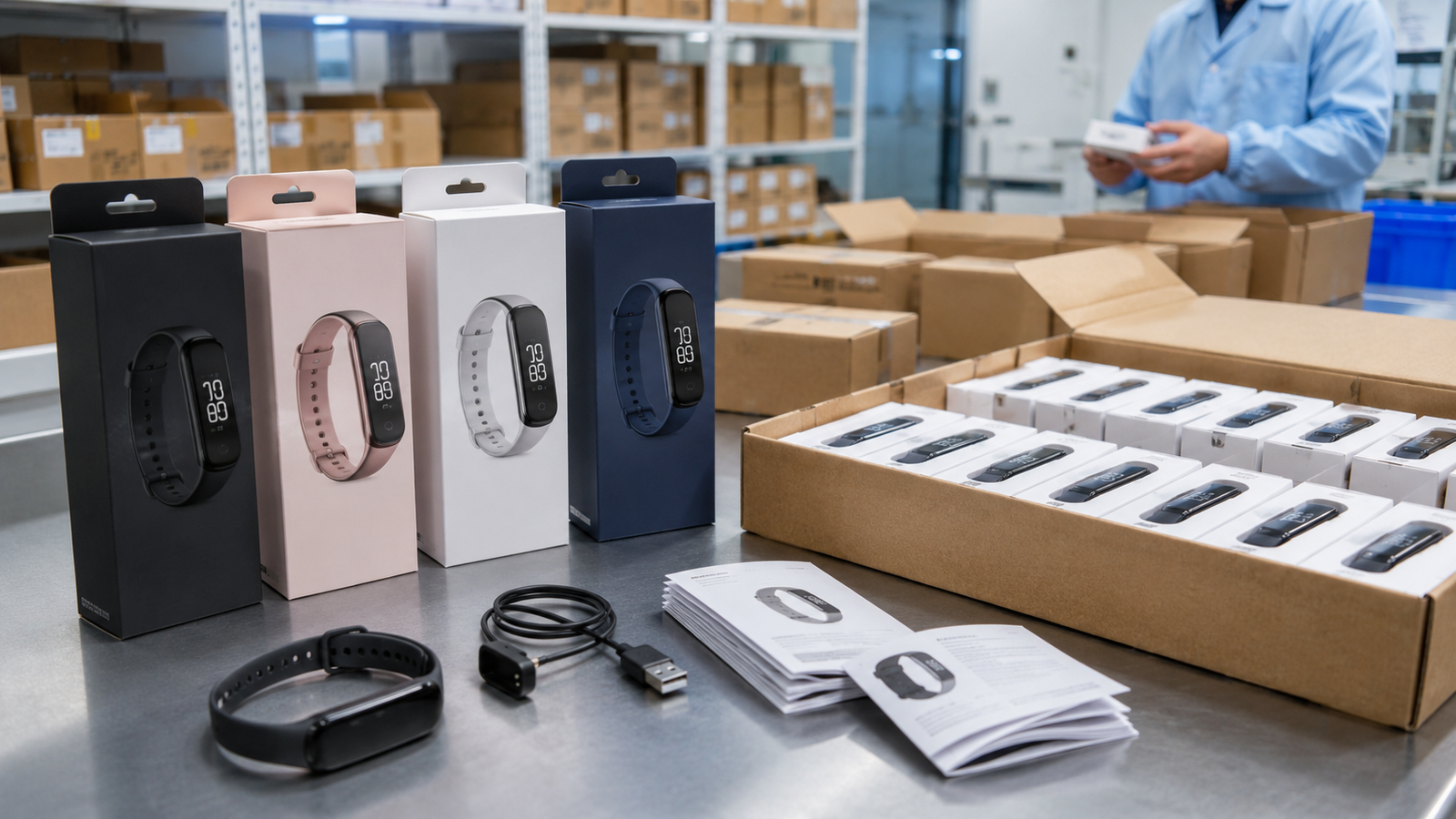
A complete smart watches RFQ names the model or reference design, the hardware and firmware configuration, quantity tiers per SKU, target market certifications, sample timeline, packaging and branding requirements, warranty and after-sales terms, and shipping Incoterms. It should also ask the supplier to state what is standard versus what is custom, so your quotation reflects the same product scope across vendors. A short, vague inquiry usually returns a short, vague price that is hard to compare or to trust.
Key Takeaways
- A distributor RFQ should be written so two or more suppliers can be compared line by line.
- Specify the configuration, not just the product family; smart watch hardware and firmware options change the cost and the compliance path.
- US-market smart watches with radio transmitters typically fall under FCC equipment authorization rules; confirm the exact requirement with the supplier and a compliance specialist.
- Lithium battery shipping documentation is a routine RFQ item, not a last-minute logistics surprise.
- Ask for MOQ breakpoints, sample lead time, and mass-production lead time as separate numbers.
- Separate unit price from landed cost; freight, duties, and packaging change the real margin.
- Put quality-control steps and pre-shipment inspection terms in writing before you approve a bulk order.

Key Facts for Buyers
| RFQ Item | What to Ask | Why It Matters for a US Distributor |
|---|---|---|
| Model and configuration | Exact model, chipset/platform, display, sensors, firmware version | Prevents quotes for different products being compared as if they were the same |
| Quantity tiers | MOQ and price breakpoints at 500, 1,000, 3,000 units and above | Supports planning across retail and e-commerce channels |
| Certifications | FCC, CE, RoHS, UN38.3, MSDS status per SKU | Import and resale documentation; requirements depend on configuration and market |
| Sample timing | Sample lead time and sample cost/refund policy | Protects your launch calendar |
| Mass-production timing | Production lead time after deposit and sample approval | Prevents overpromising to retail accounts |
| Customization | Logo, packaging, app branding, firmware options | Distributor-branded programs and channel differentiation |
| Quality control | In-process checks and pre-shipment inspection terms | Reduces returns and chargebacks |
| Warranty and spares | Warranty period, DOA policy, spare parts availability | Protects after-sales reputation with resellers |
| Incoterms | FOB, CIF, DDP, and battery shipping documentation | Determines true landed cost and responsibility |
Why a Distributor RFQ Differs From a Brand RFQ
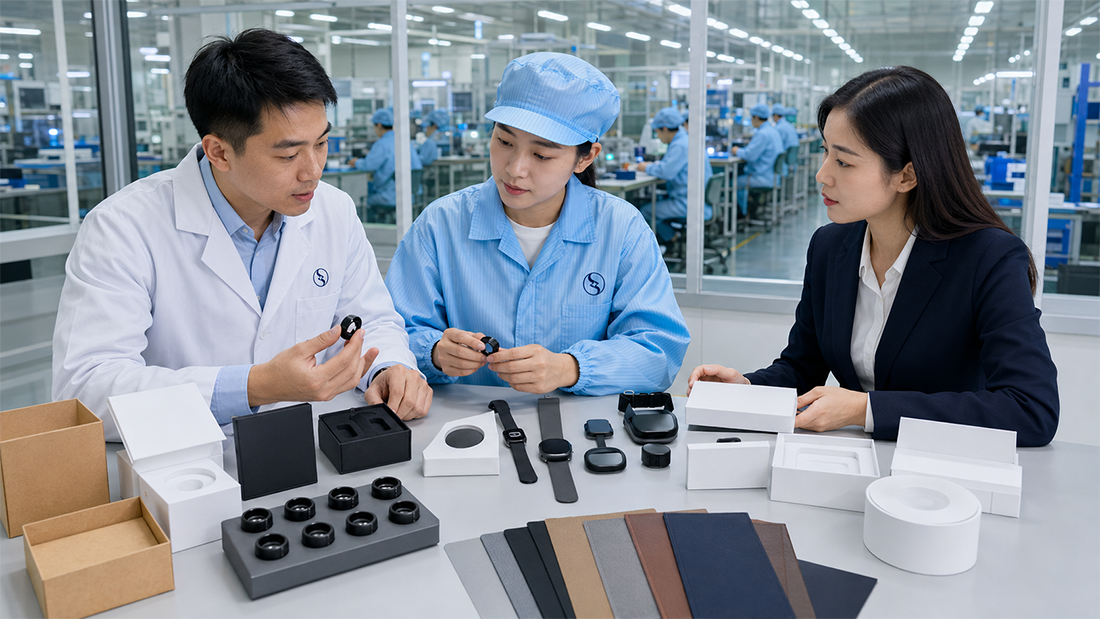
A brand buying smart watches for its own label usually has one channel and one product identity to protect. A distributor often carries multiple lines, resells through several channels, and must answer to retail buyers who ask for compliance documentation and consistent quality across repeat orders.
Repeatability beats one-off styling
Your first order is a test; your second and third orders are the business. Ask how the supplier controls consistency when a component changes, and whether they notify you before substituting a chipset, display, or battery. A factory that documents engineering change notifications is easier to build a reseller program around.
Documentation and packaging for resale
US retail accounts often expect retail-ready packaging, country-of-origin labeling, and clear user documentation. If you plan to sell through Amazon or retail chains, ask early about barcode support, packaging customization, and whether the supplier can provide consistent carton and label data across shipments. Explore smart retail and e-commerce solutions if your channel mix includes marketplaces and physical retail.
After-sales support across regions
Distributors need a warranty and DOA process they can explain to their own customers. Ask who handles defective units, whether spare parts such as straps, chargers, and displays are available, and what the return window is. These terms are easier to negotiate before the bulk order than after.
The 10 Smart Watches RFQ Checks
Use these ten checks as the core of your request for quotation. Each one produces a number or a written statement you can compare across suppliers.
1. Define the product configuration precisely
“Smart watch” covers a wide range of hardware. Specify the display type and size, case material, strap options, sensor set, battery capacity, connectivity (for example Bluetooth and any cellular or GNSS options), and whether the product runs a standard platform or a customized firmware stack. If you are comparing an OEM program with a private-label version of an existing model, say so clearly. STAR KING’s smart watches product range is a practical reference point for listing configuration options in your RFQ.
2. Ask for MOQ and price breakpoints
MOQ is usually tied to component minimums, tooling, packaging runs, and color or SKU variety. Request pricing at several quantities, such as 500, 1,000, 3,000, and 5,000 units, and ask whether mixed-SKU orders can reach a combined MOQ. For distributors, the ability to combine colors in one production run often matters more than the lowest headline price.
3. Confirm the compliance path for the US market
Smart watches with Bluetooth or other radio transmitters sold in the United States generally fall under FCC equipment authorization requirements, and the applicable procedure depends on the device type and transmitter. Ask the supplier which FCC rules and authorization route apply to the specific configuration, and request the relevant documentation before you commit. For official reference, review the FCC equipment authorization procedures. RoHS and battery-related documentation may also apply depending on the product and the buyer’s requirements; confirm per SKU rather than assuming a blanket certification covers all models.
4. Request battery safety and shipping documentation
Most smart watches contain a lithium-ion or lithium-polymer battery. Air freight typically requires a UN38.3 test summary and related battery documentation, and carriers may ask for additional paperwork. Ask the supplier to state which battery documents are available per model, and review the IATA Dangerous Goods Regulations context with your freight forwarder. This is a routine RFQ item; treat a supplier who is vague about battery documentation as a warning sign.
5. Separate sample lead time from production lead time
Ask for three dates: when a stock sample ships, when a customized sample ships, and when mass production completes after deposit and sample approval. Distributors who sell into retail promotional calendars need the production number, not just the sample number. Request the supplier’s stated lead time in writing and confirm what happens if a component is delayed.
6. Clarify OEM, ODM, and private-label scope
OEM, ODM, and private-label programs differ in who owns the design and how much customization applies. Ask whether the model is an existing ODM design available for branding, or whether it requires new tooling and industrial design work. If you plan a distributor brand, review private label OEM/ODM solutions and ask specifically about logo placement, packaging, app branding, and firmware customization options.
7. Ask about software, app, and firmware support
Smart watches depend on a companion app, firmware updates, and sometimes a cloud service. Ask which app the product uses, whether it can be white-labeled, who maintains updates, and what data-handling terms apply. If your resellers ask about app privacy or data retention, you need clear answers before the order, not after. Related reading on integrations is available in our resources blog.
8. Agree on quality control and inspection
Ask what testing happens in process and before shipment: functional testing, aging or burn-in testing, waterproof or drop testing where relevant, and pre-shipment inspection. Define the acceptable quality level and who pays for third-party inspection if you request it. Put the inspection terms in the purchase order so there is a clear reference if a shipment is disputed.
9. Calculate landed cost, not just unit price
A low unit price can lose to freight, duties, packaging, and returns. Ask for the unit price at your target quantity, the packaging cost, the carton dimensions and weight, and the Incoterm proposed. Then model landed cost with your forwarder’s rates and current duty treatment. If you sell through marketplaces, add platform fees and return reserves. For distributors comparing multiple categories, our health and fitness wearable solutions page shows how product families can be bundled for retail accounts.
10. Confirm warranty, spares, and after-sales terms
Ask for the warranty period, the DOA (dead-on-arrival) handling process, the spare-parts list and pricing, and the expected response time for technical questions. Distributors who resell to corporate or retail accounts often need a documented warranty statement they can pass down the channel. Confirm these terms in the quotation, not in a separate chat thread.
If your RFQ covers more than one wearable category, it helps to standardize the questions so quotes are comparable. STAR KING works with distributors on multi-model programs, and the same RFQ structure can be reused across smart bands and related wearable lines.
Comparison Table: RFQ Detail Levels
| RFQ Detail Level | Typical Outcome | Best For | Risk |
|---|---|---|---|
| One-line inquiry (“price for smart watch”) | Generic quote, unclear scope | Early market scanning only | Quotes cannot be compared; hidden configuration differences |
| Model plus quantity | Useful budget estimate | Early distributor planning | Certification and packaging costs may be missing |
| Model, quantity tiers, certifications, packaging, terms | Comparable quotation with clear scope | RFQ and supplier shortlist | Requires more preparation time upfront |
| Full program RFQ with samples, QC, warranty, and spares | Basis for a purchase order and repeat orders | Distributors placing repeat bulk orders | Longer negotiation cycle |
For a program covering several product types, a consistent RFQ template also supports remote health wearable solutions where documentation and data-handling questions come up early. If your accounts include workplace or insurance programs, see corporate wellness applications for the kinds of questions end buyers tend to ask.
Common Mistakes and Buyer Red Flags
- Comparing prices without a fixed configuration. Two quotes only mean something if the hardware, firmware, and packaging scope match.
- Treating “certified” as a universal claim. Ask which certification applies to which model and configuration, and request the document. Do not assume one certificate covers every SKU.
- Ignoring battery shipping paperwork. Missing UN38.3 or battery documentation can delay a shipment after you have already promised delivery dates.
- Assuming the sample equals mass production. Confirm that the approved sample is the golden sample referenced in the purchase order.
- Skipping the warranty conversation. A cheap unit with no spare-parts plan can cost more than a slightly higher-priced model with clear after-sales terms.
- Paying a deposit before written terms. Confirm scope, inspection terms, and delivery dates in the purchase order.
- Warning sign: a supplier who will not state MOQ, lead time, or certification status in writing.
- Warning sign: a quote that changes after you ask basic compliance questions.
Practical Buyer Checklist
- Model name, reference design, and full configuration listed in the RFQ
- Quantity tiers and mixed-SKU MOQ policy confirmed
- FCC and other applicable compliance status confirmed per SKU
- Battery documents (UN38.3, MSDS) confirmed as available
- Sample lead time and mass-production lead time stated separately
- Customization scope listed: logo, packaging, app, firmware
- Quality-control steps and inspection terms defined
- Landed cost model prepared with freight and duty assumptions
- Warranty, DOA, and spare-parts terms in writing
- Incoterms and shipping method agreed with the forwarder
FAQ
What is the typical MOQ for smart watches from a Chinese OEM?
MOQ varies by model, customization level, and packaging. Standard models with stock packaging can often start lower than fully customized programs. Ask for price tiers at several quantities and confirm whether colors can be combined to reach the MOQ. STAR KING’s current MOQ tiers: [STAR KING TO CONFIRM].
Do I need FCC certification to sell smart watches in the United States?
Radio-frequency devices sold in the US are generally subject to FCC equipment authorization, and the applicable route depends on the device and transmitter. Ask the supplier for the exact status of the model you are buying, and confirm with a compliance specialist before import. Do not assume a certificate for one model applies to another.
How long does a smart watch sample take?
Stock samples typically move faster than customized samples, which may require branding, packaging, or firmware changes. Ask for both dates in writing and confirm the sample cost and refund policy. STAR KING sample lead time: [STAR KING TO CONFIRM].
Can distributors get private-label branding on smart watches?
Yes, private-label programs commonly cover logo placement, packaging, and app or firmware customization, depending on the model. Confirm which elements are included in the base price and which are charged separately, and ask whether the design is shared with other buyers.
What battery documents should I request?
Ask for a UN38.3 test summary and MSDS for the battery in the specific model. Your freight forwarder may request additional documents depending on the shipping method. Confirm the available document set before you finalize the shipping plan.
How should I compare quotes from different suppliers?
Build a comparison sheet with identical line items: configuration, quantity, certification status, packaging, lead time, warranty, and Incoterms. A quote is only comparable when the scope matches. If a supplier cannot fill a line item, treat that as missing information rather than an advantage.
What is a reasonable warranty for bulk smart watches?
Warranty terms vary by supplier and program. Ask for the warranty period, DOA policy, and spare-parts availability, and confirm these terms in the purchase order. Distributors reselling to retail chains should also ask whether a written warranty statement is available for their own customers.
Conclusion
A smart watches RFQ is a procurement document, not a conversation starter. When it defines the configuration, quantity tiers, compliance path, timing, customization, and after-sales terms, you get quotes you can compare and a supplier relationship you can scale. Distributors who standardize their RFQ process across product lines usually spend less time chasing specifications and more time building channel accounts.
Before you send your next RFQ, review the ten checks in this guide, confirm the battery and FCC documentation status for each model, and model your landed cost with real freight rates. Those three steps remove most of the surprises that appear after a purchase order is signed.
Ready to Start Your Smart Watches RFQ?
STAR KING supports distributors with smart watch OEM/ODM and private-label programs, including configuration selection, sample development, packaging customization, and quality-control planning. To move forward, request a quotation with your target quantities, required certifications, and launch timeline, and the team can confirm which models fit your program and what documentation is available per SKU.
Discuss Your Smart Wearable OEM/ODM Project
Planning a smart ring, smart watch, smart band, AI glasses, AI translator, or AI voice mouse project? Contact STAR KING to discuss product positioning, sample testing, customization scope, certification requirements, lead time, and quotation details.

Team Star King

Scan WhatsApp QR code
Leave a Reply