
Digital Health Wearable Hardware & Platform Integration
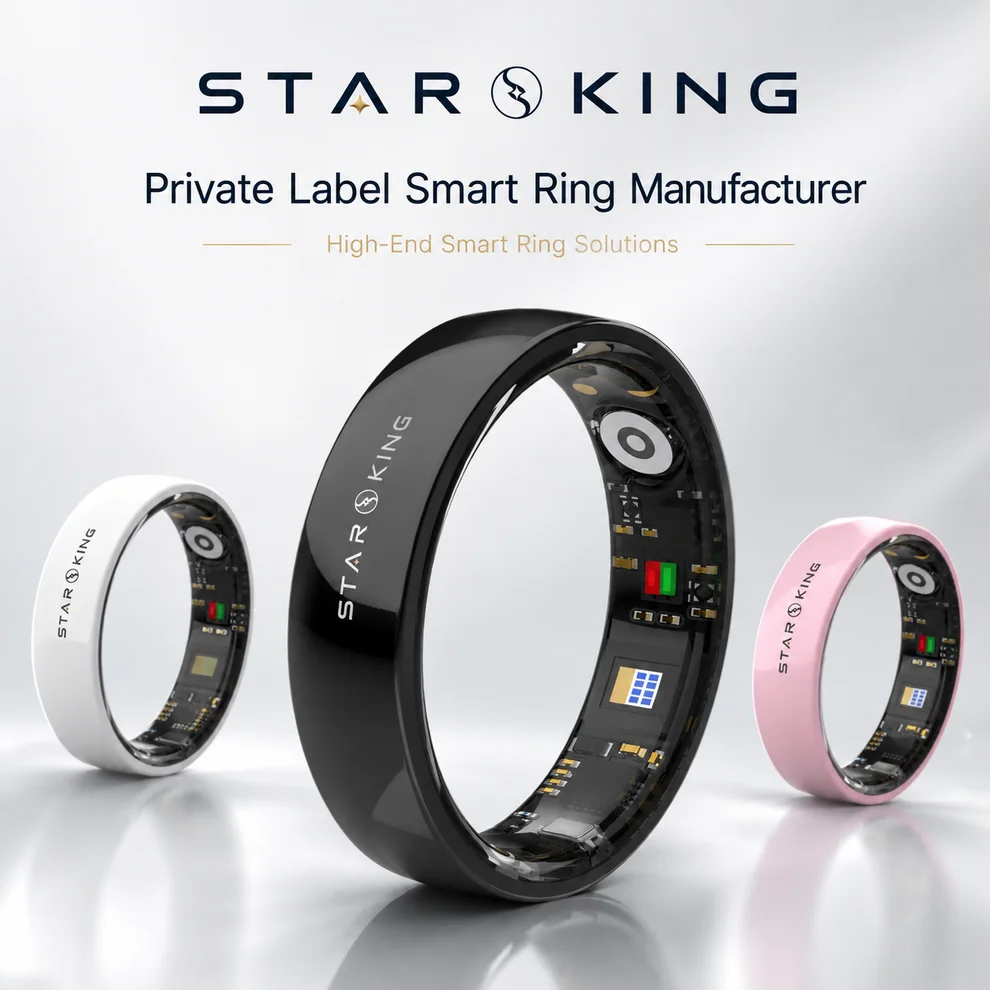
STAR KING helps digital health businesses evaluate connected wearable hardware for a defined platform and user experience. Translate your service into device, data and integration requirements, then validate the complete configuration before a commercial rollout.
Who this solution is for
Digital health platforms, wellness-app businesses, remote-service providers and integrators adding smart rings, watches or bands to an existing service.
Star King is a brand powered by Chudong Technology Ltd., serving global B2B smart electronics buyers since 2000. Discuss product selection, branding, packaging and OEM/ODM requirements with the team. Product functions, integration scope and manufacturing deliverables are confirmed for the selected configuration.
Connect the device to a specific service
Define the service journey before selecting sensors. Explain how a user joins the program, pairs the device, views information and receives support. Identify what the platform must do when a phone is offline, data is missing or a user changes devices.
A digital health business needs a reproducible user experience, not simply a specification sheet. Record the target users, countries, phone operating systems, languages and wearing habits. Separate consumer wellness functions from any medically intended use and review the required evidence for the exact configuration.
Specify the data your platform needs
Create a data-field list with names, units, timestamps, collection frequency and export requirements. Ask whether the selected model provides the fields through an SDK, an API, a companion app or another documented interface. Request sample outputs rather than estimating development from a verbal feature list.
Confirm synchronization behavior, time zones, identifiers and handling of missing values. Decide whether your business needs individual access, aggregated reporting or a user-controlled export. Obtain an interface scope and licensing proposal before committing to a launch date.
Divide hardware and software responsibilities
Identify who supplies the companion app, manages accounts, stores information and supports integration issues. Confirm whether cloud services, external APIs or subscriptions are part of the configuration and which party pays recurring costs.
Discuss authentication, consent, permissions, retention and deletion with your platform team. For custom development, agree source deliverables, background intellectual property, maintenance and update compatibility. Buying devices does not automatically transfer ownership of firmware or cloud software.
Use a pilot to validate retention and operations
Test onboarding, pairing, charging and synchronization with representative users. Record the proposed firmware, app and platform versions so issues can be reproduced. Include phone disconnection, account changes and interrupted connectivity in the test plan.
Agree a release decision based on your acceptance checklist. Review support effort, spare devices and replacement handling before scaling. Keep an approved configuration and require review when a component, app or interface changes in later batches.
From requirements to an approved deployment
- Map enrollment, pairing and the platform data journey.
- Validate the proposed device interfaces with samples.
- Pilot onboarding, connectivity and support with representative users.
- Approve the configuration, service terms and deployment schedule.
Each stage should produce a recorded decision and a list of unresolved requirements. Confirm changes before moving to the next stage so the quotation, sample and production configuration remain aligned.
Procurement checklist
Use this matrix to prepare a reviewable brief and identify the evidence needed before accepting a configuration.
| Platform need | Buyer input | Evidence to review |
|---|---|---|
| Data access | Fields, units and cadence | Interface documents and sample payload |
| User experience | Phones, languages and enrollment | Onboarding and pairing tests |
| Governance | Access, retention and permissions | Documented responsibility matrix |
| Commercial rollout | Quantity, schedule and recurring costs | Pilot acceptance and service terms |
Frequently asked questions
Can STAR KING wearables connect to our health app?
Integration depends on the selected model and available interfaces. Request SDK/API documentation and evaluate a sample exchange with your platform before agreeing the development scope.
Is a digital health platform included with every device?
No universal platform inclusion is assumed. Confirm the companion app, cloud services, licensing and maintenance scope in the model-specific proposal.
What should a digital health RFQ include?
Send the user journey, countries, device category, required data fields, phone support, integration architecture, sample plan and expected volumes.
Can the wearable be used for diagnosis?
Do not infer diagnostic suitability from wellness functions. Intended use, claims, validation and relevant market requirements must be reviewed for the exact device.
Related products and buyer resources
Prepare your solution brief
Send the intended use, users, target countries, selected category, estimated quantity and launch schedule. Add the software environment, customization requirements and pilot checklist so STAR KING can review the configuration and open questions.
Request written confirmation of samples, engineering scope, MOQ, lead time, documents, packaging and support. These terms depend on the actual product and project rather than a universal website promise.
Get a Project Quote Start an OEM Project