
Wearable & AI Hardware Manufacturing Guide: Prototype to Production
A reviewable manufacturing project links each stage to defined inputs, evidence and acceptance decisions. Use this guide to organize an OEM/ODM wearable or AI hardware program from the first specification through pilot production and repeat orders.
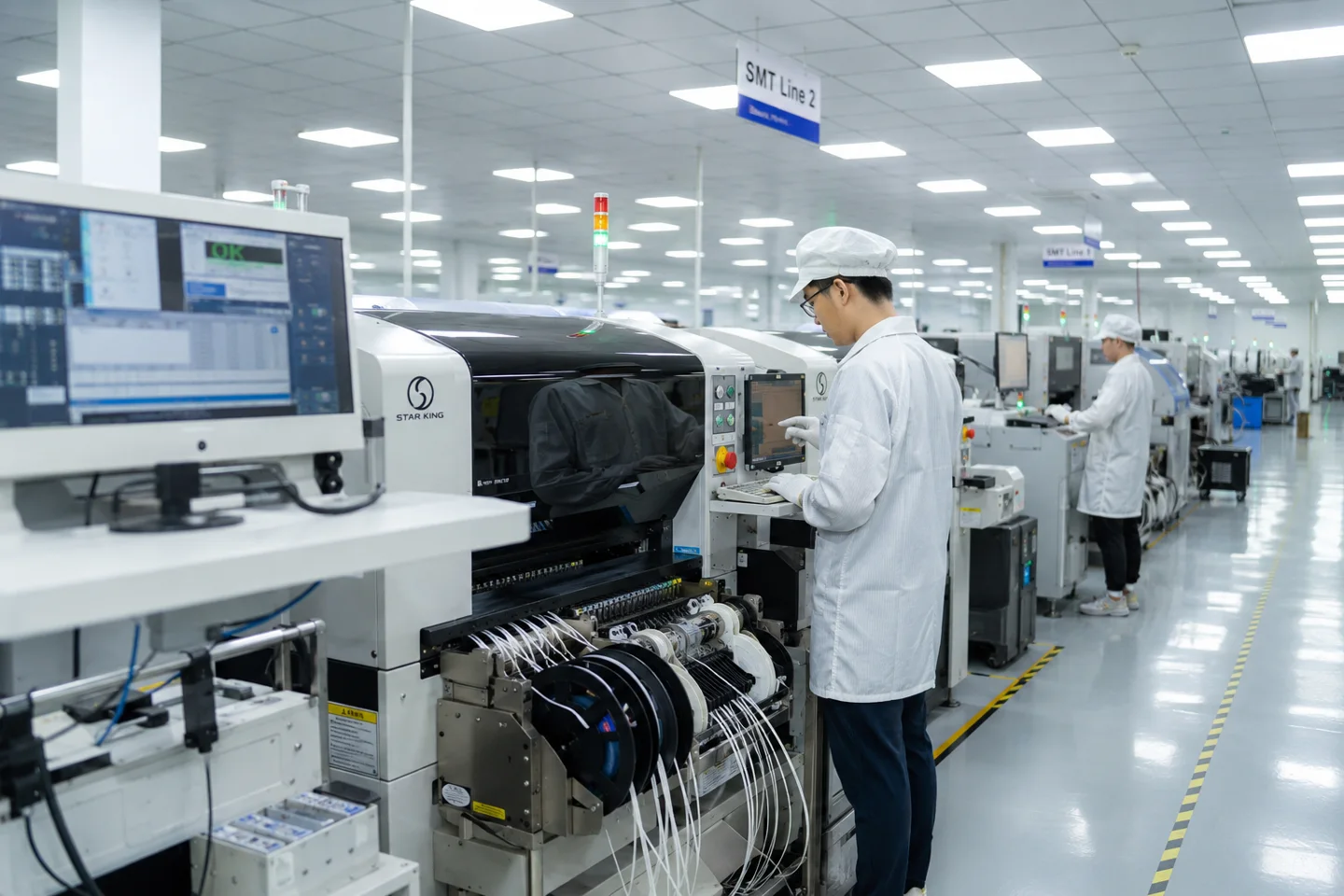
Who this page is for
Brands, startups, distributors and technical procurement teams planning product customization or production handover.
Star King is a brand powered by Chudong Technology Ltd., serving global B2B smart electronics buyers since 2000. Discuss product selection, branding, packaging and OEM/ODM requirements with our team; functions and project deliverables are confirmed for the selected configuration.
Freeze requirements before prototype work
Define product functions, target markets, form factor, software interfaces, accessories and packaging. Record open questions and assign owners. Confirm which requirements are mandatory and which can change after feasibility review.
Agree development deliverables, charges, intellectual property and a change-control process. A prototype should answer a specific question, such as fit, interface compatibility or assembly feasibility, rather than being treated as proof that the final batch is ready.
Use pilot production to verify repeatability
A pilot evaluates whether the proposed configuration can be assembled, programmed, tested and packed consistently. Agree its quantity, objectives, inspection coverage and the decision needed before scaling.
Record defects, causes and corrective actions. Include test fixtures, firmware loading, accessories, labeling and packaging in the review. Confirm that the approved configuration is the one used for the pilot, and close material issues before production release.
Establish the golden sample and inspection plan
Keep an approved reference sample and its specification, firmware version, packaging artwork and accessory list. Define inspection scope, sampling, defect categories and release authority in the order agreement.
Typical checks can include appearance, function, charging, connectivity, labels and packout. Select tests according to the product rather than copying a generic list. Ask how inspection results and lot identification are recorded for your order.
Control changes and prepare repeat orders
Review proposed component, software or packaging changes against your acceptance criteria and market documents. Identify which changes require a new sample or additional testing. Do not rely on the retail product name to establish revision consistency.
Before shipment, confirm quantities, inspection disposition, documents, logistics and support contacts. For repeat orders, reference the approved revision and update the quotation when specifications or commercial assumptions change.
Procurement checklist
Use these points to prepare a reviewable brief and request written confirmation before approving an order.
| Stage | Input | Release decision |
|---|---|---|
| Prototype | Requirements and engineering scope | Key feasibility questions resolved |
| Pilot | Proposed configuration and test plan | Issues closed and process accepted |
| Mass production | Golden sample and inspection agreement | Batch meets agreed acceptance |
| Shipment | Released goods and documents | Packout and delivery terms confirmed |
| Repeat order | Controlled revision record | Configuration and changes approved |
Frequently asked questions
What is the difference between a prototype and a pilot?
A prototype investigates design or function. A pilot evaluates a limited production run and its readiness for scaling. The objectives and acceptance criteria should be explicit.
What is a golden sample?
It is an approved reference configuration used with written specifications for agreed acceptance checks. Record firmware, accessories and packaging as well as appearance.
Does sample approval guarantee every unit in a batch?
No. Agree production checks, sampling, defect handling and release authority. Sample approval and batch acceptance serve different purposes.
How should engineering changes be managed?
Document the proposed change, its impact and required verification. Obtain the agreed approval before using the changed configuration in production.
Related products and buyer resources
Discuss your project with STAR KING
Send the product category, intended use, destination countries, estimated quantity, customization and target schedule. Add your acceptance checklist or reference files so the team can discuss a suitable configuration and identify open requirements.
Request a quotation that separates samples, product supply, engineering, packaging and delivery scope. MOQ, lead time and available documents are confirmed for the actual project.
Prepare Your RFQ Contact the team