
Pilot Production for Wearable & AI Hardware OEM/ODM Projects
STAR KING supports pilot-production discussions for selected smart electronics projects. Use a limited production run to evaluate the proposed configuration and manufacturing process, close important issues and decide whether the project is ready to scale.
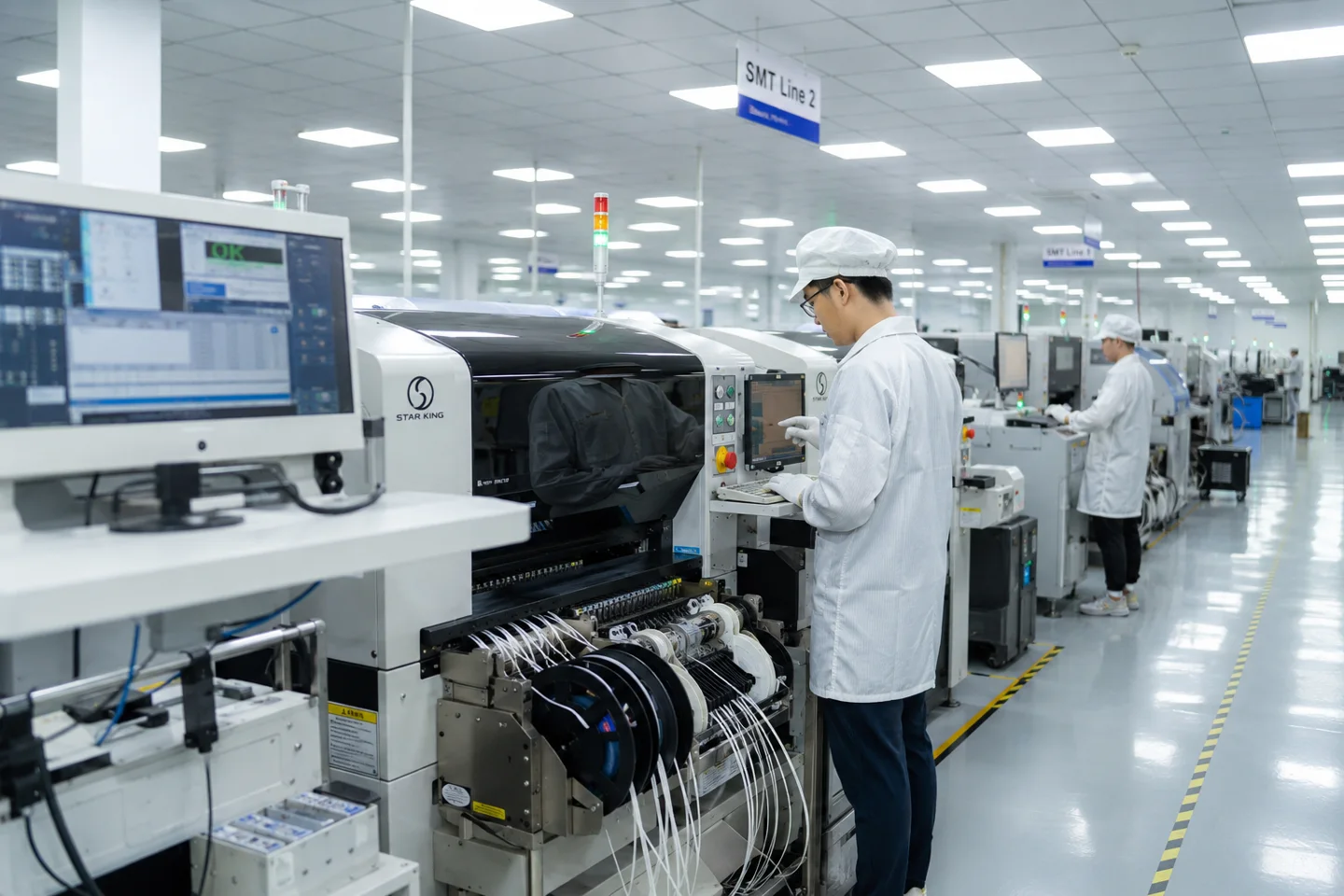
Who this service discussion is for
Brands, distributors, importers, startups and technology partners sourcing smart wearables or AI electronics. The required scope depends on your platform, markets and customization rather than a universal service package.
Star King is a brand powered by Chudong Technology Ltd., serving global B2B smart electronics buyers since 2000. Discuss product selection, branding, packaging and engineering requirements with the team. Confirm functions, deliverables, ownership and commercial terms for the selected project.
Set pilot objectives before choosing quantity
A pilot should investigate production readiness, not simply provide a smaller order. Define the questions to resolve: assembly, programming, test coverage, packaging, consistency or another requirement. Agree the configuration and the evidence needed for acceptance.
The appropriate run size depends on the product and objective. Request a proposal that identifies quantity, setup work, samples, testing and expected documentation. Do not treat a general MOQ as a substitute for a pilot plan.
Use the approved reference configuration
Bring together the specification, hardware revision, firmware, accessories, drawings and packaging artwork. Confirm that the production route uses the components and materials intended for the order. Identify open deviations before the build.
Agree how units or lots are identified and what inspection results are recorded. Review incoming components, assembly, programming, charging, connectivity and packout according to the selected product. Determine which tests are essential to your acceptance decision.
Review defects and corrective actions
Define defect categories, how issues are reported and which findings block release. Record observations, affected units and proposed causes. Distinguish process issues from design changes so the corrective action addresses the actual requirement.
Require evidence that important actions were completed and verified. A repaired sample is not proof that the process is controlled. Agree whether another trial, revised instruction or additional test is needed before proceeding.
Make the scale-up decision explicit
Summarize the tested configuration, inspection results, unresolved limitations and approved changes. Decide whether to proceed, revise or stop. Identify the person or team authorized to approve mass-production release.
Carry the accepted pilot documents into the production order. Confirm quantity, revision, inspection scope, delivery and support terms. Changes after the pilot should be reviewed rather than silently introduced into the larger batch.
Project roadmap and approval gates
- Agree pilot objectives, quantity and acceptance criteria.
- Verify the reference configuration and process setup.
- Review results, defects and corrective-action evidence.
- Approve or revise the mass-production release plan.
Keep a written decision at each gate. Record open requirements and approved changes so the quotation, sample, engineering outputs and production configuration remain aligned.
Scope, deliverables and acceptance checklist
Use this matrix to prepare the buyer brief and confirm what evidence or agreement is needed before moving forward.
| Pilot area | Required definition | Acceptance evidence |
|---|---|---|
| Objective | Questions and scope of the trial | Written pilot plan |
| Configuration | Parts, firmware and artwork | Controlled reference record |
| Process | Assembly, programming and tests | Inspection and process observations |
| Issues | Defect categories and release blockers | Corrective-action verification |
| Scale-up | Decision owner and requirements | Approved handover or revision plan |
Frequently asked questions
What is the purpose of pilot production?
It evaluates the proposed product configuration and manufacturing readiness against agreed objectives before a larger build.
Does a pilot always use the same quantity?
No. Quantity depends on the product, process and evaluation questions. Agree it with the scope and commercial proposal.
Can a pilot reveal changes needed before production?
Yes. Record findings, approve corrective actions and verify them before making the scale-up decision.
What should be handed over after pilot approval?
Retain the accepted configuration, inspection results, issue closure, packaging revision and mass-production acceptance criteria.
Related services and procurement resources
Prepare your OEM/ODM project brief
Send the product or reference model, intended use, target countries, estimated quantity and schedule. Add customization, software interfaces, required documents and acceptance criteria. Identify confidential files before sharing a BOM, drawing or proprietary workflow.
Request a written proposal that separates samples, engineering, tooling, product supply, packaging and delivery. MOQ, lead time and included support are confirmed for the actual configuration.
Start an OEM Project Submit a BOM or Reference File