

Smart Bands for System Integrators: 12 Checks Before You Integrate Wearables for EU Clients
Smart Bands for System Integrators: 12 Checks Before You Integrate Wearables for EU Clients
Direct Answer
Smart bands for system integrators are wearable devices that you embed into your own client platforms—such as corporate wellness dashboards, remote patient monitoring portals, or fleet safety systems—rather than reselling as a standalone brand. To integrate them successfully in the EU, you should verify fit-for-purpose sensor accuracy, a stable BLE/API data pipeline, CE and RED compliance, safe battery documentation, and a supplier who supports firmware and app-level customization under a clear MOQ and lead-time agreement.
Table of Contents
Table of Contents

Introduction
If you are a system integrator, you rarely sell hardware for its own sake. You sell connected outcomes: an HR dashboard for a corporate client, a fall-risk alert feed for an elderly care operator, or a shift-fatigue indicator inside a logistics platform. That changes what you need from a smart band supplier. You are not looking for the cheapest wristband on Alibaba; you are looking for a component that will not break your integration contract six months after go-live. This guide walks through 12 practical checks for selecting smart bands for system integrators operating in the European Union, from sensor specifications and BLE data reliability to CE/RED compliance, battery documentation, API support, and private-label options. Each check is written as a sourcing decision you can actually run, not a marketing wish list.
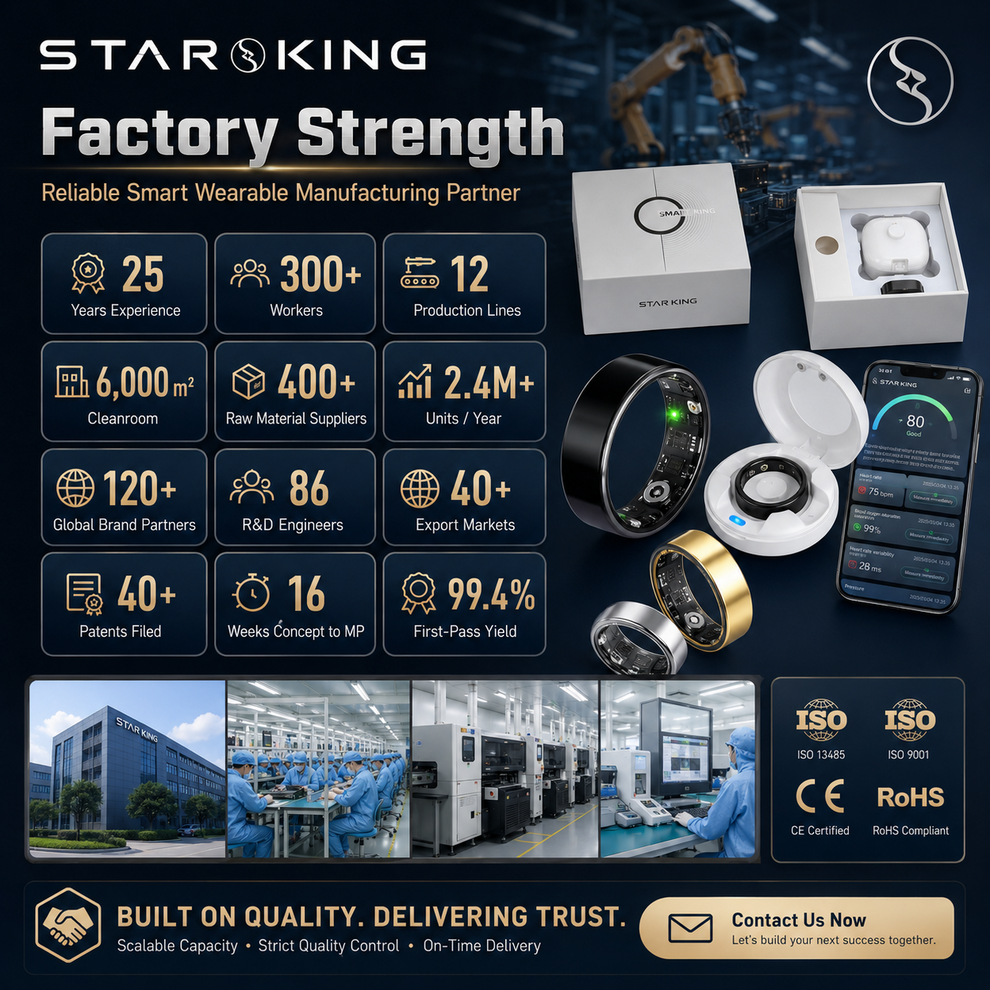
Table of Contents
- Short Answer Recap
- Key Takeaways
- Key Facts for Buyers
- What Are Smart Bands for System Integrators?
- Why Integrators Need a Different Supplier Checklist Than Resellers
- Where Smart Bands Fit in EU Integration Projects
- The 12 Checks Before You Commit
- Check 1: Sensor Set and Use-Case Fit
- Check 2: Data Pipeline and API/SDK Support
- Check 3: BLE Stack and Device Pairing Behavior
- Check 4: Battery Life and Charging Behavior
- Check 5: EU Regulatory Compliance (CE, RED, RoHS)
- Check 6: Battery Transport Documentation (UN38.3, MSDS)
- Check 7: Data Privacy and GDPR Touchpoints
- Check 8: Firmware Customization and OTA Updates
- Check 9: App Customization and White-Label Options
- Check 10: MOQ, Pricing and Landed Cost
- Check 11: Lead Time, Tooling and Production Planning
- Check 12: Quality Control, Testing and After-Sales
- Comparison Table: Off-the-Shelf vs. OEM/ODM Smart Bands
- Common Mistakes System Integrators Make
- Practical Buyer Checklist
- FAQ
- Conclusion
- Next Step: Request Samples and Technical Documentation

Short Answer Recap
For integrators, the deciding factors are rarely appearance or consumer features. They are: (1) does the sensor data hold up in your actual use case, (2) can you get that data out through a documented, reliable API or BLE protocol, (3) is the product compliant for EU deployment, and (4) will the supplier support customization, MOQ planning and after-sales in a way that matches your client SLAs. Verify these four areas before price.

Key Takeaways
- Smart bands for system integrators are evaluated on data reliability and integration flexibility, not retail styling.
- EU deployment typically requires CE marking, RED compliance for radio, RoHS where applicable, and battery transport documentation such as UN38.3 and MSDS.
- Consumer-grade optical heart rate, SpO2 and sleep tracking are not diagnostic tools; position them accordingly in end-client contracts.
- API/SDK quality, firmware update support (OTA), and BLE pairing stability often outweigh a 5–10% unit cost difference.
- MOQ, tooling ownership and private-label terms should be agreed in writing before tooling investment.
- Always request pre-shipment inspection reports and aging/battery test data for at least one full production lot.
Key Facts for Buyers
| Area | What Integrators Should Confirm | Typical Evidence to Request |
|---|---|---|
| Sensor accuracy | Is the sensor specification suited to your use case (e.g., continuous HR vs. spot checks)? | Datasheet, sample testing protocol, comparison data |
| Data access | Is there a documented API/SDK or BLE protocol for your platform? | API documentation, SDK, test account |
| EU compliance | Which directives/regulations apply to this configuration? | CE DoC where applicable, RED test summary, RoHS declaration |
| Battery safety | How is the lithium cell documented for transport and storage? | UN38.3 test summary, MSDS, IEC 62133 reference where applicable |
| Customization | Firmware, app, logo, packaging changes available? | Customization scope sheet, sample with changes |
| Commercials | MOQ, lead time, tooling ownership, warranty | Quotation with MOQ tiers, lead-time schedule, warranty terms |
What Are Smart Bands for System Integrators?
Smart bands for system integrators are wrist-worn devices—typically featuring an optical heart rate sensor, accelerometer/gyroscope, and sometimes SpO2 and skin temperature sensors—that are supplied with the intent of being integrated into a third-party software platform. Unlike consumer brands that sell a finished product to end users through retail or e-commerce, integrators buy the band as a data source and hardware endpoint. The “product” your client experiences is the application, dashboard and workflow you build around the device. This shift means your supplier evaluation should mirror how you evaluate any sensor or IoT endpoint: specification accuracy, protocol documentation, firmware lifecycle, regulatory paperwork and supply continuity. The band itself may look like a fitness tracker, but its job is to feed your platform reliably over months or years.
Why Integrators Need a Different Supplier Checklist Than Resellers
A reseller can often accept a closed ecosystem: the supplier’s app, the supplier’s cloud, the supplier’s packaging. An integrator usually cannot. Your clients—corporate wellness managers, care providers, logistics operators—expect the data inside their own environment, under their own access controls. That means you need either a well-documented API/SDK or a defined BLE characteristic map you can parse yourself. It also means the supplier must be willing to discuss firmware behavior, not just hand you a finished SKU. In practice, three questions separate a viable integration partner from a transactional vendor:
- Can you show me, in writing, how the data is exposed and at what sampling rate?
- If I need a firmware change in year two, what is the process and cost?
- Which compliance documents can you provide today, and which depend on my final configuration?
If a supplier cannot answer these clearly before you place a sample order, that is a signal about how the relationship will work after mass production. For background on how wearable platforms are typically structured, the Bluetooth SIG publishes service and profile specifications that many integrators use as a reference for expected data behavior.
Where Smart Bands Fit in EU Integration Projects
Across the EU, integrators deploy smart bands in several recurring scenarios. Each has different tolerance for sensor error and battery life:
- Corporate wellness pilots. Step counts, activity minutes and resting heart rate trend. Clients typically tolerate modest accuracy variance but expect easy onboarding. See corporate wellness applications.
- Remote monitoring for senior care. Fall detection heuristics, activity deviation alerts, and simple wearability. Regulatory sensitivity is higher, and wording must avoid diagnostic claims. See remote health wearables.
- Occupational safety and fatigue. Shift-based heart rate variability or activity-load tracking, often logged without real-time alerts initially. Here, data retention and GDPR handling dominate design.
- Fitness and rehabilitation programs. Structured session tracking where a small number of metrics are read frequently. See fitness tracking.
Mapping your project to one of these patterns early will sharpen your supplier questions. A supplier optimized for retail fitness may not be the right fit for a care-sector deployment, and vice versa.
The 12 Checks Before You Commit
Check 1: Sensor Set and Use-Case Fit
Start with the sensing requirement. A standard smart band might include an optical heart rate sensor, a 3-axis accelerometer and a gyroscope; higher-end configurations add SpO2 and skin temperature. For integration, ask the supplier for the specific sensor part numbers and a datasheet, then define the sampling interval you actually need. A wellness pilot may be fine with periodic readings, whereas a fatigue algorithm could need near-continuous samples. Treat consumer-grade optical sensors as indicative, not clinical. If your client contract implies medical use, you may need a regulated device pathway—not a consumer band—and you should verify this with your compliance lead.
Check 2: Data Pipeline and API/SDK Support
This is where most integrator projects succeed or stall. Ask for the API reference, SDK, and a sandbox or test account. Confirm: Which metrics are exposed? At what granularity (raw vs. aggregated)? Over which transport (BLE to phone app, then cloud, or direct BLE to a gateway)? What is the expected latency? A supplier who can hand you a working test environment in days is worth more than one who promises “custom development” later. If you are also evaluating adjacent devices, the same data-access questions apply to smart watches and smart rings.
Check 3: BLE Stack and Device Pairing Behavior
Pairing instability is one of the most common post-deployment complaints. Ask how many devices can be bonded per gateway or phone, how reconnection works after the band leaves range, and whether the device stores data locally during disconnection. For BLE fundamentals and profile expectations, the Bluetooth SIG specification library is a useful neutral reference. During sample testing, run a multi-day pairing test in your own environment rather than trusting a short demo.
Check 4: Battery Life and Charging Behavior
Advertised battery life usually assumes default settings. Your integration may increase sampling frequency or BLE transmission, which reduces runtime. Request the capacity in mAh and the tested runtime under conditions close to your use case. Also confirm charging method (magnetic pogo pins vs. cradle), charge time, and behavior at low battery so your app can warn users. Battery life directly affects user compliance in wellness and care programs; a band that needs charging every two days is often abandoned.
Check 5: EU Regulatory Compliance (CE, RED, RoHS)
For the EU, a Bluetooth-enabled band is typically in scope for the Radio Equipment Directive (RED) and carries CE marking; RoHS and REACH are also commonly relevant. Whether additional requirements apply depends on the final configuration and intended use, so buyers should verify with the supplier and their own compliance advisors. Request the CE Declaration of Conformity where applicable, the RED test summary, and a RoHS declaration. Note that compliance is tied to a specific configuration: changing the radio module, battery or charger can affect the documentation. For official reference points, see the European Commission CE marking page and the RED guidance on the same site.
Check 6: Battery Transport Documentation (UN38.3, MSDS)
Smart bands ship with lithium cells, so air and sea transport usually requires UN38.3 test summaries and an MSDS. Confirm these are available before you book freight, and check that the cell capacity stated matches the product you are buying. Where applicable, reference to IEC 62133 for cell safety may also be requested by your logistics provider. Documentation gaps here cause shipment delays that are entirely avoidable.
Check 7: Data Privacy and GDPR Touchpoints
Health-adjacent data is sensitive under GDPR. As the integrator, you are often the data controller or processor for your client, so you need to know what data leaves the device, where it is stored, and whether any supplier cloud is involved. Ask the supplier whether the app and cloud can be omitted entirely (BLE-only mode) or hosted in the EU. Confirm data encryption in transit and at rest, retention options, and deletion workflows. This is a design decision, not an afterthought; retrofitting privacy into a closed supplier cloud is expensive.
Check 8: Firmware Customization and OTA Updates
Ask whether firmware can be customized for your use case, and how over-the-air (OTA) updates are delivered. A supplier with a real OTA process can fix issues without recalling devices; one without it leaves you exposed. Clarify who controls the firmware image, whether custom firmware is locked to your account, and what happens if you switch suppliers. Source-code escrow or a documented exit plan is worth discussing for long deployments. Related customization capabilities often apply across the smart bands range.
Check 9: App Customization and White-Label Options
If you plan to give clients a branded companion app, confirm the customization depth: app name, icon, splash screen, color scheme, and which screens can be modified. Some suppliers offer a white-label app with limited changes; others support deeper modifications. Beyond branding, consider localization for EU languages and the app-store submission process for each market. A practical path many integrators use is a private-label wearable program; see the private label OEM/ODM solution overview for the typical scope.
Check 10: MOQ, Pricing and Landed Cost
Unit price is only part of the picture. Build a landed-cost model that includes freight, duties, VAT treatment, inspection, and any customization fees. Ask for MOQ tiers, because a pilot of 100–300 units often sits below a production MOQ, and suppliers may price samples and small runs differently. Confirm whether tooling, mold or NRE charges apply and whether they are one-time or per-order. If you are comparing suppliers, use a consistent cost template so you are not comparing a bare unit to a fully customized one.
Check 11: Lead Time, Tooling and Production Planning
Ask for a lead-time breakdown: sample lead time, customization lead time, production lead time, and shipping lead time. Integrators often face client deadlines that do not move, so buffer matters. Clarify tooling development timelines if a custom enclosure is involved, and confirm who owns the tooling. Ownership and transfer terms should be in writing before you pay for tooling, because this determines your flexibility if you later change suppliers.
Check 12: Quality Control, Testing and After-Sales
Ask what routine testing is performed—aging, drop, waterproof, and functional tests—and whether pre-shipment inspection is standard or optional. Request a sample inspection report to see the actual format. Clarify warranty length, defect handling, and availability of spare parts such as straps, chargers and replacement units. A supplier with a defined RMA process reduces the load on your support team, which is often the hidden cost of wearable deployments. STAR KING supports customization, testing and sampling programs for integrators; you can request product samples to evaluate fit before committing.
Comparison Table: Off-the-Shelf vs. OEM/ODM Smart Bands
| Factor | Off-the-Shelf (White-Label Ready) | OEM/ODM Custom |
|---|---|---|
| Typical MOQ | Lower, suitable for pilot | Higher, tied to tooling and setup |
| Data access | Depends on standard app/API | Can be defined to your platform |
| Branding | Logo and packaging changes | App, firmware, enclosure level |
| Lead time | Shorter | Longer due to tooling and NRE |
| Best for | Pilots, proofs of concept | Long-term deployments with SLAs |
| Exit flexibility | Limited | Negotiable via tooling and escrow terms |
A common integrator path is to run a pilot on a near-standard band, validate the data pipeline, then move to a customized version once the client contract is confirmed.
Common Mistakes System Integrators Make
- Choosing on unit price alone. A 5% saving rarely offsets one month of integration debugging.
- Skipping the API test. Verbal assurances about “an API” are not the same as a working sandbox.
- Assuming certification is included. Compliance depends on the final configuration and target market; always request the actual documents.
- Overlooking battery documentation. Missing UN38.3 or MSDS can delay the first shipment.
- Ignoring data residency. Assuming a supplier cloud is neutral can create GDPR exposure for your client.
- No tooling ownership clause. Paying for tooling without written ownership weakens your position later.
- Positioning consumer metrics as medical. Avoid diagnostic language; use “wellness” and “indicative” wording.
Practical Buyer Checklist
Use this as a single-page pre-commitment checklist. Each item should be answered with a document or a test result, not a verbal confirmation.
- Sensor datasheet and use-case fit confirmed
- API/SDK documentation received and sandbox accessed
- Multi-day pairing and reconnection test completed
- Runtime tested under realistic sampling settings
- CE DoC, RED test summary and RoHS declaration obtained where applicable
- UN38.3 and MSDS received and matched to cell capacity
- GDPR data-flow map agreed with your compliance lead
- Firmware customization scope and OTA process documented
- App/branding customization scope confirmed
- Landed-cost model built with duty, VAT and freight
- Lead-time schedule and tooling ownership clause signed
- Pre-shipment inspection format and warranty terms confirmed
FAQ
What is the minimum order quantity for smart bands used in integration projects?
MOQ varies by supplier and configuration. Standard, near-white-label bands often start at a few hundred units, while custom ODM builds with new tooling may require higher volumes. Ask for tiered MOQ pricing so you can match your pilot scale and growth plan.
Do smart bands need CE marking for EU deployment?
Because Bluetooth bands are radio equipment, they are typically in scope for CE marking under the Radio Equipment Directive, with RoHS and REACH also commonly relevant. Exact requirements depend on your final configuration and intended use, so buyers should verify with the supplier and their compliance advisors.
Can I get the raw sensor data instead of just an app display?
Some suppliers expose raw or semi-raw metrics through an SDK, BLE characteristic map or API; others only provide aggregated data via their cloud. Confirm the data granularity and transport method in writing before you commit, and test it in a sandbox.
Are consumer smart band heart rate sensors accurate enough for clinical use?
Consumer-grade optical sensors are not diagnostic devices and should not be positioned as such. They can be useful for wellness, fitness and trend tracking, but clinical decisions usually require regulated medical devices. Wording in your client contracts should reflect this distinction.
How long does it take to customize firmware or an app for an integration project?
Timelines depend on scope. Minor firmware adjustments and logo-level customization can take weeks, while deeper app or firmware changes may take longer. Ask for a phased schedule covering sample, validation and production stages.
What battery documents should I request before shipping?
Typically UN38.3 test summaries and an MSDS for the lithium cell, with IEC 62133 references where applicable. Confirm the documentation matches the exact cell and capacity in the product you are buying.
Who owns the tooling if I pay for a custom enclosure?
This should be defined in the purchase agreement. Ownership and transfer terms—including what happens if you change suppliers—should be documented before tooling payment is made.
Conclusion
For system integrators, selecting smart bands is less about picking a wristband and more about securing a reliable data endpoint that will hold up inside your client platforms. The 12 checks in this guide—sensor fit, API/SDK access, pairing behavior, battery, EU compliance, battery transport documents, GDPR, firmware, app customization, commercials, lead time and quality control—form a practical sequence you can run before any commitment. Start with a small pilot on a near-standard band, validate the data pipeline in your own environment, and only then move to full customization. That approach keeps integration risk visible and reduces the chance of an expensive surprise after go-live. For a broader view of how STAR KING supports wearable programs, see the resources blog.
Next Step: Request Samples and Technical Documentation
If you are planning an EU integration project and want to evaluate a smart band against these 12 checks, start with a sample and test the data pipeline directly. STAR KING can provide sample units, specification summaries and customization options for integrators—so you can confirm compliance direction, API access and MOQ before committing to a production run. Request product samples and discuss your integration requirements with our team.
Discuss Your Smart Wearable OEM/ODM Project
Planning a smart ring, smart watch, smart band, AI glasses, AI translator, or AI voice mouse project? Contact STAR KING to discuss product positioning, sample testing, customization scope, certification requirements, lead time, and quotation details.

Team Star King

Scan WhatsApp QR code