
smart watches for corporate wellness: Purchase Smart Watches for Corporate Wellness in the US: 10-Step OEM/ODM Procurement Guide (2026)
Purchase Smart Watches for Corporate Wellness in the US: 10-Step OEM/ODM Procurement Guide (2026)
Buying smart watches for corporate wellness in the United States means selecting a wearable that employees will actually wear, meets US compliance expectations, and fits your procurement process. The strongest programs compare total landed cost, app ecosystem, battery life, and data privacy before negotiating price. This guide gives corporate procurement teams a 10-step evaluation and buying framework.
Table of Contents
Table of Contents
Table of Contents
- Short Answer
- Key Takeaways
- Key Facts for Buyers
- What Are Smart Watches for Corporate Wellness?
- What US Corporate Buyers Should Require
- The 10-Step OEM/ODM Procurement Process
- Feature Trade-Offs: Sensors, Battery, Connectivity
- MOQ and Landed Cost Table
- US Compliance and Battery Logistics
- Sample Testing and Acceptance Criteria
- Common Mistakes and Buyer Red Flags
- Practical Buyer Checklist
- FAQ
- Conclusion
Short Answer
For a US corporate wellness program, smart watches should be chosen on employee adoption, app and data-flow fit, battery life, and documented US-market compliance appropriate to the selected configuration. Buyers should validate samples in a pilot group, confirm MOQ and lead time in writing, and require test documentation before mass production.
Key Takeaways
- Employee adoption and app integration matter more than a long raw spec list for corporate wellness ROI.
- US market readiness typically depends on the specific radio and battery configuration, so FCC and battery documentation should be requested per SKU, not assumed.
- MOQ, tooling, and customization choices drive unit cost more than small price negotiations.
- A 30–90 day pilot using production-intent samples reduces mass-production risk.
- Data privacy, warranty, and battery shipping terms should be resolved before the purchase order.
Key Facts for Buyers
| Decision Area | What to Verify | Why It Matters |
|---|---|---|
| Compliance | FCC equipment authorization status for the exact model; battery test summaries (e.g., UN 38.3) and applicable EU documentation if also selling there | Reduces customs and marketplace risk in the US |
| MOQ & Cost | MOQ per model/color, tooling fees, logo and packaging options, OEM/ODM scope | Determines real landed cost and flexibility |
| App & Data | App availability, account management, data export, privacy terms | Affects employee adoption and IT approval |
| Battery & Charging | Claimed battery life, charging method, aging test data | Drives daily usability and return rates |
| Lead Time | Sample lead time, mass-production lead time, shipping mode | Aligns with open enrollment or launch dates |
| Warranty & Spares | Warranty period, spare parts, replacement process | Protects program continuity |
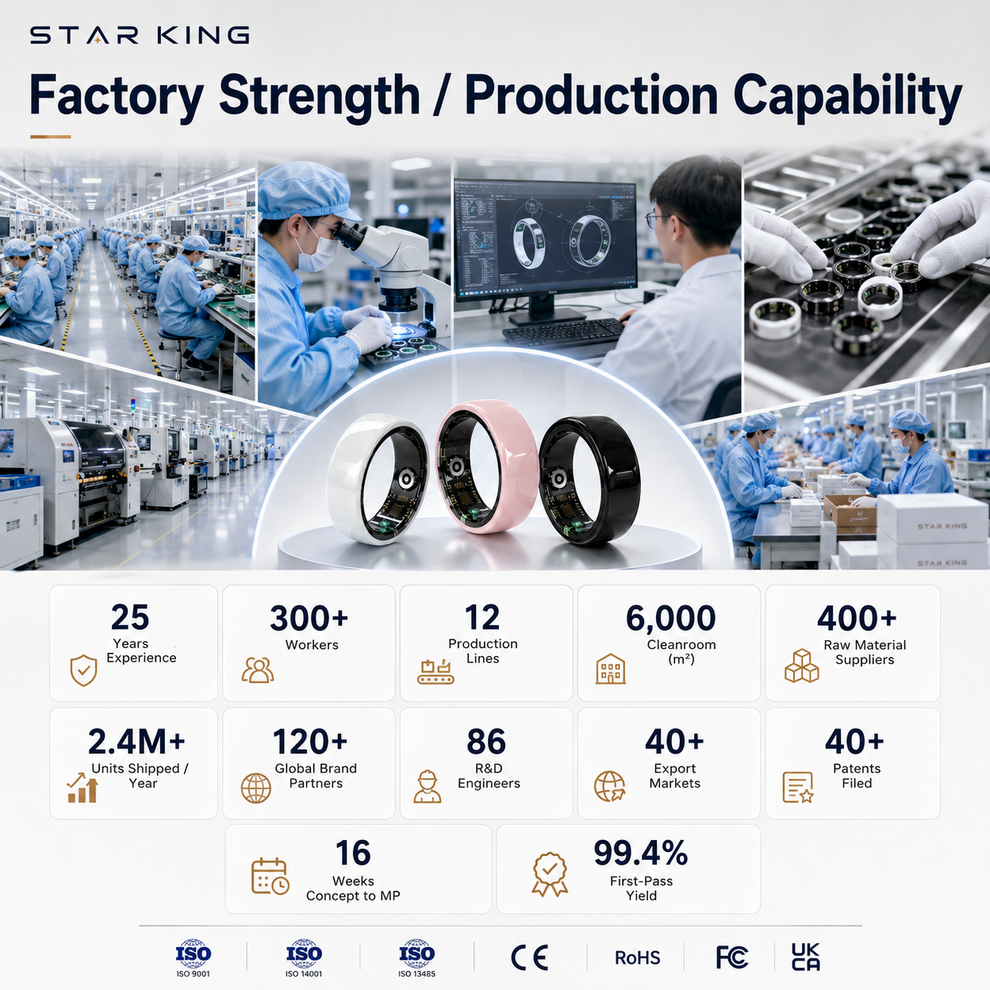
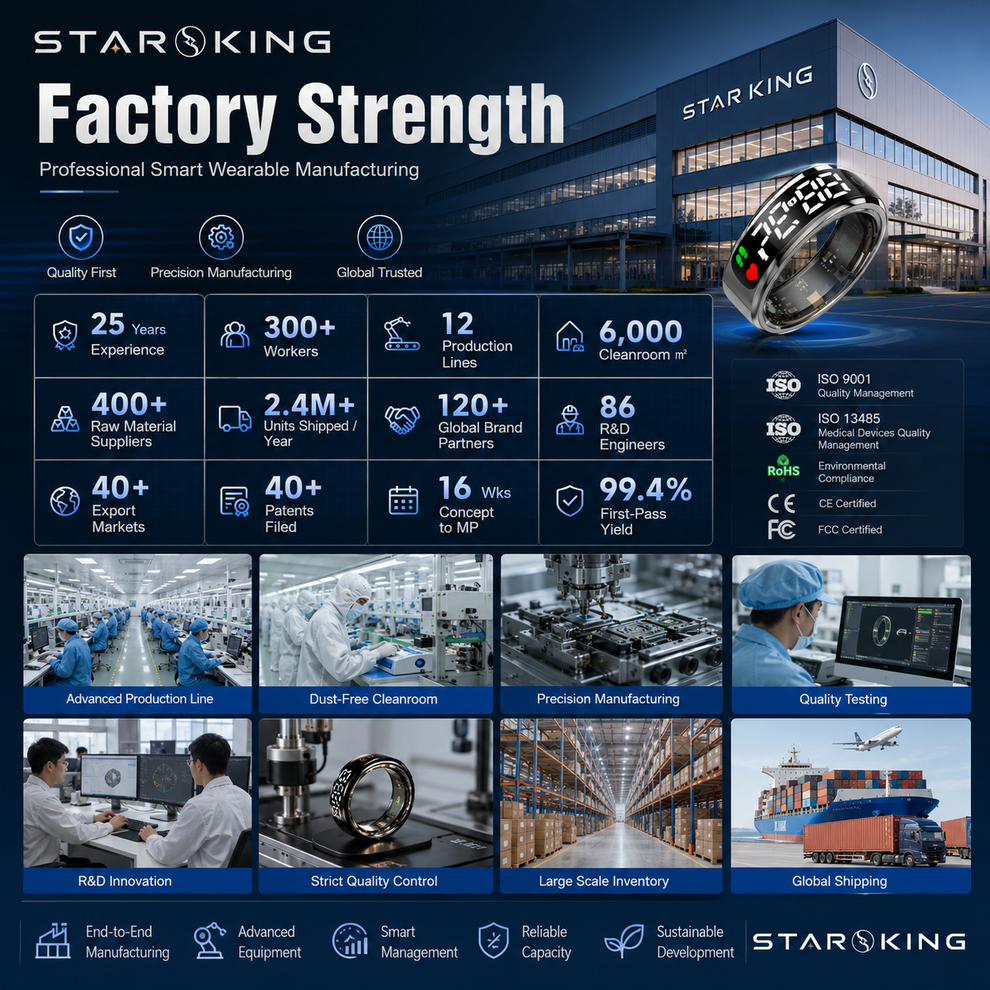
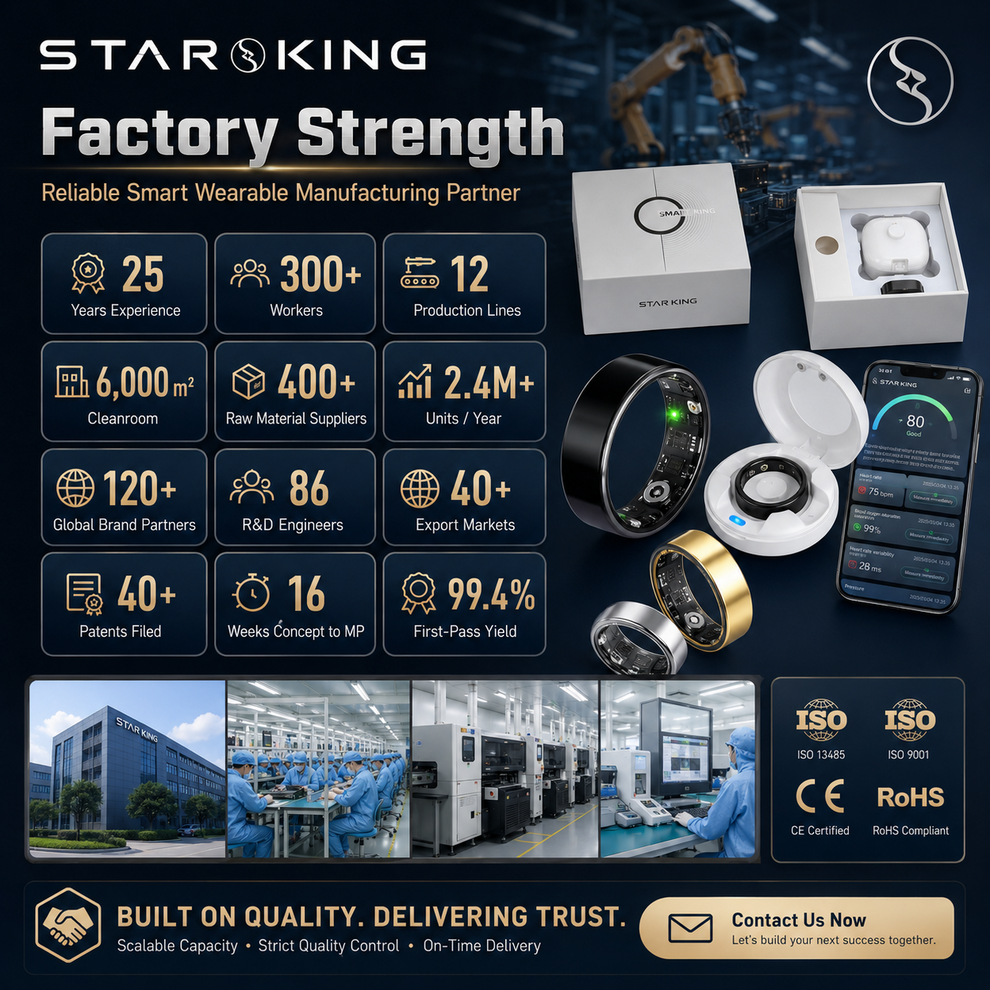
[STAR KING TO CONFIRM] current MOQ, OEM/ODM scope, app customization options, lead times, and available compliance/test documentation for corporate wellness smart watch projects.

What Are Smart Watches for Corporate Wellness?
Smart watches for corporate wellness are wearable devices provided by an employer to support activity, sleep, and general wellness engagement. They are not medical devices, and consumer wellness features should not be positioned as diagnosis or treatment tools. For procurement teams, the product is only one part of the purchase: the program includes device supply, app access, data handling, support, and often branding.
US buyers typically evaluate four layers:
- Hardware layer: sensors, display, battery, and build quality.
- Software layer: companion app, account setup, and data export.
- Program layer: how employees receive, use, and return devices.
- Commercial layer: MOQ, unit price, shipping, duties, warranty, and spares.
Because the device is worn daily and often used in a workplace context, reliability and comfort influence program success more than the number of advertised features. That is why procurement should validate samples with a pilot group before committing to a mass-production order. For broader wearable program planning, see our corporate wellness application overview.
What US Corporate Buyers Should Require
US corporate procurement teams operate under internal policies for data privacy, vendor risk, and device support. Before requesting quotations, define requirements in these categories:
- Compliance documentation: Ask for the equipment authorization status appropriate to the exact model and market. Wireless functionality may require FCC authorization; the requirement typically depends on the radio configuration and whether the device is marketed in the US.
- Battery shipping: Lithium batteries are regulated for transport. Suppliers should provide battery documentation such as UN 38.3 test summaries and safety data sheets where applicable.
- Data handling: Confirm where wellness data is stored, whether accounts are employee-owned or employer-managed, and what can be exported or deleted.
- Support model: Define who handles user setup questions, warranty claims, and replacements.
- Branding: Logo, packaging, and quick-start guides are common Private Label requests; confirm what is included in the quoted price.
If your organization also standardizes on other wearables, comparing form factors such as smart rings alongside smart watches can help match devices to different employee preferences and job roles.
The 10-Step OEM/ODM Procurement Process
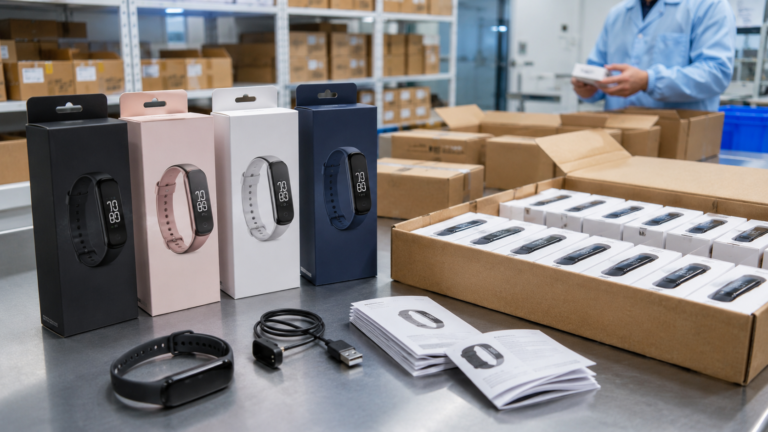
Image suggestion: ALT: smart watches for corporate wellness bulk procurement and OEM discussion
Step 1: Define the Program Goal
State the measurable goal, such as participation rate, daily active use, or completion of wellness challenges. This determines whether you need GPS, SpO2, sleep tracking, or simply reliable activity and heart-rate monitoring. Goals keep the specification honest and prevent overbuying.
Step 2: Set Minimum Technical Requirements
Write a requirements list covering display type, battery life, water resistance, charging method, supported sensors, and connectivity. Distinguish must-haves from nice-to-haves so suppliers can quote comparable options.
Step 3: Decide OEM vs. ODM vs. Private Label
ODM uses an existing platform with branding and configuration changes; OEM or deeper customization involves more development work, higher tooling investment, and longer timelines. For most corporate wellness programs, ODM with Private Label branding offers the fastest path to a compliant, supportable product. Review the Private Label OEM/ODM solution page to align scope with your program.
Step 4: Issue an RFQ with Clear Assumptions
Include quantity scenarios, target market, packaging needs, app requirements, and required documentation. Ask suppliers to quote hardware, tooling, packaging, and shipping separately to make comparisons transparent.
Step 5: Evaluate Suppliers on More Than Price
Assess sample quality, documentation responsiveness, engineering communication, and willingness to clarify what is included. A supplier that answers compliance and data questions precisely is usually easier to work with at scale.
Step 6: Test Production-Intent Samples
Request samples built to the proposed final configuration, not early prototypes. Test battery life, charging reliability, app pairing, and comfort across different wrist sizes.
Step 7: Run a Pilot Group
Deploy 20–100 units to representative employees for 30–90 days. Track pairing success, daily wear rate, and support tickets. The pilot reveals app friction that a spec sheet cannot show.
Step 8: Lock Specifications and Compliance Package
Freeze the bill of materials and confirm the documentation package before mass production. Certification requirements vary by configuration and target market, so buyers should verify the exact model’s status rather than rely on general claims.
Step 9: Approve the Purchase Order with Terms
Define MOQ, unit price, payment schedule, lead time, shipping terms, warranty, and spares. Include a pre-shipment inspection clause and agree on the acceptance criteria.
Step 10: Plan Rollout and Support
Prepare setup guides, replacement procedures, and a support contact. A smooth rollout protects participation rates and reduces helpdesk load.
Feature Trade-Offs: Sensors, Battery, Connectivity
Corporate wellness buyers often face trade-offs between battery life and feature depth. More sensors and brighter displays generally consume more power, which can reduce the interval between charges. The table below summarizes common trade-offs and their program implications.
| Feature Choice | Benefit | Trade-Off | Program Impact |
|---|---|---|---|
| Larger battery | Longer runtime | Heavier or thicker case | Better daily wear; less charging friction |
| Always-on display | Easier glanceable data | Higher power draw | May shorten battery life between charges |
| Additional sensors (e.g., SpO2) | Richer wellness data | Cost and power increase | Useful only if the program uses that data |
| Built-in GPS | Route tracking | Cost, size, and battery impact | Relevant for outdoor-focused programs |
| Metal vs. polymer case | Premium feel | Higher cost and weight | May improve perceived value for executives |
For most corporate programs, battery life and app reliability influence satisfaction more than advanced sensor counts. If your organization also issues wearable bands for shift workers, compare smart bands as a lower-cost complement to watch-based programs.
Image suggestion: ALT: corporate wellness smart watch battery and sensor comparison for bulk buyers
MOQ and Landed Cost Table
Unit price is only one component of cost. Build a landed cost model that includes tooling amortization, packaging, freight, duties, and warranty reserves. The illustrative structure below helps compare quotations on equal terms. Actual figures depend on the selected model and quantity.
| Cost Component | Typical Driver | How to Evaluate |
|---|---|---|
| Unit hardware price | Model, sensors, materials, quantity | Compare at the same quantity tier |
| Tooling / setup | Logo, case, packaging changes | Amortize over expected total volume |
| Packaging | Standard vs. custom retail box | Request printed samples |
| Freight | Mode (air/sea) and battery handling | Confirm battery shipping documentation |
| Duties and taxes | HS classification and country of origin | Verify with a customs broker |
| Warranty reserve | Expected failure rate and policy | Define replacement terms in the PO |
MOQ planning should account for spare units. A practical rule is to order replacements at 2–5% of the rollout quantity, depending on the warranty policy. For more on structuring quantities and timing, see our sourcing and procurement articles.
US Compliance and Battery Logistics
Wireless devices sold in the United States are generally subject to FCC rules, and the applicable authorization route typically depends on the radio module and intended use. Buyers should request the specific authorization documentation for the exact model rather than accept a general statement. The FCC Office of Engineering and Technology equipment authorization page explains the process.
For batteries, lithium cells are regulated for transport. Suppliers should provide UN 38.3 test summaries and, where applicable, safety data sheets. The IATA lithium battery guidance outlines shipping requirements for air transport. If the program also supports employees in the EU, CE marking obligations typically apply and should be verified for the specific configuration. Requirements may vary, so confirm with your compliance team and the supplier’s documentation before purchase.
Sample Testing and Acceptance Criteria
Define acceptance criteria before samples arrive. A structured test prevents subjective decisions later. Recommended checks:
- Pairing: Successful app pairing on both iOS and Android within a defined time.
- Battery: Runtime measured under a defined usage profile.
- Charging: Charge time and connector durability.
- Water resistance: Confirm the rated level matches the intended use.
- Comfort: Wear testing across different wrist sizes for 8+ hours.
- Data flow: Verify that wellness data appears correctly in the app and can be exported if required.
Document results and share them with the supplier to resolve issues before mass production. This step often reduces post-launch support costs more than any price negotiation.
Common Mistakes and Buyer Red Flags
Procurement teams new to wearable sourcing frequently encounter these issues:
- Buying on price alone: The lowest quote often excludes branding, packaging, or support.
- Assuming certification: Certification requirements depend on the model and market; request documentation per SKU.
- Ignoring the app: A weak companion app reduces participation regardless of hardware quality.
- Skipping the pilot: Pilot data prevents large-scale deployment problems.
- Vague warranty terms: Unclear replacement processes create long support cycles.
Red flags include suppliers who avoid compliance questions, cannot provide test documentation, or quote significantly below market without explaining what is excluded. Treat unexplained low pricing as a signal to verify the configuration.
Practical Buyer Checklist
- Program goal and success metrics defined.
- Must-have technical requirements documented.
- OEM/ODM/Private Label scope confirmed in writing.
- MOQ, tooling, and packaging costs quoted separately.
- Landing cost model built, including duties and freight.
- Samples tested against acceptance criteria.
- Pilot group completed with documented results.
- Compliance documentation requested for the exact model.
- Battery shipping documentation verified.
- Warranty, spares, and support terms agreed.
- Pre-shipment inspection clause included in the PO.
- Rollout and support plan prepared.
FAQ
What is the typical MOQ for smart watches for corporate wellness?
MOQ varies by model, customization level, and supplier. Branded ODM programs often require a lower quantity than fully customized OEM projects. Request MOQ per model and color, and clarify whether MOQ applies to total order volume or per SKU. [STAR KING TO CONFIRM]
Do these watches require FCC certification for US corporate use?
Devices with wireless functionality marketed in the US generally require FCC authorization, but the specific route depends on the radio configuration. Buyers should request documentation for the exact model. [STAR KING TO CONFIRM]
Can wellness data be exported for HR reporting?
Data export depends on the companion app and program configuration. Define reporting needs early, since not all platforms support employer-side dashboards or aggregated exports. [STAR KING TO CONFIRM]
How long does production take after the order is placed?
Lead time depends on whether tooling or packaging changes are required. Standard ODM orders typically move faster than fully customized projects. Confirm both sample and mass-production timelines in the quotation. [STAR KING TO CONFIRM]
What is the difference between OEM and ODM for wellness watches?
ODM uses an existing platform with branding and configuration options, while OEM involves more custom development. For most corporate programs, ODM with Private Label branding balances speed and cost.
How should we handle battery shipping for bulk orders?
Lithium batteries are regulated for transport and require documentation such as UN 38.3 test summaries. Confirm handling with the supplier and your freight forwarder before shipping.
Are there ongoing costs after the initial purchase?
Possible ongoing costs include app subscription fees, replacements, and support. Clarify these items in the quotation to avoid budget surprises.
Conclusion
Purchasing smart watches for corporate wellness in the US is a procurement exercise as much as a product decision. Clear requirements, verified compliance, structured sample testing, and a pilot group reduce risk far more than aggressive price negotiation. By following the 10-step process and using the checklist above, corporate buyers can build a wearable program that employees use consistently and that stands up to internal vendor review.
Next Step
If you are evaluating suppliers for an upcoming wellness rollout, STAR KING can review your requirements and provide a quotation aligned with your target quantity, branding, and compliance needs. Request a corporate wellness smart watch quotation or discuss your OEM/ODM project with our team to confirm specifications, MOQ, and timelines.
Discuss Your Smart Wearable OEM/ODM Project
Planning a smart ring, smart watch, smart band, AI glasses, AI translator, or AI voice mouse project? Contact STAR KING to discuss product positioning, sample testing, customization scope, certification requirements, lead time, and quotation details.

Team Star King

Scan WhatsApp QR code