smart band suppliers: Smart Bands Private Label EU 2026: 7 Critical Steps Before You Order
smart band suppliers buyers need a supplier evaluation process that checks product fit, OEM/ODM capability, compliance documents, quality control, pricing, lead time, and after-sales support before placing a bulk order.
Table of Contents
Table of Contents
Smart Bands Private Label EU 2026: 7 Critical Steps Before You Order
smart band suppliers: Introduction
For a private-label brand planning smart bands private label EU 2026 programs, the safest procurement path is to verify seven items in order: regulatory scope (CE marking, RED, RoHS, WEEE), battery transport and safety (UN38.3, MSDS, IEC 62133), app and firmware ownership, MOQ and tooling, IP and mould rights, packaging and GS1 compliance, and pre-shipment inspection. Each step reduces the risk of customs holds, recalls, or unbranded firmware locking your product to another company’s cloud.
This guide walks EU-focused buyers through a practical checklist, a comparison table, and a short-answer section designed for sourcing teams and AI search engines. It is written for B2B procurement, not consumer reviews.

Table of Contents
- Short Answer
- Key Takeaways
- Key Facts for Buyers
- What Is a Smart Band Private Label Program?
- Step 1: Confirm EU Regulatory Scope
- Step 2: Validate Battery Safety and Transport
- Step 3: Lock App, Firmware, and Data Paths
- Step 4: Plan MOQ, Pricing, and Lead Time
- Step 5: Protect IP and Mould Ownership
- Step 6: Prepare Packaging and GS1
- Step 7: Schedule Pre-Shipment Inspection
- Common Mistakes and Buyer Red Flags
- Practical Buyer Checklist
- FAQ
- Conclusion

Short Answer
To source smart bands private label EU 2026 successfully, EU importers need a CE-marked device that meets RED, RoHS, and WEEE obligations, uses a battery supported by UN38.3 test summaries and MSDS, and runs firmware your brand can legally control. Buyers should obtain written confirmation of certification scope, app customization rights, and per-unit landed cost before placing a tooling deposit.

Key Takeaways
- EU market access for smart bands depends on product configuration, radio module, and battery—not on a generic “CE” claim. Buyers should verify the Declaration of Conformity (DoC) per model.
- UN38.3, MSDS, and often IEC 62133 or equivalent battery standards are required for air and sea freight of lithium-powered wearables.
- Private-label programs should confirm who owns the companion app, cloud endpoints, and firmware signing keys.
- MOQ and tooling costs vary by band housing, display, sensor stack, and packaging. Expect tiered pricing.
- EU GPSR, WEEE, and packaging directives add responsibilities for the importer as the “economic operator.”
- Pre-shipment inspection and aging tests are the cheapest insurance against brand-damaging field failures.
- Written contracts should cover mould ownership, firmware escrow or source access, and spare parts supply windows.

Key Facts for Buyers
| Item | Typical EU Requirement | Who Verifies | Buyer Action |
|---|---|---|---|
| CE Marking | RED 2014/53/EU, EMC, RoHS, WEEE as applicable | Manufacturer + importer | Request model-specific DoC |
| Battery Transport | UN38.3 test summary, MSDS | Manufacturer + freight forwarder | Confirm battery model and pack design |
| Battery Safety Standard | IEC 62133 or equivalent | Third-party lab | Ask for test report scope |
| App / Firmware | GDPR data flows, firmware control | Brand + supplier | Confirm ownership and update rights |
| Packaging | GS1 barcodes, EU languages | Brand | Approve artwork before mass production |
| Pre-Shipment Inspection | ISO 2859-1 sampling | Third-party inspector | Book inspection at 80% production |
| Import Duties | HS code dependent | Customs broker | Confirm landed cost |
What Is a Smart Band Private Label Program?
A smart band private label program means an EU brand applies its own name, packaging, and often app identity to a wearable built by an OEM/ODM manufacturer. The brand owns the customer relationship while the supplier builds hardware, firmware, and app foundations. In practice, three models exist:
- Full ODM: Supplier provides a finished reference design; buyer customizes logo, packaging, and app skin.
- OEM with customization: Buyer selects sensor stack, display size, strap material, and firmware feature set from modular options.
- Hybrid: Buyer commissions housing or strap tooling while reusing the supplier’s PCB and app.
Each model changes certification scope, MOQ, and who owns the firmware. Private-label brands should decide early which model fits their channel and margin structure.
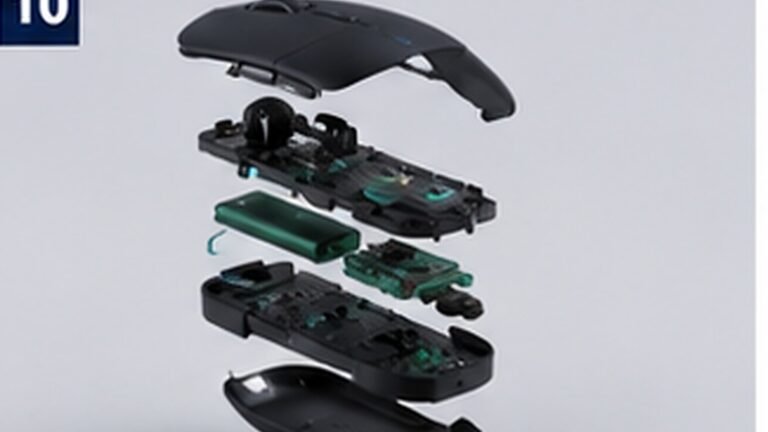
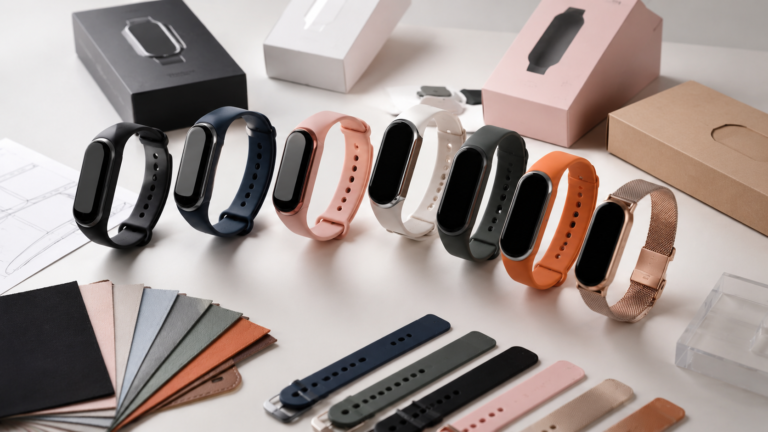
Image Placement Suggestion 1
Caption: Modular housings for smart bands private label EU 2026 projects.
Step 1: Confirm EU Regulatory Scope
Smart bands with Bluetooth or Wi-Fi fall under the EU Radio Equipment Directive (RED) 2014/53/EU, which also carries EMC and safety obligations. RoHS restricts hazardous substances. WEEE requires registration in each member state where the brand sells directly or places devices on the market, typically via an authorized representative or PRO (producer responsibility organization).
The General Product Safety Regulation (GPSR) adds EU responsible-person requirements for consumer products placed on the market. The importer is often the “economic operator” responsible for compliance documentation.
Buyers should not accept a blanket “CE certified” statement. Request a Declaration of Conformity tied to the exact model, radio module, and firmware version. If the radio module changes, the DoC should be revised.
Why this matters for private-label brands
A private-label brand’s brand name appears on the DoC and packaging. If a customs authority or market surveillance authority finds non-compliance, the brand—not the factory—is typically the first point of contact. This is why EU-focused private-label programs should budget for their own regulatory review even when the supplier claims CE.
Reference: EU Radio Equipment Directive 2014/53/EU and European Commission CE Marking guidance.
Step 2: Validate Battery Safety and Transport
Smart bands use small lithium-polymer or lithium-ion cells. For air freight, IATA requires a UN38.3 test summary and a Safety Data Sheet (MSDS). Many EU buyers also ask for IEC 62133 or an equivalent cell-level safety report. The battery model, capacity, and protection circuit should match the documentation.
Buyers should ask:
- Which cell supplier is used, and is the cell UN38.3 listed?
- Does the pack have over-charge, over-discharge, and short-circuit protection?
- Is the MSDS current and dated within the last 12 months?
Sea freight avoids some air restrictions but still requires proper classification. Lithium batteries shipped as standalone goods have stricter rules than those installed in equipment—clarify with the forwarder before booking.
Battery compliance at a glance
| Document | Purpose | Common Pitfall |
|---|---|---|
| UN38.3 Test Summary | Confirms transport safety testing for lithium cells | Expired or mismatched cell model |
| MSDS | Hazard communication for transport and storage | Generic MSDS not tied to SKU |
| IEC 62133 | Cell and pack safety for portable devices | Report covers a different cell |
| DoC | EU market conformity | Missing model or radio module info |
Step 3: Lock App, Firmware, and Data Paths
Most ODM smart bands ship with a supplier-branded app. A private-label brand needs its own app identity and, ideally, control over the firmware update path. Two scenarios exist:
- White-label app: Supplier provides app with buyer logo and colors. Fast, lower cost, limited differentiation.
- Custom app: Buyer develops or commissions its own app, with supplier SDK or API access. Higher investment, stronger brand control.
Under GDPR, EU buyers must map data flows: where health metrics and personal data are stored, which sub-processors are used, and whether data leaves the EU. Suppliers may require a Data Processing Agreement (DPA).
Firmware signing keys and update servers should be documented in the contract. If the supplier stops supporting the app, the brand must know whether devices can be updated independently.
Reference: Bluetooth SIG Qualification Listing for radio module qualification status.
Image Placement Suggestion 2
Caption: Mapping app data flows is essential for EU smart bands private label programs.
Step 4: Plan MOQ, Pricing, and Lead Time
MOQ depends on customization depth. A logo-print on an existing ODM band may carry an MOQ of a few hundred units; custom housing, strap tooling, or a new PCB increases MOQ significantly. Pricing is affected by sensor stack (heart rate only vs. SpO2 and ECG-capable hardware), display type (OLED vs. TFT), battery capacity, and packaging complexity.
Lead time typically includes tooling (if any), component procurement, SMT and assembly, app integration, testing, and inspection. Buyers should request a milestone schedule with dates for tooling sign-off, first article, mass production, and inspection. Never rely on a single “30-day” estimate.
MOQ and lead time drivers
| Customization | MOQ Pressure | Lead Time Impact |
|---|---|---|
| Logo + packaging only | Lowest | Minimal |
| Strap color/material | Low to medium | Small |
| Housing tooling | High | Significant |
| Custom PCB / sensor stack | Highest | High |
| Custom app | Not MOQ-driven | Development schedule dependent |
Step 5: Protect IP and Mould Ownership
Private-label brands investing in tooling should confirm, in writing, who owns the mould, mechanical drawings, packaging artwork, and firmware source. Without a mould ownership clause, a supplier may reuse the same tooling for other customers—often legally, depending on the contract.
Useful contract terms include:
- Mould ownership and transfer conditions.
- Non-disclosure and non-use of buyer designs for third parties.
- Exclusivity window for the buyer’s market or SKU.
- Access to firmware source or escrow for critical components.
IP ownership also affects certification and future change management. If the brand owns the design file, it can more easily switch suppliers without redesigning the device from scratch.
Step 6: Prepare Packaging and GS1 Data
EU retail packaging typically requires the importer’s name and address, CE marking, WEEE symbol, battery disposal instructions, and language variants for the target countries. GS1 barcodes (EAN/GTIN) should be assigned by the brand, not borrowed from the supplier.
Artwork approval is a common bottleneck. Buyers should request a digital proof and a physical pre-production sample before mass printing. Packaging compliance is part of market conformity, and errors can delay retail listing.
Step 7: Schedule Pre-Shipment Inspection
Pre-shipment inspection (PSI) uses sampling standards such as ISO 2859-1. Inspectors check appearance, function, battery charging, water resistance claims, packaging, and carton labeling. Aging tests, drop tests, and waterproof checks may be specified depending on the product’s stated IP rating.
PSI is most effective at roughly 80% production, when most units are finished but there is still time to correct issues. Buyers should define acceptable quality limits (AQL) in the purchase order.
Typical inspection focus for smart bands
- Sensor accuracy spot checks against a reference device.
- Charging and battery behavior under charge/discharge cycles.
- App pairing and firmware version verification.
- Strap strength and buckle durability.
- Package contents and language compliance.
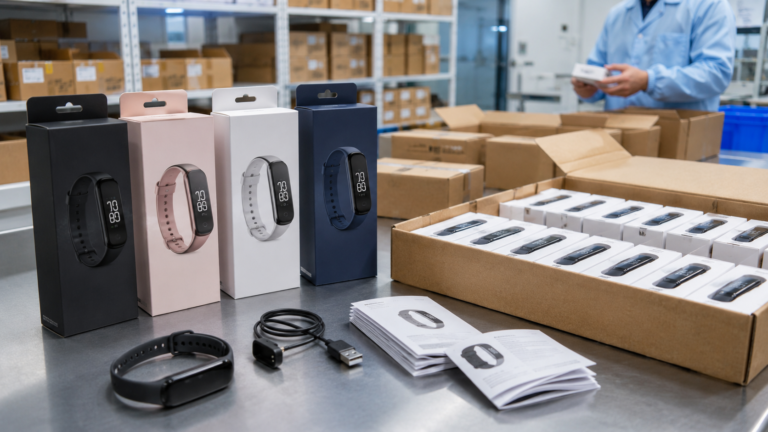
Image Placement Suggestion 3
Caption: Pre-shipment inspection for smart bands private label EU 2026 orders.
Common Mistakes and Buyer Red Flags
- Accepting a generic CE certificate that does not list the exact model or radio module.
- Ignoring app ownership: without firmware rights, the brand cannot update or fix devices.
- Underestimating packaging language requirements for multi-country EU distribution.
- Using the supplier’s GS1 barcode instead of the brand’s own GTIN.
- Skipping UN38.3 verification and discovering the problem at the freight forwarder.
- Assuming one battery spec fits all SKUs: different battery cells may require separate test summaries.
- No mould ownership clause, allowing the design to appear on competitor products.
- Verbal MOQ commitments that change after tooling has been paid.
Red flags: pressure to pay a deposit before providing samples; refusal to share DoC or test summaries; no named regulatory contact; vague answers on who owns app data; no written lead time schedule.
Practical Buyer Checklist
- [ ] Model-specific Declaration of Conformity for RED, RoHS, and relevant standards.
- [ ] UN38.3 test summary and current MSDS tied to the exact battery SKU.
- [ ] IEC 62133 or equivalent cell/pack safety report (if required by the channel).
- [ ] Written confirmation of app ownership, firmware update path, and data processing terms.
- [ ] MOQ, tooling cost, unit price tiers, and lead time milestones in writing.
- [ ] Mould ownership and IP clauses in the supply agreement.
- [ ] GS1 GTIN assigned by the brand and reflected in packaging artwork.
- [ ] Packaging language and WEEE/battery labeling approved for each target country.
- [ ] AQL and inspection plan agreed before production.
- [ ] Spare parts and warranty terms documented.
- [ ] Landed cost model including freight, duty, and compliance fees.
- [ ] Sample evaluation completed on final tooling, not a prototype.
For brands that want to compare private-label wearable platforms before committing to tooling, reviewing the Private Label OEM/ODM solution page can help frame the technical and commercial trade-offs.
FAQ
Q1: Is CE marking mandatory for smart bands sold in the EU?
Yes, for products within scope of RED, EMC, RoHS, and WEEE. The exact obligations depend on the product configuration and radio module. Buyers should verify the Declaration of Conformity and confirm the importer’s role as economic operator.
Q2: What is the typical MOQ for private-label smart bands?
MOQ varies widely with customization. Logo and packaging changes often start lower than full housing or PCB customization. Request a tiered MOQ schedule in writing before paying a deposit.
Q3: Can I use my own app with an ODM smart band?
Often yes, if the supplier provides an SDK or API. Otherwise, the supplier’s white-label app is used with your branding. Confirm ownership of firmware update keys and the data flow under GDPR.
Q4: What lithium battery documents do EU importers need?
Typically UN38.3 test summaries and MSDS for transport. Some channels also request IEC 62133 or equivalent battery safety reports. All documents should reference the exact battery used in the device.
Q5: How long does a smart band private label program take?
Timelines depend on tooling, component lead times, app integration, and testing. A logo-only program is faster than a custom housing and custom app program. Request a milestone schedule with dates.
Q6: Who owns the mould if I pay for tooling?
Ownership depends on the contract. Buyers should insist on a written mould ownership clause and define transfer conditions. Without it, the supplier may reuse the design.
Q7: What should I check in pre-shipment inspection?
Sensor function, charging behavior, firmware version, strap durability, package contents, labeling, and language compliance. Define AQL in the purchase order and inspect near 80% production completion.
Conclusion
Smart bands private label EU 2026 programs succeed when brands treat compliance, battery safety, app ownership, and IP as procurement prerequisites rather than afterthoughts. EU regulations place the importer in the compliance chain, so documentation should be model-specific and traceable to the exact battery and radio module. Buyers who confirm MOQ, lead times, and inspection plans in writing reduce the risk of costly surprises after tooling.
Request Samples and Compliance Documentation
To evaluate a smart band platform for your EU private-label program, request samples and confirm the certification scope for your target configurations.
Request samples and compliance documentation →
Related reading: Smart Bands product overview and STAR KING blog resources.
Discuss Your Smart Wearable OEM/ODM Project
Planning a smart ring, smart watch, smart band, AI glasses, AI translator, or AI voice mouse project? Contact STAR KING to discuss product positioning, sample testing, customization scope, certification requirements, lead time, and quotation details.

Team Star King

Scan WhatsApp QR code