
AI smart glasses suppliers: AI Smart Glasses for UK Wholesale: 7-Point OEM Buyer Checklist & 2026 Evaluation Guide
AI smart glasses suppliers buyers need a supplier evaluation process that checks product fit, OEM/ODM capability, compliance documents, quality control, pricing, lead time, and after-sales support before placing a bulk order.
Table of Contents
Table of Contents
AI Smart Glasses for UK Wholesale: 7-Point OEM Buyer Checklist & 2026 Evaluation Guide
Short Answer: When buying AI smart glasses for UK wholesale in 2026, importers should prioritize five factors: UK regulatory readiness (UKCA marking, UK Responsible Person, and lithium-battery rules), real-world performance of translation and voice features, OEM/ODM flexibility, verified MOQ and lead-time terms, and documented quality-control processes. Use the 7-point checklist below to compare suppliers before requesting samples.
AI smart glasses for UK wholesale are no longer a novelty category. UK importers, distributors, and Amazon sellers are actively evaluating them to fill gaps in corporate wellness, logistics, retail, and education channels. Yet the product’s cross-border nature — combining AI, Bluetooth, and lithium batteries — means evaluation must extend well beyond basic specs.
This guide is written for UK importers at the evaluation stage. It explains how to compare AI smart glasses for UK wholesale, what to verify before ordering samples, and where most first-time buyers make expensive assumptions. Each point maps to a concrete procurement action.
AI smart glasses suppliers: Table of Contents
- Why AI Smart Glasses Appeal to UK Importers in 2026
- What Are AI Smart Glasses? A Buyer-Focused Definition
- Key Facts for Buyers
- The 7-Point UK Buyer Checklist
- Comparison Table: Consumer AI Glasses vs. OEM/ODM Projects
- Common Mistakes and Red Flags
- Practical Buyer Checklist
- FAQ
- Conclusion
- Next Step: Request Samples & Quote

Key Takeaways
- UK regulatory fit is a gate, not a detail. Before specs, verify UKCA, UK Responsible Person, battery rules, and packaging obligations.
- Translation accuracy claims need testing. Request live demo units and test in real-world conditions — not just spec sheets.
- MOQ, tooling, and firmware ownership shape total cost. Clarify who owns custom firmware, molds, and app assets.
- Battery and heat behavior drive returns. Confirm UN 38.3 documentation and real-world runtime under continuous AI use.
- Sample validation is non-negotiable. Buy samples, test them, and only then discuss volume pricing.

Why AI Smart Glasses Appeal to UK Importers in 2026
The UK AI hardware market is maturing. Voice assistants, real-time translation, and AI note-taking have moved from experimental to practical. Three buyer segments are driving demand:
- Corporate procurement teams exploring accessible, hands-free tools for frontline staff and field workers.
- Retail and logistics operators needing hands-free scanning, translation, or remote assistance.
- Education technology and accessibility-focused distributors serving multilingual classrooms and workplaces.
These segments care less about consumer hype and more about reliability, service, and compliance. That is why evaluation-stage buyers should approach AI smart glasses for UK wholesale with the same rigor applied to any other imported electronic device.
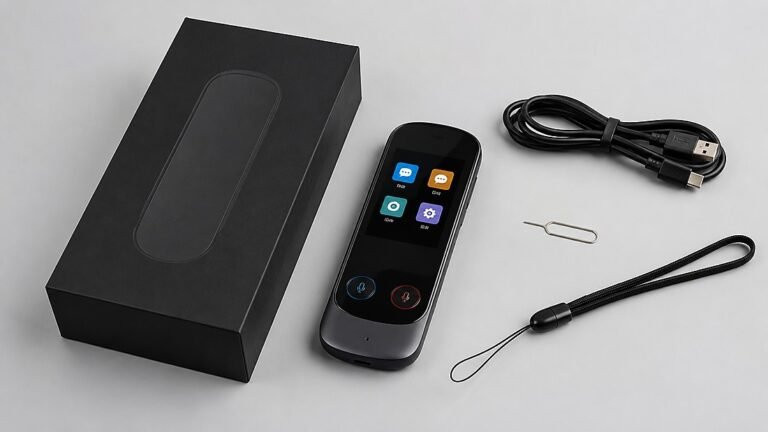
[Image suggestion 1: AI smart glasses product lineup with focus keyword in ALT — see image_seo_suggestions]

What Are AI Smart Glasses? A Buyer-Focused Definition
AI smart glasses are wearable devices that combine a compact display or audio interface with onboard AI processing, smartphone connectivity, or cloud services. Typical functions include real-time translation, voice assistant control, audio playback, and sometimes camera or heads-up display features.
For importers, the key distinction is not the feature list but the supply chain model: are you buying a finished consumer SKU, a semi-custom private-label version, or a fully customized OEM/ODM product? Each path has different MOQ, tooling investment, lead time, and firmware ownership implications. STAR KING supports private-label and OEM/ODM approaches for AI hardware; see AI smart glasses product page for baseline configurations.

Key Facts for Buyers
| Factor | What UK Importers Should Expect |
|---|---|
| Certification | Requirements typically depend on product configuration and target market. UKCA marking is generally expected for UK sale; CE may remain relevant for EU distribution. |
| Battery shipping | Lithium batteries usually require UN 38.3 test summaries and may require MSDS. Air freight rules vary by carrier. |
| MOQ | MOQ varies by customization level — logo-only may start lower than full ODM tooling. Confirm with supplier. |
| Lead time | Sample lead times and mass-production lead times should be confirmed in writing per project. |
| App/firmware | App availability, localization, and firmware update policy differ by supplier. Ask who owns custom code. |
| Translation | Real-time translation accuracy depends on language pair, network, and engine used. It is not guaranteed uniform. |
UK importers must also plan for: UK Product Safety and Metrology Regulation duties, the UK Responsible Person obligation for many electronic products, WEEE and packaging waste registration where applicable, and the UK’s General Product Safety Regulations. These obligations are not optional, and they are not fulfilled by the manufacturer alone. Buyers should verify current requirements with a UK compliance advisor and official sources such as GOV.UK’s UKCA guidance and GOV.UK’s placing goods on the market guidance.
The 7-Point UK Buyer Checklist
1. Confirm the UK Regulatory Path Before Specs
For AI smart glasses containing Bluetooth, lithium batteries, and radio transmitters, UK market placement generally requires UKCA marking in line with the relevant UK regulations. A UK Responsible Person may be required if the manufacturer is outside the UK. Buyers should verify whether the supplier can support UKCA-aligned documentation, and should not accept a generic CE declaration as a substitute for UK-specific paperwork.
Written verification to request:
- Draft UKCA declaration of conformity structure
- Radio Equipment Regulations test report references
- UK Responsible Person appointment template [STAR KING TO CONFIRM]
- Battery transport test summary (UN 38.3) and MSDS on file
2. Evaluate AI Translation Realistically
Real-time translation is the headline feature — and the most common source of post-launch complaints. Accuracy depends on language pair, ambient noise, network conditions, and whether the translation engine is on-device or cloud-based. UK importers should test in the environments their end users will actually operate in: buses, warehouses, classrooms, and client meetings.
Ask for:
- Which languages are supported and at what latency
- Whether translation works offline
- Whether the engine is proprietary, licensed, or a major cloud API
- Whether firmware updates can change language coverage
3. Compare Private Label, ODM, and Full OEM Paths
Not all customization is equal. UK importers commonly choose between:
- Private label: existing hardware with your logo, packaging, and app skin. Fastest to market, lowest MOQ.
- Light ODM: modified firmware and UI, limited cosmetic changes. Medium MOQ and lead time.
- Full OEM/ODM: custom industrial design, tooling, firmware, and app. Highest MOQ and tooling cost, longest lead time, strongest differentiation.
Firmware and app ownership must be agreed in writing. Buyers should clarify reorder terms, spare parts availability, and who retains source code and molds. For a walkthrough of customization tiers, see the Private Label OEM/ODM solution page.
4. Understand MOQ and Lead Time Drivers
MOQ and lead time are usually driven by tooling investment, component availability, custom packaging, and firmware scope. A logo-only order may ship in weeks; full ODM tooling may take months. Buyers should expect MOQ to shift based on colorways, display variants, firmware language packs, and packaging structure.
Practical questions to ask:
- What is the MOQ for logo-only, private label, and full ODM?
- What causes MOQ to increase (color variants, custom tooling, non-standard packaging)?
- What deposit is required, and what are the payment milestones?
- What is the stated lead time for samples and mass production, per configuration?
Buyers should treat MOQ and lead-time numbers as starting points and require per-project documentation.
5. Verify Quality Control and Testing Processes
AI smart glasses combine several failure-prone subsystems: hinges and frames, batteries, wireless radios, microphones, and lenses. Buyers should ask how each is tested at incoming, in-process, and final stages. A robust process typically includes:
- Component level: battery and radio module verification
- Assembly level: fit, finish, and lens alignment
- Functional level: pairing, translation, audio, and charging
- Reliability level: drop testing, aging testing, and waterproof testing where applicable
- Pre-shipment inspection (PSI) against an agreed AQL
Buyers can also engage third-party inspection providers. Buyers should verify the scope of any test reports they receive and not assume every product configuration shares the same results.
6. Plan for Lithium Battery and International Shipping Rules
AI smart glasses ship with lithium batteries, which trigger air-freight restrictions. UK importers should confirm:
- UN 38.3 test summary on file
- MSDS availability
- Battery capacity and Watt-hour rating
- Compliant packaging and labeling for transport
- Courier-specific restrictions for the destination
For passenger aircraft transport, lithium batteries generally fall under ICAO/IATA dangerous goods provisions; buyers should verify current rules with their freight forwarder and reference IATA’s Dangerous Goods Regulations.
7. Address Software, App, and After-Sales Support
Software determines post-sale satisfaction. Buyers should clarify:
- Which app stores the companion app is listed in, and whether it will be available in the UK
- Whether the app supports UK English and required languages
- Firmware update process and support window
- Warranty terms, spare-parts availability, and RMA process
- Technical documentation for retail or B2B resale
Buyers should also confirm whether the supplier offers an SDK or API for corporate and integration partners [STAR KING TO CONFIRM].
[Image suggestion 2: Close-up of AI smart glasses translation testing — see image_seo_suggestions]
Comparison Table: Consumer AI Glasses vs. OEM/ODM Projects
| Parameter | Finished Consumer SKU | Private Label | Light ODM | Full OEM/ODM |
|---|---|---|---|---|
| MOQ | Lowest | Low–medium | Medium | Highest |
| Branding | None | Logo + packaging | Logo + UI | Full custom |
| Firmware changes | No | Limited | Yes | Yes |
| App customization | No | Skin only | Partial | Full |
| Tooling investment | None | None | Low | High |
| Lead time | Fastest | Fast | Moderate | Longest |
| IP ownership | Supplier | Supplier | Negotiated | Buyer (negotiate) |
UK importers at the evaluation stage often start with private label to validate demand, then step up to ODM as volumes justify investment. That sequence reduces up-front risk while preserving a path to differentiation.
Soft CTA
If you are comparing configurations for a UK launch, our team can walk you through sample options and customization tiers based on your target channels. You can also review the remote health application page if hands-free devices fit your use case.
Common Mistakes and Red Flags
Mistakes UK Importers Commonly Make
- Skipping UK-specific compliance. Assuming CE equals UK readiness. UKCA and UK Responsible Person obligations may still apply.
- Buying on spec sheets alone. Translation latency and audio quality often differ from published specs.
- Assuming MOQ locks in at first quote. MOQ shifts with customization level.
- Ignoring battery shipping rules. UN 38.3 and MSDS documents are frequently requested at customs or by couriers.
- Not agreeing firmware and IP ownership. This becomes expensive later during product upgrades.
- Underestimating after-sales support. Firmware updates and spare parts affect returns and reviews.
Red Flags During Supplier Evaluation
- Unwillingness to provide a written UKCA-aligned declaration
- No UN 38.3 or MSDS documentation
- Refusal to share sample units before ordering volume
- Ambiguous answers about firmware updates or app ownership
- MOQ and lead time quoted verbally only
- No clear RMA or warranty terms
Practical Buyer Checklist
| Step | Action | Evidence to Request |
|---|---|---|
| 1 | Confirm UK regulatory path | UKCA declaration draft, UK Responsible Person plan |
| 2 | Test translation and audio | Sample units, test protocol |
| 3 | Choose customization path | Private label / ODM scope document |
| 4 | Lock MOQ, lead time, payment | Written quotation with milestones |
| 5 | Review QC and testing scope | Test reports, AQL plan, PSI checklist |
| 6 | Confirm battery shipping documents | UN 38.3 report, MSDS |
| 7 | Agree software and after-sales | App listing, firmware policy, warranty, RMA |
For a wider view of B2B wearables supply, see our buyer resources blog.
[Image suggestion 3: UK importer reviewing AI smart glasses sample — see image_seo_suggestions]
FAQ
1. What is the typical MOQ for AI smart glasses for UK wholesale?
MOQ depends on the customization path. Logo-only and private-label orders generally require smaller quantities than full ODM tooling. Ask for MOQ by configuration, and confirm it in writing before committing to tooling or packaging investment.
2. Do AI smart glasses need UKCA certification?
Products containing radio transmitters and placed on the GB market are typically subject to UKCA-related requirements, but the exact scope depends on the product configuration. Buyers should verify with a UK compliance advisor and request draft documentation from the supplier.
3. Can AI smart glasses ship by air?
Yes, but lithium batteries generally require UN 38.3 test summaries and may require MSDS documentation. Air-freight acceptance depends on battery capacity, packaging, and the carrier’s rules. Confirm with your freight forwarder.
4. How accurate is real-time translation?
Accuracy varies by language pair, network conditions, and the translation engine used. Buyers should test sample units in realistic environments rather than relying on published accuracy claims.
5. Can STAR KING customize firmware and the companion app?
Customization scope depends on the project tier and must be agreed in writing, including reorder terms and IP ownership. [STAR KING TO CONFIRM]
6. What should I check before placing a volume order?
Confirm: UK regulatory path, MOQ and lead time, sample test results, battery shipping documents, QC scope, app availability in the UK, warranty, and spare-parts support. Only then confirm volume pricing.
Conclusion
Buying AI smart glasses for UK wholesale in 2026 rewards preparation. The most efficient evaluators confirm compliance, test real-world performance, and lock MOQ, lead time, and software terms before placing volume orders. The 7-point checklist and comparison table above give importers a structured way to compare suppliers, reduce returns, and avoid rework later in the product lifecycle. Treat the process as a sequence: verify, sample, compare, then commit.
Next Step: Request Samples & Quote
If you are ready to move from evaluation to testing, request product samples and a configuration-specific quote. Our team can review target channels, languages, and packaging requirements to align sample units with your UK launch plan.
Request AI smart glasses samples and OEM/ODM pricing.
Discuss Your Smart Wearable OEM/ODM Project
Planning a smart ring, smart watch, smart band, AI glasses, AI translator, or AI voice mouse project? Contact STAR KING to discuss product positioning, sample testing, customization scope, certification requirements, lead time, and quotation details.

Team Star King

Scan WhatsApp QR code