AI Translator Suppliers for Southeast Asia: 10 Checks Distributors Must Run in 2026
AI Translator Suppliers for Southeast Asia: 10 Checks Distributors Must Run in 2026
Choosing among AI translator suppliers for Southeast Asia comes down to local language coverage, offline performance, battery transport rules, and app localization. This 2026 guide gives distributors ten verifiable checks across quotation, samples, certification files, and factory audit. Each step tells you what to request, what a good answer looks like, and what to reject.
Table of Contents
Table of Contents
Short Answer: How Should Distributors Evaluate AI Translator Suppliers?
Shortlist suppliers that give you, in writing: an exact offline language list, an app localization roadmap, a GSM-verified cellular band list, a battery report with the Wh rating, and documented update and warranty commitments. Then audit one actual production unit, not just a golden sample. In Southeast Asia’s multi-language markets, offline coverage and compliant batteries — not the demo’s speech speed — determine whether the product survives its first 12 months at retail.

Key Takeaways
- Demand the exact offline language list per SKU and test three local languages yourself; regional languages are what Southeast Asian buyers ask about first.
- Match cellular bands (GSM 900/1800, 3G 2100, LTE B1/B3/B5/B8) to your exact destination markets before you commit.
- Lithium batteries must be shipped as UN38.3-tested cells with an MSDS when required, because regulation depends on configuration and carrier.
- Evaluation units should come from the mass-production line — not a sample-only build — if you want an honest forecast of field returns.
- Treat the ODM app as a product: it needs local languages, local servers or clear data residency terms, and a documented update schedule.
- Price comes from MCU/NPU class, microphone count, onboard storage, connectivity, and tooling amortization — not from the marketing name.
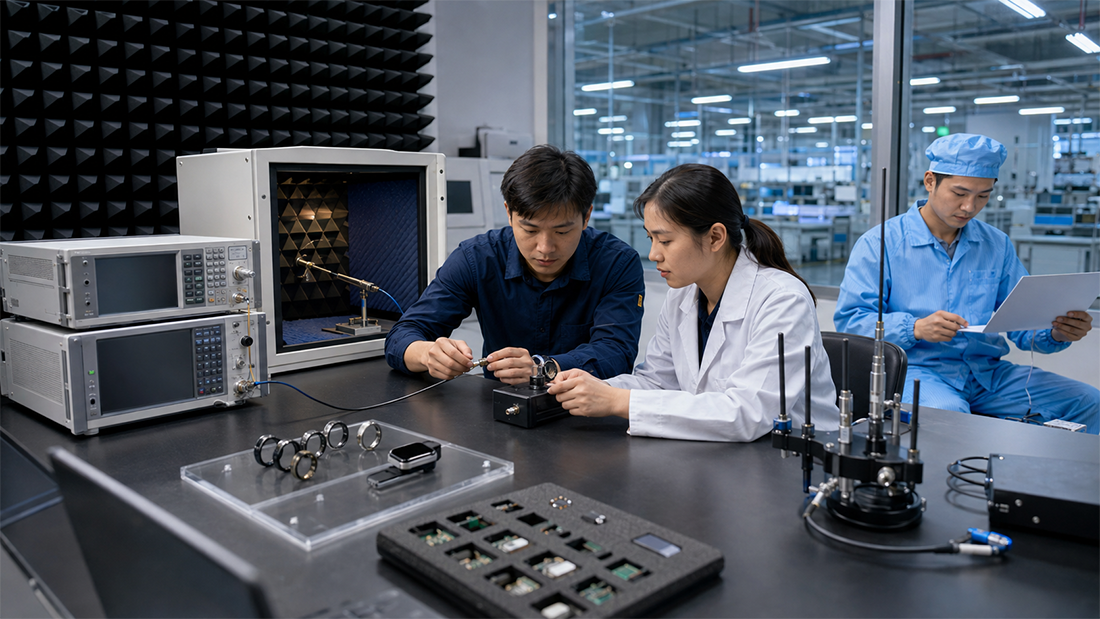
Table of Contents
- 1. What “Local Languages” Really Means
- 2. Offline vs Cloud Accuracy
- 3. Cellular Bands for Your Countries
- 4. Which AI Engine, Which License
- 5. Battery Rules for Air Freight
- 6. App Localization and Data Residency
- 7. MOQ, Tooling and Cost Drivers
- 8. Test Mass-Production Units
- 9. Launch and After-Sales Plan
- 10. Buyer Checklist, Mistakes and Red Flags
- Buyer FAQ
Key Facts for Buyers
| Item | Typical specification | Why it matters | How to verify |
|---|---|---|---|
| Offline language count | Varies by model; often 8–20 pairs [STAR KING TO CONFIRM] | Usable without Wi-Fi or SIM | Test 3 local languages on a sample before ordering |
| Cellular bands | GSM 900/1800; 3G 2100; LTE bands B1/B3/B5/B8 are common | Unsupported bands mean no service in some markets | Ask for the modem spec sheet and confirm against local carrier networks |
| Battery | Rechargeable lithium-ion cells | Air shipment rules apply | Request UN38.3 test summary and MSDS when required |
| App | iOS/Android companion app | Drives setup, updates and settings | Check the store listing date, version history and supported languages |
| Charging port | USB-C is now standard on most new models | Affects returns and cable BOM | Confirm on the datasheet, not the photo |
| Bluetooth | For audio or companion pairing | Affects headset and earbud use | Ask for the Bluetooth SIG listing where applicable |

What Is an AI Translator?
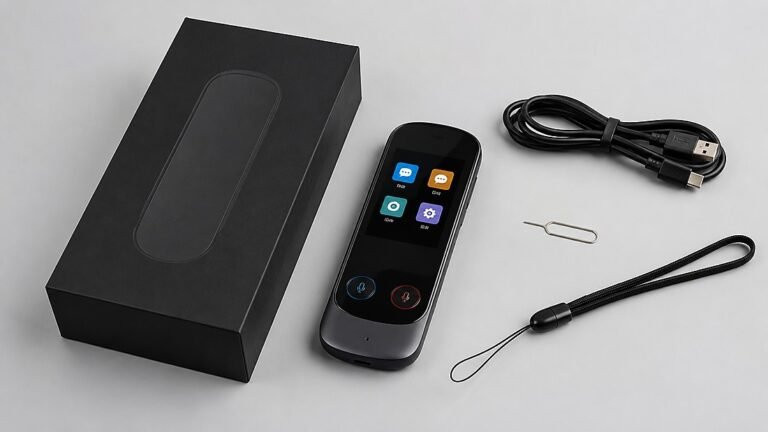
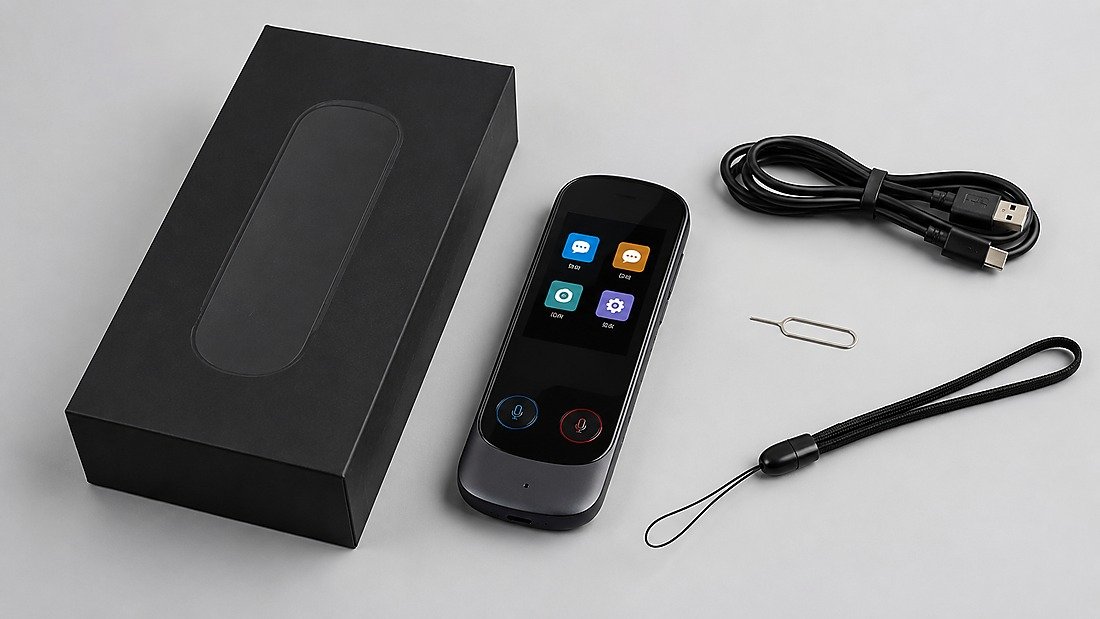
An AI translator is a handheld or wearable device that captures speech through one or more microphones, converts it to text, translates it using on-device or cloud AI models, and returns speech or text in the target language. Buyer-relevant categories are simple: offline-only devices (works without a network, limited language count), cloud devices (broader language coverage, requires connectivity), and hybrid devices that switch between the two depending on signal. For Southeast Asia, hybrid models usually fit best, but they are also the hardest to verify, because offline quality and cloud quality come from different pipelines.
1. What “Local Languages” Really Means
Ask for a written language matrix before you ask for a price. A matrix should show, for each SKU: supported languages, whether each pair works offline, online, or both, and the accuracy tier the supplier claims. Southeast Asian distributors should specifically test Thai, Vietnamese, Bahasa Indonesia and Malay first, because these are the languages buyers ask about at the counter. If the supplier cannot name the offline pairs in writing, the offline feature is probably a marketing line rather than a firmware capability.
Questions that separate real suppliers from trading desks
- “How many translation pairs are embedded on the device, and which ones?”
- “What happens to accuracy on long sentences or accented speech?”
- “Does switching between offline and cloud happen automatically, and can I disable the cloud?”
These three questions are cheap to ask and expensive to skip. If the answers are vague, request a sample and test before you sign anything. For a broader view of how regional buyers structure this evaluation, see our notes on remote and field deployment use cases where offline reliability matters most.
2. Offline vs Cloud Accuracy: Test Before You Promise
Offline engines and cloud engines are built on different model sizes and vocabulary. A device that performs well on a controlled demo may perform poorly in a noisy market, hotel lobby, or vehicle. Always test the same five sentences in your target languages across three environments: quiet room, street noise, and a call-style scenario with two speakers.
| Scenario | What to test | Pass criteria to set before the demo |
|---|---|---|
| Quiet room | Clean, full sentences | Correct translation of named entities and numbers |
| Market or street noise | Speaker distance 30–100 cm | Device captures the correct speaker without manual re-triggering |
| Turn-taking conversation | Two languages alternating | Latency acceptable to a real conversation (set your own threshold in seconds) |
| No network | Airplane mode | Offline pairs still function; no frozen UI |
Write your pass thresholds down before the sample arrives. Distributors who test against their own criteria — not the supplier’s demo script — catch problems earlier and negotiate from evidence. If your channel also sells wearable devices, the same discipline applies to health and fitness wearables you may bundle at retail.
If you want to compare how a specific ODM model behaves before you commit to a container, STAR KING can prepare a testing unit configured for your target languages so your team evaluates a realistic build — request product samples when you are ready to test rather than browse.
3. Cellular Bands for Your Countries
An AI translator with a SIM slot is only useful in the countries where its modem works. Southeast Asian markets differ: some still rely heavily on GSM and 3G coverage outside major cities, while urban networks are predominantly LTE. Before you order, download the carrier coverage maps for your country and cross-check the modem specification you were given.
- GSM 900/1800 — still relevant for fallback coverage in several regional markets.
- 3G 2100 — varies in importance by country and is being refarmed in some networks.
- LTE B1/B3/B5/B8 — commonly used bands across the region, but confirm per country.
Because network refarming changes, treat any band list as “verify before purchase.” Ask the supplier to state which countries the SKU was tested in, and confirm with local carriers where you can. For handsets and wearables, the same rule applies to the Bluetooth function — the Bluetooth SIG qualification listing is the public record to check.
4. Which AI Engine, Which License
Ask which translation and speech engines are used, whether the license permits your sales territories and volumes, and who pays for cloud translation minutes once the free tier ends. This is where some offers quietly become unprofitable: the hardware price looks attractive, but per-minute API costs or restricted territories are buried in the agreement.
Practical requests:
- Written list of engines and their licensing model (on-device, licensed SDK, or third-party cloud API).
- Whether the license covers your territories and your expected annual volumes.
- What happens if the upstream provider changes pricing or endpoints.
If the supplier cannot answer in writing, treat the AI stack as unverified. Consumer-grade health and translation features are not medical or legal services, and no supplier should imply otherwise; keep marketing claims aligned with what the device actually does.
5. Battery Rules for Air Freight
Portable translators contain lithium batteries, which places them under transport rules. Requirements typically depend on cell type, watt-hour rating, packaging, and mode of transport. For air freight, buyers should expect to request a UN38.3 test summary and, where applicable, an MSDS prepared to the current standard. See IATA’s Dangerous Goods Regulations for the framework and confirm with your freight forwarder for your lane.
Ask for:
- UN38.3 test summary for the exact cell and pack used in production.
- MSDS in the language and format your forwarder requires.
- Wh rating per device and per master carton, plus carton weight and dimensions.
- Documented packaging method for air transport.
This is also a landed-cost issue: battery paperwork affects which forwarders will quote, which affects your final cost per unit. Model it before you set retail pricing.
6. App Localization and Data Residency
Treat the companion app as part of the product. A translator whose app is English-only will frustrate Thai, Vietnamese, or Indonesian users on day one. Ask for the current app language list, the roadmap for adding languages, and the update history recorded on the public app stores.
Also raise data handling. Southeast Asian markets have differing privacy expectations, and some buyers need clear statements about where voice data is processed and stored. Ask whether cloud processing can be disabled, how long data is retained, and whether the supplier will sign a data processing addendum. Regional privacy frameworks are not identical; the Singapore PDPC and comparable national regulators publish guidance you can review. If your buyer is in the EU, EU data protection rules may apply as well. Verify with counsel for your markets and do not accept blanket claims of “fully compliant.”
7. MOQ, Tooling and Cost Drivers
MOQ and unit price should be quoted on a structure you can compare across three suppliers, not as a single number. Ask each candidate to quote the same five quantities and the same customization scope.
| Quantity | Typical implications | What to confirm |
|---|---|---|
| Sample (1–5 pcs) | Often sample pricing, no logo | Unit price, tooling amortization, delivery time |
| Pilot (100–500 pcs) | Logo or packaging change starts | MOQ threshold, setup fees, artwork deadlines |
| Container (1,000 pcs+) | Mass production and tooling spread across units | Payment terms, inspection rights, spare parts |
Cost drivers to compare line by line: MCU/NPU class, microphone count and quality, onboard translation memory size, connectivity options, display type, battery capacity, enclosure material, tooling ownership, and packaging. Where a supplier offers ODM software work, also confirm who owns the app code and firmware changes, and what happens to those assets if you switch suppliers. For buyers building a private-label program, our overview of private label and OEM/ODM support shows how these decisions fit together.
8. Test Mass-Production Units
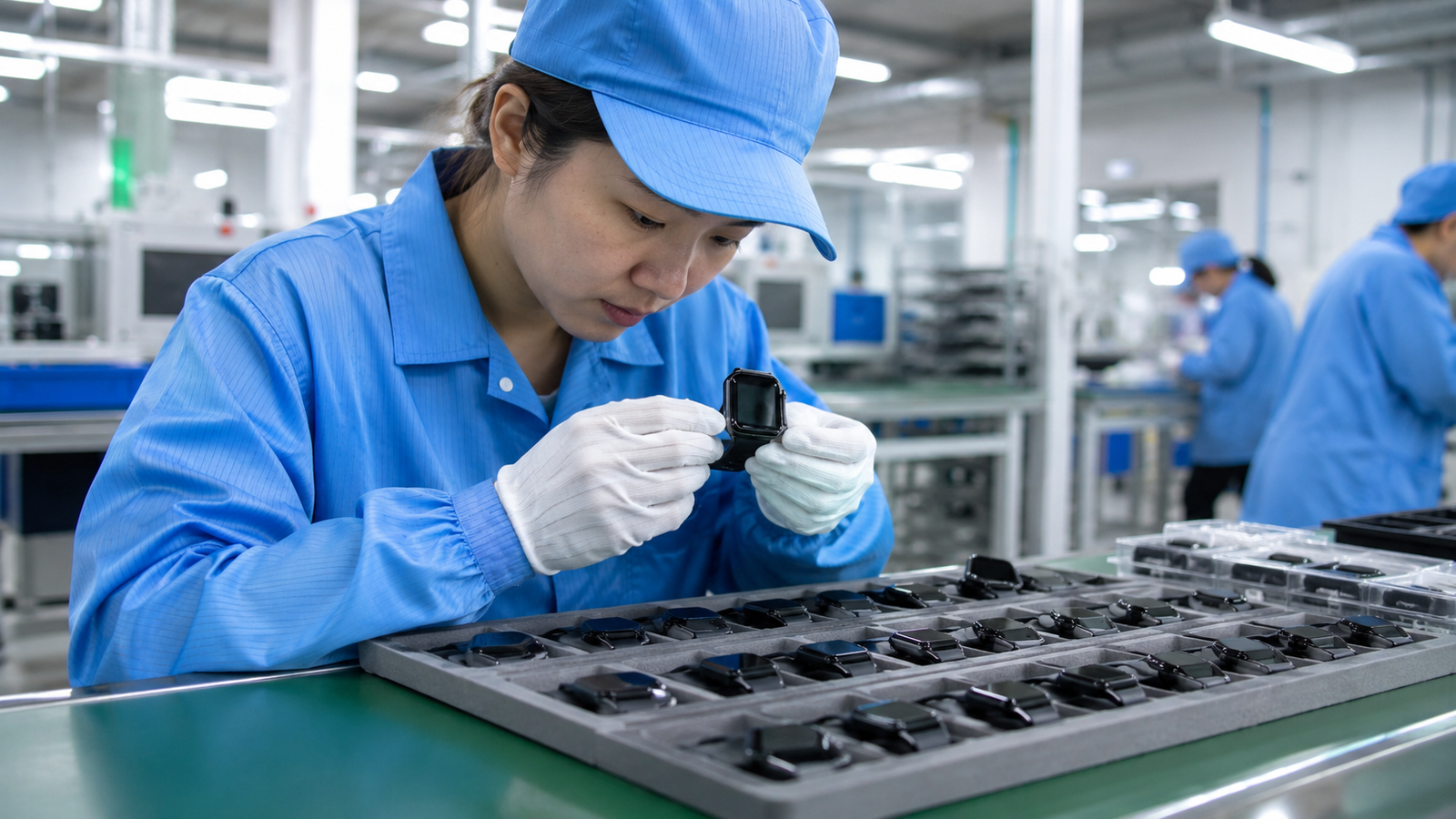
A golden sample and a production unit are not the same thing. Request that evaluation units be drawn from the actual production line, with the same firmware version that will ship. Then test beyond translation: charging cycle, heat during extended use, microphone consistency across several units, and the fit of buttons and ports.
Ask about the supplier’s production testing regime and request a pre-shipment inspection option with a defined AQL for your first order. That single step often prevents the most expensive category of problem — a container of units that pass a demo but fail in the field.
9. Launch and After-Sales Plan
Before you commit, ask four operational questions: what is the warranty period; what is the DOA policy; how are spare parts supplied; and who handles firmware updates and for how long. Get the answers in the purchase agreement, not in email.
- Warranty length and what it covers [STAR KING TO CONFIRM].
- DOA window and process for replacements.
- Spare parts availability and lead time.
- Firmware update schedule, supported versions, and end-of-support expectations.
Distributors who plan spare parts and updates at the contract stage protect their margin and their brand long after the launch campaign ends.
10. Buyer Checklist, Mistakes and Red Flags
Common Mistakes
- Choosing on demo fluency alone; ignoring offline coverage and local languages.
- Accepting a sample without a written language matrix or firmware version.
- Ignoring battery documentation until freight quotes arrive.
- Assuming an app will be localized later without a written roadmap.
- Comparing prices from suppliers who quoted different scopes.
Buyer Red Flags
- “Compliant with everything” with no documents shown.
- No willingness to state the AI engines or licensing model.
- No UN38.3 or battery documentation available on request.
- Samples that cannot be traced to a production line.
- Verbal warranty commitments not written into the agreement.
Practical Buyer Checklist: 10 Checks Before You Order
- Written offline and online language matrix for each SKU.
- Test results for at least three of your local languages on a real unit.
- Cellular band list matched to your country coverage.
- Named AI engines and licensing model in writing.
- UN38.3 test summary and MSDS where required.
- App language list, update history, and data-handling statement.
- Quotation structured by quantity and customization scope.
- Tooling and app ownership terms.
- Pre-shipment inspection scope and AQL.
- Warranty, DOA, spare parts and firmware support in the contract.
Buyer FAQ
How many offline languages should I expect in an AI translator for Southeast Asia?
It varies by model and price tier, and it is always worth asking in writing. Test the specific pairs your market needs on a physical sample. Don’t rely on catalog claims.
Do AI translators need UN38.3 certification to ship to Southeast Asia?
Any device with a lithium battery is likely to need UN38.3 test documentation for air transport. Exact requirements depend on the cell, the watt-hour rating, and the carrier, so confirm with your forwarder.
Can I sell an AI translator under my own brand?
Yes, subject to the supplier’s terms. Most suppliers offer logo, packaging, and app customization. Confirm the MOQ for logo and packaging changes, and who owns the tools and the app code, in writing.
How do you compare AI translator suppliers fairly?
Give each supplier the same quantity structure, the same customization scope, and the same question list. Compare on hardware, software, documentation, and after-sales. One number alone will mislead you.
Will an AI translator work without a SIM card or Wi-Fi?
Only if the device includes offline translation for the pair you need. Offline devices work without a network but support fewer languages. Hybrid devices switch between offline and cloud. Test both modes on a sample.
Who pays for cloud translation minutes?
That depends on the agreement. Ask whether there is a free tier, what happens beyond it, and whether the license covers your sales territories and volumes. Get the answer in writing.
Conclusion
Supplier selection in this category rewards distributors who test rather than trust. Use the ten checks in this guide as a screening sequence: first the language matrix and AI engine disclosure, then the battery and compliance documents, then a real unit tested against your own thresholds. That order catches the expensive problems — offline gaps, unsupported bands, hidden per-minute costs, and untraceable samples — before they reach your customers.
Next Step
STAR KING supports distributors with AI translator hardware and OEM/ODM options, from sample units configured for your languages to packaging and app localization discussions. To compare specifications, confirm what is available for your markets, or quote a pilot order, request a quotation or discuss your project and our team will work through the checklist with you.
Buyers can also review STAR KING AI Translators OEM/ODM options to compare product positioning, customization scope, and sample planning.
Discuss Your Smart Wearable OEM/ODM Project
Planning a smart ring, smart watch, smart band, AI glasses, AI translator, or AI voice mouse project? Contact STAR KING to discuss product positioning, sample testing, customization scope, certification requirements, lead time, and quotation details.

Team Star King

Scan WhatsApp QR code