
private label AI translators: 7 Critical Checks Before Private-Labeling AI Translators for Southeast Asia
October 16, 2026 · Team Star King
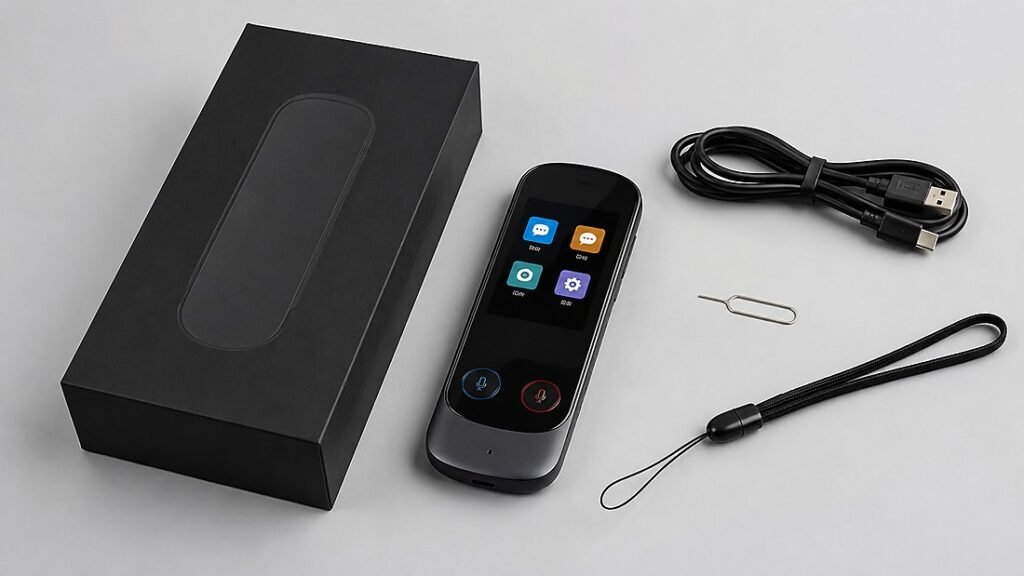
7 Critical Checks Before Private-Labeling AI Translators for Southeast Asia
Private label AI translators are handheld or wearable devices that capture speech in one language and output another, and the practical starting point for Southeast Asia is accuracy where Wi-Fi is weak: buyers should secure a credible supplier, confirm app and firmware control, verify radio and battery compliance, and plan logistics before committing a private-label order. The region is not one market — Indonesia, Thailand, Vietnam, the Philippines and Singapore each carry different language mixes, import procedures and connectivity realities — so a single English-first build rarely fits. This guide breaks the evaluation into seven checks that private-label brands can run before paying deposits, tooling or branding costs.
Table of Contents
Table of Contents
Table of Contents
- Short Answer: How Should a Private-Label Brand Start?
- Key Takeaways
- Key Facts for Buyers
- What Are Private Label AI Translators?
- 1. Confirm the Real Language and Accent Coverage
- 2. Decide How Much Control You Need Over App and Firmware
- 3. Check Radios and Compliance Against Each Country
- 4. Verify the Battery, Charging and Air-Shipment Position
- 5. Plan MOQ, Cost Drivers and Landed Cost
- 6. Test Samples and Inspection Before Tooling
- 7. Align Packaging, Branding and After-Sales
- Comparison Table: OEM vs ODM vs Full Private Label
- Common Mistakes and Buyer Red Flags
- Practical Buyer Checklist
- FAQ
- Conclusion
Short Answer: How Should a Private-Label Brand Start?
Start by defining your top three language pairs and where the device will be used — a device sold in Bangkok and Jakarta needs different accent handling and offline behavior than one used in a Singapore office. Then verify the supplier’s translation accuracy, app ownership terms, radio certifications and battery documentation. Only after those checks should you lock MOQ, packaging and tooling, because translation quality and certification scope are the two factors that are hardest and most expensive to change later.
Key Takeaways
- Southeast Asia rewards devices that work offline or on weak networks; cloud-only translation fails in rural tourism, field service and logistics routes.
- Language coverage claims should be tested with real accents and business vocabulary, not demo phrases.
- App and firmware ownership determine whether your private label remains distinctive or becomes a reskinned commodity.
- Radio and battery compliance is country-specific in ASEAN and typically depends on the final configuration.
- Air freight rules for lithium batteries are a schedule and cost risk that buyers should plan before launch season.
- MOQ, tooling and NRE usually decide the break-even point more than the unit price itself.
- Samples should be tested by end users, not only by the procurement team.
Key Facts for Buyers
| Item | Typical Position for AI Translators | What to Verify |
|---|---|---|
| Connectivity model | Hybrid offline plus online translation | Which languages work offline and which require a network |
| Platform | Android-based handheld devices | OS version, update path, security patches |
| App customization | UI skin, onboarding, brand assets | Scope of customization in writing |
| Radio compliance | Country-specific Wi-Fi/Bluetooth approvals | Whether certifications cover your exact SKU |
| Battery shipping | UN 38.3 documentation for lithium cells | Wh rating printed on the cell and package |
| MOQ | Varies by customization depth | MOQ by SKU, not by project |
| Lead time | Sample, tooling, mass production phases | Written schedule with penalties or buffers |
| Warranty | Standard 12 months is common | Spare parts and repair path |
What Are Private Label AI Translators?
Private label AI translators are AI translation devices manufactured by a supplier and sold under the buyer’s brand instead of the factory’s. The buyer controls the brand, packaging and often parts of the app experience, while the supplier owns the hardware platform, firmware baseline and industrial design unless the project is scoped as a full ODM development. For Southeast Asian brands, this model matters because the strongest differentiator is usually not the chipset but the localized language pack, the training content and the channel experience. A device sold to tour operators in Bali needs different language emphasis and packaging than one sold to customs brokers in Vietnam.
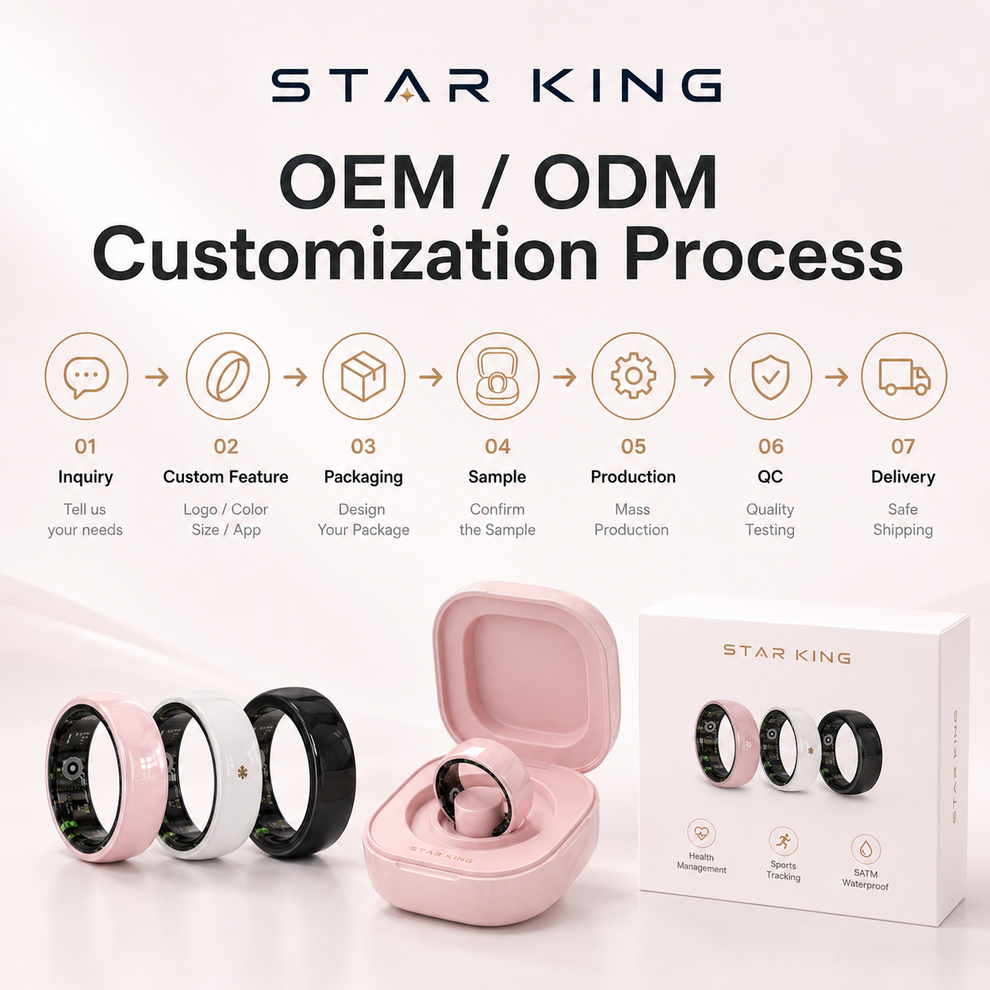
Buyers should distinguish three levels of involvement. At the lightest level, a private-label brand takes an existing AI translator and applies its logo and packaging. In the middle, the brand customizes the app interface, onboarding and language set. At the heaviest level, the project becomes an ODM engagement with custom industrial design, tooling and firmware features. Each level changes cost, risk and timeline, so the first decision is not which factory to choose but how deep the customization should go.
1. Confirm the Real Language and Accent Coverage
Marketing materials often list a large number of languages, but buyers should separate quantity from usable coverage. Ask the supplier to demonstrate translation between the specific pairs that matter for your market — for example Thai to English, Vietnamese to Mandarin, Indonesian to English, and Tagalog to Spanish. Then test accents: a device that handles formal broadcast speech may struggle with regional accents that appear in customer service, logistics or hospitality settings.
For a deeper explanation of translation concepts, buyers can review the general definition and scope of translation as background for evaluating claims. The procurement question is narrower: which pairs are handled on-device, which rely on a server, and how often language packs are updated. If your market includes older users, check whether the device supports slower speech and repetition, since senior-focused channels in Southeast Asia are growing. If those users are part of your roadmap, the requirements overlap with what buyers review on the senior health monitoring side of the portfolio.
What to ask about language coverage
- Which language pairs work offline, and what happens when the device has no network?
- How large is the offline language pack, and does it affect the bill of materials?
- Can you add a regional language pack for our market, and is there a development fee?
- How are firmware and language updates delivered — OTA, app store, or dealer tool?
2. Decide How Much Control You Need Over App and Firmware
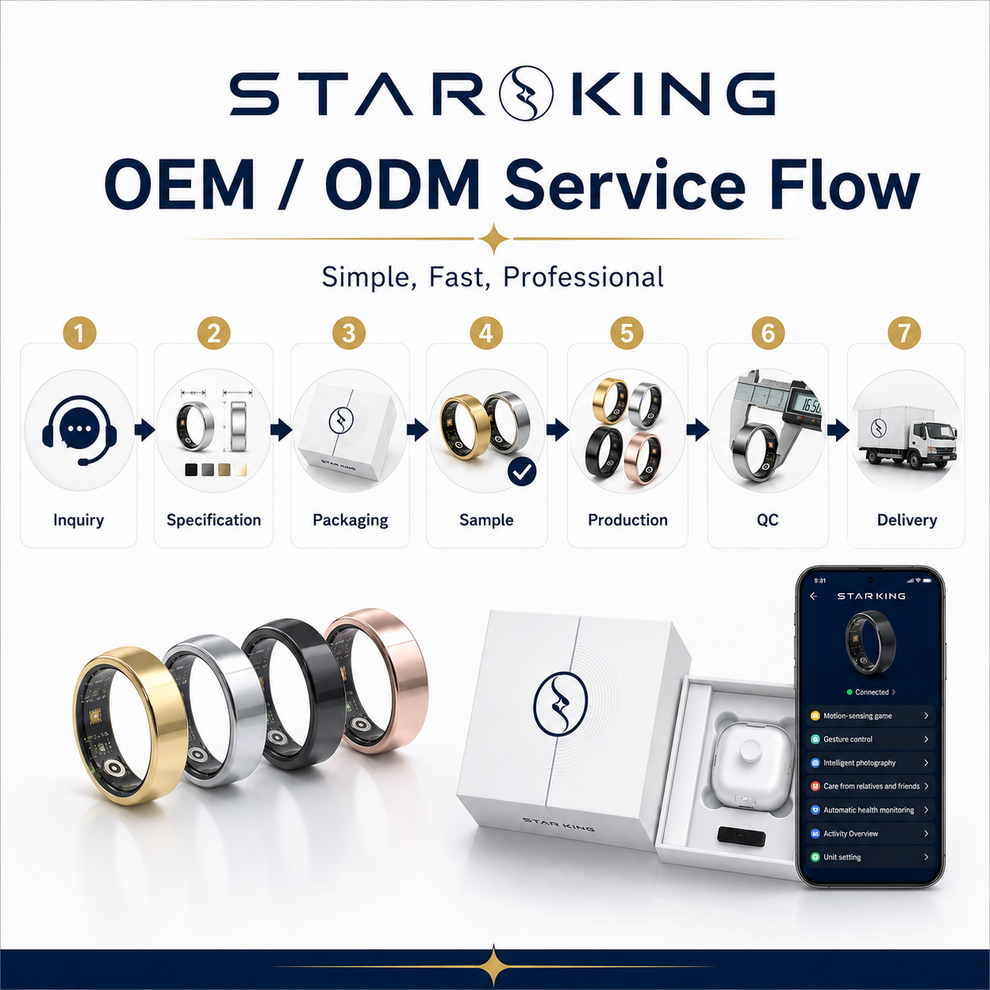
The app is where private-label brands create daily value and recurring engagement. A reskinned app with only a logo change is easy to source but hard to defend in the market. A customized app with brand onboarding, saved phrase books, industry glossaries and your own account system is harder to build but creates switching costs for users. Buyers should ask the supplier to document what is included in the app scope: splash screen and theme, login methods, cloud account ownership, analytics, update mechanism and data handling.
For buyers building broader device ecosystems, it helps to understand how companion apps and platforms are structured across product lines. The private label OEM/ODM solutions overview is a useful starting point because it explains the customization layers that typically apply to AI hardware as well as wearables. The key negotiation point is ownership: if the factory owns the app and the cloud account, the buyer may be locked into that supplier for every future update. A written agreement should state who owns the app binary, the cloud tenant, user data and the right to migrate.
App and firmware questions to settle in writing
- Is the app branded as ours on both Android and iOS store listings?
- Do we control the cloud account used for translation requests?
- Can the device work without a cloud account, and what functions stop if it cannot connect?
- What is the firmware update cadence, and who pays for major upgrades?
3. Check Radios and Compliance Against Each Country
Southeast Asia is not a single regulatory bloc. Wi-Fi and Bluetooth devices may require type approval or registration in individual countries, and the exact requirement typically depends on the radio module, output power and intended use. Buyers should request the FCC ID or equivalent test reports, confirm the radio module used, and then verify how that module is accepted in the destination market. A device approved in one jurisdiction is not automatically cleared for another.
For background on radio certification concepts, buyers can consult the FCC equipment authorization pages, which explain how radio devices are approved and why the approved configuration matters. In parallel, EU-facing channels may need to review the CE marking framework, because some Southeast Asian buyers sell into European markets later. The practical advice is simple: ask for certification status per SKU and per country, and treat any blanket claim that everything is certified as a reason to slow down and verify.
Compliance items to map before first shipment
- Radio type approval status for each target country.
- Electrical safety and EMC test reports for the charger and device.
- RoHS and REACH statements for the materials in the housing and cable.
- Documentation language and label requirements for the destination customs authority.
4. Verify the Battery, Charging and Air-Shipment Position
AI translators are battery-powered and therefore subject to lithium battery shipping rules. Buyers should ask the supplier for the UN 38.3 test summary, the watt-hour rating of the cell, and whether the product ships with a charger that meets local plug standards. For markets such as Indonesia and the Philippines, power reliability and plug type vary, so accessories may need to be planned per country. Battery safety documentation is also a procurement issue, not only a compliance one: a missing test summary can hold up a shipment at the forwarder.
Buyers should plan battery logistics before peak seasons. Air freight capacity tightens around major shopping events, and forwarders may refuse undeclared or poorly documented lithium batteries. If the device uses a removable or replaceable battery, the buyer should also confirm spare parts availability. A warranty program without battery spares becomes a customer service problem within the first year.
5. Plan MOQ, Cost Drivers and Landed Cost
MOQ for private label AI translators is rarely one number. It usually varies by customization layer: logo and packaging may have a lower minimum, a customized app a higher one, and tooling-based ODM projects the highest. Buyers should ask for an MOQ table that separates SKU minimum, color minimum, packaging minimum and tooling amortization. Unit price alone is a weak comparison metric because translation accuracy, memory, screen quality and battery capacity differ widely across suppliers.
Landed cost should include the unit price, packaging, freight, duties and taxes, forwarder fees, and the cost of spare units for warranty. For ASEAN markets, import duties and value-added tax rules differ by country and by product classification, so buyers should verify the applicable tariff and tax treatment with a customs broker in the destination country rather than relying on the supplier’s estimate. Certification costs and test samples also belong in the launch budget, because they are paid before the first sale.
Cost drivers that move the unit price most
- Offline language pack size and processor capability.
- Screen size, resolution and touch quality.
- Microphone array count and noise handling.
- Battery capacity and charging speed.
- App customization depth and cloud costs.
6. Test Samples and Inspection Before Tooling
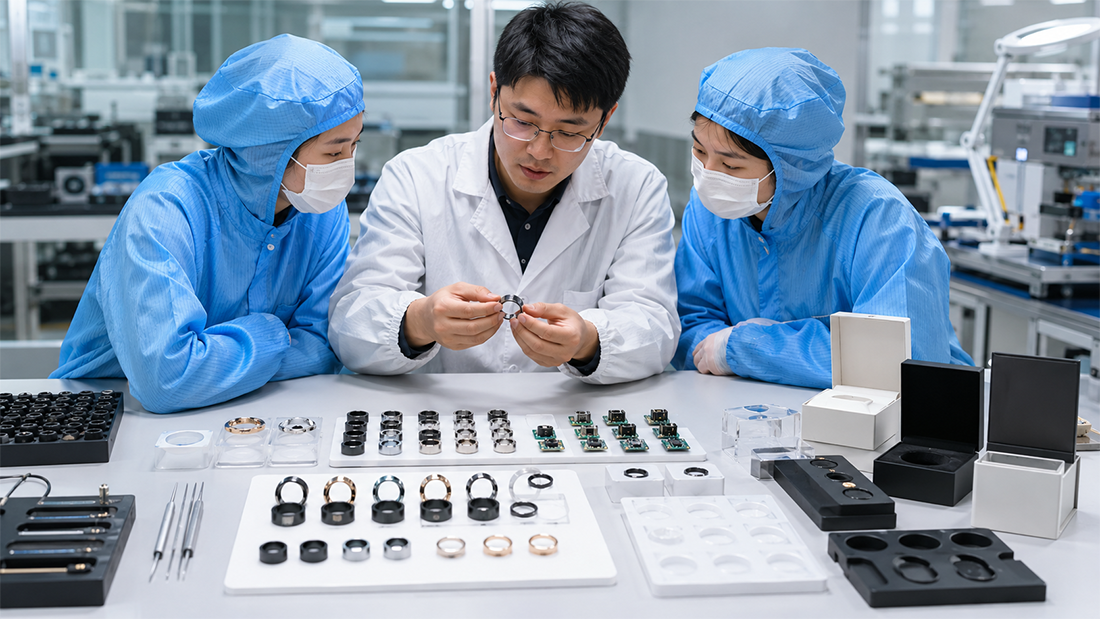
Sample testing is where the awareness stage turns into a real decision. Buyers should test translation quality in the field, not only in a meeting room: a noisy restaurant, a market, a warehouse and a vehicle all produce different results. It is also worth testing with the actual end users you expect — tour guides, nurses, customer service agents, engineers or students — because their vocabulary is the vocabulary the device must get right.
Before committing to tooling, buyers should agree on a pre-shipment inspection plan. Typical checks include appearance, function testing, battery charging cycles, drop and waterproof behavior where relevant, aging or burn-in testing, and packaging verification. Buyers can broaden their inspection thinking by reviewing the portfolio through STAR KING’s B2B resources and blog, where supplier evaluation and quality topics are explained for procurement teams. The commercial point is that inspection cost is small compared with the cost of a bad first batch.
7. Align Packaging, Branding and After-Sales
In Southeast Asia, retail packaging often does as much selling as the device. Packaging should be adapted for local languages, warranty terms, importer details and required marks. Buyers should also decide the after-sales path early: who receives returns, who repairs, where spare parts are stored, and how long repairs take. A private-label brand cannot rely on the factory’s brand reputation, so after-sales service must be defined and budgeted.
Include user documentation in the local language where the market expects it, and confirm whether the supplier provides translations or whether the buyer must commission them. For corporate buyers and education channels, consider how the device fits broader programs; the business and education solutions page shows how devices are positioned in institutional settings, which is relevant for tenders and procurement paperwork.
Comparison Table: OEM vs ODM vs Full Private Label
| Model | What the Buyer Controls | Typical MOQ | Best For | Main Risk |
|---|---|---|---|---|
| Logo and packaging only | Brand, packaging, basic bundle | Lowest | Fast market test | Low differentiation |
| App and firmware customization | App UI, language set, onboarding, cloud account | Medium | Brands building repeat usage | Ownership disputes |
| Full ODM development | Industrial design, tooling, firmware features | Highest | Brands with clear volume forecasts | Tooling cost and timeline |
Common Mistakes and Buyer Red Flags
- Choosing the supplier with the longest language list instead of the most accurate one for your pairs.
- Accepting verbal assurances about certification instead of per-SKU reports.
- Ignoring offline performance and assuming all users have reliable data.
- Letting the supplier own the app account, then losing access to user data and updates.
- Underestimating lithium battery shipping documentation before peak season.
- Comparing unit prices without normalizing memory, screen and battery specifications.
- Skipping field testing with real users in noisy environments.
Buyers should treat any claim that all products are certified for all markets, or that sample lead times are always a few days regardless of customization, as a reason to ask for documentation. Optimism is not a quality control process.
Practical Buyer Checklist
- Define your top three language pairs and use environments before contacting suppliers.
- Request a sample and test it with real users in noisy, low-connectivity settings.
- Confirm which languages work offline and how updates are delivered.
- Agree in writing who owns the app, cloud account and user data.
- Collect per-SKU certification and test reports for each target country.
- Obtain UN 38.3 documentation and confirm the battery Wh rating on the label.
- Build a landed cost model that includes duty, tax, freight and spare units.
- Agree on a pre-shipment inspection plan and acceptance criteria.
- Fix MOQ, tooling amortization and lead time in the purchase agreement.
- Define warranty, repair and spare parts responsibilities in writing.
Buyers can also review STAR KING AI Translators OEM/ODM options to compare product positioning, customization scope, and sample planning.
FAQ
How many languages should a private-label AI translator support for Southeast Asia?
Language count matters less than accuracy. Most brands start with three to five pairs that cover their main customer journeys, then expand based on sales data rather than promising dozens of languages at launch.
Can private label AI translators be customized with our own app?
Yes, but the scope should be defined in writing. Typical customization covers the app interface, onboarding, language selection and brand assets, while deeper changes to the translation engine usually depend on the platform provider.
What is the typical MOQ for AI translator private label projects?
MOQ varies by customization depth and color, and it also depends on whether new tooling is required. Buyers should request an MOQ table by SKU rather than a single figure. [STAR KING TO CONFIRM]
Do AI translators require certification in every Southeast Asian country?
Requirements typically depend on the radio module and the destination market, but in practice many ASEAN countries require some form of type approval or registration for wireless devices. Buyers should verify the exact procedure with a local importer or customs broker.
How should buyers handle lithium battery shipping for AI translators?
Ask for the UN 38.3 test summary and the battery watt-hour rating, and confirm with the forwarder whether the shipment is classed as a standalone battery or a device containing a battery. Rules and airline acceptance vary.
What warranty period is normal for private-label AI translators?
Twelve months is a common baseline, but the practical question is the repair path: who pays for shipping, how fast repairs are completed, and whether spare parts are stocked regionally.
How long does a private label AI translator project take?
Logo and packaging projects are fastest, app customization adds weeks, and ODM development with tooling takes the longest. Buyers should ask for a phased schedule covering sample, validation, tooling and mass production. [STAR KING TO CONFIRM]
Conclusion
For private-label brands entering Southeast Asia, the AI translator category rewards preparation over speed. The seven checks above — language accuracy, app control, radio compliance, battery logistics, MOQ and landed cost, sample testing, and after-sales planning — are the points where budgets are won or lost. A supplier that can document each of them is usually a better long-term partner than one that offers the longest language list or the lowest headline price. Buyers who define their language pairs, test with real users and settle ownership terms in writing will launch with fewer surprises and a clearer path to repeat orders.
Next Step
If you are evaluating private label AI translators for Southeast Asia, start with a sample and a requirements sheet rather than a price list. Request AI translator samples and confirm customization options to compare translation performance, app scope and certification status for your target markets.
Discuss Your Smart Wearable OEM/ODM Project
Planning a smart ring, smart watch, smart band, AI glasses, AI translator, or AI voice mouse project? Contact STAR KING to discuss product positioning, sample testing, customization scope, certification requirements, lead time, and quotation details.

Team Star King

Scan WhatsApp QR code
Leave a Reply