
AI voice mouse sourcing: 7 Critical Checks When Sourcing AI Voice Mice From China for Middle East Distribution in 2026
October 17, 2026 · Team Star King
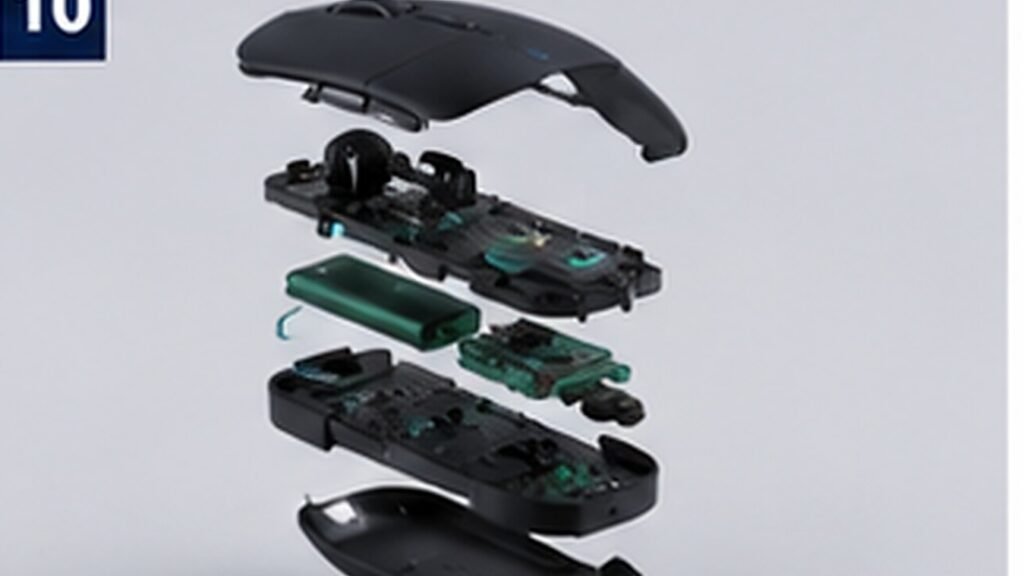
7 Critical Checks When Sourcing AI Voice Mice From China for Middle East Distribution in 2026
AI voice mouse sourcing for Middle East distribution requires verifying Arabic voice coverage, regional certification, and stable firmware support before committing to bulk orders. This guide breaks down seven checks importers should run during supplier evaluation: voice and language scope, device architecture, compliance for GCC markets, MOQ and pricing logic, sample validation, quality control, and packaging/branding for Arabic retail channels. Use the tables, buyer checklist, and FAQ to compare suppliers — not just product specs.
Table of Contents
Table of Contents
Product pages that look identical online often hide very different BOM choices, firmware stacks, and documentation capability. For importers who plan to distribute across the GCC, Levant, or wider MENA region, that hidden layer decides whether a voice mouse becomes a repeat SKU or a warranty headache. STAR KING is one of several China-based AI hardware suppliers offering OEM/ODM and private label for AI input devices; the checks below are written so you can evaluate STAR KING objectively against alternatives.
AI voice mouse sourcing: Table of Contents
- Direct Answer: What Makes a Good AI Voice Mouse Supplier?
- Key Takeaways
- Key Facts for Buyers
- Check 1: Arabic and Multilingual Voice Coverage
- Check 2: Device Architecture and Connectivity
- Check 3: Compliance for GCC and MENA Markets
- Check 4: MOQ, Pricing, and Landed Cost Logic
- Check 5: Sample Testing and Validation Plan
- Check 6: Quality Control and Firmware Stability
- Check 7: Packaging, Branding, and Retail Readiness
- Common Mistakes and Buyer Red Flags
- Practical Buyer Checklist
- FAQ
- Conclusion
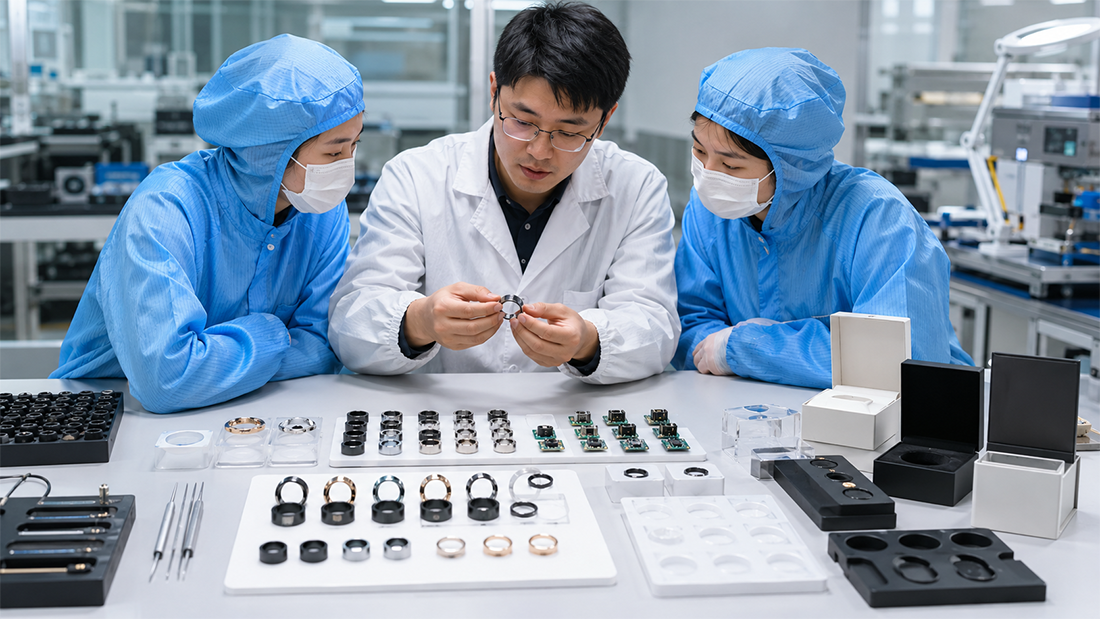
Direct Answer: What Makes a Good AI Voice Mouse Supplier?
A reliable AI voice mouse supplier must offer documented Arabic and English voice coverage, a predictable device architecture (dongle, Bluetooth, or USB-C), verifiable certification for your GCC target countries, transparent MOQ tiers, and a sample program that lets you test voice accuracy before placing a bulk order. Anything less shifts latent risk onto your distribution business.
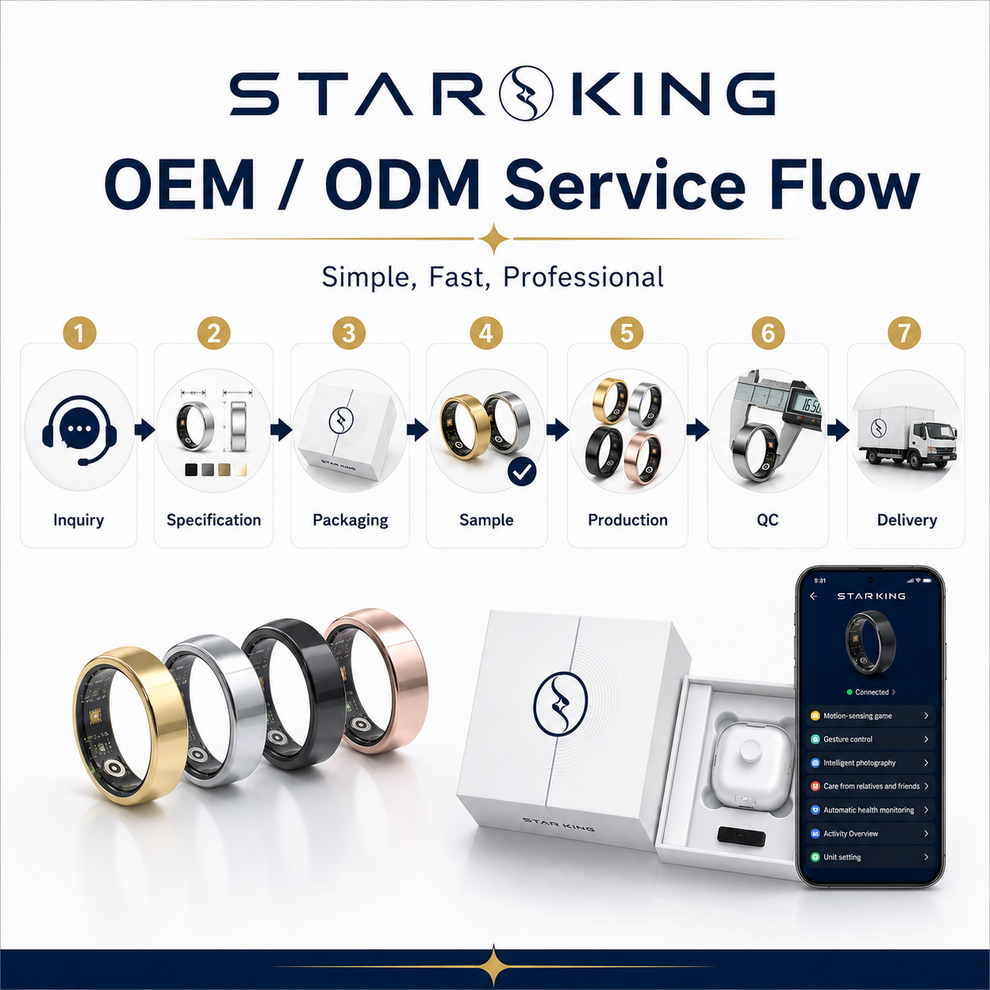
Key Takeaways
- Arabic dialect coverage is the single biggest differentiator between suppliers, and it is rarely visible from an English datasheet.
- Certification for Middle East distribution typically depends on the destination country; SASO, G-Mark, and similar schemes may apply alongside CE/FCC/RoHS for other markets.
- MOQ, per-unit price, and lead time are negotiation levers, but firmware stability and language model quality are not — they must be verified, not negotiated.
- Sample testing should be planned as a structured project with a fixed scoring sheet, not a casual demo.
- Private label packaging for Arabic retail should be planned before tooling, because booklet size and regional text affect carton dimensions.
- Firmware and app support over 18–24 months matters more than launch-day features for a distribution SKU.
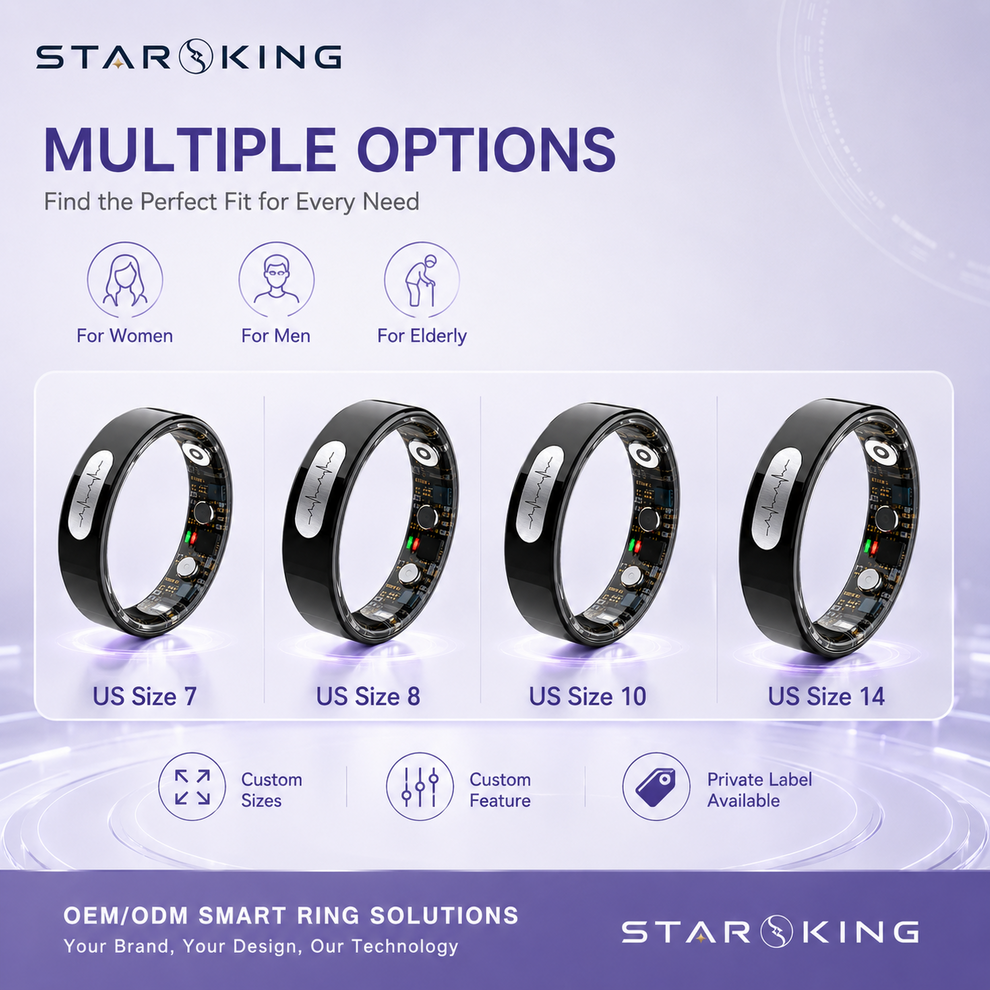
Key Facts for Buyers
| Factor | Typical Range or Consideration | Buyer Action |
|---|---|---|
| Languages supported | Often 20–200+ languages depending on model and engine | Demand a written language list and test Arabic specifically |
| Connectivity | 2.4GHz dongle, Bluetooth 5.x, USB-C wired, sometimes dual-mode | Confirm OS compatibility: Windows, macOS, Android, iOS |
| Battery | Typically 300–800mAh depending on form factor | Verify UN38.3 documentation for lithium cells |
| MOQ | Typically 500–3,000 pcs for OEM/ODM projects | Confirm whether MOQ applies per SKU or per order |
| Compliance | CE, FCC, RoHS may apply; SASO/G-Mark typically depends on destination | Verify country-specific schemes before quoting your retail partners |
| Lead time | Commonly 15–45 days after deposit and sample approval | Plan with buffer for firmware updates and packaging proofs |
| Warranty | Usually 12 months, sometimes negotiable | Agree on RMA terms and spare parts in the PO |
| Tooling ownership | Custom tooling or mold often requires separate agreement | Clarify IP and mold ownership in writing |
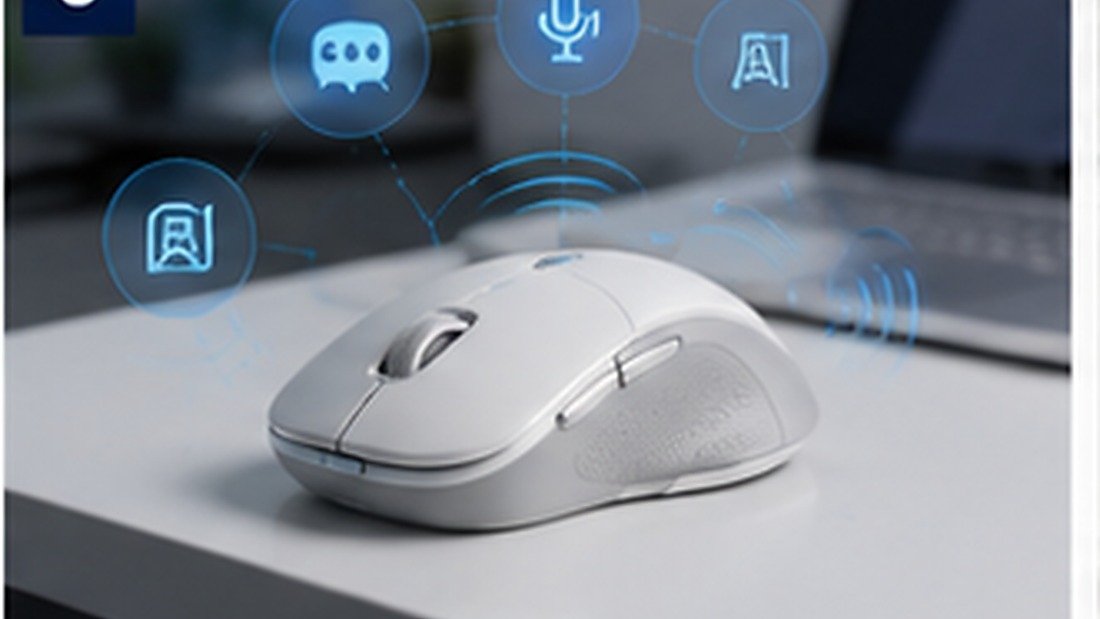
Check 1: Arabic and Multilingual Voice Coverage
Why Arabic matters more than the language count
Marketers often list “100+ languages supported” as a headline. For a Middle East importer, that number is mostly noise. What matters is the practical accuracy on Modern Standard Arabic (MSA), Gulf dialects, and Egyptian Arabic — three very different recognition and transcription challenges. Some engines perform well on MSA and degrade sharply on Gulf pronunciation; others are tuned for Levantine speech.
When evaluating, ask the supplier for:
- A written list of supported languages and dialects
- A recorded demo on Arabic voice input, typed into Word, email, or a browser field
- Whether translation (Arabic ↔ English) is offline or cloud-based
- Latency expectations and whether they change on slower networks
Cloud vs. on-device processing
Cloud speech processing often gives higher accuracy but introduces privacy, latency, and network dependency questions. On-device processing is more predictable in low-connectivity environments but can be more limited in dialect coverage. For enterprise deployments in Middle East offices or government-adjacent buyers, system integrators should ask explicitly which mode is used by default and whether it can be configured.
Check 2: Device Architecture and Connectivity
AI voice mice are not one product category. They split into at least four visible architectures, each with different implications for distribution:
| Architecture | What It Means for Buyers | Risk Profile |
|---|---|---|
| USB dongle only | Plug-and-play, minimal setup | Lower compatibility risk, but no Bluetooth flexibility |
| Bluetooth only | Cleaner for laptops with limited ports | Pairing and OS quirks vary; more support tickets |
| Dual mode (dongle + Bluetooth) | Broadest use case | Higher BOM cost, slightly higher unit price |
| Wired USB-C | Enterprise and kiosk deployments | Occasionally required by IT departments |
For an importer selling into mixed Windows and macOS office environments, dual-mode is usually the safest default. For kiosk, banking, and public-sector deployments, wired USB-C sometimes wins because IT teams can standardize drivers. Confirm the operating system matrix in writing, including Windows 10/11, macOS versions, Android, and iOS if tablets are in scope.
Check 3: Compliance for GCC and MENA Markets
Compliance is where Middle East distribution diverges most sharply from other regions. CE and FCC are widely recognized, but they are not always sufficient for GCC countries. Depending on the destination, buyers may also need to consider:
- SASO (Saudi Arabia) and related technical regulations
- G-Mark for Gulf Cooperation Council markets
- Country-specific telecom or customs clearance documentation
- UN38.3 for lithium batteries, plus MSDS for shipment
These requirements typically depend on the exact product configuration — whether the device includes a lithium cell, Bluetooth radio, or microphone array — and on which retailer or marketplace you sell through. You should verify country-specific rules with your importer of record or a local regulatory consultant before quoting your distribution channels.
Two credible references to share with your compliance team:
- FCC Office of Engineering and Technology — radio frequency device authorization
- International Electrotechnical Commission
Check 4: MOQ, Pricing, and Landed Cost Logic
MOQ is often the first question and the last thing actually negotiated. The structure matters more than the number:
- Per SKU vs. per order MOQ. A 1,000-pc MOQ across one model is very different from 1,000 pcs spread across four colors and two connectivity modes.
- Color and packaging MOQ. Custom retail boxes and Arabic booklets often carry their own minimums.
- Unit price vs. landed cost. Unit price is only part of the equation once you add freight, duties, inspection, and insurance.
Typical price influences
| Cost Driver | Direction of Impact | Question to Ask |
|---|---|---|
| Voice engine license | Higher per unit | Is the engine on-device or cloud, and who pays the license? |
| Dual-mode vs. single-mode | Higher BOM | What is the unit delta for adding Bluetooth? |
| Custom color | Setup + per unit | MOQ per color? |
| Retail packaging | One-time + per unit | Who owns the artwork files and tooling? |
| Branded app | One-time development | Is the app custom or white-label? |
Landed cost in Gulf markets
Landed cost for Middle East distribution should include product cost, freight (air vs. sea), customs duties, VAT/GST at destination, importer-of-record fees, inspection costs, and a warranty reserve. Many first-time buyers under-provision the warranty reserve; for AI-hardware SKUs with firmware, that reserve can absorb a meaningful share of margin if return rates run above expectation.
If you are still comparing product categories, a quick look at how STAR KING approaches private-label programs across AI hardware can help you frame the conversation before you finalize the SKU mix. See Private Label OEM/ODM solutions.
Check 5: Sample Testing and Validation Plan
Samples are not just for touching the product. They are the cheapest way to reduce bulk-order risk. A structured sample plan typically includes:
- One unit for voice accuracy testing in Arabic and English
- One unit for OS compatibility testing across your target laptops and phones
- One unit for battery and thermal behavior under continuous use
- One unit reserved as the golden reference for pre-shipment inspection
How to score a sample
| Test Area | What to Measure | Pass/Fail Threshold (example) |
|---|---|---|
| Arabic voice dictation | Word error rate on 20 fixed sentences | < 15% on MSA |
| English dictation | Word error rate on 20 fixed sentences | < 10% |
| Pairing stability | Reconnect attempts over 8 hours | Zero manual re-pairs expected |
| Battery life | Hours per charge in typical use | Match datasheet within 15% |
| Translation latency | Seconds between speech and output | Acceptable for live meetings |
| Fit and finish | Click feel, coating, cable quality | Meets retail expectations |
Set thresholds before the samples arrive; otherwise expectations drift, and you lose the ability to compare suppliers objectively.
Check 6: Quality Control and Firmware Stability
Quality control for AI hardware is not just a cosmetic inspection. It includes firmware burn-in, radio-frequency checks, and voice-accuracy sampling. Buyers should ask what the supplier’s standard flow looks like, and whether it matches the criteria you care about:
- Incoming component inspection (sensors, microphones, lithium cells)
- In-line assembly checks
- Firmware version verification and upgrade path
- Aging test for a defined duration per batch
- Pre-shipment inspection with a documented AQL plan
- Battery safety testing and UN38.3 documentation for shipments
Firmware support window
Firmware and app updates over the first 18–24 months determine whether your distribution business spends its time selling or supporting returns. Ask explicitly:
- Who maintains the firmware after launch? The supplier, a third party, or your team?
- How are critical bugs patched, and on what SLA?
- If a cloud service is involved, what is the service-availability commitment?
Suppliers who cannot describe this in writing should be treated as higher-risk, even if their unit price is attractive.
Check 7: Packaging, Branding, and Retail Readiness for Middle East Channels
Retail readiness in Gulf markets usually demands more than a generic English box. Practical items to plan early:
- Arabic and English bilingual booklet and box text
- Right-to-left layout in user documentation
- Regional voltage and plug guidance if a charger is included
- Barcode and compliance labeling that matches your target retailer’s requirements
- Carton dimensions that fit pallet plans for your freight format
Custom retail packaging is a project, not a checkbox. Artwork, print proofs, and physical pre-production samples typically add lead time. Plan the packaging timeline alongside tooling and firmware freeze, not after them. If you are also evaluating broader AI input hardware, browsing AI Voice Mouse product options alongside your packaging plan keeps the project on one timeline.
Common Mistakes and Buyer Red Flags
Common mistakes
- Choosing on language count rather than tested Arabic accuracy
- Treating CE/FCC as automatically sufficient for GCC markets without country-level checks
- Negotiating MOQ before confirming whether the SKU passes your sample scoring sheet
- Skipping UN38.3 and MSDS preparation until the freight forwarder asks
- Designing retail packaging after the product is finalized, then missing the launch window
- Assuming launch-day performance predicts month-12 performance; firmware support is the difference
Buyer red flags
- Supplier refuses to provide a written language list or demo recording
- Certificates shown do not include any model number or configuration
- MOQ quoted as a single number without per-SKU or per-color clarification
- No documented firmware upgrade path or named owner
- No willingness to sign an NDA before discussing private label
- Unwillingness to disclose tooling ownership terms in writing
Practical Buyer Checklist
- Written language list, with Arabic dialects specified
- Demo recording of Arabic and English voice input
- OS compatibility matrix in writing
- Certification documentation matching the exact configuration
- Country-specific compliance plan for each GCC market you will sell into
- MOQ breakdown per SKU, per color, and per packaging
- Indicative lead time with buffer for firmware and packaging proofs
- Sample units for voice, pairing, battery, and golden-reference testing
- Firmware owner and update commitment for 18–24 months
- Packaging and booklet plan with bilingual Arabic/English content
- UN38.3 and MSDS documentation available for the exact battery configuration
- Documented warranty terms, RMA process, and spare-parts path
- Written agreement on IP and mold ownership, if custom tooling is involved
FAQ
What is a typical MOQ for AI voice mouse sourcing?
OEM/ODM projects commonly start between 500 and 3,000 pcs, and MOQ may apply per SKU or per color. White-label or ready-branded SKUs sometimes carry lower minimums. Confirm whether packaging has its own MOQ.
How do I verify Arabic language quality before a bulk order?
Request a written language list and a recorded demo using fixed Arabic sentences, including Gulf and MSA samples. Score the samples against a threshold defined before testing so suppliers can be compared objectively.
Which certifications should I ask for Middle East distribution?
CE, FCC, and RoHS are commonly referenced, but GCC markets may require SASO, G-Mark, or country-level documentation depending on the destination. Requirements typically depend on the exact configuration and the sales channel; verify with your importer of record.
How long is a typical lead time for AI voice mouse production?
Common ranges are 15–45 days after deposit and sample approval. First orders with custom packaging, custom color, or firmware changes usually sit at the upper end of that range. Plan buffer for packaging proofs.
Can I get a private label version with my brand and packaging?
Yes, this is one of the more common requests. Logo, color, packaging, and app branding are typically available, with timeline impact depending on whether the app is white-label or custom-built. Tooling and artwork ownership should be written into the agreement.
What documentation is needed for shipping lithium-battery devices?
UN38.3 test reports and MSDS are commonly requested, along with correct packaging marks. Confirm documentation against the exact battery used in your SKU — battery configuration changes can invalidate prior reports.
How do I compare two AI voice mouse suppliers fairly?
Use the same scoring sheet for both: identical Arabic and English test sentences, the same OS matrix, the same battery test conditions, and the same documentation checklist. Score, don’t improvise.
Conclusion
AI voice mouse sourcing for Middle East distribution is ultimately a documentation and verification exercise. Suppliers that look similar on a product page can behave very differently when you test Arabic accuracy, request compliance documents for a specific GCC market, and ask who owns the firmware for the next two years. Importers who run these seven checks early usually avoid the most expensive category of problems: returns, refusals at customs, and quietly cancelled distribution contracts. The evaluation framework above is designed to be used at the shortlist stage, before deposits and tooling commitments.
Next Step with STAR KING
If you are at the evaluation stage, the fastest way to move forward is to confirm your target countries, volume range, and language requirements in one message. Then request sample units to run your own Arabic and English testing, and discuss OEM/ODM or private label options for packaging, color, and app branding. Start with sample units through Request samples or review the AI Voice Mouse product page for baseline specifications before the conversation.
Discuss Your Smart Wearable OEM/ODM Project
Planning a smart ring, smart watch, smart band, AI glasses, AI translator, or AI voice mouse project? Contact STAR KING to discuss product positioning, sample testing, customization scope, certification requirements, lead time, and quotation details.

Team Star King

Scan WhatsApp QR code
Leave a Reply