
sourcing AI smart glasses: 7 Checks U.K. EdTech Buyers Must Run Before Sourcing AI Smart Glasses in 2026
October 16, 2026 · Team Star King

7 Checks U.K. EdTech Buyers Must Run Before Sourcing AI Smart Glasses in 2026
Sourcing AI smart glasses for U.K. education technology is not the same as buying consumer electronics. You must verify battery safety and transport compliance, confirm CE or UKCA marking for your configuration, decide which real-time translation languages are genuinely supported, and set a MOQ that fits a school-year rollout. This guide gives you seven checks—battery, certification, translation accuracy, optics/fit, educational safeguards, MOQ and landed cost, and software/data control—so you can move to samples and a quotation with fewer surprises in 2026.
Table of Contents
Table of Contents
sourcing AI smart glasses: Short Answer
For U.K. education buyers, the safest route is to source AI smart glasses after seven verifications: (1) lithium battery transport and safety documentation; (2) CE/UKCA and RoHS conformity for the exact configuration; (3) real-time translation accuracy tested on your languages; (4) display readability and long-wear comfort under 300g; (5) an education compliance option that limits or removes a camera; (6) a MOQ and lead time aligned to a school budget cycle; and (7) app, firmware and AI platform terms that let you control student data. An OEM/ODM supplier can often build to these requirements—but only if you state them in writing before tooling and mass production.
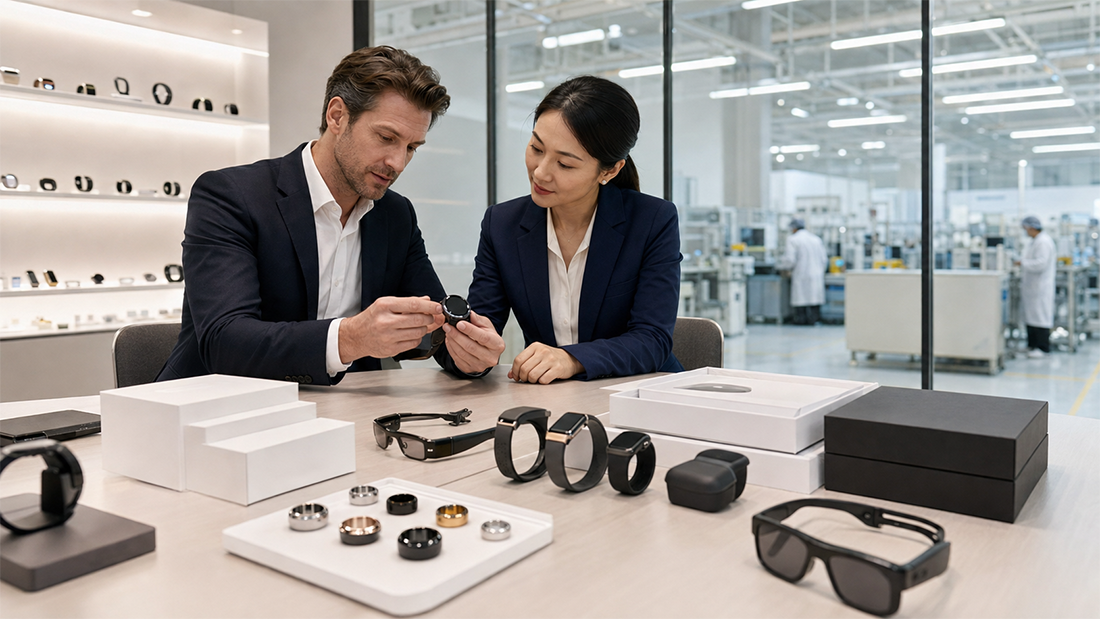
Table of Contents
- Check 1 – Battery Safety and Transport Documentation
- Check 2 – Certification and U.K. Market Conformity
- Check 3 – Real-Time Translation Accuracy for Your Languages
- Check 4 – Display Readability, Weight and Long-Wear Fit
- Check 5 – Education Compliance: Camera, Privacy and Safeguards
- Check 6 – MOQ, Tooling and Landed Cost Planning
- Check 7 – App, Firmware and AI Platform Control
- Comparison: Consumer vs Education Configuration
- Key Facts for Buyers
- Common Mistakes and Buyer Red Flags
- Practical Buyer Checklist
- FAQ
- Conclusion
Key Takeaways
- Sourcing AI smart glasses for U.K. education starts with battery and conformity documentation, not with display specs.
- CE or UKCA marking applies to the product configuration you actually import—not to a generic catalogue listing.
- Real-time translation quality varies by language pair; always test your specific languages on a sample.
- Education buyers should confirm whether a camera-disabled or privacy-restricted option exists before committing to a school rollout.
- MOQ, tooling and lead time should be planned around a school budget cycle, not a retail peak season.
- Ownership of molds, source code and app accounts should be defined in the OEM/ODM agreement.
Check 1 – Battery Safety and Transport Documentation
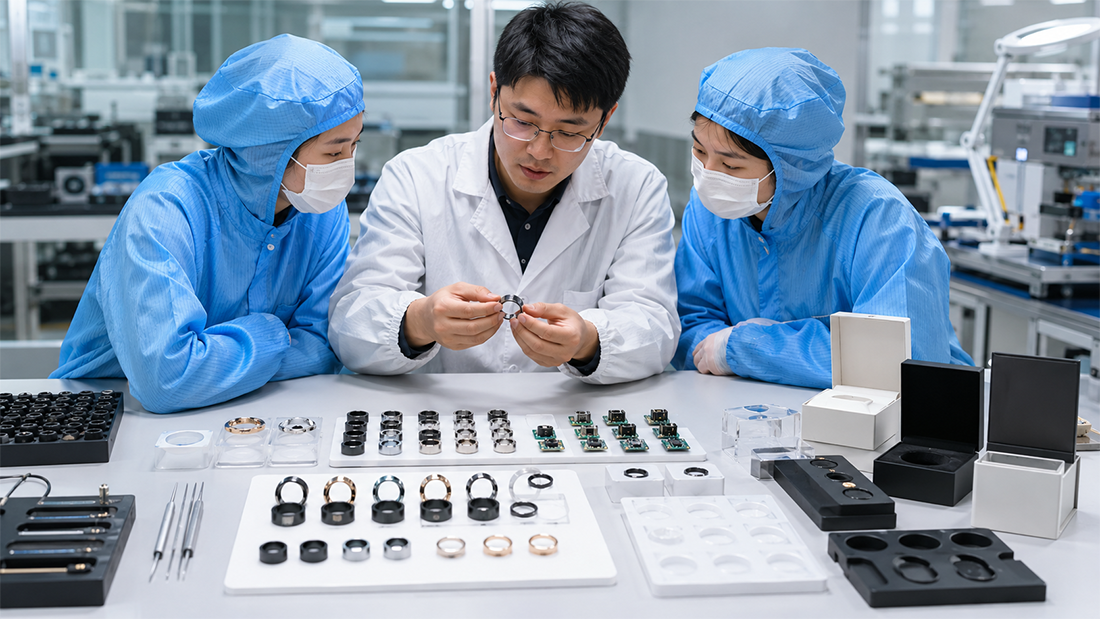
AI smart glasses use a lithium-ion or lithium-polymer battery. For a U.K. importer, the practical questions are whether the battery passes transport testing and whether your logistics provider will accept the shipment. A UN38.3 test report is the common baseline that carriers and freight forwarders ask for before moving lithium batteries. A safety data sheet (MSDS) is also frequently requested for air freight.
Ask your supplier which cell is used, whether the battery sits in the temple arm or a separate pack, and how the charging circuit protects against overcharge. If the supplier cannot produce a UN38.3 report for the exact cell and pack design, treat that as a stop condition until it is resolved.
[IMAGE PLACEMENT: Battery and UN38.3 documentation review on a sourcing desk]
For reference, see the IATA lithium battery guidance, which explains how lithium batteries are classified for air transport. Buyers should verify the most current requirements with their own forwarder, because rules are updated periodically.
Battery checklist for AI glasses
- UN38.3 report covering the actual cell and pack.
- MSDS available for the finished product.
- Charging protection described in the specification.
- Storage and shipping state-of-charge confirmed for your forwarder.
Check 2 – Certification and U.K. Market Conformity
Certification is where many education buyers discover a gap between what a supplier advertises and what the U.K. market expects. A consumer electronics supplier may hold CE documentation for one configuration, while your education version includes a different battery, a different charging case, or a changed radio module. Conformity applies to the product as placed on the market.
For a U.K. rollout, you typically need to clarify whether the product carries CE marking, and whether UKCA marking is required for your specific channel and current rules. U.K. market rules have changed since 2021, and buyers should verify the current position with a compliance adviser or the relevant authority before placing a large order.
RoHS and REACH restrictions on hazardous substances are also commonly requested by education procurement teams. Radio equipment sold in the U.K. and EU generally needs to follow radio equipment regulations and electromagnetic compatibility requirements. If the glasses include Bluetooth or Wi-Fi, Bluetooth SIG membership and a Declaration ID may be relevant for the radio design.
See the UK government UKCA guidance for the current framework, and confirm the latest position with a qualified conformity assessment body.
Certification questions to send in writing
- Which certificates apply to my exact configuration, not the base model?
- Which test lab issued the reports, and are they current?
- Will the supplier support re-testing if I change the battery or radio module?
- Can the supplier provide a declaration of conformity naming my product and brand?
Check 3 – Real-Time Translation Accuracy for Your Languages
For education technology companies, real-time translation is often the headline feature. The risk is that “translation” is demonstrated in one strong language pair—for example English to Spanish—and then performs poorly in the languages your students actually need.
Test on a representative sample with the languages your programme requires. Ask for a script that includes classroom vocabulary, proper nouns, and short sentences typical of a lesson setting. Measure latency, not just accuracy: a translation that arrives three seconds late is unusable in a live conversation.
Confirm how translation is delivered. Many AI glasses depend on a companion app and a cloud AI service. That affects data routing, subscription cost, and whether the device works offline. Ask whether translation runs on-device, in the app, or through a third-party AI platform.
For broader context on how AI office and productivity hardware is being positioned, our overview of AI office productivity solutions explains how device capabilities map to workflow and procurement decisions.
Translation evaluation table
| Test | What to ask | Pass condition |
|---|---|---|
| Language coverage | Which languages are officially supported? | Covers your student language mix |
| Accuracy | Can you test 50 sample sentences per language? | Accuracy acceptable for classroom use |
| Latency | What is typical delay per phrase? | Short enough for live conversation |
| Offline mode | Does it work without Wi-Fi or SIM? | Matches your classroom connectivity |
| Subscription | Is there a recurring fee per device? | Cost is understood before rollout |
Check 4 – Display Readability, Weight and Long-Wear Fit
Glasses are worn on the face. If the device is heavy, the temple arms press on the ears, or the display is hard to read in a bright classroom, students will not use them. Weight, balance, nose-pad material, and temple length all matter.
Ask for head width ranges and whether interchangeable nose pads and temple tips are available. For an education rollout, sizes may need to fit a broad age range or a mix of adult staff and older students. If the display is a waveguide or a micro-display, ask about brightness and whether it is readable in daylight near a window.
Request a small pre-production sample batch so multiple users can wear the glasses for a full lesson period. Sample cost and sample lead time should be quoted before you commit to a tooling budget.
Fit and usability checklist
- Weight and balance confirmed for long wear.
- Display readability tested in typical classroom lighting.
- Nose pads and temple tips adjustable or replaceable.
- Charging case or cable suited to school storage.
- Cleaning method compatible with shared use.
Check 5 – Education Compliance: Camera, Privacy and Safeguards
AI smart glasses often include a camera and microphone. In an education setting, that raises privacy questions from schools, parents and data protection officers. You need to know whether a camera-disabled or privacy-restricted version can be built, and whether the device can operate with the camera physically covered or software-disabled.
Ask how audio and video data are handled. Does the device stream data to a cloud service, store it locally, or process it on the device? If student data is involved, you should consider your obligations under U.K. data protection law and any school-level policies. This is not a decision to leave to the supplier’s marketing page.
If the glasses are used in a classroom, confirm whether recording indicators exist, whether a visible status light is present, and whether firmware can disable recording in a managed mode. For suppliers building education-specific configurations, this is a common customization request in an OEM/ODM project.
[IMAGE PLACEMENT: Education configuration with privacy controls and managed mode]
Privacy and safeguard questions
- Can the camera be disabled or physically covered?
- Is there a visible recording indicator?
- Where is data stored and who can access it?
- Can recording be locked by an administrator?
Check 6 – MOQ, Tooling and Landed Cost Planning
Sourcing AI smart glasses for education usually means a smaller first order than a consumer retail launch. Education budgets are approved by term or academic year, and pilot programmes are common. That makes MOQ a central negotiation point.
MOQ typically depends on whether you use an existing model with logo and packaging customization, or a fully custom industrial design. Logo and packaging customization usually carries a lower MOQ than new tooling for a custom frame or a new optical module. Ask for a tiered MOQ table rather than a single number.
Landed cost is more than the unit price. It includes tooling amortization, sample cost, packaging, freight, duty, VAT, certification testing, and any per-device AI subscription. Build a simple landed cost model before comparing two suppliers, because the cheapest unit price can become the most expensive programme after tooling and certification.
If you are still comparing suppliers for wearable and AI hardware categories, our overview of private-label OEM/ODM solutions explains how customization levels map to MOQ and tooling.
MOQ and cost planning table
| Customization level | Typical MOQ risk | Cost driver | Best for |
|---|---|---|---|
| Logo + packaging only | Lower | Printing and carton setup | Pilot programmes |
| Firmware/app customization | Medium | Development and testing | Branded education platform |
| New frame or optical tooling | Higher | Tooling and validation | Large multi-year rollout |
Check 7 – App, Firmware and AI Platform Control
AI glasses are only as good as the app and firmware behind them. Before you commit, clarify who controls the app, what happens if the AI provider changes its terms, and whether you can push firmware updates to devices already in schools.
Ask about account ownership. If the app is published under the supplier’s account, can you obtain admin access? If translation or assistant features rely on a third-party AI platform, what happens if that platform changes pricing or availability? These are commercial risks that belong in the contract, not in a footnote.
For an education buyer, the ability to freeze firmware versions during an exam period or a term can matter. Ask whether updates can be scheduled, and whether devices can be managed in bulk.
Software control checklist
- App account ownership and admin access.
- Firmware update schedule and rollback options.
- Third-party AI platform terms and contingency.
- Bulk device management for school IT teams.
Comparison: Consumer vs Education Configuration
| Feature | Consumer AI glasses | Education configuration |
|---|---|---|
| Camera | Always on, key selling point | May be disabled or restricted |
| Translation | Broad marketing language list | Tested languages for the programme |
| Firmware updates | Automatic | Managed, schedulable |
| Packaging | Retail box | Bulk or classroom kit |
| MOQ | Retail scale | Pilot-friendly tiers |
| Warranty | Consumer terms | Possibly extended, spare parts |
Key Facts for Buyers
| Item | What to confirm |
|---|---|
| Battery | UN38.3 report and MSDS for the exact pack |
| Conformity | CE or UKCA status for your configuration |
| Substances | RoHS and REACH statements |
| Radio | Bluetooth SIG membership and Declaration ID if applicable |
| Translation | Tested languages, latency, offline support |
| Privacy | Camera control and data handling |
| MOQ | Tiered by customization level |
| Lead time | Sample and mass production windows |
| Warranty | Term, spares and repair route |
Common Mistakes and Buyer Red Flags
- Accepting a generic certificate: a certificate for a different configuration does not cover your product.
- Testing translation in one language pair: your students may use languages the demo did not cover.
- Ignoring data routing: where student audio and video go should be known before a pilot.
- Treating MOQ as fixed: tiered MOQ is common when customization is limited to logo and packaging.
- Overlooking subscription cost: per-device AI fees can change total cost of ownership.
- No ownership clause: molds, source code and app accounts should be assigned in writing.
If a supplier cannot answer battery, conformity or data questions in writing, that is a red flag. Documentation is a normal part of a serious OEM/ODM project.
Practical Buyer Checklist
- Request UN38.3 and MSDS for the exact battery pack.
- Confirm CE or UKCA status for your configuration and channel.
- Obtain RoHS and REACH statements.
- Test real-time translation on your required languages.
- Evaluate weight, balance and display readability.
- Confirm camera control and data handling for education use.
- Request a tiered MOQ table by customization level.
- Build a landed cost model including tooling and subscription.
- Clarify app account ownership and firmware update control.
- Agree warranty, spare parts and mold ownership in the contract.
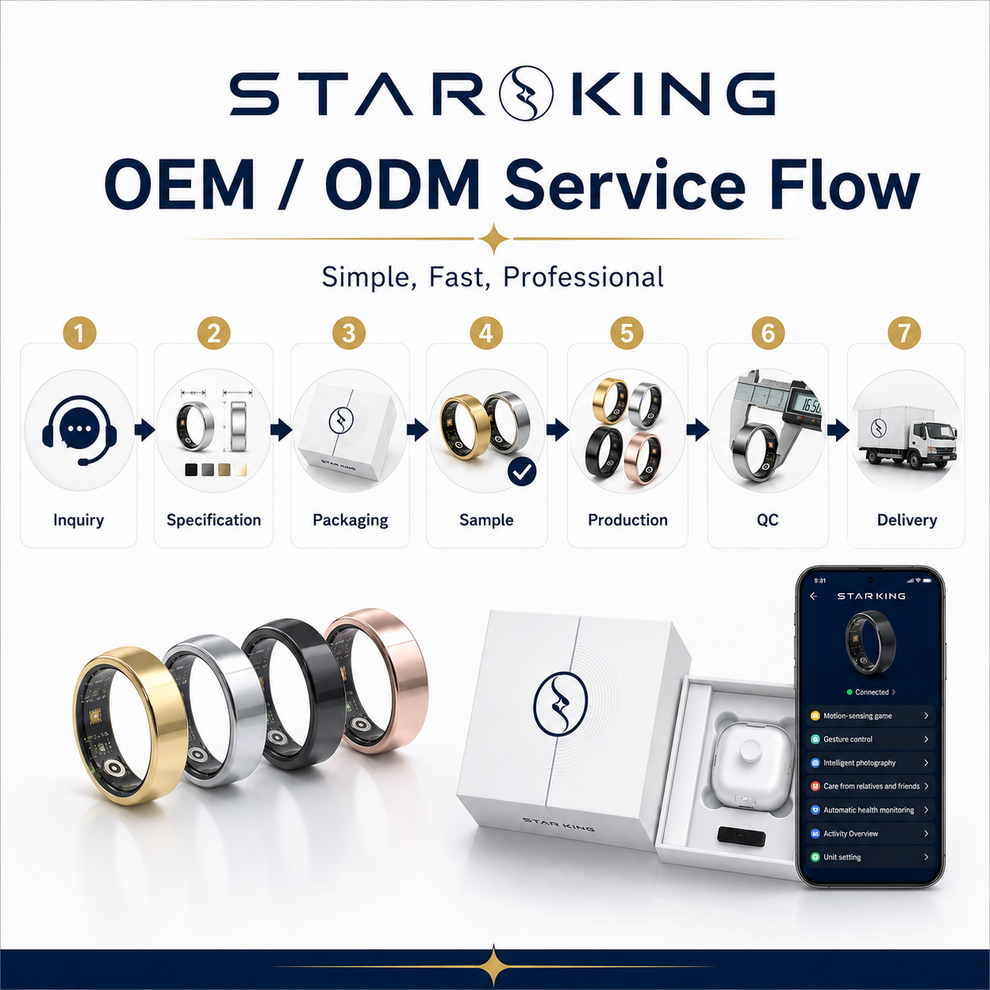
Buyers can also review STAR KING AI Smart Glasses OEM/ODM options to compare product positioning, customization scope, and sample planning.
FAQ
What is the minimum order quantity for AI smart glasses?
It depends on customization. Logo and packaging changes usually carry a lower MOQ than a custom frame or a new optical module. Ask for a tiered table rather than one number.
Do AI smart glasses need CE marking for the U.K.?
U.K. market requirements have changed since 2021, and the answer depends on your channel and product. Buyers should verify the current UKCA and CE position with a conformity adviser before importing.
Can an education version disable the camera?
Some suppliers can build a configuration with the camera disabled or restricted in firmware. Confirm this in writing, and clarify how it is enforced and indicated.
How accurate is real-time translation on AI glasses?
Accuracy varies by language pair and use case. Always test your specific languages on a sample, and measure latency as well as word accuracy.
What certifications should I ask for before shipping?
At minimum, ask for UN38.3 and MSDS for the battery, plus conformity documents for the exact configuration. RoHS and REACH statements are commonly requested by education procurement.
Who owns the molds and app account?
Ownership should be defined in the OEM/ODM agreement. Typical items to address are tooling, firmware source code, and publishing accounts for the companion app.
How long does sample development take?
This typically depends on whether the sample uses an existing model with light customization or requires new tooling. Ask for a written sample and mass production schedule.
Conclusion
Sourcing AI smart glasses for U.K. education technology in 2026 rewards preparation. The seven checks in this guide—battery and transport documentation, conformity, translation accuracy, optics and fit, privacy safeguards, MOQ and landed cost, and software control—cover the decisions that most often delay a school rollout. None of them require a large team; they require written answers before tooling and mass production begin.
Start with a small pre-production batch, test the languages your programme needs, and confirm how the device handles student data. Then compare suppliers on documentation quality and customization capability, not only on unit price. A supplier that answers the hard questions early is usually the one that delivers on schedule.
Request a Quotation for Your AI Smart Glasses Project
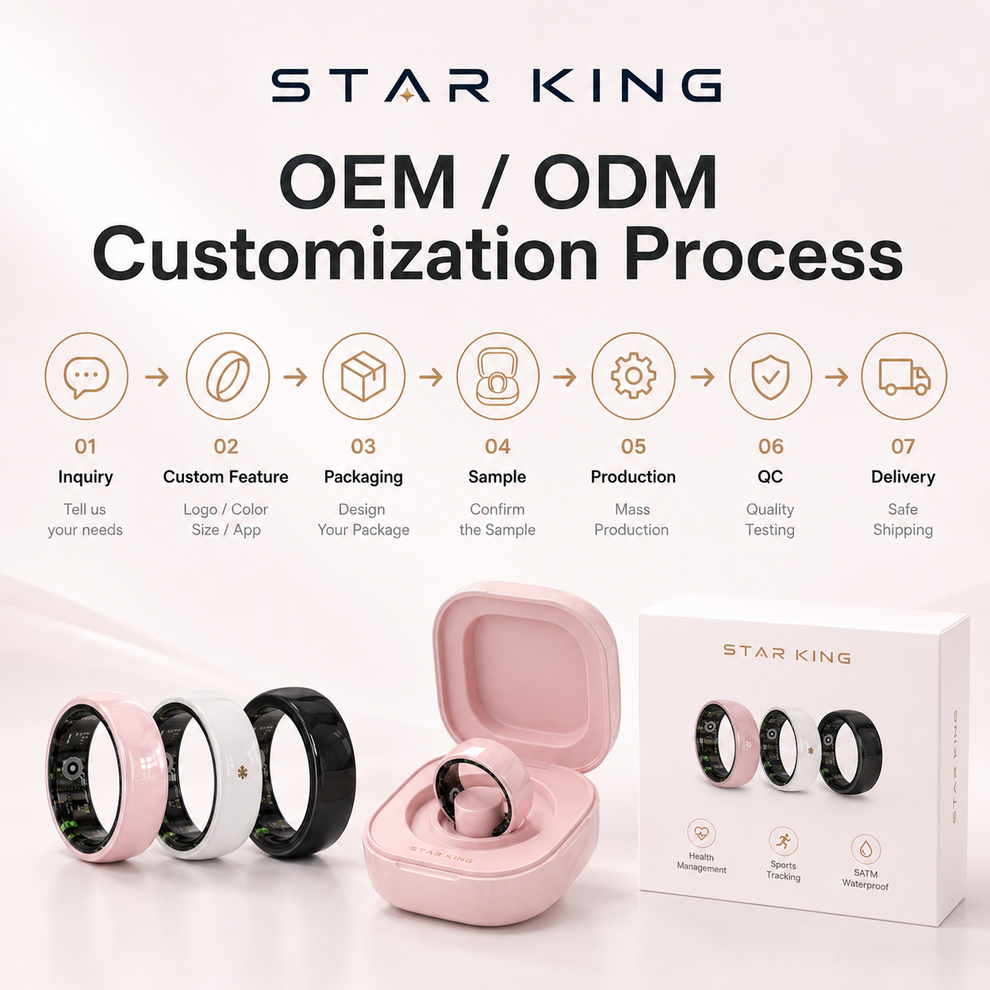
Send your requirements—target languages, privacy configuration, expected annual volume, and U.K. compliance needs—to STAR KING. The team can review customization options, confirm certification requirements for your configuration, and provide a sample and quotation plan. Request a quotation or discuss an OEM/ODM project.
Discuss Your Smart Wearable OEM/ODM Project
Planning a smart ring, smart watch, smart band, AI glasses, AI translator, or AI voice mouse project? Contact STAR KING to discuss product positioning, sample testing, customization scope, certification requirements, lead time, and quotation details.

Team Star King

Scan WhatsApp QR code
Leave a Reply