
AI voice mouse suppliers: 7 Critical Checks When Sourcing AI Voice Mouse for Middle East Retail Chains (2026 Bulk Buying Guide)
October 13, 2026 · Team Star King
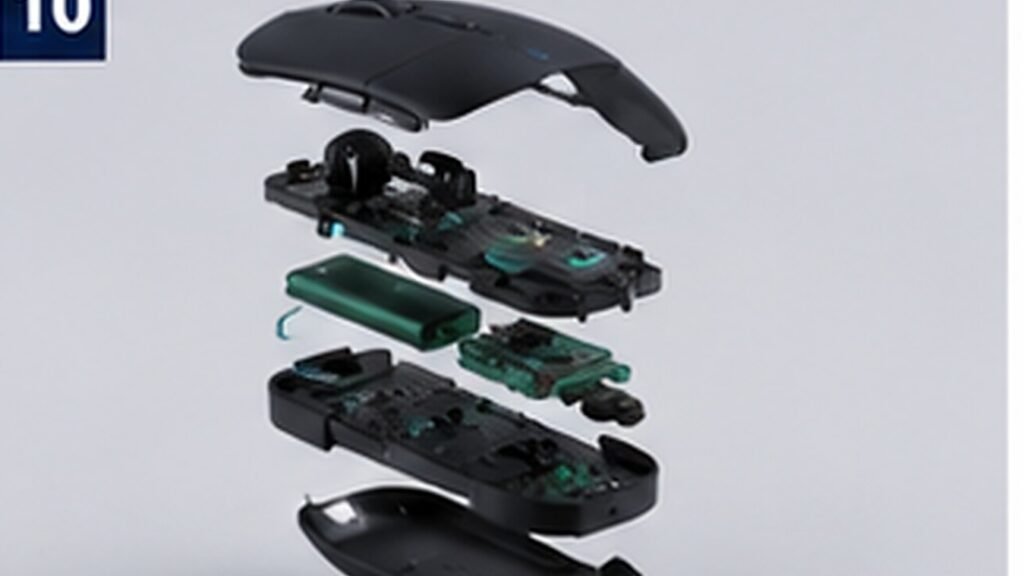
AI voice mouse suppliers buyers need a supplier evaluation process that checks product fit, OEM/ODM capability, compliance documents, quality control, pricing, lead time, and after-sales support before placing a bulk order.
Table of Contents
Table of Contents
7 Critical Checks When Sourcing AI Voice Mouse for Retail Chains in the Middle East (2026 Bulk Buying Guide)
Choosing the right AI voice mouse for retail chains in the Middle East comes down to seven checks: Arabic and multilingual voice accuracy, voice-data handling, connectivity and OS compatibility, RFQ specifications and MOQ, packaging and private-label readiness, GCC import compliance and battery documentation, and delivery scheduling for retail seasons.
This guide is written for procurement, category, and sourcing teams at retail chains evaluating the product for B2B supply, not for single-unit buyers. It explains what to confirm in an RFQ, what to test before committing to a purchase order, and where sourcing teams most often lose time or margin.
AI voice mouse suppliers: Table of Contents
- What Is an AI Voice Mouse and Why Retail Chains Are Adding It
- Short Answer: What Should Retail Chains Check First?
- Key Takeaways
- Key Facts for Buyers
- 1. Language Accuracy: Arabic Voice and Multilingual Menus
- 2. How the Device Is Likely Used Beyond Office Desks
- 3. Voice-Data Handling: What Retail Chains Should Ask the Manufacturer
- 4. Connectivity, Compatibility, and Driver Requirements
- 5. RFQ-Ready Specifications and MOQ
- 6. Packaging, Branding, and Private Label Options
- 7. Import Compliance, Battery, and Certification Checks for Selected GCC Markets
- 8. Lead Time, Repeat Orders, and Season Scheduling
- Decision Matrix: Matching Configurations to Retail Assortments
- Common Mistakes and Buyer Red Flags
- Practical Buyer Checklist Before Sending an RFQ
- FAQ
- Conclusion
What Is an AI Voice Mouse and Why Retail Chains Are Adding It
An AI voice mouse combines a standard pointing device with a microphone and voice-processing firmware. Instead of only typing or clicking, the user can dictate text, issue simple commands, or trigger translation and search functions by speaking. The device is typically positioned as an office productivity and accessibility accessory, and its value in a retail assortment comes from a clear, demonstrable use case that shoppers can understand in a store demo.
For retail chains in the Middle East, the appeal is practical rather than futuristic. A voice-enabled mouse can serve multilingual households, students, and office workers in markets where users routinely switch between Arabic and English. It can also fit corporate and education procurement because it reduces typing effort. For a category manager, that means the product can be merchandised across several planogram zones instead of one narrow aisle.
At RFQ stage, the priority is not to decide whether the category is interesting. It is to confirm that a specific supplier can deliver a consistent, compliant, Arabic-ready configuration at an MOQ and landed cost that fits your retail channel. AI Voice Mouse – Full Product Overview and AI Office Productivity Solutions are useful starting points if you are comparing platform options before the RFQ.
Image suggestion: Product hero with bilingual packaging. ALT contains the focus keyword “AI voice mouse for retail chains”. Recommended WordPress file name: ai-voice-mouse-retail-chains-middle-east-hero.webp

Short Answer: What Should Retail Chains Check First?
Retail chains should verify that the AI voice mouse supports the languages their shoppers actually use, including Arabic, and that voice input is accurate enough for routine dictation in those languages. Next, confirm that the supplier can provide the product specification, confirming the configuration at RFQ stage, and whether the selected GCC markets require specific certification or battery documentation. Only after these are confirmed should branding, packaging, and season-based scheduling be finalized.
Direct Answer: The AI voice mouse for retail chains is best evaluated as a configuration order, not a generic product. Buyers who confirm language support, voice-data handling, connectivity, packaging, certification, and lead time before the RFQ receive faster quotes and fewer order changes.
Key Takeaways
- Add the AI voice mouse to the assortment only when you can demo it with Arabic or bilingual output in-store.
- Define a written specification sheet before negotiating MOQ and target FOB pricing.
- Ask how voice input is processed and whether any audio is retained, transmitted, or stored in the cloud.
- Confirm both 2.4 GHz and Bluetooth behavior if the product supports multiple connection modes; otherwise verify the exact configuration for your SKU.
- Request copies of the certification or test documentation that apply to the destination market before the purchase order.
- Build lead time around retail seasons, and reserve time for packaging approval and pre-shipment inspection.
- Negotiate replacement parts and warranty support at the same time as the unit price.

Key Facts for Buyers
| Buyer Question | What to Confirm | Why It Matters |
|---|---|---|
| Which languages are supported? | Confirmed language list, including Arabic and English, with on-device or app-based voice processing | Determines shelf messaging accuracy and customer returns |
| How does voice data travel? | On-device processing vs. cloud-connected processing; retention policy | Matters for enterprise buyers and privacy-conscious shoppers |
| Which connection modes are available? | USB receiver, Bluetooth, or both; supported operating systems | Affects cross-sell language and support tickets |
| What is the MOQ? | MOQ by configuration, packaging, and branding level | Controls working capital and initial assortment depth |
| Which certifications are needed? | Applicable requirements per destination GCC market | Prevents customs delays and non-compliant stock |
| What is the standard lead time? | Sample lead time, mass production lead time, packaging approval time | Protects retail launch dates |
1. Language Accuracy: Arabic Voice and Multilingual Menus
Language is the first commercial filter. In many Middle East markets, shoppers expect an Arabic interface and Arabic voice input, often alongside English. A voice mouse that performs well in English but poorly in Arabic will generate returns, negative store reviews, and support costs that erase the margin on the SKU.
What to test in a sample evaluation
- Dictate the same set of sentences in Arabic and English and compare error rates.
- Switch languages during a session to see how quickly the device adapts.
- Check accent tolerance across regional Arabic dialects, not only modern standard Arabic.
- Confirm whether language packs are pre-installed, downloadable, or dependent on a connected app.
Why this matters for retail
Demo-ability drives category conversion. If a shopper can speak in Arabic and see accurate text appear immediately, the product explains itself without a salesperson. If the demo fails, the same product becomes a high-return item. Buyers should treat language accuracy as a merchandising requirement, not a technical footnote.
Verification method
Ask the manufacturer for the confirmed supported language list, then record your own sample test results in a simple scoring table. Keep the scorecard with the RFQ file so it can be reused for the next purchase order and future SKUs.
Image suggestion: Hands typing and speaking into the mouse. ALT includes the focus keyword. Recommended file name: ai-voice-mouse-retail-chains-arabic-accuracy.webp
2. How the Device Is Likely Used Beyond Office Desks
Voice input on a mouse can extend into several settings that matter for retail assortment planning. The crossover between office productivity and education hardware makes the product suitable for college and school bundles, corporate procurement, and small business use.
For example, a student using a bilingual voice mouse can dictate essays in Arabic and search in English. A customer service team can reduce typing strain. A public-sector office may value quick command shortcuts. These use cases help a category buyer decide which departments to target and whether the product belongs in the office, electronics, or education zone of the store.
Retail chains that sell to both consumers and small businesses often ask about a more integrated productivity setup. Reviewing Business & Education Display Solutions can help a category team map the product to a coherent in-store story instead of a single SKU on a shelf.
Soft CTA: If your retail chain is building an AI hardware planogram and needs a configuration sheet for the voice mouse, you can request a quotation and ask for the current product specification to compare against your assortment plan.
3. Voice-Data Handling: What Retail Chains Should Ask the Manufacturer
Voice data is a procurement topic, not only a technical one. Retail chains selling to enterprises, government buyers, or privacy-sensitive consumers need to understand how voice input is processed, whether audio is transmitted off the device, and how long, if at all, any data is retained.
Questions worth putting in writing
- Does speech recognition run on the device, on a paired app, or on a cloud service?
- Is any audio or transcript stored locally or remotely?
- Can the device operate with voice processing disabled if a buyer requests it?
- What data does the companion app collect, and is a no-app mode possible?
Why this matters for B2B sales
Corporate and government procurement teams increasingly require a data-handling answer before they approve a hardware purchase. A manufacturer that can clearly explain the voice-processing path and offer a no-retention configuration is easier to approve for those accounts.
Verification method
Request the data-handling statement in writing and, for enterprise accounts, ask whether a firmware setting or app configuration can disable cloud processing. Confirm this with your sample unit before printing claims on packaging.
4. Connectivity, Compatibility, and Driver Requirements
Compatibility determines support cost. A voice mouse that connects through a standard 2.4 GHz USB receiver usually behaves like a plug-and-play device. A Bluetooth configuration may require pairing steps that generate support questions from less technical shoppers.
| Item | What a retail chain should confirm | Buyer impact |
|---|---|---|
| Connection modes | USB receiver, Bluetooth, or both; whether both are active at the same time | Affects product positioning and return rate |
| Operating system support | Windows, macOS, ChromeOS, and supported versions | Prevents “not working with my computer” returns |
| Driver requirement | Plug-and-play vs. driver installation | Affects setup experience and support calls |
| Companion app | Is an app required for voice features? Does it support Arabic? | Affects feature claims and app-store ratings |
| Battery behavior | Rated battery life, charging port type, and battery safety documentation | Affects manual accuracy and shipping classification |
Battery specifications for a wireless device typically need documented cells for air transport. Buyers should ask for the battery documentation used for shipments, such as a UN38.3 test summary report and, where relevant, an MSDS. A useful background reference is the IATA Dangerous Goods Regulations overview for lithium battery cargo requirements.
5. RFQ-Ready Specifications and MOQ
An RFQ becomes expensive when the specification is incomplete. The supplier has to quote multiple possibilities, and the retail buyer receives a range instead of a price. A better approach is to prepare a one-page specification sheet and ask for a quote against it.
Specification fields to include
- Product model and interface type (USB receiver, Bluetooth, or both)
- Supported languages and whether Arabic is confirmed
- Color options for the initial order
- Packaging type: retail box, blister, or plain box
- Branding level: logo only, packaging, or private-label full customization
- Documentation required: user manual language, quick-start card, warranty card
- Target FOB port and required documentation for customs
How MOQ is typically structured
MOQ is usually not a single number. It changes with configuration, color, packaging, and branding. Plain-box orders often require a lower quantity than fully customized retail packaging with a printed manual in Arabic. Buyers preparing an RFQ should ask for MOQ by configuration so they can compare options rather than negotiate a single blended number.
For buyers comparing manufacturing models, Private Label OEM/ODM Solutions explains how branding, packaging, firmware, and app-level customization are typically handled by an OEM partner. A relevant supplier evaluation blog resource can help your team structure the comparison.
6. Packaging, Branding, and Private Label Options
Retail chains in the Middle East usually want the product to carry their own brand and to communicate clearly in Arabic. That moves the project into private-label territory and changes cost, timeline, and quality-control requirements.
Customization levels
- Logo printing on the device or USB receiver
- Retail box design and printed manual in Arabic and English
- Private-label branding with custom colorways
- App or firmware customization where the platform supports it
- Master carton and shipping-mark customization for distribution warehouses
Practical packaging questions
Ask how many units fit in a master carton, what the carton dimensions and weight are, and whether the artwork can be approved digitally before tooling. Packaging changes affect freight cost, so a dimension error at this stage can change the landed cost more than a small unit-price difference.
Retail chains that operate their own e-commerce channel often need packaging that survives parcel shipping and photography. Reviewing Smart Retail & E-commerce Solutions can help align store and online packaging requirements.
7. Import Compliance, Battery, and Certification Checks for Selected GCC Markets
Certification requirements depend on the product configuration and on the destination market. A single SKU sold into several GCC countries may not face identical requirements, and radio-enabled devices may have additional type-approval obligations. Buyers should verify current requirements with a local compliance agent or the relevant authority before the purchase order.
Documents to request early
- Radio or type-approval documentation for the wireless function, where required
- CE or FCC documentation for the base platform, if applicable to the model
- RoHS material compliance statement
- UN38.3 test summary report and MSDS for the battery
- Safety test reports relevant to consumer electronics
For background on radio-equipment requirements, buyers can review the FCC RF equipment authorization pages to understand how radio devices are generally assessed, and the EU Radio Equipment Directive overview for the European framework. These references are informative; they do not replace destination-market verification.
Battery documentation is especially important because a wireless mouse contains a lithium battery. The manufacturer should be able to provide the same documentation used for shipping, and the buyer should confirm that the documentation matches the exact battery used in production, not a similar model.
8. Lead Time, Repeat Orders, and Season Scheduling
Retail chains plan around seasons, promotions, and new-store openings. The supplier quotation should therefore include several separate time estimates rather than a single lead-time number.
| Stage | What it covers | Buyer planning note |
|---|---|---|
| Sample lead time | Sample production and shipping | Allow time for language and compatibility testing |
| Artwork and packaging approval | Retail box, manual, and carton approval | Digital proofs reduce delays |
| Mass production | Production after deposit and approvals | Confirm capacity before peak season |
| Pre-shipment inspection | Quality check before dispatch | Book in advance to avoid production hold |
| Shipping and customs | Freight and import clearance | Account for documentation review time |
For repeat orders, ask the supplier how firmware and component consistency is maintained. If a future batch uses a different voice-recognition module or app version, the retail chain may need new packaging claims and new testing. A supplier that flags those changes before they happen is easier to work with than one that changes silently.
Decision Matrix: Matching Configurations to Retail Assortments
| Retail channel | Suggested configuration | Why it fits |
|---|---|---|
| Hypermarket electronics aisle | Bluetooth + USB receiver, bilingual packaging, standard colorways | Broad appeal, easy demo |
| Office supply chain | USB receiver focus, multi-language manual, corporate packaging | Buyers prioritize reliability and setup simplicity |
| Education and campus store | Arabic and English voice, durable finish, student-friendly packaging | Matches bilingual study use |
| Corporate and government contract | Configurable voice-data settings, bulk packaging, asset labels | Supports procurement review |
| Airport and travel retail | Compact packaging, gift-ready design, multiple languages | Targets international shoppers |
Common Mistakes and Buyer Red Flags
Common mistakes
- Quoting against a generic product description instead of a written specification.
- Accepting a language-support claim without a sample test in Arabic.
- Ignoring master carton dimensions until after packaging artwork is approved.
- Assuming certification requirements are identical across all GCC markets.
- Negotiating price before defining warranty and spare-part terms.
Red flags in a supplier response
- No document list provided for battery or radio compliance.
- MOQ given as a single number without configuration detail.
- Unwillingness to provide a sample with the exact firmware used in mass production.
- Vague answers about whether voice data is stored or transmitted.
- Lead time quoted without including packaging approval or inspection time.
Practical Buyer Checklist Before Sending an RFQ
- Written specification sheet with model, interface, languages, and packaging type.
- Confirmed Arabic voice support and a sample test scorecard.
- Voice-data handling statement in writing.
- Supported operating systems and driver requirement confirmed.
- MOQ by configuration and color.
- Branding level defined: logo, packaging, or full private label.
- Certification and battery documentation list agreed.
- Lead-time breakdown for sample, production, approval, inspection, and shipping.
- Warranty and spare-part terms included in the quotation.
FAQ
What MOQ should a retail chain expect when sourcing an AI voice mouse?
MOQ depends on configuration, color, and packaging. Plain-box orders generally require less than fully customized retail packaging with an Arabic manual. Buyers should request MOQ by configuration rather than a single number.
Does an AI voice mouse support Arabic voice input?
Arabic support depends on the model and on the voice-recognition platform used. Buyers should confirm the supported language list in writing and test Arabic dictation on a sample unit before placing a purchase order.
Which certifications are needed to import a wireless voice mouse into the Middle East?
Requirements vary by destination country and by the product’s radio and battery configuration. Radio type approval, battery documentation such as UN38.3, and material compliance statements may be requested. Buyers should verify current requirements with a local compliance agent or the relevant authority.
How long should buyers plan for sample and mass production lead time?
Lead time typically includes sample production, artwork and packaging approval, mass production, pre-shipment inspection, and shipping. Buyers should ask for each stage separately so that retail launch dates are protected.
Can the AI voice mouse be private-labeled?
Yes, private-label programs commonly cover logo printing, retail box design, printed manuals, and colorways. Firmware or app-level customization depends on the platform and should be confirmed during the RFQ.
Is voice data stored by the device or the app?
Data handling depends on whether speech recognition runs on the device, on a paired app, or on a cloud service. Retail chains selling to enterprise or government buyers should request a written data-handling statement and, where possible, confirm a no-retention configuration.
What should be included in the battery documentation for air shipment?
Lithium battery shipments typically require a UN38.3 test summary report and, where relevant, an MSDS. The documentation should match the exact battery used in production, not a similar model.
Conclusion
The AI voice mouse for retail chains is a configuration-driven purchase. The most reliable route to a clean purchase order is a written specification, a tested Arabic sample, a clear voice-data answer, documented battery and certification paperwork, and a realistic lead-time plan that accounts for packaging approval and inspection. Chains that treat those steps as part of the sourcing process receive fewer surprises at customs and at the shelf.
For buyers who want to move quickly, the practical next step is to prepare an RFQ against a defined configuration and request documentation that matches the destination market. STAR KING can support product specification review, sample coordination, private-label packaging, and quotation. To begin, request a quotation and share your destination market, target quantity, packaging preference, and required documentation.
Discuss Your Smart Wearable OEM/ODM Project
Planning a smart ring, smart watch, smart band, AI glasses, AI translator, or AI voice mouse project? Contact STAR KING to discuss product positioning, sample testing, customization scope, certification requirements, lead time, and quotation details.

Team Star King

Scan WhatsApp QR code
Leave a Reply