
AI voice mouse supplier: 7 Critical Steps to Evaluate AI Voice Mouse Suppliers for Middle East Private-Label Brands in 2026
November 6, 2026 · Team Star King
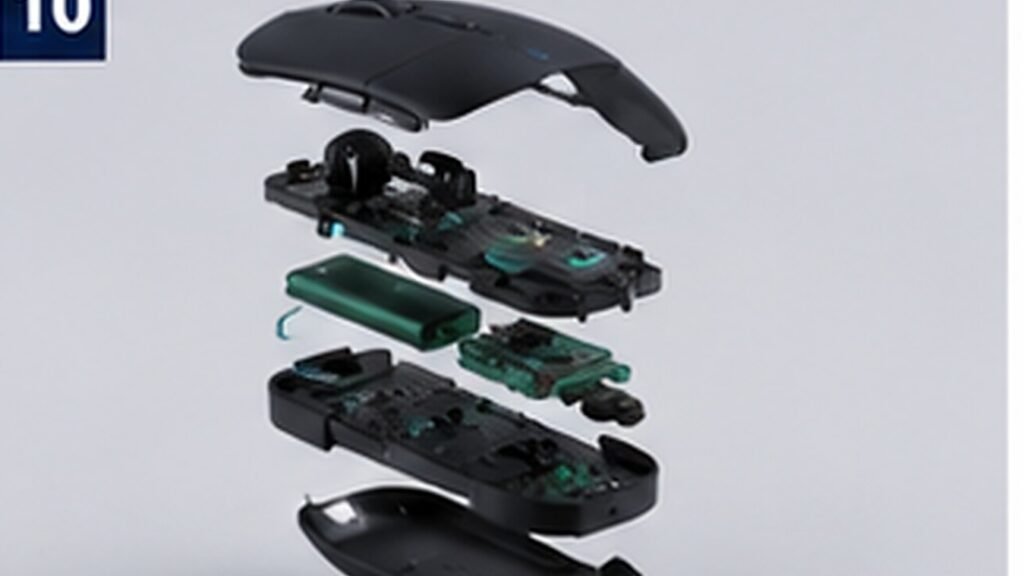
7 Critical Steps to Evaluate AI Voice Mouse Suppliers for Middle East Private-Label Brands in 2026
Choosing the right AI voice mouse supplier is a make-or-break decision for private-label brands entering the Middle East. The region’s multilingual workforce—spanning Arabic, English, Hindi, Urdu, and Filipino—demands voice recognition accuracy that many generic Chinese suppliers cannot deliver. This guide gives you a 7-step framework to evaluate suppliers on multilingual performance, OEM capability, MOQ flexibility, certification compliance, and after-sales support.
Table of Contents
Table of Contents
AI voice mouse supplier: Short Answer
To evaluate an AI voice mouse supplier for Middle East private-label brands in 2026, focus on seven criteria: (1) Arabic and multilingual voice recognition accuracy, (2) OEM/ODM customization depth, (3) MOQ and pricing transparency, (4) product specifications and hardware quality, (5) certification and regulatory compliance for GCC markets, (6) sample testing and validation process, and (7) supply chain reliability and lead times. Buyers should request documented test results, verify certifications independently, and pilot test samples before committing to bulk orders.

Table of Contents
- Step 1: Assess Multilingual Voice Recognition for Middle East Markets
- Step 2: Evaluate OEM/ODM and Private-Label Customization Capabilities
- Step 3: Understand MOQ, Pricing, and Cost Structure
- Step 4: Review Product Specifications and Hardware Quality
- Step 5: Verify Certifications and Compliance for GCC Countries
- Step 6: Conduct Thorough Sample Testing and Validation
- Step 7: Confirm Supply Chain, Lead Times, and After-Sales Support
- Comparison Table: Supplier Evaluation Criteria
- Common Mistakes and Buyer Red Flags
- Practical Buyer Checklist
- Frequently Asked Questions
- Conclusion

Key Takeaways
- Arabic voice recognition accuracy is the #1 differentiator for Middle East markets; test real-world phrases, not just isolated words.
- Private-label brands should prioritize suppliers offering firmware and app customization, not just logo printing.
- MOQ often ranges from 500 to 1,000 units for custom AI voice mice; negotiate tooling costs and sample fees upfront.
- GCC countries require specific certifications (e.g., G-Mark, IECEE) beyond CE/FCC; verify supplier documentation.
- Always test samples with your target accent and dialect before committing to mass production.
- Request a detailed production timeline and contingency plan for component shortages.
- Evaluate after-sales support: warranty terms, spare parts availability, and firmware update policy.
Key Facts for Buyers
| Criteria | What to Check | Typical Range / Note |
|---|---|---|
| Voice Recognition Languages | Arabic (MSA + dialects), English, Hindi, Urdu, Filipino | At least 3 languages; Arabic accuracy >90% for common commands [STAR KING TO CONFIRM] |
| OEM/ODM Capability | Logo, packaging, firmware, app UI customization | Full ODM preferred for brand differentiation |
| MOQ | Custom logo vs. full custom | 500–1,000 units typical; tooling fees may apply |
| Certifications | CE, FCC, RoHS, G-Mark (GCC), IECEE | Depends on target country; verify with supplier |
| Sample Lead Time | Standard vs. customized sample | 7–15 days for standard; 20–30 days for custom |
| Production Lead Time | After sample approval and deposit | 30–45 days typical; confirm with supplier |
| Warranty | Standard period and coverage | 12 months typical; negotiate extended terms |
Step 1: Assess Multilingual Voice Recognition for Middle East Markets
The Middle East is one of the most linguistically diverse regions in the world. In countries like the UAE, Saudi Arabia, and Qatar, workplaces commonly use Arabic, English, Hindi, Urdu, and Filipino. An AI voice mouse that only recognizes American English will frustrate users and damage your brand’s reputation. When evaluating an AI voice mouse supplier, demand documented accuracy rates for each language you plan to support, especially Arabic.
Ask the supplier to provide a test report showing recognition accuracy for common commands (e.g., “open file,” “send email,” “translate to Arabic”) and dictation. Also inquire about dialect support: Modern Standard Arabic (MSA) is standard, but Gulf dialects (Khaliji) may differ. Some suppliers may offer customization to add specific dialect models. [STAR KING TO CONFIRM]
Additionally, check whether the voice recognition engine runs on-device or in the cloud. On-device processing offers privacy and works offline, which is valuable in enterprise settings. Cloud-based engines may offer higher accuracy but require stable internet. For Middle East markets, where internet infrastructure varies, a hybrid approach is ideal.
Step 2: Evaluate OEM/ODM and Private-Label Customization Capabilities
Private-label brands need more than a logo sticker. A true OEM/ODM partner should offer customization across hardware, firmware, software, and packaging. For AI voice mice, key customization areas include:
- Hardware: Button layout, ergonomic shape, color, materials, and sensor selection.
- Firmware: Voice recognition language packs, wake-word customization, and command sets.
- Software/App: Companion app UI, language settings, and integration with third-party software (e.g., Microsoft Office, Google Workspace).
- Packaging: Retail box design, multilingual manuals, and regional compliance marks.
During evaluation, ask for examples of past customization projects (without revealing client names). Request a clear breakdown of which components are customizable and which are fixed. Some suppliers may claim ODM capability but only offer superficial changes. To avoid this, request a firmware customization demo or a sample with your desired language pack.
Step 3: Understand MOQ, Pricing, and Cost Structure
MOQ and pricing are critical for private-label brands, especially startups and mid-sized distributors. AI voice mouse suppliers often set MOQs between 500 and 1,000 units for customized orders. However, MOQ can vary based on customization complexity: a simple logo print might have a lower MOQ (e.g., 500 units), while a fully custom firmware with a new language model could require 1,000 units or more.
Pricing should be transparent. Request a detailed quotation that includes:
- Unit price at different order volumes (e.g., 500, 1,000, 3,000 units).
- Tooling or mold costs (if applicable).
- Sample fees and whether they are refundable against bulk order.
- Packaging costs (standard vs. custom).
- Certification costs (if the supplier handles them).
- Shipping terms (FOB, CIF, DDP) and estimated freight costs to your port.
Beware of suppliers who quote unusually low prices without clarifying what is included. Hidden costs for firmware development or certification can erode your margins. For a more detailed cost analysis, refer to our private label OEM/ODM solutions page.
Step 4: Review Product Specifications and Hardware Quality
The hardware quality of an AI voice mouse directly affects user experience and brand perception. Key specifications to evaluate include:
- Sensor: Optical or laser sensor with adjustable DPI (at least 800–1600 DPI).
- Connectivity: Bluetooth 5.0 or higher, 2.4GHz wireless, and USB-C charging.
- Battery: Capacity (mAh) and battery life (hours of active use). Look for at least 10 days of standby.
- Microphone: Noise-canceling microphone array for accurate voice pickup.
- Build Quality: Materials (ABS plastic, rubberized coating), button lifespan (e.g., 3 million clicks), and weight.
- Compatibility: Windows, macOS, Android, iOS, and possibly Linux.
Request a detailed datasheet and test reports for key components. If possible, visit the supplier’s factory or request a video tour of the production line. For a comparison of different AI hardware categories, see our AI voice mouse product page.
Soft CTA: If you’re evaluating AI voice mouse specifications, our team can share detailed datasheets and sample units for your testing. Request a sample to compare against your requirements.
Step 5: Verify Certifications and Compliance for GCC Countries
Certification is a common pitfall for private-label brands entering the Middle East. While CE and FCC are recognized in some contexts, GCC countries have their own requirements. For example, Saudi Arabia requires SASO certification and G-Mark for many electronic products. The UAE requires ESMA registration for certain devices. Additionally, products with wireless functionality (Bluetooth, 2.4GHz) may require type approval from the Telecommunications Regulatory Authority (TRA) in the UAE or CITC in Saudi Arabia.
When evaluating a supplier, ask for:
- Copies of existing test reports (CE, FCC, RoHS) and certificates.
- Confirmation of which certifications are included in the quoted price.
- Experience with GCC certification processes and timelines.
- Willingness to support your own certification efforts (e.g., providing samples for testing).
Note that certification requirements depend on the specific product configuration and target market. Buyers should verify with local authorities or a certified compliance consultant. For general guidance on international certifications, refer to the International Electrotechnical Commission (IEC) and FCC websites.
Step 6: Conduct Thorough Sample Testing and Validation
Never commit to a bulk order without testing samples. For AI voice mice, sample testing should cover:
- Voice Recognition Accuracy: Test with native Arabic speakers (multiple dialects), English, and other target languages. Use realistic commands and dictation.
- Connectivity and Range: Test Bluetooth range, pairing stability, and interference in office environments.
- Battery Life: Measure actual usage time against claimed specs.
- Ergonomics: Evaluate comfort during prolonged use.
- Software Integration: Test compatibility with popular applications (e.g., Microsoft Office, Zoom, Google Meet) and translation software.
- Durability: Perform drop tests (from 1 meter) and button life tests if possible.
Request at least 3–5 samples for internal testing and, if possible, distribute to a small group of target users in the Middle East for feedback. Document all issues and discuss with the supplier before proceeding. Reputable suppliers will welcome this feedback and may offer improvements. For more on sample testing, see our blog.
Step 7: Confirm Supply Chain, Lead Times, and After-Sales Support
Supply chain reliability is crucial for meeting launch deadlines and maintaining stock. Ask the supplier about:
- Production Capacity: Monthly output and current utilization. Avoid suppliers operating at near-full capacity.
- Component Sourcing: Key components (chips, sensors, microphones) and their lead times. Are there alternative sources?
- Lead Times: Sample lead time, production lead time after deposit, and shipping time to your destination port.
- Quality Control: Incoming material inspection, in-process checks, and final pre-shipment inspection. Request QC reports.
- Warranty and After-Sales: Warranty period, defect rate policy, spare parts availability, and return/repair process.
- Firmware Updates: Policy for providing updates to fix bugs or add features.
Also, clarify Incoterms and who handles shipping insurance and customs clearance. For high-volume orders, consider a factory audit or third-party inspection. For more on supply chain management, see our AI office productivity solutions page.
Comparison Table: Supplier Evaluation Criteria
| Criteria | Weight | What to Look For | Red Flag |
|---|---|---|---|
| Multilingual Voice Accuracy | High | Documented >90% accuracy for Arabic and English | No test reports or vague claims |
| OEM/ODM Depth | High | Firmware and app customization, not just logo | Refuses to show customization examples |
| MOQ Flexibility | Medium | Negotiable MOQ, clear tooling costs | Extremely low MOQ with high tooling fees |
| Hardware Quality | High | Detailed datasheet, component brands | Evasive about sensor or battery specs |
| Certifications | High | CE, FCC, RoHS, G-Mark readiness | Claims “all certifications” without proof |
| Sample Process | Medium | Fast sample turnaround, reasonable fees | Long sample lead times or excessive fees |
| Supply Chain | High | Realistic lead times, contingency plans | Unrealistic promises (e.g., 15-day production) |
| After-Sales | Medium | 12-month warranty, spare parts | No clear warranty policy |
Common Mistakes and Buyer Red Flags
Even experienced buyers can fall into traps when sourcing AI voice mice. Here are common mistakes and red flags to watch for:
- Mistake 1: Assuming English accuracy equals Arabic accuracy. Many suppliers optimize for English and treat Arabic as an afterthought. Always test Arabic specifically.
- Mistake 2: Accepting vague certification claims. Request copies of certificates and verify them with the issuing body if possible.
- Mistake 3: Skipping sample testing due to time pressure. A rushed launch with a poor product can damage your brand permanently.
- Mistake 4: Ignoring firmware update policies. Without updates, your product may become obsolete quickly.
- Red Flag: Supplier discourages factory visits or video tours. This may indicate poor working conditions or misrepresentation.
- Red Flag: Prices significantly lower than market average. Could indicate low-quality components or hidden costs.
- Red Flag: No clear MOQ or pricing tiers. Suggests lack of experience with B2B buyers.
- Red Flag: Unwillingness to provide references. Legitimate suppliers can often share client testimonials (with permission).
Practical Buyer Checklist
Use this checklist when evaluating AI voice mouse suppliers:
- ☐ Request a sample with Arabic language pack and test with native speakers.
- ☐ Obtain a detailed datasheet with component specifications.
- ☐ Ask for copies of CE, FCC, RoHS certificates and GCC compliance documents (e.g., G-Mark).
- ☐ Clarify MOQ for your desired customization level.
- ☐ Request a sample fee quote and refund policy.
- ☐ Confirm production lead time and shipping terms.
- ☐ Ask about warranty period and after-sales support process.
- ☐ Inquire about firmware update policy and app customization.
- ☐ Request a video tour of the production line or schedule a factory audit.
- ☐ Check references from other private-label brands in the Middle East.
Frequently Asked Questions
1. What is the typical MOQ for a private-label AI voice mouse?
MOQ typically ranges from 500 to 1,000 units, depending on customization complexity. Simple logo printing may have a lower MOQ, while custom firmware or packaging may require higher volumes. Always negotiate MOQ and tooling costs upfront.
2. How can I verify Arabic voice recognition accuracy?
Request a sample and test it with native Arabic speakers using common commands and dictation. Ask the supplier for a written test report showing accuracy percentages for Modern Standard Arabic and Gulf dialects. If possible, test in a noisy environment to simulate real office conditions.
3. What certifications are required for selling AI voice mice in Saudi Arabia?
Saudi Arabia typically requires SASO certification and G-Mark for many electronic products. Additionally, wireless devices may require type approval from CITC. Requirements can change, so verify with a local compliance consultant or the Saudi Standards, Metrology and Quality Organization (SASO) website.
4. How long does it take to get samples and then bulk production?
Standard samples may take 7–15 days, while customized samples can take 20–30 days. Bulk production typically takes 30–45 days after sample approval and deposit, depending on order volume and component availability. Always confirm lead times in writing.
5. Can the supplier customize the firmware to add specific Arabic dialect support?
Some suppliers offer firmware customization, but capabilities vary. Discuss your requirements early and request a demo or sample with the desired dialect. Note that adding new dialects may require additional development time and cost.
6. What is the typical warranty for AI voice mice from Chinese suppliers?
Most suppliers offer a 12-month warranty covering manufacturing defects. However, terms vary. Clarify what is covered (e.g., battery, microphone) and the process for returns or repairs. Some suppliers may offer extended warranties for large orders.
7. How do I protect my brand’s intellectual property when working with an OEM supplier?
Sign a Non-Disclosure Agreement (NDA) and a manufacturing agreement that clearly states ownership of tooling, firmware, and design files. Ensure the supplier agrees not to sell your custom design to other buyers. For custom tooling, you may need to pay for the mold and retain ownership.
Conclusion
Evaluating an AI voice mouse supplier for Middle East private-label brands requires a structured approach focused on multilingual accuracy, customization depth, compliance, and supply chain reliability. By following the 7-step framework outlined above, you can reduce risk and select a partner who supports your brand’s growth in the region. Remember to test samples thoroughly, verify certifications, and negotiate clear terms before committing to bulk production.
Ready to Evaluate AI Voice Mouse Samples?
STAR KING supports private-label brands with OEM/ODM customization, multilingual firmware, and certification guidance for Middle East markets. Request samples to test Arabic voice recognition and hardware quality against your requirements.
Discuss Your Smart Wearable OEM/ODM Project
Planning a smart ring, smart watch, smart band, AI glasses, AI translator, or AI voice mouse project? Contact STAR KING to discuss product positioning, sample testing, customization scope, certification requirements, lead time, and quotation details.

Team Star King

Scan WhatsApp QR code
Leave a Reply