
AI Translators for Education in Southeast Asia: 7 Procurement Checks Before You Buy
November 5, 2026 · Team Star King
AI Translators for Education in Southeast Asia: 7 Procurement Checks Before You Buy
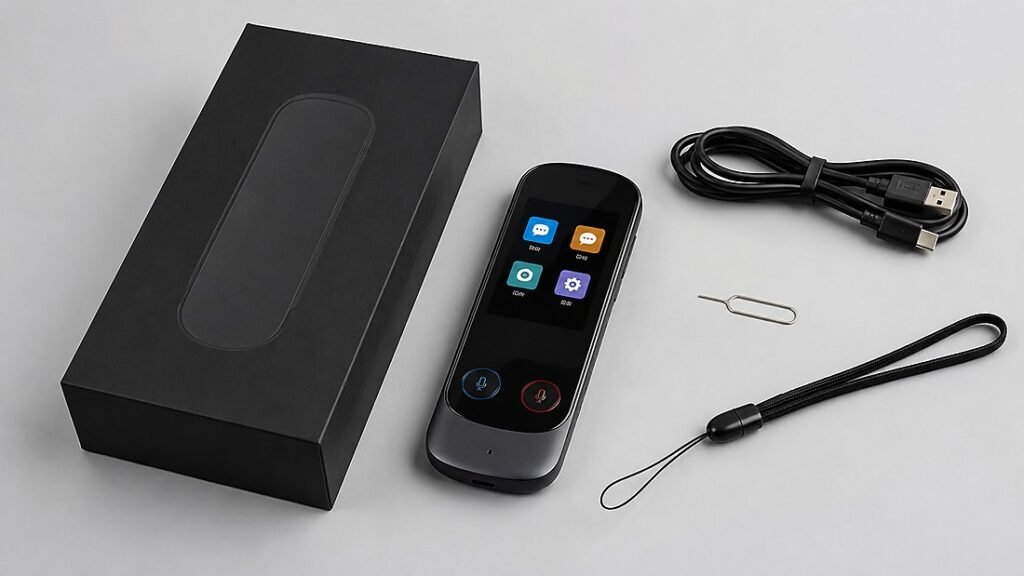
If you are sourcing AI translators for education in Southeast Asia, the first thing to confirm is not the language count on a spec sheet but whether the device works offline in a crowded classroom, whether the language pairs suit your country’s curriculum, and whether the supplier can document battery, radio and safety compliance for your destination market. This guide walks education technology buyers through seven practical procurement checks, from language and latency testing to MOQ, samples and import compliance, so you can shortlist AI translator suppliers with evidence instead of brochures.
Table of Contents
Table of Contents
AI translators for education: Short Answer
Buyers sourcing AI translators for education should evaluate five things first: the actual supported language pairs (online and offline), real-time latency and accuracy in a noisy room, battery endurance for a school day, documented compliance for the destination country, and a supplier’s ability to customize language sets, packaging and firmware UI. Start with a paid sample of two to three models, test them with your own lesson content, then negotiate MOQ and lead time.
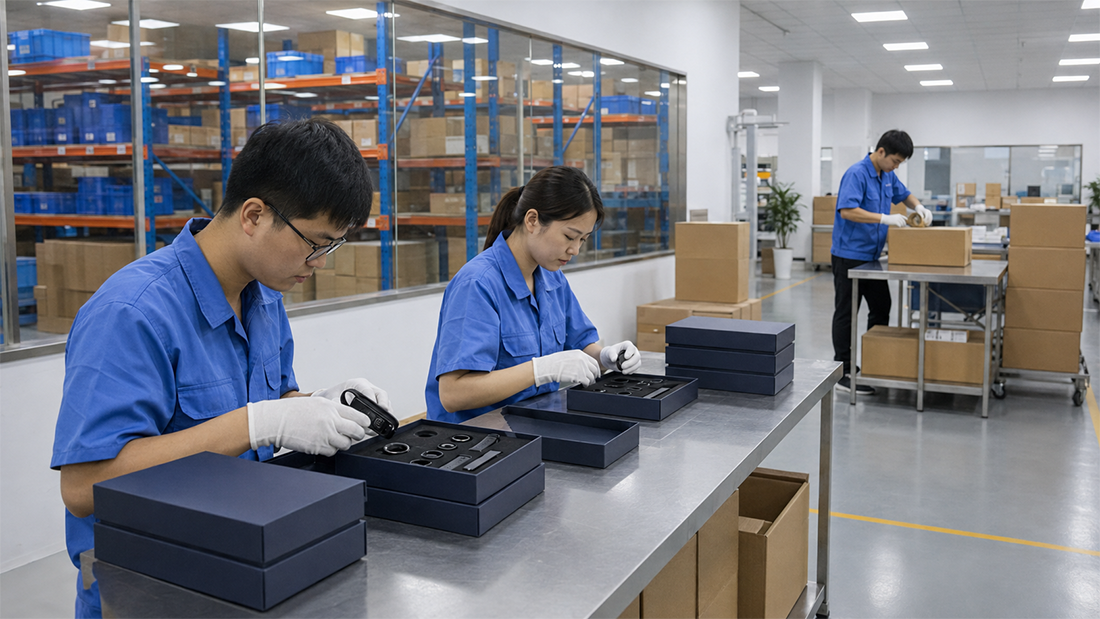
Table of Contents
- Why education buyers in Southeast Asia are looking at AI translators
- Key Takeaways
- Key Facts for Buyers
- Check 1: Supported language pairs and offline coverage
- Check 2: Real-time latency and classroom noise
- Check 3: Battery life and charging logistics
- Check 4: Connectivity and data handling
- Check 5: Certification and import compliance
- Check 6: OEM/ODM, MOQ and lead time
- Check 7: Sample testing and pilot programs
- Model comparison table
- Common mistakes and buyer red flags
- Practical buyer checklist
- FAQ
- Conclusion

Key Takeaways
- Language count is a marketing number; what matters is whether the pairs you need work offline at usable quality.
- Test AI translators with real classroom content in a noisy room before committing to volume.
- Battery endurance, charging logistics and spare parts matter more in schools than in consumer retail.
- Certification requirements typically depend on the exact SKU, its radio and battery configuration, and the destination country; buyers should verify rather than assume.
- MOQ, tooling, firmware UI and packaging customization should be documented in the supplier’s quotation, not agreed verbally.
Key Facts for Buyers
| Decision Area | What to Ask | Why It Matters for Education |
|---|---|---|
| Languages | Which pairs work online vs. offline? | Classrooms may have weak Wi-Fi; curriculum may need local languages |
| Latency | Measured delay on sentence-level speech? | Delays break conversation flow in parent meetings and lessons |
| Battery | Tested hours of active translation and standby? | Devices must survive a school day and charging cycles |
| Compliance | Which certifications per SKU and market? | Import and tender requirements vary by country |
| Customization | Firmware UI, preloaded language sets, logo, packaging? | Buyers reselling under their own brand need coherent product identity |
| Commercials | MOQ tiers, sample cost, lead time? | Pilots and tender timelines often start small |
Why Education Buyers in Southeast Asia Are Looking at AI Translators
Southeast Asia is one of the most linguistically diverse regions in the world. Schools, universities, vocational institutes and edtech resellers operate across multiple languages in a single campus, and parent-teacher communication often crosses language boundaries. That combination has created demand for handheld translation hardware that does not depend on a student’s phone, keeps translation costs predictable, and works in a supervised environment.
For education technology companies, the commercial question is not whether translation works on a smartphone. It is whether a dedicated device can be supplied at scale, branded, documented and supported. That makes AI translator devices a sourcing category rather than a consumer gadget, with the same procurement discipline you would apply to tablets or language-lab headsets.
Before going deeper into the checks, it helps to define the category clearly so tender documents and internal briefs stay precise.
Check 1: Supported Language Pairs and Offline Coverage
What “supported languages” should mean to a buyer
A definition worth using in procurement: supported languages refers to the language pairs in which the device delivers a usable, tested translation on a specific firmware version, under stated network conditions. A device listing 100+ languages may support only a subset offline, and some pairs may depend on a cloud service.
Ask the supplier for a written matrix showing:
- Language pairs available with Wi-Fi or mobile data;
- Language pairs available fully offline;
- The chipset or firmware platform for each model [STAR KING TO CONFIRM];
- Any pairs that require an active subscription.
For most Southeast Asian education deployments, buyers should verify at minimum English, Bahasa Indonesia, Vietnamese, Thai, Filipino, and the Chinese languages relevant to their market. Regional and minority languages may require custom development or may not be available yet.
How to test it
Ask for a paid sample and test ten sentences from an actual lesson plan, grading translation on whether a native speaker understands and whether technical terms survive. Repeat the test with Wi-Fi switched off.
Check 2: Real-Time Latency and Classroom Noise
Translation speed is the feature that makes or breaks adoption in a classroom. If a device pauses several seconds after each sentence, teachers abandon it. Latency depends on the speech-recognition model, the translation engine, the network, and the microphone array.
Set an acceptance threshold in your brief. For example, you may require sentence-level translation within a defined number of seconds in a room with background voices, and the same test in a quiet room for comparison. Have the supplier demonstrate the test procedure and share results rather than a marketing claim.
Noise handling matters especially for AI translators used in education, because school environments are rarely quiet. Ask how the microphone handles multiple speakers, and whether the device has a push-to-talk mode that lets the user control exactly when audio is captured.
Check 3: Battery Life and Charging Logistics
Battery endurance rarely appears in marketing decks, yet it determines whether a school can deploy devices at all. Two figures matter: active translation time and standby time. Ask for tested values under a stated duty cycle, for example translation on one hour per day across a full school day [STAR KING TO CONFIRM].
Also plan the charging model. Consider whether the device charges over USB-C, how many units a multi-port charging cabinet handles, and whether batteries are field-replaceable. Lithium batteries also mean shipping documentation; see the compliance section below. If your deployment includes wearable devices alongside translators, the charging practices are similar to those covered in our health and fitness wearable solutions work.
Check 4: Connectivity and Data Handling
Translation hardware in education frequently runs inside school networks or on managed devices. Ask how the device connects — Wi-Fi only, Wi-Fi plus cellular, or a companion app through a phone — and what data is transmitted.
Voice data is sensitive. In a school context, buyers should confirm what audio is sent to a cloud service, how long it is retained, and whether the manufacturer or translation provider stores it. Request the app and cloud data-handling policy in writing [STAR KING TO CONFIRM]. Buyers should also check whether the destination country applies local data protection rules to such data, and confirm the device settings with local counsel.
If your organization needs to integrate translation devices into an existing learning management or device-management platform, this is also the moment to discuss AI office and productivity device integration support.
Check 5: Certification and Import Compliance
Certification is where many reseller projects slow down. A question to ask directly: which certifications apply to this exact SKU, and can I see the certificate number and test report? Do not accept a general claim that all products are certified.
For an AI translator with Wi-Fi and Bluetooth, buyers typically check:
- FCC equipment authorization where US import or resale is relevant;
- CE marking and the applicable EU directives if re-exported to Europe;
- RoHS and similar restricted-substance rules;
- Radio equipment rules for the destination country — in Southeast Asia this typically means national telecom or standards authorities, and requirements vary by country;
- Air transport documentation for the lithium battery, such as IATA Dangerous Goods Regulations references and UN38.3 test summaries where air freight is used.
Requirements typically depend on the exact configuration and the destination market, and buyers should verify current rules with the relevant authority or a customs broker before tendering. If tender documents demand a specific certificate the factory does not yet hold, negotiate scope and timeline early.
Check 6: OEM/ODM, MOQ and Lead Time
For education technology companies, product identity matters. Buyers often want preloaded language sets, their own startup logo, a branded box, and a printed quick-start guide in the local language. These are standard private-label requests, but each adds time and minimum order quantity.
Ask for a quotation that breaks down:
- MOQ for the stock model versus the customized version;
- Sample cost and lead time;
- Logo and packaging tooling or setup fees;
- Firmware UI and language-set changes, if any;
- Mass production lead time, and buffer for Chinese New Year and peak season.
MOQ and lead time are usually where startup brands and smaller distributors feel pressure. A phased plan — pilot order, then a second order with branding — is often more realistic for a first project. Our private label OEM/ODM overview explains the general stages of this process. Buyers should agree a written statement on production lead time and any tooling ownership in the purchase agreement [STAR KING TO CONFIRM].
Check 7: Sample Testing and Pilot Programs
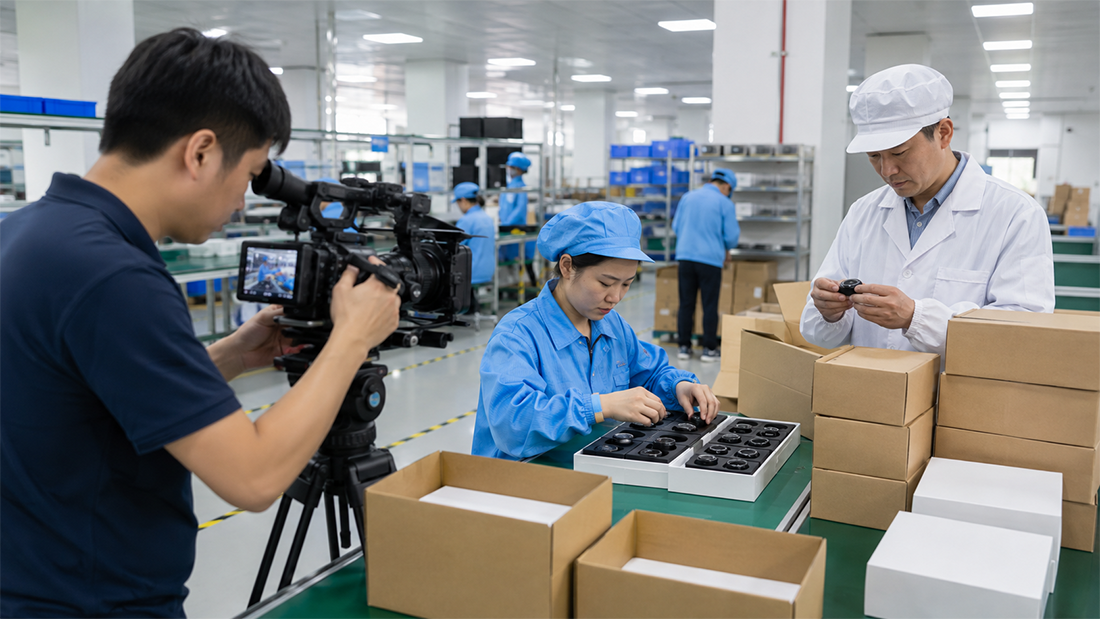
In the Awareness stage, buyers often skip the sample and go straight to a price comparison. That is a mistake. Order two or three models, run a small pilot with teachers or students, and score the results against your acceptance criteria.
A practical pilot for AI translators in education might run two to four weeks, include one class or one parent-meeting group, and use a short evaluation form. Score accuracy, latency, battery, ease of use, and how often the device was actually picked up. A pilot is also the best moment to ask the supplier how they handle warranty and spare parts, because support questions usually appear in week two, not month two.
Model Comparison Table
Use a scoring sheet like this when you compare shortlisted models. Weights should reflect your own deployment.
| Criteria | Model A | Model B | Model C |
|---|---|---|---|
| Offline language pairs | TBC | TBC | TBC |
| Online language pairs | TBC | TBC | TBC |
| Latency (quiet / noisy room) | TBC | TBC | TBC |
| Battery: active / standby | TBC | TBC | TBC |
| Connectivity | TBC | TBC | TBC |
| App and data policy provided | TBC | TBC | TBC |
| Certificates available per SKU | TBC | TBC | TBC |
| MOQ (stock / customized) | TBC | TBC | TBC |
| Sample lead time | TBC | TBC | TBC |
Fill the table only with facts the supplier has supplied in writing. Empty cells are a useful signal, not a nuisance.
Common Mistakes and Buyer Red Flags
Mistakes buyers make
- Choosing on language count rather than tested language pairs for the actual curriculum.
- Testing once in a quiet office instead of a classroom or parent-meeting room.
- Assuming certification covers every model and every destination country.
- Leaving warranty, spare parts and firmware updates out of the purchase agreement.
- Ordering volume before running a pilot with teachers.
Red flags in a supplier response
- No certificate numbers or test reports, only claims.
- No clear statement on which languages require an internet connection.
- MOQ quoted loosely with no written lead time.
- Refusal to supply a sample, or sample that differs from the quoted production model.
- No plan for firmware updates or a clear statement of support duration.
Practical Buyer Checklist
- Written language-pair matrix, online and offline, per model and firmware.
- Latency test results in quiet and noisy conditions.
- Battery: active translation and standby figures with test method.
- Connectivity and data-handling policy for the companion app or cloud service.
- Certification list per SKU and per destination market, with certificate numbers.
- Lithium battery transport documentation available for air freight.
- MOQ, setup fees, tooling, and lead times in the quotation.
- Warranty term, spare parts and firmware update support in writing.
- Sample ordered and pilot plan agreed.
As a soft step, if you have a shortlist and want to check a specific language pair or packaging configuration, you can request sealed product samples before committing to volume.
FAQ
How many languages should an AI translator for education support?
There is no fixed number. Focus on the language pairs your curriculum and parent communication actually require, and confirm how many of them work offline. A device with a shorter, well-tested offline list is often better than one with a long online-only list in a school with weak Wi-Fi.
Do I need internet access for AI translators?
Usually depends on the model. Many devices support a subset of languages offline and a wider set online. Ask the supplier for the exact offline list per firmware version and test with Wi-Fi disabled.
What MOQ should I expect for a private-label AI translator?
MOQ varies by supplier and by how much customization you need. Stock-model orders typically start lower than fully branded orders with custom firmware and packaging. Ask for both numbers in writing so you can plan a pilot-first sequence.
Which certifications apply to AI translators in Southeast Asia?
This typically depends on the destination country, the radio configuration and whether the device is resold. Buyers should verify national telecom, electrical and battery requirements with the relevant authority or a customs broker, and request the certificate numbers for the exact SKU.
Can we customize the interface and preloaded language sets?
Many suppliers can adjust logo, packaging and device UI, and some can preload specific language sets. Feasibility and lead time depend on the firmware platform, so ask for a written scope of what can be changed before tooling is committed [STAR KING TO CONFIRM].
What about warranty and updates after purchase?
Ask for warranty length, what is covered, spare-part availability, and how firmware updates are delivered. For school deployments over several years, support terms are as important as the device price.
Conclusion
Sourcing AI translators for education in Southeast Asia is a procurement project, not a gadget purchase. The suppliers that serve education buyers well can show a language-pair matrix, test results, documented compliance, a clear MOQ and lead-time plan, and a support model that survives a multi-year deployment. Use the seven checks in this guide, run a pilot, and let written evidence drive the decision.
Next Step
Ready to evaluate models for your own deployment? Request product samples for your shortlisted AI translators, or discuss a private-label configuration, language-set preloading and packaging requirements with the STAR KING team. You can also review our B2B sourcing resources for related buying guides.
Discuss Your Smart Wearable OEM/ODM Project
Planning a smart ring, smart watch, smart band, AI glasses, AI translator, or AI voice mouse project? Contact STAR KING to discuss product positioning, sample testing, customization scope, certification requirements, lead time, and quotation details.

Team Star King

Scan WhatsApp QR code
Leave a Reply