
AI Voice Mouse supplier: How to Choose an AI Voice Mouse Supplier for Middle East Private-Label Brands: 7 Proven Steps
November 15, 2026 · Team Star King
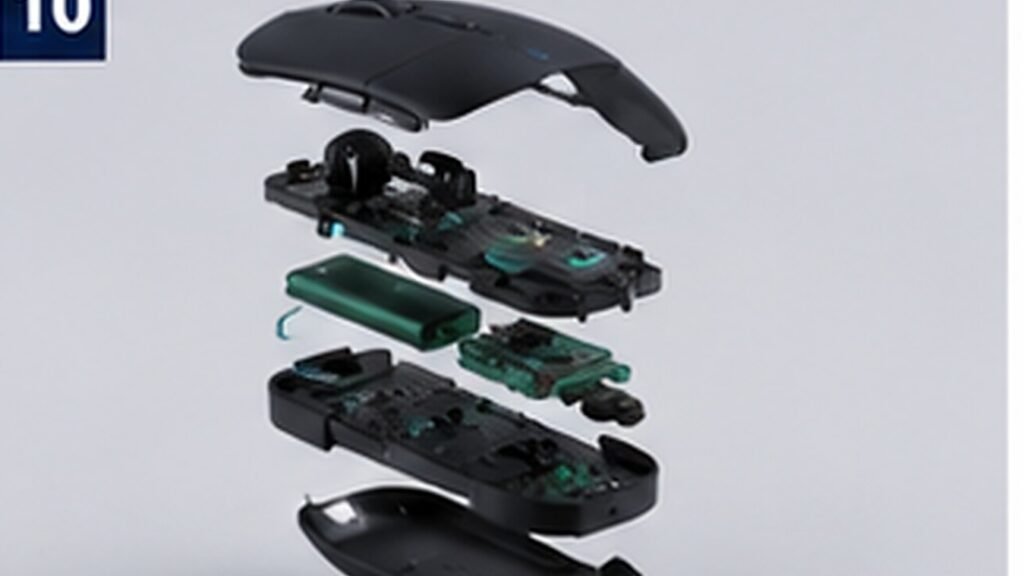
How to Choose an AI Voice Mouse Supplier for Middle East Private-Label Brands: 7 Proven Steps
Choosing the right AI Voice Mouse supplier for a Middle East private-label brand comes down to seven verifiable checks: Arabic voice performance, firmware and app localization, MOQ and tooling terms, sample validation, certification planning for GCC markets, lead-time realism, and after-sales support. This guide walks private-label buyers through each step, with comparison tables, red flags, and a practical buyer checklist. The goal is not to find the cheapest quote but to select a manufacturer whose voice stack, customization options, and compliance documentation can survive distributor and retail due diligence in the Middle East.
Table of Contents
Table of Contents
AI Voice Mouse supplier: Table of Contents
- Short Answer: What Should Middle East Buyers Look For?
- Key Takeaways
- Key Facts for Buyers
- What Is an AI Voice Mouse and Why It Matters in the Middle East
- Step 1: Define the Voice Use Case Before Contacting Suppliers
- Step 2: Audit the Voice Stack and Arabic Language Coverage
- Step 3: Compare Private-Label and OEM/ODM Models
- Step 4: Validate Samples With a Structured Test Protocol
- Step 5: Plan Compliance for GCC and Wider Middle East Markets
- Step 6: Confirm MOQ, Tooling, and Lead-Time Realism
- Step 7: Evaluate After-Sales, Warranty, and Firmware Updates
- Supplier Comparison: Questions That Separate Real OEMs From Traders
- Common Mistakes and Buyer Red Flags
- Practical Buyer Checklist
- FAQ
- Conclusion
- Next Step With STAR KING

Short Answer: What Should Middle East Buyers Look For?
Middle East private-label buyers should prioritize AI Voice Mouse suppliers that can demonstrate real Arabic (and ideally Gulf-dialect) voice accuracy on sample units, offer firmware and app localization options, document MOQ tiers and tooling ownership clearly, and provide a compliance plan covering CE, RoHS, UN38.3 where applicable, and country-specific import requirements. Price matters, but voice quality, firmware control, and documentation quality usually determine whether a private-label SKU succeeds with distributors and retail chains.
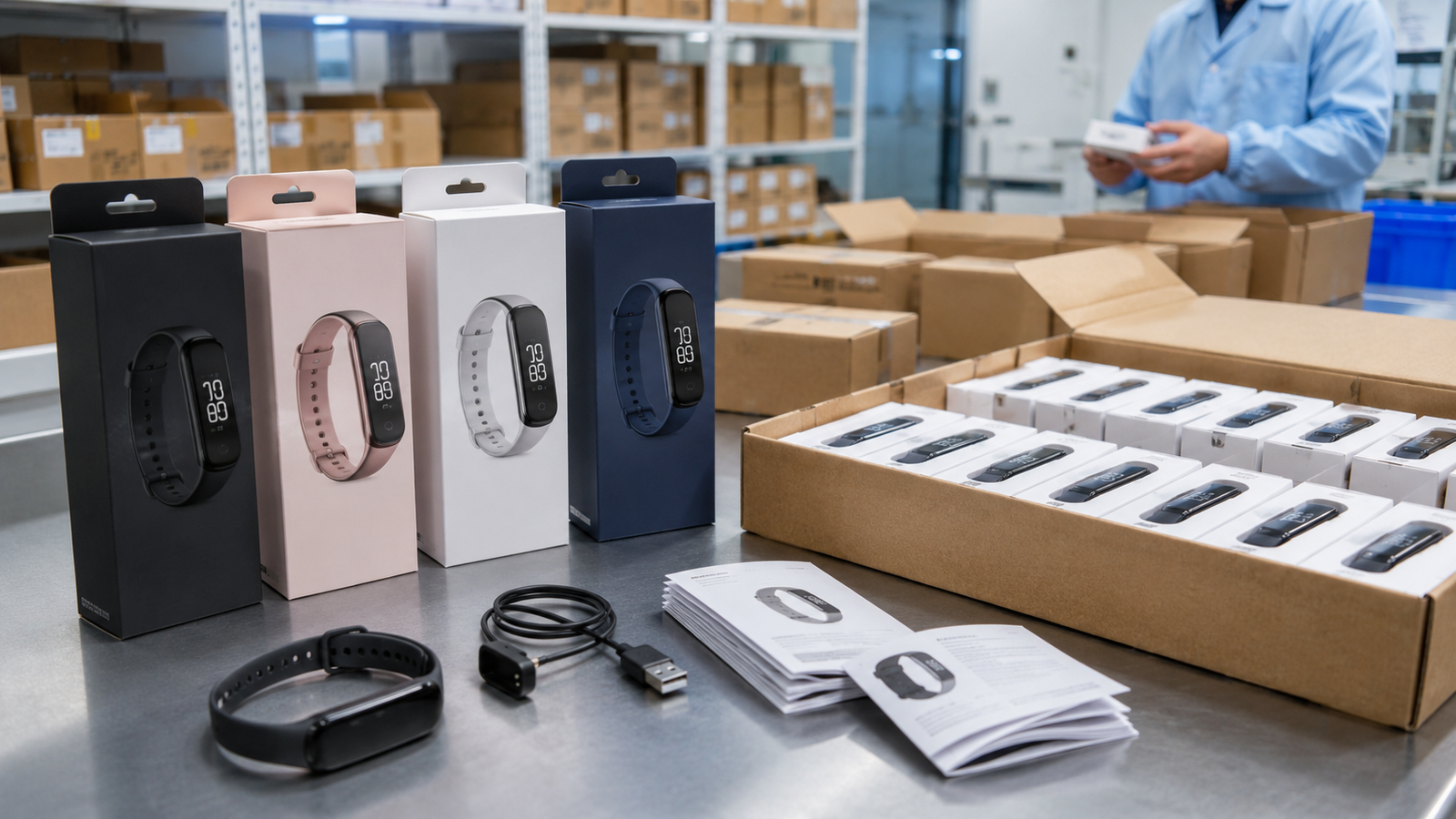
Key Takeaways
- Arabic voice performance is the single biggest differentiator in the Middle East; test it on samples, not spec sheets.
- Ask whether the supplier owns the firmware or uses a third-party stack, because this affects customization speed and roadmap.
- Private-label models range from logo-only to full ODM; choose based on how much control you need over app, packaging, and firmware.
- MOQ, tooling fees, and lead times should be confirmed in writing with sample and mass-production milestones.
- Compliance requirements depend on the destination country and product configuration; buyers should verify with local authorities.
- After-sales firmware updates and spare-part policy are part of supplier selection, not an afterthought.

Key Facts for Buyers
| Decision Area | What to Verify | Typical Impact |
|---|---|---|
| Voice stack | On-device vs cloud, supported languages, Arabic dialect coverage | Dictation accuracy, latency, privacy positioning |
| Private-label scope | Logo, packaging, app branding, firmware strings | Brand differentiation and retail readiness |
| MOQ | Tiered pricing, color mix, packaging minimums | Cash flow and inventory risk |
| Tooling | Mold ownership, modification cost, amortization | Long-term IP and switching cost |
| Samples | Lead time, fee, refundability on order | Validation speed |
| Compliance | CE, RoHS, battery documentation, local import rules | Customs clearance and retail acceptance |
| Lead time | Sample vs mass production, peak-season buffer | Launch timing and reorder flexibility |
| After-sales | Warranty terms, firmware updates, spare parts | Returns rate and brand reputation |
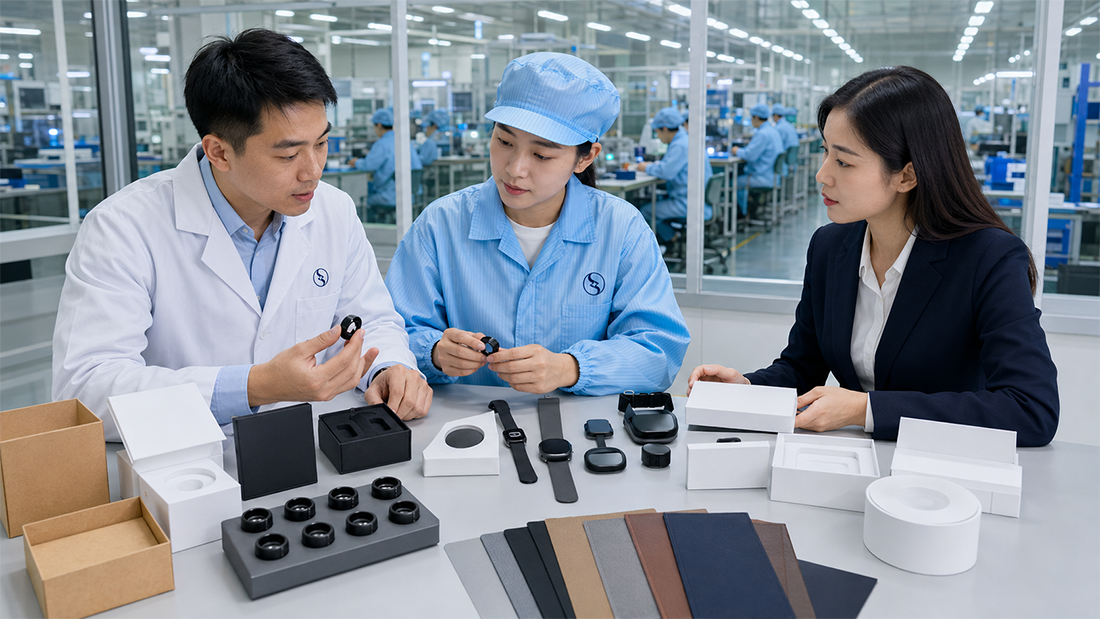
What Is an AI Voice Mouse and Why It Matters in the Middle East
An AI Voice Mouse is a computer mouse that combines conventional cursor control with a microphone and voice-processing firmware or software, enabling voice dictation, voice commands, translation, and AI-assisted text input. For Middle East markets, the appeal is practical: bilingual professionals, students, and government-adjacent users often switch between Arabic and English throughout the day, and a voice mouse can reduce typing friction when the voice engine handles Arabic accurately.
Private-label brands evaluating this category should treat it as a software-plus-hardware product rather than a generic peripheral. The mouse hardware is relatively commoditized; the voice experience, app ecosystem, and firmware roadmap are where differentiation lives. Buyers who understand this distinction ask better supplier questions and avoid the common trap of comparing only unit price and shell design.
[Image suggestion: AI Voice Mouse supplier sample units lined up for private-label evaluation, with Arabic and English packaging prototypes]
Step 1: Define the Voice Use Case Before Contacting Suppliers
Supplier selection starts with a clear internal brief. Before requesting quotes, define who will use the product and in what language mix. A device sold to corporate procurement teams in the UAE may prioritize English and Modern Standard Arabic dictation with meeting-note features, while a retail SKU aimed at students may prioritize quick translation and low latency. These are different product requirements, and they lead to different supplier questions.
Use-case questions to settle internally
- Which languages must be supported at launch, and which can follow in a firmware update?
- Is the primary value dictation, translation, AI assistant commands, or a combination?
- Will the product be sold through retail, e-commerce, distributors, or corporate channels?
- What price band and packaging format does each channel expect?
- Do you need app branding under your own name, or is a co-branded app acceptable?
Answering these questions first prevents the common situation where a buyer collects five quotes that are not comparable. It also gives the supplier a reason to propose a specific configuration rather than a generic catalog item.
Step 2: Audit the Voice Stack and Arabic Language Coverage
The voice stack is the core of an AI Voice Mouse, and it is also where suppliers differ most. Ask whether speech recognition runs on-device, in the cloud, or in a hybrid model. On-device processing can support privacy and offline use cases but may limit language coverage; cloud processing can improve accuracy and language breadth but requires connectivity and raises data-handling questions that corporate buyers in the region may ask about.
Arabic language questions to ask every supplier
- Which Arabic variants are supported today, and is Gulf-dialect input handled or only Modern Standard Arabic? [STAR KING TO CONFIRM]
- Can the supplier provide a live demonstration or recorded accuracy test on Arabic dictation?
- How are language packs updated, and can a private-label brand control update timing?
- Does the voice engine support code-switching between Arabic and English within a sentence?
- What happens when the device is offline?
Treat language coverage as a validation item, not a marketing claim. A supplier that can demonstrate Arabic dictation on a sample unit is more credible than one that lists dozens of languages on a spec sheet without evidence. Buyers should also check whether the mouse integrates with common desktop operating systems and whether the companion app is required for full functionality.
For buyers comparing AI hardware categories, the same evaluation logic applies to other voice-first devices; STAR KING’s AI translators and AI Voice Mouse product lines are worth reviewing to understand the current feature baseline.
Step 3: Compare Private-Label and OEM/ODM Models
Private-label brands often start with logo customization on an existing model and later move toward deeper ODM work. Understanding the difference early helps buyers choose a supplier that can grow with them. The table below summarizes common models; exact scope varies by supplier and should be confirmed in writing.
| Model | Customization Scope | Typical MOQ Range | Best For |
|---|---|---|---|
| Logo-only private label | Logo on product and packaging | Lower | Brands testing a new category |
| Packaging customization | Retail box, manual, inserts, barcodes | Moderate | Retail and e-commerce launches |
| App and firmware branding | App name and icons, firmware strings, default language | Moderate to higher | Brands building a software identity |
| Full ODM | Industrial design, firmware features, app features, packaging | Higher | Distributors and established brands |
For deeper detail on customization options, see STAR KING’s private-label OEM/ODM solutions. Buyers should ask which items are included in the base price and which are billed separately, since packaging and app customization are frequent sources of quote mismatch.
Step 4: Validate Samples With a Structured Test Protocol
Sample testing is where supplier claims meet reality. Rather than an informal trial, build a short protocol that mirrors your target use cases. Test Arabic and English dictation in quiet and noisy environments, check latency, verify app onboarding, and review packaging quality. Record results so different suppliers can be compared on the same criteria.
Sample validation protocol
- Test dictation accuracy in Modern Standard Arabic and at least one Gulf dialect if relevant. [STAR KING TO CONFIRM]
- Measure response latency for common voice commands.
- Test code-switching between Arabic and English in a single sentence.
- Check pairing and setup experience on Windows and macOS.
- Review firmware version and update mechanism.
- Inspect build quality, button feel, and battery documentation.
- Confirm packaging artwork matches approved files.
Samples may be free or fee-based depending on the supplier and order intent. Ask whether sample fees are credited against the first bulk order. A supplier that is transparent about sample costs and lead times is usually easier to work with during mass production.
[Image suggestion: Buyer testing an AI Voice Mouse with Arabic dictation software during sample validation]
Step 5: Plan Compliance for GCC and Wider Middle East Markets
Compliance is destination-specific. An AI Voice Mouse is a powered electronic device, and requirements typically depend on the product configuration, radio modules, battery type, and destination country. For GCC markets, buyers should verify current import and certification requirements with local authorities or a qualified compliance consultant. Commonly discussed items include CE marking for European-origin supply chains, RoHS for hazardous substances, and battery transport documentation such as UN38.3 and MSDS where a lithium battery is present.
Ask the supplier which certifications are already held for the specific SKU and which would be performed at your cost. Do not assume a generic certificate covers a customized variant. For reference, buyers can consult the U.S. Federal Communications Commission for radio-frequency equipment context and the International Electrotechnical Commission for relevant standards frameworks. Regional requirements should be confirmed with the relevant Gulf authority.
For broader context on quality processes, see STAR KING’s related resources on smart hardware sourcing and quality.
Step 6: Confirm MOQ, Tooling, and Lead-Time Realism
MOQ and lead time are linked to customization depth. Logo-only orders usually move faster than full ODM projects, and packaging customization adds artwork approval and print time. Buyers should ask for a milestone schedule covering sample approval, artwork sign-off, mass production, quality inspection, and shipping. Vague lead times are a red flag; credible suppliers can explain what drives the schedule.
Terms to confirm in writing
- MOQ per model and per color, and whether mixed-color orders are allowed
- Tooling fees, ownership, and amortization terms
- Packaging minimums and print-ready file requirements
- Payment terms and deposit percentage
- Pre-shipment inspection arrangements
- Shipping terms and lithium battery documentation responsibilities
Tooling ownership deserves particular attention. If a private-label brand pays for a mold or a custom enclosure, the contract should state who owns the tool and under what conditions it can be transferred. This is standard practice in OEM manufacturing but is sometimes left ambiguous, which creates friction if the brand later changes suppliers.
Step 7: Evaluate After-Sales, Warranty, and Firmware Updates
An AI Voice Mouse depends on firmware and app updates to stay useful as voice models and operating systems change. Ask how firmware updates are delivered, whether the private-label brand controls release timing, and what happens if the supplier’s voice engine changes its terms. Warranty terms, spare-part availability, and return-handling procedures should also be documented.
Middle East buyers often need to support users across multiple countries, so clarify whether after-sales support is handled by the brand, the supplier, or a local partner. A supplier that provides clear escalation paths and replacement-part policies reduces the operational burden on a private-label team.
Supplier Comparison: Questions That Separate Real OEMs From Traders
| Question | Strong Supplier Signal | Warning Signal |
|---|---|---|
| Do you own the firmware roadmap? | Clear roadmap and version history | Vague answers or reliance on an unnamed third party |
| Can you show Arabic dictation on a sample? | Demonstration or recorded test | Spec sheet only, no demo |
| What is included in the quote? | Itemized scope and exclusions | Lump-sum quote with no detail |
| Who owns custom tooling? | Written ownership terms | Avoids the question |
| Which certifications apply to this SKU? | SKU-specific documentation | Generic certificates only |
| How do firmware updates work? | Defined release and support process | No update policy |
Common Mistakes and Buyer Red Flags
- Comparing unit price without scope parity. A lower quote may exclude packaging, app branding, or certification support.
- Skipping Arabic sample tests. Spec-sheet language lists are not evidence of usable dictation accuracy.
- Assuming certifications transfer to custom variants. Certification scope typically depends on the final configuration.
- Ignoring tooling ownership. Ambiguity here can raise switching costs later.
- Accepting vague lead times. Milestone-based schedules are more reliable than single-date promises.
- Overlooking firmware update policy. A voice product without an update path dates quickly.
- Not confirming who handles battery shipping documentation. Lithium battery transport paperwork is often a shared responsibility.
Mid-article note: If you are shortlisting suppliers now, it helps to request a sample and a written customization scope from at least two candidates, then compare them against the same protocol. STAR KING can provide sample and customization details on request.
Practical Buyer Checklist
| Check | Question to Ask | Evidence to Request |
|---|---|---|
| Voice stack | On-device or cloud? Which Arabic variants? | Demo recording or live test |
| Customization scope | Logo, packaging, app, firmware? | Written scope document |
| MOQ | Per model, per color, packaging minimums? | Quotation with tiers |
| Tooling | Fees, ownership, amortization? | Contract clause |
| Samples | Lead time, fee, credit on order? | Sample invoice terms |
| Compliance | Which certificates apply to this SKU? | SKU-specific documents |
| Lead time | Schedule by milestone? | Production plan |
| After-sales | Warranty, firmware updates, spare parts? | Support policy document |
FAQ
What MOQ should a private-label brand expect for an AI Voice Mouse?
MOQ depends on customization depth. Logo-only orders typically require fewer units than projects involving custom packaging, app branding, or new tooling. Ask for tiered MOQs and confirm whether mixed-color orders are allowed. [STAR KING TO CONFIRM]
Can Arabic voice dictation accuracy be tested before ordering?
Yes. Request a sample unit and test Modern Standard Arabic and, if relevant, Gulf-dialect input in quiet and noisy conditions. Record results and compare suppliers on the same protocol rather than relying on spec sheets.
Are CE, RoHS, or FCC certificates automatically valid for my private-label variant?
Not necessarily. Certification scope typically depends on the final product configuration and destination market. Confirm which documents apply to your SKU and verify current requirements with local authorities.
Who owns the mold if I pay for custom tooling?
Ownership should be stated in the contract. Many OEM arrangements define the brand as the tool owner, but terms vary. Clarify transfer conditions before paying tooling fees.
How long does mass production usually take after sample approval?
Lead time varies with customization and order volume. Ask for a milestone schedule covering artwork approval, production, inspection, and shipping, and plan buffer time for peak seasons.
Does the companion app need to be branded for my private label?
App branding is an optional customization. Some buyers use a co-branded app at launch and move to fuller branding later. Confirm whether app branding affects MOQ or development timelines.
What documentation is needed for lithium battery shipping?
Where a lithium battery is present, buyers and suppliers typically discuss UN38.3 test summaries and MSDS documentation, along with carrier requirements. Responsibilities should be assigned in the purchase agreement.
Conclusion
Selecting an AI Voice Mouse supplier for Middle East private-label brands is a structured evaluation, not a price comparison. The suppliers worth shortlisting can demonstrate Arabic voice performance, explain their firmware and app customization boundaries, document MOQ and tooling terms, and provide SKU-specific compliance guidance. Buyers who validate samples against a consistent protocol and confirm after-sales policy early reduce launch risk and build a supply relationship that can scale from a first order to a regional distribution program.
Next Step With STAR KING
If you are evaluating AI voice input hardware for a private-label launch in the Middle East, STAR KING can help you compare specifications, discuss OEM/ODM and packaging customization options, and confirm certification requirements for your target markets. Contact the STAR KING sales team to request product samples or discuss an OEM/ODM project.
Discuss Your Smart Wearable OEM/ODM Project
Planning a smart ring, smart watch, smart band, AI glasses, AI translator, or AI voice mouse project? Contact STAR KING to discuss product positioning, sample testing, customization scope, certification requirements, lead time, and quotation details.

Team Star King

Scan WhatsApp QR code
Leave a Reply