
smart rings RFQ: Smart Rings for Importers: 10 RFQ Checks Before You Commit in 2026
November 15, 2026 · Team Star King
Smart Rings for Importers: 10 RFQ Checks Before You Commit in 2026
If you are an importer preparing a smart rings RFQ, the fastest way to reduce risk is to send a structured request that forces suppliers to confirm specifications, MOQ, testing, certification scope, app support, and lead time in writing. A smart ring RFQ is not a price request alone; it is a procurement document that defines what you are buying, how it will be validated, and who owns the software and tooling after the order. This guide gives you 10 practical checks for 2026, built around the questions importers actually ask during supplier evaluation.
Table of Contents
Table of Contents
Short Answer
A strong smart rings RFQ should require: (1) a written specification sheet with sensor and battery details, (2) MOQ tiers and sample pricing, (3) the exact certification scope by SKU and target market, (4) a testing and pre-shipment inspection plan, (5) app and firmware ownership terms, and (6) a lead time breakdown. Importers who collect these six items before negotiating price usually avoid the most expensive problems later: failed compliance checks, app abandonment, and unexpected tooling costs.
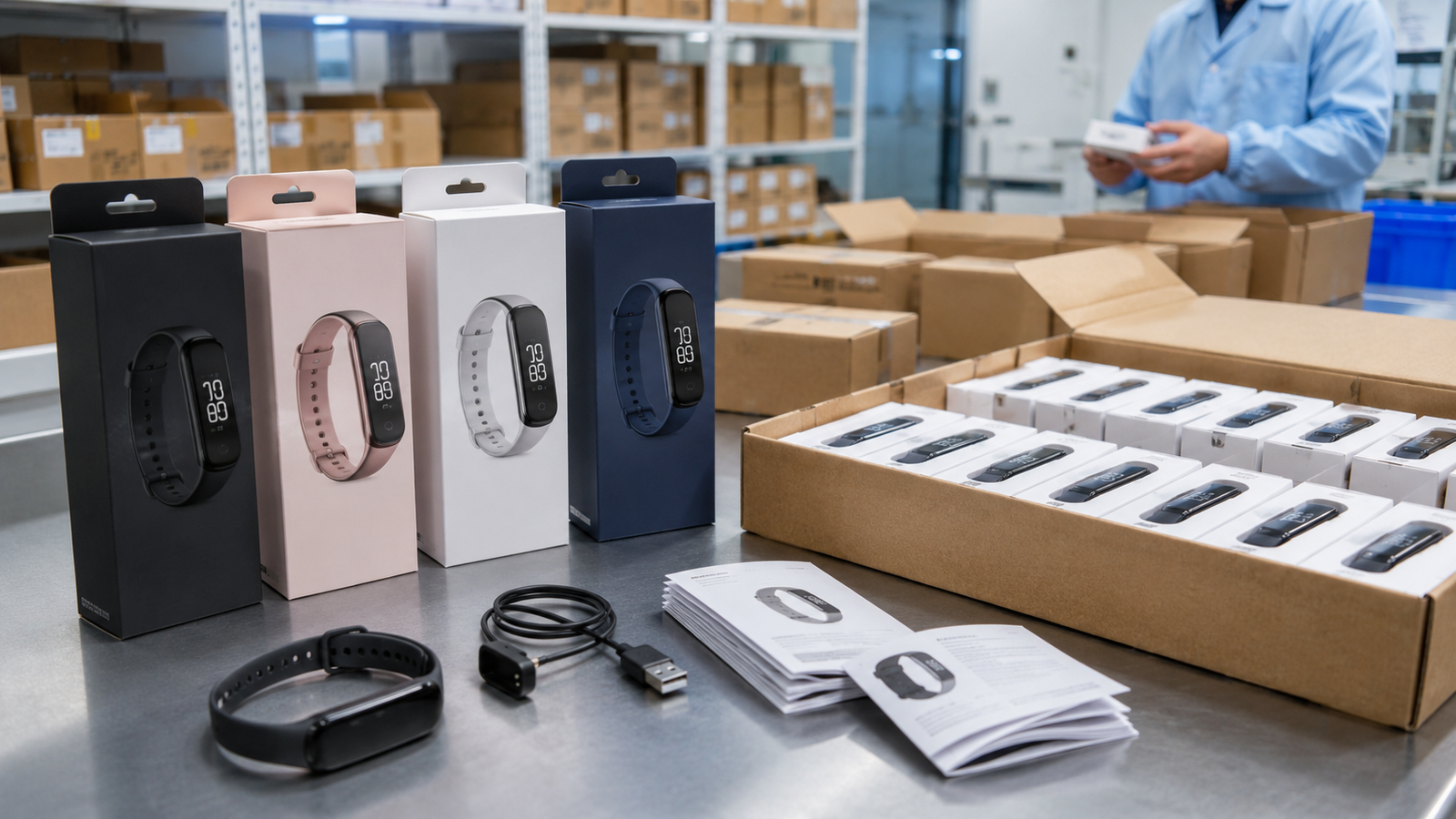
Table of Contents
- What Is a Smart Rings RFQ and Why It Matters for Importers
- Key Takeaways
- Key Facts for Buyers
- 10 Smart Rings RFQ Checks for 2026
- Comparison Table: RFQ Stage vs. What to Verify
- Common Mistakes and Buyer Red Flags
- Practical Buyer Checklist
- FAQ
- Conclusion

What Is a Smart Rings RFQ and Why It Matters for Importers
A smart rings RFQ (Request for Quotation) is a formal document that importers send to potential suppliers to obtain pricing and commercial terms for a defined smart ring product configuration. Unlike a simple price inquiry, an RFQ for smart rings should include the intended market, target certifications, expected order volume, branding requirements, app integration needs, and testing expectations. The RFQ response becomes the baseline for comparing suppliers and for drafting the purchase order.
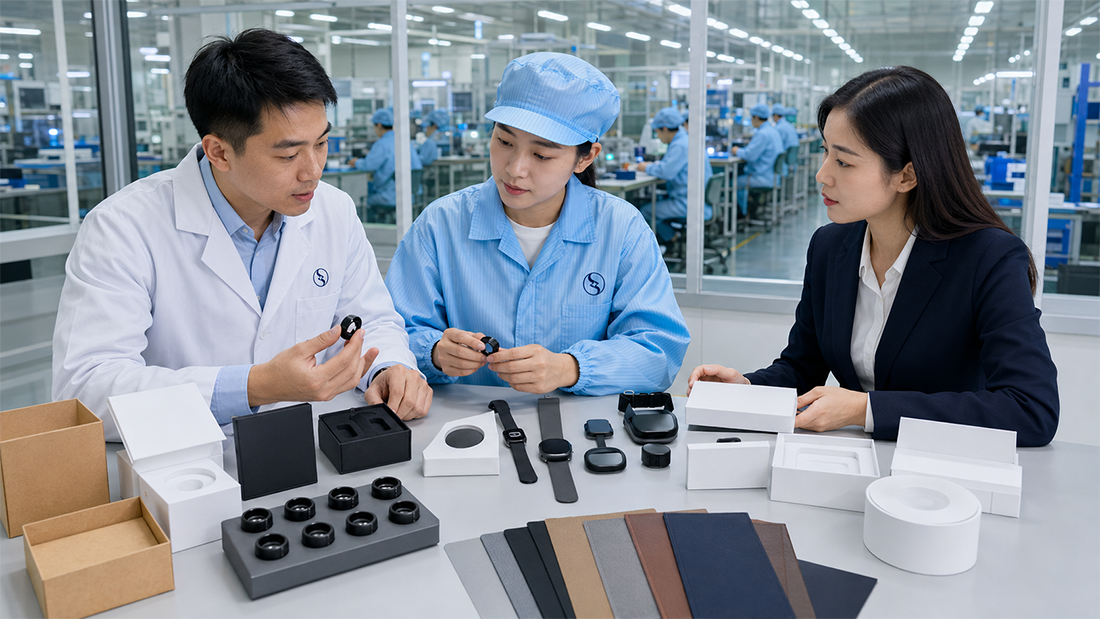
Importers use RFQs because smart rings combine hardware, firmware, mobile app, and battery-powered compliance requirements. A supplier may quote a low unit price but exclude certification costs, app customization, or tooling for a custom logo. A well-structured RFQ exposes these differences early, before you invest in samples or travel to a trade show.
Key Takeaways
- Send a written RFQ that specifies target market, certification scope, and app requirements—not just quantity and price.
- Ask for MOQ tiers (e.g., 500, 1,000, 3,000 units) and sample pricing separately from mass production pricing.
- Require a testing plan that covers battery safety (UN38.3), EMC, and waterproof performance claims.
- Clarify who owns the mobile app, firmware, and tooling if you pay for customization.
- Request a lead time breakdown: sample lead time, mass production lead time, and shipping lead time.
- Verify certification scope by SKU and target country; do not accept generic “CE/FCC available” statements.
Key Facts for Buyers
| RFQ Item | Why It Matters | What to Request |
|---|---|---|
| Product specification | Defines sensor accuracy, battery life, and materials | Detailed spec sheet with sensor model, battery capacity, charging method, and water resistance rating |
| MOQ and pricing tiers | Affects cash flow and inventory planning | MOQ for standard model and for custom logo/packaging; price at 500, 1,000, 3,000 units |
| Certification scope | Required for customs clearance and retail listing | List of certificates by SKU and target market; confirmation of validity dates |
| Testing plan | Reduces defect and return risk | Pre-shipment inspection checklist, battery test report, drop test and waterproof test results |
| App and firmware | Affects user experience and long-term support | App ownership terms, firmware update policy, API availability, data privacy compliance |
| Lead time | Impacts launch timing and reorder planning | Sample lead time, production lead time, and shipping lead time by mode |
10 Smart Rings RFQ Checks for 2026
1. Specify the Product Configuration in Writing
Start your smart rings RFQ with a clear configuration: ring sizes, materials (e.g., stainless steel, titanium, or plastic), sensor set (heart rate, SpO2, temperature), battery capacity, charging method, and water resistance rating. Importers often receive quotes for different configurations without realizing it, making price comparison unreliable. Ask the supplier to confirm each item in a table and to state which features are standard versus optional. This step also helps you compare smart rings from different suppliers on equal terms.
2. Request MOQ Tiers and Sample Pricing
MOQ is not a single number; it typically varies by customization level. A standard model with stock packaging may have a lower MOQ than a model with custom logo, custom color, and custom packaging. Ask for MOQ tiers at 500, 1,000, and 3,000 units, and request sample pricing separately. Clarify whether sample costs are refundable against a bulk order. For importers new to smart rings, starting with a smaller MOQ and standard packaging can reduce initial risk; see private label OEM/ODM for customization stages.
3. Clarify Certification Scope by SKU and Market
Certification requirements depend on the product configuration and the destination market. For example, a smart ring with Bluetooth typically requires FCC certification for the United States, CE marking for the European Union, and may require UKCA for the United Kingdom. Battery-containing devices often require UN38.3 test reports for air transport. Ask the supplier to list certificates by SKU and target country, and to confirm whether the certificate covers the exact model you are ordering. Do not accept “CE/FCC available” without a certificate number and scope. Buyers should verify certification requirements with a qualified compliance consultant or the relevant authority.
4. Require a Testing and Inspection Plan
Your RFQ should ask for the supplier’s testing plan: incoming material inspection, in-process checks, aging testing, waterproof testing, drop testing, and pre-shipment inspection. For battery safety, request UN38.3 test reports and MSDS documentation. If the supplier cannot provide a written testing plan, that is a red flag. A practical approach is to request a sample pre-shipment inspection checklist and confirm who performs the inspection—supplier QC or a third-party agency. This step supports quality control and reduces the risk of receiving a batch with high defect rates.
5. Define App, Firmware, and Data Ownership
Smart rings rely on a mobile app and firmware to function. Ask whether the app is supplier-owned or customizable, who owns the app source code if you pay for customization, and how firmware updates are handled. For private-label brands, app branding (name, icon, colors) is important. Also ask about data privacy compliance (e.g., GDPR for the EU) and whether health data is stored locally or in the cloud. If you plan to integrate with a corporate wellness platform, confirm API availability. These questions prevent the common problem of a supplier discontinuing app support after the first order.
6. Request a Lead Time Breakdown
Lead time is not one number. Ask for sample lead time (typically 7–15 days for standard models), mass production lead time (often 25–45 days after deposit and sample approval), and shipping lead time by mode (air, sea, express). For customized models with new tooling, add tooling development time. Importers should plan reorders based on production lead time plus safety stock. A supplier that gives a single lead time without breakdown may be underestimating. Use the STAR KING blog for more on lead time planning.
7. Clarify Packaging and Branding Customization
Packaging customization affects MOQ, cost, and lead time. Ask for options: custom logo on the ring, custom color, custom retail box, user manual in your language, and compliance labels (e.g., CE mark, FCC ID, WEEE symbol). Confirm whether the supplier handles artwork approval and whether you own the packaging design files. For Amazon sellers, packaging must meet marketplace requirements, including suffocation warnings and country-of-origin labeling. Request a packaging mock-up before mass production.
8. Confirm After-Sales, Warranty, and Spare Parts
Your RFQ should state the warranty period (e.g., 12 months) and the process for defective units: replacement, credit, or repair. Ask for the defect rate threshold that triggers a replacement batch. Also ask about spare parts availability (chargers, ring sizing kits) and whether the supplier provides technical support to your customer service team. For importers selling through retail chains, a clear after-sales policy is often required in the supply agreement.
9. Address International Shipping and Lithium Battery Requirements
Smart rings contain lithium batteries, which are regulated for air transport. Ask the supplier to confirm UN38.3 test reports, MSDS, and proper battery labeling. Confirm whether the supplier can ship by air (with battery declaration) or whether sea freight is required. For small orders, express couriers may have specific battery shipping restrictions. Importers should verify with their freight forwarder and ensure the supplier provides the necessary documents. This step avoids customs delays and ensure compliance with international shipping rules.
10. Protect Intellectual Property and Tooling Ownership
If you pay for custom tooling (e.g., a new ring mold or charging case), your RFQ should state who owns the tooling and whether it can be transferred to another supplier. Also address IP ownership for custom designs, firmware, and app code. For private-label brands, request a written agreement that the supplier will not sell your custom design to other buyers. This is particularly important for importers building a brand. Clarify these terms before paying a tooling deposit.
Comparison Table: RFQ Stage vs. What to Verify
| RFQ Stage | Action | What to Verify |
|---|---|---|
| Before RFQ | Define product configuration and target market | Spec sheet, certification needs, app requirements |
| During RFQ | Send structured questionnaire | MOQ tiers, sample price, lead time breakdown, testing plan |
| Sample evaluation | Test sample against specification | Sensor accuracy, battery life, app functionality, waterproof performance |
| Pre-production | Approve golden sample and packaging | Logo, packaging artwork, compliance labels |
| Mass production | Monitor production and inspection | Pre-shipment inspection report, defect rate |
| Shipping | Confirm documents and logistics | UN38.3, MSDS, commercial invoice, packing list |
Common Mistakes and Buyer Red Flags
Mistake 1: Comparing prices without comparing specifications. A lower price may reflect a smaller battery, fewer sensors, or no certification. Always compare the spec sheet line by line.
Mistake 2: Accepting verbal certification claims. Ask for certificate numbers and scope. A red flag is a supplier who cannot provide a certificate for the exact model you are ordering.
Mistake 3: Ignoring app ownership. If the supplier owns the app and stops updating it, your product may lose functionality. Clarify app support terms in writing.
Mistake 4: Underestimating lead time for customized packaging. Custom packaging often adds 7–15 days. Plan accordingly.
Red flag: No testing plan. A supplier that cannot describe their testing process may have inconsistent quality.
Red flag: Unwillingness to provide references. While STAR KING does not disclose client names, legitimate suppliers can share general case studies or allow a factory audit.
Practical Buyer Checklist
- ☐ Product specification sheet with sensor models and battery capacity
- ☐ MOQ tiers for standard and customized versions
- ☐ Sample pricing and refund policy
- ☐ Certification list by SKU and target market
- ☐ Testing plan including UN38.3, MSDS, and pre-shipment inspection
- ☐ App customization and ownership terms
- ☐ Lead time breakdown (sample, production, shipping)
- ☐ Packaging and branding options with mock-up
- ☐ Warranty and after-sales process
- ☐ Tooling ownership and IP protection agreement
FAQ
What is the typical MOQ for smart rings?
MOQ varies by supplier and customization. Standard models with stock packaging may start at 500 units; custom logo and packaging often require 1,000–3,000 units. Some suppliers offer lower MOQ for sample orders. Always confirm MOQ in the RFQ response.
How long does it take to get a smart ring sample?
Sample lead time for standard models is typically 7–15 days after payment. Customized samples with new tooling may take 20–30 days. Confirm sample lead time in the RFQ.
What certifications are required for smart rings?
Certification depends on the target market. For the US, FCC certification is typically required for Bluetooth devices. For the EU, CE marking is required, which includes EMC and RF requirements. Battery-containing devices usually need UN38.3 for transport. Buyers should verify specific requirements with a compliance consultant.
Can I customize the app for my brand?
Many suppliers offer app customization, including logo and color changes. Full app rebranding (name, icon, features) may require additional fees and longer lead time. Clarify app ownership and update policy in the RFQ.
What is the lead time for mass production?
Mass production lead time is often 25–45 days after deposit and sample approval, depending on order quantity and customization. Add shipping time (air: 5–10 days; sea: 25–40 days) for total lead time.
How do I verify a supplier’s quality?
Request a pre-shipment inspection checklist, ask for test reports (UN38.3, MSDS), and consider a third-party inspection. A factory audit is also an option for larger orders.
What should I do if I find a defect in the sample?
Document the defect with photos and a description, and ask the supplier for a corrective action plan. If the defect is significant, request a new sample before approving mass production.
Conclusion
A structured smart rings RFQ is the most effective tool importers have to control cost, quality, and compliance risk. By requiring written confirmation of specifications, MOQ, certification scope, testing, app ownership, and lead time, you shift the conversation from price to total procurement value. Use the 10 checks in this guide as the basis for your next RFQ, and keep the buyer checklist handy when comparing supplier responses. For importers planning to enter the smart ring market in 2026, a disciplined RFQ process is the first step toward a reliable product launch.
STAR KING CTA
Ready to send your smart rings RFQ? STAR KING supports importers with OEM/ODM and private label smart ring projects. Request a quotation or discuss your customization requirements with our team. We can provide specification sheets, MOQ options, and sample testing support. Request a smart ring quotation to get started.
Useful Official References for Buyers
- FCC equipment authorization guidance
- European Commission CE marking information
- Bluetooth SIG specifications
Discuss Your Smart Wearable OEM/ODM Project
Planning a smart ring, smart watch, smart band, AI glasses, AI translator, or AI voice mouse project? Contact STAR KING to discuss product positioning, sample testing, customization scope, certification requirements, lead time, and quotation details.

Team Star King

Scan WhatsApp QR code
Leave a Reply