
AI voice mouse sourcing: AI Voice Mouse for Middle East E-commerce: 7 Checks Before You Source
October 20, 2026 · Team Star King
AI Voice Mouse for Middle East E-commerce: 7 Checks Before You Source
If you sell on Amazon.ae, Noon, or a Middle East web store, an AI voice mouse sourcing plan should start with seven practical checks: Arabic voice accuracy, firmware and app support, MOQ and landed cost, compliance for GCC markets, sample testing, packaging localization, and after-sales parts. This guide explains what e-commerce sellers should verify before placing a bulk order, so you can avoid slow-moving inventory and unclear supplier commitments.
Table of Contents
Table of Contents
AI voice mouse sourcing: Table of Contents
- Key Takeaways
- Key Facts for Buyers
- What Is an AI Voice Mouse?
- Why Middle East E-commerce Sellers Are Testing Voice Mice
- Check 1: Arabic and English Voice Accuracy
- Check 2: Firmware, App, and Update Support
- Check 3: MOQ and Landed Cost Planning
- Check 4: Compliance for GCC Sales Channels
- Check 5: Sample Testing and Validation
- Check 6: Packaging, Branding, and Localization
- Check 7: After-Sales, Warranty, and Spare Parts
- Comparison Table: Entry-Level vs. Custom AI Voice Mouse
- Common Mistakes and Buyer Red Flags
- Practical Buyer Checklist
- FAQ
- Conclusion

Key Takeaways
- Arabic voice recognition quality varies widely; test with real regional accents before ordering.
- Firmware and companion-app support determine long-term customer satisfaction and return rates.
- MOQ, tooling, and customization directly affect landed cost and cash flow for e-commerce sellers.
- Compliance requirements for the GCC depend on product configuration and sales channel; verify with your supplier.
- Packaging localization and after-sales parts planning are often overlooked but affect margin.
- Request samples and a clear specification sheet before committing to bulk production.

Key Facts for Buyers
| Factor | What to Verify | Why It Matters |
|---|---|---|
| Voice accuracy | Arabic (MSA + Gulf dialect) and English recognition rates | Reduces returns and negative reviews |
| Connectivity | Bluetooth version, 2.4 GHz dongle, battery life | Affects user experience and compatibility |
| MOQ | Standard and customized MOQ tiers | Balances inventory risk and unit cost |
| Compliance | CE, FCC, RoHS, battery documentation as applicable | Required for marketplace listing and customs |
| Customization | Logo, packaging, firmware language pack | Builds brand differentiation |
| Lead time | Sample turnaround and mass production schedule | Supports launch and restock planning |
| After-sales | Warranty terms, spare parts availability | Protects margin and customer trust |

What Is an AI Voice Mouse?
An AI voice mouse is a computer mouse that combines standard cursor control with a microphone and voice-processing firmware, allowing users to dictate text, issue commands, or trigger translation and productivity functions. Unlike a conventional mouse, it depends on embedded firmware, sometimes a companion app, and often cloud-based speech recognition to convert speech into text or actions. For B2B buyers, the key evaluation point is not the marketing label but whether the voice pipeline—microphone, firmware, app, and language model—works reliably for your target users.
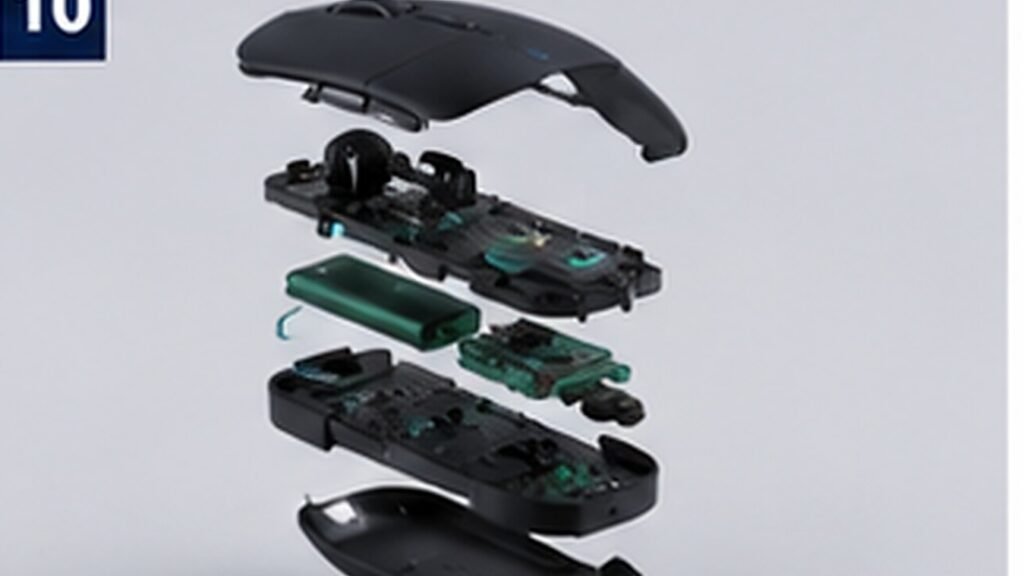
Buyers should evaluate an AI voice mouse on four layers: hardware (microphone array, battery, connectivity), firmware (language packs, update mechanism), software (app compatibility, privacy terms), and supply chain (MOQ, lead time, spare parts). Weakness in any layer can create returns or support tickets after launch.
Why Middle East E-commerce Sellers Are Testing Voice Mice
Middle East e-commerce markets have several characteristics that make voice input relevant: high smartphone penetration, growing remote-work and online-education usage, and a multilingual population that frequently switches between Arabic and English. For sellers, an AI voice mouse can serve productivity, accessibility, and education niches. However, demand is still developing, so inventory planning should be conservative and based on sample testing rather than broad assumptions.
Before listing, sellers should confirm marketplace category requirements and any restrictions on wireless devices. For general guidance on radio-frequency equipment, refer to the U.S. Federal Communications Commission (FCC) for FCC-related questions, and to the European Committee for Standardization (CEN) for CE-related context. For the Middle East, requirements typically depend on the specific country and sales channel; buyers should verify with local authorities or a compliance consultant.
Multimedia Insertion Suggestion
[Insert image: AI voice mouse sourcing checklist for Middle East e-commerce sellers]
ALT: “AI voice mouse sourcing checklist showing Arabic voice accuracy and MOQ factors for Middle East e-commerce”
Check 1: Arabic and English Voice Accuracy
Voice accuracy is the most important product decision for Middle East buyers. Arabic has multiple dialects and a formal written standard (Modern Standard Arabic, MSA). A mouse that performs well in English may struggle with Gulf, Egyptian, or Levantine accents. Sellers should request a demonstration or sample unit and test with native speakers using realistic phrases—email drafts, search queries, and meeting notes.
Ask the supplier which speech-recognition engine or cloud service is used, whether Arabic is supported natively or through a third-party app, and whether language packs can be updated. If the supplier cannot provide clear answers, treat accuracy claims as unverified.
What to Test
- Dictation accuracy for MSA and at least one Gulf dialect.
- Switching between Arabic and English within the same sentence.
- Background noise performance (office, home, classroom).
- Latency between speech and on-screen text.
Check 2: Firmware, App, and Update Support
Firmware and app support determine whether the product stays useful after launch. A buyer should confirm the update mechanism (over-the-air or desktop tool), the expected support period, and whether custom language packs or commands can be added. For private-label sellers, firmware customization and app branding may be available through an OEM/ODM partner—see STAR KING’s private label and OEM/ODM solutions for context on customization scope.
Also clarify data-handling terms: where voice data is processed, whether it is stored, and what privacy commitments the supplier makes. This matters for corporate and education buyers who may have stricter requirements.
Check 3: MOQ and Landed Cost Planning
MOQ affects cash flow and inventory risk. Typical AI voice mouse MOQs vary by supplier and customization level; buyers should request a clear MOQ schedule for standard units, logo customization, and full packaging customization. Landed cost should include unit price, packaging, tooling (if any), freight, duties, and marketplace fees.
For growing e-commerce sellers, a phased approach often works: start with a small sample order, validate sell-through, then negotiate volume pricing. Ask whether the supplier offers mixed-model orders or tiered pricing to reduce initial risk.
Landed Cost Components
- Unit price and packaging cost.
- Freight and insurance (lithium battery shipping rules may apply).
- Import duties and VAT in the destination country.
- Marketplace referral and fulfillment fees.
- Warranty reserve and spare-parts allowance.
Check 4: Compliance for GCC Sales Channels
Compliance requirements for wireless and battery-powered devices vary by country and channel. For the GCC, buyers should verify whether the product needs radio-frequency approval, safety documentation, or battery transport documents. A supplier’s existing certificates may cover a specific configuration; changes to the radio module, battery, or charger can affect validity.
Request copies of test reports and certificates, check that the model number matches the product you are buying, and confirm the standards referenced. For battery safety and transport, documents such as UN38.3 test summaries and MSDS are commonly requested. STAR KING can provide certification documentation for specific configurations where available; buyers should confirm requirements for their target market before ordering. For official reference on battery transport, see the International Air Transport Association (IATA) lithium battery guidance.
Compliance Documents to Request
- CE and FCC test reports (if applicable to your market).
- RoHS compliance statement.
- UN38.3 test summary and MSDS for the battery.
- Model-number consistency check.
Check 5: Sample Testing and Validation
Sample testing is the most reliable way to reduce sourcing risk. Order at least two to three sample units and test them across different computers, operating systems, and network conditions. Document battery life, pairing stability, microphone pickup distance, and software installation steps. If possible, run a small paid pilot with real users before committing to volume.
Ask the supplier for a sample test report template or checklist; a professional supplier should support structured validation. For related product context, review STAR KING’s AI voice mouse product page.
Multimedia Insertion Suggestion
[Insert image: sample testing of AI voice mouse with Arabic and English dictation]
ALT: “Sample testing AI voice mouse for Arabic and English dictation accuracy before bulk sourcing”
Check 6: Packaging, Branding, and Localization
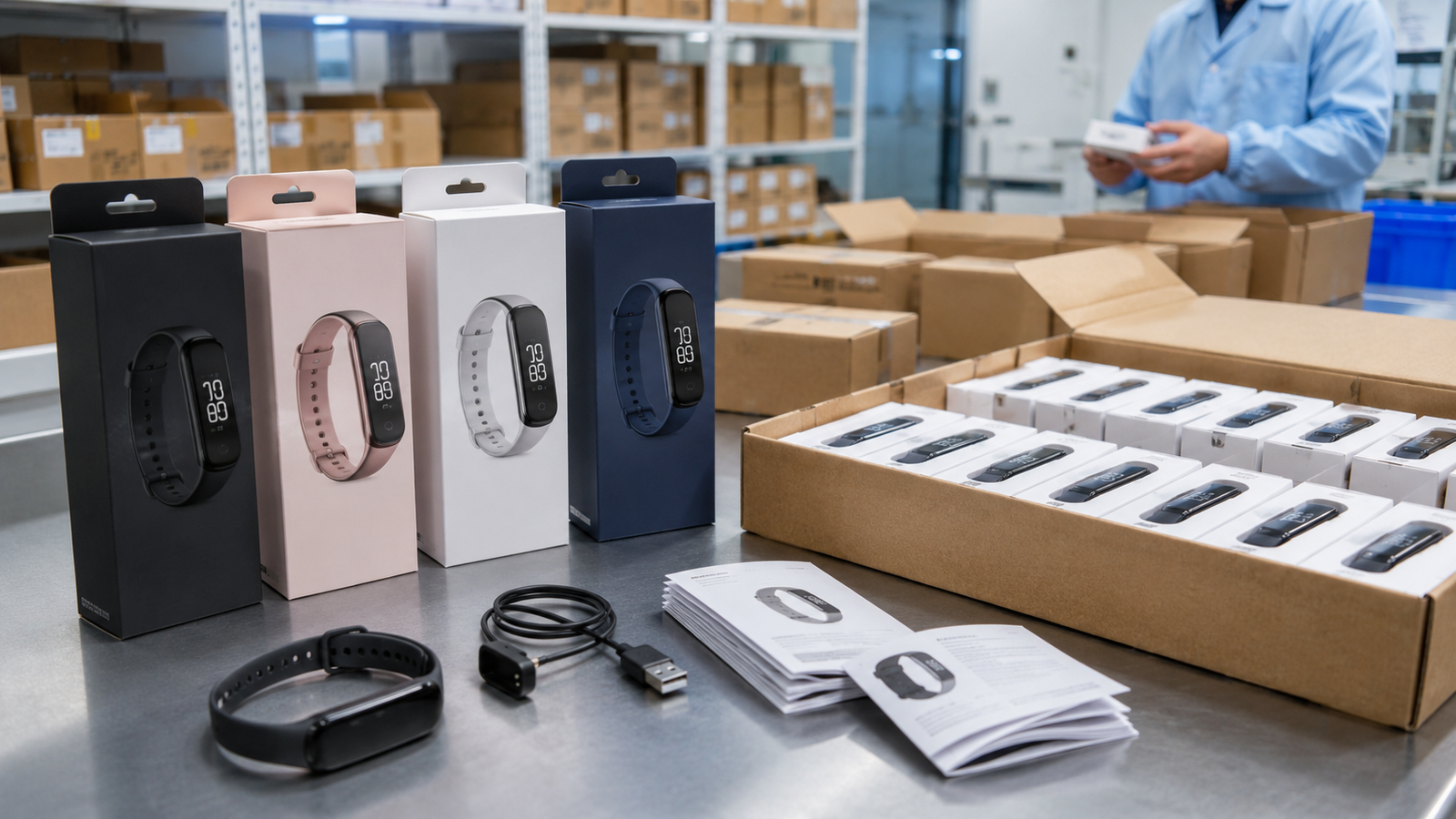
Packaging and branding affect conversion and perceived value. For Middle East e-commerce, bilingual packaging (Arabic and English) is often preferred. Confirm whether the supplier can customize the logo, retail box, user manual, and insert cards, and whether bilingual manuals are available. Also check that packaging meets marketplace requirements for labeling and warnings.
Private-label sellers should clarify artwork approval steps, minimum order quantities for customized packaging, and lead time impact. For a broader view of customization options, see smart retail and e-commerce solutions.
Check 7: After-Sales, Warranty, and Spare Parts
After-sales planning protects margin and brand reputation. Ask about warranty terms, defect-handling procedures, and spare-parts availability (dongles, charging cables, mice feet). For e-commerce sellers, a clear return-and-replacement policy with the supplier is essential. Also confirm whether the supplier provides troubleshooting guides or firmware rollback options.
If you sell on marketplaces with strict performance metrics, a small defect rate can have a large impact. Include a warranty reserve in your landed cost calculation and negotiate a defect allowance where possible.
Comparison Table: Entry-Level vs. Custom AI Voice Mouse
| Factor | Entry-Level Standard Unit | Custom Private-Label Unit |
|---|---|---|
| MOQ | Lower, often stock colors | Higher, depends on customization |
| Logo and packaging | Limited or none | Logo, retail box, manual, inserts |
| Firmware language | Standard language set | Possible custom language pack [STAR KING TO CONFIRM] |
| Lead time | Shorter | Longer due to tooling and approval |
| Unit cost | Higher per unit at low volume | Lower per unit at volume, plus setup cost |
| Brand value | Generic | Differentiated |
Common Mistakes and Buyer Red Flags
- Relying on English-only demos: demand Arabic testing with native speakers.
- Accepting certificate copies without model matching: verify model numbers and standards.
- Ignoring firmware update plans: a product without updates may become obsolete quickly.
- Underestimating landed cost: include freight, duties, and warranty reserve.
- Ordering full volume before sampling: validate demand with a pilot first.
- Unclear spare-parts terms: confirm availability before launch.
Practical Buyer Checklist
- ☐ Test Arabic (MSA + Gulf) and English dictation on sample units.
- ☐ Confirm firmware update mechanism and support period.
- ☐ Request MOQ schedule for standard and customized configurations.
- ☐ Calculate full landed cost including duties and warranty reserve.
- ☐ Verify compliance documents match the exact model and target market.
- ☐ Approve bilingual packaging and manual artwork.
- ☐ Confirm warranty, defect handling, and spare-parts availability.
- ☐ Plan a small pilot before bulk order.
FAQ
1. What is the typical MOQ for an AI voice mouse?
MOQ varies by supplier and customization. Standard units may have lower MOQs, while custom logo or packaging orders typically require higher volumes. Request a written MOQ schedule and confirm whether tiered pricing applies.
2. Can the voice mouse support Arabic dialects?
Support depends on the speech-recognition engine and language packs. Buyers should test MSA and at least one Gulf dialect with sample units and confirm whether updates can add or improve dialect support.
3. Which certifications are needed for Middle East e-commerce?
Requirements vary by country and sales channel. Common requests include radio-frequency approval, safety documentation, and battery transport documents. Buyers should verify with local authorities or a compliance consultant and confirm certificates match the exact product configuration.
4. How long does sampling and production take?
Sample turnaround and mass production lead times depend on customization and order volume. Confirm a written schedule covering sample approval, packaging artwork, production, and shipping. [STAR KING TO CONFIRM]
5. Can I customize the logo and packaging for my brand?
Many OEM/ODM suppliers offer logo and packaging customization, often with higher MOQs. Clarify artwork approval steps, bilingual manual options, and lead-time impact before ordering.
6. How should I handle lithium battery shipping?
Lithium battery shipping may require UN38.3 test summaries, MSDS, and compliant packaging. Confirm with your freight forwarder and refer to IATA guidance for air transport rules.
7. What after-sales support should I expect?
Ask for warranty terms, defect-handling procedures, and spare-parts availability. A clear replacement policy and troubleshooting resources reduce marketplace risk.
Conclusion
AI voice mouse sourcing for Middle East e-commerce rewards buyers who test early and verify details. Focus on Arabic accuracy, firmware support, MOQ and landed cost, compliance, sample validation, packaging localization, and after-sales planning. A structured approach reduces returns, protects margin, and builds a product that fits regional user expectations. For a broader view of AI hardware categories, explore STAR KING’s blog resources.
STAR KING CTA
Ready to move from evaluation to testing? Request AI voice mouse samples from STAR KING and confirm specifications, customization options, MOQ, and compliance documentation for your target market.
Multimedia Insertion Suggestion
[Insert image: AI voice mouse packaging and branding options for Middle East e-commerce]
ALT: “AI voice mouse sourcing packaging and branding options for Middle East e-commerce sellers”
Discuss Your Smart Wearable OEM/ODM Project
Planning a smart ring, smart watch, smart band, AI glasses, AI translator, or AI voice mouse project? Contact STAR KING to discuss product positioning, sample testing, customization scope, certification requirements, lead time, and quotation details.

Team Star King

Scan WhatsApp QR code
Leave a Reply