
smart rings for Amazon sellers: How Amazon Sellers Should Source Smart Rings: 9 Evaluation Checks Before Private Label Launch
October 20, 2026 · Team Star King
How Amazon Sellers Should Source Smart Rings: 9 Evaluation Checks Before Private Label Launch
Smart rings for Amazon sellers are not a simple add-on SKU. They combine a wearable sensor, a companion app, a rechargeable lithium battery, and marketplace compliance obligations in one small package. Before you commit to a private label order, you should verify nine things: supplier capability, app ownership, MOQ economics, sample performance, certification status, battery safety documentation, packaging and branding, lead time reliability, and after-sales support. This guide walks Amazon sellers through each check with buyer-focused questions, a comparison table, and a practical checklist.
Table of Contents
Table of Contents
smart rings for Amazon sellers: Table of Contents
- Short Answer
- Key Takeaways
- Key Facts for Buyers
- What Is a Private Label Smart Ring and Why Amazon Sellers Care
- Check 1: Supplier Capability and Manufacturer Verification
- Check 2: App Integration and Firmware Ownership
- Check 3: MOQ, Pricing, and Landed Cost
- Check 4: Sample Testing and Validation
- Check 5: Certification and Marketplace Compliance
- Check 6: Battery Safety and Shipping Documentation
- Check 7: Packaging and Brand Customization
- Check 8: Lead Time, Tooling, and Production Planning
- Check 9: Warranty, Spare Parts, and After-Sales
- Comparison Table: OEM vs ODM vs Private Label
- Common Mistakes and Buyer Red Flags
- Practical Buyer Checklist
- FAQ
- Conclusion

Short Answer
To source smart rings for Amazon sellers reliably, you should shortlist suppliers that can document production capability, provide a working companion app or clear customization path, quote transparent MOQ and lead time tiers, and supply certification and battery safety documents for your target marketplace. Run a paid sample evaluation before placing a bulk order, and confirm who owns the app, firmware, and tooling before you invest in branding.

Key Takeaways
- Smart rings for Amazon sellers succeed or fail on app quality and certification, not just hardware appearance.
- Private label smart rings usually require logo, packaging, and app-level customization, each with different cost and lead time impacts.
- MOQ and unit price are linked to ring sizes, colorways, and packaging complexity; ask for tiered quotes.
- Lithium battery shipping rules and marketplace compliance documents should be confirmed before launch.
- Always validate samples with real user testing and a documented QC checklist before scaling.
Key Facts for Buyers
| Evaluation Area | What to Verify | Why It Matters on Amazon |
|---|---|---|
| Supplier capability | Factory or trading status, product line focus, [STAR KING TO CONFIRM] | Reduces risk of inconsistent batches and missing documentation |
| App integration | Existing app, white-label option, API or SDK availability | Poor app experience drives returns and negative reviews |
| MOQ and pricing | Tiered MOQ, size/color mix, packaging cost | Affects cash flow and first-order risk |
| Certification | CE, FCC, RoHS, UN38.3, MSDS as applicable | Marketplace and customs may require documentation |
| Battery safety | UN38.3 test summary, MSDS, shipping labels | Air freight and marketplace compliance depend on it |
| Lead time | Sample, production, and shipping timelines | Late stock hurts launch windows and ranking |
| After-sales | Warranty terms, spare parts, replacement policy | Protects seller metrics and customer satisfaction |

What Is a Private Label Smart Ring and Why Amazon Sellers Care
A private label smart ring is a wearable device manufactured by an OEM/ODM partner and sold under the seller’s own brand, typically with customized logo, packaging, and in some cases app branding. For Amazon sellers, the appeal is straightforward: smart rings sit in a growing wearable category with compact shipping volume, strong gift potential, and health-and-fitness positioning that fits multiple buyer segments.
The trade-off is complexity. A smart ring is not a passive accessory. It depends on sensor accuracy, firmware stability, app connectivity, and battery management. Buyers should treat supplier selection as a product-development decision, not a price comparison exercise.
Where smart rings fit in an Amazon catalog
Amazon sellers often add smart rings as a premium tier above smart bands, or as a companion SKU to existing fitness accessories. If you already sell wearables, review our smart ring product range and compare it with your current catalog before defining price bands.
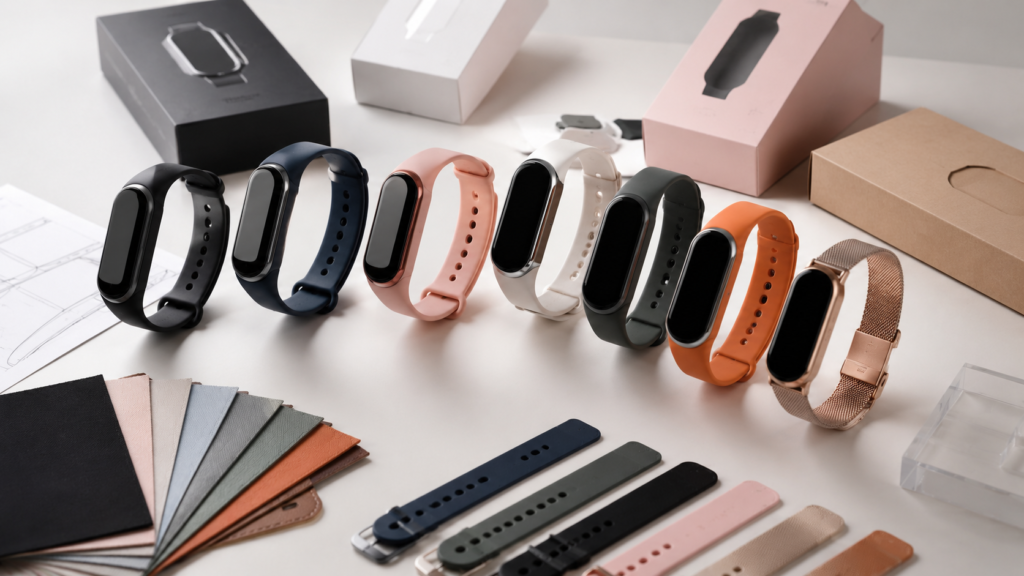
Image suggestion: place a product lineup image here showing ring sizes and colorways (see image SEO suggestions).
Check 1: Supplier Capability and Manufacturer Verification
Before discussing price, confirm what kind of supplier you are talking to. A manufacturer with in-house assembly and testing can usually answer technical questions directly. A trading company may still be a valid partner, but the responsibility chain is different.
Ask for a written overview of production scope, product lines, and quality processes. Clarify which steps are in-house and which are outsourced. For smart ring lines specifically, ask about sensor module sourcing, battery suppliers, and final assembly testing.
Investigate the supplier’s broader manufacturing background rather than relying on a single product page. Reviewing a private label OEM/ODM solution overview helps you compare how customization, sampling, and production stages are structured.
Questions to ask during verification
- Are you the manufacturer or a trading intermediary? [STAR KING TO CONFIRM]
- Which smart ring components are sourced in-house versus externally?
- What testing happens before final packaging?
- Can you share documentation on quality control procedures?
Check 2: App Integration and Firmware Ownership
The companion app is part of the product. On Amazon, app crashes, pairing failures, and confusing dashboards generate returns and one-star reviews faster than minor hardware flaws.
Ask whether the supplier offers a ready-made app, a white-label app, or SDK/API access. Confirm who owns the app listing, who controls updates, and what happens if you want to change branding later. Also clarify data handling practices, since health data raises privacy expectations in many markets.
For a deeper comparison of app expectations, see our guidance on fitness tracking applications and how companion software supports user retention.
App evaluation points
- Platform support: iOS and Android versions, minimum OS requirements
- Languages supported and localization options
- Account structure and data export
- Update frequency and bug-fix process
- Firmware update mechanism
Soft CTA: If your team is comparing app and firmware customization options for a smart ring launch, reviewing sample builds early usually saves weeks later in the project.
Check 3: MOQ, Pricing, and Landed Cost
Smart rings for Amazon sellers are often quoted with tiered MOQs. Lower tiers may limit color, size, or packaging options. Higher tiers may unlock better unit costs but increase inventory risk.
Build a landed cost model before committing. Include unit price, packaging, branding, freight, duties, marketplace fees, and expected return rate. Sellers frequently underestimate the cost of packaging and size-mix complexity.
Ring sizing is a hidden cost driver. If a supplier requires a minimum quantity per size, your inventory spread changes. Ask for a size-mix policy and confirm whether sizing kits are available for customer support.
Cost factors to model
- Unit price by MOQ tier
- Logo customization and packaging tooling
- Size and color minimums
- Freight mode and battery shipping surcharges
- Duties, taxes, and marketplace referral fees
For a broader planning perspective, review our smart retail and e-commerce solution notes on channel requirements.
Check 4: Sample Testing and Validation
Order samples and test them as a buyer would, not as an engineer. Wear the ring for several days, test charging, pairing, app stability, and comfort. Document failures with photos and dates.
Request a sample that matches your intended production configuration as closely as possible, including packaging if available. Ask whether sample costs are deductible from a bulk order.
Sample test checklist
- Pairing and reconnection reliability
- Battery life versus claimed specification
- Charging dock behavior and cable quality
- Sensor readings consistency across users
- Water resistance under normal use, based on supplier specification
- App navigation and language accuracy
- Packaging unboxing and instruction clarity
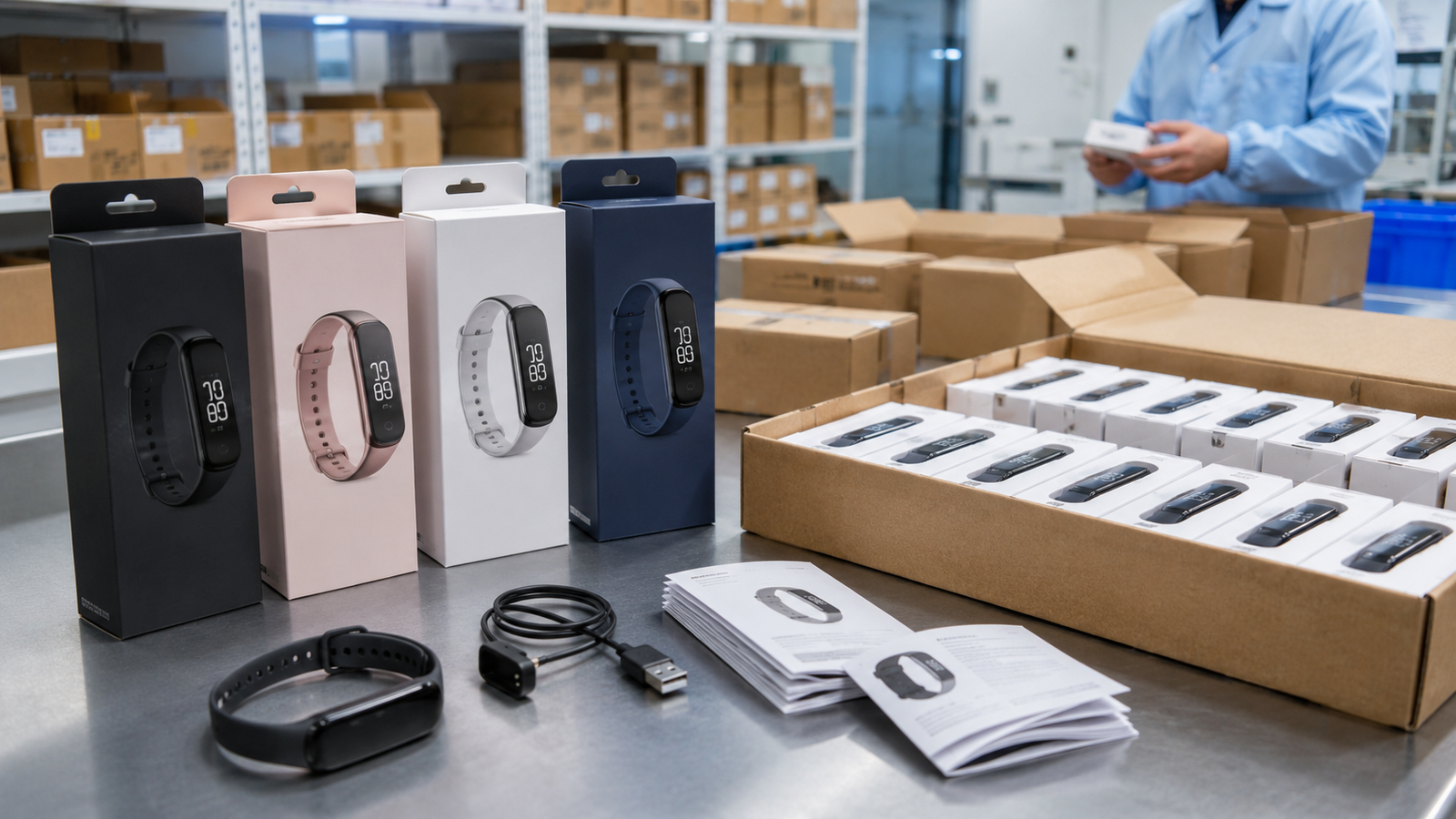
Image suggestion: insert a QC or sample-testing photo here.
Check 5: Certification and Marketplace Compliance
Certification requirements typically depend on the product’s wireless features, battery configuration, and destination market. Sellers should verify which documents apply rather than assume a single certificate covers all marketplaces.
For US listings, FCC requirements may apply to wireless devices. For EU sales, CE marking and RoHS compliance are commonly reviewed. Documentation should match the exact product configuration you intend to sell.
Amazon may request documentation during listing review. Review official references such as the FCC radio frequency device certification page and the European Commission CE marking overview to understand baseline expectations. Confirm with your supplier which documents are available for your configuration: [STAR KING TO CONFIRM].
Compliance documents to request
- Test reports relevant to your target market
- Declaration of conformity where applicable
- RoHS documentation
- Battery transport documents (UN38.3, MSDS)
- Packaging and labeling artwork review
Check 6: Battery Safety and Shipping Documentation
Smart rings contain lithium batteries, so shipping and storage rules apply. Air freight typically requires battery documentation such as a UN38.3 test summary and MSDS. Sellers should confirm who prepares these documents and who bears responsibility if a carrier requests additional information.
Ask how batteries are tested and what protections exist against overheating or swelling in normal use. Battery safety is a product quality issue and a logistics issue at the same time.
For reference on air transport expectations, see the IATA Dangerous Goods Regulations overview. Buyers should verify current requirements with their freight forwarder.
Check 7: Packaging and Brand Customization
Packaging influences conversion on Amazon and sets expectations for returns. A premium smart ring benefits from a clean, protective box with clear instructions. Private label packaging usually requires artwork files, dieline confirmation, and a proofing stage.
Confirm what is customizable: box structure, printing, inserts, manuals, and warranty cards. Ask whether customization affects MOQ or lead time. Some suppliers bundle logo and packaging into a single setup fee; others charge separately.
Packaging questions
- What dieline formats do you require?
- Are manuals and safety inserts included and localized?
- Can packaging accommodate a sizing kit or charging cable?
- What is the proofing and approval timeline?
Check 8: Lead Time, Tooling, and Production Planning
Ask for lead time broken into stages: sample approval, artwork proofing, material preparation, production, testing, and shipping. A single “30 days” answer is not enough for planning a launch.
Clarify tooling ownership if custom molds or packaging dies are created. Written confirmation of who owns tooling after the project ends protects your investment. If the supplier owns the app or firmware, clarify licensing terms.
Check 9: Warranty, Spare Parts, and After-Sales
Returns and defects affect seller metrics. Ask about warranty length, replacement policy, and spare parts availability. Confirm whether the supplier supports troubleshooting documentation for your customer service team.
A supplier that provides clear after-sales processes is easier to scale with. Include warranty and support terms in your purchase agreement.
Comparison Table: OEM vs ODM vs Private Label
| Model | Customization Level | Typical MOQ Impact | Best For | Key Risk |
|---|---|---|---|---|
| OEM | High; design and specs defined by buyer | Higher; tooling and development cost | Brands with defined product requirements | Longer development cycle and higher upfront cost |
| ODM | Moderate; supplier design with buyer branding | Moderate; depends on configuration | Sellers wanting faster market entry | Less product differentiation |
| Private Label | Logo, packaging, and app branding | Lower to moderate | Amazon sellers testing a new category | Reliance on supplier app and firmware roadmap |
Common Mistakes and Buyer Red Flags
- Choosing on price alone. Low quotes often exclude certification, packaging, or app support, which surface later as costs.
- Skipping app testing. An unstable app creates returns that hardware improvements cannot fix.
- Assuming certification covers every market. Requirements vary by region and product configuration; verify per market.
- Ignoring size-mix minimums. Ring sizing rules can inflate inventory and reduce flexibility.
- No documented sample approval. Verbal approvals create disputes later.
- Unclear tooling ownership. Without written terms, custom molds and packaging dies may remain with the supplier.
- No after-sales plan. Missing spare parts or support documents slows customer service response.
Red flags include evasive answers on certification documents, refusal to provide a paid sample in your target configuration, unclear battery documentation, and no written QC process.
Practical Buyer Checklist
- Verified supplier manufacturing scope and product-line focus
- Reviewed app demo, firmware update process, and data practices
- Requested tiered MOQ and landed cost breakdown
- Ordered and tested samples in target configuration
- Confirmed certification documents for each target marketplace
- Confirmed battery shipping documents and carrier requirements
- Approved packaging artwork and proofing timeline
- Documented stage-by-stage lead times and tooling ownership
- Agreed on warranty, spare parts, and support terms
Image suggestion: procurement checklist image or packaging mockup photo here.
FAQ
1. What MOQ should an Amazon seller expect for private label smart rings?
MOQ depends on configuration, ring sizes, colorways, and packaging. Ask for tiered quotes and confirm whether logo or packaging customization raises the minimum. Get the size-mix minimums in writing.
2. Do smart rings for Amazon sellers need FCC or CE certification?
Wireless-enabled devices may require FCC documentation for the US and CE marking for the EU, but requirements depend on the specific configuration and market. Ask your supplier which documents are available for your exact product and verify marketplace requirements.
3. Can the companion app be branded with our logo?
Some suppliers offer white-label or configurable app branding, while others provide SDK or API access. Confirm what is included, who controls updates, and how firmware updates are distributed.
4. How long does a private label smart ring project take?
Timeline depends on sample approval, packaging proofing, MOQ tier, and shipping mode. Request a stage-by-stage schedule rather than a single delivery estimate.
5. Are the health metrics medical-grade?
Consumer smart rings typically provide wellness and fitness metrics, not medical diagnoses. Position listings accordingly and verify how your supplier describes sensor capabilities.
6. What battery documents are needed for air freight?
Sellers commonly request UN38.3 test summaries and MSDS for lithium battery shipments. Confirm current requirements with your freight forwarder and carrier before booking shipments.
7. How do I evaluate app quality before a bulk order?
Install the app during sample testing, test pairing stability, check localization, review update history, and gather feedback from several test users over multiple days.
Conclusion
Smart rings for Amazon sellers reward buyers who evaluate the full package: supplier capability, app integration, MOQ economics, sample performance, certification, battery documentation, packaging, lead times, and after-sales terms. A structured evaluation process reduces launch risk and gives your private label program a clear path to scale.
For related planning guidance, review our B2B sourcing and product resources before finalizing your supplier shortlist.
STAR KING CTA
Ready to evaluate smart ring samples for your Amazon private label launch? Request product samples in your target configuration and confirm customization options, MOQ tiers, and certification documents with STAR KING.
Request smart ring samples and OEM/ODM details
Discuss Your Smart Wearable OEM/ODM Project
Planning a smart ring, smart watch, smart band, AI glasses, AI translator, or AI voice mouse project? Contact STAR KING to discuss product positioning, sample testing, customization scope, certification requirements, lead time, and quotation details.

Team Star King

Scan WhatsApp QR code
Leave a Reply