
AI voice mouse OEM: AI Voice Mouse for Middle East Startups: 7 Steps to OEM Sourcing Success in 2026
October 16, 2026 · Team Star King
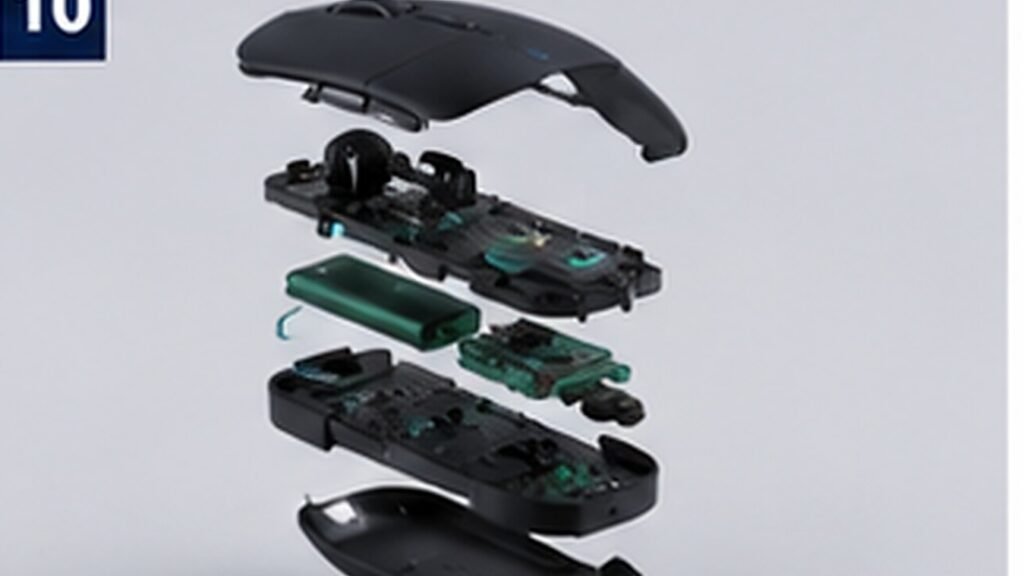
AI Voice Mouse for Middle East Startups: 7 Steps to OEM Sourcing Success in 2026
If you are a startup brand in the Middle East planning to launch an AI voice mouse, the fastest path to a saleable product is to work with an experienced AI voice mouse OEM partner that supports private label customization, Arabic voice functionality, and market-appropriate certifications. This guide gives you 7 practical steps — from supplier verification to first shipment — so you can move from idea to launch without overspending on tooling or missing compliance requirements in the GCC. It is written for founders, not engineers, and focuses on the decisions that actually affect cost, lead time, and risk.
Table of Contents
Table of Contents
Table of Contents
- Short Answer
- Key Takeaways
- Key Facts for Buyers
- What Is an AI Voice Mouse, and Why Does It Matter for Middle East Startups?
- Step 1: Define Your Use Case and Customer Profile
- Step 2: Verify AI Voice Mouse OEM Suppliers Before You Talk Price
- Step 3: Choose OEM, ODM, or Private Label
- Step 4: Lock Down Language, Firmware, and App Requirements
- Step 5: Understand MOQ, Tooling, and Pricing Logic
- Step 6: Plan Certifications for Middle East Markets
- Step 7: Validate with Samples, Then Scale to Mass Production
- Common Mistakes and Buyer Red Flags
- Practical Buyer Checklist
- FAQ
- Conclusion
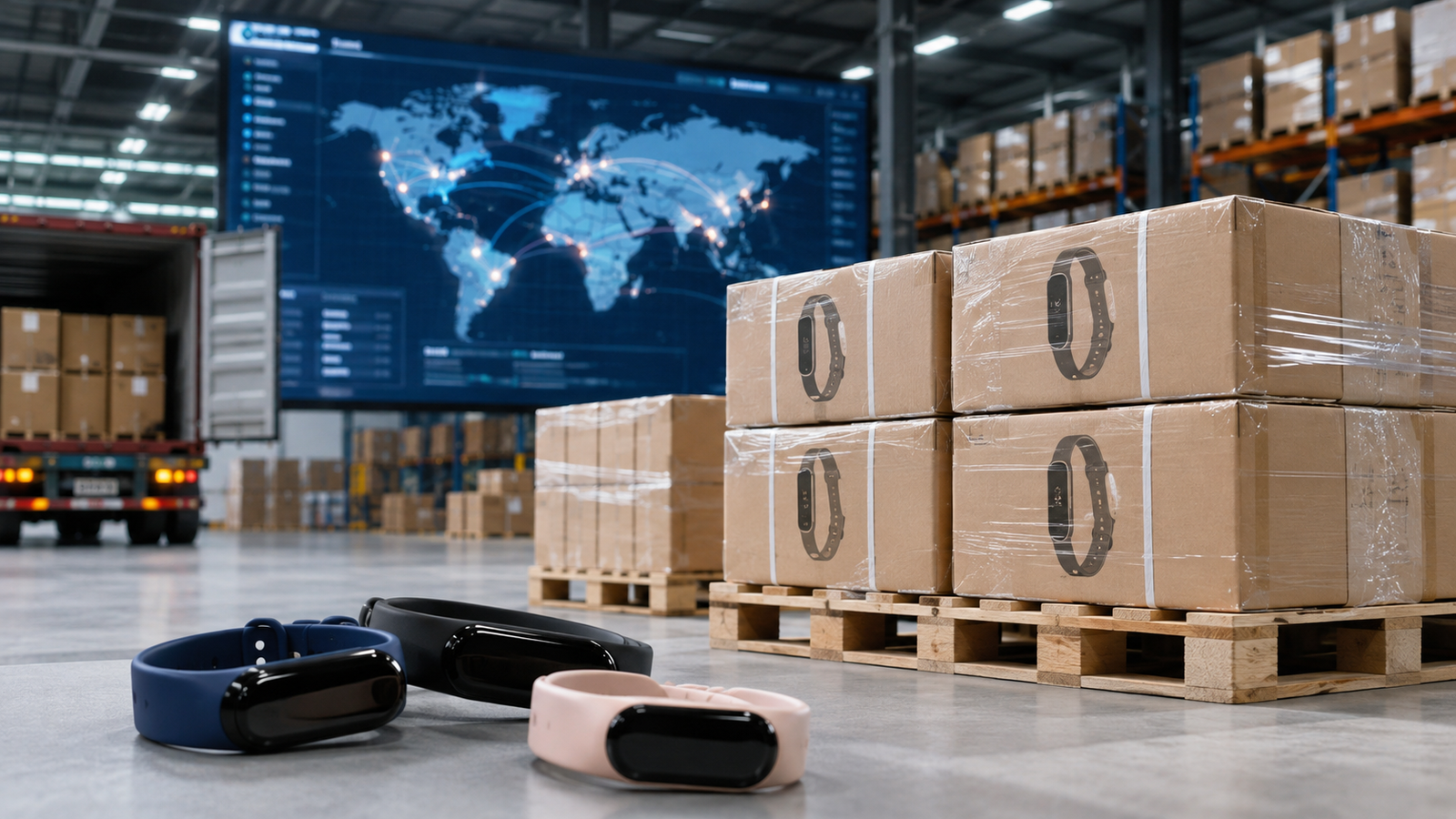
Short Answer
An AI voice mouse OEM project for a Middle East startup typically starts with a verified supplier, a defined language and firmware requirement (Arabic plus English at minimum), and a small MOQ trial order before tooling investment. Expect 4–8 weeks for samples and 6–10 weeks for mass production once specifications and certifications are confirmed. Budget for CE/FCC, RoHS, and UN38.3 (if a battery is present) and verify every claim with test reports.
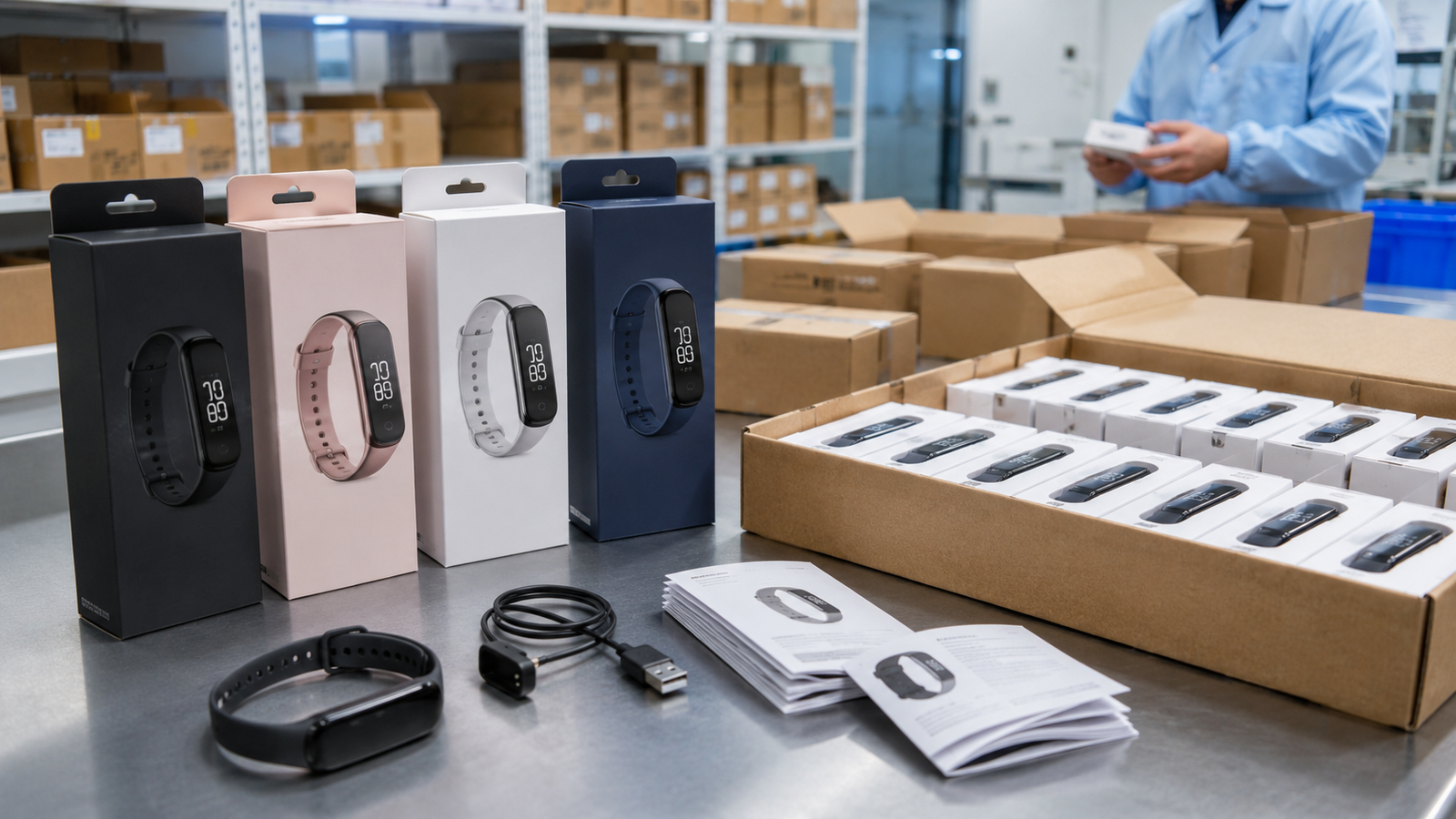
Key Takeaways
- Start with supplier verification, not price negotiation — the wrong factory costs more than a higher unit price.
- Arabic voice support, RTL text handling, and regional app store availability are the most common gaps in off-the-shelf AI voice mice.
- OEM vs ODM is a decision about speed versus differentiation: ODM is faster, OEM gives you brand ownership.
- MOQ is negotiable when you accept standard tooling and colors; customization raises both MOQ and lead time.
- Certifications depend on the specific configuration and target country — never assume a generic certificate covers your SKU.
- Always test samples against a written checklist before committing to mass production.

Key Facts for Buyers
| Item | Typical Range / Note |
|---|---|
| Product type | AI voice mouse with integrated speech-to-text, translation, or voice command functions |
| Common connection | USB receiver, Bluetooth, or dual-mode (2.4G + BT) |
| Language support | Depends on firmware and cloud vs on-device processing — Arabic support varies by model [STAR KING TO CONFIRM] |
| MOQ (public reference) | Often 500–1,000 units for private label; lower for standard models [STAR KING TO CONFIRM] |
| Sample lead time | Typically 5–15 working days [STAR KING TO CONFIRM] |
| Mass production lead time | Typically 20–45 days after deposit and sample approval [STAR KING TO CONFIRM] |
| Tooling | Required only for custom housings; standard housings avoid tooling cost [STAR KING TO CONFIRM] |
| Certifications to verify | CE, FCC, RoHS, and UN38.3/MSDS if a rechargeable battery is included |
| Customization options | Logo, packaging, app skin, firmware voice set, and button mapping |
| Target markets | UAE, Saudi Arabia, Qatar, Kuwait, Bahrain, Oman and wider MENA |
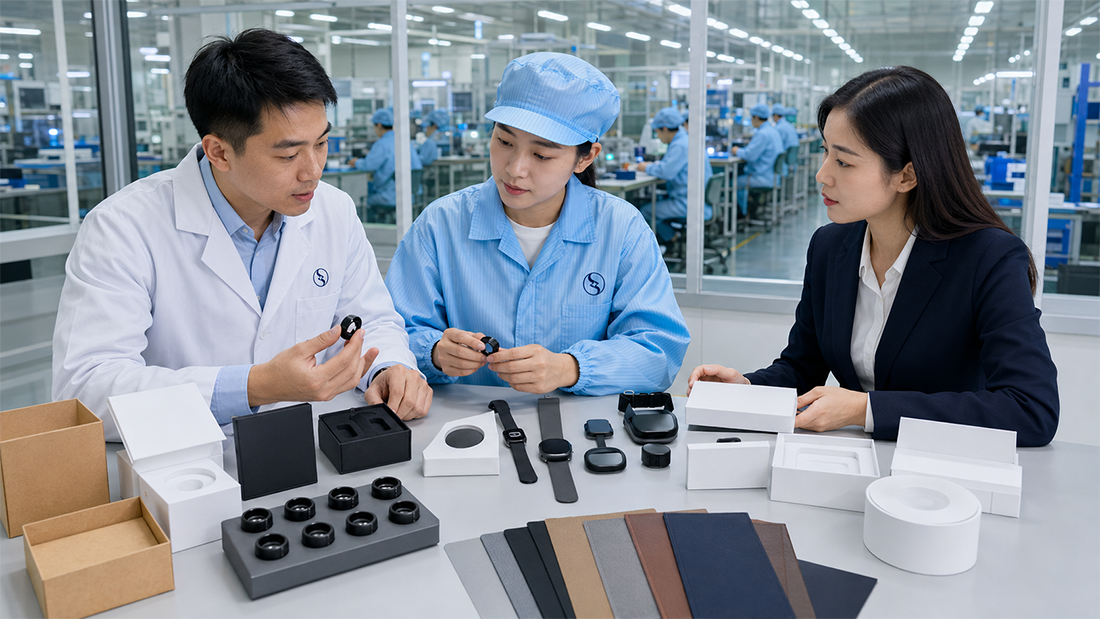
What Is an AI Voice Mouse, and Why Does It Matter for Middle East Startups?
An AI voice mouse is a computer peripheral that combines a standard pointing device with voice input, real-time speech-to-text, or AI-assisted functions such as translation and voice command execution. For a Middle East startup, the draw is clear: professionals in the UAE, Saudi Arabia, and Qatar frequently work in mixed Arabic and English environments, and a mouse that can dictate, translate, or trigger commands by voice addresses a real productivity need rather than a novelty one.
Buyers should evaluate an AI voice mouse on three dimensions: the voice stack (on-device vs cloud, language coverage, latency), the hardware (sensor quality, battery, connection stability), and the supply chain (who makes it, how customizable it is, and what certifications it carries). Marketing pages rarely separate these, which is why the sourcing steps below focus on verification.
If you are still mapping product categories for your launch, the broader AI office productivity landscape is worth reviewing alongside this guide, because voice mice usually sit inside a wider smart-office bundle that also includes AI translators and related peripherals.
Step 1: Define Your Use Case and Customer Profile
Before you contact a single factory, write a one-page specification. Middle East startup buyers usually fall into a few profiles: a B2B distributor targeting government and enterprise offices; an e-commerce seller building a branded accessory line; a system integrator bundling voice peripherals into an AV or IT package; or an education technology company equipping classrooms.
Each profile changes your sourcing decision. An enterprise-focused distributor will prioritize build quality and after-sales support. An Amazon or Noon seller will prioritize packaging, retail-ready branding, and return rates. A system integrator may need firmware customization or API access.
Questions to answer before sourcing
- Which languages must the device support out of the box?
- Is voice processing expected on-device, via cloud, or both?
- Which operating systems and apps must it work with (Windows, macOS, Android, iOS)?
- What price band can your target customer accept?
- What is your realistic first-year volume?
If your answer to the last question is “unknown,” you are in the awareness stage — that is fine. Awareness-stage founders should source a standard model first, validate demand, then invest in customization. A related category to study is the growing AI smart glasses segment, which follows similar voice-and-AI supply chain patterns.
Step 2: Verify AI Voice Mouse OEM Suppliers Before You Talk Price
Supplier verification is the step most startup founders skip, and it is the one that causes the most expensive failures. Anyone can register a domain and claim to be a manufacturer. Your job is to separate trading companies from factories and to confirm the factory actually controls the quality of the voice and hardware components.
Verification checks that matter
- Business license matching the company name on the quotation.
- A factory audit report or at least a live video walkthrough of the production and testing lines.
- Evidence of existing product lines in AI peripherals — not a generic electronics catalog.
- Named references you can contact, or verifiable export history.
- Written responses to technical questions about microphone arrays, DSP, and firmware update process.
A capable partner should be able to explain how the voice engine handles Arabic dialects, how firmware updates reach the end user, and what happens if the cloud service changes. If answers are vague, treat it as a red flag. For a broader framework, the private label OEM/ODM solution page outlines the typical workflow from brief to shipment, which is a useful comparison point when you evaluate suppliers.
Image suggestion: a photo of an engineering workstation with an AI voice mouse, laptop, and audio test software; ALT: AI voice mouse OEM sample testing in a factory lab.
Step 3: Choose OEM, ODM, or Private Label
These three models are often confused. The right choice depends on how much differentiation you need and how much time and capital you have.
| Model | What It Means | Best For | Trade-off |
|---|---|---|---|
| ODM | You buy an existing design and apply your logo/packaging | Fast launch, low capital, first order | Limited uniqueness; competitors may sell a similar shell |
| OEM | You specify the design, firmware, or hardware changes | Brands wanting a defensible product | Higher MOQ, longer lead time, tooling cost |
| Private Label | Standard product, rebranded with your identity | E-commerce sellers testing demand | Least differentiation |
For most Middle East startups at the awareness stage, private label or light ODM is the sensible entry point. Once you have sell-through data, upgrade to OEM customization. Keep in mind that smart retail and e-commerce channels reward consistent branding, so packaging and app skin matter more than exotic hardware changes on a first order.
Step 4: Lock Down Language, Firmware, and App Requirements
Language support is the single most important technical requirement for the Middle East. A voice mouse that handles English perfectly but fails on Arabic is unsellable in your market. Ask specifically about:
- Arabic speech recognition accuracy and whether dialect variation is supported.
- Right-to-left text handling in the companion app and on-screen dictation.
- On-device vs cloud processing, and what happens if connectivity drops.
- Data handling: where voice data is processed and stored. Buyers should verify data residency practices against local expectations.
- Firmware update mechanism (OTA, desktop tool, or manual).
If your product includes an app, you will need to decide between an app customization project or a white-label app. Both add cost and time. Clarify who owns the app code and what happens if you change suppliers later — this is an IP question, not just a technical one.
Software questions to put in writing
- Which languages ship by default, and how many can be added?
- Is there an SDK or API for integration with third-party software?
- How are bugs reported and fixed after launch?
- Who maintains the cloud components, and what is the uptime expectation?
Image suggestion: a screen capture of an AI voice mouse companion app configured for Arabic and English; ALT: AI voice mouse OEM app with Arabic language support.
Step 5: Understand MOQ, Tooling, and Pricing Logic
Startup founders often treat MOQ as a wall. It is really a negotiation variable tied to tooling, materials, and assembly setup. Understand the levers and you can usually reduce the first-order burden.
What drives your unit price
- Volume: Higher quantities reduce per-unit tooling amortization and material cost.
- Housing and tooling: A custom shell requires a mold; a standard shell does not.
- Components: Microphone quality, main chipset, and battery capacity are the main cost drivers.
- Packaging: Retail-grade printed boxes and inserts raise cost and minimum order quantities.
- Certification scope: Testing a single SKU for one market costs less than multi-market compliance.
Ask for a cost breakdown by component or by process step. A supplier who cannot or will not explain pricing logic is a risk. Buyers should treat “too-cheap” quotes with suspicion — they often indicate missing certifications, lower-grade components, or hidden tooling charges.
| Cost Decision | Lower Cost Option | Higher Cost Option |
|---|---|---|
| Housing | Standard available shell | Custom injection mold |
| Branding | Logo print on standard box | Full custom retail packaging |
| Language | Firmware set already supported | New language model development |
| Certification | Single market scope | Multi-country GCC + EU scope |
If MOQ is the main obstacle, ask about trial orders or mixed-container options. A quality AI voice mouse program often starts small and scales once feedback is in.
Step 6: Plan Certifications for Middle East Markets
Certification requirements depend on the specific product configuration and the target country. No supplier should promise that one certificate covers every market, and buyers should verify each document against the actual SKU being imported.
Certifications buyers commonly need to verify
- CE: For products sold in EU markets; also often requested by regional buyers as a quality signal.
- FCC: For the US market and frequently referenced as an EMC benchmark.
- RoHS: Restriction of hazardous substances; increasingly expected in corporate procurement.
- UN38.3 and MSDS: Required for shipping lithium batteries, which applies if the mouse has a rechargeable battery.
- Local conformity marks: Gulf markets may require country-specific registration; buyers should verify with the local authority or a customs broker.
For authoritative references, review the FCC equipment authorization procedures and the EU Radio Equipment Directive to understand what testing actually covers. These are baseline documents your supplier should be able to discuss.
Request test reports, not just certificates. A certificate without a matching test report and model number is difficult to defend during customs clearance. If a supplier claims certifications that they cannot document, walk away.
Image suggestion: a photo of compliance documents and a voice mouse on a desk; ALT: AI voice mouse OEM certification documents for Middle East markets.
Step 7: Validate with Samples, Then Scale to Mass Production
Samples exist to catch problems before tooling and mass production. Build a written sample test plan covering the functions that matter most to your customers.
Sample testing checklist
- Arabic and English dictation accuracy in a normal office environment.
- Latency between speaking and text appearing on screen.
- Connection stability over USB receiver and Bluetooth.
- Battery life under real use, and charging behavior.
- Button feel, tracking accuracy, and build quality.
- App installation and setup on your target OS versions.
Document every issue with video and a precise description, and ask for a corrective action plan with dates. Once samples pass, confirm a pre-production schedule, deposit terms, and inspection plan before mass production begins. A pre-shipment inspection, even a basic one, is inexpensive insurance for a first order.
Common Mistakes and Buyer Red Flags
Common mistakes
- Choosing a supplier on price alone, then discovering the product fails Arabic input.
- Paying for tooling before validating demand with a small batch.
- Assuming a generic certificate covers your specific SKU and target country.
- Skipping the sample test plan and approving by “looks fine.”
- Leaving app ownership undefined, which causes problems when switching suppliers.
Red flags
- Reluctance to share factory video, audit reports, or test documentation.
- Quotes far below the market without a credible cost breakdown.
- Vague answers on data handling and cloud dependency.
- No named contact for post-sale technical support.
- Pressure to pay a large deposit before samples are approved.
Practical Buyer Checklist
| Stage | Action | Output |
|---|---|---|
| Define | Write one-page spec with language, OS, and volume targets | Internal brief |
| Verify | Check license, factory video, references, and technical answers | Shortlist of 2–3 suppliers |
| Model | Decide ODM, OEM, or private label | Documented sourcing model |
| Negotiate | Request cost breakdown, MOQ options, and lead time | Written quotation |
| Comply | Verify certifications against SKU and market | Test reports and certificates |
| Test | Run a written sample test plan | Issue log and approval |
| Scale | Confirm inspection, deposit, and shipping terms | Purchase order and schedule |
If you need help translating this checklist into a concrete specification, our team can outline typical options and constraints; browsing the AI voice mouse product page is a practical starting point before you request samples.
FAQ
What is the typical MOQ for an AI voice mouse OEM order?
Public reference points for private label AI peripherals often start around 500–1,000 units, but MOQ depends on whether you use a standard housing or require a custom mold. Standard models usually allow smaller trial orders, while custom tooling pushes the minimum higher and adds lead time. [STAR KING TO CONFIRM]
Can the AI voice mouse support Arabic out of the box?
Support varies by model and by whether processing happens on-device or in the cloud. Some devices ship with a fixed language set; adding Arabic may require a firmware change or a different hardware configuration. Always confirm with a sample test in your target dialect. [STAR KING TO CONFIRM]
How long does it take to get samples and start mass production?
Sample lead time commonly falls between 5 and 15 working days for standard models, and mass production typically takes 20–45 days after deposit and sample approval. Custom tooling, new languages, or custom packaging extend both timelines. [STAR KING TO CONFIRM]
Which certifications do I need for GCC markets?
Gulf markets may require country-specific registration in addition to CE, FCC, RoHS, and, for battery-powered devices, UN38.3 and MSDS. Requirements depend on the exact product configuration and destination, so buyers should verify with the local authority or a customs broker before ordering.
Can I customize the app and firmware?
Yes, app and firmware customization is a common OEM request, often covering voice sets, button behavior, branding, and analytics. It adds cost, time, and an IP question: confirm in writing who owns the custom code and what happens if you change suppliers later. [STAR KING TO CONFIRM]
What is the most common failure in first OEM orders?
Under-specified samples. Founders often approve a sample based on look and feel without testing Arabic accuracy, latency, or app stability, then discover the gaps only after mass production. A written sample test plan prevents most of these issues.
How do I compare two suppliers fairly?
Use the same written specification, the same sample test plan, and the same certification checklist for both. Ask each supplier for a cost breakdown and a lead time schedule. That structure turns a subjective comparison into a documented decision.
Conclusion
Launching an AI voice mouse in the Middle East is not about finding the cheapest quote. It is about finding an OEM partner who can deliver Arabic-ready voice functionality, reliable hardware, documented compliance, and a customization path that matches your brand ambition. The 7 steps above — define, verify, choose a model, lock the language stack, negotiate MOQ honestly, plan certifications, and validate with samples — give startup founders a clear sequence that reduces risk at every stage. Start with the awareness-stage work: write the specification, verify two or three suppliers, and test samples against a written plan.
STAR KING CTA
Ready to evaluate an AI voice mouse OEM project for your market? Request product samples at Request AI Voice Mouse Samples and our team will help you compare configurations, customization options, and certification scope for your target market.
Discuss Your Smart Wearable OEM/ODM Project
Planning a smart ring, smart watch, smart band, AI glasses, AI translator, or AI voice mouse project? Contact STAR KING to discuss product positioning, sample testing, customization scope, certification requirements, lead time, and quotation details.

Team Star King

Scan WhatsApp QR code
Leave a Reply