
AI Voice Mouse for Healthcare Solution Providers in the Middle East: 7 Critical Buying Checks
October 21, 2026 · Team Star King
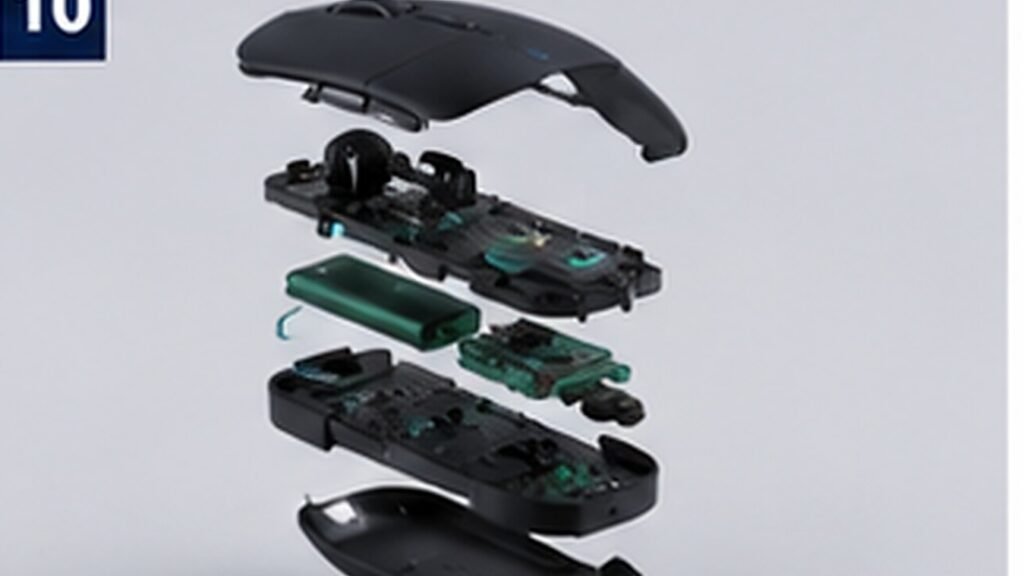
AI Voice Mouse for Healthcare Solution Providers in the Middle East: 7 Critical Buying Checks
If you are a healthcare solution provider in the Middle East evaluating an AI voice mouse for healthcare deployment, the buying decision hinges on seven checks: language and dialect coverage, clinical workflow fit, data privacy and compliance, hardware durability, integration with existing systems, OEM/ODM terms, and total landed cost. This guide walks through each check with procurement-ready questions, red flags, and a practical checklist so you can shortlist suppliers with confidence.
Table of Contents
Table of Contents
AI voice mouse for healthcare: Short Answer
For healthcare solution providers in the Middle East, an AI voice mouse is a practical input device for clinical documentation, multilingual patient interaction, and hands-reduced workflows. Evaluate suppliers on Arabic and English speech accuracy, local regulatory compliance (e.g., SFDA, MOHAP, CITC), data residency and privacy safeguards, device durability for clinical environments, and clear OEM/ODM terms covering language packs, firmware updates, and after-sales support.
Table of Contents
- Key Takeaways
- Key Facts for Buyers
- 1. Language and Dialect Coverage
- 2. Clinical Workflow Fit
- 3. Data Privacy and Compliance
- 4. Hardware Durability and Hygiene
- 5. Integration with Existing Systems
- 6. OEM/ODM and Customization Terms
- 7. Total Landed Cost and After-Sales Support
- Comparison Table: AI Voice Mouse vs. Standard Mouse for Healthcare
- Common Mistakes and Buyer Red Flags
- Practical Buyer Checklist
- FAQ
- Conclusion
Key Takeaways
- Arabic and English speech recognition accuracy is the first filter for Middle East healthcare deployments; demand dialect-specific test results.
- Compliance in the GCC is fragmented—SFDA (Saudi Arabia), MOHAP (UAE), and CITC (Saudi Arabia) may each apply depending on device classification and connectivity.
- Data privacy is non-negotiable: ask where voice data is processed (on-device vs. cloud) and whether the supplier supports local data residency.
- OEM/ODM terms should explicitly cover language pack customization, firmware update cadence, and spare parts availability.
- A total landed cost model—including certification, freight, and duties—prevents surprises after the PO is signed.
Key Facts for Buyers
| Factor | What to Verify | Why It Matters |
|---|---|---|
| Languages | Arabic (MSA and Gulf dialects), English, French (for Levant/North Africa) | Clinical staff and patients may switch languages mid-sentence. |
| Regulatory scope | Device classification (medical vs. general office), radio approvals if wireless | Determines which certificates are mandatory before import. |
| Data processing | On-device vs. cloud speech recognition; encryption standards | Affects patient privacy obligations and network requirements. |
| Durability | IP rating, drop test results, cleanable surface | Clinical environments involve frequent cleaning and accidental drops. |
| OEM terms | MOQ, language pack development, firmware roadmap, spare parts | Locks in long-term support and brand differentiation. |
| Certifications | CE, FCC, RoHS, UN38.3 (if battery), local GCC approvals | Import clearance and tender eligibility depend on valid certificates. |
1. Language and Dialect Coverage
Middle East healthcare settings are inherently multilingual. A clinician may dictate in English, speak to a patient in Gulf Arabic, and enter notes in Modern Standard Arabic—often within the same shift. An AI voice mouse that performs well only in English will frustrate users and fail adoption.
Ask the supplier for accuracy benchmarks across Arabic dialects (e.g., Gulf, Egyptian, Levantine) and English. Request a sample unit loaded with the target language packs and run a scripted test covering medical terminology, numbers, and mixed-language sentences. Note whether recognition happens on-device or via cloud; on-device processing reduces latency and data exposure but may have a smaller vocabulary. STAR KING can provide [STAR KING TO CONFIRM] language support details for its AI voice mouse lineup.
Image suggestion: A clinician testing an AI voice mouse with Arabic and English dictation in a clinic setting. ALT: AI voice mouse healthcare Arabic dictation test.
2. Clinical Workflow Fit
Evaluate how the device fits real tasks: entering patient notes, navigating EHR screens, triggering templates, or controlling imaging viewers. A voice mouse with programmable buttons and voice shortcuts can reduce keyboard time, but only if the software integration is straightforward.
Ask: Does the mouse require proprietary drivers? Can voice commands be mapped to keystrokes? Is there an SDK or API for EHR integration? For healthcare solution providers building a bundled offering, the ability to preconfigure shortcuts for common workflows (e.g., “open radiology report,” “add vitals”) shortens deployment time. Consider the AI office productivity solution context to see how voice input fits broader productivity hardware.
Soft CTA: If you need to benchmark workflow fit before committing, requesting a sample unit for a pilot is the fastest way to validate clinical usability.
3. Data Privacy and Compliance
Voice data can contain patient identifiers, so privacy is a procurement gate, not an afterthought. Determine whether audio is stored, transmitted, or processed locally. If cloud processing is used, ask about encryption in transit and at rest, retention policies, and data residency options—some Middle East health authorities require data to remain within national borders.
Regulatory obligations vary. In Saudi Arabia, the Saudi Food and Drug Authority (SFDA) oversees medical device marketing; in the UAE, the Ministry of Health and Prevention (MOHAP) regulates medical devices. Whether an AI voice mouse is classified as a medical device typically depends on its intended use and claims. Buyers should verify classification with local regulatory consultants before import.
4. Hardware Durability and Hygiene
Clinical environments subject devices to repeated cleaning, drops, and 24/7 use. Look for an IP rating appropriate for wipe-down cleaning (typically IP54 or higher), drop-test documentation, and surfaces compatible with hospital-grade disinfectants. Battery safety matters if the mouse is rechargeable: check for UN38.3 test reports and MSDS documentation.
Request aging test and drop test summaries from the supplier. STAR KING’s AI voice mouse specifications, including durability ratings, are [STAR KING TO CONFIRM].
5. Integration with Existing Systems
Healthcare solution providers often need to bundle hardware with their own software or integrate with hospital IT. Confirm compatibility with Windows, macOS, and common EHR platforms in the region. Ask whether the supplier provides firmware customization to support specific dictation engines or security protocols.
For vendors considering a broader device ecosystem, the business and education displays solution shows how STAR KING approaches system integration across hardware categories.
6. OEM/ODM and Customization Terms
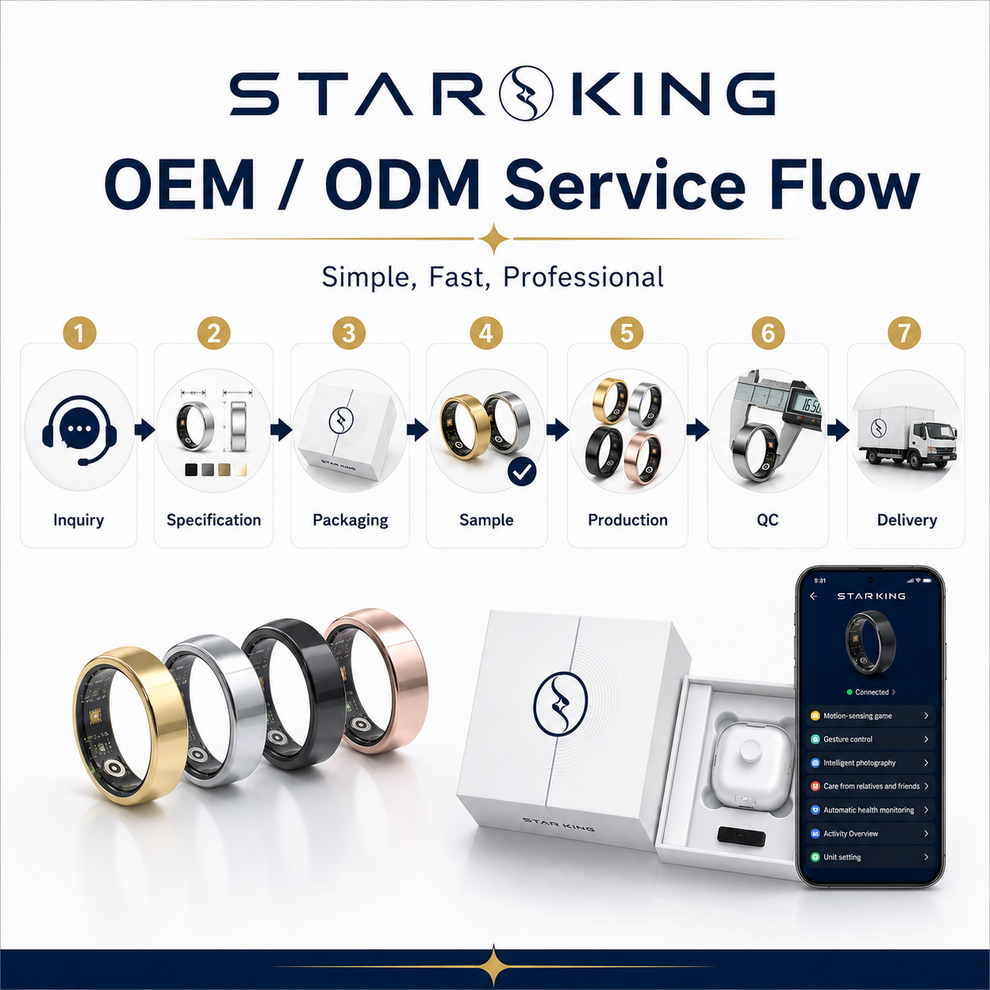
If you plan to market the device under your own brand, OEM/ODM terms determine your long-term flexibility. Key items: minimum order quantity (MOQ), language pack development cost and timeline, logo and packaging customization, firmware update policy, and spare parts availability. Clarify ownership of custom tooling and software developed for your project.
STAR KING’s private label OEM/ODM solution outlines customization options. Specific MOQ and lead time for the AI voice mouse are [STAR KING TO CONFIRM].
7. Total Landed Cost and After-Sales Support
Unit price is only one component. Build a landed cost model that includes certification costs, freight, import duties, and warranty provision. For Middle East markets, confirm whether the supplier has experience with GCC customs documentation and can provide certificates of conformity when required.
After-sales support matters for clinical deployments: ask about warranty length, RMA process, and local service partners. A supplier without regional support may leave you handling replacements alone.
Comparison Table: AI Voice Mouse vs. Standard Mouse for Healthcare
| Feature | AI Voice Mouse | Standard Mouse |
|---|---|---|
| Voice dictation | Built-in microphone and speech recognition | Requires separate microphone/software |
| Multilingual support | Often includes multiple language packs | Not applicable |
| Hands-reduced workflow | Voice shortcuts and commands | Manual input only |
| Data privacy considerations | Requires review of audio processing | Minimal |
| Unit cost | Higher | Lower |
| Training needs | Initial setup and language tuning | Minimal |
Common Mistakes and Buyer Red Flags
- Assuming English accuracy equals Arabic accuracy. Test both, and include dialect variations.
- Ignoring data residency. Confirm where voice data is processed before signing a contract.
- Skipping certification scoping. Verify whether the device is classified as medical or general office equipment for each target country.
- Overlooking firmware update commitments. Without a clear roadmap, devices may become obsolete or incompatible with updated EHR systems.
- Underestimating landed cost. Include certification, freight, and duties in your budget from the start.
Practical Buyer Checklist
- ☐ Request a sample unit with Arabic and English language packs.
- ☐ Run a scripted dictation test with medical terminology.
- ☐ Obtain written confirmation of data processing location and encryption.
- ☐ Verify applicable certifications (CE, FCC, RoHS, UN38.3) and local approvals.
- ☐ Confirm IP rating and cleaning compatibility.
- ☐ Clarify OEM/ODM terms: MOQ, customization costs, firmware updates, spare parts.
- ☐ Calculate total landed cost including duties and warranty provision.
- ☐ Check after-sales support and RMA process.
FAQ
What languages should an AI voice mouse support for Middle East healthcare?
At minimum, Modern Standard Arabic and English. For Gulf markets, Gulf Arabic dialect support is valuable. French may be useful for Levant and North Africa regions.
Is an AI voice mouse considered a medical device in the GCC?
Classification typically depends on intended use and claims. If marketed for clinical documentation without diagnostic claims, it may be treated as general office equipment; however, buyers should verify with local regulators such as SFDA or MOHAP.
What certifications are required to import an AI voice mouse into Saudi Arabia or the UAE?
Requirements vary. Common needs include CE or FCC marks, RoHS compliance, and UN38.3 for batteries. Local radio approvals (e.g., CITC in Saudi Arabia) may apply for wireless models. Confirm with a local compliance consultant.
Can I customize the AI voice mouse with my brand and language packs?
Many OEM/ODM suppliers offer logo, packaging, and firmware customization. Ask for MOQ, development timeline, and cost for language pack integration. STAR KING’s specific terms are [STAR KING TO CONFIRM].
How does on-device vs. cloud speech recognition affect privacy?
On-device processing keeps audio local, reducing data exposure. Cloud processing may offer higher accuracy but requires encryption and clear data residency agreements.
What is the typical MOQ for OEM orders?
MOQ varies by supplier and customization level. Request a written quote with MOQ tiers. STAR KING’s MOQ is [STAR KING TO CONFIRM].
How long does shipping take to Middle East ports?
Transit times depend on origin and destination. Air freight to GCC typically takes 3–7 days; sea freight 20–35 days. Confirm with your freight forwarder.
Conclusion
Evaluating an AI voice mouse for healthcare in the Middle East requires a structured approach across language support, workflow fit, compliance, durability, integration, OEM terms, and landed cost. By using the seven checks and checklist above, healthcare solution providers can shortlist suppliers that meet clinical and regulatory expectations. STAR KING supports buyers with sample evaluation and customization discussions; contact us to move from evaluation to pilot.
Ready to Evaluate an AI Voice Mouse for Your Healthcare Solution?
Request product samples to test language accuracy, durability, and integration in your own environment. Our team can discuss OEM/ODM options and certification requirements for your target markets.
Discuss Your Smart Wearable OEM/ODM Project
Planning a smart ring, smart watch, smart band, AI glasses, AI translator, or AI voice mouse project? Contact STAR KING to discuss product positioning, sample testing, customization scope, certification requirements, lead time, and quotation details.

Team Star King

Scan WhatsApp QR code
Leave a Reply