
AI Translators for System Integrators in Southeast Asia: 7 Sourcing Checks Before You Commit
October 21, 2026 · Team Star King
AI Translators for System Integrators in Southeast Asia: 7 Sourcing Checks Before You Commit
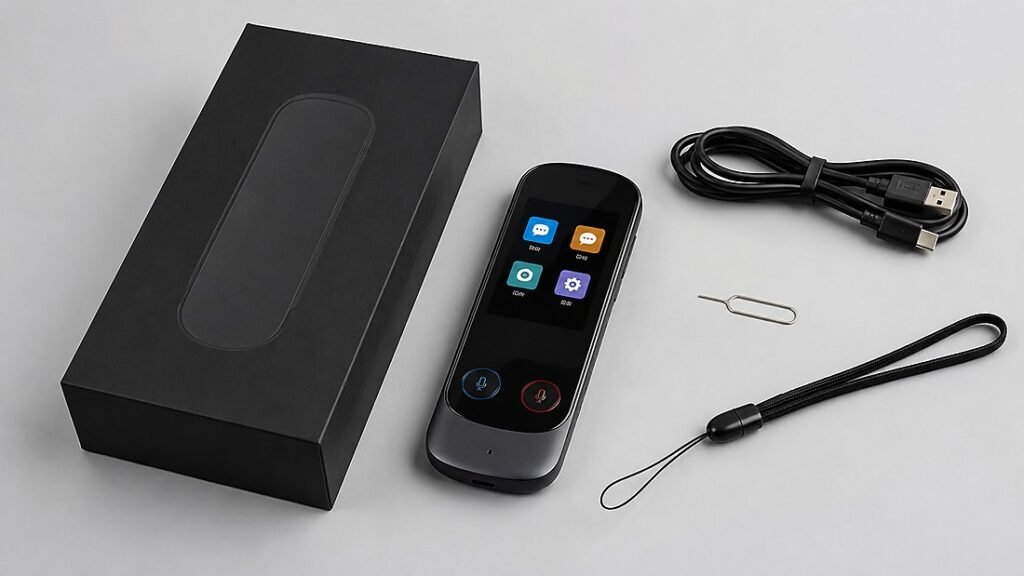
AI translators for system integrators are handheld or wearable speech-translation devices that a systems integrator embeds into a solution stack — usually combining a real-time translation engine, microphone arrays, connectivity and a management layer. For integrators working across Southeast Asia, the sourcing decision matters more than the device itself: language coverage, firmware access, battery shipping rules and certification scope determine whether a project can be delivered and maintained at scale.
Table of Contents
Table of Contents
This guide is written for awareness-stage evaluation, not for a purchase order. It explains the seven checks that separate a workable integration platform from a demo-grade gadget, and where Southeast Asian market conditions change the answers.
AI translators for system integrators: Table of Contents
- Direct Answer: What Should Integrators Verify First?
- Key Takeaways
- Key Facts for Buyers
- What Are AI Translators in an Integration Context?
- Check 1: Language Coverage Beyond the Demo Pair
- Check 2: Firmware Access, SDK and API Ownership
- Check 3: Online, Offline and Hybrid Translation Architecture
- Check 4: Lithium Battery Safety and Regional Shipping
- Check 5: Certification Scope for Each SEA Market
- Check 6: MOQ, Landed Cost and Pilot Planning
- Check 7: Packaging, Branding and End-User Support
- Evaluation Comparison Table
- Common Mistakes and Buyer Red Flags
- Practical Buyer Checklist
- FAQ
- Conclusion
Direct Answer: What Should Integrators Verify First?
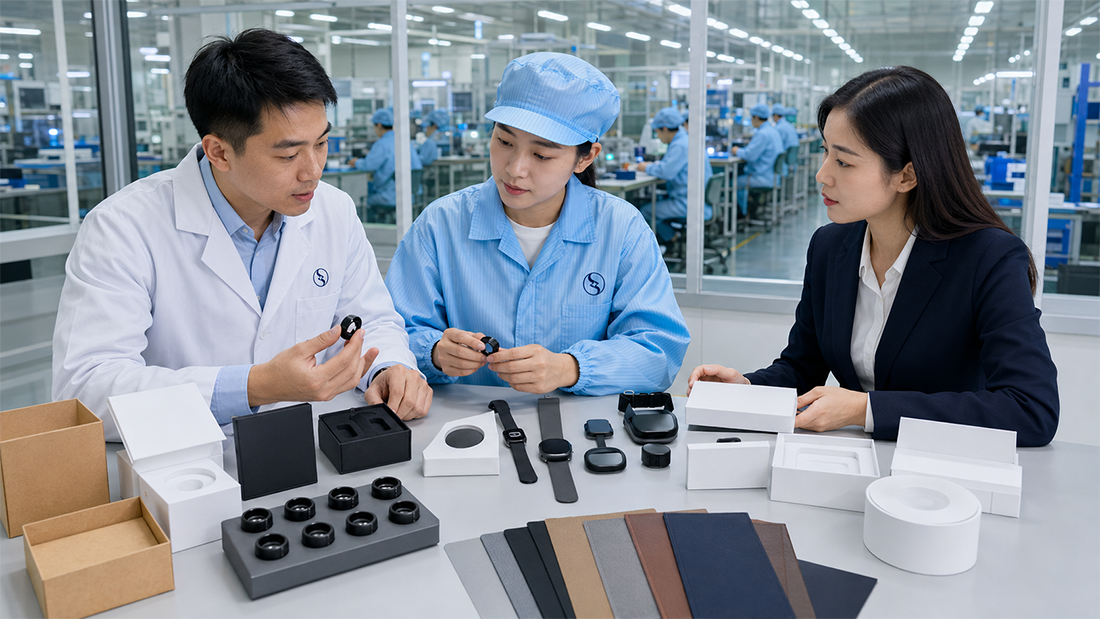
Before committing to AI translators for system integrators, confirm four things in this order: (1) that the language pairs you actually deploy are supported without lag or forced cloud routing; (2) that you have documented SDK/API or firmware access; (3) that battery documentation (UN38.3 test summary, MSDS) is available for air freight; and (4) that the manufacturer can state plainly which certifications each SKU holds and which remain the buyer’s responsibility. Everything else — MOQ, branding, packaging — is negotiable once those four are settled.
Key Takeaways
- Language coverage should be tested with your real deployment pairs (for example Thai–Vietnamese, Bahasa Indonesia–English), not a curated demo pair.
- Ask for written SDK/API documentation before a sample is shipped; verbal promises of “open firmware” are not a specification.
- Offline translation capability changes BOM, battery life and unit cost more than any other single feature.
- Lithium-battery units are regulated goods — UN38.3 and MSDS documentation is typically required for air carriage.
- Certification is configuration- and market-specific; buyers should verify scope per SKU and per country.
- A small paid pilot batch is a lower-risk entry point than a first-run bulk order.
Key Facts for Buyers
| Factor | What to Ask | Why It Matters in Southeast Asia |
|---|---|---|
| Language coverage | Which SEA languages ship on-device vs cloud? | Regional projects often need 3–6 languages across one deployment |
| Firmware/API | Is documentation available pre-sample? | Integration timelines and support contracts depend on it |
| Offline mode | Is offline translation available, and in which pairs? | Connectivity is uneven in field, campus and logistics sites |
| Battery documents | UN38.3 test summary and MSDS on file? | Air freight and customs handling may require them |
| Certification | Which SKUs hold which certificates? | Requirements vary by country and product configuration |
| MOQ | MOQ per configuration and per language pack | Pilot-stage integrators rarely need volume |
| Warranty/spares | Standard term and spare-part availability | Multi-site deployments need replaceable units |
What Are AI Translators in an Integration Context?
In consumer retail, an AI translator is a standalone gadget. In systems integration, it is a peripheral with an interface contract. The device captures speech, runs or routes a translation engine, returns text or synthesized speech, and — ideally — exposes data through a companion app, BLE, Wi-Fi or a local API so it can be logged, audited or triggered by your platform.
That distinction drives the sourcing conversation. A device that performs well for a traveler may be unsuitable for an integrator who needs to register 200 units to a management console, push language-pack updates, or capture session metadata for a hospital or a logistics operator. When you review AI translator product options, look first for configuration and access documentation, not for the loudspeaker.
Integrators frequently fold translation devices into broader solution bundles. A campus or corporate deployment, for instance, may sit alongside business and education display solutions, and a logistics deployment may sit alongside vehicle and logistics safety solutions. Each bundle brings different requirements for data handling and device management.
Check 1: Language Coverage Beyond the Demo Pair
Most spec sheets list a headline number of supported languages. The number is rarely the problem; the problem is which pairs run on-device, which require cloud access, and how latency behaves on a mobile connection.
Languages that actually matter for SEA deployments
Depending on the project, your end users may need Thai, Vietnamese, Bahasa Indonesia, Bahasa Malaysia, Filipino, Khmer, Burmese or Lao, alongside English and sometimes Mandarin. Ask the manufacturer to list, in writing, which of these are available as on-device packs and which route through a cloud engine. [STAR KING TO CONFIRM]
How to test language coverage properly
- Request a sample with the actual language packs your deployment needs pre-installed.
- Record ten scripted sentences per pair, in a quiet room and in a noisy environment.
- Compare latency, not just accuracy — a two-second round trip breaks a face-to-face service counter.
- Test accented speech from your intended user group; regional accents are the most common failure point.
If a supplier pushes back on installing your intended language pairs for a sample, that is a signal about post-sale flexibility as much as about the sample itself.
Check 2: Firmware Access, SDK and API Ownership
For AI translators for system integrators, access is the product. Before a sample ships, ask for:
- A current SDK or API reference document, versioned and dated.
- The supported transport (BLE, Wi-Fi, USB) and the data schema for translation results.
- Whether firmware updates are pushed by the manufacturer, the app, or your platform.
- Whether translation logs stay on-device, route to the manufacturer, or route to your endpoint.
- Commercial terms for API use, including any per-seat or per-call fees.
App and firmware customization
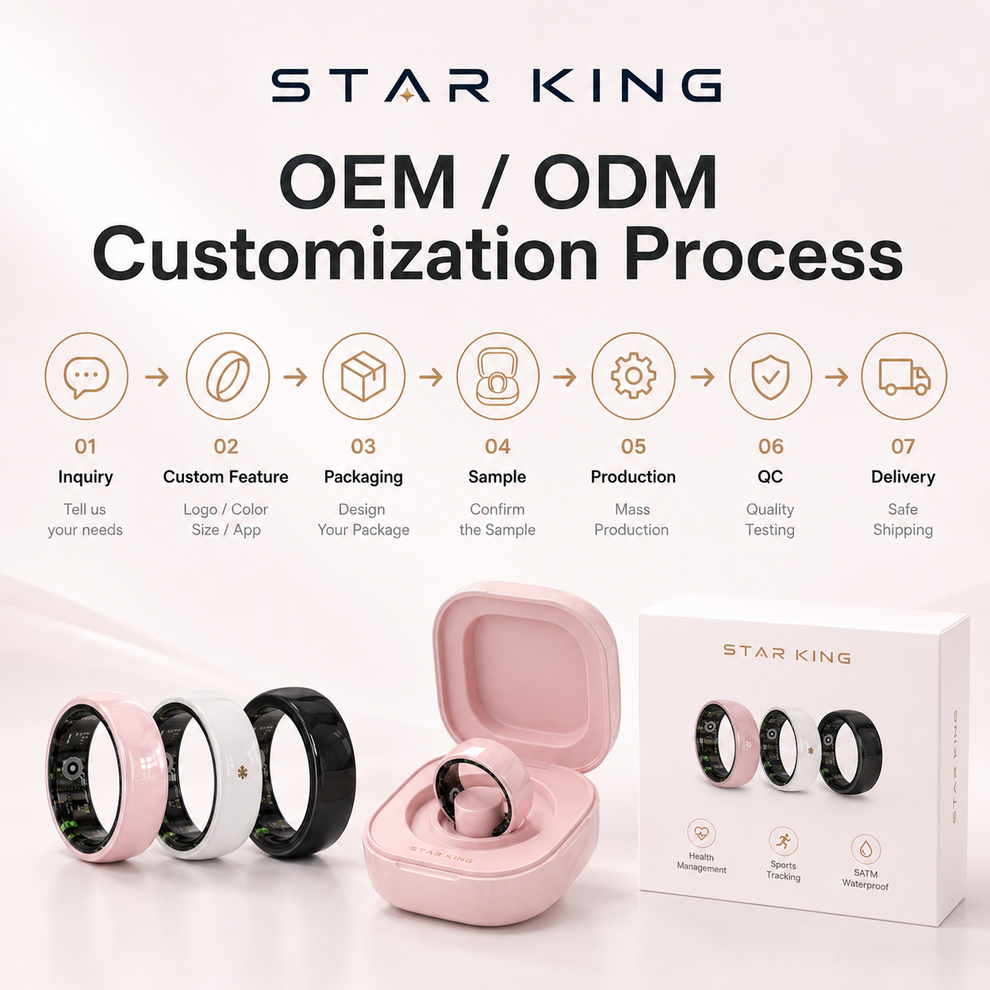
Where the companion app needs to carry your brand or connect to your backend, ask specifically about private label OEM/ODM programs. Clarify which parts are customizable — app shell, splash screen, onboarding, backend endpoint — and which are locked to keep the translation engine stable. A clear answer here usually indicates a manufacturer that has done integration work before. [STAR KING TO CONFIRM]
Check 3: Online, Offline and Hybrid Translation Architecture
Online, offline and hybrid are three different products with three different cost structures. Offline translation typically requires more onboard processing and storage, which affects battery life, thermal design and unit price. Hybrid modes trade some latency for flexibility.
| Architecture | Typical Strengths | Trade-offs to Verify | Fits Which Deployments |
|---|---|---|---|
| Cloud-first online | Broadest language coverage, better accuracy on long phrases | Depends on connectivity; may raise data-routing questions | Urban service counters, retail |
| On-device offline | Works without signal; predictable latency | Fewer language pairs; higher BOM; larger storage | Field services, rural clinics, campus sites |
| Hybrid | Fallback behavior when signal drops | Needs clear switching logic and user indication | Most SEA deployments with mixed coverage |
Ask the supplier to demonstrate the fallback behavior explicitly: disconnect the network mid-sentence and observe what the device does. That test reveals more than any datasheet.
Check 4: Lithium Battery Safety and Regional Shipping
Almost all handheld translators ship with a lithium-ion or lithium-polymer cell, which makes them regulated goods for transport. For air freight, the UN Manual of Tests and Criteria, Part III, subsection 38.3 (commonly known as UN38.3 testing) is the reference framework buyers typically ask about, and shippers commonly request a test summary and a safety data sheet.
Practical questions for a Southeast Asian deployment:
- Is an UN38.3 test summary available for the exact cell and pack configuration you are buying?
- Is an MSDS available, and does it match the shipped configuration?
- Will units ship by air or sea, and who prepares the dangerous-goods documentation?
- Are spare batteries sold separately, and how are those shipped?
Battery documentation belongs to a specific configuration. Substituting a cell is a material change that can invalidate the paperwork, so confirm that the sample you approve and the mass-production unit share the same pack.
Check 5: Certification Scope for Each SEA Market
Certification is the area where buyer assumptions most often outrun documentation. Requirements typically depend on the product configuration, the radio modules used, the battery, and the destination country’s rules. A supplier statement that a product “has CE and FCC” does not automatically mean your configured SKU is covered, and it does not address Southeast Asian national requirements.
What to ask for
- A certificate list by SKU or model number — not by product family.
- The issuing laboratory and issue date for each certificate.
- Confirmation of which radio standards were tested, with reference to the Bluetooth SIG qualification process if the device uses Bluetooth.
- Written clarification of which approvals remain the importer’s responsibility in each target country.
For regional import rules — including telecom and radio approvals — buyers should verify current requirements with a local compliance consultant or the relevant national authority. Rules change, and applicability varies by product. STAR KING can support documentation requests, but the buyer’s market-access obligations remain the buyer’s. [STAR KING TO CONFIRM]
For a deeper walkthrough of testing and documentation expectations, the STAR KING resources blog covers compliance topics in more depth.
Check 6: MOQ, Landed Cost and Pilot Planning
At the awareness stage, the objective is not the lowest unit price — it is the lowest cost of being wrong. That usually means a small paid pilot batch ahead of a volume commitment.
Cost drivers worth separating
- Base unit cost — driven by processor, microphone array, display and battery.
- Language packs and offline capability — often the largest single adder.
- Customization — app shell, logo, packaging and documentation language.
- Freight and duties — lithium-battery handling plus destination-country import charges.
- After-sales reserve — spares and replacement units for field deployments.
Build a landed-cost model rather than comparing quoted unit prices. Ask the supplier to quote FOB and a delivered estimate separately, and check whether MOQ is set per model, per configuration, or per language pack. A supplier that will discuss a pilot quantity and a later scale-up on the same terms is usually easier to plan with.
If the project scope is still forming, it is reasonable to request product samples for evaluation before locking specifications.
Check 7: Packaging, Branding and End-User Support
Integration projects usually ship devices to end users who are not technical. That makes packaging and support part of the product.
- Packaging customization — retail-ready or deployment-ready cartons, with multilingual quick-start cards.
- Branding — logo on device, app, packaging and documentation.
- Documentation language — at minimum English; local-language guides reduce support tickets considerably.
- Support model — who fields end-user questions, and what the escalation path to the manufacturer looks like.
- Spare parts — availability of replacement units and accessories for multi-year deployments.
Clarify warranty terms and the replacement process in writing. For multi-site rollouts, an advance-replacement arrangement is often worth more than a longer warranty period.
Evaluation Comparison Table: Demo-Grade vs Integration-Grade
| Question | Demo-Grade Supplier | Integration-Grade Supplier |
|---|---|---|
| SDK/API documentation | “Available after order” | Versioned document shared pre-sample |
| Language list | Headline count only | On-device vs cloud split, by pair |
| Offline behavior | Not discussed | Demonstrated with network cut |
| Battery paperwork | “Standard battery” | UN38.3 summary and MSDS per configuration |
| Certification | “CE and FCC available” | Certificate list by SKU with issuing lab |
| MOQ | Fixed high MOQ, no pilot | Pilot batch plus scale-up path |
| Data handling | Unclear where logs route | Documented endpoint and retention |
Common Mistakes and Buyer Red Flags
Mistakes integrators make
- Evaluating a device by its translation accuracy alone, without testing management, updates or data routing.
- Assuming a family-level certificate covers every SKU in the range.
- Skipping the offline test because the pilot site had good connectivity.
- Ordering volume before confirming firmware update responsibility.
- Ignoring documentation language, then absorbing support load after deployment.
Red flags in supplier conversations
- Unwillingness to send API documentation before payment.
- Vague answers on which certification applies to which model.
- No clarity on whether the battery pack is fixed across production runs.
- Refusal to quote a pilot quantity at all.
- Pressure to commit to volume before a sample evaluation.
Practical Buyer Checklist
- ☐ Language pairs for the target markets confirmed on-device and in cloud, in writing.
- ☐ SDK/API reference document received and reviewed by your engineering team.
- ☐ Offline fallback behavior demonstrated live.
- ☐ UN38.3 test summary and MSDS requested for the exact configuration.
- ☐ Certificate list by SKU obtained; national-market obligations clarified.
- ☐ MOQ per configuration and per language pack quoted.
- ☐ Pilot batch size and pricing agreed before volume commitment.
- ☐ Landed-cost estimate includes freight, duties and battery handling.
- ☐ Customization scope defined: app, logo, packaging, documentation.
- ☐ Warranty, spare parts and escalation path documented.
- ☐ Data-handling and log-routing model documented for your compliance review.
FAQ
Do AI translators need different certifications for each Southeast Asian country?
Requirements typically depend on the country and the device’s radio and battery configuration. Some markets have specific telecom or radio approval processes; others rely on importer declarations. Confirm current rules with a local compliance specialist before committing to a volume order, and ask the supplier for a certificate list by SKU.
Can we get a sample with our target language packs installed?
This is a reasonable request and a useful test of supplier flexibility. Ask in writing, and specify the exact pairs (for example Thai–English and Bahasa Indonesia–English). If pre-installation is not possible, ask which packs ship by default and how additional packs are installed.
Is offline translation necessary if our sites have Wi-Fi?
Not always, but test it. Service counters, warehouses and campus sites often have coverage gaps or congested networks. Hybrid devices that fall back to on-device translation tend to produce fewer support tickets, at the cost of a higher unit price and shorter battery runtime.
What battery documents should we expect for air freight?
Shippers commonly request a UN38.3 test summary and a safety data sheet (MSDS) for lithium-battery products. Confirm that the documents match the exact cell and pack configuration you are buying, and clarify who prepares dangerous-goods paperwork for each shipment.
How should we handle firmware updates after deployment?
Decide before ordering. Options include manufacturer-pushed updates through the companion app, updates triggered from your management platform, or manual updates at service points. Document who is responsible, how rollback works, and how language-pack updates are delivered.
What is a realistic MOQ for a first integration pilot?
It varies by manufacturer and configuration, so ask directly. Many suppliers will quote a pilot quantity separately from volume pricing. Treat the pilot as a paid evaluation: test languages, offline behavior, app integration and packaging before committing to a larger run.
How do we compare total cost rather than unit price?
Build a landed-cost model that includes unit cost, language-pack and offline capability adders, customization, freight and duties, battery handling charges, and an after-sales reserve for spares. Compare suppliers on that total, not on the FOB quote alone.
Conclusion
For system integrators, the sourcing decision for AI translators comes down to access and documentation: which languages run where, what the API exposes, how the device behaves without a network, and what paperwork accompanies the battery. Southeast Asian deployments add language diversity, uneven connectivity and country-specific import rules to the picture, which makes a structured pilot more valuable than a fast bulk order.
Work through the seven checks in order. A supplier that answers them clearly — and puts the answers in writing — is a supplier you can build a multi-year deployment on.
Ready to Evaluate AI Translators for Your Project?
If you are scoping an integration project in Southeast Asia, the next practical step is a sample evaluation with your target language packs installed. STAR KING supports integrators with configuration discussions, documentation requests and pilot quantities. Request product samples to begin, or contact the team to review customization and API access options for your deployment.
Discuss Your Smart Wearable OEM/ODM Project
Planning a smart ring, smart watch, smart band, AI glasses, AI translator, or AI voice mouse project? Contact STAR KING to discuss product positioning, sample testing, customization scope, certification requirements, lead time, and quotation details.

Team Star King

Scan WhatsApp QR code
Leave a Reply