AI translators procurement: AI Translators for Southeast Asia Corporate Procurement: 7 Steps to a Low‑Risk Pilot (2026 Guide)
AI Translators for Southeast Asia Corporate Procurement: 7 Steps to a Low‑Risk Pilot (2026 Guide)
AI translators procurement for Southeast Asia corporate teams should start with a small, measured pilot—usually 25–100 units—so you can validate language coverage, connectivity, data policy, and support before committing to a wider rollout. The most reliable approach is to define your top three languages, test devices in real meeting and field conditions, and confirm compliance, MOQ, and lead time in writing. This guide gives you a 7‑step framework, a buyer checklist, and the questions to ask suppliers before you issue a purchase order. A focused pilot typically takes 60–90 days and produces the data you need for a defensible business case.
Table of Contents
Table of Contents
Table of Contents
- Direct Answer
- What Is an AI Translator and How Is It Used in Corporate Procurement?
- Key Takeaways
- Key Facts for Buyers
- Why AI Translators Procurement Is Growing in Southeast Asia
- 7 Steps to Run a Low‑Risk AI Translator Pilot
- Device Types and Translation Workflows
- Connectivity, Privacy, and Data Policy
- Quality, Certification, and Battery Compliance
- MOQ, Pricing Factors, and Lead Time Planning
- Customization Options for Corporate Buyers
- Common Mistakes in AI Translator Procurement
- Practical Buyer Checklist
- Soft CTA (Mid‑Article)
- FAQ
- Conclusion
- STAR KING CTA

Direct Answer
For Southeast Asia corporate teams, AI translators procurement succeeds when you pilot 25–100 units with your top three languages, validate performance in real noisy environments, and confirm compliance, MOQ, and lead time before scaling. Treat certification and battery shipping documents as gating items: final requirements typically depend on the exact model, radio configuration, and destination country, so buyers should verify with the supplier and a compliance specialist.

What Is an AI Translator and How Is It Used in Corporate Procurement?
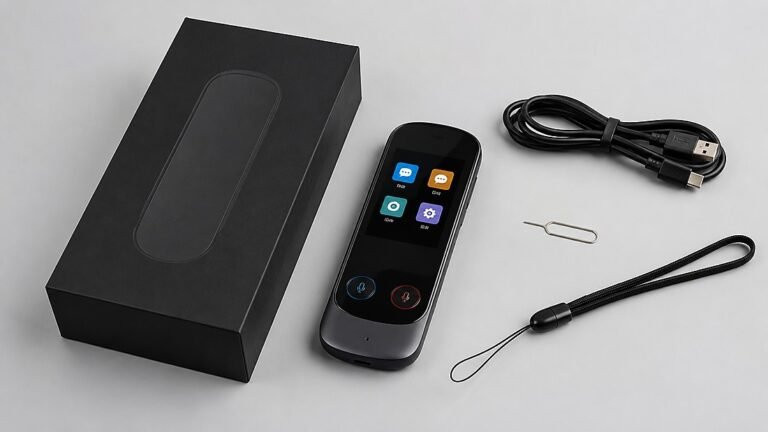
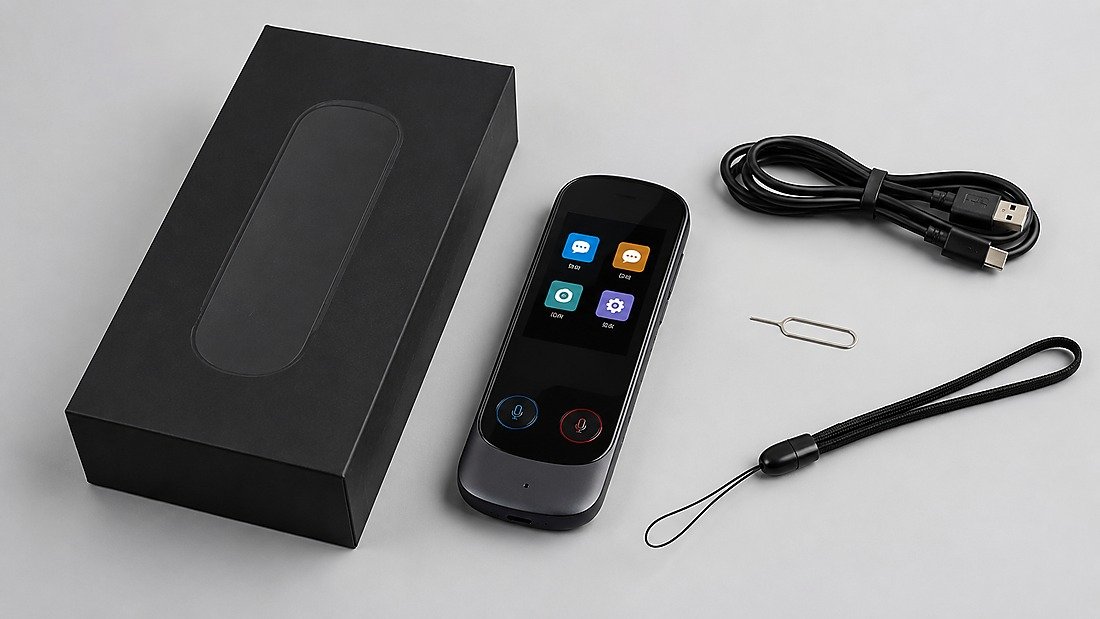
An AI translator is a portable device that captures speech or text in one language and returns translated speech or text in another, most often combining speech recognition, a translation engine (on‑device or cloud), and either an integrated speaker, a display, or earbuds. In a corporate procurement context, buyers specify the language pairs, response time, connectivity, battery endurance, and management features—then test them against real workflows such as supplier negotiations, frontline staff conversations, and training sessions.
The procurement goal is not the “smartest” device on the market. It is the configuration that reduces miscommunication cost in your specific environment while meeting your IT, security, and finance requirements.

Key Takeaways
- Start with a 60–90 day pilot of 25–100 units; measure real usage, not demo results.
- Test at least three language pairs, including one tonal language if your operations need it.
- Confirm offline capability and data policy for factories, warehouses, campuses, and remote sites.
- Treat UN38.3, MSDS, and destination certification as gating items, not afterthoughts.
- Decide between standard, light‑custom‑, and full OEM before requesting pricing.
- Request a written BOQ covering device, SIM/data, accessories, warranty, spares, support, and training.
Key Facts for Buyers
| Item | What to check | Why it matters |
|---|---|---|
| Pilot size | 25–100 units | Enough signal to evaluate, low enough budget risk |
| Languages | Top three pairs used daily | Models differ by language coverage and quality |
| Connectivity | Wi‑Fi, cellular, offline packs | Sites may lack stable networks |
| Battery | Runtime, charging, spare packs | Field shifts can exceed 8 hours |
| Data policy | Cloud vs on‑device; retention | Confidential meetings and HR data |
| Certification | CE/FCC/RoHS, UN38.3, MSDS | Customs, carriers, and buyers may request documentation |
| MOQ/Lead time | Written quote with schedule | Budget and rollout timing |
| Warranty/spares | Terms and RMA flow | Downtime cost during rollout |
Why AI Translators Procurement Is Growing in Southeast Asia
Southeast Asia rewards multilingual operations. Indonesia, Thailand, Vietnam, the Philippines, Malaysia, and Singapore each bring different language mixes, and regional teams frequently coordinate across several of them at once. Frontline roles—field service, hospitality, logistics, manufacturing, and retail—are where miscommunication shows up fastest, sometimes as safety incidents and often as costly rework.
Procurement teams also face a practical constraint: personal phones are convenient but hard to manage. Consumer translation apps may raise data, privacy, and compliance questions; devices without mobile device management (MDM) are difficult to inventory, update, and decommission. Dedicated AI translators can be easier to standardize, especially when the supplier supports provisioning and firmware updates.
Data localization and telecom rules also matter. Buyers should verify how voice data is processed—on‑device, regional cloud, or cross‑border—because requirements typically depend on your industry, data category, and country. Treat any supplier claim about compliance as something to validate with your legal and IT teams.
7 Steps to Run a Low‑Risk AI Translator Pilot
1. Define Use Cases and Success Metrics
Write down the three workflows you want to improve. Example metrics include number of interpreted conversations per day, average turnaround per exchange, escalation rate to human interpreters, and user satisfaction after two weeks. Put a number on “good enough” before you talk to suppliers so demos cannot redefine your success criteria.
2. Shortlist Two or Three Suppliers
Compare device specs, language coverage, connectivity, management tools, and support. Ask each supplier to state what is on‑device versus cloud and what happens when connectivity drops. If your operations include factories, ports, or remote campuses, offline capability moves to the top of the list.
3. Request Samples and Run Parallel Tests
Test the same conversations in the same conditions across suppliers. Include at least one noisy environment and one meeting where multiple people speak quickly. If your team needs on‑device recognition or extended offline mode, verify it; not every configuration includes these, and availability can depend on model and language.
4. Validate Privacy and Data Policy
Ask whether voice recordings are stored, where, for how long, and who can access them. Confirm whether the device supports local processing for sensitive sessions. For regulated industries, involve legal and IT early rather than at contract signature.
5. Confirm Certification and Shipping Documents
Lithium‑ion devices require UN38.3 test summaries and MSDS for many carriers. Confirm what certification is available for the exact model and radio configuration, and what is required in each destination country. Buyers should verify current requirements with the supplier and, where relevant, a customs broker, since rules may change.
6. Agree Commercial Terms in a Written BOQ
Lock in unit price, MOQ, lead time, warranty, spares, training, and optional SIM/data. Ask how firmware and translation models are updated and whether updates are free during the warranty period.
7. Measure, Decide, Scale
Collect usage and satisfaction data, document gaps, and choose one of three paths: scale, extend the pilot with a revised configuration, or stop. The pilot is valuable even when it ends in a “no”—it prevents a costly full rollout.
Soft CTA: If you are comparing options, STAR KING’s AI translator devices support corporate evaluation and private‑label discussions for regional deployments.
Device Types and Translation Workflows
Buyers typically see three form factors: handheld two‑way devices with a screen, pocket‑style units, and AI smart glasses with translation overlays. Each maps to different workflows.
| Form factor | Best fit | Trade‑offs |
|---|---|---|
| Handheld two‑way device | Frontline staff, service counters, supplier meetings | Requires shared handling; screen readability varies |
| Pocket‑style unit | Travel, short conversations, quick exchanges | Smaller display; limited multi‑speaker handling |
| AI smart glasses | Hands‑busy inspections, hospitality, retail floor | Comfort, prescription needs, battery; check specifics |
Clients often start with handheld devices for control and auditability, then explore glasses for hands‑busy roles. For a broader view, see AI Office Productivity solutions and Corporate Wellness if your program also includes staff health and safety.
Connectivity, Privacy, and Data Policy
Connectivity should be tested in the real places people work. For every site, capture Wi‑Fi availability, LTE coverage, and whether offline packs are available. Then ask what happens at the boundary—when Wi‑Fi drops mid‑sentence, does the device switch modes, pause, or complete the sentence using the last language model?
Procurement teams should also compare cloud versus on‑device processing, storage location, and retention. Keep a privacy impact assessment with your pilot data so the scale‑up decision is grounded in evidence, not vendor claims.
Quality, Certification, and Battery Compliance
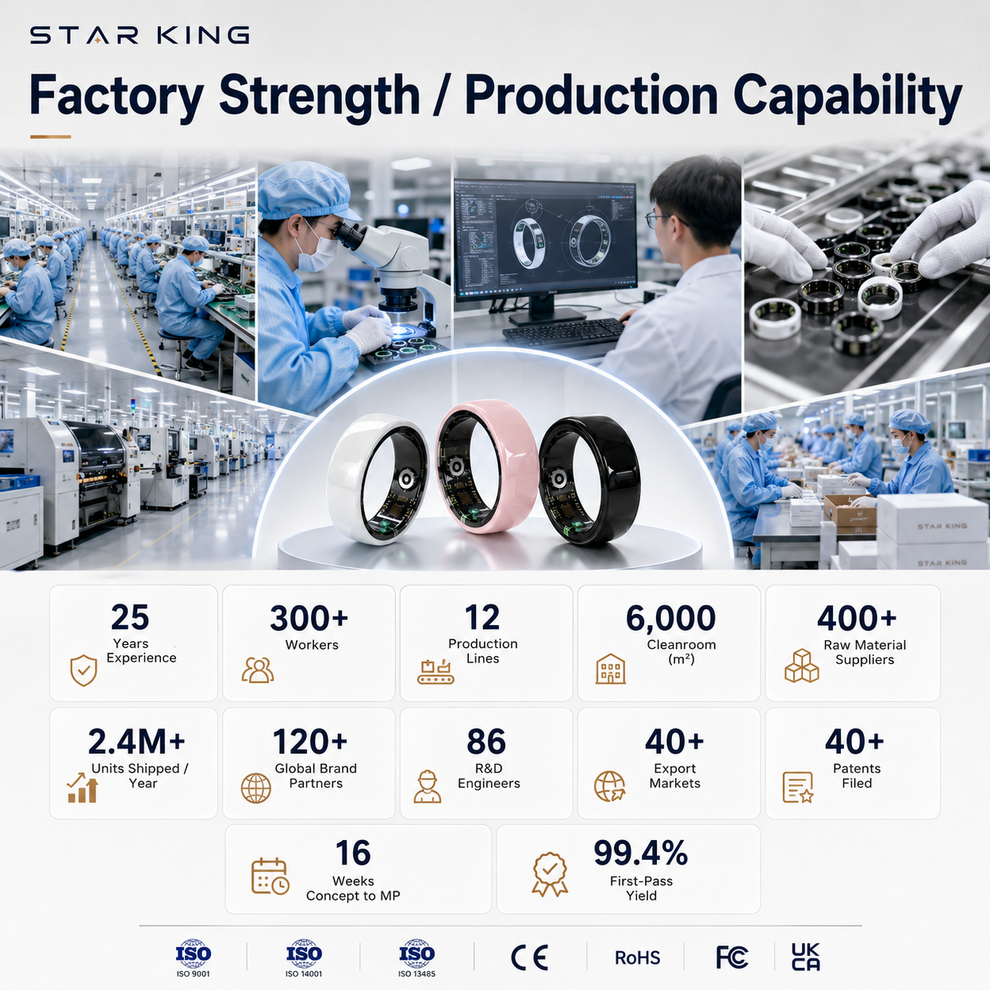
Ask suppliers to document basic QC: incoming material checks, assembly QC, and testing such as drop, aging, waterproof, and battery safety tests where applicable. Request pre‑shipment inspection and sampling. For lithium batteries, UN38.3 and MSDS are commonly requested; availability depends on the exact model. Buyers should verify certification scope for their configuration and destination—CE and FCC markings do not automatically cover every radio variant or country.
For official reference, consult the FCC Equipment Authorization procedures and the IATA Dangerous Goods Regulations on lithium battery shipping.
MOQ, Pricing Factors, and Lead Time Planning
MOQ and cost move with customizations: logo printing, packaging redesign, firmware language packs, and app integrations all change setup and changeover time. Ask for unit price at pilot MOQ versus mass‑production MOQ to see the curve. Plan for tooling and certification lead time if you move beyond standard SKUs.
| Phase | Typical activity | Buyer action |
|---|---|---|
| Evaluation | Sample review, spec comparison | Confirm required languages and connectivity |
| Pilot | 25–100 units, real‑environment testing | Agree metrics and data policy |
| Validation | QC, pre‑shipment inspection, docs | Confirm UN38.3/MSDS and destination rules |
| Scale | Mass production, packaging, support | Lock MOQ, lead time, warranty, spares |
For private‑label programs, see Private Label OEM/ODM.
Customization Options for Corporate Buyers
Beyond hardware, customization may include logo etching, boot animation, welcome screens, and bundled collateral. Firmware settings can often be adjusted—default languages, kiosk mode, allowed networks—depending on supplier capability. App or MDM integration lets IT provision devices, push updates, and retire units. Finally, agree on a returns and spares flow to minimize downtime and protect your rollout schedule.
Common Mistakes in AI Translator Procurement
- Piloting only in quiet rooms. Noise reveals whether the device is usable in real environments.
- Assuming offline mode covers everything. On‑device capability varies by model, language, and firmware.
- Skipping battery shipping docs. Missing UN38.3/MSDS can delay customs and carriers.
- No privacy review. Sensitive conversations require a defined data policy.
- Pricing without a BOQ. Unit price alone hides SIM, spares, training, and warranty costs.
- One‑vendor dependency. Test two options to preserve leverage and backup supply.
Practical Buyer Checklist
- Top three language pairs written down
- Wi‑Fi, LTE, and offline requirements per site
- Pilot size, duration, and success metrics
- Battery runtime per shift and charging plan
- QC evidence and pre‑shipment inspection plan
- UN38.3 and MSDS availability per model
- Data policy and privacy review
- MOQ, lead time, warranty, spares in a BOQ
- Packaging and logo customization scope
- Update and support cadence
FAQ
How many AI translators should we pilot before a full rollout?
Start with 25–100 units for 60–90 days, mapped to your top three languages, and track usage, satisfaction, and escalations.
Can AI translators work offline in factories or remote sites?
Some models support offline packs, but availability depends on the language and firmware. Confirm supported packs, storage, and switching behavior before the pilot.
What documents should accompany AI translator shipments?
UN38.3 test summaries and MSDS are commonly requested for lithium batteries; CE/FCC/RoHS or other certification may be relevant depending on the model and destination.
How should we handle data privacy?
Define whether processing is on‑device or cloud, where data is stored, and retention. Review with legal and IT before scaling.
What affects the MOQ and unit price?
Customization depth, language packs, packaging, app integration, and production volume. Ask for price tiers from pilot to mass production.
Do we need separate certification for each SEA market?
Requirements vary by country and radio configuration; buyers should verify with the supplier and a compliance specialist. Plan lead time for any certification needs.
Conclusion
AI translators procurement in Southeast Asia is less about picking the “best” device and more about running a disciplined pilot that proves language coverage, connectivity, privacy, and support. Use the 7‑step framework, keep compliance and data policy as gating items, and negotiate from a written BOQ. A small pilot now reduces the risk of a costly rollout later.
STAR KING CTA
Request samples for internal evaluation, compare specifications against your top language pairs, and confirm certification requirements, MOQ, lead time, and private‑label options with our team. Start at Request AI Translator Samples.
Discuss Your Smart Wearable OEM/ODM Project
Planning a smart ring, smart watch, smart band, AI glasses, AI translator, or AI voice mouse project? Contact STAR KING to discuss product positioning, sample testing, customization scope, certification requirements, lead time, and quotation details.

Team Star King

Scan WhatsApp QR code