source AI smart glasses: 7 Essential Steps to Source AI Smart Glasses for Your UK Startup Brand
7 Essential Steps to Source AI Smart Glasses for Your UK Startup Brand
To source AI smart glasses from China as a UK startup, you need to follow seven steps: define your specifications, evaluate OEM versus ODM options, verify supplier capabilities, request samples, confirm certifications like CE/UKCA, negotiate MOQ and pricing, and plan logistics and after-sales support. This guide walks you through each step with practical checklists and buyer-focused questions to help you avoid costly mistakes and launch successfully in the UK market.
Table of Contents
Table of Contents
Table of Contents
- Step 1: Define Your AI Smart Glasses Specifications
- Step 2: Evaluate OEM vs ODM for Your Startup
- Step 3: Verify Supplier Capabilities and Credibility
- Step 4: Request and Test Samples
- Step 5: Confirm Certifications and UK Compliance
- Step 6: Negotiate MOQ, Pricing, and Payment Terms
- Step 7: Plan Logistics, After-Sales, and Warranty
- Common Mistakes and Buyer Red Flags
- Practical Buyer Checklist
- FAQ

Short Answer: How Do UK Startups Source AI Smart Glasses?
UK startups should source AI smart glasses by partnering with a verified Chinese manufacturer that offers OEM/ODM flexibility, transparent MOQs, and documented compliance with UKCA/CE, RoHS, and UK battery regulations. Start with a clear product brief, request samples for real-world testing, and lock in certification and logistics plans before placing bulk orders.

Key Takeaways
- Define whether you need OEM (custom design) or ODM (ready-made with branding) before approaching suppliers.
- Always request samples and verify certifications for the UK market, including UKCA and CE.
- MOQs for AI smart glasses typically range from 500 to 1,000 units, but can be negotiable for startups.
- Battery shipping and UN38.3 compliance are critical for air freight into the UK.
- Budget for a 15–30% landed cost margin above FOB price, covering import duty, VAT, and logistics.

Step 1: Define Your AI Smart Glasses Specifications
Before contacting suppliers, create a detailed product requirements document. This ensures you compare quotes accurately and avoid scope creep. Key specifications to define include:
- Form factor: Full-frame AR glasses, audio-only smart glasses, or camera-equipped AI glasses.
- Core features: Real-time translation, voice assistant, navigation, fitness tracking, or hands-free calling.
- Display technology: Micro-LED, waveguide, or monocular display. This significantly impacts cost and battery life.
- Battery life: Target 4–8 hours of mixed use; expect trade-offs with display brightness.
- Connectivity: Bluetooth 5.2+, Wi-Fi, or standalone cellular.
- Software: Need for companion app, firmware customization, or API access.
- Target price point: UK retail prices for AI smart glasses range from £150 to £800, influencing BOM cost.
Use this document to brief suppliers on your AI smart glasses requirements. For startups, a modular approach—starting with a proven ODM platform and customizing software—reduces development risk.

Step 2: Evaluate OEM vs ODM for Your Startup
Choosing between OEM and ODM is a pivotal decision. OEM (Original Equipment Manufacturer) means you provide the design and specifications; the factory builds to your requirements. ODM (Original Design Manufacturer) means you select from the factory’s existing designs and customize branding, packaging, and sometimes firmware.
For UK startups, ODM is often faster and more cost-effective, with lower MOQs and shorter lead times. OEM offers full differentiation but requires higher investment in tooling, certification, and development time—often 6–12 months and £50,000+.
| Factor | OEM | ODM |
|---|---|---|
| Design Ownership | You own the design | Supplier owns base design |
| MOQ | 1,000–3,000 units | 500–1,000 units |
| Development Time | 6–12 months | 3–6 months |
| Upfront Cost | High (tooling, NRE) | Low |
| Differentiation | High | Low to Medium |
| IP Ownership | You own IP | Supplier retains base IP |
Many startups begin with ODM to validate the market, then transition to OEM for a second-generation product. Discuss customization options with your supplier early—logo, packaging, and app branding can often be tailored without full OEM.
Step 3: Verify Supplier Capabilities and Credibility
Not all AI smart glasses suppliers are equal. Conduct due diligence through:
- Company registration: Verify the supplier’s business license and years in operation.
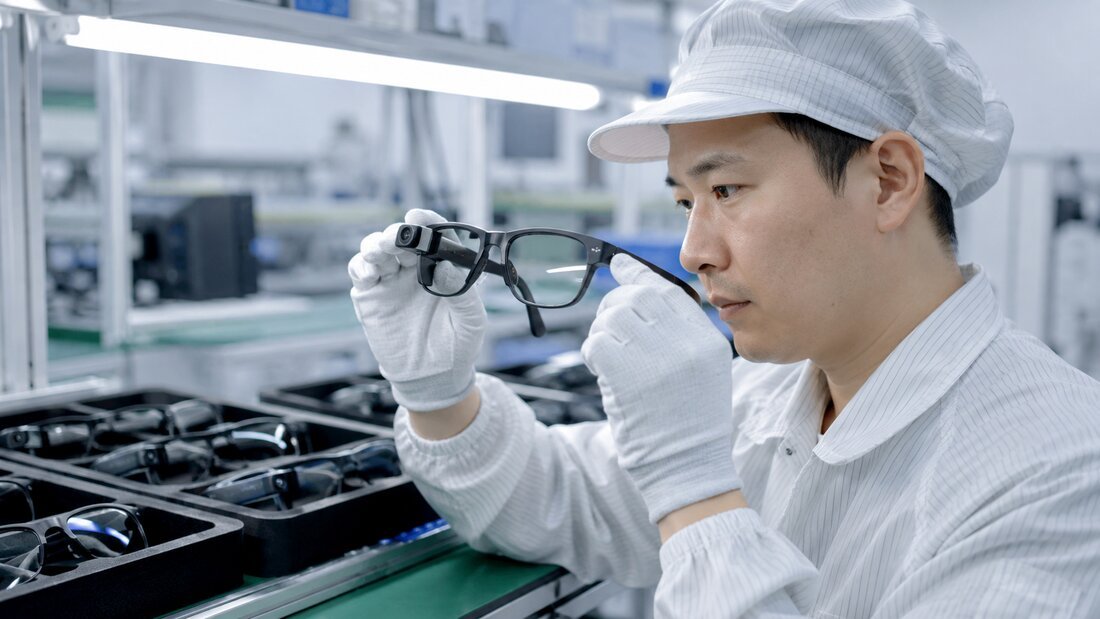
- Factory audit: Request a video tour or third-party audit (e.g., SGS, TÜV).
- R&D team: Ask about in-house hardware and software engineers. AI glasses require expertise in optics, audio, and AI.
- Quality management: Check for ISO 9001 certification and documented QC processes.
- References: Request case studies from similar markets (UK/EU) and product categories.
- Communication: Responsiveness and English proficiency indicate a partner used to international clients.
For AI hardware, look for suppliers with experience in voice recognition and real-time translation. STAR KING, for example, offers private label OEM/ODM solutions for smart wearables and AI devices.
Step 4: Request and Test Samples
Always test samples before committing to bulk. Request 2–3 units for internal testing, and consider sending one to a UK-based usability panel. Evaluate:
- Audio quality: Clarity for calls and voice assistant, especially in noisy environments.
- Translation accuracy: Test with common UK languages and accents.
- Battery life: Real-world usage vs. claimed specs.
- Comfort and fit: Weight, nose bridge, and temple flexibility for diverse users.
- App integration: Ease of pairing, firmware updates, and data syncing.
- Build quality: Materials, hinge durability, and water resistance (IP rating).
Document issues and share with the supplier for a revised sample. This iterative process ensures the final product meets your standards. Budget £200–£500 for samples including shipping.
Step 5: Confirm Certifications and UK Compliance
For the UK market, AI smart glasses typically require:
- UKCA marking: Mandatory for most electronic products. CE may be accepted in some cases; verify current rules with the UK government.
- RoHS compliance: Restriction of hazardous substances.
- REACH: Chemical safety.
- Battery regulations: UN38.3 for lithium battery transport, and compliance with UK battery waste regulations.
- Radio equipment: UK Radio Equipment Regulations 2017 for Bluetooth/Wi-Fi.
- WEEE: Producer responsibility for electronic waste.
Certification requirements depend on the specific product configuration and target market. Buyers should verify with a UK-based compliance consultant. Your supplier should provide test reports from accredited labs (e.g., UKCA marking guidance).
Step 6: Negotiate MOQ, Pricing, and Payment Terms
MOQs for AI smart glasses vary. Startups can often negotiate lower initial MOQs (e.g., 300–500 units) with higher unit prices, then scale. Key pricing factors:
- Components: Display type, processor, battery, sensors.
- Order volume: 1,000+ units typically reduce unit cost by 15–30%.
- Customization: Logo, packaging, and firmware changes add NRE fees.
- Payment terms: Standard is 30% deposit, 70% before shipment. Negotiate for 30/70 or 50/50 if possible. Use escrow or letters of credit for large orders.
Request a detailed breakdown of costs, including tooling, certification, and shipping. Compare at least three quotes to ensure competitiveness.
Step 7: Plan Logistics, After-Sales, and Warranty
Shipping AI smart glasses from China to the UK involves:
- Air freight: Fastest (5–10 days), but lithium batteries must comply with IATA rules; expect higher costs.
- Sea freight: Cheaper for large volumes (30–40 days), but longer lead time.
- Customs clearance: Ensure correct HS codes and duty/VAT payment. UK import duty for smart glasses is typically 0–4%, plus 20% VAT.
After-sales: Define warranty terms (usually 12 months), spare parts availability, and return process. For startups, consider a UK-based repair partner or a local fulfillment center to handle returns efficiently.
Common Mistakes and Buyer Red Flags
| Mistake | Red Flag |
|---|---|
| Skipping sample testing | Supplier refuses to provide samples or charges excessive fees |
| Assuming CE covers UKCA | Supplier claims “CE is enough for UK” without verification |
| Overlooking battery shipping rules | No UN38.3 report available |
| Paying full amount upfront | Supplier insists on 100% T/T before production |
| Not clarifying IP ownership | No written agreement on design rights |
| Ignoring after-sales | No spare parts or repair policy |
Practical Buyer Checklist
- ☐ Product specification document completed
- ☐ OEM vs ODM decision made
- ☐ Supplier background and factory audit done
- ☐ Samples requested and tested
- ☐ Certifications confirmed (UKCA, RoHS, UN38.3)
- ☐ MOQ, pricing, and payment terms negotiated
- ☐ Logistics and Incoterms agreed
- ☐ Warranty and after-sales plan in place
- ☐ Contract reviewed by legal counsel
FAQ
Q1: What is the typical MOQ for AI smart glasses from China?
MOQs vary by supplier and customization level. For ODM with logo branding, MOQs often start at 500 units. For full OEM, expect 1,000–3,000 units. Some suppliers offer trial orders of 100–300 units at higher unit prices.
Q2: Do I need UKCA or CE for selling AI smart glasses in the UK?
UKCA marking is generally required for most electronic products placed on the UK market. CE may be accepted in certain cases, but buyers should verify current regulations with the UK government or a compliance expert.
Q3: How long does it take to source and receive AI smart glasses?
From initial inquiry to delivery, expect 3–6 months for ODM and 6–12 months for OEM. This includes sampling, certification, production, and shipping. Air freight takes 5–10 days; sea freight 30–40 days.
Q4: Can I customize the software and app for AI smart glasses?
Many ODM suppliers offer firmware and app customization, including branding, UI changes, and feature adjustments. Full software development may require OEM partnership and additional NRE fees.
Q5: What are the shipping restrictions for AI smart glasses with lithium batteries?
Lithium batteries must comply with UN38.3 and IATA regulations for air transport. Suppliers should provide MSDS and test reports. Sea freight may have fewer restrictions but longer transit times.
Q6: How can I protect my brand and design when sourcing from China?
Sign a comprehensive contract covering IP ownership, confidentiality, and non-compete clauses. Register your trademark in the UK and consider registering design rights. Work with suppliers who respect IP and offer private label agreements.
Q7: What is the average landed cost for AI smart glasses in the UK?
Landed cost includes FOB price, freight, insurance, duty (0–4%), and VAT (20%). As a rule of thumb, add 20–30% to the FOB price. For a £150 FOB unit, expect a landed cost of £180–£195.
Conclusion
Sourcing AI smart glasses for your UK startup requires careful planning, from defining specifications to managing logistics and compliance. By following these seven steps, you can mitigate risks, control costs, and bring a competitive product to market. Remember to prioritize sample testing, certification, and clear supplier communication.
STAR KING supports startups with flexible OEM/ODM options, including private label AI smart glasses and customization services. To discuss your project, request a quote or samples tailored to your UK market needs.
Ready to source AI smart glasses? Request a quotation or ask for product samples to evaluate quality and fit for your brand.
Useful Official References for Buyers
- FCC equipment authorization guidance
- European Commission CE marking information
- Bluetooth SIG specifications
Discuss Your Smart Wearable OEM/ODM Project
Planning a smart ring, smart watch, smart band, AI glasses, AI translator, or AI voice mouse project? Contact STAR KING to discuss product positioning, sample testing, customization scope, certification requirements, lead time, and quotation details.

Team Star King

Scan WhatsApp QR code