
smart watches OEM: Smart Watches for System Integrators: 7 Checks to Select a Reliable OEM Supplier in 2026
October 16, 2026 · Team Star King

Smart Watches for System Integrators: 7 Checks to Select a Reliable OEM Supplier in 2026
Direct answer: To select a reliable smart watches OEM supplier as a US system integrator, verify seven things before signing: SDK/API access and data ownership, firmware update capability, verifiable quality and certification records, integration support, realistic MOQ and pricing logic, battery and shipping compliance, and production lead time. These checks matter more for integrators than for brands reselling standalone devices.
Table of Contents
Table of Contents
As a system integrator, you rarely buy a smartwatch for its own sake. You buy a device to feed a platform — a corporate wellness dashboard, a senior-care system, a field-operations app, or an education program. That changes the supplier conversation. You need firmware and app integration, data export, consistent hardware across production runs, and documentation your end clients can audit. This guide gives you a practical framework for choosing a smart watches OEM partner in the US market, with checks you can run during supplier selection and a checklist you can reuse for every new project.
smart watches OEM: Table of Contents
- What System Integrators Actually Buy
- Check 1: SDK, API, and Data Ownership
- Check 2: Firmware Customization and Update Path
- Check 3: Quality Systems You Can Audit
- Check 4: Certifications and US Market Compliance
- Check 5: MOQ, Tooling, and Pricing Logic
- Check 6: Sampling, Testing, and Validation
- Check 7: Lead Time, Shipping, and Battery Rules
- Key Facts for Buyers
- Common Mistakes and Buyer Red Flags
- Practical Buyer Checklist
- FAQ
- Conclusion

Key Takeaways
- For system integrators, integration capability (SDK/API, firmware, data export) usually outweighs cosmetic customization.
- Certification claims must be verified per product configuration and target market; never accept a generic claim for a whole product range.
- MOQ and tooling costs are negotiable and depend on whether you use an existing platform or a fully new design.
- Lithium battery shipping rules affect cost and lead time; plan UN38.3 documentation and MSDS early.
- A controlled, documented sample process is the fastest way to reduce integration risk before mass production.
What System Integrators Actually Buy
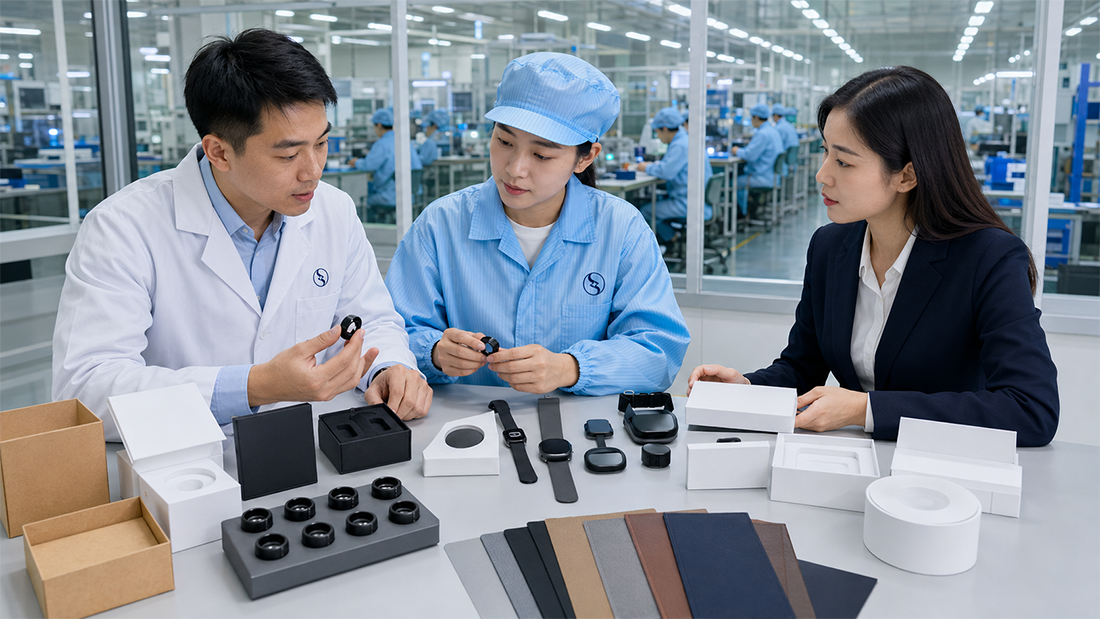
A smartwatch for an integrator is a component with a data contract. The device must reliably collect the data your platform needs, deliver it in a format your platform can ingest, and behave consistently across the units shipped months apart. That is why the supplier selection process for integrators differs from a private-label brand buying a finished product.
In practice, system integrators ask three questions before commercial terms: Can the device talk to my system? Can the supplier change behavior (firmware, app, data fields) when my client asks? And can the supplier prove quality and compliance in writing? STAR KING’s smart watches product line is built for buyers who need OEM/ODM flexibility rather than off-the-shelf retail devices.
Define your integration requirement before you contact suppliers
Write a one-page integration brief: required sensor data (heart rate, SpO2, sleep stages, motion), data frequency, export method (cloud API, BLE, file), user identification model, and the app or platform that will consume the data. Suppliers respond far more accurately to a brief than to “we need a smartwatch with an API.”
Check 1: SDK, API, and Data Ownership
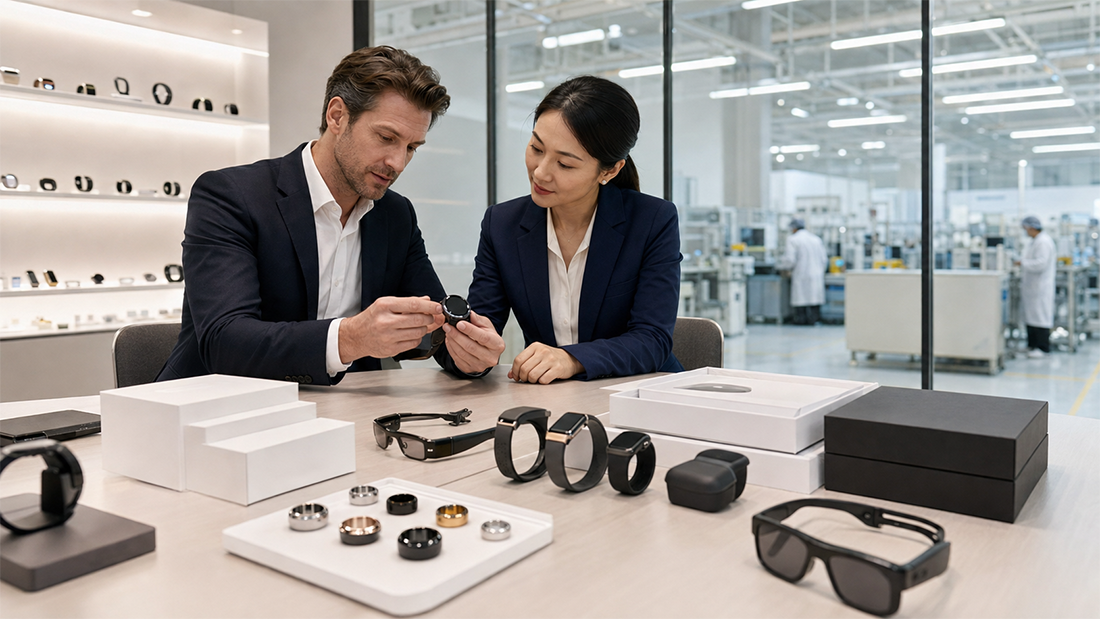
This is the single most important check for integrators. Ask for the SDK documentation, the available API endpoints, and a written statement of where data is stored and who controls it.
What to request
- SDK package and sample code, with the supported platforms (iOS, Android, and whether a web/cloud API exists).
- A data schema listing each field the device can export and its sampling interval.
- Whether raw or processed data is available, and whether historical sync is supported.
- Data residency: which servers store user data and what controls your end client has. This matters under US state privacy laws; buyers should verify current requirements with qualified counsel.
[STAR KING TO CONFIRM] exact SDK coverage for each smartwatch model and whether cloud-side data export is offered by default or as a development project.
For platforms built around physiological data, understanding what the device can and cannot measure is essential. Consumer wearables are not diagnostic tools; they provide wellness-oriented estimates. See our overview of health and fitness wearable solutions for how these data streams are typically used in commercial deployments.
Check 2: Firmware Customization and Update Path
Your client will request behavior changes: a different onboarding flow, a new alert type, a custom dashboard push, or a region-specific setting. The supplier’s ability to modify firmware — and to ship updates securely — determines how much of that work you can absorb without a new hardware revision.
Questions that reveal real capability
- Is firmware customization done in-house or outsourced? Who owns the source?
- Is OTA (over-the-air) update supported, and how are updates signed and rolled out?
- How are firmware versions tracked per production batch?
- What is the change-control process, and what does a change cost?
A supplier that cannot describe a versioning and change-control process will create integration drift: units from different batches behaving differently. That is a hidden cost integrators frequently underestimate.
Check 3: Quality Systems You Can Audit
Quality claims are easy to make. Ask for process evidence instead of marketing statements. Wearable manufacturing quality typically involves incoming material inspection, in-process checks, functional testing, aging/burn-in, and pre-shipment inspection.
| Evidence requested | What it proves | Red flag if missing |
|---|---|---|
| Incoming inspection records | Component control | No traceability to components |
| In-process and functional test plan | Consistent unit behavior | Only final visual check |
| Aging/burn-in parameters | Early-failure screening | No runtime testing at all |
| Pre-shipment inspection report | Batch-level verification | Reports generated only on request |
| Defect rate trend data | Process stability over time | Only one favorable snapshot |
If your deployment is in a regulated or safety-sensitive environment, require that inspection be performed to a defined sampling standard and documented per batch. Our private label OEM/ODM solutions page outlines how customization and quality steps are typically sequenced in a project.
Check 4: Certifications and US Market Compliance
Certification is configuration-specific. A supplier’s claim that “our smartwatches are FCC certified” means little until you confirm the certificate matches your exact model, radio configuration, and battery. For the US market, the relevant items usually include FCC equipment authorization for intentional and unintentional radiators, and battery transport documentation for lithium cells.
Buyers should verify each of the following against the actual product being quoted:
- FCC authorization type (e.g., certification vs. SDoC) and the model covered. See the FCC equipment authorization database to look up an FCC ID.
- UN38.3 test summary for lithium batteries, plus MSDS and, where applicable, a transport test summary. Refer to IATA lithium battery guidance for air transport context.
- RoHS and, where relevant for your channel, REACH documentation.
- Radio module approvals if the device uses Bluetooth; check the Bluetooth SIG qualification status of the module.
- Health-adjacent claims: consumer wellness devices are generally not FDA-cleared medical devices, and marketing language must stay within wellness claims. If your end client intends clinical use, the regulatory path changes and should be reviewed with a specialist.
Certification requirements typically depend on product configuration and the destination market, and buyers should verify current rules with a qualified compliance partner rather than relying on a supplier summary alone.
Check 5: MOQ, Tooling, and Pricing Logic
MOQ and unit price are outputs of a design decision, not fixed numbers. The main variables are whether you use an existing platform or a new industrial design, how much firmware/app work is custom, and whether you pay for tooling separately.
| Scenario | Typical MOQ level | Tooling | Customization depth |
|---|---|---|---|
| Existing platform + logo/packaging | Lowest | Usually none | Cosmetic and app skin |
| Existing platform + firmware/app changes | Low to moderate | None or minimal | Functional |
| New industrial design (ODM) | Higher | Tooling investment | Full hardware + software |
[STAR KING TO CONFIRM] the current MOQ tiers for standard smartwatch platforms and the tooling terms for custom enclosures. Ask specifically what happens to tooling ownership and whether the mold can be transferred if you change suppliers — this protects your long-term position.
When you evaluate quotes, normalize them into landed cost: unit price, tooling amortization, packaging, freight, duty, and the cost of integration effort on your side. The lowest unit price is often not the lowest landed cost.
If you are comparing suppliers for a specific deployment, it helps to send your integration brief early. STAR KING’s team can review your SDK, firmware, and certification requirements and respond with a configuration-specific proposal — see the contact sales page to start that conversation.
Check 6: Sampling, Testing, and Validation
Sampling is where integration risk is cheapest to find. A structured sample program should include functional samples, firmware at the intended release version, and documentation of known limitations.
Sample validation checklist
- Request at least two sample units so you can test pairing and re-pairing behavior.
- Test data export end-to-end into your platform, not just the vendor app.
- Measure battery runtime under your real usage pattern (sampling frequency, screen usage, connectivity).
- Test water resistance claims against the stated IP rating conditions, and note that ratings depend on test conditions.
- Confirm the firmware build number matches the version quoted.
- Record defects and get written confirmation of corrective actions before mass production.
For deployments involving older users or clinical-adjacent programs, usability testing with representative users reduces support load after launch. See our notes on senior health monitoring applications for typical considerations.
Check 7: Lead Time, Shipping, and Battery Rules
Lead time for smartwatches usually covers component procurement, production, testing, and packing, and it varies with customization depth. Lithium batteries add a shipping layer: air transport rules, state-of-charge limits, and labeling requirements can affect cost and schedule.
- Ask for a production schedule broken into sample approval, materials, assembly, testing, and packing.
- Confirm which shipping documentation the supplier provides (UN38.3 summary, MSDS, packing instructions).
- Plan buffer time for customs and for any re-testing if your configuration changes.
- Ask how spare parts and warranty replacements are handled after delivery.
Lead time and MOQ planning should be written into the purchase agreement, including what happens if a shipment fails incoming inspection at your warehouse.
Key Facts for Buyers
| Item | What integrators should confirm |
|---|---|
| Focus area | Integration capability, not just hardware appearance |
| Critical documents | SDK/API docs, data schema, test plans, certificates matching the quoted model |
| US-relevant items | FCC authorization for the exact model; lithium battery transport documentation |
| Commercial levers | Existing platform vs. new design; tooling ownership; MOQ tiers |
| Risk controls | Version control, batch traceability, documented sample validation |
| Timeline drivers | Customization depth, battery shipping rules, customs clearance |
Common Mistakes and Buyer Red Flags
Common mistakes
- Treating the watch as a finished product instead of a data component, and skipping SDK validation until after the order.
- Accepting a range-level certification claim without matching it to the quoted model and radio configuration.
- Choosing the lowest unit price without modeling landed cost and integration effort.
- Neglecting tooling ownership, which weakens your position if you later change suppliers.
- Underestimating battery shipping requirements, which can delay a launch.
Buyer red flags
- The supplier cannot produce SDK documentation or a data field list.
- No version control or change-control process for firmware.
- Certificates shown without model numbers, or “we will certify it later” without a written plan.
- Pressure to commit before you have tested samples against your platform.
- Vague answers on tooling ownership, warranty, or spare parts.
Practical Buyer Checklist
- Integration brief written and shared before quotation.
- SDK/API documentation received and tested in a sandbox.
- Data ownership and residency statement obtained in writing.
- Firmware customization and OTA update process documented.
- Batch traceability and inspection plan reviewed.
- Certificates matched to the exact quoted model and market.
- MOQ tiers, tooling terms, and tooling ownership confirmed in writing.
- Two or more samples validated end-to-end with your platform.
- Lead time, shipping documentation, warranty, and spare parts terms agreed.
For broader sourcing context, the STAR KING blog covers supplier evaluation, cost structures, and category-specific buying guides that complement this checklist.
FAQ
What is the most important factor when choosing a smart watches OEM supplier as a system integrator?
Integration capability. Confirm the SDK/API, data schema, and firmware change process first; hardware appearance and unit price come second, because integration problems are the most expensive to fix after deployment.
Does a smartwatch supplier’s FCC claim cover my specific model?
Not automatically. FCC authorization applies to a specific device configuration, including the radio and battery. Ask for the certificate covering your exact model and verify the FCC ID in the FCC database.
What MOQ should a US system integrator expect?
It depends on the design path. Using an existing platform with logo and packaging customization usually allows the lowest MOQ, while a new industrial design with custom firmware typically requires higher volumes and tooling investment. Confirm current tiers directly with the supplier.
Can firmware be customized for my application without new tooling?
Often yes, if the platform supports it. Firmware and app changes generally do not require new hardware tooling, but they may affect validation and certification scope, so confirm the change-control path before ordering.
How do lithium batteries affect shipping for US-bound smartwatch orders?
Lithium batteries require transport documentation such as UN38.3 test summaries and MSDS, and air shipments must follow carrier rules on state of charge and labeling. These requirements can affect both cost and schedule.
How long does smartwatch production typically take?
Lead time varies with customization depth and component availability, and it usually spans sample approval, materials, assembly, testing, and packing. Request a written schedule and plan buffer time for customs and any re-testing.
Who should own the tooling and firmware source?
Terms vary by agreement. Buyers should negotiate tooling and IP terms explicitly, including whether tooling can be transferred and how firmware source or escrow is handled. [STAR KING TO CONFIRM] standard terms for these items.
Short Answer
For a US system integrator, the right smart watches OEM supplier is the one that can prove integration capability (SDK/API, firmware control, data ownership), quality through auditable records, and compliance matched to the exact model — while offering transparent MOQ, tooling, and lead-time terms. Verify these seven checks with documents and samples before committing to mass production.
Conclusion
Supplier selection for integrators is a documentation exercise as much as a commercial one. The seven checks in this guide — integration, firmware, quality evidence, certification, MOQ and tooling, sample validation, and lead time with battery compliance — give you a defensible basis for choosing a smart watches OEM partner. Run them before you negotiate price, because each check changes what a fair price actually is.
If you are preparing a US deployment and want a configuration-specific response to your integration brief, STAR KING can review your SDK, firmware, and certification requirements and outline the available options.
Next step: Request a quotation or discuss your OEM/ODM smartwatch project with our team — including your SDK, firmware, MOQ, and certification requirements — via the contact sales page. If you are still comparing platforms, request product samples first and validate data export against your own system before committing to volume.
Discuss Your Smart Wearable OEM/ODM Project
Planning a smart ring, smart watch, smart band, AI glasses, AI translator, or AI voice mouse project? Contact STAR KING to discuss product positioning, sample testing, customization scope, certification requirements, lead time, and quotation details.

Team Star King

Scan WhatsApp QR code
Leave a Reply