
Smart Watches for Corporate Procurement: 7 Critical Checks Before You Issue an RFQ in 2026
November 15, 2026 · Team Star King

Smart Watches for Corporate Procurement: 7 Critical Checks Before You Issue an RFQ in 2026
Smart watches for corporate procurement are wearable devices purchased in volume by an organization — not by an individual consumer — typically for employee wellness programs, safety monitoring, customer loyalty bundles, or branded gifting. Before issuing an RFQ, procurement teams should verify seven areas: use case and specifications, radio and safety certifications, app and firmware integration, MOQ and landed cost, sample testing, lead time and packaging, and warranty support. This guide gives corporate buyers in the United States a structured RFQ checklist for sourcing smart watches through OEM, ODM, or private-label channels.
Table of Contents
Table of Contents
Table of Contents
- Short Answer: What Corporate Buyers Should Know First
- Key Takeaways
- Key Facts for Buyers
- What Are Smart Watches for Corporate Procurement?
- 1. Define the Program Use Case Before You Write the RFQ
- 2. Lock Down Specifications That Matter in Volume Deployments
- 3. Confirm FCC, Battery, and Environmental Certification Scope
- 4. Validate App, Firmware, and Data Integration Early
- 5. Understand MOQ, Tooling, and Landed Cost Drivers
- 6. Run a Structured Sample and Pre-Production Test
- 7. Plan Lead Time, Packaging, and After-Sales Support
- Comparison Table: OEM vs. ODM vs. Private Label
- Common Mistakes and Buyer Red Flags
- Practical RFQ Buyer Checklist
- FAQ
- Conclusion

Short Answer: What Corporate Buyers Should Know First
For a U.S. corporate wellness or branded-device program, smart watches for corporate procurement should be evaluated on seven RFQ criteria: a defined use case, verifiable specifications, FCC and battery-safety documentation, app and firmware integration compatibility, transparent MOQ and landed cost, a documented sample approval process, and a realistic lead-time and warranty plan. Buyers should require written evidence for each item before issuing a purchase order. Supplier claims without documentation should be treated as open questions, not verification.
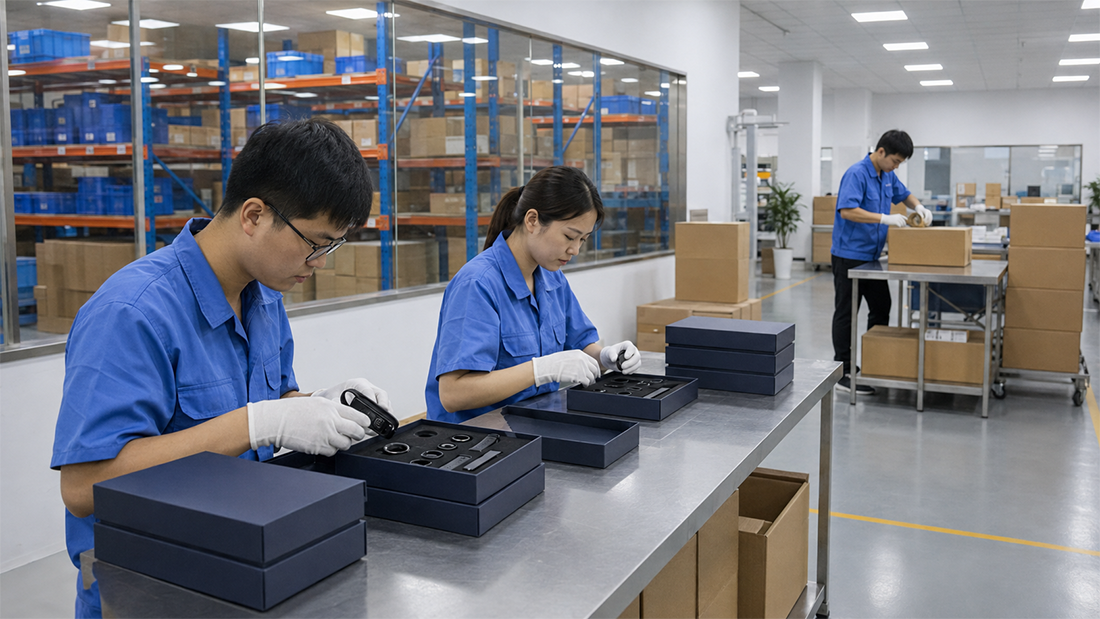
Key Takeaways
- Procurement teams buy differently from consumers: the RFQ must specify integration, certification scope, packaging, warranty, and data handling, not just hardware features.
- FCC certification, UN38.3 battery transport documentation, and applicable environmental compliance typically depend on the exact SKU and configuration — ask for the specific model test report, not a general certificate image.
- App, firmware, and back-end integration are often the longest lead-time items in a corporate wearable program; start them before the hardware RFQ is finalized.
- MOQ, tooling, and customization depth materially change landed cost; request a line-item quote that separates hardware, tooling, packaging, and certification costs.
- Sample testing and pre-production approval should be a contractual milestone, not an informal step.

Key Facts for Buyers
| RFQ Element | What to Verify | Typical Evidence | Common Pitfall |
|---|---|---|---|
| Use case | Wellness, safety, gifting, or loyalty program | Written program brief | Specifying consumer features the program cannot use |
| Radio compliance | FCC equipment authorization status for the exact model | FCC ID and grantee record | Generic certificate image with no model match |
| Battery safety | UN38.3 test summary and MSDS availability | Test report and SDS | Assuming all SKUs share the same battery pack |
| App and firmware | iOS/Android support, SDK or API availability, data export | Technical documentation and test build | Discovering integration limits after PO |
| MOQ and tooling | MOQ per model, tooling cost, customization depth | Line-item quotation | Comparing unit price without tooling or NRE |
| Sampling | Golden sample approval, drop/waterproof/aging tests | Sample test report | Skipping pre-production approval |
| Lead time | Production, packaging, and shipping sequence | Production schedule | Ignoring lithium-battery shipping requirements |
| Warranty | Coverage period, spare parts, RMA process | Warranty terms | No spare-part commitment for multi-year programs |

What Are Smart Watches for Corporate Procurement?
Smart watches for corporate procurement are wearable devices specified, purchased, and deployed by an organization rather than an individual buyer. They may be distributed as employee wellness tools, safety or lone-worker devices, branded loyalty rewards, conference gifts, or as part of a larger managed wearable program that includes a companion app and reporting dashboard. Because deployment is organizational, the buying criteria differ from consumer retail: the RFQ must define device quantity, usage duration, integration requirements, data ownership, replacement logistics, and the compliance documentation the organization’s legal and IT teams will need.
Corporate buyers in the United States typically source these devices through one of three models: OEM where the organization controls part of the design, ODM where a manufacturer’s existing platform is adapted, or private label where branding and packaging are customized on a mature product. Each model carries different MOQ, tooling, and certification implications, which is why the RFQ should state the intended model explicitly.
1. Define the Program Use Case Before You Write the RFQ
Specifications should follow the use case, not the other way around. A wellness program focused on step count, heart rate, and sleep trends has different requirements from a safety program that needs location reporting or long battery life in outdoor conditions. Writing the use case first prevents over-specifying features that inflate unit cost and complicate certification.
Questions to answer internally before contacting suppliers
- Who receives the device, and for how long? A 12-month employee program has different durability and warranty needs than a one-time corporate gift.
- What data will the organization access? Define whether data stays on the user’s phone, syncs to a company dashboard, or is not collected at all.
- Does the program require a companion app, or will the device operate with the manufacturer’s standard app?
- Are there accessibility or IT policy requirements, such as managed device enrollment or data residency constraints?
- What is the expected failure and replacement rate, and who handles returns?
These answers become the evaluation criteria in the RFQ and give suppliers enough context to propose a realistic platform rather than a generic catalog model. For buyers comparing wearable formats, the health and fitness wearable solutions overview can help clarify which device category fits a given program.
2. Lock Down Specifications That Matter in Volume Deployments
In a corporate deployment, the specifications that matter most are the ones that affect total cost of ownership: battery life under realistic use, display durability, water resistance rating, strap material and replaceability, charging method, and Bluetooth compatibility. Consumer-oriented specifications such as watch-face count or sport modes are secondary unless the program depends on them.
Specification areas to fix in the RFQ
- Battery and charging: state expected daily runtime and charging cycle; battery capacity claims should be validated in sample testing.
- Water resistance: specify the IP or ATM rating the program requires, and confirm the rating applies to the shipped configuration.
- Materials and skin contact: for long-wear wellness programs, specify strap material and confirm biocompatibility documentation where relevant.
- Connectivity: confirm Bluetooth version and compatibility with the organization’s device fleet, including iOS and Android versions in use.
- Health sensors: if the program uses heart rate or blood oxygen monitoring, clarify that these are wellness features and not medical diagnostic functions.
If the corporate program is part of a broader wellness initiative, linking device specifications to the corporate wellness application requirements helps align procurement and HR stakeholders before the RFQ is issued.
[Image suggestion: Procurement team reviewing smart watch specification sheet — see image_seo_suggestions]
3. Confirm FCC, Battery, and Environmental Certification Scope
Certification is the area where corporate RFQs most often stall. U.S. buyers should ask for documentation tied to the exact model and radio configuration being quoted, not a general certificate image. For devices with Bluetooth or other radio transmitters, the supplier should be able to show FCC equipment authorization records that match the model. For the lithium battery, UN38.3 test documentation and an MSDS are typically required for air transport, and buyers should verify applicability with their freight forwarder. Environmental requirements such as RoHS and REACH may apply depending on the organization’s procurement policy and the target market.
Certification requirements depend on the specific product configuration and destination market. Buyers should verify the current status of every certificate against the supplier’s quoted model and consult their own compliance or legal team before relying on documentation for a purchase decision. Official references include the FCC equipment authorization process and the IATA Dangerous Goods Regulations for lithium battery shipping.
Certification questions to put in the RFQ
- Which exact model numbers and radio configurations are covered by the FCC documentation provided?
- Is there a UN38.3 test summary for the battery pack used in this SKU, and does it match the shipping configuration?
- Which environmental compliance declarations (for example, RoHS) can the supplier provide for this model?
- Who is the responsible party for certification, and will the supplier support re-testing if the configuration changes?
- Can the supplier provide dated test reports rather than undated certificates?
4. Validate App, Firmware, and Data Integration Early
For corporate programs, the software layer is often more complex than the hardware. If the organization plans to pull wellness data into an internal dashboard or HR platform, the supplier must confirm whether an SDK or API exists, what data fields are available, and how user consent is handled. If the program will use the manufacturer’s standard app, the organization should confirm app store availability, privacy policy terms, and account management options for large user groups.
Integration checks
- Does the supplier offer SDK or API access, and under what commercial terms?
- Which data fields can be exported, and are they raw or aggregated?
- How are app updates delivered, and can enterprise users defer updates?
- What happens to the device and data if the user leaves the organization?
- Is there a documented data retention and deletion policy?
If the corporate program includes app customization or firmware changes, the private label OEM/ODM solution page outlines the types of customization typically available, and buyers should request a written scope before quotation.
5. Understand MOQ, Tooling, and Landed Cost Drivers
Unit price is only one line in a corporate smart watch budget. The RFQ response should separate hardware cost, tooling or non-recurring engineering (NRE), packaging and branding cost, certification cost, and shipping. MOQ varies by model and customization level; buyers should ask for MOQ per SKU and the threshold at which unit cost changes. Tooling charges apply when the program requires a custom enclosure, custom strap, or custom packaging, and ownership of tooling should be defined in writing.
Cost questions for the RFQ
- What is the MOQ for the standard model, and what is the MOQ if we change the logo, packaging, or firmware?
- Are tooling and NRE costs one-time, and who owns the tooling after the project ends?
- What is the per-unit cost of the custom packaging option?
- Which certification costs are included, and which are billed separately?
- What Incoterms are quoted, and what is the estimated landed cost to our U.S. destination?
For buyers at the RFQ stage, requesting a line-item quotation rather than a single unit price makes comparison between suppliers meaningful and reduces the risk of later change orders. STAR KING can provide a quotation template on request through the quote request page.
6. Run a Structured Sample and Pre-Production Test
Sample testing is the buyer’s main opportunity to verify supplier claims before committing to volume. A structured process includes an initial sample evaluation, a golden sample approval, and a pre-production sample check against the approved golden sample. Tests should cover the functions the program will actually use, plus basic reliability checks such as drop testing, water resistance verification, and aging or burn-in testing for the battery and display.
Sample testing steps
- Request samples in the final intended configuration, including packaging.
- Test battery runtime under realistic daily use, not only standby.
- Verify app pairing, data sync, and firmware update behavior.
- Run drop and water resistance checks consistent with the program environment.
- Approve a golden sample in writing and require pre-production samples to match it.
If the corporate program has a wellness or safety application, the sample test should also confirm the specific sensor functions the program relies on, such as fitness tracking accuracy under normal use.
[Image suggestion: Smart watch sample testing on a bench with drop-test and charging fixtures — see image_seo_suggestions]
7. Plan Lead Time, Packaging, and After-Sales Support
Lead time for corporate smart watch orders typically includes sample approval, component procurement, production, packaging, and shipping. Because the devices contain lithium batteries, shipping method and documentation affect schedule; buyers should confirm that UN38.3 and MSDS documentation is ready before booking freight. Custom packaging usually adds lead time and should be scheduled in parallel with production. After-sales planning should cover warranty period, spare-parts availability for the program duration, and a return process for defective units.
Lead-time and support questions
- What is the production lead time after sample approval, and what is the packaging lead time?
- What shipping documentation is provided for lithium battery transport?
- What warranty period applies, and what is the spare-parts commitment?
- What is the RMA process and expected turnaround for replacements?
- Who is the supplier’s contact for after-sales issues during the program?
Comparison Table: OEM vs. ODM vs. Private Label
| Model | Buyer Controls | Typical MOQ Impact | Tooling and NRE | Best Fit |
|---|---|---|---|---|
| OEM | Design, firmware, and branding | Highest | Usually required | Organizations with specific technical requirements |
| ODM | Platform selection and limited customization | Moderate | Sometimes required | Programs that need a proven platform adapted to their needs |
| Private Label | Branding, packaging, and app appearance | Lowest | Usually packaging only | Wellness, gifting, and loyalty programs on a fixed budget |
Buyers should confirm the model classification with each supplier, because the same factory may offer all three under different MOQ and tooling terms. For a broader view of wearable options, the smart watches product page lists available platforms and configurations that can be adapted for corporate programs.
Common Mistakes and Buyer Red Flags
Common mistakes
- Writing an RFQ around consumer features instead of program requirements.
- Accepting a certificate image without matching the model and radio configuration.
- Leaving app and data integration to the post-award phase.
- Comparing unit prices without normalizing tooling, packaging, and certification costs.
- Skipping the golden sample approval step.
- Assuming lithium-battery shipping is routine for every destination.
Buyer red flags
- Supplier cannot name the exact model covered by the certification documentation.
- Quotation does not separate tooling, packaging, and certification costs.
- No written warranty or spare-parts commitment.
- Pressure to skip sample testing or pre-production approval.
- Unwillingness to provide a named contact for after-sales.
Practical RFQ Buyer Checklist
- Program brief with use case, quantity, deployment length, and data requirements.
- Specification sheet with battery, water resistance, connectivity, and sensor requirements.
- Certification request tied to exact model and radio configuration.
- Integration requirements for app, SDK, API, and data export.
- Line-item quotation request covering hardware, tooling, packaging, certification, and shipping.
- Sample testing plan with golden sample approval milestone.
- Lead time and packaging schedule.
- Warranty, spare-parts, and RMA terms.
- Tooling ownership and IP clauses where customization applies.
- Named after-sales contact for the program duration.
FAQ
What certifications should U.S. corporate buyers require for smart watches?
Buyers should typically require FCC equipment authorization documentation for the exact radio configuration, UN38.3 test documentation and MSDS for the lithium battery, and applicable environmental declarations such as RoHS. The specific set depends on the model and the organization’s procurement policy, so buyers should verify with their compliance team.
How long does a corporate smart watch order usually take?
Lead time typically includes sample approval, component procurement, production, packaging, and shipping. Because the schedule depends on model, customization, and shipping method, buyers should request a production schedule from each supplier and plan for sample approval as a separate milestone.
Can we customize the app for our wellness program?
App customization depends on the supplier’s platform. Some suppliers offer branding-level customization, while others offer SDK or API access for data integration. Buyers should request a written scope and a test build before quotation, not after.
What is a typical MOQ for private-label smart watches?
MOQ varies by model and customization level. Packaging-only customization usually carries a lower MOQ than firmware or enclosure changes. Buyers should ask for MOQ per SKU and the threshold at which unit pricing changes.
How do we verify supplier claims before placing a bulk order?
A structured sample process is the main verification tool: request samples in the final configuration, test the functions the program will use, approve a golden sample in writing, and require pre-production samples to match it. Certification documents should be matched to the exact model.
Who owns the tooling if we customize the enclosure or packaging?
Tooling ownership should be defined in the purchase agreement. Buyers should ask whether tooling is charged as a one-time cost, who holds it, and what happens to it if the program ends. This clause is worth negotiating before the PO.
Are smart watch health features medical devices?
Consumer smart watch health features such as heart rate and blood oxygen monitoring are typically wellness features, not medical diagnostic functions. Organizations planning health-related programs should consult their legal and clinical advisors and should not present these features as diagnostic tools.
Conclusion
Issuing an RFQ for smart watches for corporate procurement is a documentation exercise as much as a purchasing one. The seven checks in this guide — use case, specifications, certification, integration, MOQ and cost, sample testing, and lead time and support — give procurement teams a structured way to compare suppliers on evidence rather than claims. Organizations that define requirements before contacting suppliers, and that require written documentation for each item, reduce the risk of change orders, schedule slips, and compliance gaps after the purchase order is signed.
Next Step: Request a Quotation
If your organization is preparing an RFQ for a corporate wellness, gifting, or branded wearable program, STAR KING can review your requirements and provide a line-item quotation covering hardware, customization, packaging, certification scope, and lead time. Request a quotation or ask to discuss an OEM/ODM project and confirm which smart watch configurations fit your program.
[Image suggestion: Corporate wellness program dashboard with smart watch data — see image_seo_suggestions]
Discuss Your Smart Wearable OEM/ODM Project
Planning a smart ring, smart watch, smart band, AI glasses, AI translator, or AI voice mouse project? Contact STAR KING to discuss product positioning, sample testing, customization scope, certification requirements, lead time, and quotation details.

Team Star King

Scan WhatsApp QR code
Leave a Reply