
smart ring suppliers: 7 Proven Steps to Vet Smart Ring Suppliers for Startup Brands in 2026
November 15, 2026 · Team Star King

7 Proven Steps to Vet Smart Ring Suppliers for Startup Brands in 2026
Vetting smart ring suppliers is the most critical decision for startup brands entering the wearable market. A reliable supplier ensures product quality, timely delivery, and compliance, directly impacting your brand’s reputation and profitability. This guide outlines seven proven steps to evaluate smart ring suppliers effectively. You’ll learn how to assess OEM/ODM capabilities, quality control, certifications, MOQ, and more, empowering you to make an informed choice for a successful partnership.
Table of Contents
Table of Contents
Table of Contents
- Introduction
- Short Answer
- Key Takeaways
- Key Facts for Buyers
- Step 1: Define Your Product Requirements
- Step 2: Identify Potential Smart Ring Suppliers
- Step 3: Evaluate OEM/ODM Capabilities
- Step 4: Assess Quality Control and Certifications
- Step 5: Understand MOQ, Pricing, and Lead Times
- Step 6: Request Samples and Validate Performance
- Step 7: Negotiate Terms and Finalize Partnership
- Comparison Table: Supplier Evaluation Criteria
- Common Mistakes and Buyer Red Flags
- Buyer Checklist
- FAQ
- Conclusion

Short Answer
To vet smart ring suppliers effectively, startup brands should follow a structured 7-step process: define requirements, identify candidates, evaluate OEM/ODM capabilities, assess quality and certifications, clarify MOQ and lead times, request samples for validation, and negotiate favorable terms. This approach minimizes risks and ensures a reliable supply chain. Partnering with a verified manufacturer like STAR KING can streamline the process and provide ongoing support.

Key Takeaways
- Vetting smart ring suppliers requires a systematic approach to assess capability, quality, and compliance.
- Startup brands must clearly define product specifications and target market requirements before engaging suppliers.
- OEM/ODM flexibility, quality control processes, and certifications are critical selection criteria.
- MOQ, pricing, and lead times should align with your launch plans and budget.
- Sample testing and validation are essential to confirm supplier claims and product performance.
- Common mistakes include ignoring certifications, underestimating MOQ, and skipping reference checks.
- Using a buyer checklist can streamline supplier evaluation and reduce risks.
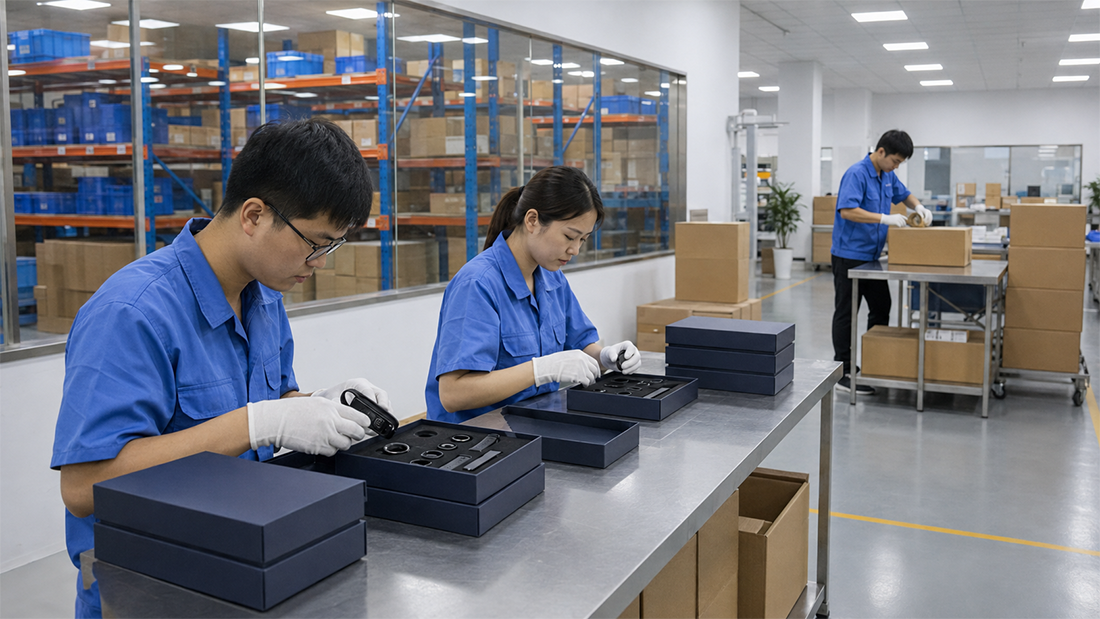
Key Facts for Buyers
| Fact | Detail |
|---|---|
| Typical MOQ for smart rings | 500–1,000 units for OEM; lower for ODM [STAR KING TO CONFIRM] |
| Standard lead times | 30–60 days after sample approval, depending on customization [STAR KING TO CONFIRM] |
| Key certifications | CE, FCC, RoHS, UN38.3 (battery), depending on market |
| Common ring sizes | US 6–13; custom sizing may require tooling |
| Battery life | 3–7 days typical, varies with usage |
| Quality control | Incoming inspection, in-process checks, pre-shipment inspection |
| Packaging customization | Available with MOQ; digital and print assets required |

Step 1: Define Your Product Requirements
Before contacting suppliers, clearly define your smart ring’s specifications, target market, and unique selling points. This preparation ensures efficient communication and accurate quotations.
Key Specifications to Outline
- Functional features: Heart rate monitoring, sleep tracking, blood oxygen, NFC, etc.
- Design: Ring size range, material (e.g., titanium, ceramic), water resistance rating.
- Connectivity: Bluetooth version, app compatibility (iOS/Android).
- Battery life: Minimum acceptable duration.
- Certifications: Required for your target markets (e.g., CE for EU, FCC for US).
- Packaging and branding: Custom logo, packaging design.
Documenting these requirements helps you compare supplier capabilities and avoid misalignment. For startups, consider scalability—choose features that can evolve with future models.
Step 2: Identify Potential Smart Ring Suppliers
Source suppliers through industry trade shows (e.g., CES, IFA), B2B platforms (Alibaba, Global Sources), and referrals. Focus on manufacturers with proven experience in wearable technology.
Where to Find Reliable Suppliers
- Trade shows: Meet suppliers face-to-face and inspect samples.
- B2B platforms: Filter by verified suppliers and read reviews.
- Industry associations: Such as the Bluetooth SIG for connectivity standards.
- Referrals: Ask within your network for trusted manufacturers.
Create a shortlist of 5–8 suppliers that meet your basic criteria. For smart rings, prioritize those with in-house R&D and app development capabilities. STAR KING, for instance, offers private label OEM/ODM solutions tailored for startups.
Step 3: Evaluate OEM/ODM Capabilities
Assess whether the supplier can support your desired level of customization. OEM (Original Equipment Manufacturer) typically involves building to your specifications, while ODM (Original Design Manufacturer) offers existing designs you can brand.
Questions to Ask
- Do you have in-house design and engineering teams?
- Can you customize firmware, app, and sensors?
- What is your experience with smart rings specifically?
- Can you provide references from similar startup clients?
Request a capabilities presentation and case studies. A supplier with strong OEM/ODM flexibility can accommodate your branding and functional requirements, reducing time to market.
Step 4: Assess Quality Control and Certifications
Quality and compliance are non-negotiable. Inquire about the supplier’s quality management system and testing protocols.
Quality Control Checklist
- ISO 9001 certification (or equivalent).
- Incoming material inspection.
- In-process quality checks.
- Final pre-shipment inspection (e.g., AQL sampling).
- Product testing: drop, waterproof, aging, etc.
Certifications
Ensure the supplier can provide required certifications for your target markets. Common ones include:
- CE: For EU market.
- FCC: For US market (see FCC official site).
- RoHS: Restriction of hazardous substances.
- UN38.3: For lithium battery safety in transport.
Verify certificates and ask for test reports. Note that certification requirements vary by product configuration and destination; confirm with the supplier and your compliance advisor.
Step 5: Understand MOQ, Pricing, and Lead Times
Discuss minimum order quantities (MOQ), pricing structure, and production lead times early to ensure alignment with your business plan.
Factors Influencing MOQ and Pricing
- Level of customization (OEM vs. ODM).
- Material and component costs.
- Order volume.
- Packaging complexity.
Startups often face higher MOQs for custom designs. Some suppliers offer lower MOQs for ODM products. Clarify lead times for sampling, mass production, and shipping. Typical lead times are 30–60 days after sample approval, but this can vary [STAR KING TO CONFIRM].
Step 6: Request Samples and Validate Performance
Always test samples before placing a bulk order. Evaluate build quality, sensor accuracy, app functionality, and battery life.
Sample Testing Protocol
- Order samples in different sizes to check fit and comfort.
- Test all advertised features (heart rate, sleep tracking, etc.).
- Assess app user experience and data sync.
- Conduct stress tests (water resistance, drop).
- Compare against your specifications.
Document any issues and discuss improvements with the supplier. This step is crucial to avoid costly mistakes in mass production.

Image suggestion: Startup team reviewing smart ring samples from different suppliers.
Step 7: Negotiate Terms and Finalize Partnership
Once you’ve selected a preferred supplier, negotiate pricing, payment terms, warranty, and after-sales support. Ensure all agreements are documented in a contract.
Key Terms to Negotiate
- Price breaks for volume orders.
- Payment schedule (e.g., 30% deposit, 70% before shipment).
- Warranty period and RMA process.
- Intellectual property (IP) ownership for custom designs.
- Exclusivity rights (if applicable).
Establish clear communication channels and a timeline for production milestones. A reliable supplier will be transparent and cooperative during negotiations.
Comparison Table: Supplier Evaluation Criteria
| Criteria | What to Look For | Red Flag |
|---|---|---|
| OEM/ODM Capability | In-house design, engineering, and app development; custom firmware options | Outsources all development; limited customization |
| Quality Control | ISO 9001, documented QC processes, pre-shipment inspection | No QC documentation; vague testing procedures |
| Certifications | CE, FCC, RoHS, UN38.3; test reports available | Cannot provide certificates; claims without proof |
| MOQ | Flexible for startups; clear volume tiers | Very high MOQ for custom designs |
| Lead Time | Realistic timelines; buffer for delays | Unrealistically short lead times |
| Communication | Responsive, English-speaking support | Slow responses; language barriers |
| References | Willing to share client testimonials | Refuses to provide references |

Image suggestion: Auditor inspecting smart ring production line.
Common Mistakes and Buyer Red Flags
Avoid these pitfalls during supplier selection:
- Ignoring certifications: Selling without required certifications can lead to customs seizure and legal issues.
- Underestimating MOQ: Ordering too few units may result in higher per-unit costs or rejected orders.
- Skipping sample testing: Relying solely on supplier specs can lead to quality issues.
- Not verifying references: Past client feedback reveals reliability.
- Overlooking IP protection: Ensure ownership of custom designs and molds.
- Falling for too-good-to-be-true pricing: Extremely low quotes often indicate compromised quality.
Red flags include reluctance to share certification documents, pressure to pay in full upfront, and lack of a physical address or factory audit report.
Buyer Checklist
Use this checklist to streamline your supplier evaluation:
- ☐ Defined product specifications and target market requirements.
- ☐ Shortlisted 5–8 potential suppliers with relevant experience.
- ☐ Requested and reviewed OEM/ODM capabilities and references.
- ☐ Verified quality control processes and certifications.
- ☐ Clarified MOQ, pricing, and lead times.
- ☐ Ordered and tested samples; documented performance.
- ☐ Negotiated contract terms, including warranty and IP.
- ☐ Conducted a factory audit or video tour (if possible).

Image suggestion: Printable checklist for evaluating smart ring suppliers.
Buyers can also review STAR KING Smart Rings OEM/ODM options to compare product positioning, customization scope, and sample planning.
FAQ
1. What is the typical MOQ for smart rings from Chinese suppliers?
MOQ varies by supplier and customization level. For ODM products, MOQ may start at 500 units; for full OEM, it could be 1,000 units or more. STAR KING offers flexible MOQs for startups—contact us for details [STAR KING TO CONFIRM].
2. How long does it take to get samples from a smart ring supplier?
Sample lead time is typically 7–15 days, depending on product complexity and customization. Some suppliers may charge sample fees, which are often refundable upon bulk order.
3. What certifications should I require for smart rings?
At minimum, CE (EU), FCC (US), RoHS, and UN38.3 for battery transport. Additional certifications may be needed for specific markets or features (e.g., medical device claims). Always verify certificates with the supplier.
4. How can I verify a supplier’s quality control?
Request a quality manual, ask for test reports, and conduct a factory audit. Third-party inspection services can also be hired for pre-shipment checks.
5. What are common red flags when dealing with smart ring suppliers?
Red flags include refusal to provide certification documents, unresponsive communication, unrealistic lead times, and requests for full payment upfront without a contract.
6. Can startup brands customize smart rings with their own branding?
Yes, many suppliers offer private label and OEM services. Customization options include logo, packaging, and even firmware modifications. Discuss your needs early to ensure feasibility.
Conclusion
Vetting smart ring suppliers is a systematic process that requires careful planning and due diligence. By following these seven steps, startup brands can identify reliable partners who deliver quality products on time and within budget. Remember to define your requirements, evaluate capabilities, verify certifications, test samples, and negotiate favorable terms. Avoiding common mistakes and using a checklist will further reduce risks. With the right supplier, you can focus on building your brand and capturing market share in the growing smart ring market.
Ready to Find Your Ideal Smart Ring Supplier?
STAR KING specializes in OEM/ODM smart rings for startup brands. We offer flexible MOQs, comprehensive quality control, and certification support. Request a quotation or discuss your OEM/ODM project today to get started.
Discuss Your Smart Wearable OEM/ODM Project
Planning a smart ring, smart watch, smart band, AI glasses, AI translator, or AI voice mouse project? Contact STAR KING to discuss product positioning, sample testing, customization scope, certification requirements, lead time, and quotation details.

Team Star King

Scan WhatsApp QR code
Leave a Reply