Smart Watch Sourcing for US Importers: A Step-by-Step Evaluation Guide
Smart Watch Sourcing Guide for US Importers: How to Evaluate Suppliers and Products
If you’re importing smart watches to the US, your biggest challenge isn’t finding a supplier—it’s finding one you can trust. This guide walks through the key steps: defining product requirements, vetting manufacturers, comparing OEM vs. ODM, budgeting, certifications, and quality control. Whether you’re starting a private label brand or expanding your product line, understanding the sourcing process will help you avoid costly mistakes and build a reliable supply chain.
Key Takeaways
- Define your target market and product specs before contacting suppliers.
- Understand the difference between OEM and ODM to choose the right partnership model.
- Consider certifications (FCC, CE, RoHS) early—they impact cost and lead time.
- Insist on pre-production samples and third-party inspections.
- Plan for logistics, including battery requirements and potential tariffs.
Understanding the Smart Watch Market for Importers
The US smart watch market continues to grow, driven by health and fitness trends. Importers can capture value by offering unique features or targeting niche segments like corporate wellness or senior health. However, success depends on smart sourcing—you need a product that meets US consumer expectations for quality, safety, and connectivity.
What US Buyers Expect from Smart Watches
US consumers prioritize battery life, health accuracy, compatibility with smartphones, and build quality. As an importer, you must ensure your smart watch meets these expectations to avoid returns and negative reviews. For example, a watch with a short battery life or inaccurate heart rate monitoring will quickly damage your brand.
Defining Your Product Requirements
Before reaching out to suppliers, create a detailed spec sheet. This is your blueprint for sourcing and will be critical during supplier evaluation.
Key Features and Specifications
- Display: Type (AMOLED, LCD), size, resolution.
- Sensors: Heart rate, SpO2, accelerometer, gyroscope, GPS, etc.
- Battery: Capacity, charging method, expected life.
- Connectivity: Bluetooth version, Wi-Fi, NFC for payments.
- Operating System: Proprietary or OS like RTOS, Wear OS, etc.
- Water resistance: IP rating (IP67, IP68).
- App compatibility: iOS and Android.
Target Features by Application
If you plan to sell to corporate wellness programs, prioritize features like step counting, sedentary reminders, and stress tracking. For fitness enthusiasts, focus on GPS, workout modes, and heart rate accuracy. Determine your buyer profile now—this will influence your product choice.
OEM vs. ODM: Which Model Is Right for You?
Smart watch manufacturers typically offer two sourcing models:
| Factor | OEM (Original Equipment Manufacturing) | ODM (Original Design Manufacturing) |
|---|---|---|
| Design | You provide design or specifications; factory manufactures. | Factory has existing designs; you customize branding and minor features. |
| Development Time | Longer; requires tooling and testing. | Shorter; uses proven hardware. |
| MOQ | Typically higher (e.g., 3000+). | Can be lower (e.g., 500–1000). |
| Cost per Unit | Potentially lower after development. | Higher due to factory margin, but no development cost. |
| Customization | Full control over hardware and firmware. | Limited to logo, casing color, app rebranding. |
If you’re a startup with limited capital, ODM is often faster and cheaper. However, if you have a unique product vision and budget for development, OEM can create a stronger brand moat.
Evaluating Suppliers: What You Need to Check
Not all manufacturers are equal. Use a systematic checklist to vet potential partners.
1. Company Background and Verification
Check the supplier’s business license, years in business, and export experience. Use third-party services like SGS or Bureau Veritas to conduct a factory audit, or request references from existing customers.
2. Product Quality and Manufacturing Capabilities
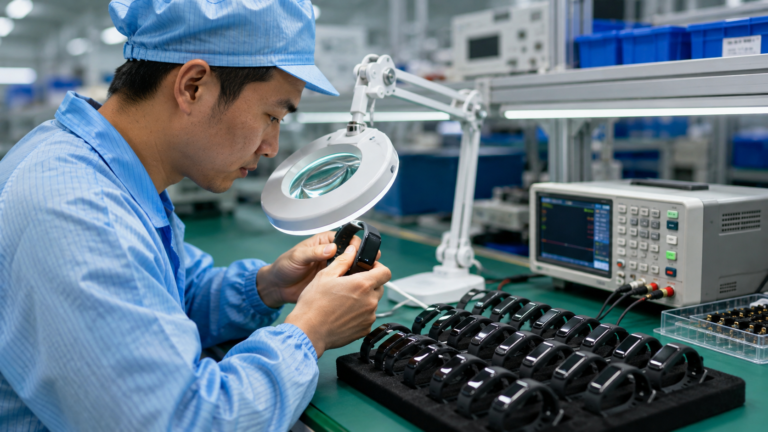
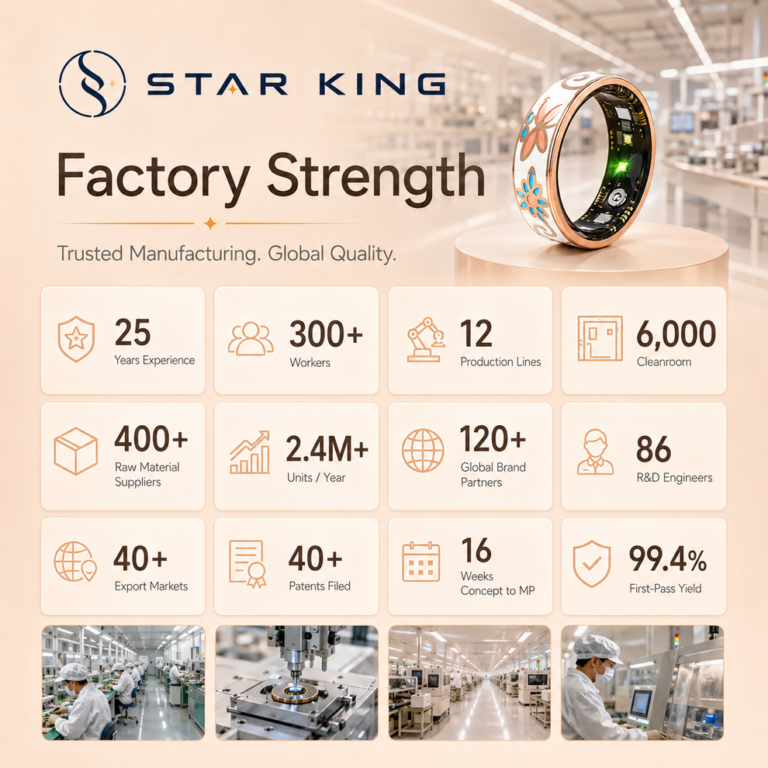
Ask about their production lines, testing equipment, and defect rates. Request a sample of their current products to evaluate build quality. For smart watches, pay attention to sensor accuracy and the touchscreen responsiveness—these are common pain points.
3. MOQ, Pricing, and Payment Terms
MOQ affects your cash flow and inventory risk. Understand how pricing scales with volume and what factors influence unit cost (e.g., memory, sensors, casing material). Standard payment terms are 30% deposit and 70% before shipment, but you can negotiate if you have a track record.
4. Compliance and Certifications
Before importing to the US, you must ensure your product meets FCC and RoHS requirements. CE is needed for Europe, but if you plan to sell globally, start with universal certifications. Battery shipments require UN38.3 and MSDS—verify your supplier provides these. Remember: certification requirements depend on your target market and product configuration; always confirm with your supplier and a compliance consultant.
5. Software and App Support
Smart watches rely on a companion app. Your supplier must provide a reliable app, and you should clarify who owns the app code. If you choose ODM, the app is often white-labeled. For OEM, you may need to develop your own app or integrate with an existing platform via API.
6. Supply Chain Transparency
Ask about their component sourcing. Are batteries from reputable manufacturers? Do they comply with environmental regulations? A transparent supply chain reduces the risk of recalls and brand damage.
Cost Breakdown: Understanding the Price You Pay
Beyond the unit price, consider these cost factors:
- Tooling: For OEM, there may be one-time tooling costs for molds and fixtures.
- Certification testing: FCC, CE, and other tests add to your upfront costs.
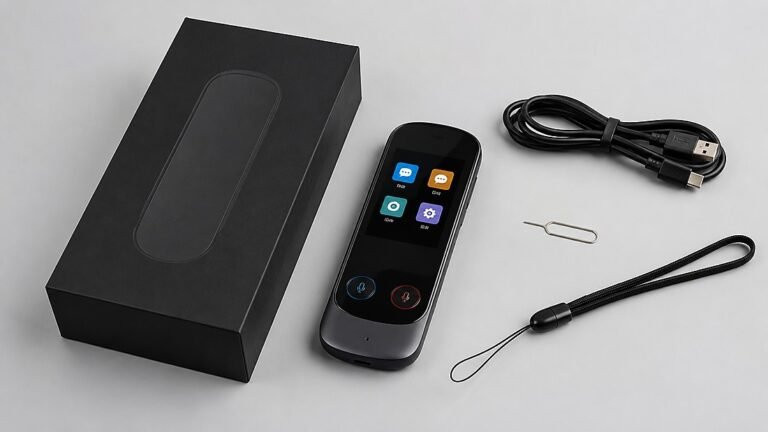
- Packaging: Custom packaging design and printing costs.
- Logistics: Air vs. sea freight; US import duties (check HTS codes) and customs broker fees.
- Insurance and warranty: Consider setting aside budget for replacements.
Request a detailed quotation from multiple suppliers to compare landed costs, not just unit prices.
Quality Control During Production
Quality issues can ruin your launch. Implement a QC plan:
Pre-Production Sample
Always order a pre-production sample—even in ODM—to verify the final product matches your requirements. Test it for at least a week to check battery life, sensor accuracy, and stability.
In-Process Inspection
If your order is large, hire a third-party inspection company to conduct a mid-production audit. They can catch issues early, reducing the risk of a full batch being defective.
Pre-Shipment Inspection
Before shipment, inspect a sample of the finished goods. This is your last chance to catch problems like cosmetic defects, incorrect logos, or software bugs.
Common Mistakes to Avoid
- Choosing the cheapest supplier: Low price often means low quality. Balance cost with reliability.
- Ignoring app quality: A buggy app leads to poor user experience and returns.
- Skipping certification: FCC non-compliance can result in product seizures and fines.
- Not testing battery safety: Lithium batteries are hazardous if not handled correctly—verify UN38.3 compliance.
- Overlooking post-sale support: Clarify warranty terms and spare parts availability before signing.
Practical Buyer Checklist
- Define your target market and buyer persona.
- Write a detailed product specification sheet.
- Shortlist at least 3–5 suppliers (use Alibaba, Canton Fair, or trade shows).
- Verify supplier credentials and request factory audit reports.
- Order samples and conduct thorough testing.
- Confirm MOQs, lead times, and payment terms in writing.
- Ensure certifications (FCC, RoHS, UN38.3) are provided and valid.
- Plan for logistics: choose a freight forwarder, understand duties, and insurance.
- Set up a QC plan with pre-shipment inspection.
- Negotiate a warranty and after-sales support agreement.
Frequently Asked Questions
1. What is the typical MOQ for smart watch OEM orders?
MOQs vary from 500 to 5,000 units. ODM orders may have lower MOQs (500–1,000), while full custom OEM often requires 2,000+. Always ask for the supplier’s minimum.
2. How long does it take to receive a custom smart watch order?
For ODM, sample production may take 2–4 weeks, and mass production 2–6 weeks. OEM can take 8–20 weeks due to tooling and app development. Plan lead time carefully.
3. What certifications are mandatory for smart watches in the US?
FCC compliance is required for radio frequency devices. RoHS is a substance restriction directive in the EU, but many US buyers require it as well. For battery shipment, UN38.3 and MSDS are needed. Always verify with a compliance expert.
4. Can I use my own logo and app for a private label smart watch?
Yes. For ODM, the factory customizes the logo, casing, and often the app with your branding. For OEM, you have full control over design and software, but development costs are higher.
5. How do I protect my intellectual property when sourcing from overseas?
Sign an NDA before sharing confidential designs. In OEM projects, ensure you own the tooling and firmware rights. Work with a legal advisor to enforce IP in China and the US.
6. What is the best way to test a smart watch before committing to a large order?
Order a pre-production sample and conduct real-world testing—wear it for at least a week, test battery life, sensor accuracy, and app connectivity. Also, run drop and water resistance tests.
7. How can I lower landed cost without sacrificing quality?
Optimize shipping (sea freight for bulk), negotiate volume discounts, and consider using generic packaging. However, never compromise on battery safety or core sensor quality, as those are critical to user satisfaction.
Conclusion
Importing smart watches offers a lucrative opportunity, but success requires rigorous supplier evaluation, clear product specifications, and proactive quality management. By following this guide, you’ll minimize risks and position your brand for success in the US market. When you’re ready to move forward, partnering with a reliable manufacturer like STAR KING can provide the expertise and support you need. Contact us to discuss your project and request samples.
Get Started with STAR KING
Request a quotation or discussion about your smart watch OEM/ODM project. Our team can help you navigate specifications, certifications, and production planning. Request samples now.