
smart watch sourcing: Amazon Smart Watch Sourcing from China: 7 Steps for US Sellers
October 18, 2026 · Team Star King
Amazon Smart Watch Sourcing from China: 7 Steps for US Sellers
Smart watch sourcing is the process of identifying, evaluating, and qualifying a manufacturer to produce smart watches that meet your product specifications, quality standards, and US market compliance requirements. For Amazon sellers, the goal is not simply to find a low unit price—it is to build a repeatable supply chain that protects your listing, your brand, and your margins. This guide outlines seven practical steps for sourcing smart watches from China, with a focus on the decisions that matter most to US-based Amazon sellers.
Table of Contents
Table of Contents
Table of Contents
- Short Answer
- Key Takeaways
- Key Facts for Buyers
- What Is Smart Watch Sourcing and Why It Matters for Amazon Sellers
- Step 1: Define Your Product and Amazon Market Requirements
- Step 2: Shortlist and Vet Smart Watch Factories
- Step 3: Choose the Right Business Model (OEM, ODM, or Private Label)
- Step 4: Understand MOQ, Pricing, and Landed Cost
- Step 5: Validate Samples and Quality Control
- Step 6: Confirm US Compliance and Amazon Requirements
- Step 7: Plan Logistics, Lead Times, and After-Sales
- Comparison Table: OEM vs. ODM vs. Private Label
- Common Mistakes and Buyer Red Flags
- Practical Buyer Checklist
- FAQ
- Conclusion
Short Answer
To source smart watches from China as an Amazon seller, start by defining your target market and product specifications, then vet factories for manufacturing capability and compliance documentation. Request samples to verify quality, confirm US regulatory requirements (FCC, battery safety, and Amazon’s product policies), and plan logistics and after-sales support before committing to a bulk order. A structured sourcing process reduces risk and protects your Amazon listing.

Key Takeaways
- Smart watch sourcing requires balancing unit cost with compliance, quality, and supply chain reliability.
- Vet factories on manufacturing capability, quality systems, and documentation—not just price.
- Understand the trade-offs between OEM, ODM, and private label models before committing.
- Samples and pre-shipment inspections are essential to catch issues before they reach Amazon FBA.
- US compliance for smart watches may include FCC equipment authorization, UN38.3 battery testing, and other requirements depending on product features.
- Plan lead times and after-sales support to avoid stockouts and negative reviews.
Key Facts for Buyers
| Factor | What Amazon Sellers Should Know |
|---|---|
| Typical MOQ | Often 500–1,000 units for private label; lower for stock models. Confirm with supplier. |
| Sample Lead Time | Typically 7–15 days, depending on customization. |
| Production Lead Time | Usually 30–60 days after sample approval and deposit. |
| Key US Compliance | FCC (if radio transmitter), UN38.3 for lithium battery transport, and Amazon product compliance policies. |
| Common Customization | Logo, packaging, app branding, and firmware settings. |
| Quality Checks | Incoming inspection, in-line checks, pre-shipment inspection, and aging tests. |

What Is Smart Watch Sourcing and Why It Matters for Amazon Sellers
Smart watch sourcing is more than placing an order with a factory. It involves qualifying a manufacturing partner who can consistently deliver products that meet your specifications, comply with US regulations, and satisfy Amazon’s customers. For Amazon sellers, a poor sourcing decision can lead to listing suspensions, negative reviews, returns, and lost revenue. A well-structured sourcing process, on the other hand, supports stable supply, protects your brand reputation, and allows you to scale.
US buyers typically look for smart watches with features such as heart rate monitoring, fitness tracking, sleep tracking, notifications, and long battery life. However, the features you choose must be supported by reliable hardware and software. Sourcing decisions should therefore consider not only the product’s feature set but also the manufacturer’s ability to deliver consistent quality and documentation.
For a deeper look at smart watch product categories, you can explore STAR KING’s smart watch offerings.
Step 1: Define Your Product and Amazon Market Requirements
Before contacting suppliers, define what you want to sell. Consider your target customer, price point, and the features that matter for your Amazon listing. A clear product definition helps you compare suppliers objectively and avoid costly changes later.
Key Questions to Answer
- What is your target retail price and target margin?
- Which features are essential (e.g., heart rate monitoring, GPS, Bluetooth calling)?
- What battery life do you need?
- Will you offer multiple colors or sizes?
- Do you require a companion app? If so, what functionality?
- What certifications do you need for the US market?
Amazon sellers should also review Amazon’s product compliance requirements for wearables, including battery safety and labeling. You can find relevant information on Amazon Seller Central (login required).
Feature Trade-offs
Adding features increases cost and complexity. For example, GPS and cellular connectivity increase power consumption and require additional regulatory testing. Decide which features deliver real value to your customers and which are unnecessary.
Step 2: Shortlist and Vet Smart Watch Factories
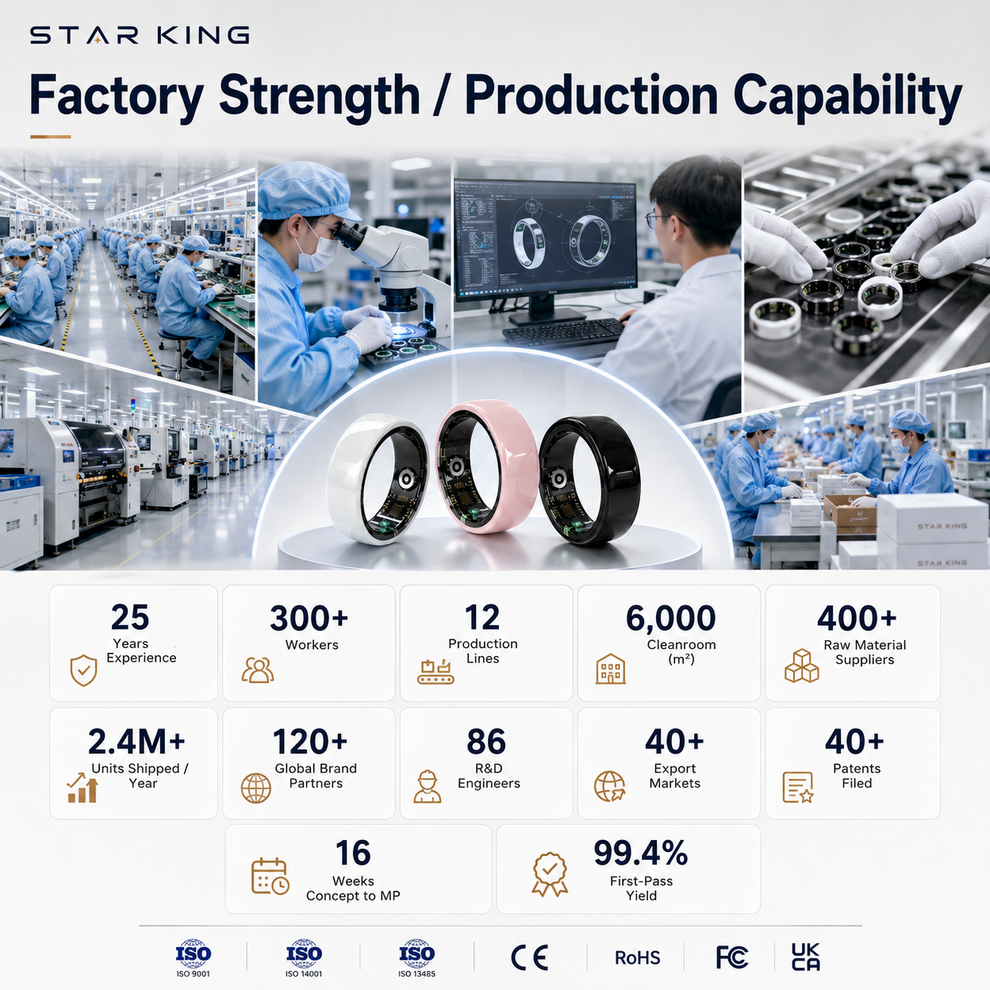
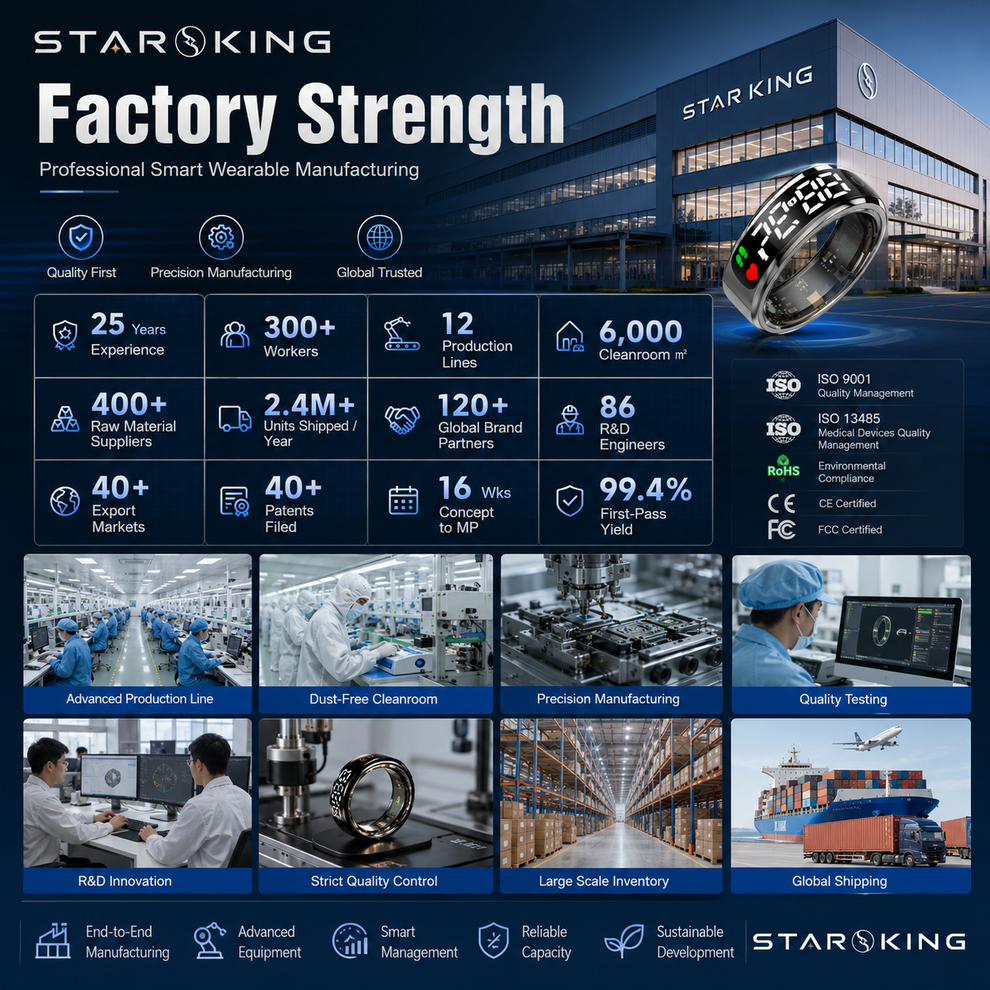
Not all factories are equal. Some specialize in low-cost stock products, while others focus on OEM/ODM projects with custom development. For Amazon sellers, the right factory should have experience with international buyers, quality systems, and compliance documentation.
What to Look For
- Manufacturing experience and product range
- Quality management system (e.g., ISO 9001) [STAR KING TO CONFIRM]
- In-house testing capabilities
- Compliance documentation for US market
- Communication responsiveness and English proficiency
- References from other international clients (ask for case studies)
You can use platforms like Alibaba to identify potential suppliers, but always verify their credentials independently. Request a factory audit report or schedule a video tour.
Supplier Evaluation Criteria
Create a scorecard to compare suppliers. Evaluate factors such as product quality, price, communication, lead time, and willingness to support customization. Avoid choosing solely on price; the lowest quote may come with hidden costs or quality risks.

Step 3: Choose the Right Business Model (OEM, ODM, or Private Label)
Your business model determines how much control you have over the product and how much investment is required. For Amazon sellers, the choice often depends on your brand strategy and resources.
OEM (Original Equipment Manufacturer): You provide the design and specifications, and the factory manufactures the product. This offers the highest level of customization but requires more investment and longer development time.
ODM (Original Design Manufacturer): The factory offers a ready-designed product that you can brand. This is faster and less expensive but offers less differentiation.
Private Label: You apply your brand to an existing product, often with minor customization such as logo and packaging. This is the fastest route to market but may result in less unique products.
For more details on private label wearables, see STAR KING’s private label solutions.
Step 4: Understand MOQ, Pricing, and Landed Cost
MOQ (Minimum Order Quantity) and pricing are critical factors for Amazon sellers, especially those testing new products. Factories typically set MOQs based on production efficiency and component sourcing. For smart watches, MOQs can range from a few hundred to several thousand units, depending on customization.
Factors Affecting Price
- Product specifications (e.g., display type, sensors, battery capacity)
- Material choices (e.g., plastic vs. metal casing)
- Customization level (logo, packaging, app)
- Order quantity
- Compliance testing requirements
When calculating costs, consider the landed cost, which includes the unit price, shipping, duties, taxes, and any Amazon FBA fees. A lower unit price may not result in a lower landed cost if shipping or compliance costs are higher.
Negotiation Tips
Build a long-term relationship with your supplier. Start with a smaller trial order to test quality and market response, then scale up. Ask for volume discounts and clarify payment terms.
Step 5: Validate Samples and Quality Control
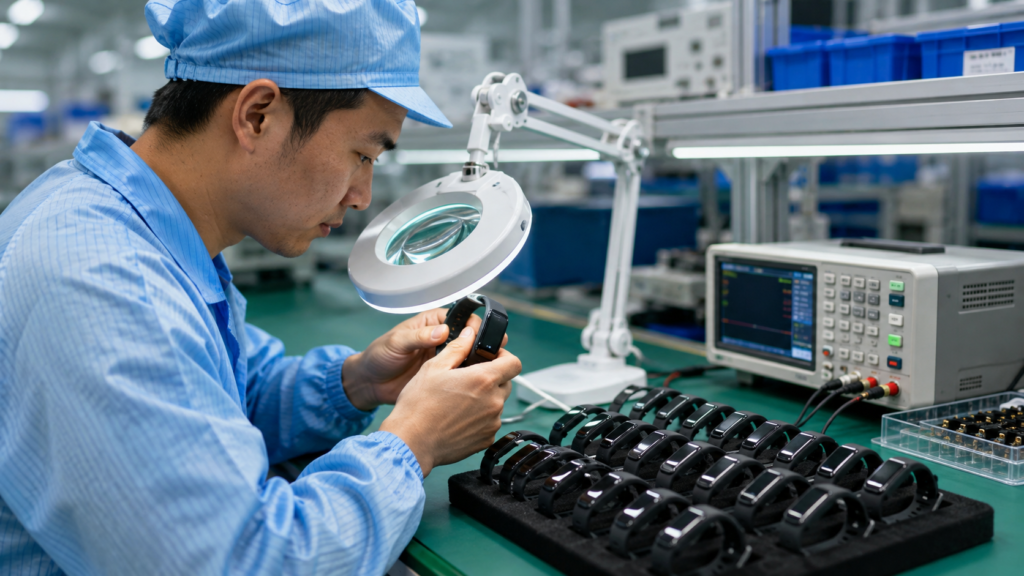
Always request samples before placing a bulk order. Samples allow you to evaluate build quality, performance, and packaging. Test the watch thoroughly: check battery life, sensor accuracy, app connectivity, and water resistance if applicable.
What to Check in a Sample
- Build quality and finish
- Display and touch responsiveness
- Heart rate and other sensor performance (compare with a known device)
- Battery life under typical use
- App pairing and functionality
- Charging and accessories
- Packaging and labeling
During production, arrange a pre-shipment inspection to verify quantity, functionality, and packaging. A third-party inspection service can provide an independent report. For more on quality control, refer to ISO 9001 quality management principles.
Step 6: Confirm US Compliance and Amazon Requirements
US market compliance for smart watches depends on the product’s features. If the watch includes Bluetooth or other radio transmitters, it may require FCC equipment authorization. Lithium-ion batteries must meet UN38.3 testing for transport. Other requirements may include RoHS (if applicable) and California Proposition 65 warnings.
Amazon also has specific requirements for product documentation and safety. Sellers should ensure their products comply with Amazon’s policies. For FCC requirements, consult the FCC’s wireless devices page. For battery safety, refer to the IATA Dangerous Goods Regulations. Always verify requirements with a qualified compliance professional.
Documentation to Request
- FCC test reports and certification (if applicable)
- UN38.3 test summary
- RoHS declaration (if applicable)
- MSDS for battery
- Product labeling and packaging artwork
Step 7: Plan Logistics, Lead Times, and After-Sales
Shipping smart watches from China to the US typically involves air or sea freight. Lithium batteries are regulated, so ensure the supplier provides proper documentation and packaging. Amazon FBA sellers should plan for inbound shipment requirements, including labeling and appointment scheduling.
Lead times vary: sample production may take 7–15 days, and mass production 30–60 days after sample approval. Always add buffer time for quality inspections and shipping delays. After-sales support is also important; clarify warranty terms, spare parts availability, and return policies with your supplier.
Comparison Table: OEM vs. ODM vs. Private Label
| Model | Customization Level | Investment | Time to Market | Best For |
|---|---|---|---|---|
| OEM | High (design, specs, firmware) | High | Long | Brands with unique product vision |
| ODM | Medium (branding, packaging) | Medium | Medium | Sellers wanting differentiation without full development |
| Private Label | Low (logo, packaging) | Low | Short | New sellers testing the market |
Common Mistakes and Buyer Red Flags
- Choosing solely on price: The cheapest supplier may cut corners on quality or compliance.
- Ignoring compliance: Missing FCC or battery documentation can lead to customs delays or Amazon listing removal.
- Skipping samples: Ordering without testing a sample increases the risk of mass production issues.
- Not verifying the factory: Relying only on online profiles without independent verification.
- Underestimating lead times: Failing to account for production and shipping delays can cause stockouts.
- No after-sales plan: Not clarifying warranty and spare parts can lead to customer service problems.
Practical Buyer Checklist
- ☐ Define product specifications and target price
- ☐ Research and shortlist potential suppliers
- ☐ Request factory audit reports or schedule video tours
- ☐ Request and test samples
- ☐ Confirm compliance documentation (FCC, UN38.3, etc.)
- ☐ Clarify MOQ, pricing, and payment terms
- ☐ Arrange pre-shipment inspection
- ☐ Plan logistics and Amazon FBA inbound
- ☐ Clarify warranty and after-sales support
- ☐ Start with a trial order before scaling
FAQ
1. What is the typical MOQ for smart watches from China?
MOQs vary by supplier and customization level. For private label orders, MOQs often start around 500–1,000 units. Stock models may have lower MOQs. Always confirm with the specific factory.
2. Do I need FCC certification for smart watches sold on Amazon US?
If your smart watch includes a radio transmitter such as Bluetooth or Wi-Fi, it may require FCC equipment authorization. Verify with the manufacturer and a compliance testing lab. Amazon may request documentation.
3. How long does shipping from China to the US take?
Air freight typically takes 5–10 days, while sea freight can take 25–40 days, depending on the port and service. Add time for customs clearance and Amazon FBA inbound processing.
4. Can I customize the packaging and logo?
Yes, most factories offer logo and packaging customization for private label orders. Some also offer app branding and firmware customization. Confirm details and costs with your supplier.
5. What quality checks should I require?
Request a pre-shipment inspection that includes functionality testing, visual inspection, and packaging checks. For smart watches, also test battery performance and sensor accuracy on samples.
6. What are common red flags when evaluating suppliers?
Watch for reluctance to provide compliance documents, vague answers about manufacturing processes, unusually low prices, and lack of references. Always verify factory credentials independently.
Conclusion
Smart watch sourcing for Amazon sellers requires careful planning and due diligence. By following these seven steps, you can reduce risk, ensure compliance, and build a supply chain that supports your brand’s growth. Remember that the lowest price is not always the best value; prioritize quality, compliance, and reliability.
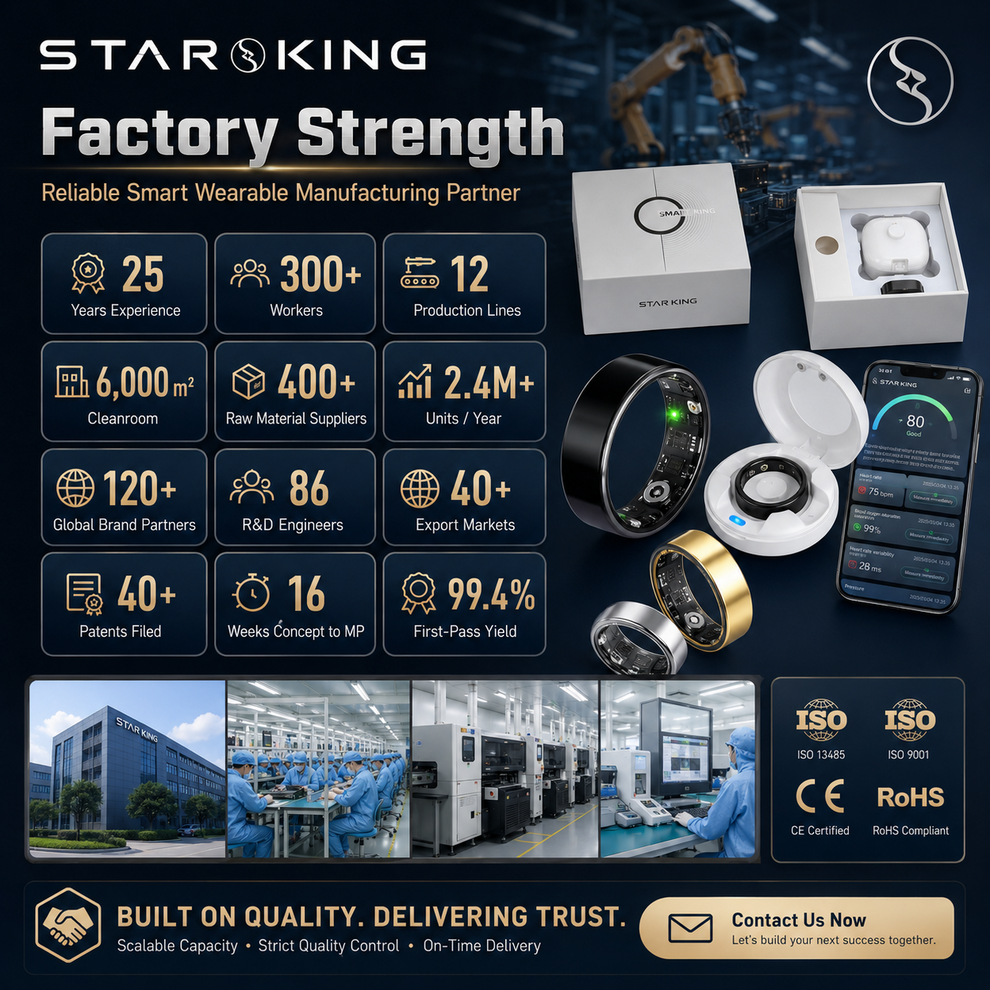
At STAR KING, we support international buyers with smart watch OEM/ODM and private label solutions. Our team can help you evaluate product options and discuss your project requirements.
Ready to start your smart watch project? Request product samples or contact us to discuss your OEM/ODM requirements.
Discuss Your Smart Wearable OEM/ODM Project
Planning a smart ring, smart watch, smart band, AI glasses, AI translator, or AI voice mouse project? Contact STAR KING to discuss product positioning, sample testing, customization scope, certification requirements, lead time, and quotation details.

Team Star King

Scan WhatsApp QR code
Leave a Reply