
Smart Watch Private Label Sourcing: 9 Critical Checks for US Buyers
October 22, 2026 · Team Star King
Smart Watch Private Label Sourcing: 9 Critical Checks for US Buyers
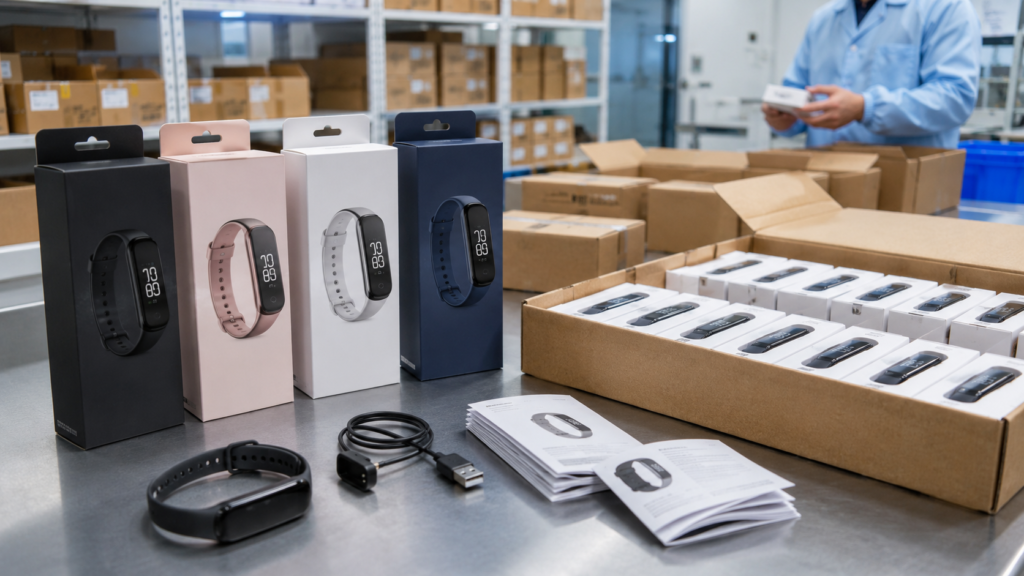
Smart watch private label sourcing means contracting a wearable manufacturer to produce smart watches under your own brand, with your logo, packaging, app identity, and specifications. For US private-label brands at the RFQ stage, the decisive checks are factory capability, MOQ and tooling costs, certification and battery compliance, sample validation, firmware and app control, and lead-time planning. This guide gives you nine practical checks to run before you issue a purchase order.
Table of Contents
Table of Contents
Table of Contents
- Short Answer: What Should US Buyers Check First?
- Key Takeaways
- Key Facts for Buyers
- What Is Smart Watch Private Label?
- Check 1: Manufacturer Capability and Verification
- Check 2: OEM vs ODM vs Private Label Model
- Check 3: MOQ, Tooling, and Cost Drivers
- Check 4: Sample Testing and Validation
- Check 5: Specifications and Feature Trade-offs
- Check 6: Quality Control and Pre-Shipment Inspection
- Check 7: US Certification and Battery Compliance
- Check 8: Firmware, App, and Data Control
- Check 9: Lead Times, Shipping, and After-Sales
- Comparison Table: OEM vs ODM vs Private Label
- Common Mistakes and Buyer Red Flags
- Practical Buyer Checklist
- FAQ
- Conclusion
Short Answer: What Should US Buyers Check First?
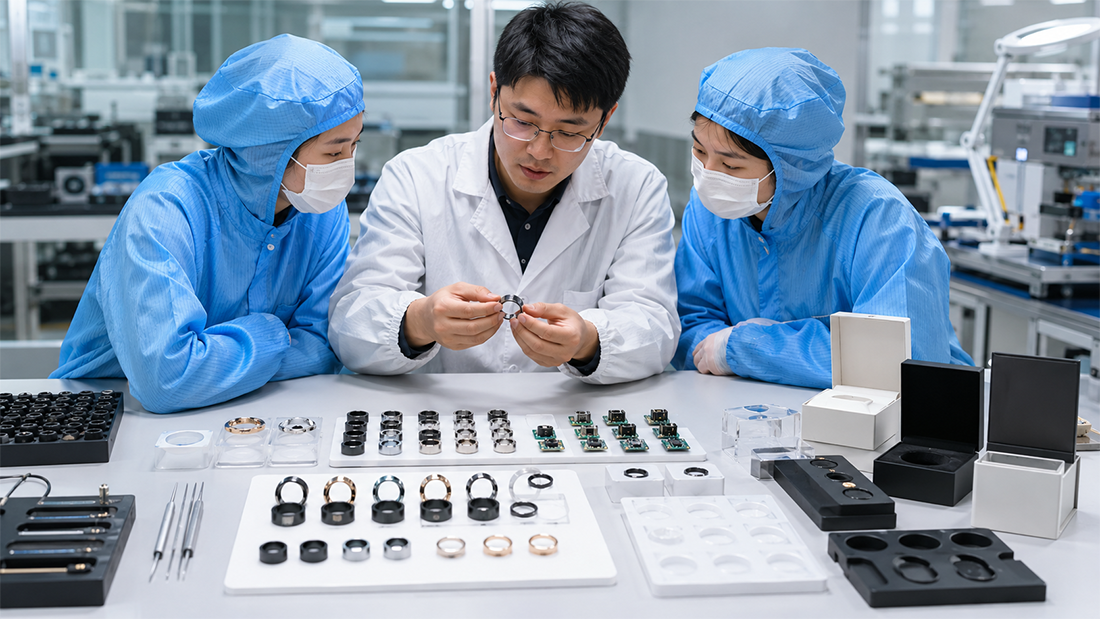
Before sending an RFQ for smart watch private label production, US buyers should verify four things: the factory’s actual manufacturing and testing capability, the MOQ and tooling cost structure, the certification path for the US market including FCC and battery-related requirements, and the sample validation process. These four items determine whether a quote is realistic and whether the product can legally and commercially reach the US market.
Key Takeaways
- Smart watch private label projects fail most often at the specification and compliance stage, not at the price negotiation stage.
- MOQ, tooling, and certification costs typically depend on whether you choose OEM, ODM, or a private-label configuration.
- FCC rules and lithium battery shipping requirements apply to smart watches entering the US; buyers should verify the exact scope with the manufacturer and a compliance lab.
- Request pre-shipment inspection reports and sample test data before approving mass production.
- Clarify firmware ownership, app customization, and data handling early, because these affect long-term brand control.
Key Facts for Buyers
| Item | Typical Consideration | What Buyers Should Verify |
|---|---|---|
| MOQ | Varies by model and customization level | Written MOQ per SKU and per customization tier [STAR KING TO CONFIRM] |
| Tooling cost | Applies mainly to custom enclosures or new molds | Whether tooling is one-time and who owns the mold |
| Certification | FCC and battery requirements may apply for the US | Test reports per model and configuration |
| Sample lead time | Depends on stock vs customized sample | Sample timeline and sample cost policy [STAR KING TO CONFIRM] |
| Production lead time | Depends on order quantity and component supply | Written lead time and buffer plan [STAR KING TO CONFIRM] |
| App and firmware | Standard app vs customized app | Who controls updates, data, and branding |
| Shipping | Lithium battery transport rules apply | UN38.3 and MSDS documentation availability |
What Is Smart Watch Private Label?
Smart watch private label is a manufacturing arrangement in which a brand sells smart watches produced by a wearable manufacturer under the brand’s own name, logo, packaging, and usually its own app identity. It differs from pure OEM in that the product platform may already exist, while branding and some specifications are customized. It differs from full ODM development in that the buyer may not require a new industrial design or new firmware platform.
Buyers should evaluate smart watch private label suppliers on three levels: manufacturing capability, customization depth, and compliance readiness. A supplier that can assemble and brand a standard model may not be able to support custom firmware, new sensor configurations, or US-specific certification needs. For a broader view of customization models, see STAR KING’s private label OEM/ODM solutions.
Check 1: Manufacturer Capability and Verification
Start with factory verification. Ask for business license information, factory address, production lines, and testing equipment. A supplier that cannot describe its own production process in specific terms is a risk. Buyers should also ask which processes are in-house and which are outsourced, because outsourced assembly can affect quality control and lead times.
What to request
- Company registration and factory address
- Production and assembly line description
- Testing equipment list and quality process overview
- References or case examples that can be verified
Manufacturer verification is not about distrust; it is about matching the supplier’s real capability to your order size and customization needs. For a broader evaluation framework, see STAR KING’s sourcing and product resources.
Check 2: OEM vs ODM vs Private Label Model
The manufacturing model determines cost, timeline, and brand control. OEM usually means the buyer provides specifications and the factory manufactures to them. ODM means the factory offers a developed platform that the buyer brands or modifies. Private label typically means branding an existing platform with logo, packaging, and app changes.
At the RFQ stage, ask the supplier which model they recommend for your target price and volume, and why. A supplier that pushes a single model without discussing trade-offs may not be evaluating your business case carefully. For smart watch platform options, see STAR KING smart watches.
Check 3: MOQ, Tooling, and Cost Drivers
MOQ and price are linked to customization depth. Standard color and logo changes usually carry lower MOQ than custom enclosures or new molds. Tooling costs are typically one-time but may be amortized into unit price. Buyers should ask for a written breakdown of unit price, tooling, sample cost, packaging cost, and certification cost.
Key cost drivers
- Order quantity per SKU and per color
- Custom enclosure or new mold requirement
- Display, sensor, and battery specification
- App customization level
- Packaging type and print process
- Certification testing scope
Do not compare quotes without normalizing specifications. A lower quote often reflects a lower battery capacity, a different display, or a narrower certification scope. For related supply planning context, see smart retail and e-commerce solutions.
Check 4: Sample Testing and Validation
Samples are the first real test of a supplier. Request samples that match the intended production configuration, not a generic demo unit. Test battery life under realistic use, screen readability, touch response, Bluetooth pairing stability, app onboarding, and charging behavior.
Sample validation checklist
- Battery life under mixed use and standby
- Charging time and charger compatibility
- Bluetooth pairing and reconnection stability
- App installation and account setup
- Water resistance claim verification
- Packaging and manual quality
Ask whether sample cost is refundable against a bulk order and how long sample production takes. These details are often negotiable at the RFQ stage [STAR KING TO CONFIRM].
Check 5: Specifications and Feature Trade-offs
Smart watch specifications involve trade-offs. Larger displays and brighter panels increase battery drain. Advanced sensors add cost and may require additional calibration. Cellular or GPS features increase power demand and certification complexity. Buyers should define the minimum viable feature set for their target price and channel.
Consumer health features such as heart rate or blood oxygen monitoring are generally wellness features, not medical diagnostics, unless the product is specifically cleared or approved for medical use. Buyers should avoid marketing language that implies diagnosis. For application context, see fitness tracking applications.
Check 6: Quality Control and Pre-Shipment Inspection
Quality control should be documented, not promised. Ask how the factory handles incoming component inspection, in-process checks, functional testing, and final pre-shipment inspection. Request the inspection checklist and the acceptable quality limit (AQL) level used.
Quality questions to ask
- What tests are performed on every unit?
- What is the sampling plan for pre-shipment inspection?
- How are defective units handled and replaced?
- Are aging and drop tests performed, and at what frequency?
For US buyers, pre-shipment inspection reduces the risk of receiving units that fail on arrival and protects marketplace ratings.
Check 7: US Certification and Battery Compliance
Certification requirements for smart watches entering the US typically depend on the product’s wireless functions, battery type, and target channel. The Federal Communications Commission (FCC) regulates radio frequency devices, and products with Bluetooth or other wireless functions generally require FCC equipment authorization. Buyers should verify the exact requirement with the manufacturer and a qualified testing laboratory.
Lithium battery shipping is a separate compliance area. Air transport of lithium batteries is governed by international dangerous goods rules, and documentation such as UN38.3 test reports and MSDS is commonly requested. The FCC equipment authorization page and the IATA Dangerous Goods Regulations provide official reference points. Buyers should confirm which certifications apply per model and configuration, because a certificate for one model does not automatically cover another.
Check 8: Firmware, App, and Data Control
For private-label brands, the app is part of the product. Ask whether the supplier provides a white-label app, a customized app under your brand, or only a generic app. Clarify who controls firmware updates, who owns the app code, and how user data is handled. Data handling expectations in the US may require clear privacy disclosures, and buyers should verify requirements with legal counsel.
If your roadmap includes AI features or voice interaction, evaluate the supplier’s integration capability early. STAR KING’s AI office productivity solutions illustrate how software and hardware integration can be scoped.
Check 9: Lead Times, Shipping, and After-Sales
Lead time planning should cover sample approval, mass production, quality inspection, and shipping. Ask for a written timeline with milestones and a buffer plan for component delays. For US buyers, ocean freight is slower but cheaper for large volumes, while air freight is faster and more expensive.
After-sales terms matter for marketplace sellers. Clarify warranty period, spare parts policy, and the process for handling defective returns. A supplier that cannot describe its after-sales process in writing may create costly delays later [STAR KING TO CONFIRM]. For related logistics context, see vehicle and logistics safety solutions.
Comparison Table: OEM vs ODM vs Private Label
| Model | Customization Depth | Typical MOQ | Tooling | Best For |
|---|---|---|---|---|
| Private Label | Logo, packaging, app branding | Lower | Usually none | Fast market entry |
| ODM | Platform modification, firmware options | Medium | May apply | Differentiated product on proven platform |
| OEM | Buyer-defined specifications | Higher | Likely | Full brand control and custom design |
Common Mistakes and Buyer Red Flags
- Comparing quotes without normalizing specifications and certification scope.
- Accepting verbal certification claims without test reports.
- Ignoring lithium battery shipping documentation until the last minute.
- Not clarifying firmware and app ownership before mass production.
- Choosing a supplier solely on unit price and later facing quality or lead-time problems.
- Assuming a sample from one model represents the production configuration of another.
Practical Buyer Checklist
- Factory verification documents reviewed
- Manufacturing model selected (OEM, ODM, or private label)
- Written MOQ, tooling, and cost breakdown received
- Samples tested against a defined checklist
- Specification trade-offs documented
- Quality control process and AQL level confirmed
- Certification and battery documentation scope confirmed per model
- Firmware, app, and data ownership clarified
- Lead time and shipping plan agreed in writing
- After-sales and warranty terms documented
FAQ
What is the typical MOQ for smart watch private label orders?
MOQ varies by model and customization level. Standard logo and packaging changes usually carry lower MOQ than custom enclosures. Ask for written MOQ per SKU and per customization tier before comparing quotes [STAR KING TO CONFIRM].
Do smart watches need FCC certification for the US market?
Smart watches with Bluetooth or other wireless functions generally require FCC equipment authorization. The exact requirement depends on the product’s radio configuration, and buyers should verify with the manufacturer and a qualified testing laboratory.
How long does smart watch private label production take?
Lead time depends on order quantity, customization depth, and component supply. A written timeline covering sample approval, production, inspection, and shipping is more reliable than a single lead-time number [STAR KING TO CONFIRM].
Can the app be branded under my own name?
Many suppliers offer white-label or customized app options. Buyers should clarify branding level, update control, and data handling before committing to mass production.
What battery documentation is needed for shipping?
Lithium battery shipments commonly require UN38.3 test reports and MSDS documentation. Requirements depend on the shipping method and carrier, and buyers should confirm with the supplier and freight forwarder.
How can I verify quality before mass production?
Request pre-shipment inspection reports, sample test data, and the factory’s quality control checklist. Confirm the AQL level and how defective units are handled.
Is smart watch private label suitable for a startup brand?
Private label can be a practical entry path because it usually requires lower tooling investment than full OEM. Startup brands should still plan for certification, shipping, and after-sales costs in their landed cost model.
Conclusion
Smart watch private label sourcing succeeds when buyers treat the RFQ as a verification process, not a price comparison. Confirm the factory’s capability, the manufacturing model, the cost structure, the sample performance, the quality process, and the US compliance path before approving production. These nine checks reduce the risk of delays, marketplace issues, and unexpected landed costs.
Ready to Discuss Your Smart Watch Private Label Project?
If you are preparing an RFQ for a US-market smart watch program, STAR KING can help you review customization options, sample planning, and certification scope. Request a quotation and share your target specifications, volume, and channel so the team can respond with a structured proposal.
Discuss Your Smart Wearable OEM/ODM Project
Planning a smart ring, smart watch, smart band, AI glasses, AI translator, or AI voice mouse project? Contact STAR KING to discuss product positioning, sample testing, customization scope, certification requirements, lead time, and quotation details.

Team Star King

Scan WhatsApp QR code
Leave a Reply