
smart watch OEM suppliers: How Retail Chains Should Evaluate Smart Watch OEM Suppliers: 7 Proven Steps for a Low-Risk RFQ
October 31, 2026 · Team Star King

How Retail Chains Should Evaluate Smart Watch OEM Suppliers: 7 Proven Steps for a Low-Risk RFQ
For U.S. retail chains, the right smart watch OEM suppliers reduce markdowns, compliance surprises, and launch delays. The best approach is a structured seven-step evaluation: define the retail use case, verify the factory, validate samples, confirm certification for the U.S. market, lock down MOQ and lead time, audit quality controls, and calculate landed cost. This guide gives procurement teams a repeatable RFQ framework so you can compare suppliers on evidence rather than price alone.
Table of Contents
Table of Contents
smart watch OEM suppliers: Table of Contents
- Short Answer
- Key Takeaways
- Key Facts for Buyers
- Step 1: Define the Retail Use Case Before You Contact Suppliers
- Step 2: Verify the Manufacturer, Not Just the Trading Company
- Step 3: Validate Samples Against a Written Spec
- Step 4: Confirm U.S. Market Compliance Before the PO
- Step 5: Lock Down MOQ, Lead Time, and Capacity
- Step 6: Audit Quality Control and Pre-Shipment Inspection
- Step 7: Calculate Landed Cost and Compare Total Value
- The 7-Point RFQ Decision Table
- Common Mistakes and Buyer Red Flags
- Practical Buyer Checklist
- FAQ
- Conclusion

Short Answer
Retail chains should evaluate smart watch OEM suppliers by verifying factory identity, testing samples against a written specification, confirming FCC and battery-safety documentation for the U.S. market, and comparing quotes on landed cost rather than unit price. A structured RFQ with clear MOQ, lead-time, and quality requirements helps procurement teams choose a supplier that can support repeatable retail programs without compliance or inventory risk.
Key Takeaways
- Define retail price band, features, and packaging before sending an RFQ to avoid apples-to-oranges quotes.
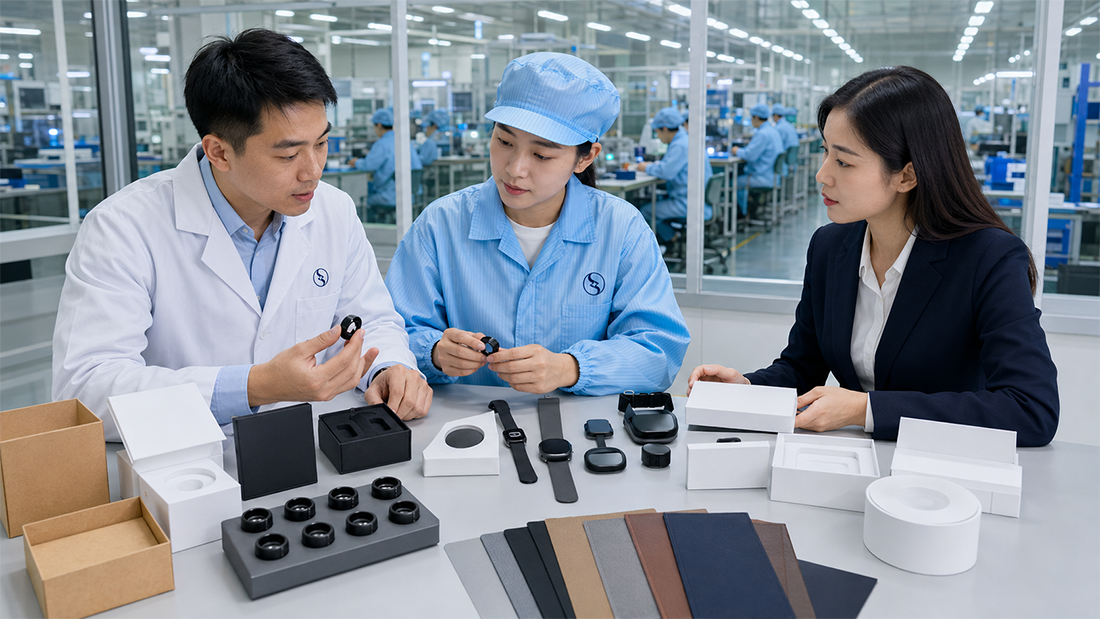
- Verify that the supplier is a manufacturer or an authorized OEM partner; request business license, factory audit report, and production photos.
- Test samples for display clarity, battery performance, app stability, and drop resistance under retail conditions.
- For the U.S., confirm FCC equipment authorization, UN38.3 battery test summaries, and RoHS compliance support for each model configuration.
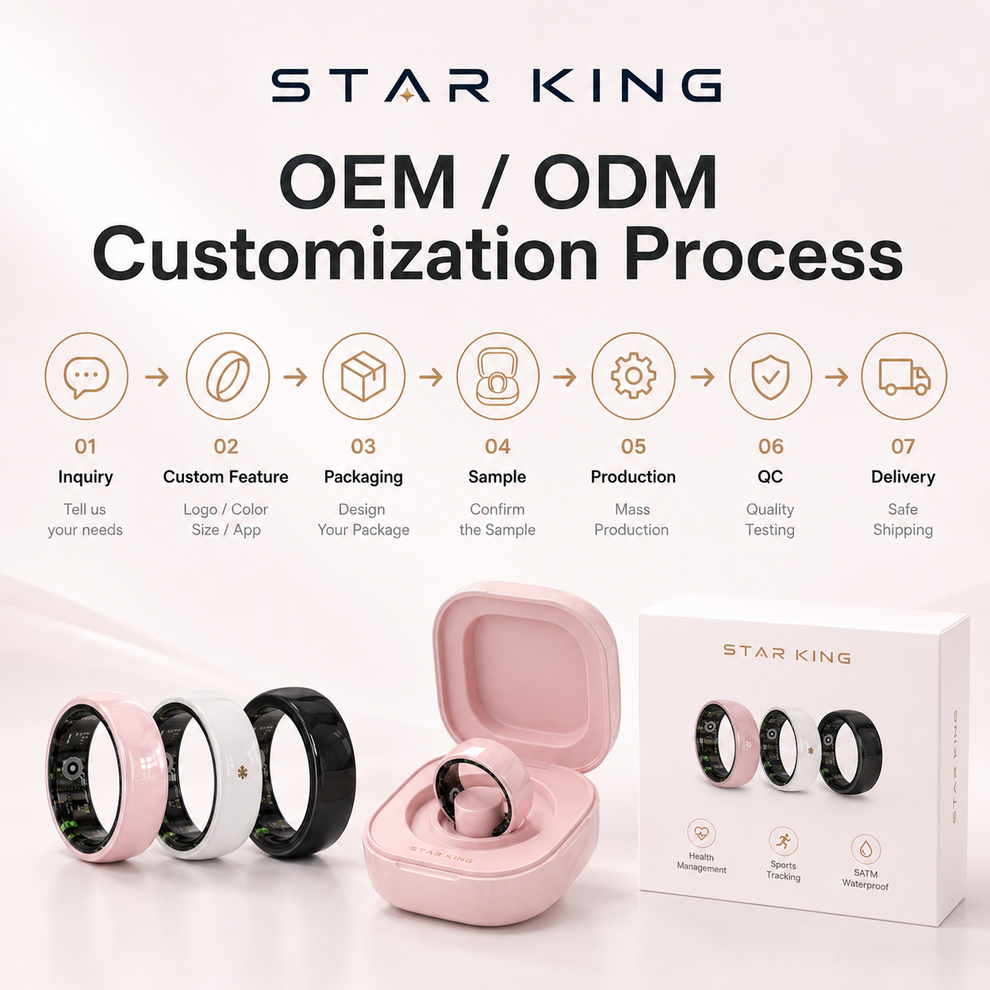
- Use the private label OEM/ODM solution model to plan logo, packaging, and app customization without underestimating tooling and MOQ implications.
Key Facts for Buyers
| RFQ Factor | Typical Range / Requirement | Why It Matters for U.S. Retail Chains |
|---|---|---|
| MOQ for private label smart watches | Often 500–1,000 units per model; may be higher for custom tooling or packaging | Affects cash flow, warehouse space, and markdown risk |
| Sample lead time | 7–15 days for stock designs; 20–35 days for customized samples | Determines launch timeline and buyer review cycles |
| Mass production lead time | 30–45 days after sample approval and deposit | Must align with planogram resets and seasonal promotions |
| U.S. compliance | FCC equipment authorization; UN38.3 for lithium batteries; RoHS support | Required for customs clearance and retailer compliance teams |
| Battery safety documentation | UN38.3 test summary and MSDS | Airlines and customs may request before shipment |
| Quality inspection | Pre-shipment inspection with AQL sampling | Reduces defective units reaching store shelves |
Step 1: Define the Retail Use Case Before You Contact Suppliers
Retail chains buy smart watches for specific shelf positions: entry-level fitness bands, fashion-forward watches, or health-monitoring models with premium packaging. Before sending an RFQ, document the target retail price, required features, screen size, battery life expectation, app ecosystem, and packaging format. This internal brief prevents suppliers from quoting mismatched products and helps you compare bids fairly. For U.S. retail, also decide whether the watch will be sold as a standalone SKU or bundled with accessories, because bundling affects battery shipping documents and packaging costs.
Product Specification Trade-offs for Retail Chains
Feature choices directly influence cost, battery life, and compliance. For example, always-on AMOLED displays increase power consumption and may require a larger battery, which in turn affects UN38.3 documentation and shipping classification. Heart-rate and blood-oxygen sensors add cost and require clear labeling that the device is not a medical diagnostic tool. When reviewing smart watches from a supplier, ask for a feature-to-cost matrix so your buying team can decide which features justify the retail price gap.
Step 2: Verify the Manufacturer, Not Just the Trading Company
Many suppliers present themselves as OEM manufacturers but source from third-party factories. For retail chains, this creates accountability risk: if a defect appears, a trading company may have limited control over production. Ask for the business license, factory address, production line photos, and recent factory audit reports. A video call walkthrough of the assembly and testing areas is a practical verification step. Also request the names of any subcontracted processes, such as packaging or molding, and confirm who owns the tooling.
Questions That Reveal Supplier Capability
- Which models are produced in-house versus outsourced?
- Can you provide a factory audit report or ISO certificate?
- Who owns the molds if we fund custom tooling?
- How do you handle firmware updates after shipment?
- What is your warranty and spare-parts policy for retail returns?
If you are comparing multiple suppliers, a structured sourcing guide can help standardize the evaluation criteria across your buying team.
Step 3: Validate Samples Against a Written Spec
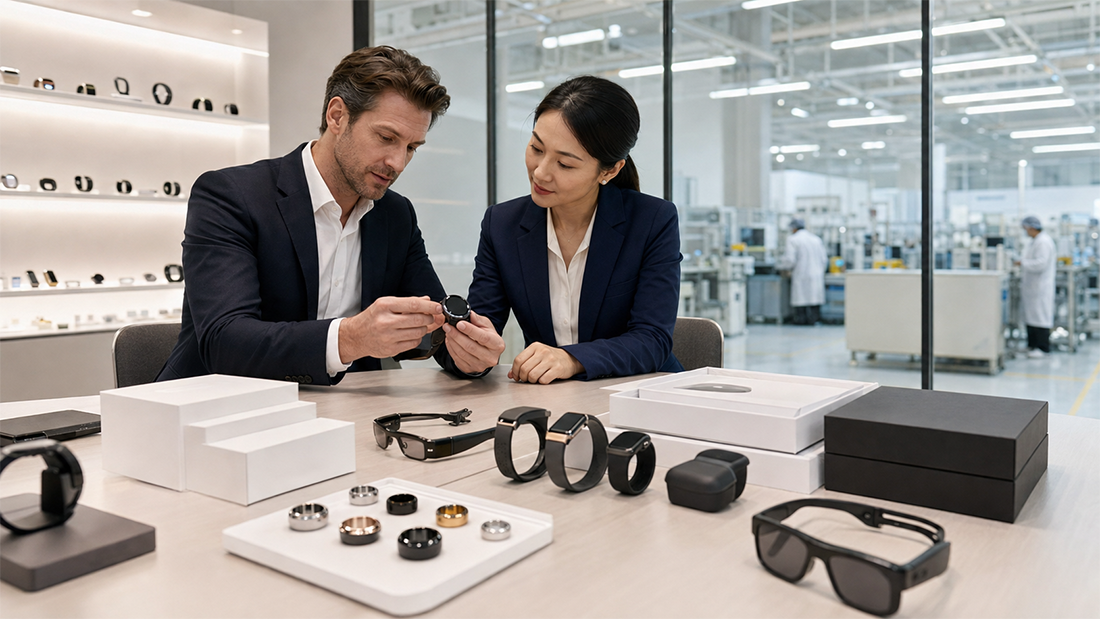
Samples are the first real test of whether a supplier can meet retail expectations. Do not rely on catalog photos. Request samples that match the exact configuration you intend to order, including packaging and accessories. Test battery life under realistic use, check touchscreen responsiveness, verify app pairing on iOS and Android, and evaluate strap durability. For retail chains, also test the out-of-box experience: packaging clarity, quick-start guide, and charger compatibility.
Sample Testing Checklist
- Battery drain test over 24–48 hours with typical notifications and health tracking enabled.
- App pairing and firmware update process on both iPhone and Android devices.
- Display readability under store lighting and outdoor conditions.
- Water resistance claim verification (e.g., IP rating) with documentation.
- Drop test from retail counter height (approx. 1 m) for casing and screen durability.
- Charging time and charger compatibility with U.S. voltage and USB standards.
Step 4: Confirm U.S. Market Compliance Before the PO
Compliance is a common source of launch delays for retail chains. For the U.S. market, smart watches with Bluetooth or Wi-Fi require FCC equipment authorization. Lithium-ion batteries require UN38.3 test summaries and MSDS for transport. RoHS compliance may be requested by retailers even when not legally mandated for all product categories. Suppliers should provide compliance documents that match the exact model and radio configuration you plan to import. Confirm whether the supplier can support private label OEM/ODM compliance documentation in your brand name, because labeling requirements vary by certification scheme.
Compliance Documents to Request
- FCC equipment authorization (or supplier declaration where applicable) for the specific model.
- UN38.3 test summary for the battery cell and pack configuration.
- MSDS for battery shipping.
- RoHS test report or declaration of conformity.
- Prop 65 statement if required by your retail compliance team.
For official reference, see the FCC website and the IATA Dangerous Goods Regulations for lithium battery transport requirements. Certification requirements typically depend on the exact product configuration and target market; buyers should verify with their compliance team.
Step 5: Lock Down MOQ, Lead Time, and Capacity
MOQ and lead time determine whether a smart watch program fits your inventory and planogram cycle. Ask each supplier for MOQ per model, per color, and per packaging variant. Clarify whether MOQ applies to total order value or per SKU, and whether sample fees are credited against the bulk order. Lead time should be broken down into sample approval, material procurement, production, testing, and shipping. For retail chains, also ask about capacity during peak season (e.g., Q4) and whether the supplier can support repeat orders within the same tooling.
MOQ and Lead-Time Comparison Table
| Supplier Type | Typical MOQ | Lead Time | Customization Flexibility |
|---|---|---|---|
| Large OEM factory | 1,000–3,000 units | 35–50 days | High for tooling; slower for small changes |
| Mid-size OEM/ODM | 500–1,000 units | 30–45 days | Balanced; good for private label packaging |
| Trading company | 100–500 units | 20–35 days | Limited control over production changes |
| Stock/wholesale supplier | 50–200 units | 3–10 days | Minimal; logo printing only |
Use these ranges as a starting point; actual terms vary by supplier and product complexity. For a deeper review of customization options, see the OEM/ODM private label page.
Step 6: Audit Quality Control and Pre-Shipment Inspection
Quality control is where many retail programs fail after the first order. Ask suppliers to describe their incoming material inspection, in-process testing, and final pre-shipment inspection (PSI) process. Request the AQL (Acceptable Quality Limit) sampling plan they use and whether third-party inspection is allowed. For smart watches, key inspection points include screen function, touch response, heart-rate sensor accuracy consistency, charging port durability, and packaging integrity. If the supplier cannot explain their QC process in detail, that is a red flag.
Quality Control Questions for the RFQ
- What is your AQL level for major and minor defects?
- Do you perform aging tests and drop tests on every batch?
- Can we arrange a third-party pre-shipment inspection?
- How do you handle firmware version control across batches?
- What is your warranty period and defective-unit replacement policy?
Step 7: Calculate Landed Cost and Compare Total Value
Unit price alone is misleading. Landed cost includes freight, duties, insurance, compliance testing, packaging, and possible inspection fees. For U.S. imports, check the Harmonized Tariff Schedule classification for smart watches and any applicable Section 301 duties. Ask the supplier for FOB and DDP quotes so you can compare total cost. Also factor in markdown risk: a slightly higher unit price from a supplier with reliable quality and compliance may be cheaper than a low-cost supplier that causes returns or customs delays.
Landed Cost Components
- FOB unit price × order quantity.
- International freight (air or sea) and insurance.
- Import duties and fees based on HTS classification.
- Compliance testing or documentation costs if not included.
- Packaging and customization fees.
- Inspection and warehousing costs.
For official tariff information, refer to the USITC Harmonized Tariff Schedule. Buyers should verify classification with a customs broker.
The 7-Point RFQ Decision Table
| Evaluation Area | What to Ask | Pass Criteria |
|---|---|---|
| Supplier verification | Business license, factory photos, audit report | Direct manufacturer or authorized OEM with verifiable facility |
| Sample quality | Exact-configuration samples with packaging | Meets written spec; stable app and battery performance |
| Compliance | FCC, UN38.3, MSDS, RoHS | Documents match model and radio configuration |
| MOQ and lead time | Per-SKU MOQ, production schedule | Fits inventory plan and launch date |
| Quality control | AQL, PSI, warranty | Documented QC process and third-party inspection allowed |
| Customization | Logo, packaging, app, firmware | Clear tooling ownership and change-control process |
| Landed cost | FOB/DDP quotes, HTS classification | Total cost within target margin with risk buffer |
Common Mistakes and Buyer Red Flags
Mistakes Retail Chains Make When Evaluating Smart Watch OEM Suppliers
- Comparing quotes without a common specification sheet, leading to hidden feature differences.
- Accepting catalog photos instead of physical samples.
- Assuming a supplier’s existing certification covers your private label configuration.
- Ignoring battery shipping documentation until the shipment is ready.
- Choosing the lowest unit price without calculating landed cost and markdown risk.
- Not clarifying tooling ownership when funding custom molds or packaging.
Red Flags to Watch For
- Supplier cannot provide a factory address or declines a video walkthrough.
- Compliance documents are generic and not model-specific.
- MOQ and lead time change significantly after the sample stage.
- No clear warranty or spare-parts policy.
- Pressure to pay a large deposit before sample approval.
- Unwillingness to allow third-party inspection.
Practical Buyer Checklist
- Prepare a written product specification and target retail price.
- Request business license, factory audit report, and production photos.
- Order samples in the exact configuration and test for 7–14 days.
- Collect FCC, UN38.3, MSDS, and RoHS documents for the specific model.
- Confirm MOQ per SKU, lead time, and peak-season capacity.
- Review QC process, AQL, and third-party inspection policy.
- Calculate landed cost with freight, duties, and compliance fees.
- Clarify tooling ownership, warranty, and spare-parts terms in the contract.
- Plan packaging and logo customization with realistic timelines.
- Verify after-sales support and firmware update process.
FAQ
What is the typical MOQ for private label smart watches?
MOQ often ranges from 500 to 1,000 units per model for private label packaging and logo. Custom tooling or unique app requirements may increase MOQ. Buyers should confirm whether MOQ applies per color or per total order.
How long does it take to get samples from a smart watch OEM supplier?
Stock-design samples may ship in 7–15 days. Customized samples with logo and packaging typically take 20–35 days. Confirm sample fees and whether they are credited against the bulk order.
Which certifications are required to import smart watches into the U.S.?
Smart watches with Bluetooth or Wi-Fi typically require FCC equipment authorization. Lithium batteries require UN38.3 test summaries and MSDS for transport. RoHS and Prop 65 documentation may be requested by retailers. Requirements depend on the exact product configuration and should be verified with a compliance specialist.
Can a supplier provide compliance documents in my brand name?
Some OEM suppliers can support private label compliance documentation, but labeling and authorization requirements vary by certification scheme. Buyers should confirm this capability during the RFQ stage and verify with their compliance team.
How do I verify that a supplier is a real manufacturer?
Request the business license, factory address, production line photos, and a video walkthrough. Ask which processes are in-house versus outsourced. A third-party factory audit can provide additional verification.
What should be included in a smart watch RFQ?
Include product specifications, target quantity per SKU, packaging requirements, logo and app customization needs, required certifications, target delivery date, and requested Incoterms (e.g., FOB or DDP). A clear RFQ reduces back-and-forth and improves quote accuracy.
Conclusion
Evaluating smart watch OEM suppliers for U.S. retail chains requires a disciplined RFQ process: define the use case, verify the manufacturer, test samples, confirm compliance, lock down MOQ and lead time, audit quality control, and calculate landed cost. Suppliers that provide transparent documentation and allow verification reduce launch risk and protect retail margins. For buyers seeking a partner that supports private label customization and U.S. compliance documentation, STAR KING smart watches offer a starting point for a structured OEM/ODM discussion.
Next Step: Request a Smart Watch Quotation
Ready to move from evaluation to RFQ? Share your target specifications, quantity, and compliance requirements with the STAR KING team to receive a tailored quotation and sample plan. Request a smart watch quotation or discuss your private label OEM/ODM project today.
Discuss Your Smart Wearable OEM/ODM Project
Planning a smart ring, smart watch, smart band, AI glasses, AI translator, or AI voice mouse project? Contact STAR KING to discuss product positioning, sample testing, customization scope, certification requirements, lead time, and quotation details.

Team Star King

Scan WhatsApp QR code
Leave a Reply