Smart Watch OEM for Startups: Your 2026 Supplier Vetting Guide with 7 Essential Checks
Smart Watch OEM for Startups: 7 Essential Checks for Selecting a Supplier in 2026
If you run a startup brand and want to launch a smart watch, the fastest and most capital-efficient route is smart watch OEM for startups: partnering with an established manufacturer that can handle design, tooling, mass production, and certification while you focus on brand and distribution. But choosing the wrong OEM can delay your launch by months or permanently damage your margins. This guide gives you seven practical, no-nonsense checks to vet a smart watch OEM for startups in 2026, covering MOQ, lead time, IP, compliance, and hidden costs. Use it before you sign anything.
Table of Contents
Table of Contents
smart watch OEM for startups: Table of Contents
- Direct Answer
- Key Takeaways
- Key Facts for Buyers
- What Is Smart Watch OEM (and How Is It Different From ODM)?
- Check 1: Production and Engineering Capability
- Check 2: MOQ, Tooling, and Total Landed Cost
- Check 3: Certification and U.S. Compliance
- Check 4: Quality Control, Testing, and Inspection
- Check 5: Software, App, and Firmware Support
- Check 6: IP Ownership and Customization Boundaries
- Check 7: Supply Chain Resilience and Lead Time
- Supplier Comparison Table
- Common Mistakes and Buyer Red Flags
- Practical Buyer Checklist
- FAQ
- Conclusion
Direct Answer
Smart watch OEM for startups means contracting a factory to produce a smart watch under your brand, using your specifications or a lightly customized reference model. The best supplier for a startup offers low MOQs (often 500–1,000 units), transparent tooling costs, FCC and other U.S. certifications aligned with your product configuration, and clear firmware/App support. Vet at least three suppliers, request samples, and verify certifications directly before paying tooling deposits.
Key Takeaways
- Startup-friendly OEMs usually require 500–1,000 units for a custom smart watch; MOQ drives unit price and tooling amortization.
- U.S. market entry typically requires FCC Part 15 for wireless, plus battery UN 38.3 and—depending on claims—FCC RF exposure review.
- Ask for a full landed cost breakdown: unit price, tooling, certification, packaging, freight, and tariffs.
- App and firmware support is often the biggest hidden differentiator; lock down update frequency and bug-fix SLAs.
- Never fund tooling without a written agreement on IP ownership and a mold retention clause.
- Order samples from two suppliers and test real-world battery life, app stability, and sensor accuracy before committing.
Key Facts for Buyers
| Item | Typical Range for Startups | Why It Matters |
|---|---|---|
| MOQ | 500–1,000 units | Lower MOQ = higher unit cost but less cash risk |
| Tooling cost | $5,000–$20,000 [STAR KING TO CONFIRM] | Amortized over production; shared if you reuse standard molds |
| Certification (U.S.) | FCC, UN 38.3, possibly RoHS | Required or strongly recommended for retail and Amazon |
| Lead time | 30–60 days after sample approval | Includes tooling, mass production, and QC |
| Sample lead time | 7–15 days [STAR KING TO CONFIRM] | Critical for startup validation cycles |
| Payment terms | 30% deposit, 70% before shipment | Negotiate milestone payments to reduce risk |
What Is Smart Watch OEM (and How Is It Different From ODM)?
OEM stands for Original Equipment Manufacturer—a factory that builds a product to your brand’s specifications. In a strict OEM relationship, you provide the design or detailed requirements, and the factory manufactures to them. ODM (Original Design Manufacturer) means the factory already has a developed product you can rebrand, often with minor cosmetic changes.
For a startup, pure OEM is rare due to high tooling and R&D costs. Most startups use a hybrid: they select an existing platform, then customize the enclosure, strap, packaging, App skin, and firmware features. This is sometimes called “private label” or “semi-custom OEM.” It strikes a balance between cost and differentiation.
When evaluating a supplier, clarify which model they propose. A factory that pushes pure ODM may not support your unique industrial design. A factory that promises pure OEM at startup volumes may be unrealistic about tooling costs.
Check 1: Production and Engineering Capability
You need more than a trading company. Look for a supplier with in-house engineering, tooling, and assembly. Ask for:
- Factory audit reports or a video walkthrough of the production line.
- Number of engineers dedicated to wearable hardware and firmware (not sales staff).
- Experience with products in your target price band—$30–$80 retail is very different from $200+.
- References from other brands (they may be under NDA; ask for anonymized case studies).
A capable partner will ask about your target cost, features, and timeline before quoting. If they send a generic price list immediately, treat it as a red flag.
For a deeper look at manufacturing models, see Private Label OEM/ODM solutions.

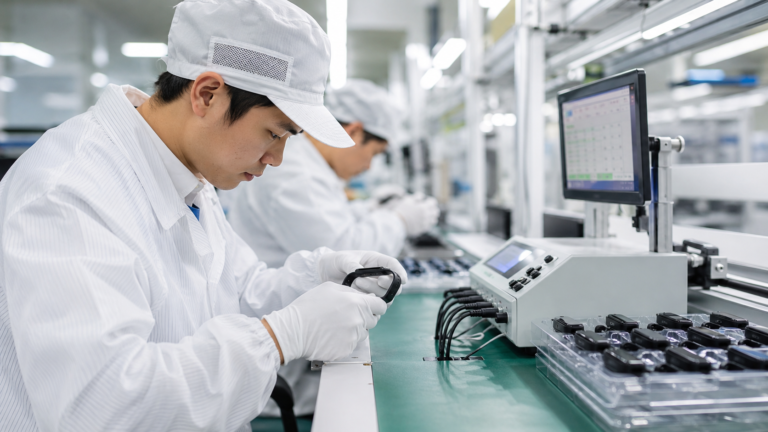
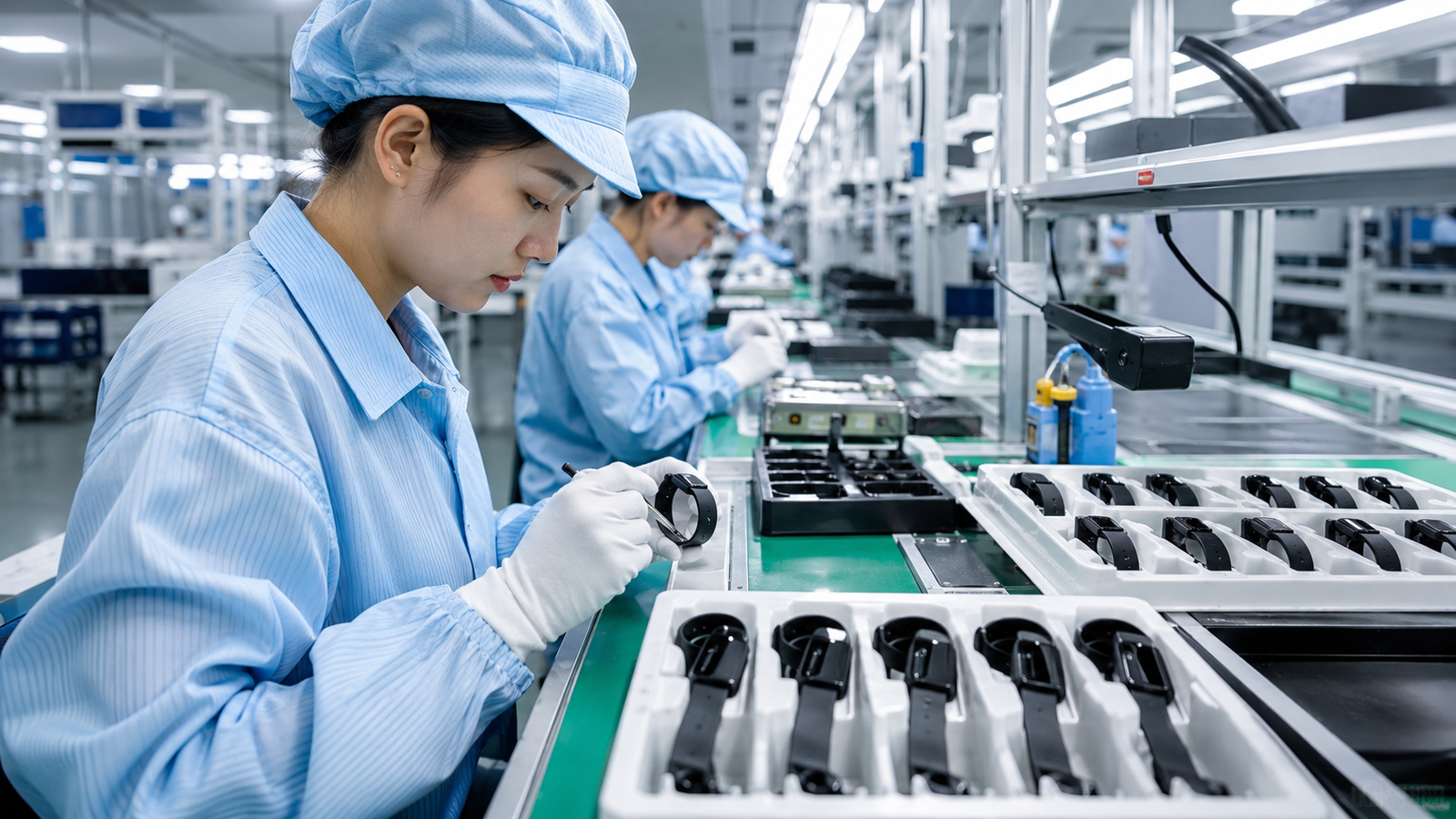
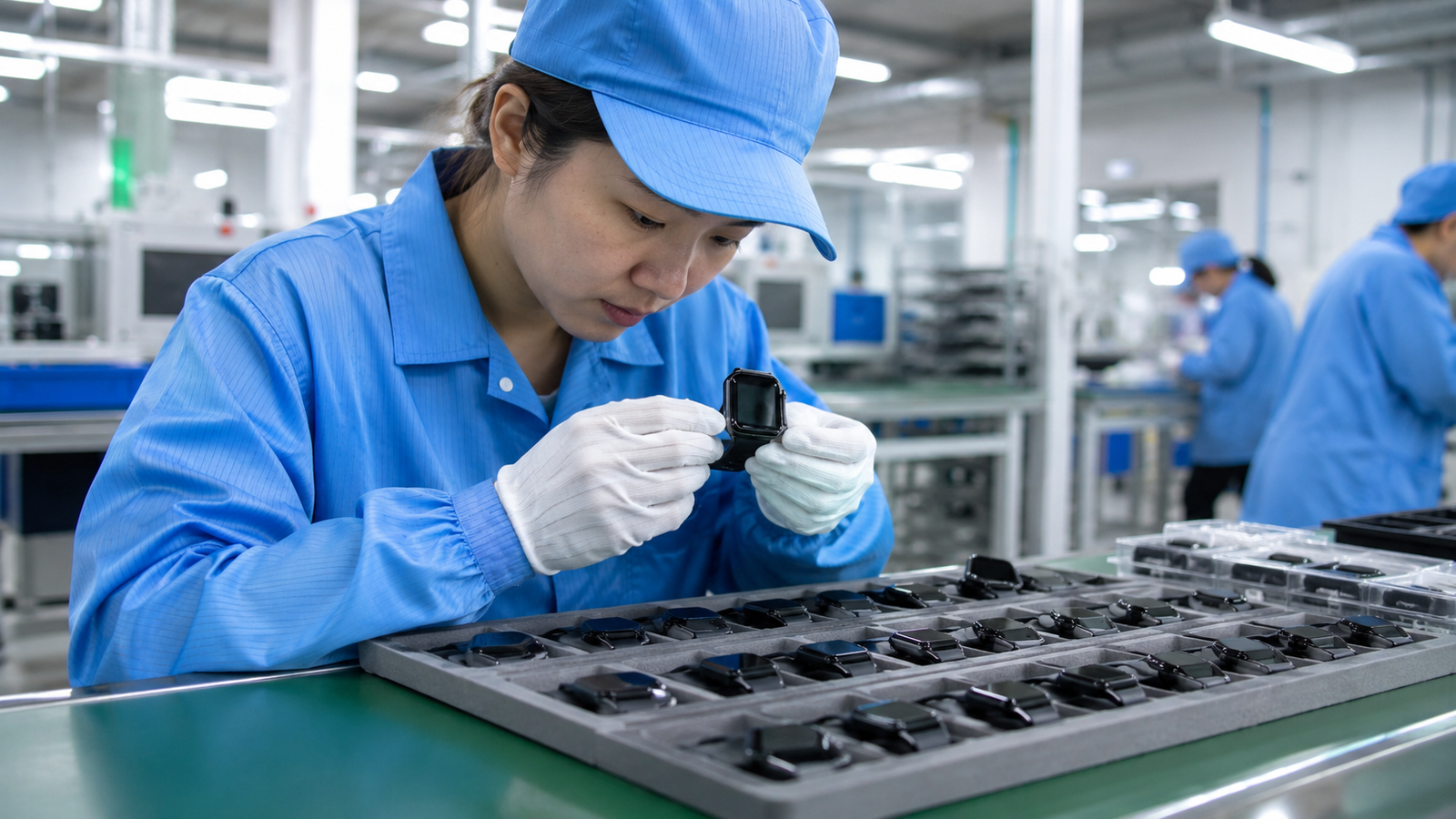
Image suggestion: Smart watch OEM for startups assembly line with technicians inspecting PCBA.
Check 2: MOQ, Tooling, and Total Landed Cost
MOQ is often the first barrier for startups. A factory’s MOQ is driven by component minimum order quantities, tooling setup, and production efficiency. Expect 500–1,000 units for a semi-custom smart watch, and up to 3,000+ for a fully custom enclosure.
Tooling costs are separate from unit price. Injection molds for a new watch case can range from $5,000 to $20,000 or more, depending on complexity. Some factories will amortize tooling into the unit price if you commit to a higher volume.
Always request a landed cost breakdown that includes:
- Unit price (EXW or FOB)
- Tooling and sample fees
- Certification testing fees (FCC, UN 38.3, etc.)
- Custom packaging and logo printing
- Freight (air/sea) and insurance
- U.S. import duties and tariffs (verify current rates; they change)
Startups often underestimate freight and duties, which can add 15–30% to the unit cost. Use a landed cost calculator or ask your freight forwarder for a quote before finalizing your retail price.
Check 3: Certification and U.S. Compliance
Selling a smart watch in the United States requires compliance with several regulatory frameworks. The exact requirements depend on your product’s features (Bluetooth, Wi-Fi, cellular, heart rate sensors) and your marketing claims.
- FCC Part 15 for unintentional and intentional radiators (Bluetooth, Wi-Fi). The FCC Office of Engineering and Technology provides equipment authorization guidance.
- UN 38.3 for lithium-ion battery transport. This is mandatory for shipping batteries by air or sea. See the IATA lithium battery guidance.
- FCC RF exposure evaluation may be required for wearables that transmit radio frequency.
- California Prop 65 warnings may apply for certain materials.
- RoHS and REACH are EU directives, but U.S. buyers often request RoHS-compliant components as a quality indicator.
Do not accept a certificate without verifying it. Ask for the test report and the FCC ID, then look up the ID in the FCC database. Certificates can be falsified or outdated. Also confirm which entity holds the certification—it should be the factory or your brand, not a third party that may not support future production.
If your smart watch includes health monitoring features like heart rate or blood oxygen, avoid medical claims. The FDA generally does not classify general wellness devices as medical devices, but claims like “diagnoses atrial fibrillation” would trigger FDA regulation. For more, see the FDA general wellness policy.
Soft CTA: Need help mapping certification requirements for your target market? STAR KING can provide a compliance checklist and sample test reports for review. Discuss your project.
Check 4: Quality Control, Testing, and Inspection
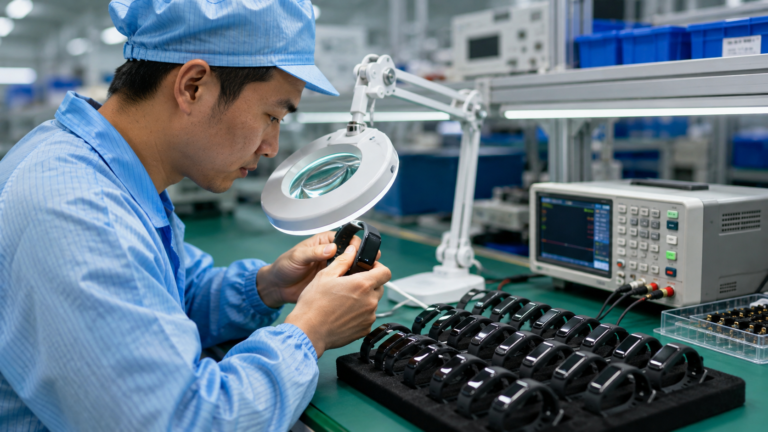
Quality failures are expensive for startups because you lack the inventory buffer to absorb returns. Ask the supplier to describe their QC process at each stage:
- Incoming component inspection
- In-process checks during assembly
- Functional testing (screen, touch, sensors, charging, Bluetooth pairing)
- Battery aging and charge/discharge cycle testing
- Drop testing and waterproof testing (IP rating)
- Pre-shipment inspection (PSI) with AQL sampling
Request the AQL standard they use (commonly AQL 1.0 or 2.5 for major defects). Hire a third-party inspection company for the first order; the cost (typically $300–$500) is worth the risk reduction.
For more on quality and compliance, explore our Health & Fitness Wearables solutions.
Check 5: Software, App, and Firmware Support
The app experience often determines customer satisfaction and return rates. Startups frequently underestimate the effort required for app customization. Key questions:
- Does the factory provide a white-label app or an SDK?
- Can they customize the app icon, splash screen, and branding?
- How often are firmware updates released? Who fixes bugs?
- Is there a cloud backend, and who owns the data?
- What is the process for adding new features post-launch?
A factory that only offers a generic app with no customization may limit your brand differentiation. Conversely, a factory that promises full app development may not have the software team to maintain it. Ask for a demo account and test the app yourself.
Check 6: IP Ownership and Customization Boundaries
When you invest in custom tooling, you should own the molds or have a clear agreement on their use. Without a written clause, the factory may reuse your mold for other clients or refuse to transfer it if you switch suppliers.
Define the following in your contract:
- Ownership of industrial design, molds, and firmware source code (if custom).
- Whether the factory can sell the same design to other brands (non-compete clause).
- Your rights to the brand name, logo, and packaging artwork.
- What happens to tooling if the relationship ends.
Also clarify customization boundaries: which parts can be changed without new tooling? Often, strap color, logo printing, and packaging are easy; changing the case shape requires new molds.
Check 7: Supply Chain Resilience and Lead Time
Startups need predictable lead times. Ask for a detailed production schedule:
- Sample lead time (usually 7–15 days)
- Tooling lead time (if custom)
- Mass production lead time after sample approval (30–60 days)
- QC and packing time
- Shipping time (air: 5–10 days; sea: 25–40 days)
Also assess component sourcing. Does the factory rely on a single supplier for critical components like the SoC or display? A resilient factory has alternate sources or holds buffer stock. Ask about their experience with component shortages and how they mitigated them.
For broader sourcing insights, visit our blog.
Supplier Comparison Table
Use this table to compare two or three potential OEM partners side by side.
| Criteria | Supplier A | Supplier B | Supplier C |
|---|---|---|---|
| MOQ (units) | |||
| Unit Price (FOB) | |||
| Tooling Cost | |||
| Certification Included | |||
| Sample Lead Time | |||
| Mass Production Lead Time | |||
| App Customization | |||
| IP Ownership Clause | |||
| Payment Terms | |||
| Reference Check |

Image suggestion: Buyer comparing smart watch OEM for startups suppliers using a checklist.
Common Mistakes and Buyer Red Flags
- Choosing on price alone: The cheapest quote often hides lower-quality components or missing certifications.
- Skipping sample validation: Never mass-produce based on a spec sheet; test a physical sample for at least a week.
- Ignoring certification costs: Budget $3,000–$8,000 for FCC, UN 38.3, and related testing [STAR KING TO CONFIRM].
- No written IP agreement: Verbal promises are worthless; get it in the contract.
- Overlooking app quality: A buggy app generates returns and bad reviews.
- Red flag: Supplier refuses to share factory video or audit report.
- Red flag: Certification documents can’t be verified on the issuing authority’s website.
- Red flag: Pressure to pay full amount upfront or via untraceable payment methods.
Practical Buyer Checklist
Before you sign an OEM contract for smart watches, confirm the following:
- MOQ and unit price are within your budget and business model.
- Tooling and certification costs are itemized and reasonable.
- FCC ID and test reports are verified and held by the correct entity.
- Sample has been tested for battery life, sensor accuracy, and app stability.
- QC process includes AQL sampling and third-party pre-shipment inspection.
- IP ownership and mold retention clauses are in writing.
- Lead times are defined and achievable for your launch date.
- Payment terms are milestone-based, not full upfront.
- After-sales support and warranty terms are clear.
Buyers can also review STAR KING Smart Watches OEM/ODM options to compare product positioning, customization scope, and sample planning.
FAQ
What is a typical MOQ for a startup-branded smart watch?
Most OEMs require 500–1,000 units for semi-custom designs and 3,000+ for fully custom tooling. Some factories offer lower MOQs at higher unit prices. Confirm what is included in the MOQ.
Do I need FCC certification to sell smart watches in the U.S.?
If your smart watch includes Bluetooth or Wi-Fi, FCC Part 15 certification is required. The exact equipment authorization procedure depends on the module and transmitter power. Verify with the factory and the FCC rules.
How much does smart watch tooling cost?
Injection molds for a custom watch case typically range from $5,000 to $20,000 or more, depending on complexity and number of cavities. Reusing an existing mold significantly reduces cost.
Can I customize the app for my brand?
Many factories offer white-label apps with basic branding. Full app customization, including custom features and backend development, is usually a separate service with additional cost and timeline.
What is the lead time for a custom smart watch order?
Sample lead time is typically 7–15 days. Mass production after sample approval is 30–60 days, plus shipping. Tooling adds 15–30 days if a new mold is required.
How do I verify a supplier’s certifications?
Ask for the test report and FCC ID. Then search the FCC ID database online to confirm the grantee and product details. For UN 38.3, request the test summary report.
What payment terms are typical for OEM orders?
30% deposit with the balance before shipment is common. For tooling, expect 50%–100% upfront. Negotiate milestone payments to reduce risk.
Conclusion
Selecting the right smart watch OEM for startups is a decision that shapes your product quality, brand reputation, and profitability. By systematically vetting suppliers on engineering capability, MOQ and landed cost, certification, quality control, software support, IP ownership, and supply chain resilience, you minimize risk and set your launch up for success. Use the checklist and comparison table in this guide, request samples, and verify every claim. The extra diligence now will save you from costly surprises later.
Ready to discuss your smart watch OEM project? STAR KING supports startups with flexible MOQs, private label customization, and U.S. compliance guidance. Request a quotation and sample plan today.
Discuss Your Smart Wearable OEM/ODM Project
Planning a smart ring, smart watch, smart band, AI glasses, AI translator, or AI voice mouse project? Contact STAR KING to discuss product positioning, sample testing, customization scope, certification requirements, lead time, and quotation details.

Team Star King
Scan WhatsApp QR code