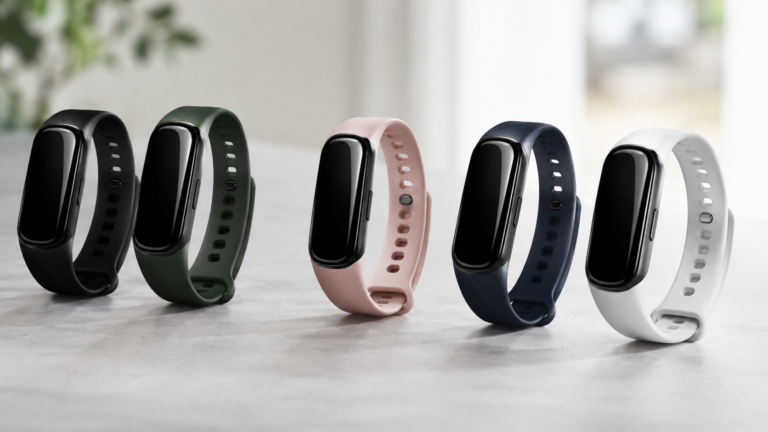

Smart Watches for E-commerce Sellers: 7 Proven Steps to Scale Your US Amazon Business in 2026
Smart Watches for E-commerce Sellers: 7 Proven Steps to Scale Your US Amazon Business in 2026
Direct Answer: Smart watches for e-commerce sellers are best sourced from China-based OEM/ODM manufacturers that offer low MOQs, FCC/CE-ready hardware, private-label branding, and reliable lead times. In 2026, US sellers who win on Amazon and Shopify are the ones who control three things: product differentiation, landed cost, and compliance paperwork. This guide walks you through 7 steps to evaluate, source, and scale a smart watch line that sells in the US.
Table of Contents
Table of Contents
Table of Contents
- Short Answer
- Key Takeaways
- Key Facts for Buyers
- What Are Smart Watches for E-commerce Sellers?
- Step 1: Nail Down the US Demand Before Choosing a Model
- Step 2: Choose the Right Supplier Model (OEM, ODM, or Private Label)
- Step 3: Match Features to Real Amazon Buyer Preferences
- Step 4: Understand MOQ, Pricing, and Landed Cost Math
- Step 5: Validate Samples and Firmware Before Committing
- Step 6: Lock Down Certifications, Apps, and Battery Shipping
- Step 7: Plan Lead Times, Packaging, and After-Sales
- Comparison Table: Smart Watch Sourcing Options
- Common Mistakes and Buyer Red Flags
- Practical Buyer Checklist
- FAQ
- Conclusion
- STAR KING CTA
Short Answer
Smart watches for e-commerce sellers should be selected by (1) US demand trends, (2) customization level (OEM vs ODM vs private label), (3) FCC and battery compliance readiness, (4) realistic MOQ and lead times, and (5) after-sales support. Start with 1-3 models, validate with samples, then scale the winner.
Key Takeaways
- US Amazon demand for smart watches remains driven by battery life, health tracking, and price points between $29 and $99.
- Private label and ODM routes usually deliver the fastest time-to-market for e-commerce sellers.
- MOQ is negotiable based on model maturity, customization depth, and component lead times.
- FCC, RoHS, and UN38.3 documentation is non-negotiable for US marketplaces; requirements depend on configuration and shipping method.
- Sample testing should cover firmware stability, app pairing, battery aging, and waterproof performance.
- Landed cost (not unit price) determines your profit on Amazon.
Key Facts for Buyers
| Factor | Typical Range | Buyer Action |
|---|---|---|
| MOQ (private label) | 500-1,000 units | Confirm per model and per color |
| Sample lead time | 7-15 days | Request 2-3 samples for testing |
| Mass production lead time | 25-45 days | Build buffer for Q4 |
| FCC certification | 2-4 weeks | Verify lab reports before shipment |
| Battery shipping | UN38.3 + MSDS required | Match carrier rules |
| Unit price (basic smart watch) | $12-$35 FOB | Calculate landed cost, not just FOB |
What Are Smart Watches for E-commerce Sellers?
Smart watches for e-commerce sellers are consumer wearable devices sourced from OEM/ODM factories, customized with your brand, and sold through online channels such as Amazon, eBay, Walmart Marketplace, TikTok Shop, and Shopify. Unlike retail-chain buyers, e-commerce sellers usually need faster model turnover, lower MOQs, and stronger packaging and listing assets.
In practice, most successful sellers treat smart watches as a “SKU engine”: one hero model with strong reviews, supported by 2-4 variants (color, strap, screen size) that capture additional keyword demand. The sourcing strategy should support that engine—not chase every new chipset that appears each quarter.
Step 1: Nail Down the US Demand Before Choosing a Model
US buyers searching on Amazon typically filter by use case: fitness tracking, sleep tracking, calls on wrist, senior monitoring, or kids’ watches. Before you contact any supplier, define your entry segment.
What US e-commerce buyers actually search for
- Battery life statements — 7-14 days is a common benchmark for mainstream models.
- Health tracking — heart rate, SpO2, sleep stages, and stress indicators are expected features.
- Calling and notifications — Bluetooth calling models remain strong in the $49-$99 band.
- Compatibility — iOS and Android pairing is assumed; buyers check app reviews heavily.
If you sell through a marketplace, cross-check demand on Amazon Best Sellers, Google Trends, and marketplace ad tools before locking a model. This protects you from sourcing inventory that looks impressive in a catalog but has no search demand.
Step 2: Choose the Right Supplier Model (OEM, ODM, or Private Label)
The three sourcing routes have very different cost, speed, and risk profiles.
- ODM: You pick from a factory’s ready designs and rebrand. Fastest to market, lowest tooling cost, but the same hardware may appear under many brands.
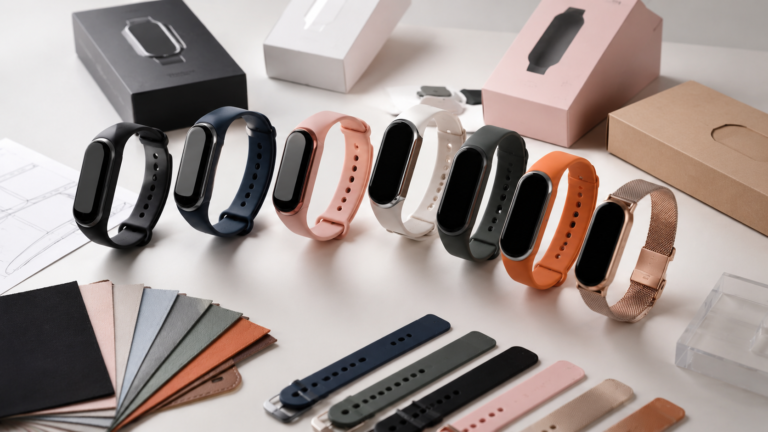
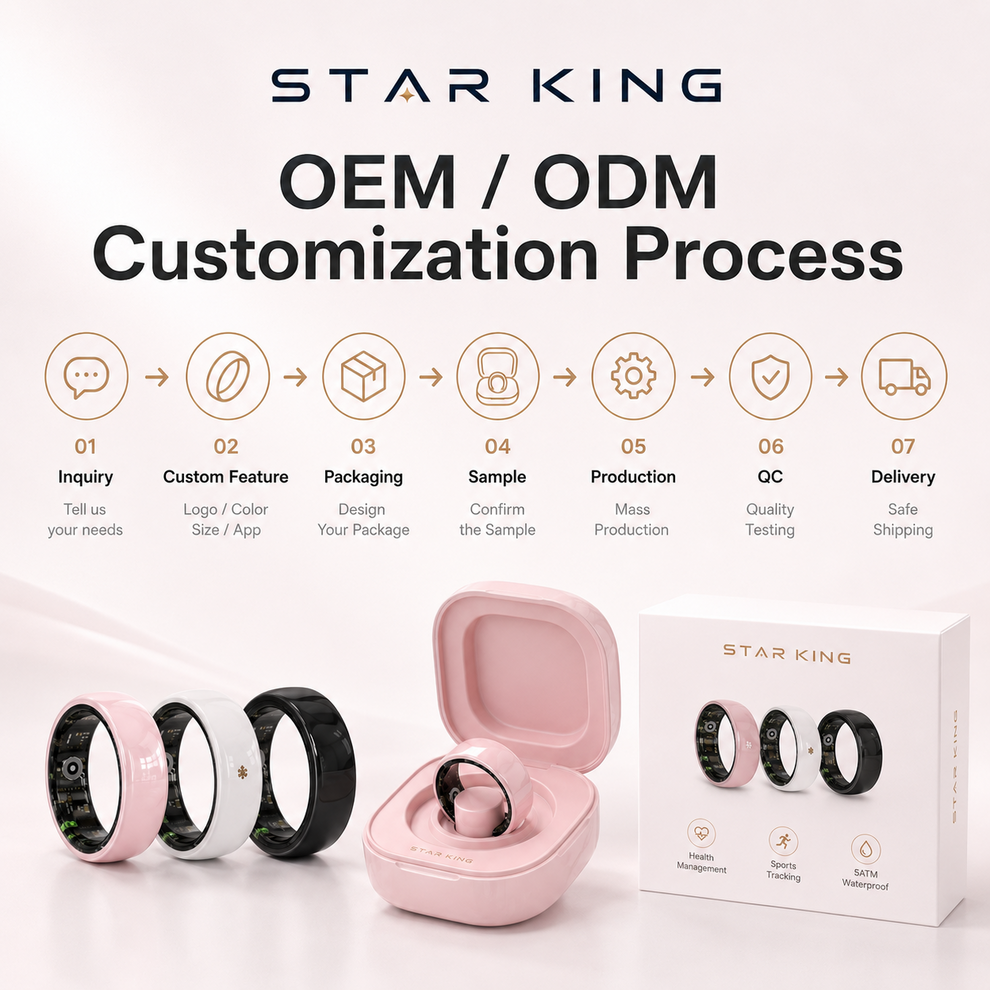
- Private label: A middle route—standard hardware with your logo, packaging, app name, and sometimes firmware tweaks.
- OEM: Custom ID, custom firmware, custom app. Highest differentiation, highest upfront cost, longest timeline.
For most e-commerce sellers entering the category, ODM or private label is the rational first step. OEM makes sense after you have proven demand and are ready to defend your listing against copycats.
If you want to compare customization depth across these models, review STAR KING’s Private Label OEM/ODM solution to see how branding, packaging, and firmware options map to each route.
Step 3: Match Features to Real Amazon Buyer Preferences
Feature bloat is a common trap. US e-commerce buyers read reviews, so features that fail or behave inconsistently become 1-star complaints rather than selling points.
Feature trade-offs to discuss with your supplier
- Display: AMOLED increases perceived quality but raises cost and can reduce battery life.
- GPS: Built-in GPS is a differentiator but adds cost and certification complexity.
- ECG / blood pressure: Often positioned as wellness indicators. Do not describe them as medical diagnostics without proper regulatory clearance.
- App quality: A weak companion app destroys reviews faster than missing hardware features.
- Water resistance: IP67 or IP68 is a baseline expectation for fitness-oriented listings.
For sellers focused on health-oriented listings, aligning with a proven Health & Fitness Wearables solution can reduce firmware risk because the platform has already been tuned for tracking use cases.
Step 4: Understand MOQ, Pricing, and Landed Cost Math
MOQ is the first wall most new sellers hit. The reality is that MOQ is not fixed—it moves with model maturity, customization depth, component availability, and your payment terms.
What drives your unit cost
- SoC and sensor selection
- Display type and size
- Battery capacity and safety components
- Strap material (silicone, TPU, metal, leather)
- Packaging complexity (insert, manual, retail box, barcode)
- App and firmware customization hours
Landed cost is what actually decides profitability on Amazon. A simplified landed cost formula looks like this:
Landed cost = FOB unit price + freight + duty + last-mile + Amazon fees + returns allowance + certification amortization.
Always model at least two scenarios: one with air freight and one with sea freight. Air freight raises landed cost but shortens cash conversion cycles, which matters for e-commerce sellers who fund inventory upfront.
If you’re planning a first order and want a realistic MOQ and lead-time estimate for your configuration, the fastest path is to request product samples and a quotation with your target specs.
Step 5: Validate Samples and Firmware Before Committing
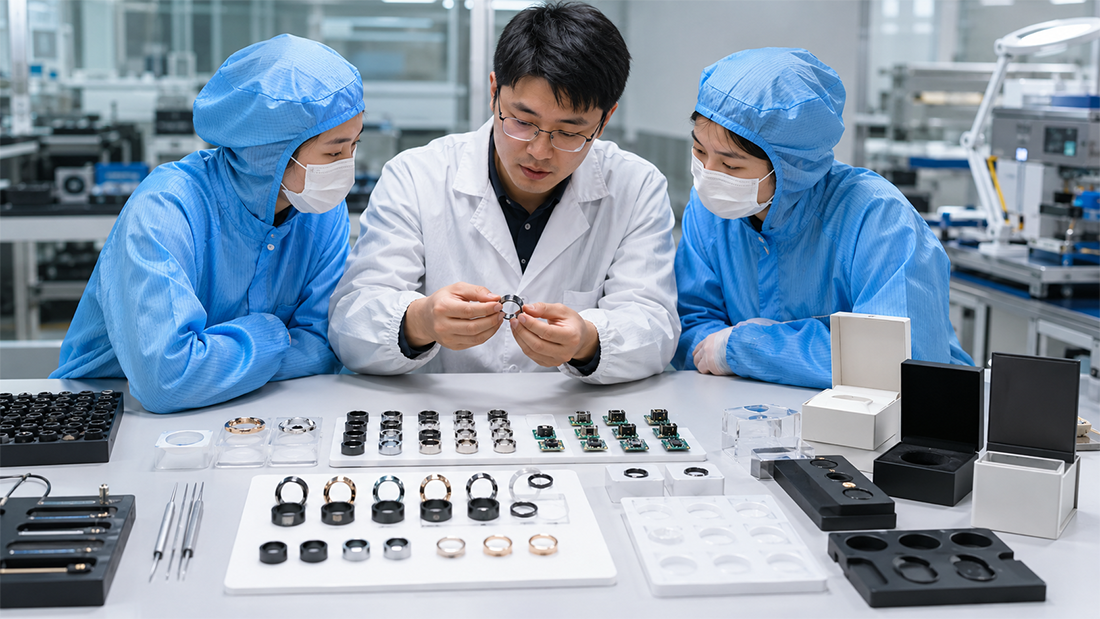
Sample testing is where you catch problems that no spec sheet shows. Order at least two samples per candidate model, and test them like a real customer would.
Sample test checklist
- Pair with both iOS and Android devices; check pairing time and reconnect behavior.
- Run the watch through a full battery cycle; note actual performance vs. claim.
- Test notifications, calls, and app sync under normal conditions.
- Verify waterproof behavior per the stated IP rating (a shower test, not a dive test).
- Inspect strap, buckle, and charging contacts for mechanical quality.
- Review firmware version, OTA update process, and app release history.
The firmware and app are the parts you cannot fix after 1,000 units land in a US warehouse. If you see an app with no update history in 12 months, treat that as a red flag.
Step 6: Lock Down Certifications, Apps, and Battery Shipping
For US marketplaces, compliance documentation is not optional. Requirements typically depend on product configuration, wireless features, and the shipping method used.
- FCC: Required for devices with wireless transmission (Bluetooth, Wi-Fi). Verify the FCC ID and test report.
- RoHS: Restricts hazardous substances in electronics.
- UN38.3: Lithium battery transport testing.
- MSDS: Material Safety Data Sheet for battery logistics.
- Prop 65 (California): May apply depending on materials.
You can verify FCC requirements and search device certifications at the official FCC Equipment Authorization database. For battery transport guidance, review the IATA Dangerous Goods Regulations, which many carriers reference for lithium batteries.
Two practical rules for sellers:
- Do not accept a certification “copy” without matching it to the exact model, FCC ID, and configuration you ordered.
- Confirm with your freight forwarder which battery documents are required for your specific route.
Step 7: Plan Lead Times, Packaging, and After-Sales
E-commerce sellers live and die by Q4. Build your production calendar backwards from Black Friday, not forwards from today.
Lead time planning basics
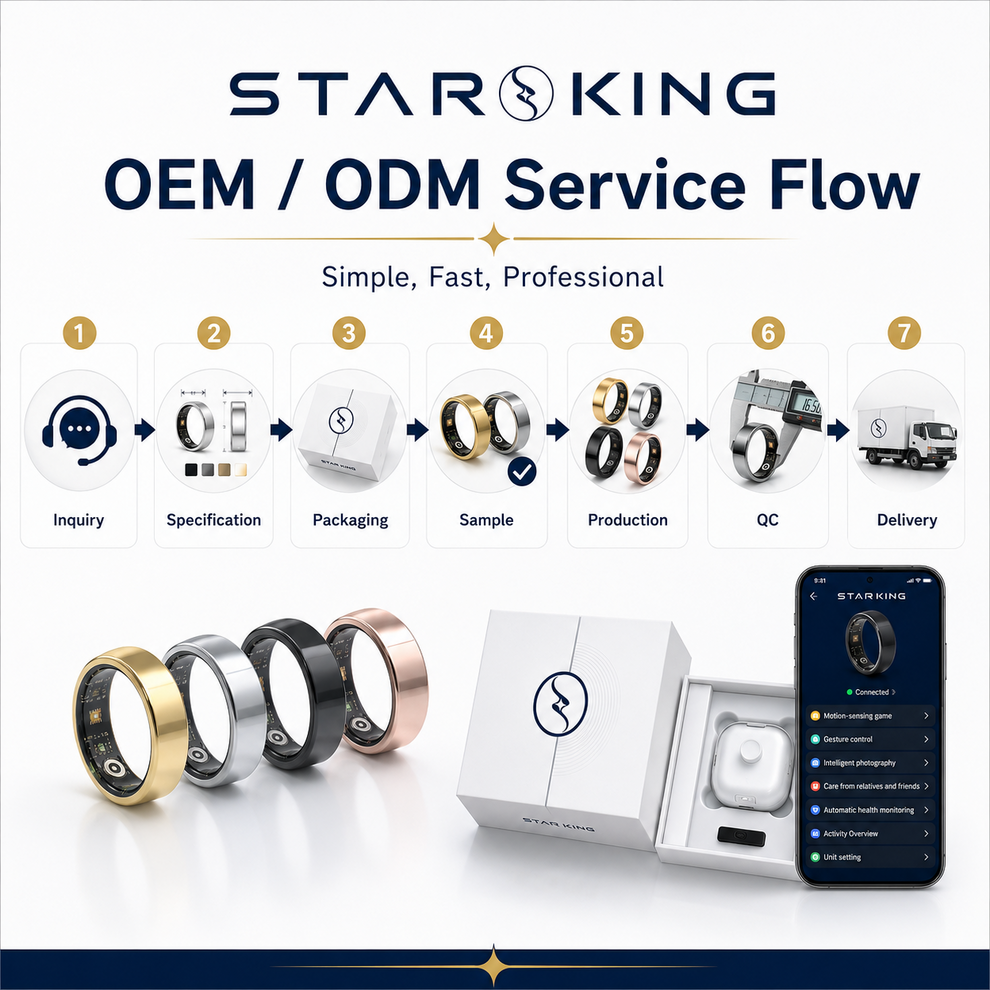
- Sample approval: 7-15 days
- PO to production start: 3-7 days
- Mass production: 25-45 days depending on model and quantity
- Inspection and packing: 3-5 days
- Sea freight to US: 25-40 days; air freight: 5-10 days
Packaging and branding
Packaging is often the cheapest differentiation you can buy. Custom retail boxes, bilingual manuals, and branded inserts improve perceived value and reduce returns. Ask your supplier what’s included at base MOQ and what triggers additional cost.
After-sales plan
Amazon sellers need replacement units and spare straps. Confirm your supplier’s warranty policy, defect rate allowance, and spare parts availability before the first order ships.
Comparison Table: Smart Watch Sourcing Options
| Route | Differentiation | Time to Market | Upfront Cost | Best For |
|---|---|---|---|---|
| ODM (rebrand) | Low-Medium | Fast (4-8 weeks) | Low | New sellers testing demand |
| Private Label | Medium | Moderate (6-10 weeks) | Moderate | Growing Amazon brands |
| OEM (custom ID/firmware) | High | Slow (12-20 weeks) | High | Established brands defending listings |
Common Mistakes and Buyer Red Flags
- Chasing the lowest FOB price: It rarely survives landed cost and returns.
- Ignoring app quality: The #1 cause of negative reviews in this category.
- Buying without FCC ID verification: Can lead to listing removal in the US.
- Assuming certifications transfer between models: They do not; each configuration may need its own.
- Not asking about battery documentation: Shipments get held at customs.
- Skipping sample testing: Ends up costing far more than the samples themselves.
Practical Buyer Checklist
- ☐ Confirm your target US price band and margin target.
- ☐ Choose ODM, private label, or OEM before requesting quotes.
- ☐ Request at least two samples and test app + firmware stability.
- ☐ Verify FCC ID, RoHS, UN38.3, and MSDS documents.
- ☐ Confirm MOQ, color variants, and per-model lead times.
- ☐ Calculate landed cost under both air and sea freight.
- ☐ Review packaging, manual, and warranty terms.
- ☐ Agree on spare parts and defect allowance.
- ☐ Plan backward from your peak sales window.
Buyers can also review STAR KING Smart Watches OEM/ODM options to compare product positioning, customization scope, and sample planning.
FAQ
1. What is a realistic MOQ for private-label smart watches?
MOQ often starts around 500-1,000 units per model and color, but this depends on model maturity and customization level. Startup brands can sometimes negotiate lower trial quantities.
2. Are smart watches for e-commerce sellers required to have FCC certification in the US?
Any smart watch with wireless transmission (Bluetooth or Wi-Fi) typically requires FCC authorization to be legally marketed in the US. Buyers should verify the FCC ID and test report for the exact model configuration.
3. How long does production take for a first smart watch order?
Typical production timelines run 25-45 days after sample approval, plus inspection and shipping. Sea freight to the US can add 25-40 days.
4. Can I customize the app and packaging?
Yes. App name, icon, and limited UI elements are usually customizable in private-label and OEM routes. Packaging customization is standard at most factories once MOQ thresholds are met.
5. What is the biggest risk when sourcing smart watches from China?
Weak firmware and poor app quality. They undermine the listing’s review profile, which is expensive to repair on Amazon.
6. How do I calculate landed cost correctly?
Add FOB price, freight, duty, last-mile delivery, marketplace fees, returns allowance, and certification amortization. Model both air and sea freight scenarios.
7. Should I ship by air or sea for my first order?
Air freight is faster and better for testing a new SKU. Sea freight is cheaper per unit but ties up more capital. Most sellers start with air and shift to sea once demand is validated.
Conclusion
Sourcing smart watches for e-commerce sellers in 2026 is a disciplined process, not a catalog browse. The sellers who win on US marketplaces focus on demand validation, customization depth, compliance documentation, and landed cost—not just unit price. Start with a defined target segment, evaluate suppliers on their app quality and compliance rigor, test samples thoroughly, and plan lead times backward from your peak sales window.
If you are comparing models, private label versus OEM, or certification requirements for the US market, it helps to work with a supplier who can show documentation and customization options upfront rather than after the order.
STAR KING CTA
Ready to evaluate your first smart watch SKU? Request product samples and a quotation from STAR KING with your target specifications. Share your market, price band, and customization goals, and our team can help you compare models, MOQ options, and compliance requirements for the US market.
Discuss Your Smart Wearable OEM/ODM Project
Planning a smart ring, smart watch, smart band, AI glasses, AI translator, or AI voice mouse project? Contact STAR KING to discuss product positioning, sample testing, customization scope, certification requirements, lead time, and quotation details.

Team Star King

Scan WhatsApp QR code