
smart rings for retail chains: 2026 Buyer’s Guide: 10 Checks for Smart Rings for Retail Chains
2026 Buyer’s Guide: 10 Checks for Smart Rings for Retail Chains
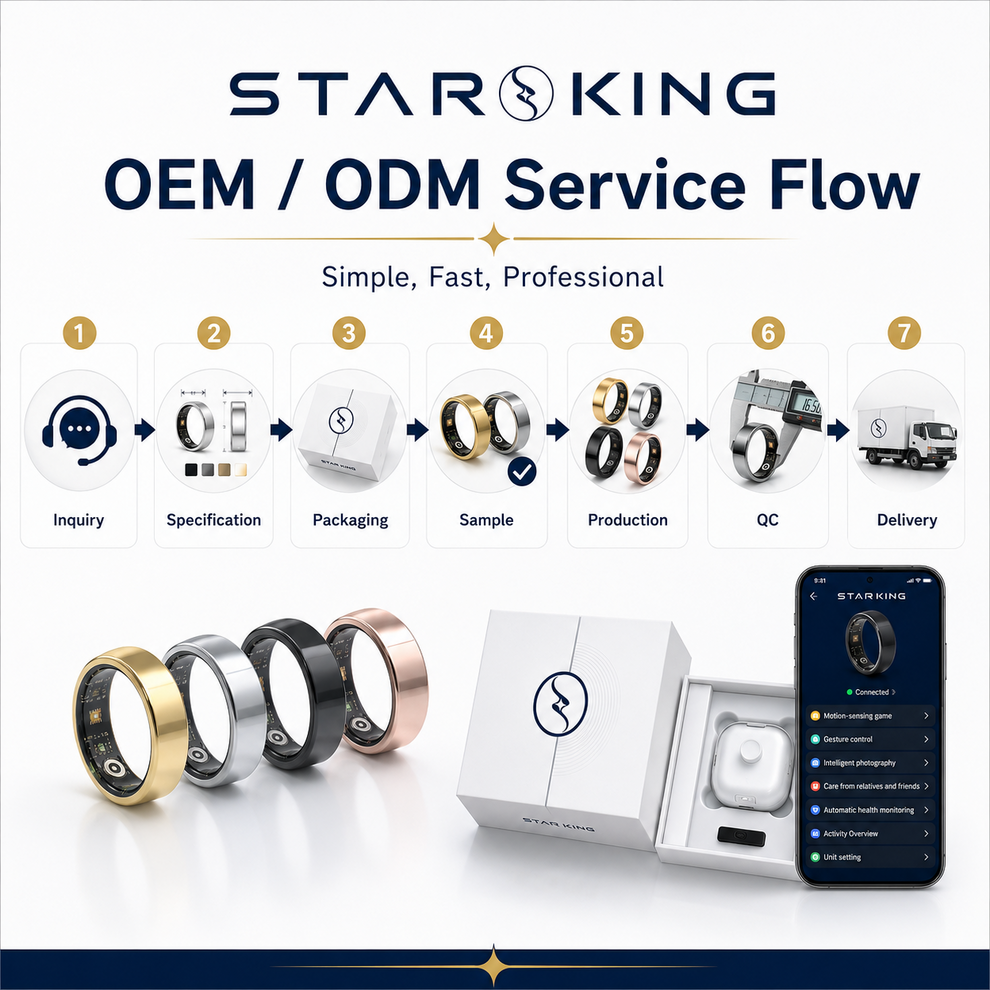
Smart rings for retail chains in 2026 are evaluated less on novelty and more on whether they can be stocked, supported, and sold profitably across many stores. The 10 checks below cover the supplier, product configuration, app and data handling, certifications, testing, MOQ, lead time, packaging, after-sales support, and landed cost. Use them as a procurement checklist when shortlisting OEM/ODM partners such as STAR KING and comparing offers.
Table of Contents
Table of Contents
Table of Contents
- Direct Answer
- Key Takeaways
- Key Facts for Buyers
- What Are Smart Rings for Retail Chains?
- 1. Supplier and Factory Fit
- 2. OEM vs ODM vs Private Label
- 3. Sensor and Battery Specifications
- 4. App, Firmware, and Data Handling
- 5. Certifications and Target-Market Compliance
- 6. Quality Control and Testing Protocols
- 7. MOQ, Tooling, and Lead Time
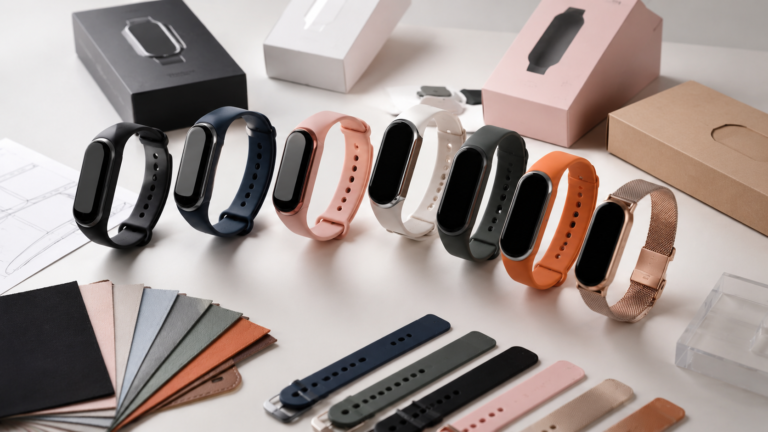
- 8. Packaging and Branding Customization
- 9. After-Sales, Warranty, and Spare Parts
- 10. Landed Cost and Total Cost of Ownership
- Comparison Table: Evaluation vs. Mass Production
- Common Mistakes and Buyer Red Flags
- Practical Buyer Checklist
- FAQ
- Conclusion
Direct Answer
Smart rings for retail chains should be judged like any multi-store SKU: confirm the supplier’s OEM/ODM capability, verify that certifications match each target market, lock a realistic MOQ and lead time, test the companion app, and calculate landed cost. Shortlist two or three factories, request samples, and validate compliance documents before committing to mass production.
Key Takeaways
- Product fit for retail comes from sensor accuracy, battery life, app stability, and size variety, not marketing claims.
- Certifications such as CE, FCC, RoHS, and UN38.3 typically depend on the exact configuration and destination market, so buyers should verify documents per SKU.
- MOQ, tooling, and lead time are negotiation levers; they influence cost, flexibility, and replenishment speed across stores.
- App and firmware customization affect launch timing, data privacy, and long-term support obligations.
- A structured scoring model helps compare suppliers objectively and reduces rework during pilot and mass production.
Key Facts for Buyers
| Category | Typical Option A | Typical Option B | Buyer Implication |
|---|---|---|---|
| Supply model | Standard ODM catalog | OEM with custom firmware | Faster launch vs. stronger differentiation |
| Sensor set | Heart rate + SpO2 | Adds sleep staging or temperature | Higher BOM vs. richer wellness features |
| App control | White-label app | Standalone branded app | Standalone app raises cost and timeline |
| MOQ (first order) | Often lower for standard finishes | Higher with custom tooling | Affects pilot scale and cash flow |
| Certifications | CE/FCC/RoHS for many SKUs | Additional per-market mark | Buyers should confirm per destination |
| Battery shipping | UN38.3 + MSDS prepared | Special carrier handling | Impacts air freight and lead time |
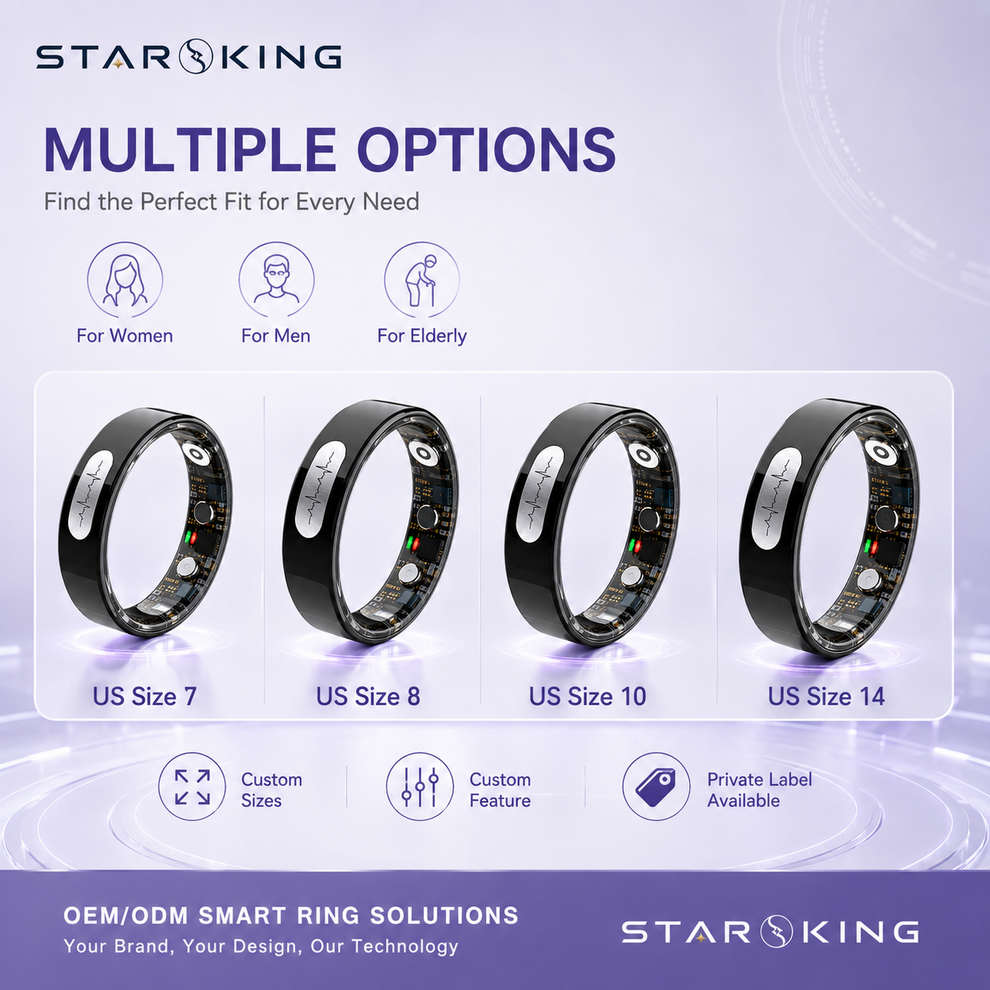
| Size range | Standard ring sizes | Extended sizes in development | Influences in-store fit and returns |
Note: The options above are illustrative of common program choices and do not represent fixed STAR KING specifications. Confirm final configuration, MOQ, and certification scope in writing before purchase.
What Are Smart Rings for Retail Chains?
Smart rings for retail chains are compact, wearable devices that track wellness metrics such as heart rate, blood oxygen, sleep patterns, and activity, and sync that data to a companion app. For retail buyers, the product is only part of the decision. A smart ring SKU also includes the app experience, firmware updates, packaging, warranty process, and compliance documentation that support sales across multiple stores and regions. Retailers typically choose between standard ODM models that can be branded quickly and OEM programs that allow deeper customization of sensors, firmware, and app design.
Because a retail chain sells at scale, the evaluation must consider consistency across batches, replenishment speed, and returns handling, not only the product demo. STAR KING’s Smart Rings product page provides a starting point for reviewing available configurations and customization options.
1. Supplier and Factory Fit
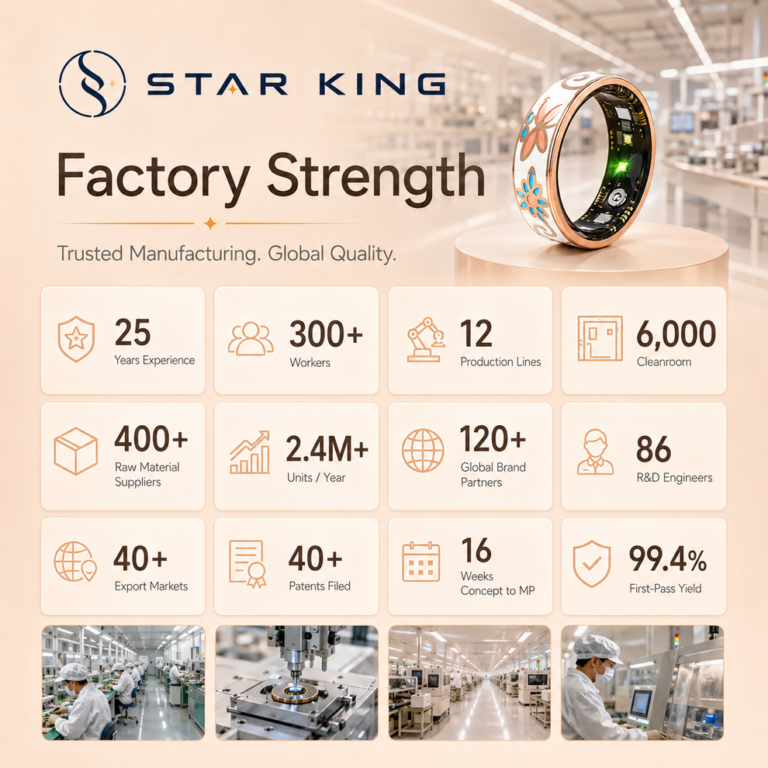
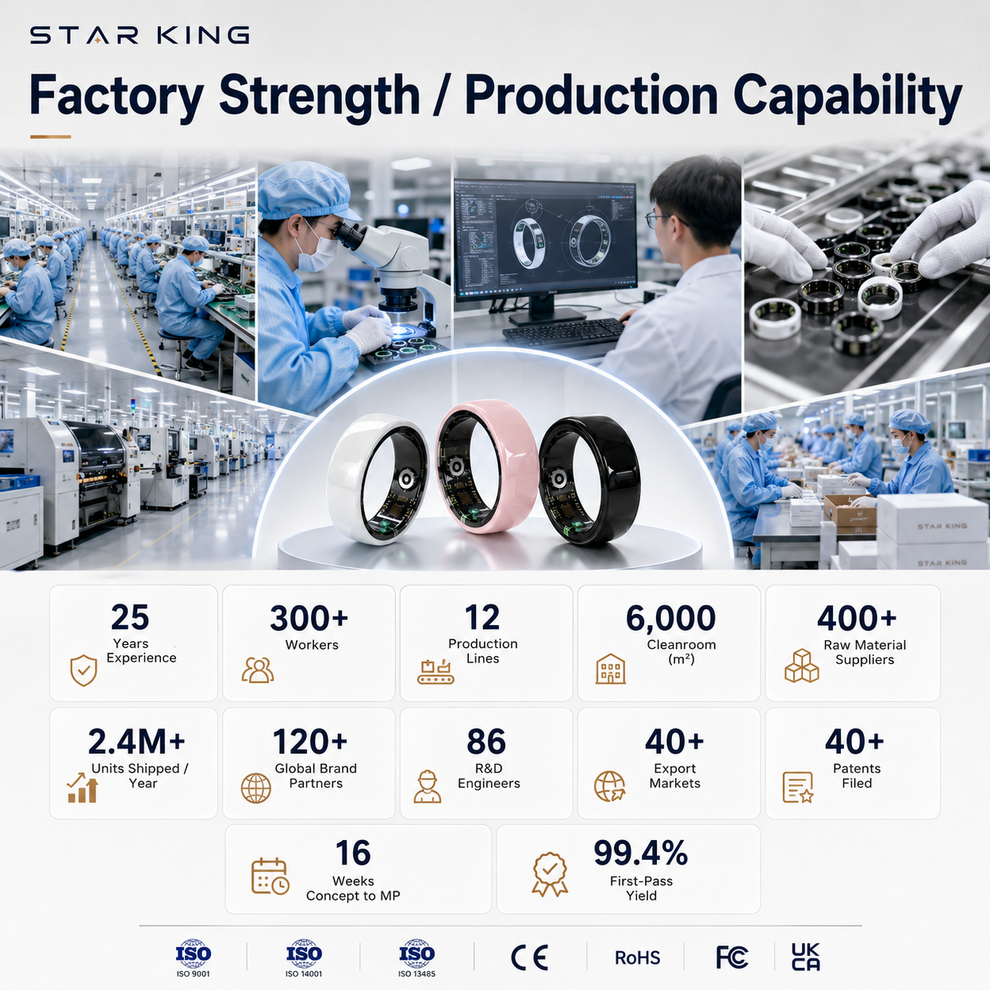
Before discussing price, assess whether the supplier can support a retail-chain program. Look for documented production processes, an established quality system, and evidence of experience with wearable-grade components. Ask for factory profile information, equipment lists, and references from comparable wearable projects where possible. Where information is unavailable, request it in writing rather than relying on verbal assurances.
Supplier evaluation should also cover engineering depth: can the factory handle sensor calibration, firmware updates, and app integration? Retailers that plan to keep a smart ring SKU in stores for multiple seasons need a supplier capable of maintaining firmware and app compatibility over time.
2. OEM vs ODM vs Private Label
The supply model determines how much control a retail chain has over the product and how quickly it can launch.
ODM (Original Design Manufacturer)
In an ODM model, the factory provides an existing design that buyers can brand. This is usually the fastest route to market for retail chains that want to test demand with lower upfront investment.
OEM (Original Equipment Manufacturer)
OEM generally involves deeper customization of hardware, firmware, or app features based on the buyer’s requirements. It offers stronger differentiation but typically requires higher tooling investment and longer development timelines.
Private Label
Private label focuses on branding: logo, packaging, and app identity applied to an existing product. It balances speed and brand control, and is a common choice for retail chains that want consistent store branding without redesigning the product.
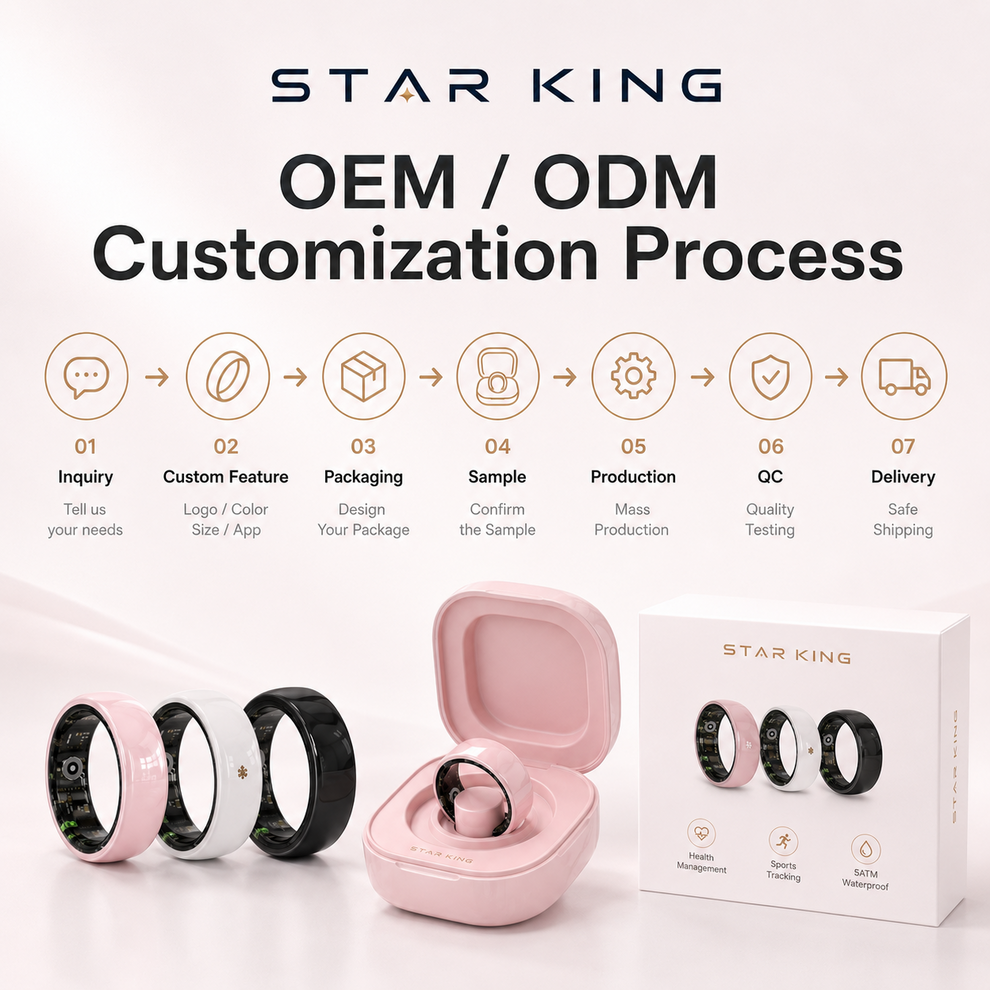
Customization options are summarized on the Private Label OEM/ODM solution page. Buyers should confirm which model applies to each SKU, since scope, cost, and lead time differ significantly.
3. Sensor and Battery Specifications
Sensor selection affects both BOM cost and consumer expectations. Common configurations include heart rate and blood oxygen monitoring, with optional sleep tracking or temperature sensing. Retail chains should define the minimum metric set required for their target customer and avoid paying for features that do not drive sales.
Battery life is another critical specification. Ring form factor limits battery capacity, so realistic usage figures depend on screenless design, sensor duty cycle, and app sync frequency. Buyers should request test data and confirm parameters with the supplier rather than relying on marketing numbers.
4. App, Firmware, and Data Handling
The companion app is part of the retail product. Poor app stability leads to negative reviews and returns, even if the ring hardware is solid.
Key app questions
- Is the app white-label or fully custom branded?
- Which iOS and Android versions are supported?
- Who maintains the app after launch, and on what schedule?
- How is user data stored, and does the setup align with data protection expectations in the target market?
Firmware updates should be traceable, and buyers should understand whether updates are pushed by the supplier or controlled through the app. For retail chains, a clear update policy reduces support tickets over the product lifecycle. See Remote Health Wearables for related application context.
5. Certifications and Target-Market Compliance
Certification scope depends on product configuration, radio modules, battery type, and destination market. Common documents include CE marking for the EU, FCC authorization for the United States, RoHS for restricted substances, and UN38.3 plus MSDS for lithium battery shipping. Additional requirements may apply in specific countries, and buyers should verify the current rules for each market.
Retail chains should request certificates per SKU, confirm the model numbers match the purchase order, and check validity dates. For radio-equipped devices, ask how the supplier manages Bluetooth certification and whether the design uses qualified modules.
6. Quality Control and Testing Protocols
A reliable wearable program depends on testing at multiple stages: incoming component checks, in-process inspection, and pre-shipment inspection. Ask the supplier to describe which tests are performed on samples and production units, and how failures are documented and resolved.
- Battery aging and safety checks
- Water resistance testing where the product claims a water rating
- Drop testing for durability
- Sensor calibration verification
Retail buyers should request test reports for prototype and production stages and consider third-party pre-shipment inspection for larger orders. If a supplier cannot provide documented testing procedures, that is a warning sign for retail-scale programs.
7. MOQ, Tooling, and Lead Time
MOQ and lead time directly affect pilot scale, store rollout, and replenishment. MOQ is often influenced by component sourcing, tooling requirements, and packaging setup. Custom colors or finishes may raise MOQ, while standard configurations often allow lower first orders.
Lead time typically includes sampling, tooling where applicable, mass production, and inspection. Retail chains planning seasonal launches should build buffer time, especially for lithium battery products that may need additional logistics handling.
Clarify in the purchase agreement: sample lead time, production lead time, inspection window, and shipping terms. Where the supplier cannot confirm fixed dates, use ranges and plan inventory accordingly.
8. Packaging and Branding Customization
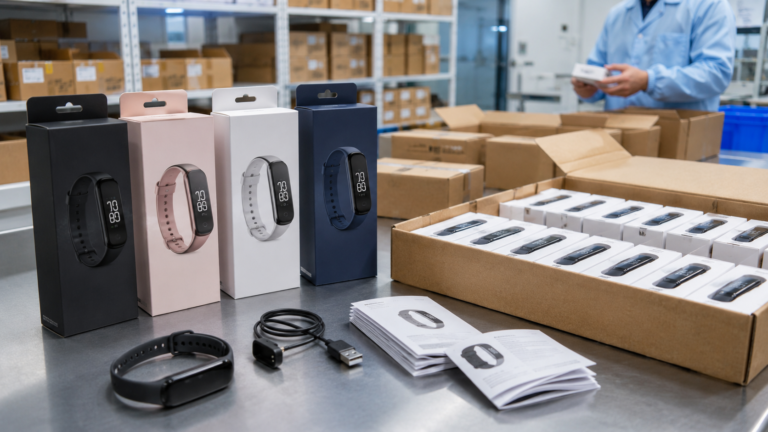
Packaging shapes the in-store experience and often affects logistics cost. Retail chains should confirm whether custom boxes, inserts, manuals, and warranty cards are supported, and whether artwork files and dielines are provided by the supplier.
For a multi-region rollout, packaging should support local language requirements and regulatory labeling. Buyers should also confirm who owns the packaging artwork and whether changes require additional tooling.
9. After-Sales, Warranty, and Spare Parts
Retail programs generate returns and warranty claims. A supplier should define the warranty period, the return process, and the availability of spare parts such as chargers or replacement rings. Ask how defect rates are tracked and whether the supplier offers root-cause analysis for recurring issues.
For chains, a clear RMA process reduces store-level friction. Confirm whether replacements ship from a regional warehouse or from the factory, and how long that takes.
10. Landed Cost and Total Cost of Ownership
Unit price is only one part of the cost. Landed cost includes freight, duties, battery handling fees, inspection, and packaging. Retailers should also account for app maintenance, warranty reserves, and marketing assets. Comparing suppliers on unit price alone often produces misleading conclusions.
A total cost of ownership model should include sampling cost, tooling, certification cost, and expected return rates. This helps retail chains set a retail price that supports margin after all program costs.
Comparison Table: Evaluation vs. Mass Production
| Decision Area | During Evaluation | During Mass Production | Buyer Action |
|---|---|---|---|
| Supplier | Shortlist 2–3 factories | Consolidate to one primary supplier | Verify references and quality system |
| Product scope | Lock sensor set and size range | Freeze BOM and firmware | Confirm scope in writing |
| Certifications | Collect draft documents | Confirm final certificates per SKU | Match model numbers |
| Testing | Sample testing and review | Pre-shipment inspection | Document results |
| MOQ / Lead time | Negotiate first order | Plan replenishment cycles | Build buffer time |
| Packaging | Approve artwork and dielines | Confirm print proof | Check regulatory labels |
| After-sales | Define warranty terms | Track defect and return rates | Agree RMA process |
Common Mistakes and Buyer Red Flags
- Accepting verbal certification claims without checking model numbers and validity.
- Choosing a supplier on unit price only, ignoring landed cost and app support.
- Skipping pilot testing before committing to a large first order.
- Ignoring data handling requirements in the target market.
- Assuming lead times are fixed without written confirmation.
- Overlooking size range, which affects fit and returns.
- Failing to define app update responsibility after launch.
If a supplier cannot provide test reports, refuses sample customization, or answers compliance questions vaguely, buyers should treat these as red flags and continue evaluating alternatives.
Practical Buyer Checklist
- Confirm supply model (OEM, ODM, or private label) per SKU.
- Review sensor set, battery life claims, and size range.
- Test the companion app on current iOS and Android devices.
- Collect certifications per SKU and verify model numbers.
- Request UN38.3 and MSDS documents for battery shipping.
- Review testing protocols and inspection options.
- Agree MOQ, tooling, and lead time in writing.
- Approve packaging artwork and regulatory labels.
- Define warranty terms and RMA process.
- Build a landed cost model including duties and inspection.
FAQ
What MOQ should a retail chain expect for smart rings?
MOQ depends on the supply model, finishes, and packaging. Standard ODM configurations often allow lower first orders than fully custom OEM programs. Buyers should ask for a written MOQ breakdown by configuration. [STAR KING TO CONFIRM]
Can smart rings be fully private labeled?
Yes, many suppliers support logo, packaging, and app branding. The scope of private label should be defined in writing, including who maintains the app and how updates are handled.
How long does production typically take?
Lead time depends on sampling, tooling, and production capacity. Standard orders often take several weeks, while custom programs can take longer. Confirm timelines in the purchase agreement rather than relying on verbal estimates.
Which certifications are needed for retail sales?
Requirements depend on the product configuration and destination market. CE, FCC, RoHS, and UN38.3 are common, but additional local requirements may apply. Buyers should verify current rules for each market.
How should app data be handled for privacy?
Buyers should confirm where data is stored, whether it is encrypted, and how consent is managed. Requirements vary by market, and retailers should verify applicable data protection rules.
What is the best way to compare suppliers?
Use a scoring model covering product specifications, app capability, certifications, testing, MOQ, lead time, and after-sales support. Request samples and documentation before final selection.
Conclusion
Smart rings for retail chains succeed when procurement decisions are based on verified specifications, documented compliance, and realistic supply terms. The 10 checks above provide a structured evaluation framework for shortlisting suppliers, comparing configurations, and planning a pilot that can scale into multi-store distribution. Retail buyers who document each decision reduce rework, protect margin, and improve the customer experience across every store.
Ready to evaluate smart rings for your retail chain? Request samples and discuss OEM/ODM options with STAR KING to compare configurations, confirm certification requirements, and plan your pilot order.
Useful Official References for Buyers
- FCC equipment authorization guidance
- European Commission CE marking information
- Bluetooth SIG specifications
Discuss Your Smart Wearable OEM/ODM Project
Planning a smart ring, smart watch, smart band, AI glasses, AI translator, or AI voice mouse project? Contact STAR KING to discuss product positioning, sample testing, customization scope, certification requirements, lead time, and quotation details.

Team Star King

Scan WhatsApp QR code