Choosing Mini Drones for EU System Integrators: A Specification and Sourcing Guide
Choosing Mini Drones for EU System Integrators: A Specification and Sourcing Guide
System integrators in the EU are increasingly incorporating mini drones into solutions for security, agriculture, inspection, and logistics. However, finding the right mini drone for a client’s needs requires more than picking a popular consumer model. You must verify specifications, compliance, customization possibilities, and supplier reliability. This guide helps you evaluate mini drones and initiate a successful OEM/ODM project, with practical steps for requesting quotes and samples.
Key Takeaways
- Define your integration requirements (payload, flight time, SDK/API) before sourcing.
- Understand EU drone regulations (EASA categories) and product compliance (CE, RoHS, etc.).
- Evaluate OEM/ODM suppliers for customization, quality control, and production lead times.
- Use a structured RFQ and sample testing process to mitigate risks.
- Leverage internal links to STAR KING’s mini drone page and solutions for further guidance.
Define Mini Drone Requirements for Your Integration Projects
When integrating a mini drone into a larger system, specifications matter more than marketing hype. Start by documenting your client’s operational environment and mission. For example, an indoor inspection drone may prioritize GPS-denied navigation and obstacle avoidance, while a perimeter surveillance drone needs a long-flight endurance and a stable camera gimbal.
Critical Drone Specifications for System Integrators
- Weight & Size: Mini drones typically fall under 250 g, which simplify EU regulations (open category A1) but may limit payload. For heavier systems, consider drones up to 4 kg.
- Flight Time: Real-world flight time varies with wind, payload, and temperature. Confirm with manufacturer test data from your supplier.
- Camera & Gimbal: If the drone is for visual inspection or surveillance, check sensor resolution, stabilization, and frame rates.
- Connectivity: For integration, you may need SDK/API access for custom flight control or data streaming. Confirm availability.
- Battery & Charging: Swappable batteries and charging times affect operational uptime. Also ensure batteries meet UN38.3 for transport.
Key EU Compliance Regulations for Mini Drones
System integrators must verify that drones comply with EU drone regulations and product safety directives. EU drone regulations (Delegated Regulation (EU) 2019/945 and Implementing Regulation (EU) 2019/947) categorize drones based on weight and operational risk. For a mini drone under 250 g, it often falls under ‘open’ category, but if it has a camera and is used for surveillance, it may require a specific operational authorization. Since rules vary, consult an expert or national aviation authority.
Product compliance includes the CE mark, which covers radio equipment (RED), electromagnetic compatibility (EMC), and low voltage if applicable. The drone should also comply with RoHS, and batteries must have UN38.3 and MSDS for shipping. For outdoor use, IP ratings may be relevant. Note that compliance certification is product-specific and must be verified with your supplier.
CE vs. EASA: What System Integrators Need to Know
The CE mark on a drone indicates conformity with EU product directives, while EASA regulations govern drone operations. A drone can have CE yet require an operational authorization in your country. Always confirm the intended operation and class with your client and legal advisor.
OEM/ODM Opportunities for Mini Drones
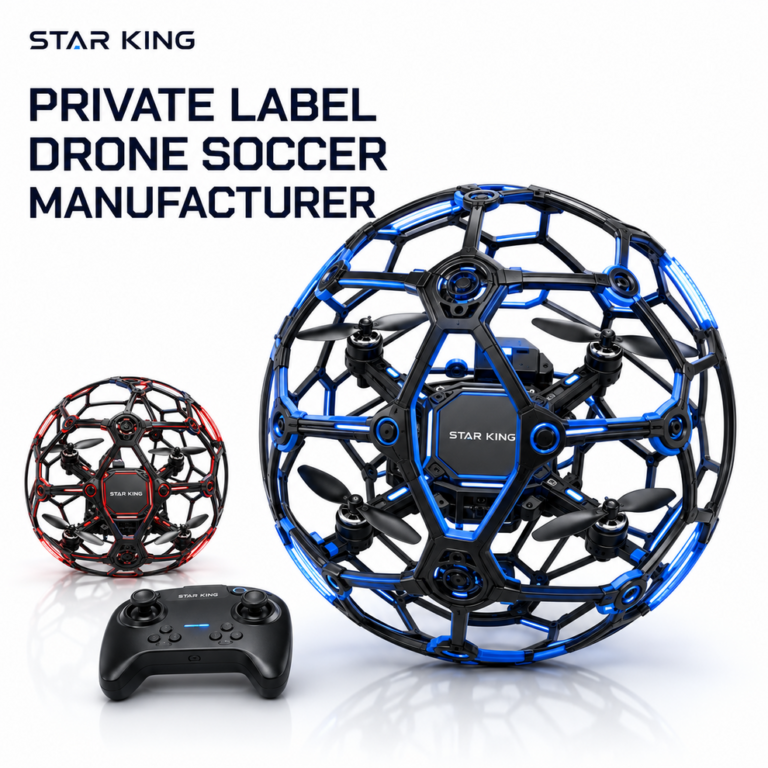
For system integrators, customization is often necessary to fit specific hardware mounts, sensors, or firmware. STAR KING offers mini drones that can be customized for OEM and ODM projects. Whether you need a private label drone or a fully modified design, understanding the levels of customization helps you choose the right partner.
Customization Options: From Labeling to Firmware
- Logo and Packaging: Basic customization includes printing your logo on the drone body and packaging.
- App and Firmware: You can request firmware changes to disable certain features or add flight modes. App customization may also align the control interface with your brand.
- Hardware Modifications: For payload integration, you may need different gimbal mounts or sensor brackets. This requires ODM partnership.
MOQ, Lead Time, and Cost Factors
MOQs vary with customization depth. A simple private label may have an MOQ of 500 units, while a full ODM project might require 1,000+ and a longer development cycle. Lead times typically range from 30 to 90 days after prototype approval. Cost factors include tooling for plastic parts, firmware development, and certification testing. All these should be clarified during the RFQ phase.
Evaluate Suppliers for Capacity and Quality
Not all drone manufacturers are equal. When evaluating a supplier, consider their production volume, quality control procedures, and existing certifications. Ask for factory audits, inspection reports, and test results. A supplier with experience exporting to the EU is preferable because they understand compliance documentation.
Red Flags in Supplier Evaluation
- No clear support for OEM/ODM customization.
- No documentation for CE, RoHS, UN38.3, or other required certifications.
- Vague lead times or unwillingness to provide sample units.
- No quality control process before shipment.
- Unrealistic prices that seem too good.
Requesting Quotes and Samples: A Practical RFQ Process
When you’re ready to move forward, a structured RFQ (Request for Quotation) helps both parties align. Include your technical specs, target price, expected yearly volume, and compliance needs. STAR KING provides a quote request page to start the process. Below is a template table you can adapt:
| Requirement Category | Details to Provide |
|---|---|
| Drone type | Mini drone, camera required? Gimbal? |
| Flight time | Minimum minutes required |
| Payload | If any, weight and dimensions |
| Customization | Logo, firmware, app, hardware changes |
| Certifications | CE, RoHS, UN38.3, other EU requirements |
| Volume & target price | Annual quantity, landed cost expectations |
| Timeline | When do you need samples and production? |
Common Mistakes and Buyer Red Flags
Common Mistake: Specifying Without Context
Many integrators request a drone with ‘long flight time’ without defining actual endurance under payload and wind. This leads to underperformance.
Common Mistake: Ignoring Certification Complexity
Assuming CE covers all operational needs can cause delays. Check with legal counsel for your specific use cases.
Red Flag: Supplier Cannot Provide Documentation
If a supplier cannot produce compliance files, they may be using cheap components that fail EU standards. Always request test reports.
Practical Buyer Checklist for System Integrators
- [ ] Confirm your mission profile: altitude, distance, payload, and environmental conditions.
- [ ] Define required integrations: SDK/API, sensors, camera interfaces.
- [ ] Determine if you need OEM or ODM customization and what level.
- [ ] Verify EU drone regulations and product compliance for your market.
- [ ] Ask for sample units for your own testing, not just a manufacturer’s demo.
- [ ] Inspect quality control processes and request a pre-shipment inspection.
- [ ] Clarify warranty and after-sales support (spare parts, firmware updates).
Frequently Asked Questions (FAQ)
What are the key specifications to specify for a mini drone for EU integration?
Focus on weight, flight time, camera quality, connectivity (SDK), and battery type. These directly affect your integration and operations.
What EU compliance is required to sell/introduce drones as a system integrator?
Product compliance includes CE (RED, EMC), RoHS, and battery UN38.3. Additionally, drone operations must comply with EASA regulations, which depend on your use case.
Can I customize a mini drone for my client’s brand and firmware?
Yes, most manufacturers offer logo customization, app changes, and firmware modifications. The extent depends on the drone’s architecture and your MOQ.
How do I evaluate a drone manufacturer for quality?
Ask for factory audit reports, ISO certifications, test results, and existing EU client references. Also request a pre-shipment inspection.
What is the typical MOQ for a private label mini drone?
It varies. For basic private label, MOQ may start at 200-500 units; for deeper ODM, expect higher minimums. Always ask.
How long does it take to get custom mini drones produced?
After sample approval, mass production typically takes 2-4 weeks, but development can extend if you require new tooling or firmware. Discuss timelines in your RFQ.
What are common risks when importing mini drones from China?
Risks include non-compliant batteries, false CE marks, and poor quality control. Mitigate by using a reputable supplier, samples, and third-party inspections.
Conclusion
System integrators in the EU can successfully integrate mini drones by clarifying technical requirements, aligning with a customizable manufacturer, and following a rigorous RFQ and testing process. Focus on compliance and real-world performance, not just spec sheets. By partnering with a reliable OEM/ODM manufacturer like STAR KING, you can deliver robust drone solutions to your clients.
Ready to start your project? Request a quotation for mini drones, discuss customization, and confirm certifications to move your integration initiative forward.