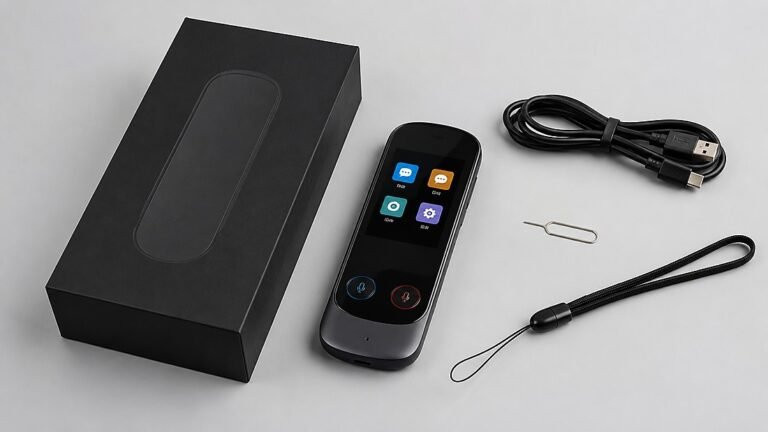
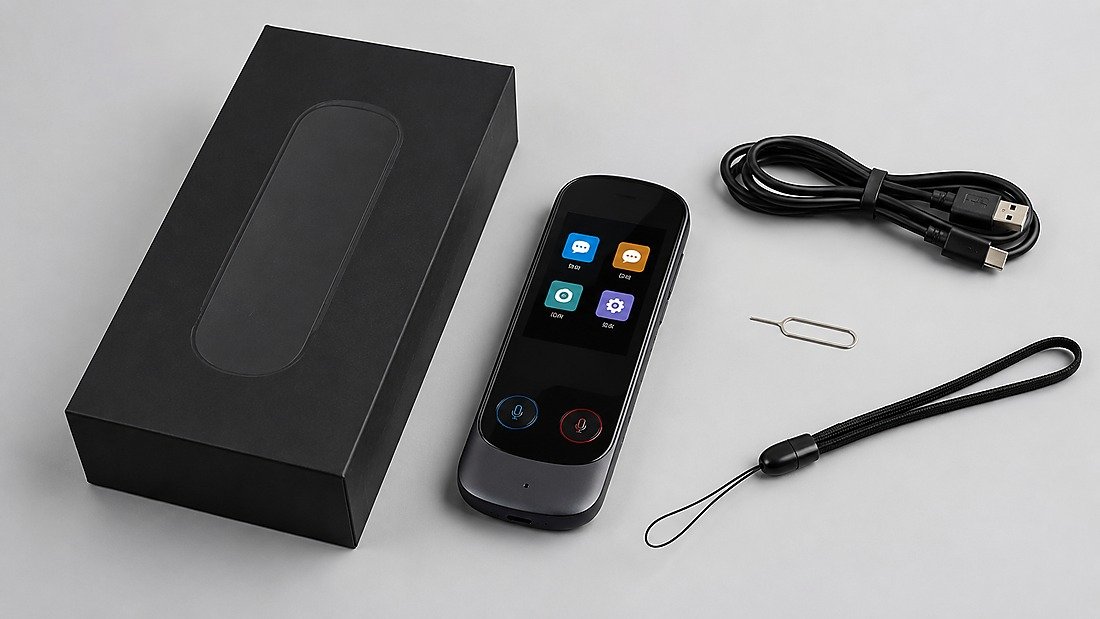
AI translator OEM/ODM supplier: How System Integrators in Southeast Asia Should Evaluate AI Translator OEM/ODM Suppliers: 7-Step 2026 Checklist
How System Integrators in Southeast Asia Should Evaluate AI Translator OEM/ODM Suppliers: 7-Step 2026 Checklist
System integrators in Southeast Asia should evaluate an AI translator OEM/ODM supplier against seven documented checkpoints: translation engine quality for your target language pairs, hardware and firmware flexibility, API/app integration, MOQ and price logic, certification for your destination markets, sample validation workflow, and post-sales support. The strongest suppliers provide verifiable evidence — firmware changelogs, lab test reports, and documented customization scope — not just spec sheets.
Table of Contents
Table of Contents
Table of Contents
- Short Answer
- Key Takeaways
- Key Facts for Buyers
- What Is an AI Translator OEM/ODM Supplier?
- 1. Confirm Translation Engine and Language Coverage
- 2. Audit Hardware, Firmware, and App Customization
- 3. Compare OEM, ODM, and Private Label Models
- 4. Understand MOQ, Tooling, and Per-Unit Pricing
- 5. Verify Certification for Each Southeast Asian Market
- 6. Validate Samples Before Committing to Volume
- 7. Evaluate Support, Warranty, and Firmware Updates
- OEM vs ODM vs Private Label: Decision Table
- Common Mistakes and Buyer Red Flags
- Practical Buyer Checklist
- FAQ
- Conclusion
Short Answer
Evaluating an AI translator OEM/ODM supplier requires evidence, not promises. Confirm which language pairs work offline, request the firmware customization scope in writing, verify CE/FCC/RoHS and battery transport documentation for each destination country, and validate MOQ and pricing with a paid sample order. A supplier that answers these points with documents and sample lead times is usually safe to shortlist; one that deflects is a risk.
Key Takeaways
- Translation quality depends on the engine, not the shell. Ask for language-pair testing results in your target markets.
- For system integrators, integration matters more than cosmetics: API, SDK, MQTT/PTT hooks, and app control often decide the project.
- MOQ is typically negotiable for OEM/ODM projects, but tooling and certification costs are usually borne by the buyer — clarify who owns them.
- Certification requirements vary by product configuration and destination country. Confirm each before committing.
- Sample validation should include on-site language testing, battery safety documentation, and a firmware update test.
Key Facts for Buyers
| Evaluation Factor | What to Ask | Acceptable Evidence |
|---|---|---|
| Language coverage | Simultaneous language pairs; offline packs | Documented language list; tested results |
| Firmware | Customization scope, update path | Firmware changelog; update policy |
| App/API | SDK, REST API, PTT/MCPTT hooks | Technical documentation; test access |
| MOQ | Minimum order per SKU and per customization | Written quotation with MOQ and tooling |
| Certification | CE, FCC, RoHS, UN38.3, MSDS | Test reports with model numbers |
| Lead time | Sample and mass-production schedule | Production calendar with milestones |
| Warranty | Coverage period; replacement policy | Written warranty terms |
[STAR KING TO CONFIRM] — STAR KING should confirm which of these certifications and documents apply to specific AI translator configurations before buyers rely on them.
What Is an AI Translator OEM/ODM Supplier?
An AI translator OEM/ODM supplier is a manufacturer that supplies handheld or wearable two-way translation devices and offers either OEM services (building your design under your brand) or ODM services (adapting an existing platform to your requirements). For system integrators, the supplier is not just a hardware seller — it is a technology partner whose firmware, APIs, and app stack must slot into customer projects such as hospitality, logistics, government service counters, healthcare, and field operations.
Because translation is a software-driven experience, buyers should evaluate the supplier on the software layer first and the physical product second. A polished device with a weak engine, limited offline language packs, or no API integration will fail in real deployment, no matter how good the industrial design looks.
1. Confirm Translation Engine and Language Coverage
Ask the right questions
- Which language pairs work fully offline, and which require connectivity?
- Is the engine proprietary, licensed, or cloud-based from a third party?
- What is the measured latency for real-time conversation mode?
- How are accents and regional dialects handled — for example, Bahasa Indonesia, Thai, Vietnamese, or Filipino English?
Why it matters in Southeast Asia
Southeast Asian deployments often mix local languages with English, Mandarin, and regional business languages. Offline performance matters in places with unreliable connectivity, such as rural clinics, ports, or construction sites. When you request language coverage, ask for a written list and test the most important pairs yourself.
[STAR KING TO CONFIRM] — STAR KING should provide the current supported language list, offline language packs, and any documented translation testing results.
2. Audit Hardware, Firmware, and App Customization
System integrators rarely deploy devices as-is. They need to configure firmware behavior, control the device through an app or backend, and possibly integrate translation output into existing workflows.
Hardware considerations
- Audio quality: Microphone count and noise cancellation determine translation accuracy in noisy environments.
- Battery: A translation device used all day by ground staff needs battery life that matches real shift patterns.
- Display and controls: Large, glove-friendly buttons and readable screens matter for field staff.
- Connectivity: Wi-Fi, Bluetooth, and optional cellular or eSIM options — if available — affect deployment models.
Firmware and app customization
Ask whether the supplier can customize boot logos, default languages, restricted modes (for compliance reasons), and update paths. App customization matters when your customer wants branded app shells or wants to integrate with their own backend. If your project involves push-to-talk or group communication, ask specifically about PTT or MCPTT integration and whether the supplier can provide guidance for integration with existing audio systems.
[STAR KING TO CONFIRM] — STAR KING should confirm which firmware, app, and API customizations are offered for AI translators and whether SDK or API documentation is available for system integrators.
3. Compare OEM, ODM, and Private Label Models
Most buyers use one of three engagement models: OEM (build to your specification), ODM (adapt the manufacturer’s platform), or private label (mostly cosmetic branding). Each has different implications for cost, timeline, and IP.
ODM is usually the fastest path when a platform already meets your technical needs. OEM offers more control but typically involves tooling, longer development cycles, and higher upfront costs. Private label works best when your differentiation is brand and packaging rather than technology.
If your project is primarily private-label, it is also worth reading up on private label OEM/ODM programs to understand how branding, packaging, and documentation are typically bundled.
4. Understand MOQ, Tooling, and Per-Unit Pricing
MOQ and pricing in AI translator sourcing depend on several factors: whether the product is existing stock or customized, whether new tooling is required, whether the buyer wants custom packaging, and which certifications are needed. Buyers should ask for a written quotation that separates:
- Unit price at different volume tiers
- Sample fee (often refundable on volume orders — confirm policy)
- Tooling or mold cost, if applicable
- Certification cost and who owns the certificate
- Packaging and branding fees
- Shipping terms and estimated freight to your Southeast Asian destination
Be specific about landed cost, not just FOB or EXW price. Import duties, VAT, and freight can materially change the business case in countries such as Indonesia, Vietnam, or the Philippines.
[STAR KING TO CONFIRM] — STAR KING should provide MOQ tiers, sample pricing, tooling cost ranges (if applicable), and standard lead times for AI translator OEM/ODM projects.
5. Verify Certification for Each Southeast Asian Market
Certification is one of the most common causes of delay in hardware projects. Requirements depend on the specific product configuration and the destination country, so buyers should verify each item rather than assume.
Typical documents to request
- CE marking documentation (for EU-bound devices)
- FCC documentation (for US-bound devices)
- RoHS compliance statement
- UN38.3 test report and MSDS for lithium battery shipping
- Local telecom or radio approvals where applicable in your destination country
In Southeast Asia, many markets also require country-specific product registration or radio approval. Buyers should confirm with a local compliance consultant or their customs broker. Official references such as the FCC equipment authorization database help buyers understand what device authorization looks like in practice, and the Bluetooth SIG qualification program is a useful reference if the device uses Bluetooth and you need to verify qualification status.
[STAR KING TO CONFIRM] — STAR KING should confirm which certifications apply to specific AI translator models and whether certificates can be shared with buyers under NDA.
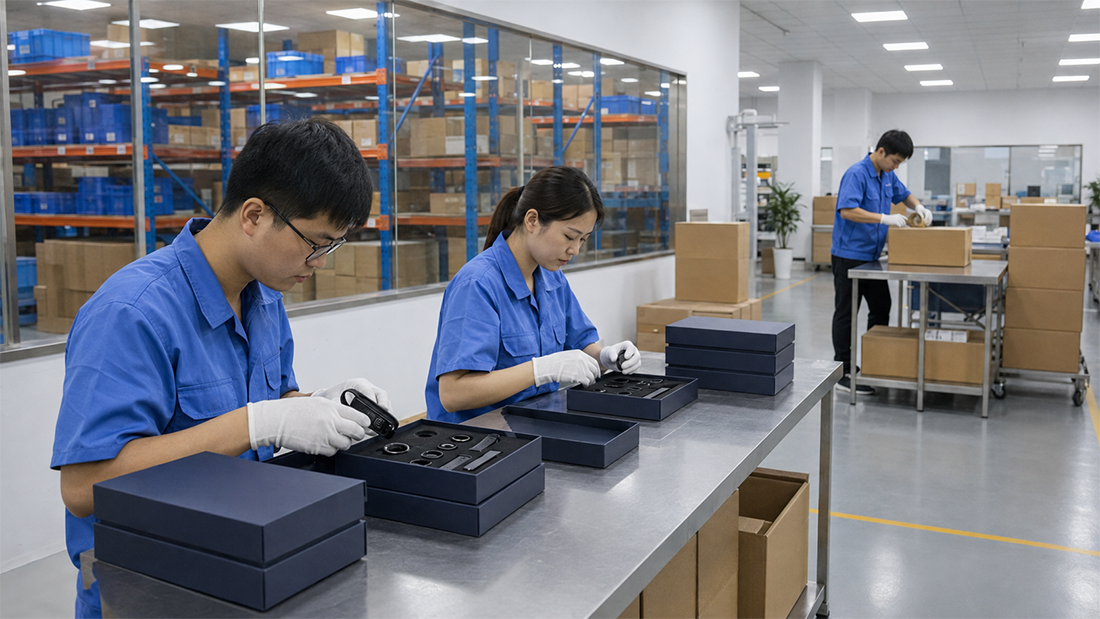
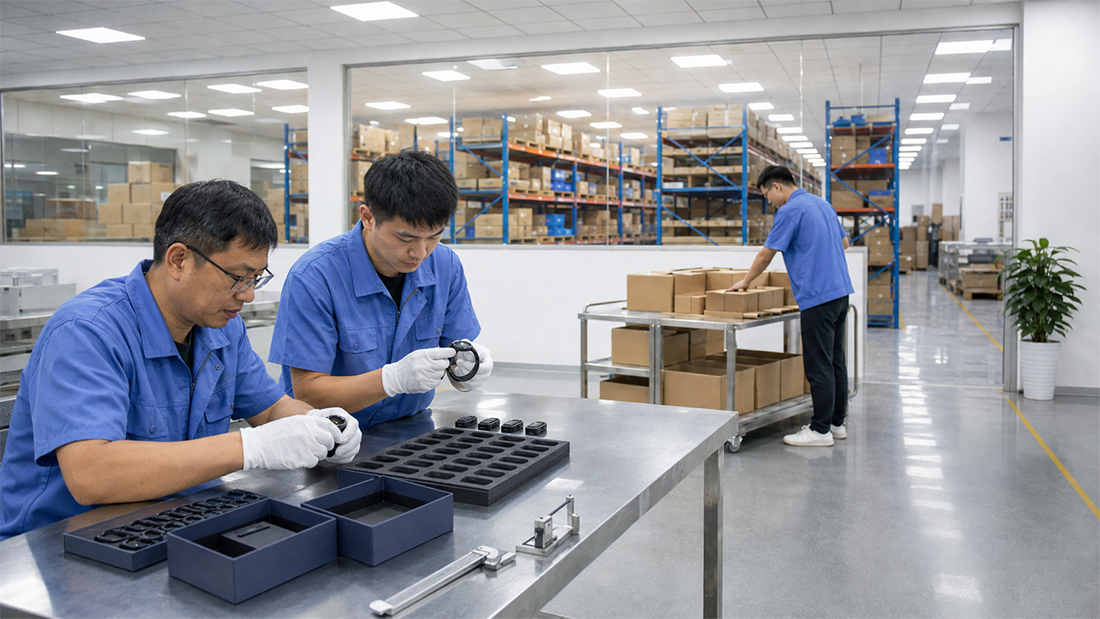
6. Validate Samples Before Committing to Volume
Sample evaluation is where integrators separate good suppliers from average ones. Treat the sample stage as a project phase, not a courtesy. Prepare a test protocol that includes:
- Language pair accuracy tests in realistic noise conditions
- Battery runtime under continuous translation use
- Update and reset behavior, including factory reset and firmware update
- App pairing, pairing stability, and Bluetooth range
- Charging and thermal behavior
- Physical durability and button behavior under repeated use
Document each test, and if the sample fails, decide whether the failure is fixable by firmware update or requires a hardware change. This decision point is the main reason buyers should avoid ordering volume units before completing sample verification.
7. Evaluate Support, Warranty, and Firmware Updates
Post-sales support is where total cost of ownership is decided. For system integrators, a slow firmware update process can stall an entire deployment. Ask the supplier:
- What is the warranty period, and what does it cover?
- How are defective units handled — replacement, repair, or credit?
- How often are firmware updates issued, and how are buyers notified?
- Are spare parts available for the expected product lifecycle?
- Is there a dedicated technical contact for integrator projects?
A supplier that cannot describe its update process in detail is likely to be a short-term partner. Buyers should also confirm data handling and privacy practices, especially if translation data is processed in the cloud.
OEM vs ODM vs Private Label: Decision Table
| Factor | OEM | ODM | Private Label |
|---|---|---|---|
| Design control | High | Medium | Low |
| Upfront cost | High (tooling, development) | Medium | Low |
| Time to market | Long | Medium | Short |
| MOQ | Often higher | Moderate | Lowest |
| Customization depth | Full | Firmware, app, branding | Logo, packaging |
| Best for | Differentiated product | Integrator projects | Brand launch |
Use this table to align your project’s business case with the right engagement model. If your differentiator is software integration, ODM is often the most efficient path.
Soft CTA: If your project involves deploying translation devices to field teams or customer-facing counters, you can review STAR KING’s AI translators product line and share your integration requirements for a tailored response.
Common Mistakes and Buyer Red Flags
- Relying on spec sheets only: Language coverage and latency claims should be tested, not assumed.
- Ignoring offline capability: Cloud-only translation fails in low-connectivity environments.
- Assuming certification is automatic: It depends on product configuration and destination country.
- Not separating tooling cost from unit price: This obscures true cost and creates disputes later.
- No firmware update plan: Devices that cannot be updated become liabilities.
- Skipping sample validation: Volume orders based on samples that were never tested in real conditions often fail.
- No documented warranty: Verbal assurances do not protect you after shipment.
Practical Buyer Checklist
- Request the current supported language list, including offline language pairs.
- Ask for firmware customization scope and update process in writing.
- Confirm API/SDK availability and integration documentation.
- Obtain a written quotation with MOQ, tooling cost, sample fee policy, and volume pricing.
- Verify certification requirements for each destination country and request available test reports.
- Order samples and run a documented test protocol.
- Confirm warranty terms, spare parts availability, and firmware update cadence before placing volume orders.
FAQ
What is the typical MOQ for an AI translator OEM/ODM project?
MOQ depends on whether the product is an existing model or requires customization. Standard models often have lower MOQs, while OEM projects with new tooling or certification requirements may need higher volumes. Ask for MOQ tiers in writing.
Can AI translators work without internet?
Some devices support offline language packs for selected language pairs. Offline coverage varies by engine and language, so buyers should confirm which pairs work offline and test them in real conditions.
Who owns the certification when a buyer requests a custom version?
Certification ownership and cost are usually negotiated. In many projects, the buyer pays for certification and the certificate is issued to the buyer or to a shared entity. Clarify this before development begins.
How long does sample development take?
Timelines vary by customization scope. Cosmetic branding on an existing model is faster than firmware changes or new tooling. Suppliers should provide a sample production calendar with milestones. [STAR KING TO CONFIRM]
Do I need UN38.3 for shipping to Southeast Asia?
Lithium battery shipments generally require UN38.3 test reports and an MSDS. Air and sea freight rules vary by carrier and destination, so buyers should verify with their freight forwarder.
Can the supplier integrate with our existing push-to-talk system?
Integration depends on the device’s firmware and API support. Ask specifically about PTT or MCPTT compatibility and whether the supplier can provide technical documentation for integrators. [STAR KING TO CONFIRM]
What should I test in a sample?
Test translation accuracy in realistic noise, battery runtime, update and reset behavior, app pairing stability, charging and thermal behavior, and physical durability. Document results and decide whether issues are firmware-fixable.
Conclusion
For system integrators in Southeast Asia, the right AI translator OEM/ODM supplier is one that can show evidence: verified language coverage, documented firmware and API customization, clear MOQ and pricing logic, destination-market certification, a disciplined sample process, and a realistic post-sales plan. Use the seven steps in this guide as a working checklist, and treat every unanswered question as an open risk, not a detail to revisit later. If your project is at the supplier-selection stage, the most useful next move is to request detailed specifications and integration documentation from a shortlist of suppliers and compare them side by side.
STAR KING CTA
If you are evaluating AI translator OEM/ODM partners for a Southeast Asia deployment, STAR KING can discuss integration requirements, sample evaluation, and customization options. Contact sales to request product samples, compare specifications, or confirm certification requirements for your target market.
Discuss Your Smart Wearable OEM/ODM Project
Planning a smart ring, smart watch, smart band, AI glasses, AI translator, or AI voice mouse project? Contact STAR KING to discuss product positioning, sample testing, customization scope, certification requirements, lead time, and quotation details.

Team Star King
Scan WhatsApp QR code