
ai smart glasses uk: AI Smart Glasses in the UK: 10-Point Procurement Checklist for Corporate Buyers
ai smart glasses uk buyers need a supplier evaluation process that checks product fit, OEM/ODM capability, compliance documents, quality control, pricing, lead time, and after-sales support before placing a bulk order.
Table of Contents
Table of Contents
AI Smart Glasses in the UK: A 10-Point Procurement Checklist for Corporate Buyers
Procuring AI smart glasses for a UK organisation comes down to ten checks: clear use case, hardware and AI specification, OEM or ODM model, MOQ and pricing, sample validation, GPSR and UKCA compliance, lithium-battery shipping documentation, lead times, warranty and spare parts, and landed cost. This guide walks corporate procurement teams through each checkpoint so evaluation moves to a defensible supplier decision.
Buyers in the UK face a specific combination of pressures: data-protection expectations under UK GDPR, product-safety obligations under the General Product Safety Regulations, and internal IT, security, and accessibility reviews that rarely exist in consumer purchases. The AI smart glasses category sits at the intersection of hardware, software, and data flow, so a generic consumer review will not survive a procurement committee. What follows is a sourcing-focused checklist built for evaluation-stage decisions.
ai smart glasses uk: Short Answer
For UK corporate buyers, AI smart glasses should be evaluated as a hardware-plus-firmware-plus-compliance package, not a single device. Confirm the use case, lock the specification, request validated samples, verify CE/UKCA/RoHS and lithium-battery documentation for your specific configuration, and model landed cost alongside MOQ and lead time. Certification requirements typically depend on product configuration and intended market, so buyers should verify documents before committing.

Table of Contents
- Key Takeaways
- Key Facts for Buyers
- 1. Define the Corporate Use Case Before Any RFQ
- 2. Specification Reality Check: What “AI Smart Glasses” Usually Includes
- 3. OEM vs ODM vs Private Label: Choosing the Right Model
- 4. MOQ, Pricing Factors, and Cost Drivers
- 5. Sample Testing and Validation for UK Buyers
- 6. UK Compliance: UKCA, CE, GPSR, RoHS, and Data Protection
- 7. Lithium Batteries, Shipping, and Import Documentation
- 8. Lead Time, Production Planning, and Repeat Orders
- 9. Warranty, Spare Parts, and After-Sales Structure
- 10. Landed Cost and Total Cost of Ownership
- Supplier Comparison Table
- Common Mistakes and Buyer Red Flags
- Practical Buyer Checklist
- FAQ
- Conclusion

Key Takeaways
- Start with a defined corporate use case; without it, specification and evaluation criteria cannot be set.
- Ask for configuration-specific compliance documents, not generic certification claims.
- MOQ and unit cost are usually driven by hardware platform, firmware scope, and packaging customization.
- Sample testing should cover fit, battery performance, AI latency, and firmware behaviour in your environment.
- UK buyers should model landed cost including duty, VAT treatment, freight, and lithium-battery handling.
- Warranty terms and spare-parts availability should be agreed before the purchase order, not after.
Soft CTA: If you are comparing AI smart glasses options for a UK rollout, requesting a working sample early will save weeks later in the process. Request a sample to test against your own use case.

Key Facts for Buyers
| Item | Typical UK Procurement Position | What to Verify |
|---|---|---|
| Product category | Consumer electronics / wearable | Correct classification for import and safety |
| Compliance marks | UKCA for GB, CE for NI/EU | Documents matching your configuration |
| Battery | Lithium-ion or lithium-polymer | UN38.3 report, MSDS, packaging instructions |
| Data | Subject to data-protection review | Data flow, storage, and app behaviour |
| MOQ | Varies by platform and branding | Written MOQ bands and tooling terms |
| Sample lead time | Often weeks, not days | Confirmed timeline in writing |
| Warranty | Negotiated | Term, scope, and RMA process |

1. Define the Corporate Use Case Before Any RFQ
Corporate procurement teams evaluating AI smart glasses typically fall into a few use-case patterns: field teams needing hands-free reference or guided workflows, customer-facing staff who need quick language assistance, and office or hybrid workers using voice and AI assistance for documentation. Each pattern changes the specification materially.
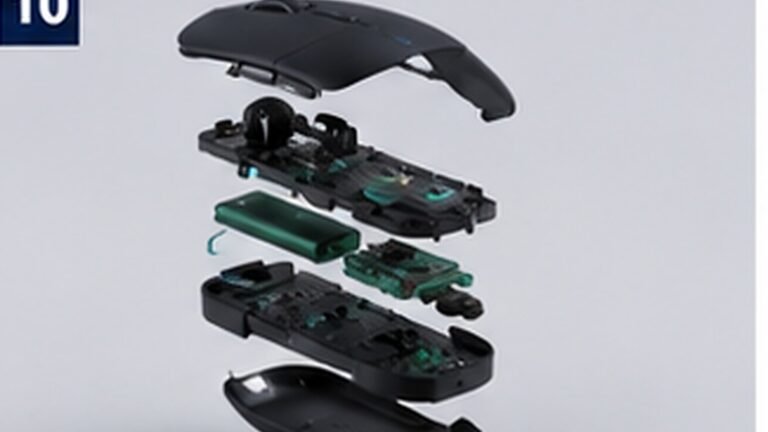
A field-service use case may prioritise ruggedness, camera quality, and low-latency connectivity. A language-assistance use case may prioritise microphone array quality and real-time translation performance. An office-productivity use case may prioritise comfort over a full working day and integration with voice tools such as an AI voice mouse workflow. Buyers should document the use case in the RFQ, because suppliers can only quote accurately against a defined scope.
What to include in the use-case brief
- Number of users and pilot size vs full rollout.
- Environment (indoor, outdoor, industrial, customer-facing).
- Required functions: camera, translation, voice assistant, display, audio.
- Device management expectations for your IT team.
- Data handling constraints from your security and privacy teams.
2. Specification Reality Check: What “AI Smart Glasses” Usually Includes
The term AI smart glasses covers a wide range of hardware. For procurement, the specification should be treated as a set of trade-offs rather than a feature list. Buyers often over-specify battery and under-specify firmware behaviour, which is where most evaluation surprises occur.
| Specification Area | Typical Trade-Off | Procurement Consideration |
|---|---|---|
| Battery capacity | Higher capacity adds weight and size | Match runtime to shift length, not marketing claims |
| Processor / RAM | More performance increases cost and heat | Confirm AI feature performance at your load |
| Camera | Higher resolution increases data and power load | Check privacy and data-flow implications |
| Audio / microphone | Better arrays improve translation accuracy | Test in realistic noise conditions |
| Connectivity | More radios raise certification complexity | Verify radio certification for the UK |
| Firmware / app | Customisation increases development time | Define who owns updates and support |
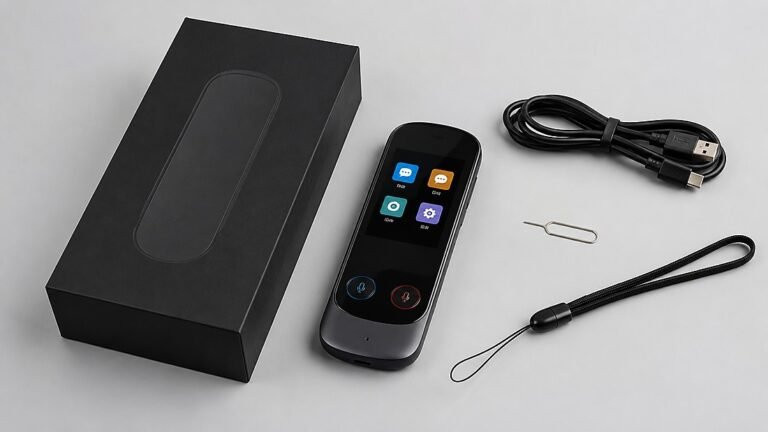
If your organisation also uses AI translators or other AI devices, it can make sense to review the AI office productivity solution as a combined integration question rather than buying devices in isolation.
Firmware, app, and API questions to raise early
- Does the device work standalone, with a companion app, or both?
- Can firmware be customised for your organisation’s workflow?
- Is there an API or management interface for IT teams?
- How are software updates distributed and supported?
- What happens to device behaviour and data if cloud services change?
3. OEM vs ODM vs Private Label: Choosing the Right Model
AI hardware OEM arrangements generally fall into three patterns. Choosing the right model early avoids renegotiation later.
| Model | What the Supplier Provides | Best Fit |
|---|---|---|
| ODM | Existing platform, limited or no hardware change | Fast pilots, defined budget, low engineering input |
| OEM | Modified hardware or firmware to your requirements | Organisations with specific functional needs |
| Private label | Branding, packaging, and app/logo customisation | Distributors and branded rollouts |
For evaluation-stage UK buyers, private label is often the fastest route to a branded pilot, while OEM becomes relevant once requirements are proven. Buyers can review private label OEM/ODM options to understand what is typically customisable and what is not.
Customisation questions for corporate buyers
- Which parts of the device can be branded (lens frame, temple, case, packaging)?
- Is app branding or a custom app required, and who maintains it?
- Can firmware defaults be changed for your deployment?
- Are custom requirements subject to new tooling, and who owns the tooling?
- Does custom packaging change MOQ or lead time?
4. MOQ, Pricing Factors, and Cost Drivers
MOQ and unit cost for AI smart glasses are usually shaped by the hardware platform, the depth of customisation, and packaging requirements. A brand-only change is typically a lower-MOQ exercise than a firmware or hardware change, which may require additional engineering and validation.
Common cost drivers
- Hardware platform and component selection (processor, battery, optics, sensors).
- Firmware and app customisation scope.
- Branding and packaging complexity.
- Compliance documentation and testing for the target market.
- Order volume, which affects component purchasing terms.
- Shipping method, especially where lithium batteries are involved.
Buyers should request MOQ bands in writing and ask how MOQ changes if the specification changes. For a structured view of MOQ planning and supplier verification, the site’s blog and sourcing resources are a useful reference point.
5. Sample Testing and Validation for UK Buyers
Sample testing is where most evaluation risk is reduced, and it should be planned as a structured activity rather than a quick look. For a UK corporate pilot, testing should cover the device in conditions close to the real deployment.
Sample validation checklist
- Fit and comfort across a range of users, over a full working session.
- Battery runtime against the claimed figure.
- AI feature latency and accuracy in realistic noise and lighting.
- Pairing, app behaviour, and firmware stability.
- Connectivity in the locations where the devices will be used.
- Charging behaviour and accessory quality.
Buyers should also confirm what level of sample customisation is realistic. Early-stage samples may be platform-standard units, with branding and packaging applied at mass production. Understanding this distinction prevents mismatched expectations.
6. UK Compliance: UKCA, CE, GPSR, RoHS, and Data Protection
Compliance is often the longest-lead item in an AI smart glasses procurement, because it depends on the specific configuration and intended market. In the UK, Great Britain uses UKCA marking while Northern Ireland follows CE rules, and buyers should verify the correct route for the destination of the goods with their supplier and, where appropriate, a compliance adviser. Requirements typically depend on product configuration, radio features, battery type, and how the product is placed on the market.
Documents to request
- UKCA or CE documentation relevant to your configuration.
- RoHS compliance statement for the electronics.
- Radio equipment documentation where wireless features are present.
- General product safety information suitable for UK obligations.
Buyers should also assess data protection. AI smart glasses may capture audio, images, or translation data, and the data flow should be understood before deployment. For reference, buyers can consult the UK Information Commissioner’s Office guidance on data protection at ico.org.uk, and the UK government’s guidance on placing goods on the market at gov.uk. These are general references; each organisation remains responsible for its own compliance position.
Image suggestion: documentation review meeting with compliance checklist.
7. Lithium Batteries, Shipping, and Import Documentation
AI smart glasses contain lithium batteries, which affects both shipping and import handling. Buyers should expect to receive documents such as a UN38.3 test summary and a material safety data sheet where applicable, along with packaging instructions suitable for air or sea freight. These requirements typically depend on battery type and shipping method, so buyers should verify with the supplier and the freight forwarder.
Battery and shipping questions
- What is the battery chemistry and rated capacity?
- Is UN38.3 documentation available for the specific battery?
- Is an MSDS available?
- What packaging is used for transport, and does it meet carrier requirements?
- Which shipping methods are available for the destination?
UK buyers should also confirm commodity codes and duty treatment with their customs broker, since these depend on the product and its classification. Certification and import requirements can change, so buyers should verify the current position before committing to a purchase order.
8. Lead Time, Production Planning, and Repeat Orders
Lead time for AI smart glasses depends on whether the order is a standard platform order or a customised programme. Standard orders typically move faster than OEM programmes that require firmware changes or new tooling.
| Order Type | Typical Planning Focus | Buyer Action |
|---|---|---|
| Standard platform | Component availability, assembly, QC | Confirm batch dates and QC reports |
| Private label | Branding, packaging, documentation | Approve artwork and packaging early |
| OEM / custom | Engineering, tooling, validation | Plan milestone reviews |
Corporate buyers should ask for a production timeline with clear milestones rather than a single lead-time figure, and should confirm how repeat orders are handled so that a successful pilot can scale without a new qualification cycle.
9. Warranty, Spare Parts, and After-Sales Structure
Warranty and after-sales terms are frequently treated as an afterthought, then become a source of friction once devices are deployed. For a corporate rollout, buyers should agree the following before ordering.
- Warranty term and what is covered (hardware, battery, firmware).
- Return material authorisation (RMA) process and turnaround expectations.
- Availability of spare parts, including batteries and accessories.
- Firmware update policy and support window.
- Escalation path for technical issues.
These terms matter most in multi-site deployments, where a single failure can affect a shift or a customer interaction. Buyers should record agreed terms in the purchase contract rather than relying on general statements.
10. Landed Cost and Total Cost of Ownership
Landed cost for AI smart glasses includes more than the unit price. A realistic model should include the following elements, each of which can shift the business case.
- Unit price at your MOQ band.
- Freight, including any lithium-battery handling surcharge.
- Import duty and VAT treatment as advised by your broker.
- Compliance and documentation costs where testing is required.
- Accessories, spares, and replacement batteries.
- Internal deployment costs such as configuration, training, and support.
For evaluation-stage decisions, a landed-cost model should be built alongside the sample test, so the business case is tested against real evidence rather than supplier claims.
Supplier Comparison Table
| Evaluation Criterion | What a Strong Supplier Provides | Warning Sign |
|---|---|---|
| Specification clarity | Written spec with defined options | Verbal promises only |
| Compliance | Documents matching your configuration | Generic certificate images |
| Sample process | Defined timeline and scope | Vague sample lead time |
| MOQ | Written bands and terms | MOQ changes after pricing |
| Battery documentation | UN38.3 and MSDS available | Refusal to share documents |
| After-sales | Defined warranty and RMA | No spare parts plan |
| Customisation | Clear scope and ownership | Unclear tooling ownership |
Common Mistakes and Buyer Red Flags
Common mistakes
- Running an RFQ before the use case and user audience are defined.
- Assuming certification covers every configuration and market.
- Testing samples informally rather than against a structured checklist.
- Ignoring firmware and app support in the commercial evaluation.
- Underestimating lithium-battery shipping and documentation effort.
- Comparing unit prices without modelling landed cost.
Buyer red flags
- Supplier cannot explain which compliance documents apply to your configuration.
- MOQ, lead time, or tooling terms change after a price is quoted.
- No clear warranty or spare-parts statement.
- Unwillingness to provide battery documentation for shipping.
- No defined process for firmware updates or support.
Practical Buyer Checklist
- Use case documented with user count and environment.
- Specification agreed, including firmware and app scope.
- OEM, ODM, or private label model selected.
- MOQ bands and pricing confirmed in writing.
- Samples ordered and tested against a checklist.
- UK compliance route confirmed for the configuration.
- UN38.3 and MSDS documents requested for the battery.
- Production timeline with milestones received.
- Warranty, RMA, and spare-parts terms agreed.
- Landed cost model completed with your customs broker.
FAQ
Do AI smart glasses need UKCA marking for UK corporate use?
Great Britain generally uses UKCA marking, while Northern Ireland follows CE rules, and the position depends on the product and how it is placed on the market. Buyers should verify the applicable route for their specific configuration with the supplier and, where appropriate, a compliance adviser.
What MOQ should a UK corporate buyer expect?
MOQ typically depends on the platform, customisation depth, and packaging. Branding-only orders usually carry lower MOQs than OEM programmes with firmware or tooling changes. Buyers should request written MOQ bands before comparing quotes.
How long does sample development take?
Sample timelines vary by platform and customisation scope, and they are usually measured in weeks. Buyers should request a written timeline with milestones rather than a single estimate.
Can AI smart glasses be customised with our logo and packaging?
Logo and packaging customisation are common in private label AI devices, while firmware and app customisation fall under OEM scope. Buyers should confirm exactly which elements are customisable and who owns any custom tooling.
What battery documentation is required for shipping to the UK?
Lithium batteries typically require a UN38.3 test summary and an MSDS, with packaging suitable for the chosen freight method. Requirements depend on battery type and shipping route, so buyers should confirm with the supplier and their freight forwarder.
How should corporate buyers evaluate AI feature performance?
AI performance should be tested with samples under realistic noise, lighting, and connectivity conditions. Buyers should define measurable acceptance criteria, such as latency and accuracy thresholds, before evaluation begins.
What after-sales terms should be agreed before ordering?
Buyers should agree the warranty term and scope, the RMA process, spare-parts availability, and the firmware update policy. These terms are most valuable in multi-site deployments and should be recorded in the purchase contract.
Conclusion
AI smart glasses procurement in the UK is a structured evaluation exercise rather than a simple product purchase. Procurement teams that define the use case, lock the specification, test samples rigorously, verify compliance for their specific configuration, and model landed cost will make faster and more defensible decisions. The ten checkpoints in this guide are designed to be used together, from the first RFQ through to repeat orders, so that a pilot can scale without renegotiation.
Next step: If your organisation is evaluating AI smart glasses for a UK deployment, request samples to test against your own use case, or discuss an OEM/ODM or private label programme. Request a quotation or samples and share your specification, MOQ, and target timeline so the discussion starts from your requirements.
Discuss Your Smart Wearable OEM/ODM Project
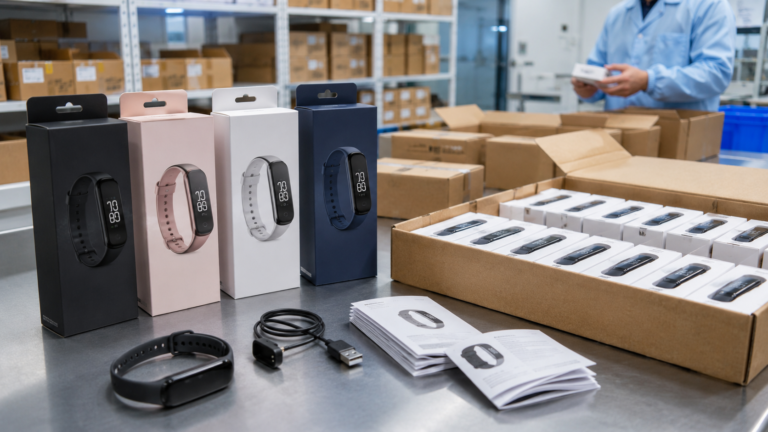
Planning a smart ring, smart watch, smart band, AI glasses, AI translator, or AI voice mouse project? Contact STAR KING to discuss product positioning, sample testing, customization scope, certification requirements, lead time, and quotation details.

Team Star King

Scan WhatsApp QR code