

smart bands OEM: Smart Bands for EU Startup Brands: 7 Critical OEM Steps Before You Scale in 2026
Smart Bands for EU Startup Brands: 7 Critical OEM Steps Before You Scale in 2026
Smart bands OEM is the process of contracting a manufacturer to produce private-label fitness trackers with your brand, firmware, and packaging. For EU startup brands, the seven steps are: define use case and specs, choose OEM vs ODM, verify CE/RoHS/UN38.3 compliance, validate a sample, lock MOQ and lead times, customize app and packaging, and plan lithium-battery logistics. This guide gives you the exact procurement checklist to avoid costly delays and compliance failures in 2026.
Table of Contents
Table of Contents
smart bands OEM: Table of Contents
- Direct Answer: What Should EU Startup Brands Know First?
- Key Takeaways
- Key Facts for Buyers
- Step 1: Define Your EU Use Case and Technical Specifications
- Step 2: Choose OEM or ODM for Your Smart Band
- Step 3: Verify CE, RoHS, and UN38.3 Compliance Early
- Step 4: Validate with a Real Sample Before Committing
- Step 5: Negotiate MOQ and Lead Times That Match Startup Cash Flow
- Step 6: Customize the App, Firmware, and Packaging
- Step 7: Plan Lithium Battery Shipping and Customs
- OEM vs ODM vs Private Label: Comparison Table
- Common Mistakes and Buyer Red Flags
- Practical Buyer Checklist
- FAQ
- Conclusion
Direct Answer: What Should EU Startup Brands Know First?
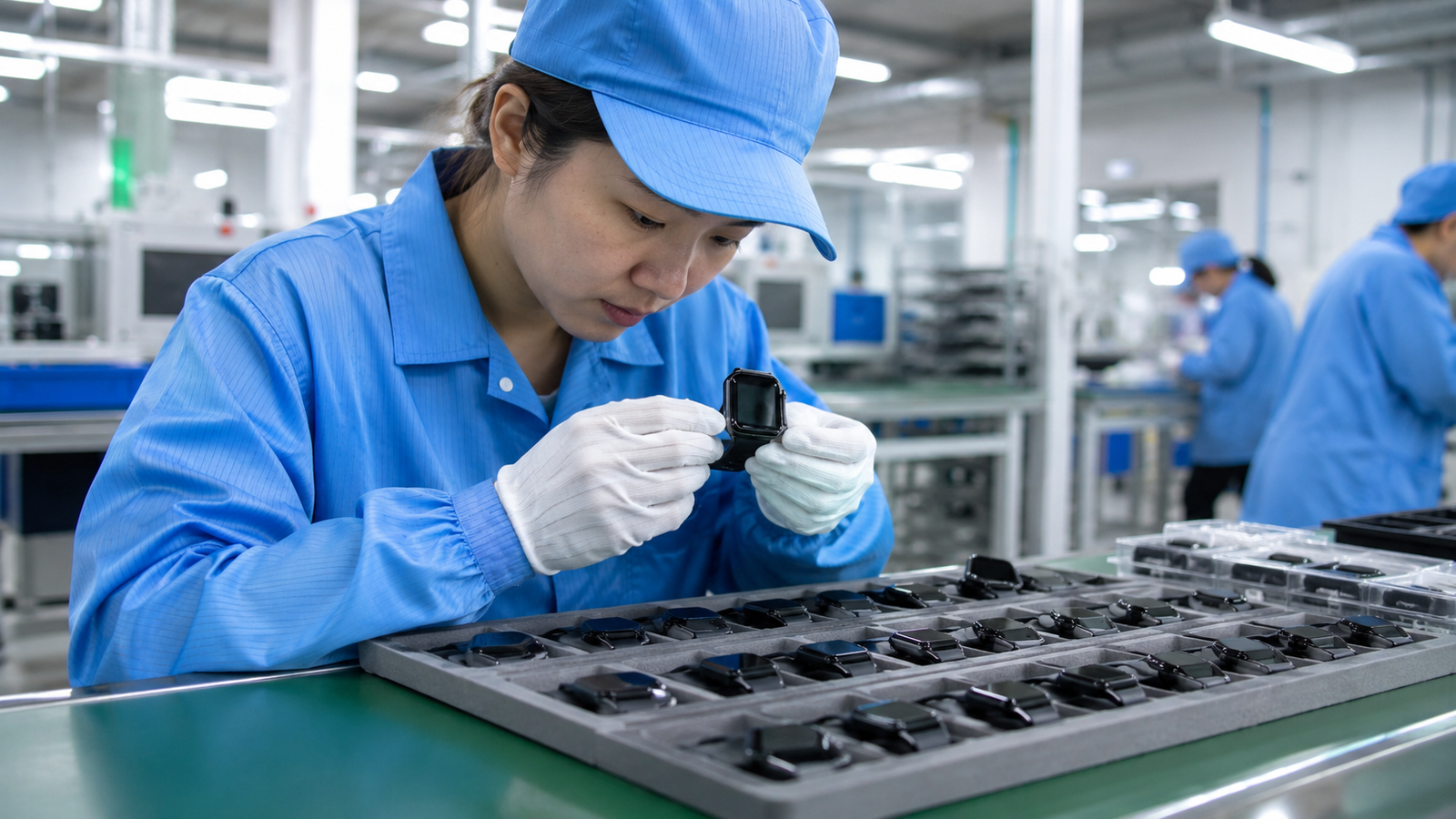
Smart bands OEM lets EU startup brands launch a private-label fitness tracker without owning a factory. You typically start with a 500–1,000 unit MOQ, need CE marking and RoHS documentation for EU customs, and must validate a sample before mass production. Build 12–16 weeks into your launch timeline for tooling, certification, and sea freight.

Key Takeaways
- EU startup brands usually begin with 500–1,000 unit MOQs; below that, unit cost rises sharply.
- CE marking, RoHS, and UN38.3 are baseline requirements for smart bands sold in the EU; FCC is only relevant if you also sell in the US.
- ODM templates shorten development to 4–8 weeks, while full OEM firmware customization typically takes 8–14 weeks.
- Always approve a golden sample and a pre-shipment inspection before releasing balance payment.
- Lithium-polymer batteries trigger dangerous-goods shipping rules; confirm UN38.3 test summaries and MSDS with your supplier.
Key Facts for Buyers
| Item | Typical Range for EU Startups | Notes |
|---|---|---|
| Minimum order quantity (MOQ) | 500–1,000 units | Lower MOQs may be available for ODM stock models |
| Sample lead time | 7–15 days | Custom logo samples may take longer |
| Mass production lead time | 25–40 days | Depends on component availability |
| Required EU documentation | CE, RoHS, UN38.3, MSDS | WEEE and REACH may also apply |
| Unit cost impact of custom app | +$2–$6 per unit | Based on development amortization |
| Shipping method | Air or sea | Lithium batteries restrict air options |

Step 1: Define Your EU Use Case and Technical Specifications
Before contacting suppliers, write a one-page specification. EU startup brands win deals by being specific: heart rate monitoring, SpO2, sleep tracking, step count, battery life target, screen type, water resistance, and companion app platforms. This document becomes your RFQ and your sample approval checklist.
Decide whether you are building a fitness-first band, a wellness band, or a corporate wellness device. Each use case changes sensor requirements and cost. A basic fitness tracker may need only an accelerometer and optical heart rate sensor, while a sleep-focused product benefits from a more accurate photoplethysmography (PPG) module. If your roadmap includes clinical claims, consult EU MDR guidance early, because general wellness devices and medical devices face very different regulatory paths.
Step 2: Choose OEM or ODM for Your Smart Band
OEM means you bring the design and the factory builds it. ODM means the factory offers an existing design you rebrand. For most EU startups, ODM is the faster and cheaper entry point. You can move to full OEM once volumes justify tooling investment.
Ask suppliers whether they support firmware customization, app customization, and logo customization on their ODM platform. A good ODM partner will let you change the boot logo, app name, color scheme, and packaging without new tooling. Full OEM usually requires mold development, which can add $8,000–$25,000 and 4–8 weeks before samples. For more on how these models differ, see our private label OEM/ODM solutions.
Step 3: Verify CE, RoHS, and UN38.3 Compliance Early
Compliance is not a paperwork detail you handle after production. It determines whether your shipment clears EU customs and whether you can legally sell. CE marking is the manufacturer’s declaration that the product meets applicable EU directives. For smart bands, the relevant directives often include the Radio Equipment Directive (RED) 2014/53/EU, the Electromagnetic Compatibility Directive, and the Low Voltage Directive where applicable.
Request test reports, not just certificates. A CE certificate without a corresponding test report is a red flag. RoHS compliance covers restricted substances; UN38.3 covers lithium battery transport safety. If your supplier cannot provide a UN38.3 test summary and MSDS, shipping and customs will be difficult. The European Commission provides official guidance on CE marking, and the Bluetooth SIG maintains the Bluetooth qualification framework if your band uses Bluetooth. Buyers should verify the exact certification scope for their product configuration and target countries, because requirements typically depend on radio modules, battery chemistry, and packaging claims.
Step 4: Validate with a Real Sample Before Committing
Never approve mass production from a catalog photo. Order a sample with your logo and app branding, then test it for at least 7–10 days. Check heart rate accuracy against a chest strap, battery life under realistic use, app pairing stability, and comfort during sleep. If the band will be used in corporate wellness programs, test data export and privacy settings.
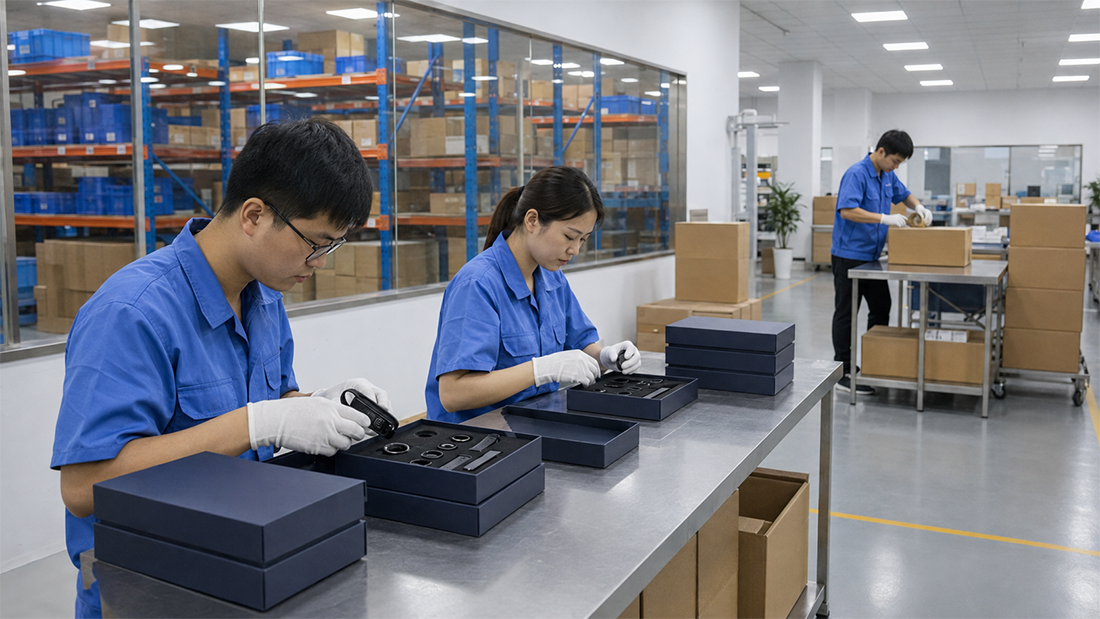
Ask for a pre-shipment inspection before balance payment. This is standard practice and protects both sides. Your inspection should cover function testing, aging testing, waterproof testing if rated, and packaging check. For sample development details, see our smart bands product page.

Step 5: Negotiate MOQ and Lead Times That Match Startup Cash Flow
MOQ is the single biggest constraint for EU startup brands. Most factories set 1,000 units as a standard minimum, but 500 units is negotiable for ODM models with standard colors and packaging. Below 500 units, expect higher unit prices or tooling surcharges.
Ask for a written lead time breakdown: component procurement, assembly, testing, and packaging. Production lead time of 25–40 days is typical, but Chinese New Year and summer holidays can add 2–4 weeks. Plan your cash flow around a 30% deposit and 70% balance against inspection. For more on sourcing strategy, explore our health and fitness wearable solutions.
Step 6: Customize the App, Firmware, and Packaging
Your app is part of the product. Ask whether the supplier provides a white-label app or an SDK for custom development. White-label apps are faster and cheaper but limit differentiation. SDK-based apps give you control over onboarding, data dashboards, and brand experience, but require your own developer or a contracted team.
Packaging customization matters in the EU because retail chains and e-commerce platforms expect retail-ready boxes with CE marking, importer details, and local language instructions. Confirm whether the supplier can print multilingual manuals and apply the CE mark and WEEE symbol correctly.
Step 7: Plan Lithium Battery Shipping and Customs
Smart bands contain lithium-polymer batteries, which are classified as dangerous goods for transport. Air shipments require UN38.3 test reports and often a lithium battery handling label. Sea freight is slower but easier for larger volumes. Your supplier should provide the MSDS and UN38.3 summary, and your freight forwarder should confirm carrier acceptance before booking.
For EU import, you need an EORI number and a customs broker familiar with electronics. Duties and VAT depend on your HS code and country of import. Verify current rates with your broker, because tariff treatment can change.

OEM vs ODM vs Private Label: Comparison Table
| Model | Who Designs | Typical MOQ | Time to Sample | Best For |
|---|---|---|---|---|
| ODM | Factory | 500–1,000 | 7–15 days | Startups testing the market |
| Private Label | Factory design, your brand | 500–1,000 | 7–15 days | Brands focused on marketing |
| Full OEM | You, with factory support | 2,000–5,000 | 30–60 days | Brands with proven demand |
Common Mistakes and Buyer Red Flags
Common Mistakes
- Approving a sample without testing battery life under real conditions.
- Accepting a CE certificate without a matching test report.
- Ignoring UN38.3 until freight booking, causing shipment delays.
- Choosing the lowest quote without verifying the factory’s quality control process.
- Assuming all suppliers can customize firmware; many only rebrand the app icon.
Buyer Red Flags
- Supplier refuses a pre-shipment inspection.
- No physical address or verifiable business license.
- Prices far below market without explanation.
- Pressure to pay full amount upfront.
- Vague answers about battery safety documentation.
Practical Buyer Checklist
- Written specification with sensors, battery target, and app requirements.
- Supplier verification: business license, factory audit, references.
- CE, RoHS, UN38.3, and MSDS documents requested.
- Sample approved with logo and app branding.
- MOQ, unit price, deposit, and balance terms confirmed in writing.
- Lead time breakdown and shipping method agreed.
- Pre-shipment inspection booked.
- Warranty and spare parts policy defined.
FAQ
What is the typical MOQ for smart bands OEM?
Most factories set MOQ at 500–1,000 units for ODM models. Full OEM with custom tooling usually starts at 2,000–5,000 units. MOQ can sometimes be negotiated if you accept standard colors and packaging.
Do I need CE certification to sell smart bands in the EU?
Yes, smart bands sold in the EU generally require CE marking under the Radio Equipment Directive and related directives. You also need RoHS compliance and UN38.3 for the battery. Requirements may vary by product configuration, so verify with a compliance lab.
How long does smart bands OEM production take?
Sample lead time is typically 7–15 days. Mass production usually takes 25–40 days after sample approval and deposit. Add time for certification, Chinese New Year, and shipping.
Can I customize the app for my smart band?
Many suppliers offer white-label apps with your logo and colors. SDK-based customization gives more control but requires development resources. Confirm whether firmware changes are included or charged separately.
What documents do I need for lithium battery shipping?
You typically need a UN38.3 test summary and an MSDS. Your freight forwarder will advise on labeling and carrier acceptance. Air shipments have stricter rules than sea freight.
How do I verify a smart band manufacturer?
Request the business license, factory audit report, and references. Ask for test reports, not just certificates. A video factory tour and a paid sample order are practical verification steps.
Conclusion
Smart bands OEM gives EU startup brands a realistic path to market without owning a factory. The work is in the details: a clear specification, verified compliance, a tested sample, and a supplier who communicates openly about MOQ and lead times. Start with ODM if you are testing demand, and move to full OEM when volumes justify it. The startups that scale are the ones that treat compliance and sample validation as non-negotiable steps, not afterthoughts.
Ready to Start Your Smart Band Project?
STAR KING supports EU startup brands with smart bands OEM, private label, and ODM services. Request samples to evaluate build quality, app performance, and packaging options before you commit to mass production.
Request smart band samples and discuss your OEM project →
Discuss Your Smart Wearable OEM/ODM Project
Planning a smart ring, smart watch, smart band, AI glasses, AI translator, or AI voice mouse project? Contact STAR KING to discuss product positioning, sample testing, customization scope, certification requirements, lead time, and quotation details.

Team Star King
Scan WhatsApp QR code