AI smart glasses suppliers: 7 Steps to Source AI Smart Glasses for UK Healthcare: A Buyer’s Guide
AI smart glasses suppliers buyers need a supplier evaluation process that checks product fit, OEM/ODM capability, compliance documents, quality control, pricing, lead time, and after-sales support before placing a bulk order.
Table of Contents
Table of Contents
7 Steps to Source AI Smart Glasses for UK Healthcare: A Buyer’s Guide
AI smart glasses for UK healthcare are transforming clinical workflows and patient monitoring, but sourcing them for procurement requires a structured approach. This guide outlines seven essential steps for healthcare solution providers to evaluate, select, and purchase AI smart glasses from a reliable manufacturer like STAR KING, ensuring compliance, quality, and scalability.
AI smart glasses suppliers: Table of Contents
- Short Answer: What is the Sourcing Process?
- Key Takeaways
- Step 1: Define Clinical Requirements
- Step 2: Select the Right Manufacturing Model
- Step 3: Evaluate Technical Specifications
- Step 4: Verify Compliance and Certifications
- Step 5: Assess Quality Control and Testing
- Step 6: Plan Logistics and Lead Times
- Step 7: Review Total Cost and Contract Terms
- Common Mistakes to Avoid
- Buyer Checklist
- Frequently Asked Questions
- Conclusion

Short Answer: What is the Sourcing Process?
To source AI smart glasses for UK healthcare, buyers should define their clinical needs, choose an OEM/ODM partner, evaluate specs and compliance, conduct quality checks, and negotiate terms. A structured process ensures the device meets medical standards and is viable for long-term deployment.

Key Takeaways
- AI smart glasses can enhance telemedicine, diagnostics, and hands-free workflows in UK healthcare.
- Define your specific use case (e.g., remote assistance, patient monitoring) to select the right hardware.
- OEM/ODM models offer customization for branding and functionality, but require clear requirements.
- Compliance with UK MDR 2002, CE marking, and other regulations is critical for medical use.
- Quality control and testing are non-negotiable to ensure reliability in clinical environments.
- Plan for logistics, battery safety, and lead times to avoid supply chain disruptions.
- Total cost analysis should include unit price, certifications, customization, and ongoing support.
Key Facts for Buyers
| Fact | Details |
|---|---|
| Product Type | AI smart glasses with camera, microphone, display (optional), and connectivity. |
| Primary Use Cases | Telemedicine, remote patient monitoring, clinical documentation, hands-free data access. |
| Manufacturing Models | OEM (standard with branding), ODM (custom design), Private Label (branding only). |
| Key Certifications | CE (Europe), UKCA (UK), RoHS, FCC (if importing to certain markets), UN38.3 for batteries. |
| Typical MOQ | Often 500-1000 units for OEM/ODM, but can vary by supplier. |
| Lead Time | 4-8 weeks after sample approval, depending on order size. |
AI smart glasses are not medical devices per se, but they can be used in healthcare settings for administrative and clinical support. For regulated medical use, the software may need to be classified as a medical device under UK MDR 2002. Buyers should consult with the MHRA and their legal team to determine necessary approvals.
The UK healthcare market is growing for wearable technology, with increasing adoption of telemedicine and remote monitoring. For healthcare solution providers, sourcing AI smart glasses involves navigating technical, regulatory, and procurement challenges.
This guide is designed to help you make an informed purchase decision, whether you are a private label brand, distributor, or healthcare technology integrator.

Step 1: Define Clinical Requirements
Start by identifying the specific clinical workflows the glasses will support. Questions to ask:
- What tasks will the glasses assist with? (e.g., remote consultations, hands-free documentation, patient education)
- What environment will they be used in? (e.g., hospital, clinic, home care)
- Who are the end-users? (e.g., physicians, nurses, patients)
- Are there data privacy requirements (e.g., GDPR for patient data)?
This definition will guide hardware selection, such as camera resolution, battery life, and connectivity (Wi-Fi, Bluetooth, cellular). It also influences the need for additional sensors like heart rate monitoring if the glasses include health tracking features.
Step 2: Select the Right Manufacturing Model
When sourcing AI smart glasses, you can choose between OEM, ODM, and private label models. Each has different implications for customization, cost, and time.
- OEM (Original Equipment Manufacturer): You use a standard product and add your branding. Best for quick entry with minimal upfront investment.
- ODM (Original Design Manufacturer): The manufacturer modifies existing designs to your specifications, including hardware and software changes. Ideal for differentiating your product.
- Private Label: Similar to OEM but focuses purely on branding and packaging. Good for distributors that want to sell under their brand without product changes.
For healthcare solutions, you may need ODM to integrate specific sensors or software. Ensure the manufacturer can support firmware customization and app development. This flexibility can be critical for telemedicine platforms, electronic health records (EHR) integration, and remote monitoring.
Step 3: Evaluate Technical Specifications
AI smart glasses come with a range of specs. Key ones to evaluate:
- Camera: Resolution (e.g., 1080p or higher), field of view, and low-light performance.
- Display: If the glasses have an on-screen display, check its resolution, brightness, and whether it’s a monocle or binocular.
- Audio: Noise-canceling microphones for clear patient interactions.
- Battery Life: Continuous use time, typically 4-8 hours, and whether batteries are swappable.
- Connectivity: Wi-Fi 5/6, Bluetooth 5.0, and possibly 4G/5G options for remote areas.
- Sensors: Accelerometer, gyroscope, optical heart rate, and other health sensors if needed.
- Operating System: Often Android or Linux; check if it supports your telehealth apps.
- Storage: Internal storage and cloud syncing capabilities.
Consider the software integration: can the glasses stream video to a telehealth platform? Is there an SDK or API for custom app development? These are vital for seamless integration into existing healthcare IT systems.
Step 4: Verify Compliance and Certifications
For UK market, ensure the product complies with relevant regulations:
- CE Marking: Required for electronic devices sold in the EU, but the UK now uses UKCA for Great Britain. Some products may still be accepted with CE until 2027 if they meet pre-Brexit standards. Buyers should verify.
- UKCA (UK Conformity Assessed): For products placed on the UK market, especially Great Britain. Northern Ireland has different rules (EU CE marking).
- RoHS: Restriction of Hazardous Substances conformity for electronics.
- Battery Safety: If glasses have a lithium-ion battery, UN38.3 certification is typically required for transport.
- Medical Device Classification: If the glasses are used to monitor vital signs or diagnose, the software may need to be certified as a medical device under UK MDR 2002. This is complex; consult with the MHRA.
Ask the manufacturer for certificates for the specific model you are importing. Certifications can be configuration-specific, so verify that the model and all components (including battery) are covered.
Step 5: Assess Quality Control and Testing
Quality control is crucial to avoid device failures in clinical settings. Inquire about:
- Testing requirements: Drop testing, waterproofing (if intended for washable environments), and aging tests.
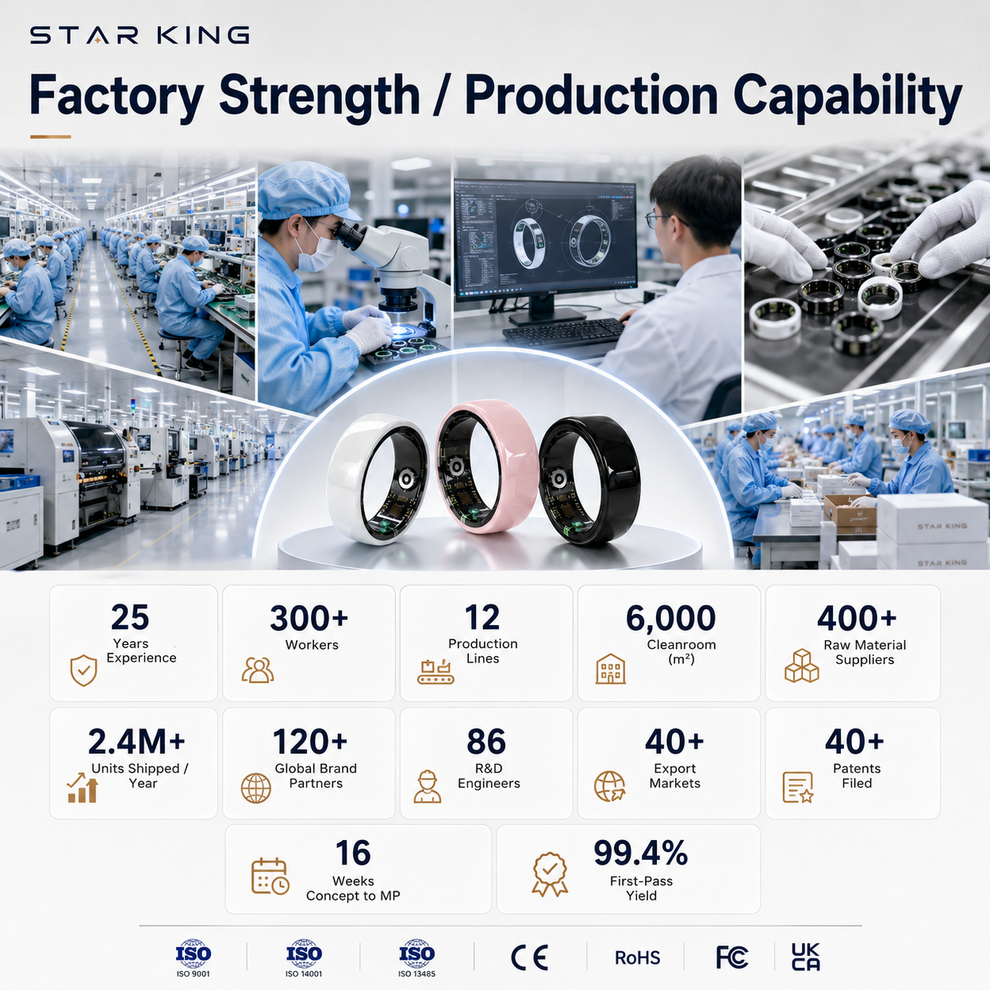
- Quality management: Does the factory have ISO 9001 certification? This shows a commitment to quality processes.
- Pre-shipment inspection: Request an inspection of your batch before shipment to catch defects.
- Warranty: What is the warranty period? Typically 12 months, but can be longer. Clarify the RMA process for returned units.
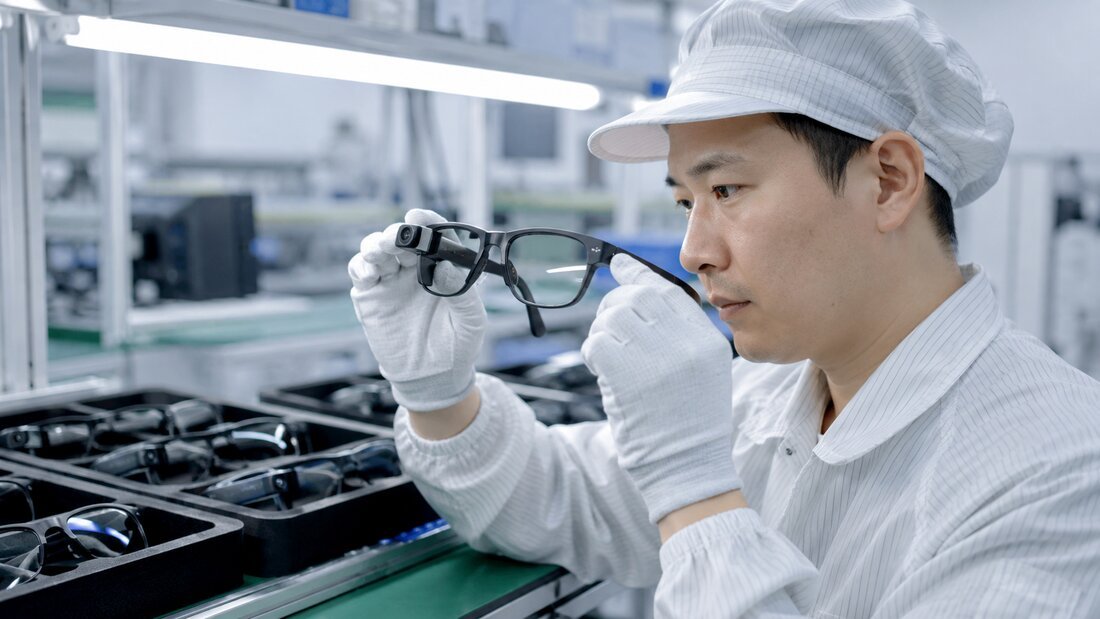
For healthcare, reliability is non-negotiable. You may also want to test a few samples in your environment before mass production. STAR KING offers sample testing and can adapt production based on feedback.
Step 6: Plan Logistics and Lead Times
Shipping to the UK involves considerations: customs, payment of import VAT (5% for technology items, but confirm), and ensuring the shipment complies with UKCA/CE marking. Lithium batteries are classified as dangerous goods, so prepare proper documentation.
Lead times typically include:
- Sample development and approval: 2-4 weeks
- Tooling (if new molds are needed): 30-45 days
- Mass production: 4-8 weeks depending on order size
- Shipping: 5-15 days via air, or 30-40 via sea
Plan your inventory needs to avoid stockouts. If you are a distributor, consider forecasting demand based on healthcare contracts or seasonal trends.
Step 7: Review Total Cost and Contract Terms
The unit price is only one component. Calculate the total landed cost:
- Unit cost: Varies with quantity and customization. MOQ typically 500-1000 pieces.
- Tooling costs: If doing ODM.
- Certification costs: You may need to pay for testing and certification if not already covered.
- Customization costs: Logo printing, packaging, app development.
- Shipping and duties: Add freight, insurance, and import duty (which for smart devices is typically 0% under WTO info tech agreement, but verify current rates).
- After-sales support: Include spare parts stock and warranty claim handling.
Negotiate contract terms including payment (usually 30% deposit, 70% before shipment), production schedule, and penalties for delays. Have a lawyer review the contract to protect your IP rights if you’re developing custom hardware/software.
Common Mistakes to Avoid
- Overlooking compliance: Assuming CE is enough for the UK. Verify UKCA or mutual recognition.
- Ignoring data privacy: Not ensuring the device complies with GDPR when handling patient data.
- Skipping samples: Buying in bulk without testing the product in your environment.
- Not verifying the manufacturer: Failing to audit the factory or check certifications can lead to low quality.
- Underestimating total cost: Focusing only on unit price and forgetting shipping, customs, and certifications.
Buyer Checklist
- Define clinical use cases and data security requirements.
- Choose an appropriate OEM/ODM model.
- Evaluate tech specs against your needs.
- Request and verify certificates (CE/UKCA, RoHS, battery).
- Check if the software qualifies as a medical device.
- Inspect quality control processes.
- Plan shipping and import logistics.
- Compute total landed cost.
- Negotiate warranty and support terms.
Frequently Asked Questions
- Q: Can AI smart glasses be used for medical diagnosis?
A: They are not intended for diagnosis unless specifically certified as a medical device. They can assist healthcare professionals by providing hands-free data access or remote communication. - Q: What is the typical MOQ for AI smart glasses from STAR KING?
A: MOQ varies by model, typically around 500 units for standard OEM. For ODM with new tooling, MOQ can be higher. Contact STAR KING for exact MOQs. - Q: How long does it take to deliver an order?
A: After sample approval, production typically takes 30-45 days, plus shipping time. For 1000 units, expect 45-60 days. - Q: What UK regulations apply to AI smart glasses?
A: They must meet UKCA/CE requirements for electronics, RoHS, and battery safety. If used for medical purposes, the software may require MHRA approval. - Q: Can we customize the glasses with our brand?
A: Yes, STAR KING offers branding on the device, packaging, and software splash screens. Additional costs may apply. - Q: Are the glasses compatible with existing telehealth platforms?
A: Most glasses run on Android and offer SDKs for integration. Verify specific compatibility with your platform. - Q: What data security features are available?
A: Some models support encryption and secure boot. For patient data, ensure your software complies with GDPR and NHS standards.
Conclusion
Sourcing AI smart glasses for UK healthcare is a multi-step process that requires careful planning. By following these seven steps, you can identify a reliable supplier, ensure compliance, and manage costs effectively. With the right partner, these devices can enhance clinical efficiency and patient outcomes.
At STAR KING, we offer AI smart glasses and OEM/ODM services tailored to healthcare needs. Request a quotation to discuss your project.
Buyers can also review STAR KING AI Smart Glasses OEM/ODM options to compare product positioning, customization scope, and sample planning.
Useful Official References for Buyers
- FCC equipment authorization guidance
- European Commission CE marking information
- Bluetooth SIG specifications
Discuss Your Smart Wearable OEM/ODM Project
Planning a smart ring, smart watch, smart band, AI glasses, AI translator, or AI voice mouse project? Contact STAR KING to discuss product positioning, sample testing, customization scope, certification requirements, lead time, and quotation details.

Team Star King

Scan WhatsApp QR code