AI smart glasses: 7 Proven Steps for UK System Integrators to Source AI Smart Glasses in 2026
7 Proven Steps for UK System Integrators to Source AI Smart Glasses in 2026
Direct answer: Sourcing AI smart glasses for UK system integration projects means matching an OEM or ODM platform to your end-client use case, then locking down UKCA and CE requirements, Bluetooth SIG and battery documentation, camera and audio specifications, and a realistic MOQ before you sign off tooling. Most integrator projects run 1,000 to 10,000 units across a 12 to 20 week production window, so the sourcing decision is a supply chain commitment, not a gadget purchase.
Table of Contents
Table of Contents
UK system integrators rarely buy AI smart glasses as a standalone retail product. They buy them as a component of a larger deployment: a warehouse picking workflow, a field-service heads-up display, a training and onboarding kit, or a corporate wellness or education pilot. That changes the sourcing brief entirely. You are not comparing features on a spec sheet. You are comparing whether a manufacturer can deliver consistent hardware, stable firmware, a documented SDK, and the compliance paperwork your client’s procurement team will demand.
This guide is written for buyers who are past the discovery stage and moving toward a purchase decision. It covers seven steps, from use-case definition to post-launch support, with the tables and checklists you need to brief a supplier, compare quotations, and avoid the integrator-specific failures that surface three months into a rollout.
Table of Contents
- Step 1: Define the Integration Use Case Before You Talk to Suppliers
- Step 2: Match the AI Smart Glasses Platform to Your Deployment
- Step 3: Choose OEM, ODM, or Private Label
- Step 4: Understand MOQ and What Drives Unit Price
- Step 5: Map UK and EU Compliance Requirements
- Step 6: Validate Samples, Firmware, and the SDK
- Step 7: Lock Quality Control, Battery Logistics, and After-Sales
- Key Facts for Buyers
- Common Mistakes and Buyer Red Flags
- Practical Buyer Checklist
- FAQ
Short Answer
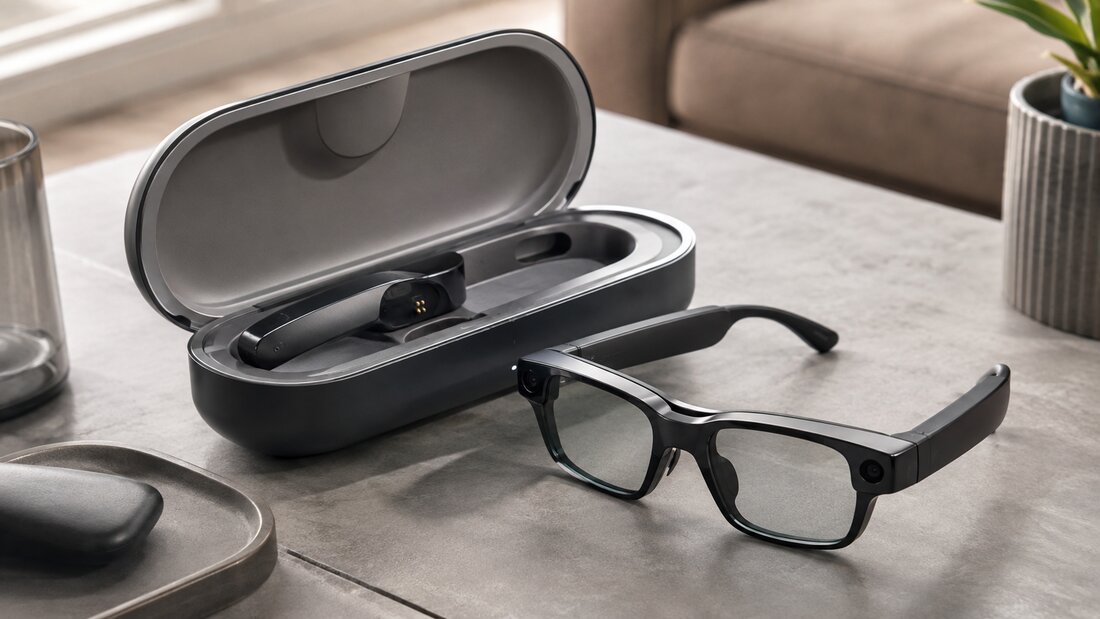
For UK system integration projects, AI smart glasses should be sourced from a manufacturer that can provide a stable hardware platform, documented firmware and SDK support, and the specific compliance and battery documentation your end client requires. The decision hinges on four variables: use-case fit, OEM versus ODM flexibility, MOQ versus unit economics, and verification of certifications for the exact configuration you order.

Key Takeaways
- Define the end-client workflow first; the use case determines camera, audio, display, and connectivity requirements more than any spec sheet.
- ODM platforms cut time to market but limit differentiation; OEM and private-label routes cost more in tooling and engineering time.
- MOQ is driven by tooling amortization, component packaging, and packaging runs, not by manufacturer preference alone.
- UK deployments typically require UKCA marking, and CE remains relevant for Northern Ireland and EU resale; requirements depend on the exact configuration.
- Lithium battery shipping requires UN 38.3 test summaries and often MSDS documentation; buyers should verify per shipment.
- Sample validation should test firmware stability and SDK behavior, not just fit and finish.
- Pre-shipment inspection and agreed defect thresholds protect the integrator, not just the end client.
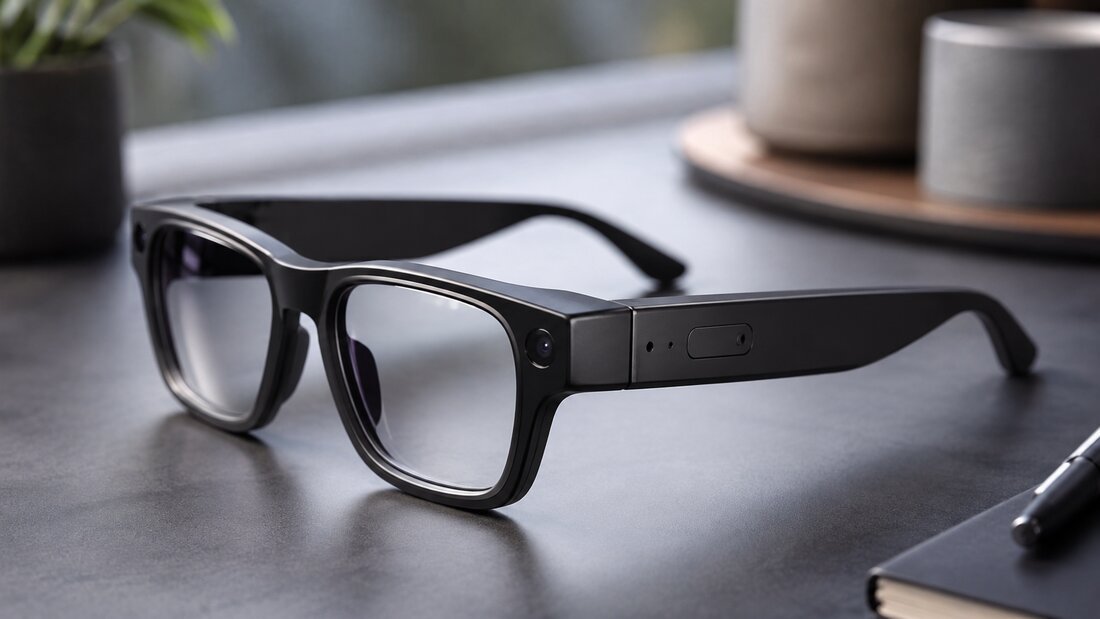
Step 1: Define the Integration Use Case Before You Talk to Suppliers
The most common sourcing error in system integration is opening a supplier conversation with “send me your AI smart glasses catalog.” That produces a generic quotation that tells you nothing about fit. Start from the deployment instead.
Write a one-page internal brief that answers:
- Who wears the device and for how long per shift or session.
- What the wearer needs to see or hear — hands-free audio only, a monocular heads-up display, or camera capture.
- What the device connects to — your own back-end, a client ERP, a video platform, or a translation service.
- Where it operates — indoor, outdoor, high-noise, or hygiene-controlled environments.
- What “success” is measured by — task time, error rate, training completion, or incident reduction.
This brief determines whether you need an AI smart glasses platform with open SDK access, whether voice control is essential, and whether real-time translation is a core function or a nice-to-have. It also tells you which of the AI smart glasses reference designs are even worth evaluating.
Translate the use case into hard requirements
Convert the brief into three lists: must-have, negotiable, and out-of-scope. A warehouse deployment might list ruggedness and battery life as must-have, display brightness as negotiable, and camera resolution as out-of-scope. A field-service deployment might invert that. Suppliers quote more accurately when you give them a requirements list instead of a wish list.
[Insert image 1 here]

Step 2: Match the AI Smart Glasses Platform to Your Deployment
AI smart glasses are not a single product category. They span audio-first frames, camera-equipped frames, and display frames with varying degrees of on-board AI processing. For integrators, the practical split is between devices that are mostly a connected peripheral and devices that run meaningful processing locally.
What matters technically
- Compute placement: local processing reduces latency and data transfer but increases power draw and heat. Cloud or paired-device processing keeps the glasses light but depends on connectivity.
- Connectivity: Bluetooth for control and audio, Wi-Fi for higher-bandwidth tasks, and the paired phone or a gateway device for heavy compute.
- SDK maturity: whether the manufacturer documents APIs, provides sample code, and supports firmware updates tied to your feature requests.
- Battery architecture: capacity, charging method, and whether the battery is user-replaceable — a genuine field-service advantage.
- Audio path: open-ear speakers versus bone conduction versus earbud pairing, which affects usability in noisy environments.
Typical configuration trade-offs
| Configuration | Best for | Trade-off to accept |
|---|---|---|
| Audio-first frames, no display | Voice-guided workflows, translation, training | No visual information delivery |
| Camera + audio frames | Remote assistance, documentation, audit capture | Higher power draw, privacy and data-handling obligations |
| Monocular display frames | Pick-and-place, inspection, guided assembly | Higher unit cost, longer user training curve |
| Translation-capable frames | Multilingual service and education settings | Accuracy depends on connectivity and language coverage |
If your deployment leans on spoken output rather than visual output, it is worth reviewing the AI translators range as a complementary or alternative form factor, particularly for education and public-facing environments. For desk-based productivity components of the same project, AI office productivity solutions may cover parts of the workflow that do not need a wearable at all.
Step 3: Choose OEM, ODM, or Private Label
Your sourcing model determines your cost structure, your time to market, and how much of the product you actually control.
ODM: fastest route
You select an existing platform, apply brand-level customization such as logo, packaging, and app skin, and go to market quickly. Engineering effort is low, but differentiation is limited and competing integrators may be able to source a near-identical device.
OEM: controlled but heavier
You define the specification, and the manufacturer builds to it. This is where firmware customization, app customization, and possibly industrial design changes come in. Expect higher tooling and engineering costs, longer development timelines, and a need for clearer documentation on mold ownership.
Private label: a defined middle ground
Private label typically means an existing hardware platform with deeper branding, packaging, and software-layer customization, without new tooling. Many UK integrators start here for a pilot and migrate to OEM for larger rollouts. The private label OEM/ODM route is worth reviewing in detail, because the boundary between private label and OEM is rarely as clean as the sales page suggests.
Decision guide
| Model | Time to market | Upfront cost | Differentiation | Typical fit |
|---|---|---|---|---|
| Private label | Short | Low | Brand and packaging only | Pilot deployments, single-client projects |
| ODM with light customization | Short to medium | Moderate | App and packaging layered on standard hardware | Multi-client rollouts on a shared platform |
| OEM | Long | High | Hardware, firmware and software control | Programs with a defined 3-year roadmap |
This is the stage where a technical conversation replaces a sales conversation. If the manufacturer’s team can discuss SDK documentation, firmware release cadence, and mold ownership without deflecting, that is a useful signal. If every question routes back to “we can customize everything,” treat the quotation with caution.
[Insert image 2 here]
Step 4: Understand MOQ and What Drives Unit Price
MOQ exists because manufacturing has fixed costs. Understanding which costs are fixed and which are variable makes you a more effective negotiator and a more accurate internal budgeter.
What actually drives MOQ
- Tooling: housing molds and fixtures carry a one-time cost that must be amortized across units.
- Component packaging: custom packaging runs have their own minimum print quantities.
- SMT and assembly line setup: line changeover time is a fixed cost regardless of run size.
- Battery supply: cell suppliers may impose their own minimum order quantities.
- Certification scope: testing a new configuration adds cost and usually a minimum quantity to justify it.
Unit price drivers to clarify in the RFQ
| Cost driver | What to ask |
|---|---|
| BOM content | Which components are specified, and are second sources qualified? |
| Memory and storage | Does added storage materially affect the unit cost or just the BOM line? |
| Display module | Is the display a standard part or custom, and how does that affect lead time? |
| Battery capacity | Is capacity fixed by the housing, or is there room to trade capacity for weight? |
| Packaging | What is the minimum print run for the packaging design you want? |
| Software scope | Is app or firmware customization charged as NRE, per unit, or both? |
Request the quotation broken down by these lines rather than a single unit price. A single number hides where your cost sits and makes it impossible to negotiate rationally or to model landed cost. For UK importers, add freight, duty, VAT treatment, and any testing or labeling costs to reach a true landed cost per unit before you commit to a client price.
MOQ and lead time planning deserve dedicated attention because they interact. A lower MOQ often means a higher unit price; a longer lead time often means a lower unit price. Neither is automatically better — it depends on how your client contract is structured.
Step 5: Map UK and EU Compliance Requirements
Compliance is where integrator projects most often slip. The critical point is that requirements depend on the exact product configuration and the markets you place it in. No manufacturer can promise blanket certification across all configurations, and any supplier who does should be questioned.
The UK position
For products placed on the Great Britain market, UKCA marking is the relevant framework for many categories of electrical and radio equipment. CE marking continues to be recognized in specific circumstances and remains the framework for Northern Ireland and for EU resale. Because the rules have been revised more than once, buyers should verify the current position with the UK government guidance rather than relying on a supplier’s summary.
- Check the official UK marking guidance: UKCA marking guidance.
- Confirm RED and EMC obligations for radio-equipped devices, and confirm which standards apply to your configuration.
- Confirm whether the device includes a camera and microphone, which brings data protection and privacy obligations into scope under UK GDPR.
Battery and transport documentation
Lithium batteries in wearables are subject to transport rules. UN 38.3 test summaries are typically required, and safety data sheet (MSDS) documentation is commonly requested by freight forwarders and carriers. The test summary format is defined by the UN Manual of Tests and Criteria, Part III, Sub-section 38.3 — a standard reference point your forwarder will recognize. Buyers should verify document version, cell supplier, and that the documents match the exact battery used in the shipped configuration.
- Confirm UN 38.3 test summaries for the specific cell and pack.
- Confirm MSDS availability and validity.
- Confirm the shipping mode (air, sea, or road) and the documentation each requires.
Wireless and interoperability
Devices using Bluetooth should be checked for the relevant qualification status. Bluetooth SIG maintains the qualification process and a public listing directory, which lets a buyer verify whether a module or end product has been declared. This is a useful independent check that does not rely on the manufacturer’s word.
- Verify Bluetooth declaration status via the Bluetooth SIG qualification listing.
- For products involving any health-related measurement, be careful to treat features as wellness indicators rather than diagnostic functions unless the regulatory pathway for a medical device has been followed.
Compliance documentation checklist
| Document | Applies when | Verification step |
|---|---|---|
| UKCA declaration of conformity | GB market placement of in-scope products | Check signatory, standards cited, and configuration covered |
| CE documentation | EU resale or Northern Ireland | Confirm technical file access, not just a certificate image |
| RoHS documentation | Electrical equipment placed on market | Confirm material declarations for the actual BOM |
| UN 38.3 test summary | Lithium battery transport | Match to cell and pack used in your order |
| MSDS | Battery shipment and carrier requests | Confirm issue date and supplier identity |
| Bluetooth declaration | Bluetooth-equipped devices | Verify in the public listing directory |
Certification scope matters more than certificate existence. A certificate for one configuration does not automatically cover a variant with a different radio module, battery, or camera. Ask the manufacturer to state, in writing, exactly which configurations each document covers.
Step 6: Validate Samples, Firmware, and the SDK
Samples are usually treated as a fit-and-finish check. For integrators they are a systems test. The device you receive must be evaluated against your own software stack, not just held in the hand.
A sample validation sequence
- Unboxing and documentation review: does the box contain the promised accessories, and is the documentation complete?
- Pairing and connectivity: pair with your target phone OS versions and your gateway if applicable. Log failure rates over repeated attempts.
- SDK and API behavior: run your own test scripts against the documented interfaces. Record undocumented behavior.
- Firmware update test: apply the manufacturer’s update and confirm the device recovers correctly, including from an interrupted update.
- Battery and thermal test: run a realistic session length and record battery drain and device temperature.
- Field test with real users: a small pilot with actual end users finds usability problems that bench testing misses.
Document every issue in a shared tracker with the manufacturer. A supplier’s response to a list of ten specific defects tells you more about the working relationship than any capability presentation.
If your deployment depends on multilingual voice interaction, test the language pairs and background-noise conditions that matter in your UK environment, not the manufacturer’s demo conditions.
[Insert image 3 here]
Step 7: Lock Quality Control, Battery Logistics, and After-Sales
The final step before purchase is the least glamorous and the most consequential. Quality control, shipping documentation, and after-sales commitments are what determine whether a rollout succeeds after the pilot.
Quality control terms to agree
- Acceptable quality level: agree a defect threshold and a sampling plan before production starts.
- Pre-shipment inspection: agree whether a third-party inspection is permitted and who pays for it.
- Firmware version freeze: confirm that the units shipped match the firmware version you validated.
- Packaging verification: confirm branding, labeling, and language requirements for the UK market.
- Retained samples: keep signed golden samples from both parties as a reference for disputes.
Battery logistics
Lithium battery shipments need correct documentation and, for air freight, compliance with carrier and regulatory restrictions. Confirm early whether the shipping mode you plan is actually available for your battery configuration and quantity. Budget for the possibility that sea freight, though slower, is materially simpler for large volumes.
After-sales, warranty, and spares
- Clarify the warranty period and what it covers — the device, the battery, or both.
- Confirm the spare parts policy, especially for hinges, nose pads, temples, and batteries.
- Establish the RMA process and expected turnaround time from the UK.
- Confirm ongoing firmware support and for how long.
For integrators, warranty is a contract issue, not a customer service issue. Your end client will hold you to a service level, so your supplier commitment needs to be at least as strong. A supplier that will not put warranty terms in writing is a supplier that has not thought about after-sales.
Key Facts for Buyers
| Item | Typical position for integrator projects |
|---|---|
| Common project volume | 1,000 – 10,000 units, often staged in phases |
| Sourcing models | Private label, light ODM customization, or full OEM |
| Time to first shipment | Typically 12 – 20 weeks depending on customization depth |
| Key UK marking framework | UKCA for GB; CE remains relevant for Northern Ireland and EU resale — verify current rules |
| Battery documentation | UN 38.3 test summary and MSDS commonly requested |
| Wireless verification | Bluetooth declaration status verifiable via the public listing directory |
| Main cost variables | BOM content, display and camera configuration, battery, packaging, software NRE |
| Protective measures | Agreed AQL, pre-shipment inspection, firmware freeze, retained golden samples |
Common Mistakes and Buyer Red Flags
Common mistakes
- Choosing hardware before defining the workflow. The hardware decision becomes arbitrary and expensive.
- Accepting a single unit price. Without a BOM breakdown you cannot negotiate or model landed cost.
- Treating a certificate as coverage. A certificate for one configuration does not cover variants.
- Testing samples only for fit and finish. Integrating hardware without testing the SDK guarantees surprises later.
- Leaving spares and warranty undefined. This is the most common source of post-rollout disputes.
- Assuming battery shipping is routine. Documentation and carrier rules change, and mismatches stop shipments.
Buyer red flags
- A supplier who guarantees certification for any configuration without asking about your target market.
- A quotation that cannot be broken down by cost driver.
- Unwillingness to allow third-party pre-shipment inspection.
- Vague answers about firmware update history and support duration.
- No documented position on mold ownership or tooling transfer.
- Pressure to commit to a large first order before sample validation.
Practical Buyer Checklist
Use this checklist when reviewing quotations from any AI smart glasses supplier, including STAR KING.
- Written use-case brief shared with the supplier
- Confirmed sourcing model: private label, ODM, or OEM
- BOM-level cost breakdown received
- MOQ stated per configuration, not per catalog page
- Lead time stated with assumptions about component availability
- Certification documents matched to the exact configuration
- UN 38.3 test summary and MSDS available for the ordered battery
- Bluetooth declaration status verified independently
- SDK documentation and sample code reviewed
- Firmware version freeze agreed in writing
- Acceptable quality level and inspection terms agreed
- Warranty, spares, and RMA turnaround documented
- Golden samples retained by both parties
- Landed cost model completed before quoting your end client
A quick note on the mid-project stage: if you are still comparing platforms rather than suppliers, the fastest path is usually a short technical call with the manufacturer’s engineering contact rather than another round of catalog review. That conversation is where configuration trade-offs become concrete.
FAQ
What MOQ should a UK system integrator expect for AI smart glasses?
MOQ depends on the sourcing model. Private-label orders on an existing platform usually carry the lowest minimum, while OEM projects with new tooling carry the highest. Ask for MOQ per configuration and per customization level, not a single catalog figure, because packaging and firmware scope change the minimum.
Do AI smart glasses need UKCA marking to be sold in the UK?
For many categories of radio and electrical equipment placed on the Great Britain market, UKCA marking is the relevant framework, but the exact requirements depend on the product configuration and current rules. Buyers should verify against current UK government guidance rather than relying on a supplier summary.
How long does production take after tooling approval?
Production timelines vary significantly with customization depth, component lead times, and battery supply. A light private-label order typically moves faster than an OEM program with new molds and custom firmware. Ask for a written timeline with the assumptions stated, and build contingency into your client contract.
Can the manufacturer provide an SDK for integration with our own platform?
Many manufacturers offer an SDK for app and service integration, but the depth of documentation, language support, and update cadence varies widely. Request the SDK documentation before ordering samples and test it against your own code, rather than relying on a feature list.
What battery documentation is required for shipping AI smart glasses to the UK?
Lithium batteries in wearables typically require a UN 38.3 test summary, and carriers commonly request an MSDS. The documents must match the exact cell and pack used in the shipped configuration, and requirements can vary by transport mode and carrier.
Can we customize firmware and branding for a single client deployment?
Firmware and branding customization are commonly available, but scope affects cost and timeline. Clarify whether customization is charged as a one-time engineering fee, a per-unit fee, or both, and confirm who owns the resulting software and design assets.
How should we handle warranty and spares for a multi-site rollout?
Agree warranty terms, spare parts availability, and RMA turnaround before the first bulk order. For multi-site rollouts, ensure the supplier can support staged deliveries and that spare parts — especially hinges, temples, nose pads, and batteries — remain available for the expected service life.
Conclusion
Sourcing AI smart glasses for UK system integration work is a supply chain decision dressed as a hardware purchase. The seven steps above — define the use case, match the platform, choose the sourcing model, understand MOQ and cost drivers, map compliance, validate samples and software, and lock quality and after-sales — turn an open-ended supplier search into a controlled procurement process.
The buyers who get this right tend to share three habits. They brief suppliers with precision rather than browsing catalogs. They verify compliance documentation against the exact configuration they are ordering. And they test firmware and SDK behavior before committing to volume. None of these steps is glamorous, but each one removes a category of risk from a rollout.
If you are working toward a purchase decision and need to compare configurations, clarify MOQ and lead time assumptions, or confirm which compliance documents apply to your UK deployment, the most useful next step is a direct technical conversation rather than another quotation request.
Request a Quotation or Discuss Your AI Smart Glasses Project
Share your use-case brief, target volumes, and compliance requirements, and request a configuration comparison plus a quotation that reflects your actual deployment. If your project involves OEM or private-label development, ask about app and firmware customization, packaging options, and sample availability so you can begin validation.
Request a quotation for your AI smart glasses project
Discuss Your Smart Wearable OEM/ODM Project
Planning a smart ring, smart watch, smart band, AI glasses, AI translator, or AI voice mouse project? Contact STAR KING to discuss product positioning, sample testing, customization scope, certification requirements, lead time, and quotation details.

Team Star King
Scan WhatsApp QR code