
Smart Rings for Retail Chains: 7 Proven Steps to a Profitable Private Label Program in 2026
November 3, 2026 · Team Star King
Smart Rings for Retail Chains: 7 Proven Steps to a Profitable Private Label Program in 2026
Smart rings for retail chains are best sourced by combining a shortlist of verified suppliers, a clearly scoped private label or OEM/ODM configuration, and a phased roll-out that matches MOQ and lead times to store-level sell-through. This 7-step guide shows retail buyers how to evaluate suppliers, lock specifications, budget landed cost, confirm certification and packaging, and plan a pilot launch before a full chain roll-out. It is written for category managers, private label teams and procurement leads who need repeatable sourcing decisions rather than consumer product descriptions.
Table of Contents
Table of Contents
Short Answer: What Do Retail Chains Need to Buy Smart Rings Successfully?
Retail chains need a supplier that can deliver a stable, certified, retail-ready smart ring program with defined MOQ tiers, realistic lead times, packaging that fits their brand standards, and available compliance files for each target market. The right approach is to run a small pilot order, verify quality and returns performance, then scale with a supplier whose firmware, app and packaging can be customized without changing product identity. Certification requirements typically depend on the ring configuration (for example Bluetooth, battery capacity, and charging method) and on the destination market, so buyers should verify documents rather than assume blanket coverage.
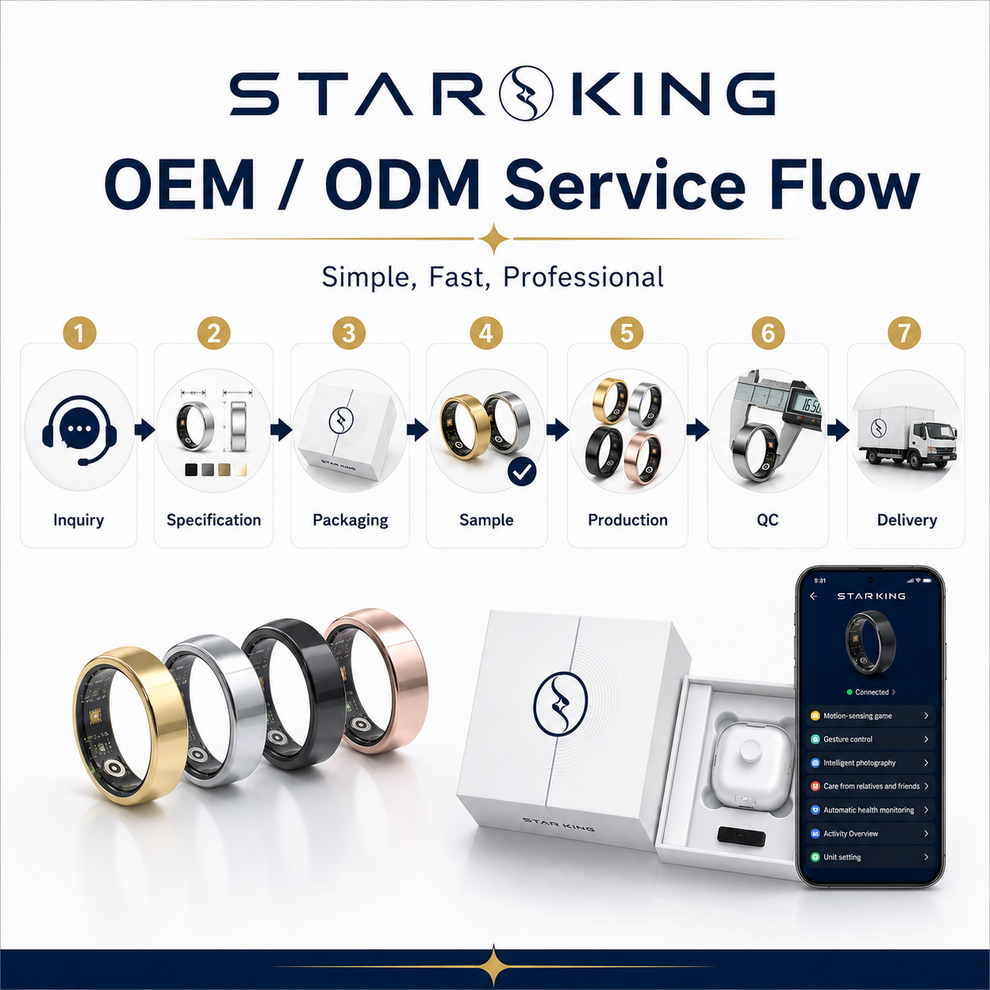
Table of Contents
- Key Takeaways
- Step 1 — Define Retail Use Cases and Price Points
- Step 2 — Shortlist Smart Ring Suppliers
- Step 3 — Choose Private Label, OEM or ODM
- Step 4 — Plan MOQ, Pricing and Landed Cost
- Step 5 — Validate Samples and Quality
- Step 6 — Confirm Certification and Compliance
- Step 7 — Design Packaging and In-Store Merchandising
- Lead Time and Launch Schedule
- Comparison Table: Sourcing Options
- Common Mistakes and Buyer Red Flags
- Practical Buyer Checklist
- FAQ
- Conclusion
Key Takeaways
- Retail chains should treat smart rings as a category program, not a one-off purchase: supplier capability, MOQ planning and sell-through matter more than headline unit price.
- A private label smart ring program usually involves logo, packaging and app-shell customization while keeping the underlying hardware platform stable; deeper ODM changes carry higher tooling and validation cost.
- Landed cost includes unit price, packaging, freight, duties, batteries-related shipping requirements and potential return reserves — buyers should model all of them before negotiation.
- Certification and compliance files should be verified per SKU and per market; documented status typically depends on the exact hardware configuration.
- A pilot order, store-level sell-through data and a clear reorder plan reduce the risk of overstocking or stock-outs across a chain.
Key Facts for Buyers
| Decision Factor | What Retail Buyers Typically Need | How to Verify |
|---|---|---|
| Product scope | Smart ring models with defined sizes, colors, battery life and companion app | Request spec sheets, size charts and sample units |
| Customization | Logo, packaging, app name and language support options | Request previous customization examples and a written scope |
| MOQ | Tiered minimums for pilot versus full roll-out | Ask for MOQ per SKU, per color and per packaging version |
| Lead time | Sampling, production and shipping timelines | Request a schedule with milestones in writing |
| Compliance | Documents relevant to target markets and battery shipping | Verify certificates by model and configuration; check official standards pages |
| Quality | Incoming inspection, functional testing and pre-shipment inspection | Review QC reports, request third-party inspection options |
| Landed cost | Unit price plus packaging, freight, duties and duties-related fees | Build a cost model with supplier and freight forwarder inputs |
Step 1 — Define Retail Use Cases and Price Points Before You Source
Retail chains rarely buy smart rings as a single item; they buy a category position. The first sourcing decision is not the supplier but the shelf strategy: will the ring be sold as a fitness accessory, a sleep-focused wearable, a gift item, or part of a broader health and wellness assortment? That choice determines the required sensor set, app features, packaging footprint and price band.
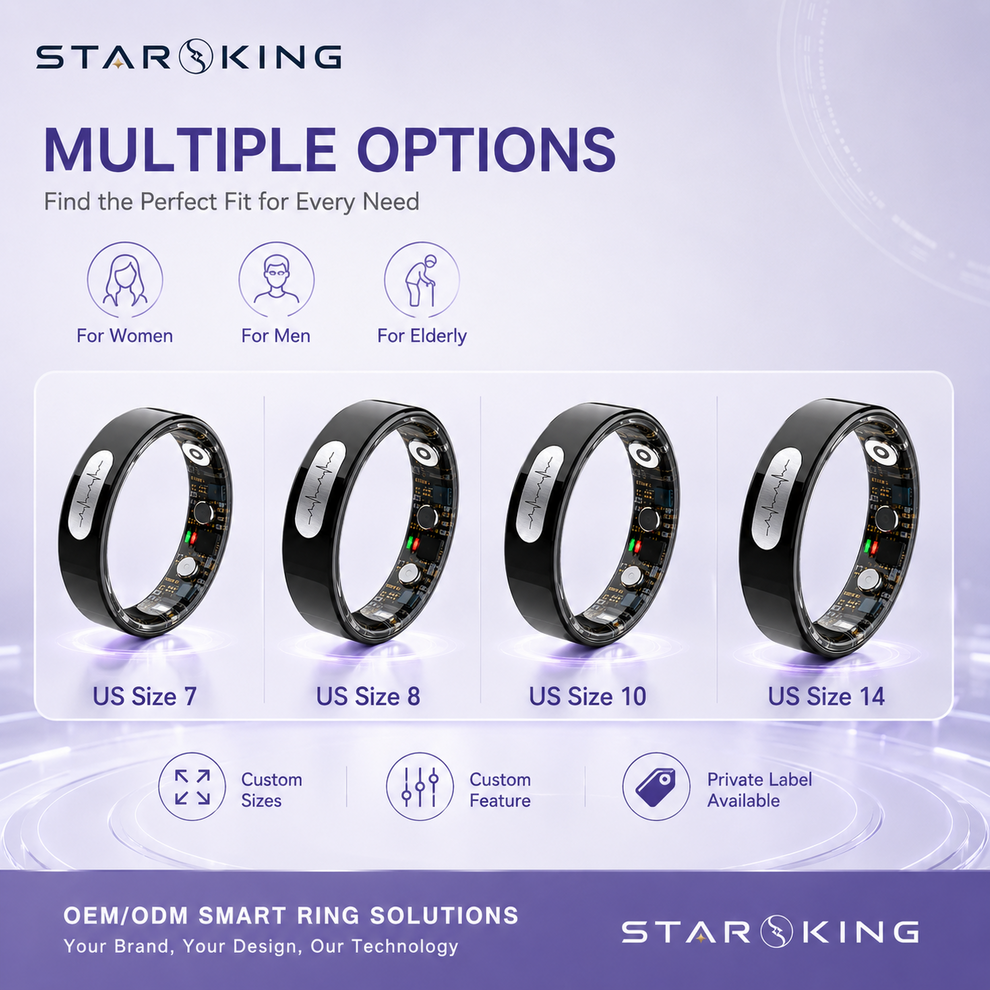
Define at least three retail scenarios: an entry price band for impulse or gift purchase, a mid band for fitness and daily-use buyers, and a premium band for customers comparing multi-feature wearables. For each band, agree on the minimum acceptable specification: ring sizes offered per pack, estimated battery life under defined use conditions, water-resistance level claimed by the supplier, and app compatibility (iOS and Android versions).
A useful internal check is to compare the target retail price with a realistic landed cost. If the ring is intended for a chain-wide planogram, packaging dimensions, display stability and barcode requirements also become part of the product definition. Buyers should document these requirements before requesting quotations so that supplier responses are comparable rather than informal.
Where the chain plans to merchandise rings next to smart watches or smart bands, the ring specification should complement rather than duplicate existing assortment. A common approach is to position the ring as a lighter, screenless option for sleep and recovery, with the app providing the data view.
Step 2 — Shortlist Smart Ring Suppliers With Retail-Ready Capabilities
Many suppliers can assemble a sample. Fewer can support a multi-store retail chain with consistent packaging, documented quality control and a repeatable reorder process. When sourcing smart rings for retail chains, evaluate suppliers against retail-specific criteria rather than generic factory claims.
Ask for evidence in four areas: product development capability, quality management, documentation readiness and communication discipline. Product development capability covers hardware and firmware engineering, app integration and packaging design support. Quality management covers incoming material checks, functional testing, aging or reliability routines and pre-shipment inspection. Documentation readiness covers the willingness to provide test reports and declarations relevant to the target market. Communication discipline covers how clearly the supplier answers technical questions and how it manages change requests.
Before shortlisting, buyers should verify the legal business identity of each supplier and treat certifications as claims to be confirmed. Official databases and standards bodies can help; for example, buyers can review the U.S. Federal Communications Commission equipment authorization processes via the FCC equipment authorization page and confirm Bluetooth-related requirements through the Bluetooth SIG. For products sold in the European Union, the European Commission’s CE marking guidance explains the manufacturer’s obligations. These references do not replace a supplier’s documents, but they help buyers ask better questions.
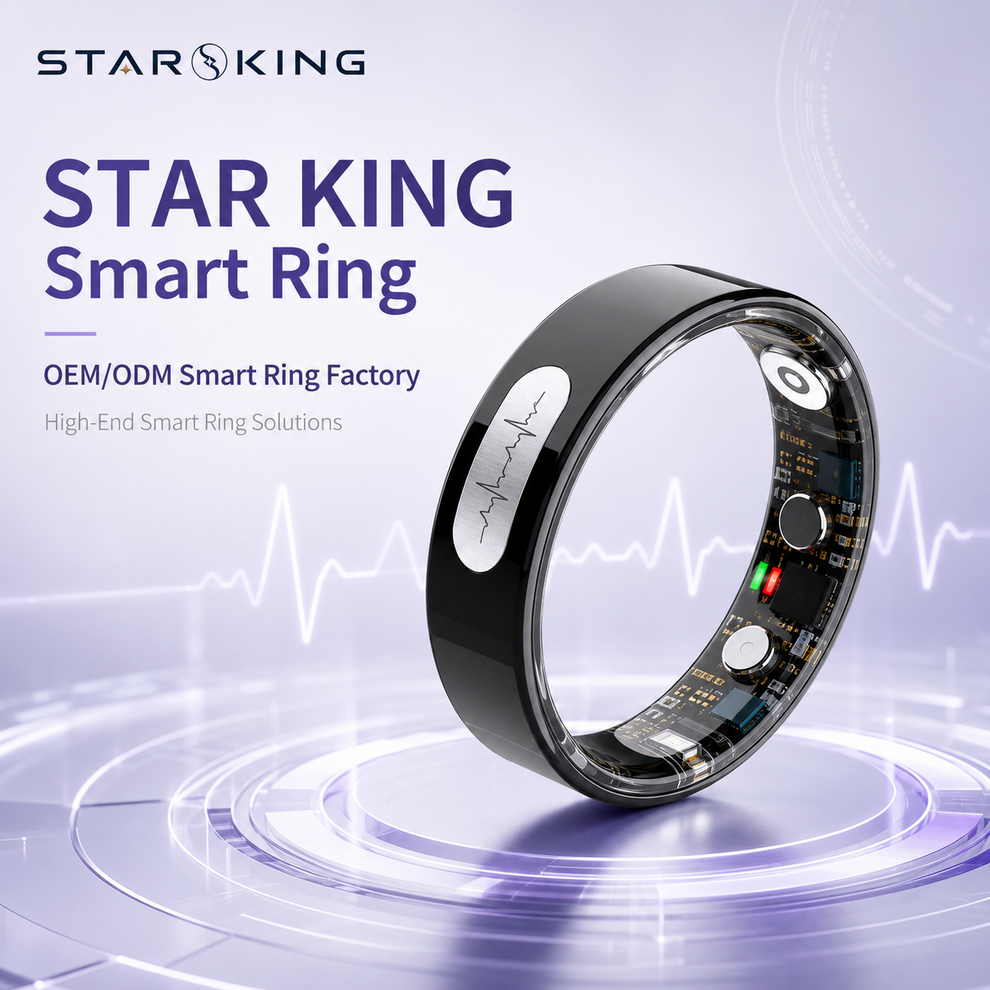
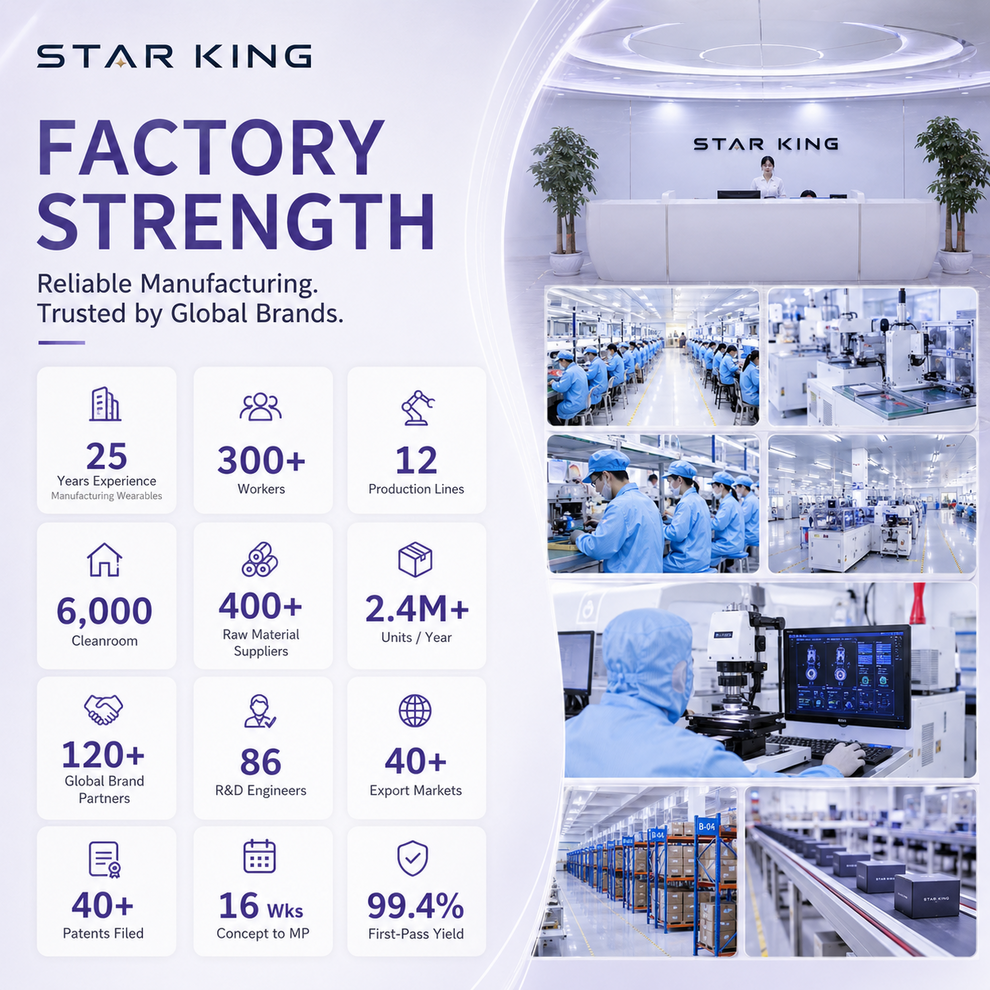
A shortlist of three to five suppliers is usually enough for a first round. Send the same requirement sheet to each and compare responses on specification, MOQ, lead time, packaging capability and documentation. STAR KING’s private label OEM/ODM solution is one option buyers can evaluate as part of that shortlist.
Step 3 — Choose Private Label, OEM or ODM for Your Retail Program
The sourcing model determines cost, risk and time to shelf. Retail chains typically begin with private label because it lets them build a house brand on an existing hardware platform, but the right model depends on how much differentiation the chain needs.
- Private label: Existing smart ring model with your logo, packaging and app branding. Lowest development effort and fastest path to a pilot order, but limited hardware differentiation.
- OEM: Greater customization of appearance, packaging or feature combinations within an established platform. Requires more specification work and validation.
- ODM: Supplier-led development for a new form factor or feature set. Highest investment in tooling, development time and testing, and usually appropriate only after the chain has validated category demand.
Retail buyers should also clarify software ownership and customization. If the chain needs its own app name, onboarding screens and language support, the supplier must confirm what can be customized and how updates are managed. Firmware and app change control should be written into the agreement, including how updates are tested before release to stores or end customers.
Another decision is whether the ring will use a shared app or a chain-branded app shell. Shared apps reduce development cost but weaken brand control; branded shells improve the retail experience but require app-store review and ongoing maintenance. The correct choice depends on the chain’s digital capability and the size of the expected program.
Step 4 — Plan MOQ, Pricing and Landed Cost
Retail chains often assume MOQ is a single number. In practice, MOQ varies by SKU, ring size, color, packaging version and customization level. A supplier may accept a pilot order for one configuration but require higher volumes for mixed-size displays or customized packaging.
Build the cost model before the first negotiation. The table below lists the main components retail buyers should request and validate.
| Cost Component | What to Ask the Supplier | Buyer Action |
|---|---|---|
| Unit price | Price tiers by quantity and configuration | Compare on identical specification |
| Packaging | Standard versus custom box, inserts and printing | Request packaging quotes at pilot and roll-out volumes |
| Tooling or setup | Setup fees for logo, packaging or app shell | Confirm whether fees are one-time or recurring |
| Freight | Shipping method and battery-related handling requirements | Quote with a freight forwarder familiar with lithium battery shipments |
| Duties and taxes | HS classification guidance | Verify classification with a customs broker |
| Returns reserve | Warranty and defect handling terms | Estimate return rate and spare-unit needs |
Battery-containing products may require specific shipping documentation such as UN38.3 test summaries or safety data sheets. Buyers should request the relevant documents for the exact cell and product configuration and confirm airline or carrier requirements with their forwarder. These requirements typically depend on battery capacity and shipping mode, so a document that covers one configuration may not cover another.
Landed cost planning should also include reorder lead time. If a chain sources rings from China for global distribution, production plus ocean or air freight can extend the cash-to-shelf cycle. A supplier that offers clear MOQ tiers and realistic lead times is usually more valuable than one that quotes a lower unit price but cannot confirm a production schedule. STAR KING’s smart ring program details, including MOQ and lead time, are [STAR KING TO CONFIRM] and should be requested in writing during the quotation stage.
For a structured comparison of ring specifications and retail positioning, buyers can review the smart rings product page and request a configuration matrix.
Step 5 — Validate Samples and Quality With Retail-Level Testing
Sample approval is not the same as retail readiness. A chain should test samples against the conditions that matter in stores and after purchase: pairing stability across common phones, battery performance under defined use, charging reliability, ring sizing comfort, app onboarding and packaging protection during transport.
Create a sample evaluation scorecard with weighted criteria. Include functional tests, durability checks and documentation. If the supplier offers test reports, confirm whether they apply to the sampled configuration. Where testing is not documented for the exact model, request clarification rather than assuming coverage.
Quality control expectations should be agreed before mass production. Ask how the supplier manages incoming components, in-process checks and final inspection, and whether third-party pre-shipment inspection is allowed. A written QC plan with acceptance criteria reduces disputes and protects the chain’s brand if defects reach stores.
For buyers building a health-oriented assortment, it is important to describe product claims accurately. Consumer smart rings may track metrics such as heart rate or sleep patterns, but they should not be presented as medical diagnostic devices unless the specific product has the required regulatory status for that market. Retail chains should review packaging and marketing claims with their legal and compliance teams before print approval.
Step 6 — Confirm Certification and Compliance for Each Target Market
Certification is one of the most common sources of delay in retail smart ring programs. The correct approach is to map each sales market to its required documents and then verify that the supplier can provide them for the exact product configuration being purchased.
Radio-emitting products are typically subject to equipment authorization or declaration requirements in the destination market. Battery-containing products may also require transport documentation. The European Union’s CE marking framework, the FCC equipment authorization process and carrier requirements for lithium batteries are starting points, but the buyer’s own regulatory or customs adviser should confirm the final documentation list.
Do not accept a generic certificate pack as proof for every SKU. Ask for documents that identify the model, the radio module or Bluetooth version, the battery specification and the manufacturer. Where a supplier states that a product is CE, FCC or RoHS compliant, request the supporting report and check whether the tested configuration matches the order. STAR KING product certification status may vary by product configuration and target market: [STAR KING TO CONFIRM].
Retail chains should also confirm labeling requirements, including importer information, language requirements and local responsible-person obligations where applicable. These details differ by market and should be verified before packaging artwork is finalized.
Step 7 — Design Packaging and In-Store Merchandising for Sell-Through
Smart rings are small, high-value items that depend on packaging and display to communicate value. Retail packaging should protect the ring, explain sizing and app setup, and meet the chain’s shelf and barcode standards. For private label programs, packaging customization is often the most visible form of differentiation and should be specified early because it affects MOQ and lead time.
Decide whether the ring will be sold in a single-size box, a multi-size kit or a try-on display format. Each format changes the packaging cost, the in-store experience and the returns process. A sizing kit or a clear size guide can reduce returns, but it adds cost and complexity. Chains should test the format in a pilot store before committing to chain-wide packaging tooling.
Packaging should also support after-sales service. Include QR codes or web links for app download, warranty registration and support contact. If the chain sells across multiple countries, language variants may be required, and these should be planned with the supplier’s packaging team.
For retail-specific merchandising and e-commerce integration considerations, STAR KING’s smart retail solution page provides context on how wearable products fit retail channels.
Lead Time and Launch Schedule: Planning the Roll-Out
A retail launch plan should work backwards from the shelf date. Typical phases include requirement definition, supplier shortlisting, sampling and evaluation, packaging artwork, pilot production, quality inspection, freight and store allocation. Each phase has dependencies; for example, packaging artwork cannot be finalized until compliance labeling requirements are confirmed.
| Phase | Key Output | Buyer Dependency |
|---|---|---|
| Requirement definition | Spec sheet and price bands | Internal category and legal review |
| Supplier shortlist | Three to five qualified quotes | Verification of business identity and references |
| Sampling | Approved sample and scorecard | Testing across target phones |
| Packaging and compliance | Final artwork and document list | Regulatory and customs confirmation |
| Pilot production | Inspection report and shipping documents | Freight booking and battery documentation |
| Store roll-out | Sell-through and returns data | Reorder decision and scale plan |
Actual durations depend on customization complexity, supplier capacity and shipping mode. Buyers should request a written schedule with milestones and ask the supplier to flag dependencies early. STAR KING lead times for specific smart ring configurations are [STAR KING TO CONFIRM].
Comparison Table: Which Sourcing Model Fits Your Retail Chain?
| Model | Best For | Customization Level | MOQ and Investment | Time to Shelf |
|---|---|---|---|---|
| Ready-to-sell with logo | Chains testing the category | Logo and basic packaging | Lowest; confirm per SKU | Fastest |
| Private label | Chains building a house brand | Logo, packaging, app shell | Moderate; packaging setup may apply | Moderate |
| OEM | Chains needing distinct features or appearance | Hardware and packaging changes | Higher; tooling may be required | Longer |
| ODM | Chains with validated demand and a new concept | Full development | Highest; development and testing | Longest |
Most retail chains should start with a ready-to-sell or private label pilot, measure sell-through and returns, and only then consider deeper customization. This staged approach keeps early risk low while preserving the option to invest in differentiation once demand is proven.
Common Mistakes and Buyer Red Flags in Smart Ring Sourcing
Common Mistakes
- Comparing quotes without a common specification sheet, which makes price differences meaningless.
- Assuming a single MOQ applies to all sizes, colors and packaging versions.
- Approving packaging artwork before compliance labeling requirements are confirmed.
- Ignoring battery shipping documentation until the freight booking stage.
- Treating a sample as proof of mass-production quality without a QC plan.
- Presenting consumer health tracking features as medical capabilities in retail marketing.
Buyer Red Flags
- A supplier that cannot identify the model, battery specification or tested configuration behind a certificate.
- Quotes that omit packaging, setup fees or shipping terms.
- Vague answers about app ownership, update responsibility or data handling.
- No documented process for change requests or pre-shipment inspection.
- Pressure to commit to large volumes before a pilot has been validated.
Practical Buyer Checklist for Retail Chains
- Written specification sheet covering sizes, colors, battery life, app compatibility and water-resistance claims.
- Supplier identity documents and references checked.
- Three to five comparable quotations on the same specification.
- MOQ confirmed by SKU, color and packaging version.
- Landed cost model including freight, duties, packaging and returns reserve.
- Sample evaluation scorecard completed across target phones and store conditions.
- QC plan and pre-shipment inspection terms agreed in writing.
- Certification and compliance documents verified per model and target market.
- Battery shipping documentation confirmed with the freight forwarder.
- Packaging artwork reviewed by legal and compliance before print approval.
- Pilot store plan, sell-through metrics and reorder triggers defined.
- Warranty, spare parts and after-sales responsibilities documented.
FAQ: Smart Rings for Retail Chains
1. What is a realistic MOQ for a smart ring pilot in a retail chain?
MOQ depends on the supplier, model, color and packaging. Pilots are often possible at lower volumes for standard configurations, while custom packaging or multiple sizes per store may raise the minimum. Ask for MOQ by SKU and packaging version, and confirm whether pilot pricing differs from roll-out pricing.
2. How long does a private label smart ring program take from sample to shelf?
Timelines depend on customization scope, compliance documentation, packaging approval and shipping mode. A standard private label program with logo and packaging changes is generally faster than an OEM change involving tooling or new features. Request a milestone schedule and confirm dependencies in writing.
3. Which certifications should a retail chain request for smart rings?
The required documents depend on the destination market and the exact product configuration. Buyers typically request radio equipment authorization where applicable, RoHS or equivalent material declarations, and battery transport documentation such as UN38.3 summaries. Verify that each document identifies the model being purchased, and confirm final requirements with a compliance adviser.
4. Can we customize the app and packaging under a private label agreement?
Many suppliers offer logo, packaging and app-shell customization within an existing platform. Scope, cost and ownership should be defined in writing, including who maintains the app and how updates are tested. Deeper software changes may require an ODM arrangement.
5. How should we compare landed cost between suppliers?
Compare on identical specifications and include unit price, packaging, setup fees, freight, duties, battery documentation costs and an estimated returns reserve. A lower unit price can be misleading if packaging or freight terms are excluded.
6. Are consumer smart rings medical devices?
Consumer smart rings are generally positioned as wellness and fitness wearables, not medical diagnostic devices. Retail chains should review claims and packaging with legal and compliance teams, and should not imply diagnosis or treatment unless the specific product has the required regulatory status in that market.
7. What is the biggest risk when scaling from pilot to chain-wide roll-out?
The most common risk is scaling before pilot data is analyzed. Sell-through, return reasons and defect rates should inform reorder quantities and any specification changes. Locking a production schedule and packaging version before those results are in can create overstock or repeat defects.
Conclusion
Smart rings for retail chains succeed when sourcing is treated as a staged program: define the shelf strategy, shortlist suppliers against retail criteria, choose the right private label or OEM/ODM model, model landed cost, validate samples, confirm compliance per market and design packaging for sell-through. A pilot order followed by data-driven scaling reduces risk and gives the chain a defensible category position. Because MOQ, lead time, certification files and pricing depend on the exact configuration, buyers should request written confirmation for each item before committing to a chain-wide launch.
Next Step: Review Your Smart Ring Program With STAR KING
If you are evaluating smart rings for a retail chain, the next practical step is to share your target markets, price bands, packaging requirements and expected pilot volume. STAR KING can review your specification, discuss private label and OEM/ODM options, and provide a quotation and sample plan for your program. Request a quotation and sample plan to move from shortlist to a documented pilot decision.
Discuss Your Smart Wearable OEM/ODM Project
Planning a smart ring, smart watch, smart band, AI glasses, AI translator, or AI voice mouse project? Contact STAR KING to discuss product positioning, sample testing, customization scope, certification requirements, lead time, and quotation details.

Team Star King

Scan WhatsApp QR code
Leave a Reply