
Smart Rings for Education Technology: The 2026 Buyer’s Guide to OEM/ODM Wearables
November 22, 2026 · Team Star King
Smart Rings for Education Technology: The 2026 Buyer’s Guide to OEM/ODM Wearables
Smart rings for education technology are wearable devices that track health and productivity metrics, used by schools, universities, and edtech companies to support student wellness, staff well-being, and campus safety. This guide explains how education technology companies can source smart rings via OEM/ODM, covering product specifications, MOQ, compliance, sampling, and supplier selection—so you can make informed procurement decisions in 2026.
Table of Contents
Table of Contents
Table of Contents
- Short Answer
- Key Takeaways
- Key Facts for Buyers
- Why Smart Rings for Education Technology?
- OEM vs. ODM vs. Private Label: Which Model Fits EdTech?
- Key Specifications and Feature Trade-offs
- MOQ and Pricing Factors
- Sampling and Validation Process
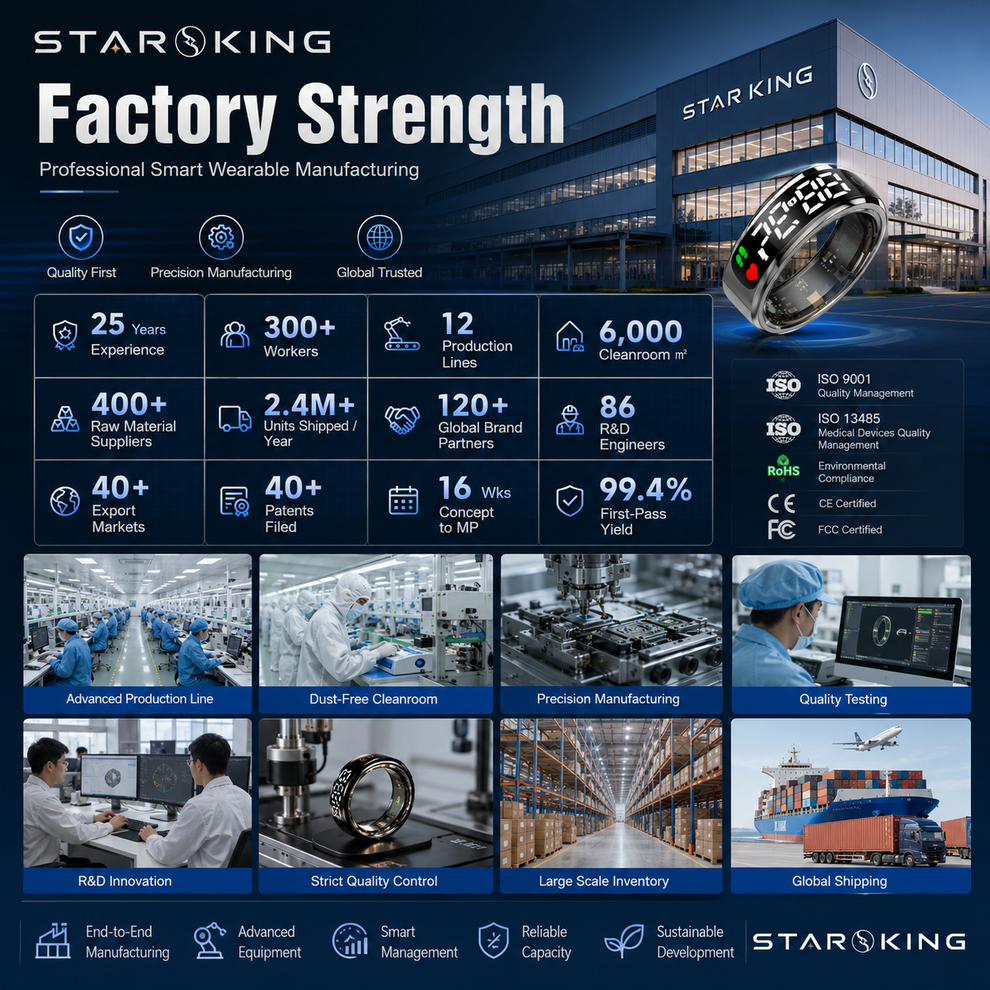
- Certifications and Global Compliance
- Supplier Evaluation Checklist
- Common Mistakes and Buyer Red Flags
- Practical Buyer Checklist
- FAQ
- Conclusion
- Request Samples
Short Answer
Smart rings for education technology are typically sourced through OEM/ODM manufacturers in China, with MOQs ranging from 500 to 1,000 units for private label and higher for full customization. Buyers should prioritize suppliers with proven wearable manufacturing experience, clear certification support (CE, FCC, RoHS, UN38.3), and transparent sampling processes. Compliance with local regulations, data privacy laws (e.g., GDPR, FERPA), and battery safety standards is essential for market entry.
Key Takeaways
- Smart rings offer discreet health tracking suitable for students and staff, with growing demand in edtech for wellness and productivity programs.
- Choose between OEM (full customization), ODM (ready design with branding), or private label (rebranding) based on your resources and timeline.
- MOQ for smart rings typically starts at 500–1,000 units; costs are influenced by materials, sensors, and packaging.
- Always request samples, verify certifications (CE, FCC, RoHS, UN38.3), and confirm data security measures.
- Evaluate suppliers on manufacturing experience, quality control, and communication responsiveness.
- Plan for 30–60 day lead times and consider logistics for lithium-ion batteries.
Key Facts for Buyers
| Factor | Typical Range | Notes |
|---|---|---|
| MOQ (private label) | 500–1,000 units | Lower for stock models, higher for custom designs |
| MOQ (full OEM) | 1,000–3,000 units | Depends on tooling and customization |
| Sampling time | 7–15 days | After design freeze |
| Production lead time | 30–60 days | After sample approval |
| Certifications | CE, FCC, RoHS, UN38.3 | Verify per SKU and target market |
| Battery life | 3–7 days | Dependent on usage and sensor configuration |
| Data privacy | GDPR, FERPA, COPPA | Ensure app and cloud compliance |
Why Smart Rings for Education Technology?
Education technology companies are increasingly exploring smart rings as part of student wellness and staff productivity programs. Unlike smartwatches, smart rings are unobtrusive, comfortable for 24/7 wear, and can track sleep, heart rate, and activity—key metrics for stress management and well-being. Schools and universities can use aggregated data to inform wellness initiatives, while edtech platforms can integrate ring data into learning or health apps.
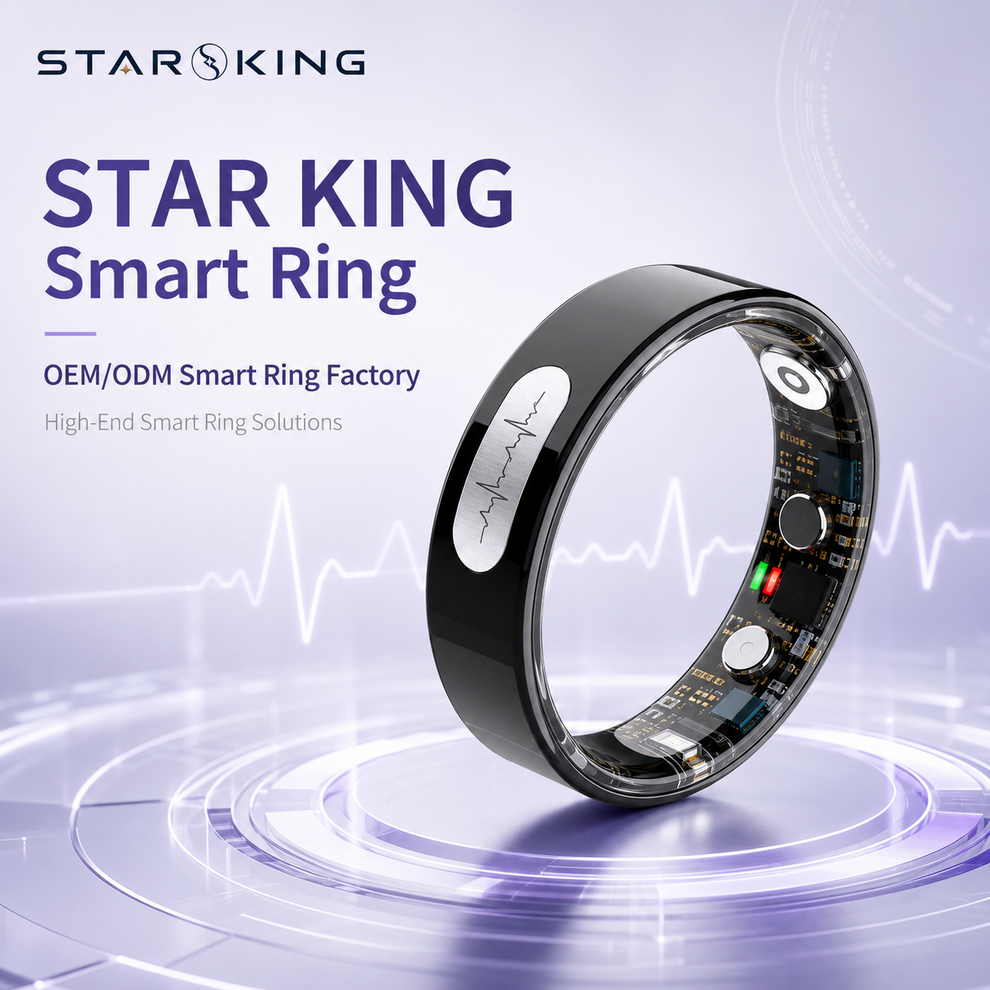
For B2B buyers, smart rings present an opportunity to offer differentiated products to educational institutions. Whether you are developing a campus wellness program, a student safety solution, or a research tool, sourcing the right smart ring is critical. STAR KING’s smart rings are designed for OEM/ODM flexibility, allowing edtech companies to customize features, branding, and packaging.
OEM vs. ODM vs. Private Label: Which Model Fits EdTech?
Understanding the differences between OEM, ODM, and private label is essential for procurement. OEM (Original Equipment Manufacturer) means you provide the design and specifications, and the manufacturer builds to your requirements. ODM (Original Design Manufacturer) means the manufacturer offers a ready design that you can rebrand or slightly modify. Private label is a form of ODM where you apply your brand to an existing product.
For education technology companies, the choice depends on your resources and timeline:
- OEM: Best if you have a unique design or specific technical requirements, but requires higher investment and longer development time.
- ODM: Suitable for faster market entry with some customization (logo, packaging, app).
- Private label: Fastest and most cost-effective, ideal for pilot programs or limited budgets.
STAR KING offers all three models. Their private label OEM/ODM solutions allow edtech companies to customize smart rings with their branding, packaging, and app integration.
Key Specifications and Feature Trade-offs
When selecting smart rings for education technology, consider these specifications:
- Sensors: Heart rate, SpO2, accelerometer, and temperature sensors are common. More sensors increase cost and battery drain.
- Battery life: 3–7 days is typical; longer battery life may require a larger ring or lower power sensors.
- Connectivity: Bluetooth Low Energy (BLE) is standard. Ensure compatibility with your app platform.
- Water resistance: IP68 is common; essential for daily wear.
- Materials: Titanium or stainless steel for durability; sizing options are critical for comfort.
- App integration: Custom app or SDK availability for data export and integration with edtech platforms.
Each feature involves trade-offs. For example, adding SpO2 monitoring may reduce battery life, and titanium construction increases cost. Define your must-have features early to avoid scope creep.
MOQ and Pricing Factors
MOQ for smart rings varies by supplier and customization level. For private label, MOQs typically start at 500–1,000 units. Full OEM projects may require 1,000–3,000 units due to tooling and setup costs. Pricing is influenced by:
- Materials: Titanium rings cost more than stainless steel.
- Sensors: Advanced sensors (e.g., SpO2, ECG) add cost.
- Packaging: Custom packaging increases per-unit cost.
- Order volume: Higher volumes reduce per-unit price.
- Certification: Some certifications may require additional testing fees.
Always request a detailed quotation that breaks down these factors. Be wary of quotes that seem too low—they may hide costs or compromise quality.
Sampling and Validation Process
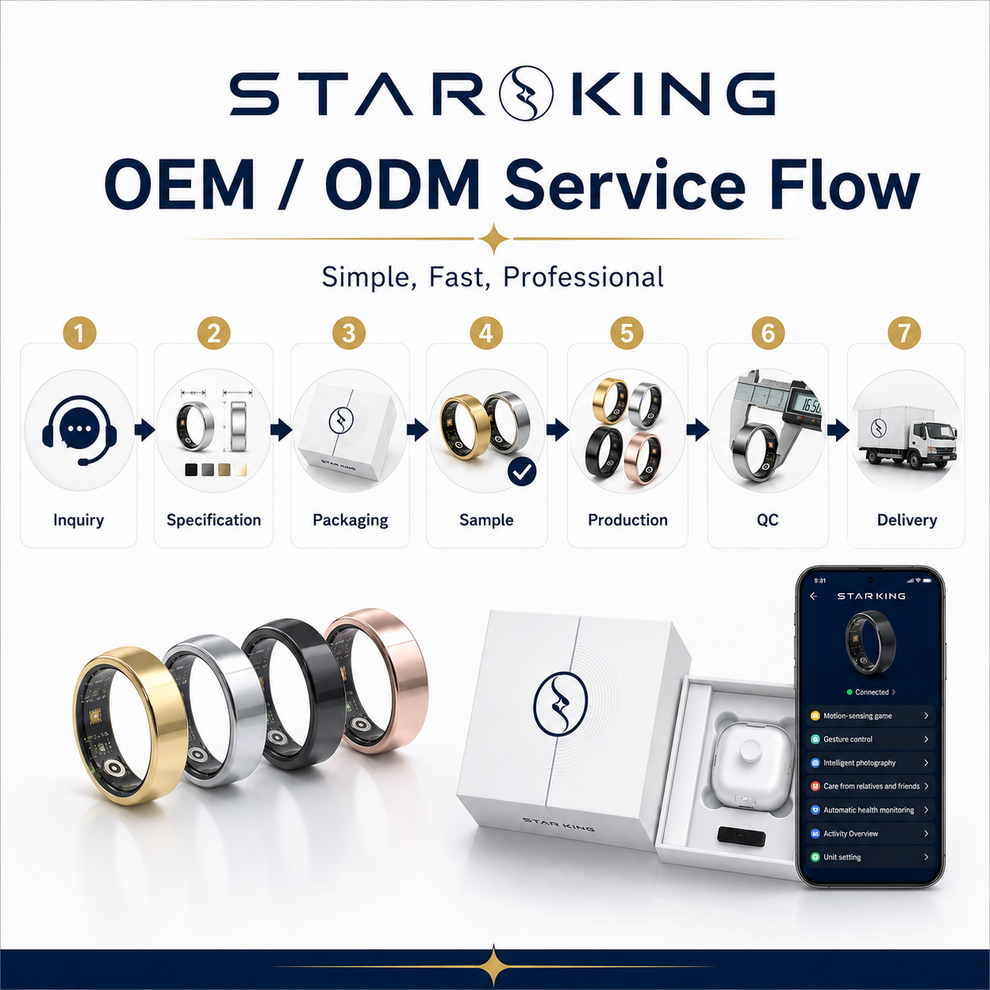
Sampling is a critical step in procurement. A typical process includes:
- Requirement discussion: Share your specifications and target market.
- Sample development: Supplier provides samples (7–15 days).
- Evaluation: Test functionality, comfort, battery life, and app integration.
- Feedback and revisions: Request changes if needed.
- Approval: Sign off on the final sample before mass production.
STAR KING provides sample development services to help edtech companies validate their smart ring designs. Always test samples with your target users (students or staff) to ensure comfort and usability.
Certifications and Global Compliance
Compliance is non-negotiable for education technology products. Key certifications include:
- CE: Required for the European Economic Area.
- FCC: Required for the United States.
- RoHS: Restricts hazardous substances.
- UN38.3: Required for lithium-ion battery transport.
Additionally, data privacy regulations such as GDPR (EU), FERPA (US), and COPPA (US, for children under 13) may apply. Ensure the supplier’s app and cloud infrastructure comply with these laws. Certification requirements depend on the specific product configuration and target market; buyers should verify with the supplier and local authorities.
For official information, refer to the FCC website and the European Union regulations.
Supplier Evaluation Checklist
Choosing the right supplier is crucial. Use this checklist to evaluate potential partners:
| Criteria | What to Look For |
|---|---|
| Manufacturing experience | At least 3–5 years in wearable production; ask for references. |
| Quality control | ISO 9001 certification, in-house testing lab, pre-shipment inspection. |
| Certification support | Ability to provide CE, FCC, RoHS, UN38.3 reports. |
| Communication | Responsive English-speaking sales team; clear documentation. |
| Customization options | Logo, packaging, app, firmware. |
| MOQ flexibility | Willing to accommodate pilot orders. |
| After-sales support | Warranty, spare parts, technical support. |
STAR KING meets these criteria with its health & fitness wearable solutions and OEM/ODM expertise.
Common Mistakes and Buyer Red Flags
Avoid these pitfalls when sourcing smart rings:
- Ignoring data privacy: Failing to address GDPR/FERPA can lead to legal issues.
- Underestimating MOQ: Ordering too few units may result in higher per-unit costs.
- Skipping sample testing: Always test samples with end-users.
- Not verifying certifications: Ensure certificates are valid for your market.
- Choosing on price alone: Low quotes may indicate poor quality or hidden fees.
- Overlooking battery logistics: Lithium-ion batteries require special shipping.
Red flags include suppliers who cannot provide certification documents, are vague about lead times, or refuse sample requests.
Practical Buyer Checklist
- Define your target market and required certifications.
- Decide on OEM, ODM, or private label.
- Set a budget and realistic MOQ.
- Request samples and test with users.
- Verify supplier certifications and quality processes.
- Confirm data privacy compliance.
- Plan for logistics and battery shipping.
- Negotiate warranty and after-sales support.
FAQ
What is the typical MOQ for smart rings?
MOQ varies by supplier and customization. Private label typically starts at 500–1,000 units, while full OEM may require 1,000–3,000 units.
How long does sampling take?
Sampling usually takes 7–15 days after design freeze, depending on complexity.
What certifications are needed for smart rings?
CE, FCC, RoHS, and UN38.3 are common. Requirements depend on your target market; verify with the supplier.
Can we customize the app?
Yes, many suppliers offer app customization or SDKs for integration with your platform.
How to ensure data privacy?
Choose suppliers with GDPR-compliant apps and clear data handling policies. For US education, ensure FERPA and COPPA compliance.
What is the lead time for mass production?
Typically 30–60 days after sample approval, depending on order volume.
What are the shipping considerations for lithium-ion batteries?
Lithium-ion batteries require UN38.3 certification and special packaging. Work with a logistics partner experienced in battery shipping.
Conclusion
Sourcing smart rings for education technology requires careful planning, from defining specifications to verifying compliance. By following this guide, edtech companies can navigate the OEM/ODM process, select reliable suppliers, and bring innovative wearable solutions to the education market.
Request Samples
Ready to explore smart rings for your education technology program? Request samples or contact STAR KING to discuss your OEM/ODM requirements.
Discuss Your Smart Wearable OEM/ODM Project
Planning a smart ring, smart watch, smart band, AI glasses, AI translator, or AI voice mouse project? Contact STAR KING to discuss product positioning, sample testing, customization scope, certification requirements, lead time, and quotation details.

Team Star King

Scan WhatsApp QR code
Leave a Reply