
Smart Bands Supplier Selection: 7 Steps for EU Distributors to Source Compliant Wearables
November 4, 2026 · Team Star King

Smart Bands Supplier Selection: 7 Steps for EU Distributors to Source Compliant Wearables
Smart bands supplier selection is a critical process for EU distributors aiming to source compliant, high-quality wearables. This guide outlines seven steps to evaluate suppliers, covering compliance, quality control, MOQ, and logistics. By following these steps, distributors can mitigate risks and build reliable supply chains.
Table of Contents
Table of Contents
smart bands supplier selection: Table of Contents
- Short Answer
- Key Takeaways
- Key Facts for Buyers
- Step 1: Define Your Product Requirements
- Step 2: Identify Potential Suppliers
- Step 3: Evaluate Supplier Capabilities
- Step 4: Verify Compliance and Certifications
- Step 5: Assess Quality Control Processes
- Step 6: Understand MOQ and Pricing
- Step 7: Plan Logistics and After-Sales
- Comparison Table: Supplier Evaluation Criteria
- Common Mistakes
- Buyer Checklist
- FAQ
- Conclusion

Short Answer
For EU distributors, smart bands supplier selection should prioritize suppliers who demonstrate EU compliance (CE, RoHS, REACH, WEEE), robust quality control, transparent MOQs, and reliable logistics. Conduct thorough due diligence, request samples, and verify certifications to ensure a successful partnership.
Key Takeaways
- EU distributors must verify CE marking, RoHS, REACH, and WEEE compliance for smart bands.
- Evaluate suppliers on product quality, certification, communication, and after-sales support.
- Understand MOQ and pricing structures to align with your sales channels.
- Implement a quality control plan including pre-shipment inspections.
- Plan for logistics and battery shipping regulations (UN38.3).
- Consider OEM/ODM options for private label branding.

Key Facts for Buyers
| Factor | Details |
|---|---|
| Compliance | CE, RoHS, REACH, WEEE, UN38.3 for battery |
| MOQ | Typically 500-1000 units for custom branding, lower for stock models |
| Lead Time | 30-60 days depending on customization |
| Quality Control | Pre-shipment inspection, aging tests, drop tests |
| After-Sales | Warranty 12 months, spare parts availability |

Step 1: Define Your Product Requirements
Before approaching suppliers, clearly define your smart band specifications: features (heart rate, SpO2, sleep tracking), battery life, app integration, and target price point. Consider EU market preferences for design, languages, and health data privacy (GDPR). Document these requirements in a Request for Quotation (RFQ) to ensure comparable responses.
Step 2: Identify Potential Suppliers
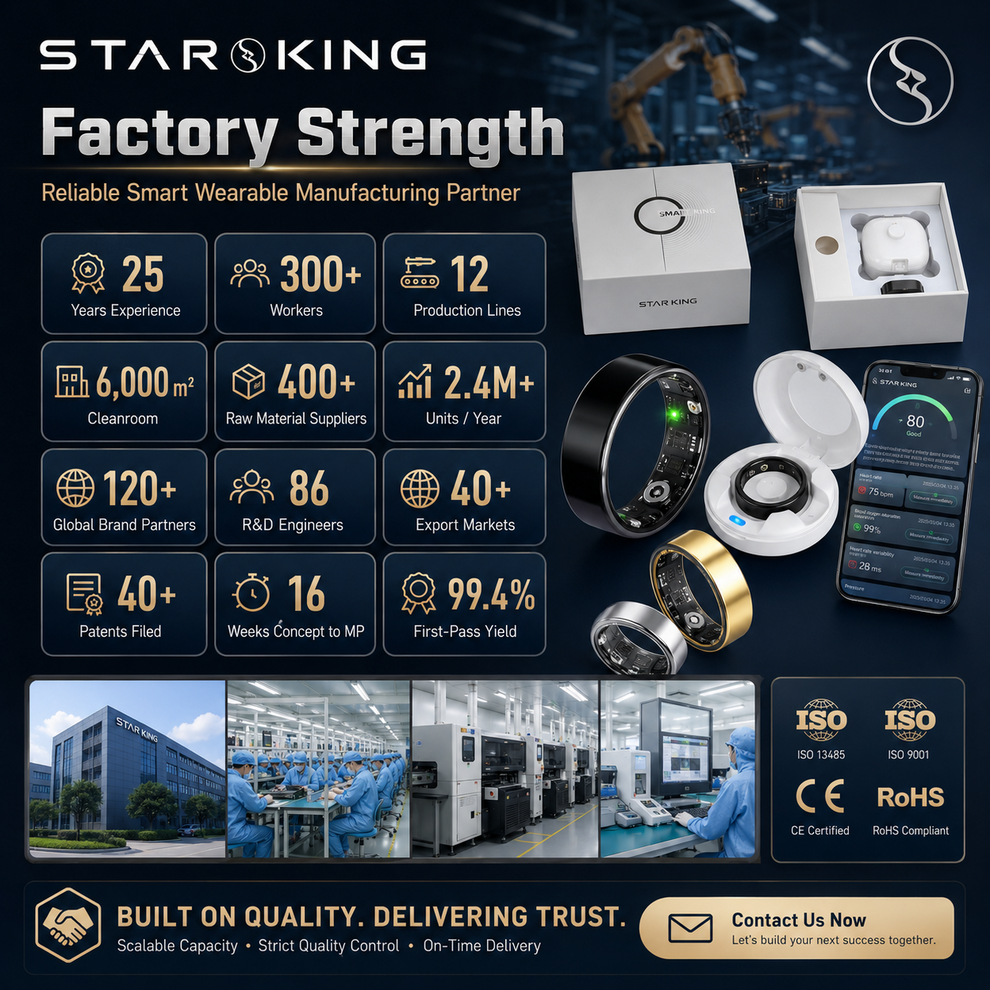
Source suppliers through trade shows (e.g., MWC, IFA), B2B platforms (Alibaba, Global Sources), and industry referrals. For smart bands, focus on manufacturers with experience in wearable technology and EU exports. STAR KING offers smart bands with OEM/ODM options, serving global distributors.
Step 3: Evaluate Supplier Capabilities
Assess supplier capabilities: production capacity, R&D team, in-house testing, and customization options. Request a company profile, factory audit reports, and client references. Verify if they have experience with EU compliance and can provide necessary documentation. A capable supplier should offer private label solutions to support your brand.
Step 4: Verify Compliance and Certifications
EU distributors are responsible for ensuring products meet EU regulations. Smart bands require CE marking (including EMC, RED, and LVD directives), RoHS, REACH, and WEEE compliance. Battery-powered devices need UN38.3 certification for transport. Ask suppliers for copies of test reports and certificates. Note that compliance depends on specific product configurations; buyers should verify with notified bodies if unsure.
Step 5: Assess Quality Control Processes
Request details on the supplier’s quality control: incoming material inspection, in-process checks, and final pre-shipment inspection. Ask about testing standards for drop, waterproof, and aging. Consider third-party inspection before shipment. A robust QC process reduces defect rates and returns, protecting your brand reputation.
Step 6: Understand MOQ and Pricing
MOQs for smart bands vary by model and customization level. Standard models may have MOQs of 500 units, while custom branding might require 1000 units. Pricing depends on features, materials, and order volume. Discuss lead times and payment terms. Request a detailed quotation with breakdown to compare offers fairly.
Step 7: Plan Logistics and After-Sales
Smart bands contain lithium batteries, so shipping requires UN38.3 test summary and compliance with IATA regulations. Plan for freight forwarders experienced in battery shipping. Clarify warranty terms (typically 12 months) and spare parts availability. Ensure the supplier provides firmware updates and app support for the product lifespan.
Comparison Table: Supplier Evaluation Criteria
| Criteria | Weight | Supplier A | Supplier B |
|---|---|---|---|
| Compliance (CE, RoHS, etc.) | High | Verified | Partial |
| Quality Control | High | ISO 9001 | No certification |
| MOQ Flexibility | Medium | 500 units | 1000 units |
| Lead Time | Medium | 45 days | 60 days |
| After-Sales Support | Medium | 12 months warranty | 6 months |
Common Mistakes
- Overlooking EU compliance requirements, leading to customs delays or fines.
- Choosing suppliers based solely on price, ignoring quality and reliability.
- Failing to request samples and conduct pre-shipment inspections.
- Not clarifying MOQ and lead times, causing stockouts.
- Ignoring battery shipping regulations, resulting in rejected shipments.
Buyer Checklist
- Define product specifications and target market requirements.
- Request and verify compliance certificates (CE, RoHS, REACH, WEEE, UN38.3).
- Obtain and test samples.
- Conduct a factory audit or request third-party inspection.
- Confirm MOQ, pricing, lead time, and payment terms.
- Plan logistics and insurance.
- Clarify warranty and after-sales support.
FAQ
What certifications do smart bands need for the EU?
Smart bands typically require CE marking (covering EMC, RED, and LVD), RoHS, REACH, and WEEE compliance. Lithium batteries require UN38.3 certification for transport. Always verify with the supplier and, if necessary, a notified body.
What is a typical MOQ for smart bands?
MOQs vary by supplier and customization. Standard models may have MOQs of 500 units, while custom branding or packaging may require 1000 units or more. Discuss with suppliers to find flexibility.
How long does production take?
Lead time depends on order volume and customization. Typically, 30-60 days from order confirmation, plus shipping time. Plan accordingly to avoid stockouts.
Can I customize smart bands with my brand?
Yes, many suppliers offer OEM/ODM services including logo, packaging, and app customization. STAR KING provides private label solutions for smart bands.
What quality control measures should I expect?
Suppliers should have incoming material inspection, in-process checks, and pre-shipment inspection. Request test reports for drop, waterproof, and aging tests. Third-party inspection is recommended.
How to handle shipping of smart bands with batteries?
Smart bands contain lithium batteries, which are regulated for transport. Ensure the supplier provides UN38.3 test summary and uses compliant packaging. Work with a freight forwarder experienced in battery shipping.
Conclusion
Smart bands supplier selection requires careful evaluation of compliance, quality, MOQ, and logistics. By following these seven steps, EU distributors can source reliable products and build strong supplier relationships. STAR KING offers smart bands with flexible OEM/ODM options and a commitment to quality and compliance.
STAR KING CTA
Ready to source smart bands for the EU market? Contact STAR KING to discuss your requirements, request samples, or explore OEM/ODM options. Our team can provide compliance documentation and support your supplier selection process.
Useful Official References for Buyers
- FCC equipment authorization guidance
- European Commission CE marking information
- Bluetooth SIG specifications
Discuss Your Smart Wearable OEM/ODM Project
Planning a smart ring, smart watch, smart band, AI glasses, AI translator, or AI voice mouse project? Contact STAR KING to discuss product positioning, sample testing, customization scope, certification requirements, lead time, and quotation details.

Team Star King

Scan WhatsApp QR code
Leave a Reply