
smart bands for EU importers: How to Source Smart Bands for the EU: 9 Critical Checks for Importers in 2026
Sourcing Smart Bands for EU Importers: 9 Critical Checks for 2026
smart bands for EU importers: Short Answer
Sourcing smart bands for EU importers comes down to verifying five things before you sign: manufacturer identity, product testing (CE, RoHS, RED, UN38.3), MOQ and lead time realism, app and firmware control, and after-sales terms. Demand written evidence, never accept “EU certified” claims without documentation, and treat 2026 EU rules on AI features and product safety as part of your sourcing checklist—not an afterthought.
Table of Contents
Table of Contents

Introduction
If you are importing smart bands into the European Union, the hardest part is rarely the wristband itself—it is proving the supplier can deliver compliant, repeatable product at your margin. Smart bands for EU importers sit at the intersection of consumer electronics, radio equipment, lithium batteries, and—increasingly—data and AI regulation. A supplier who ships fine samples but cannot produce a Technical File, a UN38.3 test summary, or a consistent firmware build will cost you far more than a slightly higher unit price.
In the next 2,800 words we will work through nine checks we see experienced buyers use before they place purchase orders. Each check maps to a real risk: delayed customs clearance, marketplace takedowns, batch inconsistency, or a support backlog that erodes your ratings. Read it as a sourcing script you can run against any shortlisted supplier, including STAR KING.
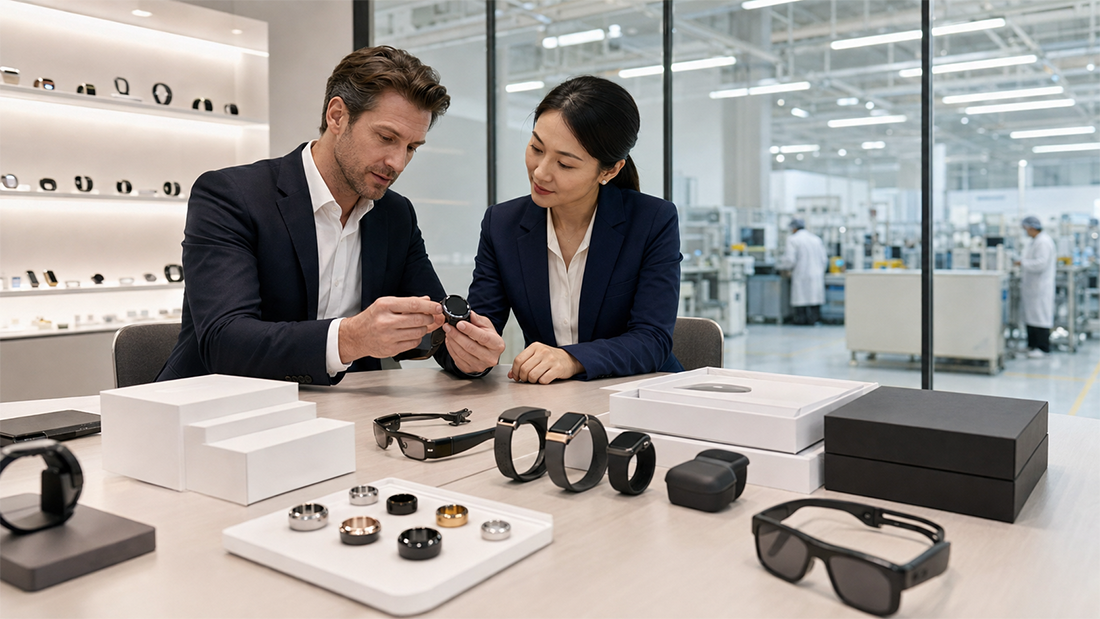
Table of Contents
- 1. Define the product before you compare suppliers
- 2. The 2026 EU compliance baseline for smart bands
- 3. Supplier identity and factory verification
- 4. Sample evaluation: what to test and how
- 5. MOQ, pricing, and landed cost for EU importers
- 6. App, firmware, and data ownership
- 7. Packaging, branding, and Private Label
- 8. Battery shipping, logistics, and customs
- 9. Lead time, QC, and after-sales
- Key Facts for Buyers
- Comparison Table: Small Trading Company vs. OEM/ODM Manufacturer
- Common Mistakes and Buyer Red Flags
- Practical Buyer Checklist
- FAQ
- Conclusion
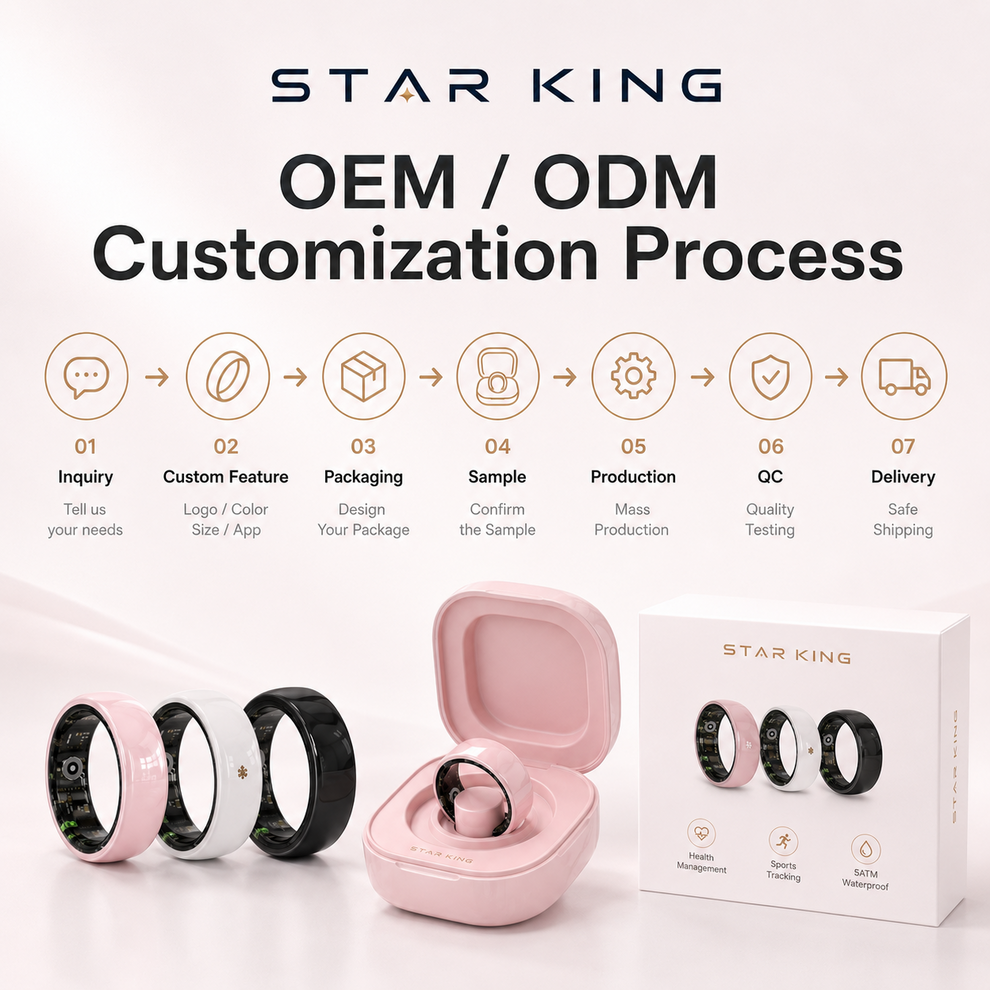
Key Takeaways
- CE marking for smart bands is not a single certificate; it combines RED (radio), EMC, RoHS, and—where applicable—the battery directive and eco-design rules.
- Always request the EU Declaration of Conformity, test reports, and the Technical File structure before paying a deposit.
- Realistic MOQs for private-label smart bands commonly start in the low thousands; treat anything under 500 units with scepticism about consistency.
- UN38.3 and a Safety Data Sheet (MSDS) are typically required to ship lithium-polymer smart bands commercially.
- The EU AI Act may apply to features such as health insights and voice assistants; buyers should verify the exact configuration.
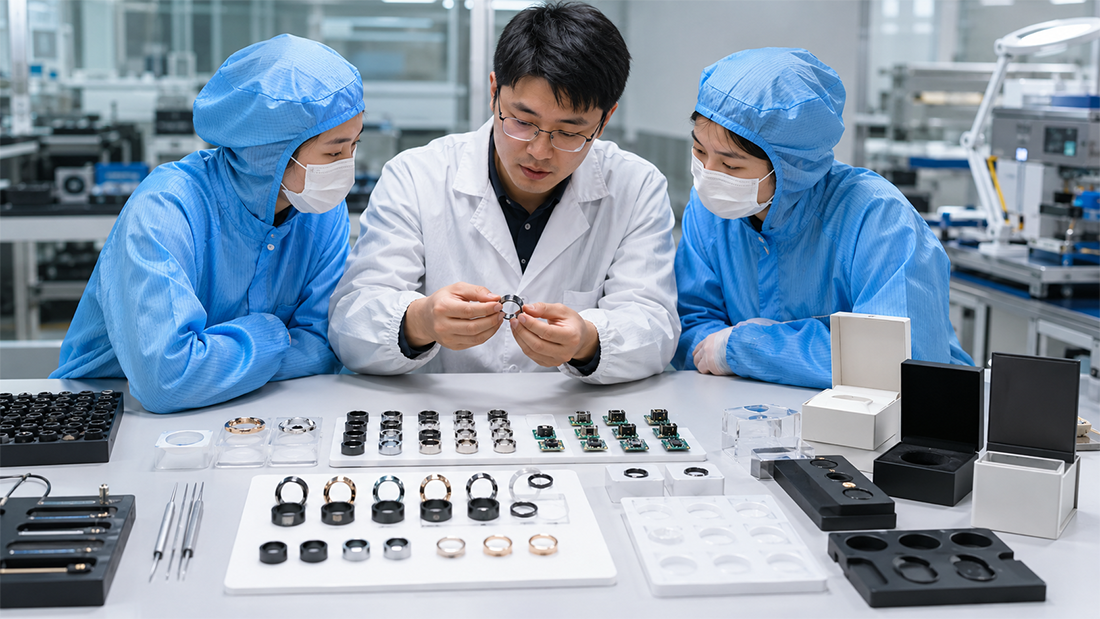
1. Define the Product Before You Compare Suppliers
Before requesting quotations, pin down the specifications that drive cost and compliance. Smart bands vary more than buyers expect: a 0.96″ monochrome tracker with a plastic case is a different product class from a 1.47″ AMOLED unit with SpO2, GPS, NFC, and an AI-assisted coaching feature.
Write a one-page specification sheet covering display size, sensor set, battery capacity, waterproof rating (IP67 vs 5ATM), wireless protocols, app platform, and target retail price band. Suppliers who receive this specification will quote comparable configurations; suppliers who receive a vague brief will quote something that looks cheap and fails your sampling.
For buyers building a broader wearable portfolio, it helps to compare our smart bands product page alongside adjacent categories such as smart watches and smart rings so your price ladder is coherent across channels.

Soft CTA: If you want a starting point, our team can review your specification sheet and return a configurable smart band quotation with OEM and Private Label options. You can review our Private Label OEM/ODM approach before you finalise the brief.
2. The 2026 EU Compliance Baseline for Smart Bands
Compliance is the single most common reason smart band shipments are held at EU customs. The following regimes typically apply, though the exact mix depends on your product configuration and the member states where you sell.
| Requirement | What it covers | Evidence to request |
|---|---|---|
| CE marking | Declaration that the product meets applicable EU directives | EU Declaration of Conformity signed by the manufacturer |
| RED (Radio Equipment Directive 2014/53/EU) | Bluetooth and any wireless radio functions | RED test report from an accredited lab |
| EMC Directive 2014/30/EU | Electromagnetic compatibility | EMC test report |
| RoHS 2011/65/EU | Restricted substances in electronics | RoHS test report; supplier declaration |
| GPSR (General Product Safety Regulation) | Product safety, traceability, EU Responsible Person | Named EU Responsible Person and technical documentation |
| WEEE / Battery Directive | Take-back, labelling, battery chemistry | Registration and labelling evidence |
| UN38.3 and MSDS | Lithium battery transport | UN38.3 test summary and MSDS sheet |
Note two structural points. First, since the GPSR entered application, importers typically need a named EU Responsible Person on record. Second, features marketed as AI—voice assistants, health insights, recommendation engines—may fall under the EU AI Act depending on risk classification. Buyers should verify the exact feature set against the regulation rather than rely on a supplier’s summary.
3. Supplier Identity and Factory Verification
Many smart band “manufacturers” on B2B platforms are traders. That is not automatically a problem, but it changes risk allocation: a trader cannot modify firmware, hold tooling, or manage a corrective-action cycle on the line. Before committing, establish:
- Legal entity: Business licence, registered address, and whether the entity on the contract matches the entity on the invoice.
- Manufacturing footprint: In-house SMT lines for the PCBA, or outsourced? Where is final assembly?
- Capability evidence: Photos or live video of the production line and QC station, ideally matched to your product category.
- Customer references: Ask for anonymised references you can speak to. Treat claims of “major EU brand” clients without proof as a yellow flag.
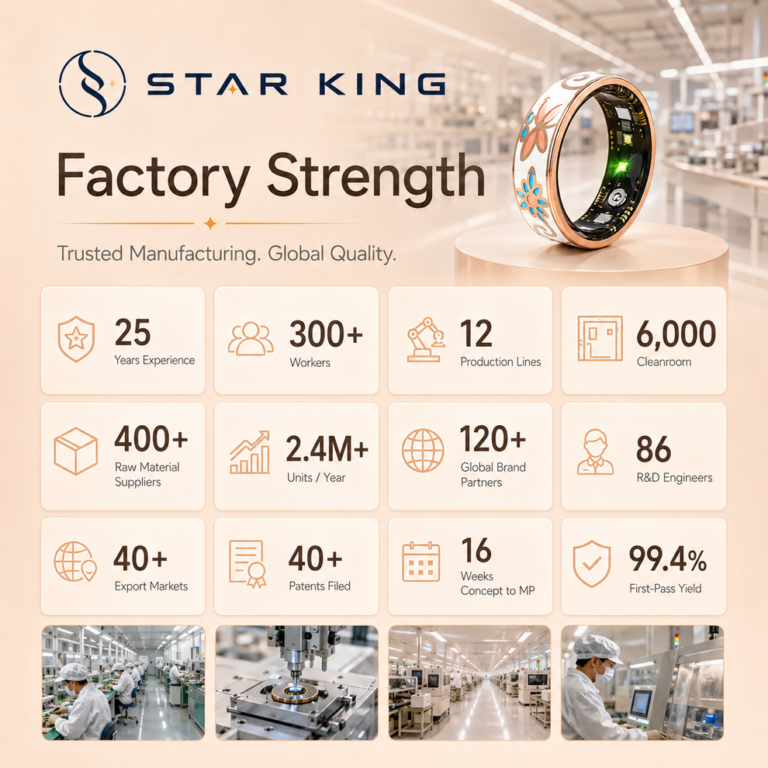
Manufacturer verification is not about distrust; it is about knowing which lever you can pull if a batch fails. We describe how our own sourcing and manufacturing lines are structured in our health and fitness wearables solutions overview.
4. Sample Evaluation: What to Test and How
Sample testing is where most European importers get their best return on time. Do not just wear the band for a week. Run a structured test plan and record results for each sample unit:
- Sensor accuracy: Compare heart rate and SpO2 readings against a reference device across rest and exercise.
- Battery: Measure real-world battery life at your intended feature set, not the supplier’s headline figure.
- Water resistance: Confirm the IP or ATM rating with a controlled test or supplier test report.
- App pairing: Test on iOS and the current and previous major Android versions. Track sync failures.
- Build quality: Strap durability, buckle strength, screen scratch resistance under normal use.
- Compliance documents: Confirm the sample batch matches the test reports in the Technical File.
If you are also building a fitness tracking application, agree the data fields and update frequency at sample stage—retrofitting them after tooling is expensive.

5. MOQ, Pricing, and Landed Cost for EU Importers
MOQ is not a fixed number—it is a function of tooling, PCBA panel size, and packaging. A supplier that cannot explain their MOQ logic is a supplier who will surprise you later.
Typical MOQ bands (indicative)
| Scenario | Indicative MOQ | Notes |
|---|---|---|
| Private Label with existing tooling | 1,000–3,000 units | Logo and packaging only |
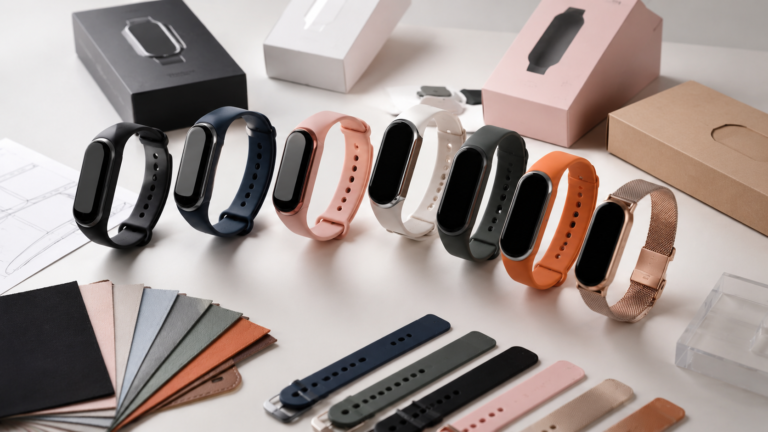
| Private Label with new strap or case colour | 2,000–5,000 units | Colour and material tooling |
| Full ODM from a standard platform | 3,000–10,000 units | Cosmetic and firmware changes |
| New industrial design | 5,000–20,000 units | New tooling, higher NRE |
When you model landed cost, add duty (smart bands typically land under HS 8517 or 9102 families depending on construction—verify with your customs broker), import VAT, testing for your own compliance file, and last-mile returns provision. A band quoted at €x FOB can land 25–40% higher once duties, VAT, and compliance are included. That gap is where inexperienced importers lose margin.
6. App, Firmware, and Data Ownership
The app is where many smart band projects quietly fail. Key questions to settle before tooling:
- Is the app a white-label build, a shared generic app, or a dedicated build?
- Who owns the store listing, developer account, and release plan?
- What is the data-flow architecture—who hosts user data, and in which region?
- Are firmware updates OTA, and who signs them?
- What SLA applies to app bug fixes and OS updates?
For EU buyers, data residency and GDPR roles (controller vs. processor) are material. Put them in the contract, not in a side email. If your product roadmap includes broader connected devices, it is worth comparing how AI voice hardware and other connected peripherals handle app integration, so your technical team builds a consistent stance.
7. Packaging, Branding, and Private Label
Packaging is often the cheapest lever for perceived value and the most common source of launch delays. Lock down artwork, language requirements, and sustainability claims early. Under EU rules, certain environmental claims must be substantiated, so avoid unverified “eco-friendly” wording on the box.
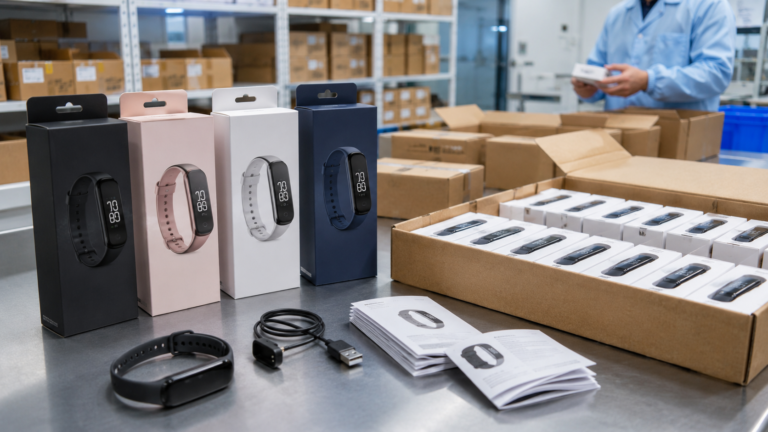
Decide whether you want a fully branded unboxing experience or a cost-optimised retail pack. Confirm which items are included—charging cable, spare strap, quick-start guide in the required languages, warranty card—and specify that these are version-controlled.
8. Battery Shipping, Logistics, and Customs
Smart bands ship with lithium-polymer cells, so freight is governed by dangerous-goods rules. For air freight, IATA rules and UN38.3 documentation typically apply. Sea freight is slower but often simpler for larger palletised orders. Your carrier will require:
- UN38.3 test summary
- MSDS for the cell and the finished product
- Correct packing instruction compliance
- Accurate HS classification and commercial invoice description
Do not accept a verbal assurance that shipping is “no problem”. Ask the supplier to confirm the exact documentation they will attach to the shipment, and have your forwarder review it before booking.
9. Lead Time, QC, and After-Sales
Realistic timelines for a private-label smart band order usually run 25–45 days for production after deposit, plus 7–20 days transit depending on mode. Add 1–3 weeks if tooling is new, and add time for any third-party pre-shipment inspection.
Agree an AQL-based inspection plan (commonly AQL 2.5 major / 4.0 minor for consumer electronics) and define defective handling: repair, replace, or credit. Clarify the warranty period, spare-part availability, and whether firmware fixes are delivered to existing units.
Key Facts for Buyers
| Decision point | What to verify | Typical evidence |
|---|---|---|
| Supplier identity | Manufacturer vs. trader | Business licence, factory video, references |
| EU compliance | CE, RED, RoHS, GPSR | DoC, test reports, EU Responsible Person |
| Battery shipping | UN38.3 and MSDS | Test summary, MSDS, forwarder review |
| MOQ | Tooling and PCBA constraints | Written MOQ breakdown |
| App | Ownership and SLA | Contract appendix |
| After-sales | Defective handling | Written AQL plan and warranty terms |
Comparison Table: Trading Company vs. OEM/ODM Manufacturer
| Factor | Trading company | OEM/ODM manufacturer |
|---|---|---|
| Firmware changes | Limited, often none | Possible with NRE |
| Tooling ownership | Unclear | Contractual |
| QC control | Depends on third party | In-line QC |
| Certification file | Often resold reports | Product-specific file |
| Response on defects | Slower escalation | Engineering-led fix |
Common Mistakes and Buyer Red Flags
- “CE certified” with no document. Red flag. Ask for the DoC and test reports before any deposit.
- MOQ under 300 for a genuinely new product. Usually means short sample runs, not a real production line.
- No EU Responsible Person. This can block or delay sales under GPSR.
- App owned by the supplier with no SLA. You lose control of your customer experience.
- Battery documentation promised “after payment”. Insist on UN38.3 and MSDS before booking freight.
- AI features described in marketing but absent from the Technical File. Verify against the EU AI Act scope.
Practical Buyer Checklist
- Specification sheet written and version-controlled.
- Supplier legal entity, licence, and factory evidence reviewed.
- CE DoC, RED, RoHS, and GPSR documents in hand.
- EU Responsible Person named for your listing.
- UN38.3 and MSDS reviewed by your forwarder.
- Sample test plan scored for at least three units.
- MOQ, lead time, and AQL written into the PO.
- App ownership, hosting region, and SLA agreed.
- Packaging artwork and language versions signed off.
- After-sales terms, spare parts, and firmware support confirmed.
FAQ
What does MOQ mean for OEM smart bands?
MOQ is the minimum order a manufacturer will produce for a custom configuration. It is driven by tooling, substrate panel size, and packaging setup. For private-label smart bands, realistic figures usually start around 1,000 units when tooling already exists.
Which certifications do I need to import smart bands into the EU?
Typically CE marking through RED, EMC, and RoHS, plus GPSR compliance with a named EU Responsible Person. Lithium batteries require UN38.3 and MSDS. Exact requirements depend on the product’s radio, battery, and AI features—verify before shipping.
Can I ship lithium-polymer smart bands by air?
Yes, but they are classed as dangerous goods. You will normally need UN38.3 test summaries, an MSDS, and compliant packaging under IATA rules. Some carriers add restrictions on loose-battery products.
How long does production take for a private-label smart band order?
A typical range is 25–45 days after deposit for existing tooling, plus transit. New tooling or new industrial design adds 1–3 weeks and extra NRE.
How do I verify a smart band manufacturer is real?
Match the contracting entity to the business licence, ask for line-level video or an audit, and request anonymised customer references. Manufacturers should be able to discuss firmware and QC in technical terms.
Do I need to test samples before ordering?
Yes. Score at least three units for sensor accuracy, battery life, app pairing, build quality, and document matching. This is the cheapest risk reduction available to an importer.
Can AI features on smart bands trigger EU AI Act obligations?
Possibly. Features positioned as health insight, coaching, or voice assistance may fall within scope depending on risk classification. Buyers should verify against the official regulation rather than rely on a supplier statement.
Conclusion
Supplier selection for smart bands into the EU is a documentation exercise as much as a specification exercise. The importers who succeed are not the ones who negotiate the lowest unit price—they are the ones who collect the DoC, test reports, and UN38.3 before the deposit, lock app ownership into the contract, and plan lead times with realistic buffers. Run the nine checks in this guide against every shortlisted supplier, and you will avoid most of the traps that turn a promising product into a margin problem.
Next Step with STAR KING
If you are evaluating smart band suppliers for a 2026 EU launch, send us your specification sheet and target market. We can discuss OEM/ODM scope, Private Label options, and the compliance documents you will need for your market.
Request a quotation or discuss your smart band OEM/ODM project.
Discuss Your Smart Wearable OEM/ODM Project
Planning a smart ring, smart watch, smart band, AI glasses, AI translator, or AI voice mouse project? Contact STAR KING to discuss product positioning, sample testing, customization scope, certification requirements, lead time, and quotation details.

Team Star King

Scan WhatsApp QR code