
Smart Bands for EU E-commerce: 7 Critical Checks Before You Buy
November 16, 2026 · Team Star King
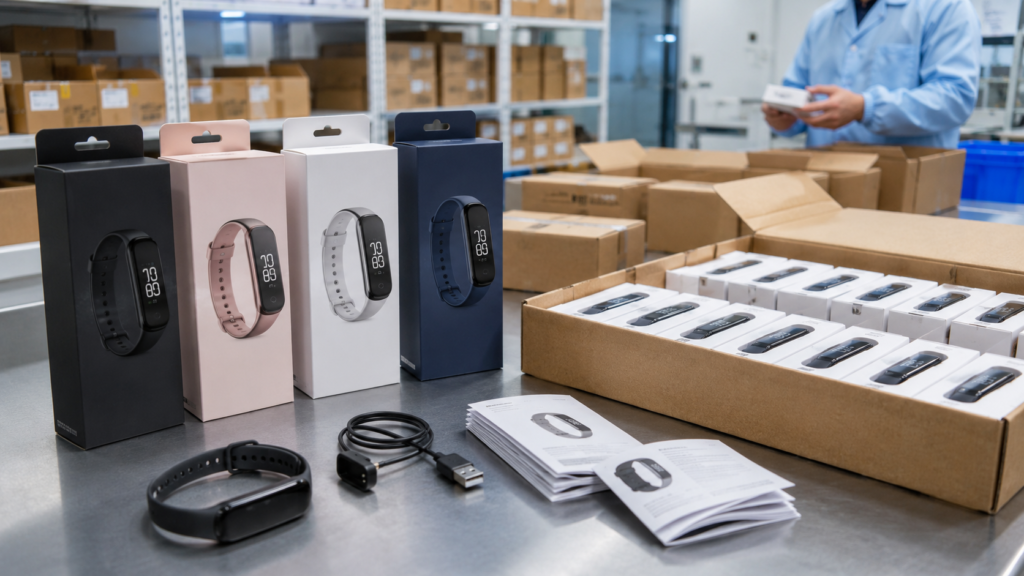
Smart Bands for EU E-commerce: 7 Critical Checks Before You Buy
If you are sourcing smart bands for EU e-commerce, focus on seven checks: CE and RoHS compliance, battery safety documentation (UN38.3, MSDS), app and data privacy readiness, MOQ and landed cost, sample validation, packaging and labeling, and after-sales support. These determine whether your product can be legally sold, profitably scaled, and supported across the European Union. This guide explains each check with practical steps for e-commerce sellers.
Table of Contents
Table of Contents
smart bands for EU e-commerce: Table of Contents
- Short Answer
- Key Takeaways
- Key Facts for Buyers
- 1. EU Market Access and Product Compliance
- 2. Battery Safety and Transport Documentation
- 3. App, Firmware, and Data Privacy
- 4. MOQ, Pricing, and Landed Cost
- 5. Sample Testing and Verification
- 6. Packaging, Labeling, and Brand Customization
- 7. After-Sales, Warranty, and Spare Parts
- Comparison Table: Compliance and Sourcing Priorities
- Common Mistakes and Buyer Red Flags
- Practical Buyer Checklist
- FAQ
- Conclusion

Short Answer
To sell smart bands for EU e-commerce successfully, verify that the product carries CE marking, meets RoHS and REACH requirements, and has valid battery test documentation such as UN38.3 and MSDS. Confirm that the companion app supports EU languages, offers clear data privacy terms, and that the manufacturer can provide consistent quality across MOQ batches. These checks reduce the risk of customs delays, marketplace suspensions, and returns.
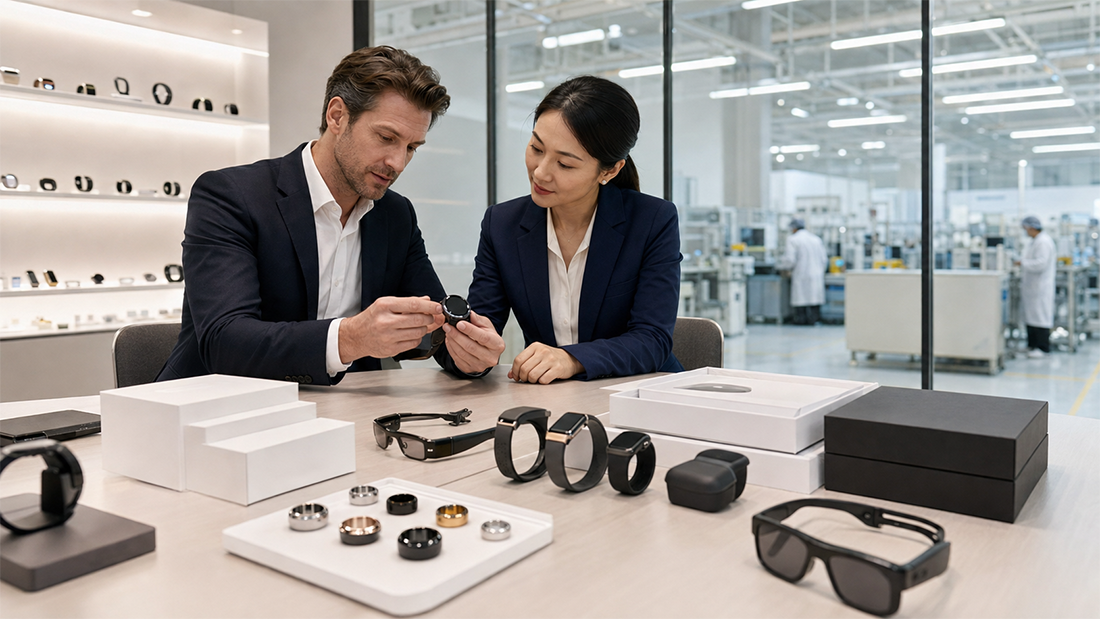
Key Takeaways
- CE marking is mandatory for smart bands sold in the EU; additional directives may apply depending on features.
- Battery safety documents (UN38.3, MSDS) are required for air transport and customs clearance.
- App quality and data privacy compliance affect customer retention and legal exposure under GDPR.
- MOQ and landed cost must be calculated together to protect margins in competitive e-commerce channels.
- Sample validation and pre-shipment inspections help avoid batch-to-batch inconsistencies.
- Packaging and labeling must meet EU language and waste directive requirements.
- A clear after-sales agreement reduces return costs and protects your seller rating.
Key Facts for Buyers
| Compliance Area | Typical Requirement | Buyer Action |
|---|---|---|
| CE Marking | Mandatory for most electronics; depends on product features | Request EU Declaration of Conformity and test reports |
| RoHS | Restricts hazardous substances in electrical equipment | Verify RoHS test report for the specific model |
| REACH | Chemical safety; may apply to materials and packaging | Ask for REACH compliance statement |
| Battery Transport | UN38.3 test report and MSDS for lithium batteries | Confirm documents are available before shipment |
| GDPR | Data protection for EU users | Review app privacy policy and data processing terms |
| WEEE | E-waste recycling obligations | Ensure manufacturer supports WEEE registration or provides necessary info |
| Packaging | EU language requirements and waste directives | Plan multilingual packaging from the start |

1. EU Market Access and Product Compliance
Before you list smart bands for EU e-commerce, confirm the product meets applicable EU legislation. CE marking is the baseline for most consumer electronics, but smart bands with wireless features (Bluetooth, GPS) also fall under the Radio Equipment Directive (RED). Products with health monitoring features may require additional scrutiny under general safety and liability rules. Always request the EU Declaration of Conformity (DoC) and the corresponding test reports from the manufacturer. The DoC must list the directives and standards applied, and it should match the exact model you are importing.
RoHS compliance is also essential. Smart bands contain electronic components, solder, and plastics that must not exceed restricted substance thresholds. Ask for a RoHS test report issued by a recognized laboratory. For packaging and materials, REACH may apply; a compliance statement from the supplier is typically sufficient at the sourcing stage, but verify it covers the materials used.
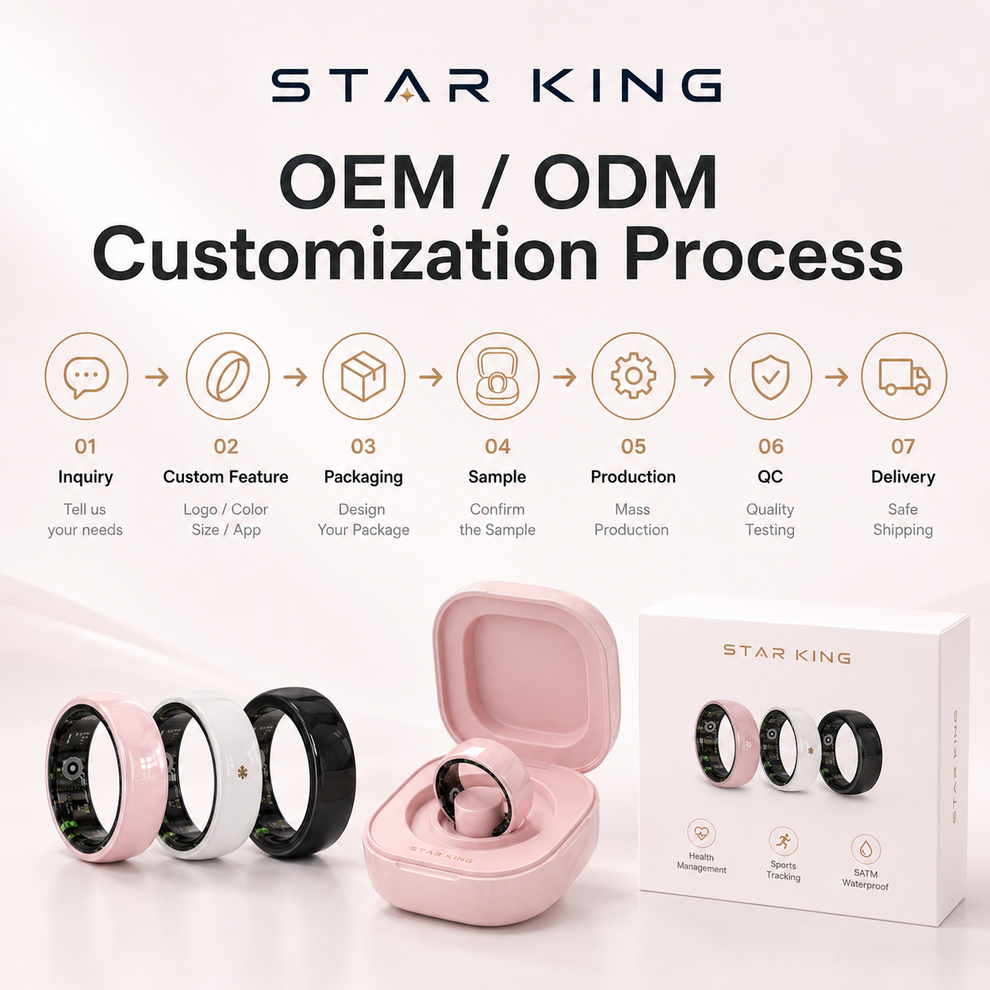
Buyers should verify that the manufacturer can provide documentation for each production batch, not just a one-time certificate. This is especially important if you plan to scale. STAR KING’s private label OEM/ODM solutions support compliance documentation as part of the development process, but requirements vary by product configuration and target market.
What to ask your supplier
- Can you provide an EU Declaration of Conformity for this exact model?
- Which directives and standards are listed?
- Are RoHS and REACH reports available and less than two years old?
- Do you support WEEE registration or provide the necessary information?
2. Battery Safety and Transport Documentation
Smart bands contain lithium-ion or lithium-polymer batteries, which are regulated for transport. For air freight, you will need a UN38.3 test report and a Material Safety Data Sheet (MSDS). These documents are often requested by freight forwarders and customs authorities. Without them, shipments may be delayed or rejected. Confirm that the documents are for the specific battery model used in your smart bands, as battery specifications can change between production runs.
Battery safety also affects product quality. Ask about the battery manufacturer, capacity, and cycle life. A lower-cost battery may reduce unit price but increase return rates and safety risks. For e-commerce sellers, battery failures can lead to negative reviews and marketplace penalties. Ensure the manufacturer has aging and safety testing procedures in place, such as overcharge, short-circuit, and thermal testing. These tests are typically part of quality control but may not be documented unless requested.
When shipping to the EU, also consider the Battery Directive and local recycling regulations. Some EU countries require registration for battery producers. Your supplier may not handle this directly, but they should provide the information you need to comply. STAR KING’s smart bands are available with different battery configurations; specifications should be confirmed per model.
3. App, Firmware, and Data Privacy
The companion app is a critical part of the smart band experience. For EU e-commerce, the app must support the languages of your target markets and comply with GDPR. Check whether the app has a clear privacy policy, obtains user consent for data collection, and allows users to delete their data. If the app is provided by the manufacturer, confirm who is responsible for updates and bug fixes. A poorly maintained app can lead to negative reviews and returns.
Firmware updates also matter. Smart bands may require periodic updates to fix issues or add features. Ask about the update mechanism (OTA or manual) and the expected support period. For private label projects, you may need custom firmware or app branding. This is where OEM/ODM customization becomes relevant. Customization can extend development time and affect MOQ, so clarify requirements early.
Data privacy is not just a legal issue; it is a trust factor. EU consumers are sensitive about health data. Ensure the app does not share data with third parties without consent and that data storage complies with GDPR. If the app is hosted outside the EU, check whether the provider uses standard contractual clauses or other approved transfer mechanisms.
4. MOQ, Pricing, and Landed Cost
MOQ (Minimum Order Quantity) is a common barrier for e-commerce sellers testing new products. Manufacturers often set MOQs based on component sourcing and production efficiency. For smart bands, MOQ can range from a few hundred to several thousand units, depending on customization. Lower MOQs may be available for standard models, but private label orders typically require higher volumes. Discuss MOQ early and ask whether it can be reduced for initial orders.
Pricing should be evaluated on a landed cost basis, not just FOB. Landed cost includes product cost, freight, insurance, duties, and taxes. EU import duties for smart bands depend on the product classification and country of origin. VAT is also applied at the point of sale or import. Use a landed cost calculator or ask your freight forwarder for an estimate. A lower FOB price may not be cheaper if freight or duties are higher.
Also consider payment terms. Typical terms are 30% deposit and 70% before shipment, but this can vary. For first orders, negotiate a smaller deposit or use escrow services to reduce risk.
| Cost Component | Typical Range | Notes |
|---|---|---|
| FOB Unit Price | $8–$25 | Depends on features, display, sensors, battery |
| Freight (air) | $2–$6 per unit | Based on weight and volume; expedited costs more |
| Import Duty | 0–4% | Depends on HS code and origin |
| VAT | Varies by country | Typically 19–27% |
Note: These ranges are indicative only and should be verified with suppliers and freight forwarders.
5. Sample Testing and Verification
Always order samples before committing to a bulk order. Sample testing allows you to evaluate build quality, sensor accuracy, battery life, and app performance. Test the smart band in real-world conditions: wear it for several days, track sleep and workouts, and check syncing reliability. Compare the sample against the specifications provided. If possible, test with multiple smartphones to ensure compatibility.
During sample testing, also verify the packaging and documentation. Check that the user manual is in the correct language and that the packaging includes required symbols (CE, WEEE, etc.). A sample that fails these checks may indicate larger issues in production. Ask the manufacturer for a sample testing report or checklist to formalize the process.
For e-commerce sellers, it is also wise to test the product’s market fit. Show the sample to potential customers or run a small pre-order campaign to gauge demand. This reduces the risk of overstocking.
6. Packaging, Labeling, and Brand Customization
Packaging is part of your brand and your compliance. EU regulations require that certain information be provided with the product, including the manufacturer’s name and address, CE marking, and WEEE symbol. Instructions must be in the language(s) of the country of sale. Plan for multilingual packaging if you sell in multiple EU countries. This can increase packaging costs and lead times, so factor it into your budget.
Private label packaging allows you to build brand recognition. Customization options include logo printing, custom box design, and inserts. MOQs for custom packaging are often higher than for standard packaging. Discuss with your supplier whether they can support low-volume customization for test launches.
Also consider environmental packaging trends. EU consumers increasingly prefer recyclable or minimal packaging. Some markets may have specific recycling labeling requirements. Your supplier should be able to provide packaging material specifications.
7. After-Sales, Warranty, and Spare Parts
After-sales support is often overlooked during sourcing but is critical for e-commerce. Clarify the warranty period, what it covers, and how returns are handled. Smart bands are prone to issues like battery degradation, screen scratches, and strap wear. A clear warranty policy reduces customer disputes and protects your seller metrics.
Ask about spare parts availability, such as straps and chargers. If you plan to sell accessories, ensure the manufacturer can supply them consistently. For private label, you may want your brand on accessories as well. Also discuss the process for handling defective units: will the manufacturer replace them, credit you, or provide repair parts? A written after-sales agreement is recommended.
Consider the cost of returns. In the EU, consumers have a 14-day right of withdrawal for online purchases. Your return rate will affect profitability. A quality product with a good app reduces returns, but you still need a process for handling them.
Comparison Table: Compliance and Sourcing Priorities
| Priority | What to Verify | Why It Matters | Typical Evidence |
|---|---|---|---|
| CE Marking | DoC, test reports | Legal requirement for EU sales | EU Declaration of Conformity |
| RoHS/REACH | Test reports, compliance statements | Environmental and health compliance | Laboratory test report |
| Battery Safety | UN38.3, MSDS | Transport and safety | UN38.3 test report, MSDS |
| App & Data | GDPR compliance, language support | User trust and legal exposure | Privacy policy, app documentation |
| MOQ & Cost | Landed cost calculation | Profitability | Quotation with freight and duties |
| Sample Quality | Real-world testing | Reduce returns and reviews | Sample test report |
| Packaging | Language, symbols, materials | Compliance and brand | Packaging artwork proof |
| After-Sales | Warranty terms, spare parts | Customer satisfaction | Warranty agreement |
Common Mistakes and Buyer Red Flags
- Assuming CE marking is enough: CE marking must be backed by a DoC and test reports for the specific model. A generic certificate is a red flag.
- Ignoring battery documentation: Missing UN38.3 or MSDS can halt shipments. Always request these before ordering.
- Overlooking app quality: A poorly designed app leads to negative reviews. Test the app thoroughly during sampling.
- Underestimating landed cost: Freight and duties can significantly impact margins. Calculate total cost before setting prices.
- Skipping sample testing: Relying on specifications alone is risky. Always test samples in real conditions.
- Not planning for packaging compliance: Multilingual packaging and correct symbols are mandatory. Factor in time and cost.
- No after-sales agreement: Without clear warranty terms, returns can become costly and damage your seller rating.
Red flags include suppliers who cannot provide test reports, are vague about battery specifications, or refuse to share app documentation. Trust your instincts: if something seems off, ask for more evidence.
Practical Buyer Checklist
- ☐ Request EU Declaration of Conformity and test reports for the exact model.
- ☐ Verify RoHS and REACH compliance documents.
- ☐ Obtain UN38.3 and MSDS for the battery.
- ☐ Review app privacy policy and language support.
- ☐ Calculate landed cost including freight, duties, and VAT.
- ☐ Order samples and test for at least one week.
- ☐ Check packaging for required symbols and language.
- ☐ Clarify warranty terms and spare parts availability.
- ☐ Confirm MOQ and lead time for initial and repeat orders.
- ☐ Sign a written after-sales agreement.
FAQ
1. Do smart bands need CE marking to be sold in the EU?
Yes, most smart bands are electrical products and require CE marking. The specific directives depend on features such as wireless connectivity and health sensors. Always obtain a Declaration of Conformity.
2. What battery documents are required for shipping smart bands to the EU?
For air freight, you typically need a UN38.3 test report and an MSDS. Some forwarders may also require a battery safety test summary. Confirm with your logistics provider.
3. How can I ensure the app complies with GDPR?
Review the app’s privacy policy for clarity on data collection, storage, and user rights. Ensure the developer provides a data processing agreement if you are the data controller. Consult a legal expert if unsure.
4. What is a typical MOQ for private label smart bands?
MOQs vary by manufacturer and customization level. Standard models may have MOQs of 500–1,000 units, while custom designs often require 1,000–3,000 units. Discuss with your supplier.
5. How do I calculate landed cost for smart bands?
Add the FOB price, freight, insurance, import duties, and VAT. Use a landed cost calculator or ask your freight forwarder for a quote based on shipment weight and volume.
6. What should I check in a sample before placing a bulk order?
Test battery life, sensor accuracy, app syncing, build quality, and comfort. Also verify packaging, manual language, and included accessories.
7. What after-sales support should I expect from a manufacturer?
Look for a clear warranty period (typically 12 months), a process for handling defective units, and availability of spare parts such as straps and chargers.
Conclusion
Sourcing smart bands for EU e-commerce involves more than comparing prices. Compliance, battery safety, app quality, and after-sales support are critical to long-term success. By following the seven checks in this guide, you can reduce risks and build a product that meets EU requirements and customer expectations. Remember to verify all documentation and test samples thoroughly before committing to bulk orders.
STAR KING supplies smart bands and other wearables with OEM/ODM options. To discuss your project and request samples, visit our sample request page.
Useful Official References for Buyers
- FCC equipment authorization guidance
- European Commission CE marking information
- Bluetooth SIG specifications
Discuss Your Smart Wearable OEM/ODM Project
Planning a smart ring, smart watch, smart band, AI glasses, AI translator, or AI voice mouse project? Contact STAR KING to discuss product positioning, sample testing, customization scope, certification requirements, lead time, and quotation details.

Team Star King

Scan WhatsApp QR code
Leave a Reply