Smart Bands for Education Technology in the EU: 7 RFQ Steps to OEM Supply in 2026
Smart Bands for Education Technology in the EU: 7 RFQ Steps to OEM Supply in 2026
Short answer: Buyers sourcing smart bands for education technology in the EU should issue an RFQ that specifies the end use, the firmware and app behavior, the compliance evidence required, a realistic MOQ, and a pilot-sized first order. The strongest quotes come from suppliers who can answer those five points with documents and dates, not just a unit price. Compulsory EU rules are typically the RED, EMC, RoHS, WEEE and REACH, and their exact scope depends on the final product configuration.
Table of Contents
Table of Contents
Introduction
Schools, universities and vocational training providers in the EU are adopting wearable devices for attendance support, campus wellness programs, movement challenges and PE data collection. For an education technology company, buying hundreds or thousands of smart bands is not the same as buying consumer gadgets from a marketplace. You need stable firmware, managed device lists, teacher-friendly dashboards, and evidence that each unit complies with the rules that apply in the markets you serve.
This RFQ guide walks through seven steps that help education technology companies compare suppliers, define a specification sheet, prepare compliance questions, plan a pilot, and negotiate MOQ and lead time without locking the program into a device that cannot be supported for the next three school years. It also explains which details most often cause delays between the first inquiry and the first invoice.
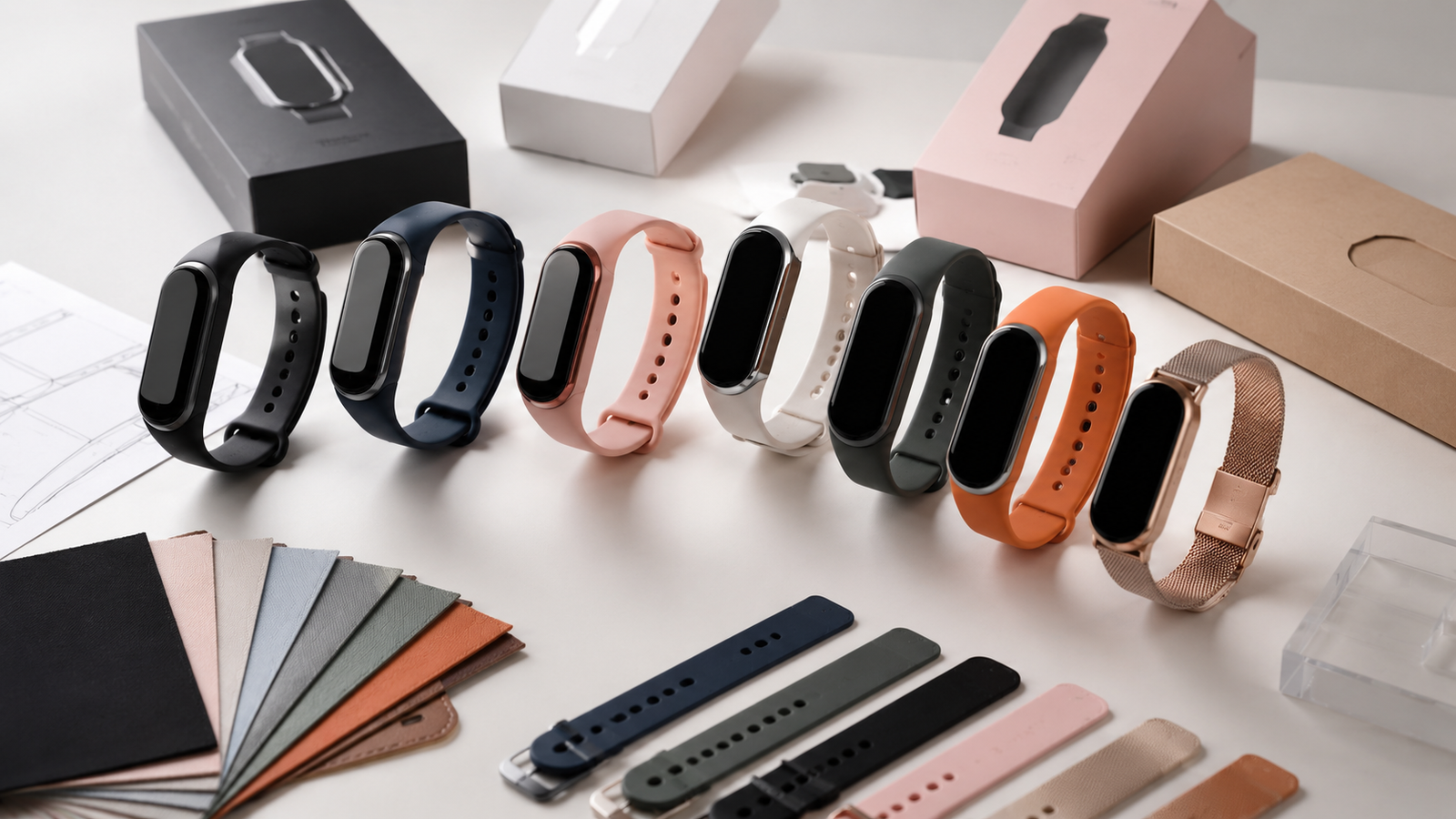
Table of Contents
- What “smart bands for education technology” means in an EU procurement context
- Key Facts for Buyers
- Key Takeaways
- Step 1 – Define the learning and operations use case first
- Step 2 – Write a specification sheet buyers and suppliers can both approve
- Step 3 – Decide between stock OEM, semi-custom and full ODM
- Step 4 – Ask the right EU compliance questions and verify documents
- Step 5 – Build a pilot that proves the device in real classrooms
- Step 6 – Structure MOQ, price tiers and lead time around the school calendar
- Step 7 – Lock quality control, warranty and long-term supply
- Comparison: smart band supply models for education programs
- Common Mistakes and Buyer Red Flags
- Practical Buyer Checklist
- FAQ
- Conclusion

Key Facts for Buyers
| Item | Typical position for EU education projects | What buyers should verify |
|---|---|---|
| Product type | Smart bands with display, optical heart-rate sensor, accelerometer, BLE connectivity | Sensor list and firmware version in the quotation |
| Connectivity | Bluetooth Low Energy 5.x to a teacher or admin app | Bluetooth SIG declaration and supported app versions |
| Charging | Magnetic pogo-pin charger, sealed or water-resistant body | IP rating claim and charging safety documentation |
| Battery | Lithium-polymer cell, multi-day typical usage | UN38.3 test summary and MSDS for transport |
| EU compliance scope | Radio Equipment Directive, EMC, RoHS, WEEE, REACH | Which directives apply to the configuration you buy |
| Order structure | Pilot batch, then scale by campus or district | MOQ per model and per color or logo variant |
| Customization | Logo, packaging, splash screen, app naming | One-time setup costs and approval steps |
| Lead time | Weeks, not days, once tooling or firmware changes are added | Firm dates for sample and bulk shipment |

Key Takeaways
- The RFQ should describe an education workflow, not only a device: who wears the band, who sees the data, and how devices are assigned and returned.
- EU compliance is configuration-specific; confirm which directives and standards apply to the exact model you order.
- A small paid pilot before a large purchase reduces both technical and budget risk.
- MOQ, price tiers and lead time should be mapped against the academic calendar, not just negotiated on unit cost.
- Software maintenance, spare parts and warranty terms matter as much as the hardware specification.
- Documents and dates on paper are stronger signals than verbal assurances.
What “smart bands for education technology” means in an EU procurement context
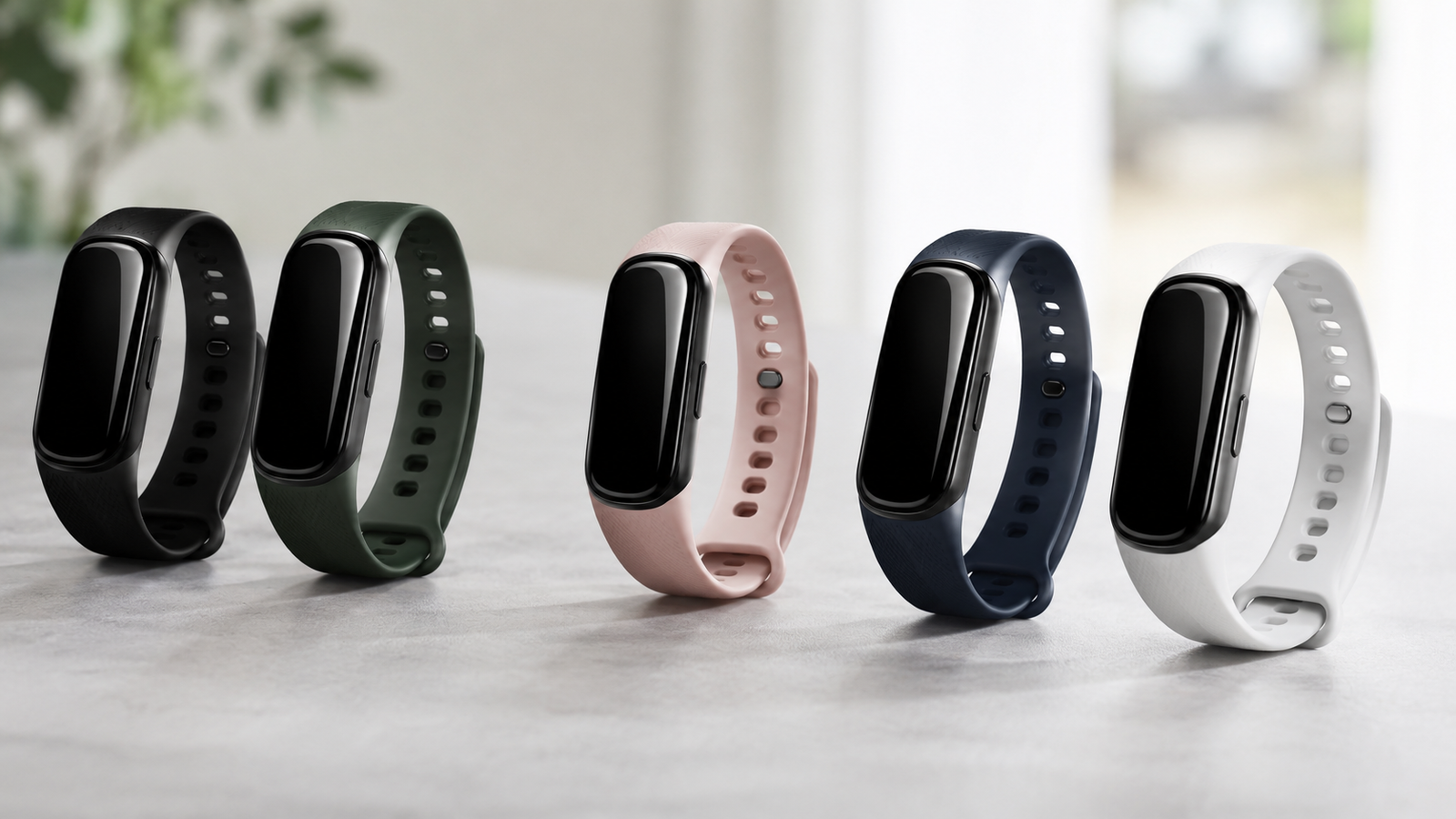
In this guide, smart bands for education technology means wrist-worn wearable devices purchased by education technology companies for use in schools, universities, training centers and student wellness programs, rather than for general consumer retail. The buyer is usually an education technology vendor, a system integrator or an institution’s procurement office, and the purchase typically includes a managed app, a device inventory list, and support for a defined school term or academic year.
This definition matters because it changes the questions in the RFQ. A consumer buyer asks about screen size and colors. An education buyer also asks how devices are assigned to students, how data is exported to a dashboard, whether the firmware can lock out features that are not relevant for younger users, and what happens when a band is lost, damaged or returned at the end of a term.
Step 1 – Define the learning and operations use case first
Before contacting any supplier, describe the program in one page. State the number of students or staff, the campuses involved, the duration of the program, and the exact purpose. Typical purposes include movement and step challenges, campus wellness initiatives, PE data collection, and attendance support. Each purpose drives a different specification.
A step-challenge program prioritizes battery life and simple charging. A PE data program prioritizes sensor sampling rate and data export. A corporate-style staff wellness program prioritizes privacy controls and how aggregated data is presented to administrators. Write down which of these applies, because the supplier’s quotation will follow your framing.
Questions to answer internally first
- How many bands are needed for the pilot, and how many for full rollout?
- Who owns the device list, and how is it synchronized with the app?
- Will students keep the bands for the whole term, or return them after each session?
- Which data leaves the device, and who can view it?
These answers shape the request for quotation. A supplier that receives a clear use case can propose a realistic configuration instead of a generic catalog item.
Step 2 – Write a specification sheet buyers and suppliers can both approve
The specification sheet is the single document that both sides reference later. Keep it to one or two pages, and separate must-have items from nice-to-have items. For education projects, the display, battery, charging method, sensor set, connectivity and firmware behavior are the most common areas of disagreement.
Specification areas that drive both cost and lead time
- Display: size, resolution and whether always-on display is required.
- Sensors: optical heart rate, accelerometer, and whether blood oxygen monitoring is needed or only nominal.
- Battery: capacity, typical days of use, and charge time.
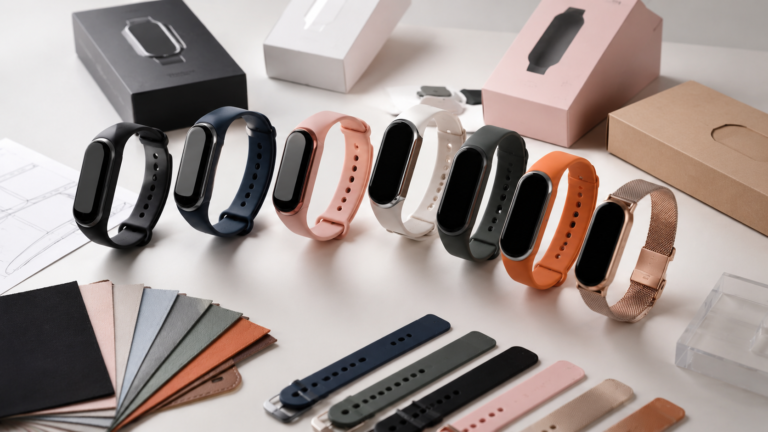
- Body and strap: material, strap type, and whether replaceable straps are needed.
- Water resistance: the IP rating you actually need for school environments, not the highest available.
- Connectivity: Bluetooth version and range expectations in classrooms.
- Firmware behavior: splash screen, language set, lockout options and over-the-air update support.
- App integration: whether the supplier provides an app for your brand or supports your existing platform.
If you plan to offer a branded student or staff experience, the STAR KING smart bands product page is a useful reference point for standard form factors and feature categories before you finalize your own sheet.
Step 3 – Decide between stock OEM, semi-custom and full ODM
There are three realistic supply models for an EU education technology company, and they differ mainly in how much development work you fund and how much control you gain.
- Stock OEM: an existing smart band model with your logo, packaging and app naming. Fastest route, lowest engineering effort, but the hardware specification stays close to the platform design.
- Semi-custom: a standard hardware platform with firmware changes, app changes, packaging and accessory adjustments. This is the most common route for education technology companies.
- Full ODM: a new enclosure, new tooling and a customized hardware design. Highest control and highest cost, with longer development and tooling timelines.
Map each model against your budget, your timeline and your need to differentiate. Many education programs do not need custom tooling; they need a reliable platform with a controlled firmware variant and a support plan. STAR KING’s private label OEM and ODM solutions outline how these three models are usually structured during quotation.
Step 4 – Ask the right EU compliance questions and verify documents
Compliance is where education purchases are delayed most often. Radio devices sold in the EU are typically within the scope of the Radio Equipment Directive, and additional requirements such as EMC, RoHS, WEEE and REACH may apply depending on the product. Because the applicable set depends on the exact configuration, you should ask the supplier to confirm the scope for the specific model you are buying rather than relying on a generic statement.
Official references are available from the European Commission Radio Equipment Directive page and the RoHS Directive on EUR-Lex. Both are useful when drafting your compliance questions.
Compliance questions to send with the RFQ
- Which directives and standards does this model configuration fall under?
- Can you provide the technical file, declaration of conformity, and test reports for this model?
- Which notified body or test laboratory produced the reports, and what are the report dates?
- What battery documentation is available for transport, including UN38.3 and MSDS?
- Who is the EU responsible person for this product, and what is their contact information?
- What changes would void the existing documentation?
These questions belong in the first RFQ, not after the purchase order. If a supplier cannot name the documents and dates, treat that as a gap to close before payment.
Step 5 – Build a pilot that proves the device in real classrooms
A pilot is the cheapest risk control available to an education buyer. Order enough units to run a real class or a small campus group through a full term cycle, and define success criteria in advance.
Pilot success criteria that matter for education
- Battery life matches the supplier’s stated typical usage in real conditions.
- Pairing and re-pairing a device to a student account works reliably.
- Data export to the dashboard is complete and understandable to teachers.
- Charging connectors survive repeated handling by students.
- Firmware update procedures work without on-site technical staff.
- Support response time from the supplier meets your program requirements.
During the pilot, keep a simple log of failures and near-misses. That log becomes the basis for the pre-shipment inspection plan on the bulk order.
Step 6 – Structure MOQ, price tiers and lead time around the school calendar
MOQ for smart bands depends on the supply model. A logo and packaging change on a standard model usually has a lower MOQ than a firmware variant, which in turn is lower than a new tooling project. Color variants, strap types and packaging formats can each carry their own minimum, so ask for MOQ per variant rather than a single headline number.
Price tiers usually step down at defined quantities, but the steps differ by model and component availability. [STAR KING TO CONFIRM] MOQ thresholds, price break quantities and sample policy for the smart band models you are considering.
Lead time planning for an academic year
Work backwards from the term start date. Include sample approval, compliance document review, production, battery-related shipping preparation, ocean or air transit, customs clearance, and a buffer for inbound inspection. If your program begins in September, the quotation discussion usually needs to happen in the first half of the year.
Ask the supplier to separate these dates in writing: sample ready date, mass production start date, mass production finish date, and shipment date. A supplier that provides only one overall lead time is harder to plan around.
Step 7 – Lock quality control, warranty and long-term supply
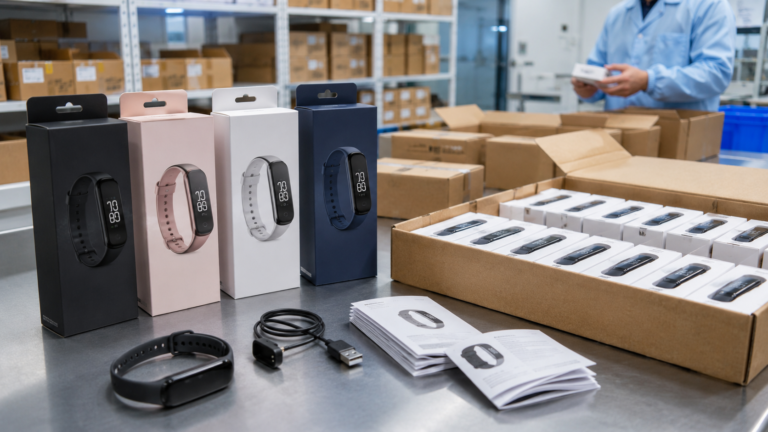
Education programs often run for multiple years, so define support terms before you scale. Quality control for wearables usually covers incoming components, production testing, and pre-shipment inspection. Ask which tests are performed on every unit and which are performed on samples.
Support terms to agree in writing
- Warranty length, scope and the process for replacement units.
- Availability of spare straps, chargers and replacement bands.
- Firmware and app maintenance commitments for the support period.
- Spare parts percentage included in the bulk order.
- Procedure and cost if a batch fails incoming inspection after arrival.
For buyers who need a longer support horizon across health and wellness use cases, the health and fitness wearable solutions overview shows how device, app and data layers are typically combined.
At this stage, a short technical call often resolves more questions than a week of email. If your team is comparing two or three suppliers, request a quotation package that includes the specification sheet, compliance document list, MOQ and lead time in one response, so the comparison is like for like.
Comparison: smart band supply models for education programs
| Decision factor | Stock OEM | Semi-custom | Full ODM |
|---|---|---|---|
| Typical effort for buyer | Low | Medium | High |
| Hardware changes | Logo and packaging only | Firmware, app, packaging, accessories | New enclosure and tooling |
| Time to first bulk shipment | Shortest | Moderate | Longest |
| MOQ pressure | Usually lowest | Moderate | Highest |
| Differentiation | Limited | Good | Highest |
| Compliance scope | May reuse existing documents if configuration unchanged | Often requires updated assessment | Full new assessment |
| Best fit | Fast pilot, limited budget | Most education technology programs | Long-term branded platform |
Common Mistakes and Buyer Red Flags
Common mistakes
- Sending a one-line RFQ with a target price but no use case, quantities or compliance expectations.
- Comparing unit prices from suppliers whose quotations cover different accessories, packaging or app support.
- Assuming a supplier’s existing certificates automatically cover a changed configuration.
- Skipping the pilot and discovering battery or pairing issues after the full order arrives.
- Underestimating shipping preparation time for devices that contain lithium batteries.
- Forgetting to budget for spare straps, chargers and replacement units.
Buyer red flags
- The supplier cannot name the directives or standards relevant to the product.
- Compliance documents are promised but never shared, even under a simple confidentiality request.
- MOQ and lead time change repeatedly without a written reason.
- Firmware or app behavior is described only verbally and cannot be demonstrated.
- No clear process exists for handling defective units after delivery.
- The quotation omits battery transport documentation entirely.
Practical Buyer Checklist
- One-page use case document completed.
- Specification sheet with must-have and nice-to-have items separated.
- Supply model chosen: stock OEM, semi-custom or full ODM.
- Compliance question list sent with the RFQ.
- Document set requested: declaration of conformity, test reports, battery documents.
- EU responsible person confirmed for the product.
- Pilot size, duration and success criteria defined.
- MOQ confirmed per model, per color and per packaging variant.
- Price tiers and sample policy in writing.
- Lead time split into sample, production and shipment dates.
- Warranty, spare parts and firmware support terms agreed.
- Inbound inspection plan prepared before shipment.
FAQ
What is the typical MOQ for smart bands in an education technology project?
MOQ depends on the supply model. Logo and packaging changes on a standard model usually carry the lowest minimum, firmware variants a higher one, and new tooling the highest. Ask for MOQ per variant, because color and packaging often have separate thresholds. [STAR KING TO CONFIRM] specific MOQ figures for the models you are evaluating.
Which EU compliance documents should an education buyer request?
Request the declaration of conformity, the applicable test reports, and battery documentation for transport such as UN38.3 and MSDS. Which directives apply depends on the final configuration, so confirm the scope for the exact model rather than for the product family as a whole.
How long does a smart band order take for a school term start?
Plan backwards from the term start date and include sample approval, compliance review, production, shipping preparation for lithium batteries, transit and inbound inspection. Bulk lead time is typically measured in weeks once samples are approved, and any change to firmware, packaging or tooling adds time.
Can smart bands be branded for a university or school program?
Yes. Common customization includes logo on the strap or packaging, splash screen, app naming and customized packaging inserts. Each element has its own setup process and cost, so list them in the RFQ so they are priced transparently.
Should we buy a stock model or develop a custom design?
A stock or semi-custom model is usually faster and lower risk for a first program. Full custom tooling makes sense when the program needs a distinct industrial design and can absorb longer development time and higher MOQ.
What should we test during a pilot?
Focus on battery life in real usage, pairing and re-pairing reliability, data export to the dashboard, charging connector durability, firmware update handling and supplier support response time. Log failures and near-misses so they can be converted into inspection points for the bulk order.
Do smart bands need battery transport documents for EU imports?
Devices containing lithium batteries are typically subject to transport requirements, and buyers should expect to receive battery documentation such as UN38.3 summaries and MSDS. Confirm the exact paperwork with your freight forwarder before shipment, because requirements depend on the shipping method and route.
Conclusion
Sourcing smart bands for education technology in the EU is a procurement exercise with a technical layer, a compliance layer and a calendar layer. Suppliers that answer all three in writing are easier to work with, and their quotations are easier to compare. Build the use case first, define the specification sheet, choose the right supply model, verify compliance documents, run a pilot, and negotiate MOQ and lead time against the academic calendar. Do that, and the RFQ stage becomes a manageable process rather than a guessing game.
STAR KING CTA
If you are preparing an RFQ for an education wearable program in the EU, send us your use case, target quantities and compliance requirements. We can respond with a specification-aligned quotation, MOQ options and indicative lead times for your evaluation. Request a smart band quotation to start the comparison, or review the smart band options before you finalize your specification sheet.
Discuss Your Smart Wearable OEM/ODM Project
Planning a smart ring, smart watch, smart band, AI glasses, AI translator, or AI voice mouse project? Contact STAR KING to discuss product positioning, sample testing, customization scope, certification requirements, lead time, and quotation details.

Team Star King
Scan WhatsApp QR code