
smart band suppliers: How to Source Smart Bands for EU Healthcare Providers: 7 Proven Steps to Reduce Procurement Risk in 2026
October 27, 2026 · Team Star King
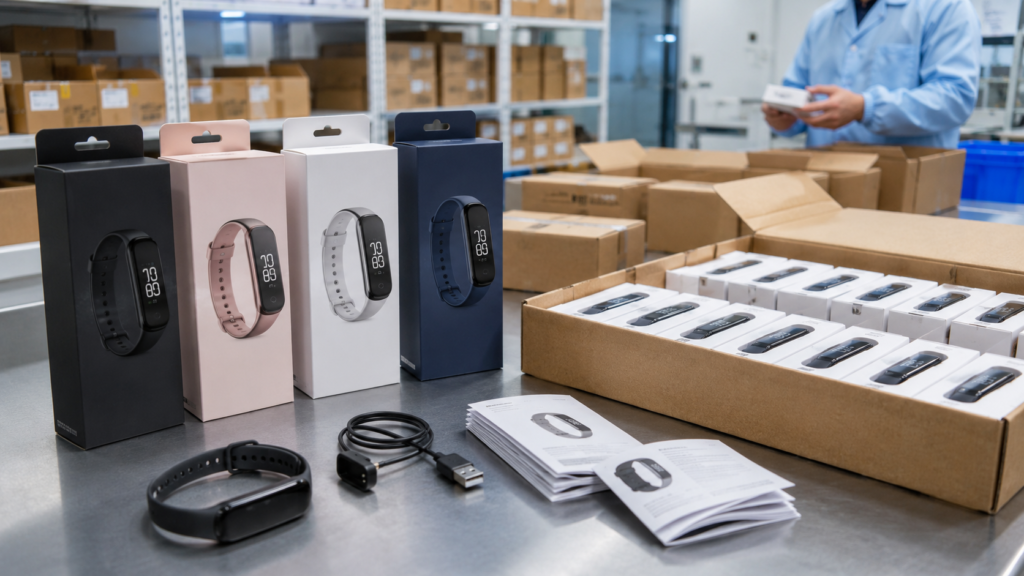
smart band suppliers buyers need a supplier evaluation process that checks product fit, OEM/ODM capability, compliance documents, quality control, pricing, lead time, and after-sales support before placing a bulk order.
Table of Contents
Table of Contents
How to Source Smart Bands for EU Healthcare Providers: 7 Proven Steps to Reduce Procurement Risk in 2026
This guide explains how healthcare solution providers should source smart bands for EU deployment in seven auditable steps, from requirements definition and supplier screening to sample testing, CE and RoHS verification, app integration, and lead time planning. The core answer is that successful procurement depends less on picking the thinnest band and more on matching firmware, data-handling and compliance documentation to the specific EU care program you intend to serve.
Buyers in this category are rarely shopping for a consumer gadget. They are buying a data-capture endpoint for a remote monitoring service, a corporate wellness program, or a senior-care pilot. That changes the evaluation criteria: documentation, app interoperability, battery predictability, and supply continuity carry more weight than raw specification headlines. If you are a healthcare solution provider preparing a purchase order for an EU launch, the steps below are built to protect you from costly post-delivery surprises.
smart band suppliers: Table of Contents
- Short Answer
- Key Takeaways
- Key Facts for Buyers
- Step 1: Define the Care Program Before the Product
- Step 2: Screen Suppliers on Evidence, Not Brochures
- Step 3: Run a Structured Sample and Field Pilot
- Step 4: Confirm Certification Requirements for Your EU Use Case
- Step 5: Map App, Firmware, and Data-Integration Requirements
- Step 6: Negotiate MOQ, Pricing Drivers, and Lead Time Together
- Step 7: Lock Down Packaging, Logistics, and After-Sales Terms
- Smart Band Comparison Table for Healthcare Deployments
- Common Mistakes and Buyer Red Flags
- Practical Buyer Checklist
- FAQ
- Conclusion
Short Answer
To source smart bands for EU healthcare providers, define the monitoring use case first, then shortlist suppliers who can show traceable testing and compliance documentation, run a field pilot with real users, and only then negotiate MOQ and price against a signed specification. Certification scope, app integration, and battery performance under continuous monitoring typically determine whether a project succeeds, so buyers should verify each item before committing to volume.

Key Takeaways
- Healthcare procurement rewards specification discipline: start from the care program, not from a catalog.
- Request evidence for every compliance claim; EU requirements depend on the product configuration and intended use.
- Run a pilot with 10-50 units before approving mass production.
- Confirm app, firmware, and data-export capabilities early; late software rework is the most common schedule risk.
- MOQ, unit price, and lead time move together; negotiate them as a package.
- Battery type and transport documentation affect cost and delivery into the EU.
- Agree on warranty, spare parts, and replacement policy before the first shipment.
Key Facts for Buyers
| Procurement Factor | What Healthcare Buyers Should Verify | Why It Matters in the EU |
|---|---|---|
| Intended use | Wellness vs. clinical claim boundary in your program design | Determines which regulatory pathway may apply |
| Certification scope | CE-marked documents tied to the exact model and firmware version | Certificates are configuration-specific, not brand-wide |
| Radio and battery | Bluetooth version, battery type, UN38.3 test summary availability | Affects carrier acceptance and safety documentation |
| ROHS and materials | Restricted-substance declarations per component | Required for EU market access and public tenders |
| Data flow | Where health data is stored and who controls the endpoint | Shapes GDPR obligations for the deploying provider |
| Battery life | Runtime under continuous heart-rate and SpO2 sampling | Drives service cost and user compliance |
| MOQ | MOQ per model and per color, plus price breaks | Balances pilot volume against landed cost |
| Lead time | Sample, mass production, and shipping phases separately | Prevents pilot-to-rollout gaps |
| After-sales | Warranty period and spare-part availability window | Protects multi-year care contracts |
Step 1: Define the Care Program Before the Product
Begin with the monitoring workflow your healthcare solution provider will operate. A remote patient monitoring service tracks adherence and trends over weeks; a corporate wellness program needs low-friction daily wear; a senior-care deployment may prioritize simple charging, large readouts, and caregiver-visible alerts. Each workflow implies a different weighting of sensor set, battery life, comfort, and app behavior.
Write a one-page requirements brief covering: population served, duration of wear per day, data points collected (heart rate, SpO2, sleep, activity), who reads the data, and how devices are returned or replaced. This brief becomes the baseline for every supplier conversation and protects you from being sold a specification you did not ask for. The health and fitness wearable solution pages are a useful reference for mapping program types to device categories.
Distinguish wellness from clinical intent
Consumer-grade smart bands typically provide wellness trend information, not diagnostic results. If your program implies diagnosis or treatment decisions, the regulatory pathway may change substantially, and buyers should verify requirements with a qualified EU regulatory consultant. Keep claims aligned with the intended-use statement you agree with your supplier.
Image suggestion: a healthcare program manager reviewing a requirements brief next to a smart band on a desk.
Step 2: Screen Suppliers on Evidence, Not Brochures
Supplier screening is where most procurement risk is either absorbed or amplified. Ask each candidate for a documented evidence pack: test reports mapped to the exact model, a component-level battery declaration, a firmware version log, and a clear statement of what is customizable. A supplier who answers in documents rather than adjectives is generally easier to audit later.
For a structured comparison, see the smart bands product range and request the matching specification sheet for each candidate model. Evaluate how the hardware, firmware, and app customization options align with your program rather than comparing headline sensor counts.
Useful screening questions
- Can you share test summaries for the exact model and firmware you are quoting?
- Which elements are customizable: logo, packaging, app skin, firmware parameters, or sensor sampling intervals?
- What is the MOQ per model and per color, and how do price breaks work?
- What is the standard lead time for samples, and for a first mass-production order?
- How are firmware updates distributed after deployment?
Model this stage on recognised good practice for supplier evaluation, such as the quality management principles described by the ISO 9001 quality management standard, which many manufacturers use as their operating framework.
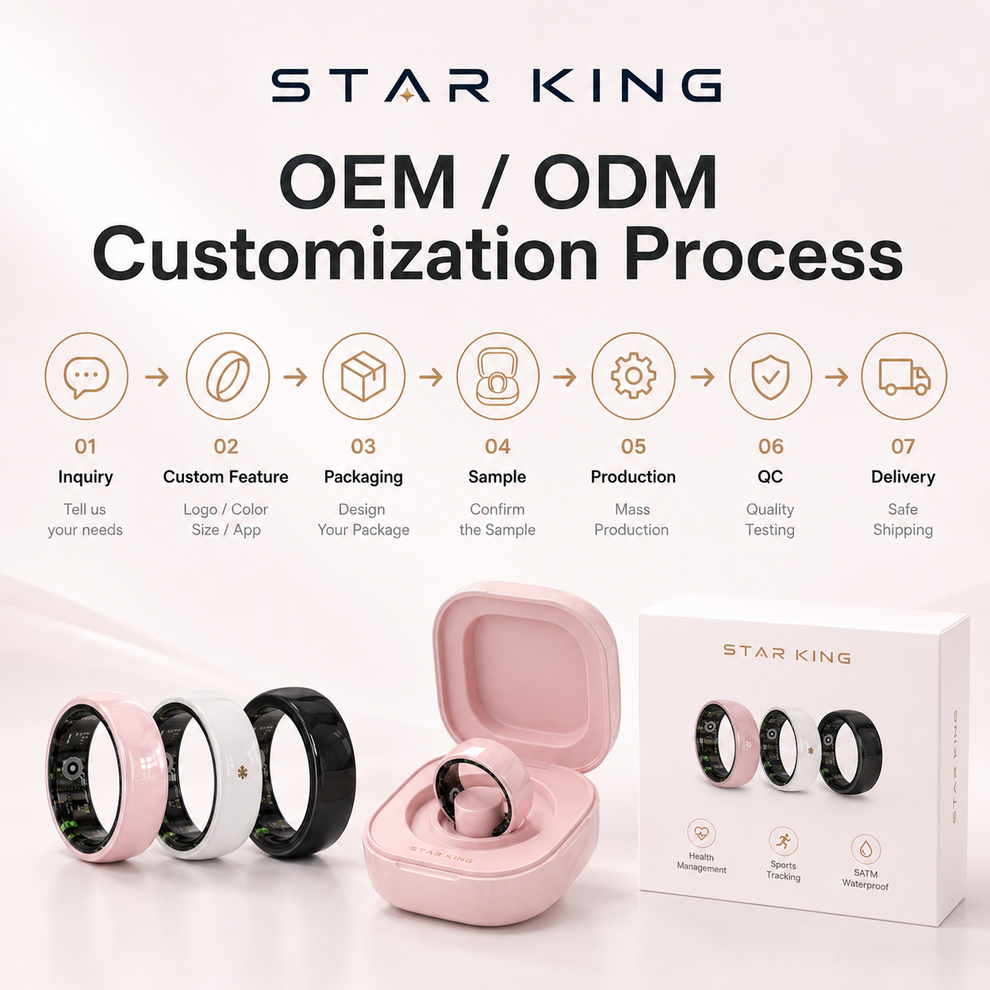
If you need help translating your care program into a device specification, you can discuss your requirements with the STAR KING team before you issue an RFQ.
Step 3: Run a Structured Sample and Field Pilot
Samples should test the use case, not just the box. Order evaluation units for the exact firmware you intend to deploy, then run a pilot with a small group of representative users for at least two weeks. Record charging behavior, comfort complaints, sync failures, and data completeness. A band that performs well on a spec sheet can still fail on adherence if charging is inconvenient or notifications are confusing.
| Pilot Test Area | What to Record | Pass Criteria (Example) |
|---|---|---|
| Battery runtime | Days per charge under your sampling settings | Meets your service-window requirement |
| Data sync | Successful uploads per week per user | No unresolved dropouts in the pilot |
| Comfort and fit | Wear-hours per day, skin reaction reports | Meets minimum wear-hours threshold |
| Charging workflow | Missed charge events, time to full charge | Acceptable to users and caregivers |
| App usability | Support tickets per user in pilot | Within your support budget |
Document the pilot against your own acceptance criteria and keep the results. If you later need to raise a quality claim, a signed pilot record is far stronger than anecdotal feedback. Testing methods for environmental and durability performance are often aligned with international standards such as IEC publications; ask suppliers which standards they reference.
Step 4: Confirm Certification Requirements for Your EU Use Case
Certification is configuration-specific. A supplier certificate is not automatically valid for every model, color, firmware build, or packaging variant you order. For EU deployment, healthcare buyers typically need to confirm CE marking documentation, RoHS conformity, radio equipment compliance where applicable, and battery transport documentation. Whether additional requirements apply depends on the intended use and the claims in your program materials; buyers should verify with a regulatory specialist rather than assume.
Ask for the declaration of conformity and test reports that name your exact model. Cross-check radio requirements against the EU Radio Equipment Directive framework, summarised in the European Commission RED overview, and check restricted-substance obligations against the relevant EU RoHS guidance. For medical-adjacent use cases, review the EU Medical Device Regulation information portal and confirm the classification question with a specialist.
Image suggestion: compliance folder with CE declaration and test reports beside a smart band packaging box.
Step 5: Map App, Firmware, and Data-Integration Requirements
Software decides whether the hardware is usable in a care program. Before purchase, agree on who owns each layer: the supplier’s reference app, a white-label app, or your own platform consuming data through an SDK or API. Confirm the sampling interval for heart rate and SpO2, how historical data is exported, and what happens to data if connectivity drops for several hours.
Data protection deserves explicit attention. The deploying healthcare provider usually defines the legal basis and retention rules, but the device and app architecture must support them. Confirm where data is stored, whether a cloud region can be selected, and what identifiers are attached to records. This is one of the most common sources of delay when healthcare buyers move from pilot to rollout.
If your organization also runs wellness or return-to-work programs, the corporate wellness application overview shows typical deployment models and can help you frame integration questions to suppliers.
Step 6: Negotiate MOQ, Pricing Drivers, and Lead Time Together
MOQ, price, and lead time are one negotiation, not three. Unit price is driven by display and sensor selection, battery capacity, case materials, band material, packaging, app customization, and order volume. A low headline price with a high MOQ can produce worse landed cost than a slightly higher unit price at a volume you can actually absorb.
| Decision | Lower-Cost Path | Higher-Cost Path | Trade-off to Weigh |
|---|---|---|---|
| Volume | Higher MOQ, lower unit price | Lower flexible MOQ | Working capital vs. rollout flexibility |
| Customization | Standard firmware, standard app | Custom firmware and app skin | Development time vs. brand and workflow fit |
| Sensors | Standard heart-rate and activity set | Extended sensing and higher sampling | Data richness vs. battery life and cost |
| Packaging | Standard carton | Private-label retail packaging | Brand impact vs. tooling and MOQ impact |
| Logistics | Consolidated sea freight | Air freight for pilot speed | Cash flow timing vs. urgency |
Ask for each quotation to state the assumed battery configuration and shipping term, because lithium battery shipments into the EU carry documentation requirements that can change both cost and transit time. A freight forwarder can confirm whether your carrier requires a UN38.3 test summary and safety data sheet wording for the specific battery.
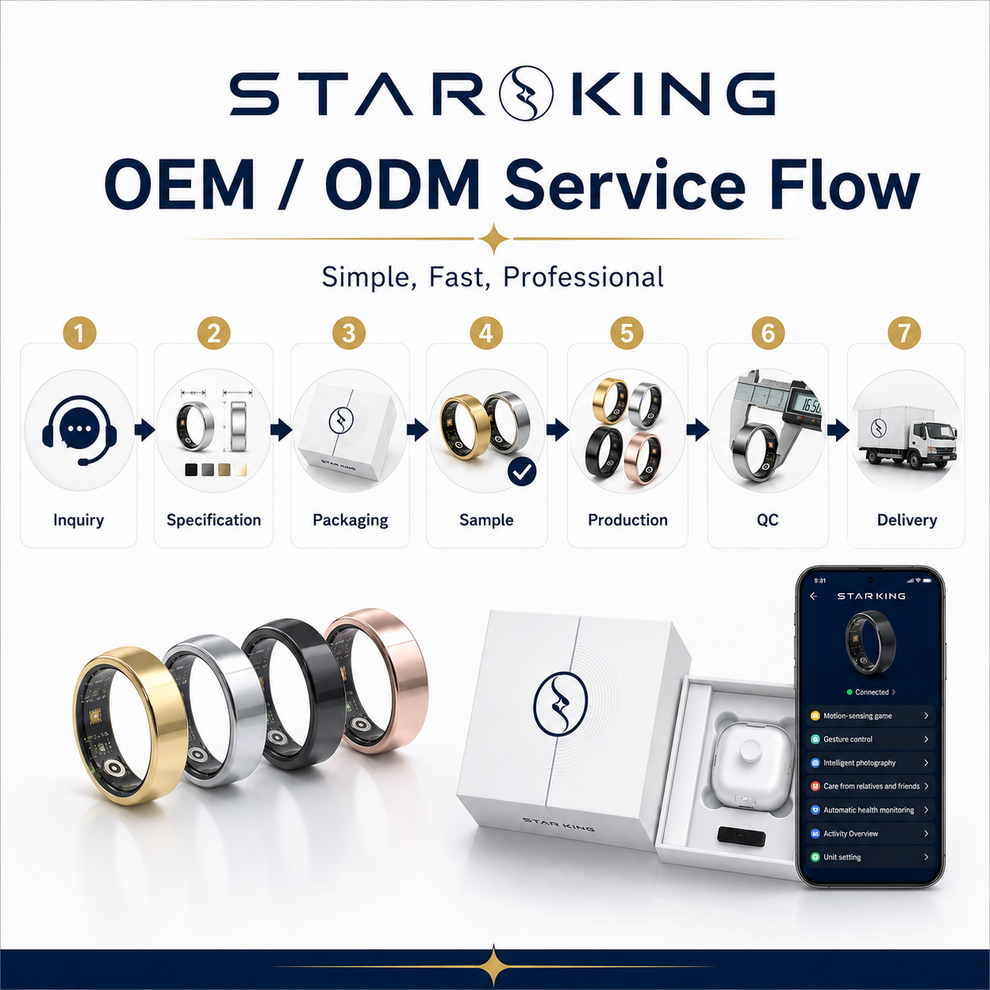
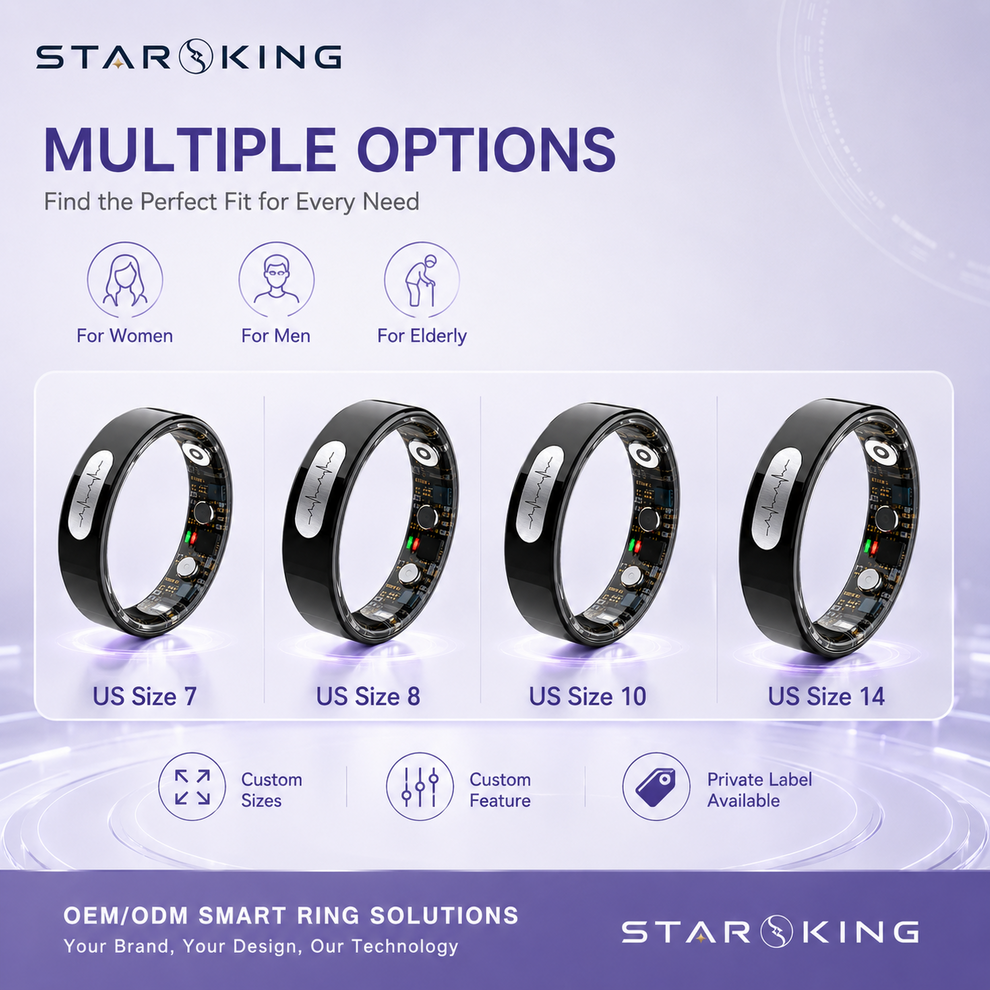
The private label OEM/ODM solution overview explains which customization layers typically affect MOQ and development time, helping you choose a realistic starting configuration.
Step 7: Lock Down Packaging, Logistics, and After-Sales Terms
The last step protects the first year of operation. Agree on packaging content, language requirements for EU markets, serial-number tracking, and the documents that travel with each carton. Multi-language packaging and instructions may be expected by your distribution partners; confirm the exact scope in the purchase agreement.
Define warranty duration, what counts as a defect, how replacement units are shipped, and how long spare parts remain available. For multi-year care contracts, an unclear spare-part window is a business continuity risk. Also clarify whether tooling, molds, and app code developed for your project are owned by you; ownership terms should be written into the contract, not assumed.
After-sales terms worth negotiating
- Defect rate thresholds that trigger replacement or credit.
- Replacement unit turnaround time for EU destinations.
- Spare-part availability window after the final production run.
- Firmware maintenance and update support period.
- Documentation of changes to components or firmware between batches.
Smart Band Comparison Table for Healthcare Deployments
Use this decision table to shortlist configurations against program type. Exact specifications vary by model; request the current datasheet for each candidate product.
| Program Type | Priority Features | Battery Priority | App Priority | Sampling |
|---|---|---|---|---|
| Remote monitoring | Reliable heart-rate and SpO2 trends, sync stability | Long runtime between charges | Data export and alerting to care team | Continuous trends |
| Corporate wellness | Activity, sleep, comfort, low-friction wear | Weekly charge acceptable | Simple user app, privacy clarity | Standard intervals |
| Senior care | Simple interface, durable band, caregiver visibility | Minimal charging burden | Caregiver dashboards | Mixed |
| Clinical pilot | Documented test evidence, stable firmware | Program-defined | SDK or API access | Program-defined |
Common Mistakes and Buyer Red Flags
- Buying to a consumer spec sheet. Sensor counts and screen size look impressive but do not indicate data quality for a care program.
- Accepting brand-level certificates. Certificates must name the exact model and configuration you order.
- Skipping the pilot. Field testing exposes charging, comfort, and sync problems that spec reviews miss.
- Leaving software to the end. Integration problems delay rollout more than hardware issues.
- Ignoring battery documentation. Missing transport paperwork can stall shipments at the carrier stage.
- Red flag: refusal to share test reports or reluctance to state a firmware version.
- Red flag: vague ownership terms for app code, tooling, or data exports.
- Red flag: prices quoted without stating battery configuration or shipping terms.
Practical Buyer Checklist
| # | Checkpoint | Evidence to Collect |
|---|---|---|
| 1 | Program requirements documented | Signed one-page brief |
| 2 | Supplier evidence pack requested | Test reports, firmware log, customization statement |
| 3 | Samples match intended firmware | Sample invoice with firmware version |
| 4 | Pilot completed | Pilot report against acceptance criteria |
| 5 | Certification scope confirmed | Declaration of conformity naming the model |
| 6 | App and data flow agreed | Integration specification or SDK notes |
| 7 | MOQ and price breaks confirmed | Quotation with volume tiers |
| 8 | Lead time phased | Schedule for samples, production, and freight |
| 9 | Battery transport documents checked | Carrier confirmation and test summary |
| 10 | After-sales terms signed | Warranty, spare parts, and ownership clauses |
FAQ
What MOQ should a healthcare provider expect when ordering smart bands?
MOQ depends on the model and the customization level, and pilot volumes are sometimes possible with standard configurations. Ask for MOQ per model and per color, plus the price break for each volume tier, so you can compare offers on a comparable basis. [STAR KING TO CONFIRM current MOQ floors per model]
Are smart bands sold in the EU always treated as medical devices?
Not automatically. The answer depends on intended use and the claims made in your program materials. Wellness positioning follows one route; diagnostic or treatment claims may bring additional regulatory obligations. Buyers should confirm classification with a qualified EU regulatory advisor before launch.
Which certifications should be requested for a first EU order?
Typically buyers request CE-related documentation, RoHS declarations, and battery transport documentation, with radio equipment compliance where applicable. Requirements vary by product configuration and target market, so request documents that name your exact model and verify them with your compliance advisor.
How long does delivery take from sample approval to first shipment?
Plan the timeline in three phases: mass production, packaging and customization, and freight to your EU destination. Lead time depends on volume, customization scope, and shipping mode. [STAR KING TO CONFIRM standard production and delivery lead times]
Can a supplier support app integration with an existing care platform?
It depends on the firmware and app architecture. Ask whether an SDK or API is available, what data fields can be exported, and how frequent sampling can be set. Confirm the integration approach in writing before issuing a purchase order. [STAR KING TO CONFIRM SDK and API availability]
What battery life should a continuous-monitoring program plan for?
Runtime varies substantially with sampling frequency, screen use, and notification settings. Request vendor runtime data measured under your intended configuration rather than headline figures, and validate it in the pilot. [STAR KING TO CONFIRM battery capacity and runtime per model]
Conclusion
Sourcing smart bands for EU healthcare providers is a specification and evidence exercise. Define the care program, screen suppliers on documentation, run a real pilot, verify certification scope for the exact configuration, settle software and data flow, negotiate MOQ with price and lead time together, and lock after-sales terms into the contract. Buyers who follow these seven steps trade a small amount of upfront structure for a much lower probability of deployment delays and rework.
Start Your Smart Band Procurement with STAR KING
STAR KING supports healthcare solution providers with smart band OEM and private-label programs, including customization, sample development, and production planning. If you are preparing a purchase decision for an EU care program, request a quotation and share your requirements brief so our team can respond with the matching configuration, MOQ options, and documentation scope for your review.
Request a Smart Band Quotation for Your Healthcare Program
Discuss Your Smart Wearable OEM/ODM Project
Planning a smart ring, smart watch, smart band, AI glasses, AI translator, or AI voice mouse project? Contact STAR KING to discuss product positioning, sample testing, customization scope, certification requirements, lead time, and quotation details.

Team Star King

Scan WhatsApp QR code
Leave a Reply