
AI voice mouse: How System Integrators Can Evaluate AI Voice Mouse Suppliers: 7 Checks for Middle East Procurement
October 30, 2026 · Team Star King
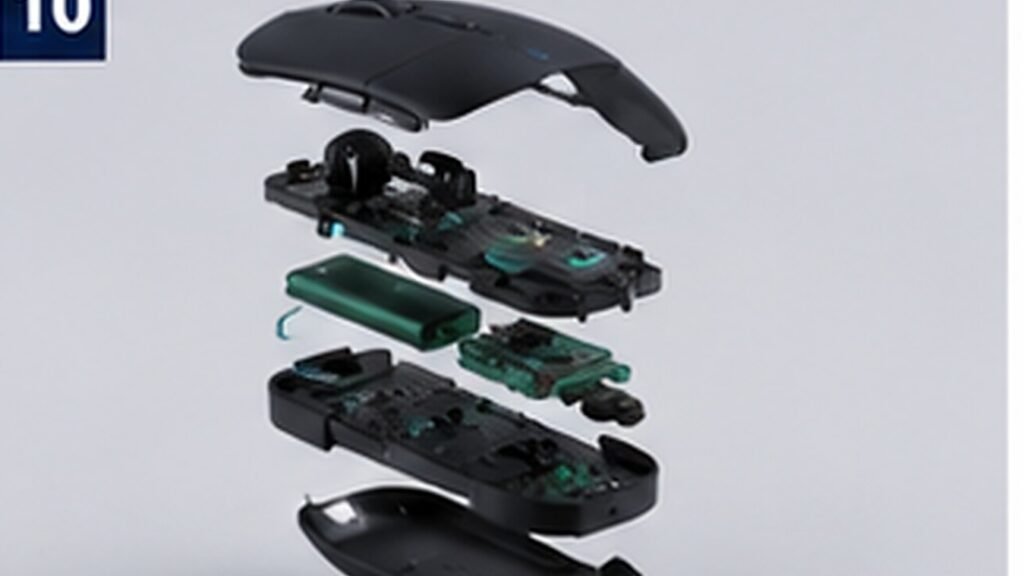
How System Integrators Can Evaluate AI Voice Mouse Suppliers: 7 Checks for Middle East Procurement
An AI voice mouse is a computer peripheral that combines a pointing device with voice input, on-device or cloud-based speech recognition, and often translation or voice-to-text output. For system integrators in the Middle East, the practical question is not which mouse has the most features, but which supplier can document firmware behavior, language coverage, driver compatibility, and compliance for the countries where the devices will be deployed.
Table of Contents
Table of Contents
This guide gives procurement and technical teams a structured evaluation path: seven supplier checks, a buyer checklist, and a short list of red flags to catch before you commit to a pilot order.
Short Answer
Evaluate AI voice mouse suppliers on seven points: language and dialect support, OS and driver compatibility, SDK/API access, firmware update policy, certification evidence for each destination market, MOQ and sample lead time, and after-sales replacement terms. For Middle East deployments, ask for Arabic input testing in Gulf dialects and confirm how voice data is processed. A controlled sample pilot with written acceptance criteria is the lowest-risk way to qualify a supplier.
Table of Contents
- Why Middle East System Integrators Need a Different Evaluation Approach
- What Is an AI Voice Mouse in a System Integration Context?
- 7 Supplier Checks for AI Voice Mouse Procurement
- Key Facts for Buyers
- Comparison Table: Evaluation Criteria for AI Voice Mouse Suppliers
- Common Mistakes and Buyer Red Flags
- Practical Buyer Checklist
- FAQ
- Conclusion

Key Takeaways
- For system integrators, an AI voice mouse is a component in a larger solution, so compatibility and firmware control matter more than retail packaging.
- Arabic language support, including dialect handling and text direction, should be verified with recorded test scripts, not marketing claims.
- Certification is market- and SKU-specific; ask for the certificate scope and the exact model number it covers.
- A small paid pilot with written acceptance criteria is more reliable than a large first order based on samples alone.
- MOQ, lead time, and warranty replacement terms should be agreed in writing before tooling or private label investment.

Why Middle East System Integrators Need a Different Evaluation Approach
System integrators typically deploy AI voice mouse units as part of workplace productivity, education, or public-sector projects. That changes the supplier relationship in three ways.
First, deployment environments are mixed. A single project may include Windows desktops, thin clients, and virtual desktop infrastructure. Second, language requirements are not uniform. Arabic is the primary language in many Gulf projects, but English, Urdu, Hindi, and Tagalog are also common in workplaces. Third, compliance and import documentation may be requested by the end customer or by customs, and the requirement can differ by country.
For these reasons, a consumer-style review of the AI voice mouse is not enough. Integrators need supplier evidence they can pass on to their own customers.
What Is an AI Voice Mouse in a System Integration Context?
In a system integration context, an AI voice mouse is a voice-enabled input peripheral that must fit into an existing IT stack. The evaluation should cover the device, the software layer, and the supplier’s ability to support both over the deployment lifecycle.
A useful definition for procurement documents is: a USB or wireless mouse with a microphone array and a voice processing function that converts speech into text, commands, or translated output, supported by firmware and software that the integrator can configure or update.
That definition leads directly to the questions that matter: which languages, which operating systems, which update path, and which party is responsible when the software changes.
7 Supplier Checks for AI Voice Mouse Procurement
1. Language and Dialect Support
Ask the supplier to provide a written language matrix for the AI voice mouse model you are considering. For Middle East projects, this should include Arabic input and output, handling of right-to-left text, and expected accuracy under office background noise.
Request a recorded test using your own script, not a supplier demo. A practical script might include product names, customer names, and mixed Arabic-English phrases. If the supplier cannot test Gulf dialect variants, document that limitation and plan a pilot before committing.
For integrators building multilingual workplace solutions, the AI voice mouse should also be tested alongside other speech tools. You can review related device categories in the AI translators product range to see how the supplier positions language coverage across products.
2. OS, Driver, and Virtual Desktop Compatibility
Confirm which operating systems are officially supported and which are only “tested informally.” Ask for the driver signing approach and whether the device requires administrator rights to install.
In virtual desktop or thin-client environments, microphone pass-through and voice processing location matter. If the AI voice mouse sends audio to a cloud service, the integrator must confirm network policy and data handling with the end customer.
Ask for a compatibility table that lists OS versions, driver version, and known limitations. Test on the oldest OS version in your deployment, not only the newest.
3. SDK, API, and Integration Options
System integrators often need to embed voice input into their own software. Ask whether the supplier offers an SDK, API documentation, or a local integration guide.
If no SDK is available, clarify whether the device behaves as a standard keyboard and microphone at the OS level. That fallback is often sufficient for simple dictation but may not support custom commands.
Where integration is important, review the supplier’s AI office productivity solutions to understand the wider software and hardware ecosystem before committing to a single SKU.
4. Firmware Update Policy and Change Control
Firmware and voice models change. Ask how updates are delivered, whether updates are optional, and how the supplier notifies integrators of behavior changes.
For multi-site deployments, a forced firmware update can break a validated workflow. Request a written policy on update cadence, rollback options, and version tracking. [STAR KING TO CONFIRM]
5. Certification Evidence for Each Destination Market
Certification requirements depend on the product configuration and the destination country. For radio-equipped wireless models, CE, FCC, or local equivalent approvals may be required; battery-powered devices may need UN38.3 test summaries and safety documentation for transport.
Ask for the certificate scope and the model number it covers. A certificate for one SKU does not automatically cover a private label variant. Purchasers should verify requirements with their customs broker or local authority.
Official references include the U.S. Federal Communications Commission (FCC) for radio frequency equipment and the International Electrotechnical Commission (IEC) for standards context. Neither link is a substitute for destination-market verification.
6. MOQ, Sample Lead Time, and Pilot Order Structure
For awareness-stage evaluation, ask for the standard MOQ for the AI voice mouse, the sample lead time, and whether a small pilot order below MOQ is possible.
Compare quoted MOQ against the pilot quantity your first project can absorb. A supplier that supports a documented pilot with the same firmware as mass production gives you a more reliable test than one that offers only retail samples.
7. After-Sales, Warranty, and Spare Parts
Ask how defective units are handled, whether replacement units are shipped from a regional warehouse or from the factory, and what the warranty period covers.
For integrators, a clear DOA (dead on arrival) policy and a spare-parts buffer are often more valuable than a lower unit price. Confirm the terms in writing before the first order.
Key Facts for Buyers
| Item | What to ask the supplier | Why it matters for Middle East integrators |
|---|---|---|
| Language support | Written language matrix and Arabic input test | Arabic and mixed-language input is often a project requirement |
| OS compatibility | Supported OS versions and driver signing | Deployments may include older Windows and virtual desktops |
| Integration | SDK, API, or standard HID fallback | Custom workflows may need programmatic voice input |
| Firmware | Update policy and rollback options | Validated workflows can be disrupted by updates |
| Certification | Certificate scope and model number | Import and customer acceptance may require specific documents |
| MOQ and lead time | Standard MOQ, sample and pilot lead times | Pilot sizing and project scheduling depend on these figures |
| After-sales | DOA policy, warranty period, spare parts | Multi-site support needs predictable replacement terms |
Comparison Table: Evaluation Criteria for AI Voice Mouse Suppliers
Use this table to compare two or three suppliers on the same criteria. Score each item from 1 (weak) to 5 (strong) and require written evidence for any score above 3.
| Criterion | Evidence to request | Supplier A | Supplier B |
|---|---|---|---|
| Arabic language testing | Recorded test with your script | ||
| OS compatibility list | Version table with known issues | ||
| SDK or API | Documentation and sample code | ||
| Firmware update policy | Written policy with version history | ||
| Certification coverage | Certificate scope and model numbers | ||
| MOQ and pilot terms | Quotation with pilot quantity | ||
| Warranty and DOA policy | Written policy and replacement lead time |
This comparison table is a starting point. For a broader view of hardware customization options, see the private label OEM/ODM solutions page.
Common Mistakes and Buyer Red Flags
Common Mistakes
- Testing only English. Arabic input and right-to-left text behavior should be tested before any pilot order.
- Accepting a certificate for a different model. Always match the certificate to the SKU and destination market.
- Ignoring firmware change control. An unplanned update can invalidate a tested workflow.
- Choosing on unit price alone. Replacement and support costs can outweigh a small price difference over a multi-year deployment.
Buyer Red Flags
- The supplier cannot state which languages are supported on the device versus in a cloud service.
- No written firmware update policy or version history is available.
- Certification documents are promised but not shared for review.
- MOQ and lead time change after technical questions are raised.
- The supplier refuses a paid pilot with written acceptance criteria.
Practical Buyer Checklist
Use this checklist before issuing a purchase order for an AI voice mouse pilot.
- Language matrix received and Arabic input tested with your script.
- OS compatibility table received, including the oldest OS version in scope.
- Driver signing and installation rights confirmed.
- SDK, API, or standard HID behavior confirmed.
- Firmware update policy and rollback options in writing.
- Certification scope and model numbers reviewed for the destination market.
- MOQ, sample lead time, and pilot quantity quoted in writing.
- Warranty, DOA policy, and spare-parts terms agreed.
- Data handling and cloud processing location confirmed with the end customer.
For teams comparing suppliers across categories, the STAR KING sourcing and hardware blog publishes related evaluation guides.
Buyers can also review STAR KING AI Voice Mouse OEM/ODM options to compare product positioning, customization scope, and sample planning.
FAQ
What is the minimum order quantity for an AI voice mouse?
MOQ varies by model and customization level. Ask for the standard MOQ and whether a lower-quantity paid pilot is available. MOQ for private label versions is typically higher than for standard models. [STAR KING TO CONFIRM]
Can the AI voice mouse support Arabic?
Language support depends on the model and software configuration. Request a written language matrix and a recorded Arabic input test before ordering. Right-to-left text handling should be tested in the target application.
Does the AI voice mouse require an internet connection?
It depends on whether voice processing is on-device, cloud-based, or both. Ask the supplier to document which functions work offline and where audio is processed.
Which certifications should a Middle East integrator request?
Requirements depend on the product configuration and the destination country. For wireless models, radio frequency approvals may apply; battery-powered devices may require UN38.3 transport documentation. Buyers should verify with their customs broker or local authority.
How long does a sample order take?
Sample lead time varies by model and customization. Request a written lead time for samples and for pilot quantities, and confirm whether both use the same firmware as mass production. [STAR KING TO CONFIRM]
Can the AI voice mouse be customized with our logo and packaging?
Logo and packaging customization are commonly available for private label orders, subject to MOQ. Confirm artwork requirements, approval steps, and packaging lead time in the quotation.
What warranty terms should we expect?
Warranty periods and DOA policies vary by supplier. Ask for the warranty period, replacement process, and spare-parts availability in writing before placing the order. [STAR KING TO CONFIRM]
Conclusion
For system integrators in the Middle East, the AI voice mouse decision is a supplier qualification exercise, not a product browsing exercise. The seven checks in this guide give you a defensible way to compare suppliers on language support, integration, firmware control, certification, MOQ, and after-sales terms.
Start with a written language and compatibility requirement, request evidence for each check, and validate with a paid pilot before scaling. That sequence reduces the risk of a deployment that works in a demo but fails in the field.
Next Step: Request Product Samples
If you are evaluating an AI voice mouse for a Middle East deployment, the practical next step is a sample or pilot order with written acceptance criteria. Request product samples from STAR KING to review language support, driver compatibility, firmware behavior, and documentation for your target market.
Discuss Your Smart Wearable OEM/ODM Project
Planning a smart ring, smart watch, smart band, AI glasses, AI translator, or AI voice mouse project? Contact STAR KING to discuss product positioning, sample testing, customization scope, certification requirements, lead time, and quotation details.

Team Star King

Scan WhatsApp QR code
Leave a Reply