
AI voice mouse sourcing: The Ultimate 2026 Guide to Sourcing AI Voice Mouse for Retail Chains in the Middle East: 7 Critical Steps for Supplier Selection
October 3, 2026 · Team Star King
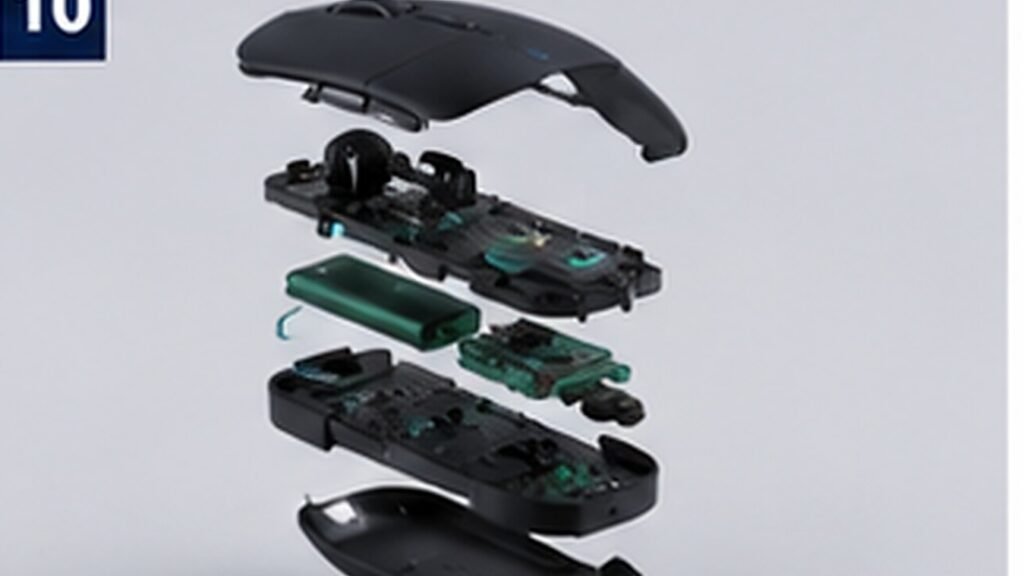
The Ultimate 2026 Guide to Sourcing AI Voice Mouse for Retail Chains in the Middle East: 7 Critical Steps for Supplier Selection
For retail chains across the Middle East, pinpointing a reliable AI voice mouse sourcing partner is not just a procurement task—it’s a strategic move that can elevate your product portfolio and drive repeat sales. The right supplier combines hardware expertise, regional compliance knowledge, and scalable OEM/ODM support. This guide walks you through a 7-step process to identify, evaluate, and secure a manufacturing partner that aligns with your volume, customization, and timeline needs.
Table of Contents
Table of Contents
Short Answer
To source an AI voice mouse for Middle Eastern retail chains, focus on verified manufacturers offering OEM/ODM services, confirm compliance with regional certifications (e.g., GCC Standardization Organization – GSO), evaluate MOQ flexibility, and test samples thoroughly. Prioritize suppliers with experience in voice-command technology and multilingual support for Arabic and English.

Table of Contents
- Step 1: Define Your Retail Chain’s Requirements
- Step 2: Identify Potential Suppliers
- Step 3: Evaluate OEM/ODM Capabilities
- Step 4: Negotiate MOQ and Pricing
- Step 5: Verify Compliance for the Middle East
- Step 6: Test Samples and Validate Quality
- Step 7: Finalize Logistics and After-Sales
- Supplier Comparison Table
- Practical Buyer Checklist
- FAQ

Key Takeaways
- Selecting the right AI voice mouse supplier requires a structured approach covering compliance, MOQ, and OEM/ODM flexibility.
- Middle East retail chains must prioritize suppliers familiar with GSO and local import regulations.
- Always request samples and conduct thorough testing before committing to bulk orders.
- Negotiate MOQ based on your projected sales volume and supplier’s production capabilities.
- Ensure clear communication on packaging, branding, and after-sales support.
- Leverage STAR KING’s Private Label OEM/ODM solutions for tailored AI voice mouse production.
Key Facts for Buyers
| Factor | Details |
|---|---|
| Typical MOQ | 500–1,000 units for OEM/ODM; may be negotiable based on customization |
| Lead Time | 30–60 days after sample approval and deposit |
| Certifications | CE, FCC, RoHS, GSO (varies by configuration and destination) |
| Customization Options | Logo, packaging, firmware, voice commands (Arabic/English) |
| Battery Shipping | UN38.3 required for lithium batteries; MSDS may be needed for air freight |
| Supplier Location | China (Shenzhen, Dongguan) dominates AI hardware manufacturing |
Step 1: Define Your Retail Chain’s Requirements
Before contacting suppliers, clarify what your retail chain needs. Consider target price point, volume per quarter, desired features (voice command languages, connectivity, battery life), and packaging requirements. Middle Eastern markets often demand Arabic language support and compliance with local standards.
Key Questions to Ask Internally:
- What is the expected annual volume?
- Do we need private label branding or white-label?
- Which certifications are mandatory for our countries (e.g., Saudi Arabia, UAE)?
- What is our target retail price and required margin?
Step 2: Identify Potential Suppliers
Start by searching online directories, trade shows (e.g., Global Sources, Canton Fair), and B2B platforms. Look for manufacturers specializing in AI hardware and smart office devices. Verify their legitimacy through third-party verification services and check for export experience to the Middle East.
When evaluating AI voice mouse sourcing options, consider STAR KING’s AI Voice Mouse, designed for OEM/ODM projects with customizable features.
Step 3: Evaluate OEM/ODM Capabilities
Not all suppliers offer full customization. Determine whether you need simple logo printing or complete ODM services including firmware and app development. A robust partner will provide:
- Industrial design and prototyping
- Firmware customization and voice recognition tuning
- Packaging design and branding
- App integration for settings and updates
Ask for examples of previous custom projects and request a sample of their customization work.
Step 4: Negotiate MOQ and Pricing
MOQ is often a sticking point for retail chains testing a new product. While many suppliers set MOQ at 1,000 units, some may accept lower for initial orders. Discuss your growth plan and negotiate a tiered pricing structure. Remember that higher volumes typically yield lower unit costs.
Factors influencing price: component quality, customization complexity, order volume, and payment terms. Always request a detailed quotation breakdown.
Step 5: Verify Compliance for the Middle East
Compliance is non-negotiable. For the Middle East, products may require GSO certification, and depending on the country, additional approvals. Ensure your supplier can provide necessary documentation: CE, FCC, RoHS, UN38.3 for batteries, and MSDS for shipping. Verify that certifications apply to the exact model you’re importing.
Refer to the GCC Standardization Organization (GSO) for updated regulations. For battery safety, consult IATA Dangerous Goods Regulations.
Step 6: Test Samples and Validate Quality
Order samples from at least two shortlisted suppliers. Test voice recognition accuracy in Arabic and English, battery life, connectivity, and build quality. Consider third-party inspection for bulk orders. Document any issues and discuss improvements with the supplier.
Sample Testing Checklist:
- Voice command recognition in noisy environments
- Battery performance under continuous use
- Compatibility with common operating systems
- Durability and ergonomics
- Packaging and branding accuracy
Step 7: Finalize Logistics and After-Sales
Clarify shipping terms (FOB, CIF, DDP), lead times, and warranty policies. For lithium battery products, ensure proper shipping documentation. Discuss after-sales support: spare parts availability, repair services, and firmware updates. A supplier with local representation in the Middle East can be advantageous.
For tailored solutions, explore STAR KING’s AI Office Productivity solutions.
Supplier Comparison Table
| Criteria | Supplier A | Supplier B | Supplier C |
|---|---|---|---|
| OEM/ODM Experience | 10+ years | 5 years | 8 years |
| MOQ | 1,000 units | 500 units | 800 units |
| Certifications | CE, FCC, RoHS | CE, RoHS | CE, FCC, GSO |
| Sample Lead Time | 7 days | 10 days | 5 days |
| Production Lead Time | 45 days | 60 days | 40 days |
| Customization | Logo, Packaging | Logo | Full ODM |
Common Mistakes in AI Voice Mouse Sourcing
- Ignoring compliance: Assuming CE is enough for the Middle East; GSO may be required.
- Underestimating MOQ: Failing to negotiate flexible MOQ for initial orders.
- Skipping sample testing: Relying solely on spec sheets without hands-on evaluation.
- Overlooking language support: Not verifying Arabic voice recognition quality.
- Neglecting after-sales: Not clarifying warranty and spare parts terms.
Practical Buyer Checklist
- Defined product specs and target volume
- Verified supplier business license and export history
- Requested and tested samples
- Confirmed compliance with GSO and other local regulations
- Negotiated MOQ and pricing
- Agreed on packaging and branding
- Clarified shipping terms and lead times
- Reviewed warranty and after-sales support
- Signed contract with clear terms
FAQ
1. What is the typical MOQ for AI voice mouse orders?
MOQ varies by supplier and customization level. For OEM/ODM, it often ranges from 500 to 1,000 units. Some suppliers may accept lower for trial orders.
2. Which certifications are required for the Middle East?
GSO certification is commonly required, along with CE and RoHS. Battery-powered devices need UN38.3. Always verify specific country requirements.
3. How long does sample development take?
Sample lead time is typically 5–10 days after design confirmation, depending on complexity.
4. Can the AI voice mouse support Arabic?
Yes, many manufacturers can customize voice recognition for Arabic. Confirm with your supplier during the specification phase.
5. What are the shipping options for lithium batteries?
Lithium batteries are classified as dangerous goods. Air freight requires UN38.3 test reports and proper packaging. Sea freight has different rules.
6. How to ensure quality before mass production?
Request pre-production samples and consider third-party inspection. Perform aging and drop tests as needed.
7. What after-sales support should I expect?
Suppliers should offer warranty (typically 12 months), spare parts, and firmware updates. Clarify these in the contract.
Conclusion
Sourcing an AI voice mouse for retail chains in the Middle East demands careful supplier selection. By following these seven steps, you can mitigate risks, ensure compliance, and secure a partnership that supports your business growth. Remember to prioritize suppliers with proven OEM/ODM capabilities, transparent communication, and a commitment to quality.
STAR KING CTA
Ready to discuss your AI voice mouse project? Contact STAR KING’s sales team to request samples, compare specifications, or explore customization options for your retail chain.
Discuss Your Smart Wearable OEM/ODM Project
Planning a smart ring, smart watch, smart band, AI glasses, AI translator, or AI voice mouse project? Contact STAR KING to discuss product positioning, sample testing, customization scope, certification requirements, lead time, and quotation details.

Team Star King

Scan WhatsApp QR code
Leave a Reply