
AI translator suppliers: AI Translators for Amazon Sellers in Southeast Asia: 7 Critical Checks Before You Buy in 2026
October 3, 2026 · Team Star King
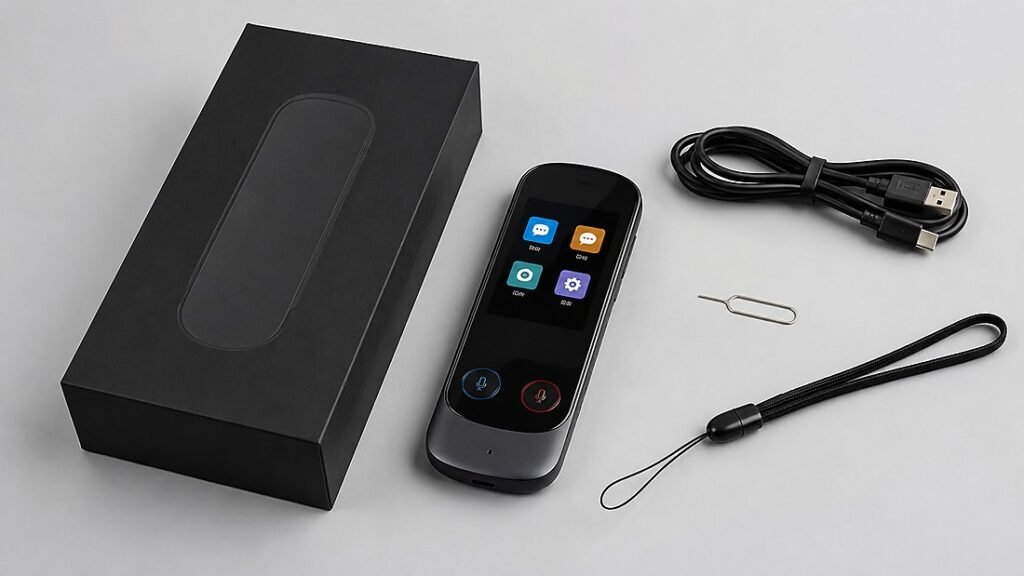
AI translator suppliers buyers need a supplier evaluation process that checks product fit, OEM/ODM capability, compliance documents, quality control, pricing, lead time, and after-sales support before placing a bulk order.
Table of Contents
Table of Contents
AI Translators for Amazon Sellers in Southeast Asia: 7 Critical Checks Before You Buy in 2026
Direct Answer: AI translators for Amazon sellers in Southeast Asia should be evaluated on seven checks: (1) whether the device works offline for the languages your shoppers actually speak, (2) real-world translation accuracy beyond spec sheets, (3) total landed cost per unit after MOQ and shipping, (4) certifications required by each Amazon SEA marketplace, (5) OEM/ODM flexibility versus generic white-label supply, (6) battery and lithium-battery shipping rules, and (7) supplier reliability, warranty, and spare-parts support. A device that passes all seven is usually safe to pilot on Lazada, Shopee, TikTok Shop, and Amazon.sg.
Southeast Asia is one of the fastest-growing e-commerce regions for portable AI hardware, but it is also one of the most linguistically fragmented. A single Amazon.sg seller may need to serve English, Mandarin, Malay, Tamil, Thai, Vietnamese, Bahasa Indonesia, and Filipino buyers. That is exactly why the AI translator category is attractive — and exactly why many first-time importers lose margin on the wrong unit. This guide gives Amazon sellers a buyer-side framework for evaluating AI translators for Southeast Asia in 2026, including the certification, MOQ, and landed-cost questions suppliers rarely volunteer. If you also sell adjacent hardware, our AI smart glasses line follows a similar procurement logic.
AI translator suppliers: Table of Contents
- What an AI translator actually is in 2026
- Short Answer
- Key Takeaways
- Key Facts for Buyers
- Check 1: Language coverage and offline mode
- Check 2: Translation accuracy you can verify
- Check 3: Form factor fit for SEA use cases
- Check 4: Landed cost per unit, not FOB price
- Check 5: MOQ, sample, and lead-time planning
- Check 6: Certifications per SEA marketplace
- Check 7: OEM/ODM, branding, and IP
- Common Mistakes and Buyer Red Flags
- Practical Buyer Checklist
- FAQ
- Conclusion
- Next Step

What an AI translator actually is in 2026
An AI translator is a handheld or wearable device that captures speech in one language and outputs spoken or written text in another, typically using a combination of cloud neural machine translation and an on-device model for offline fallback. Most units sold on Southeast Asian marketplaces fall into three form factors: handheld two-way translators, translation earbuds, and translation pens. Some recent models also embed translation into AI smart glasses or a companion app.
Buyers should evaluate where translation happens, because that determines whether the product is marketable in metro Manila, rural Vietnam, or a Bangkok tourist zone with weak Wi-Fi. Cloud-only devices are cheaper but can fail when connectivity is poor. Hybrid devices cost more per unit but convert better in reviews because they behave consistently.
How buyers should evaluate AI translators for Southeast Asia
Start from your end-customer scenario. A Grab driver communicating with tourists, a nurse speaking to a regional patient, a B2B exporter in a video call, and a shopper buying on Shopee all have different accuracy, latency, and privacy requirements. Map your top three scenarios to device capability before you look at price. If your catalogue also covers productivity devices, the same evaluation logic applies to an AI voice mouse.

Short Answer
For most Amazon sellers in Southeast Asia, the safest procurement path in 2026 is a hybrid offline/online AI translator with at least 8 locally relevant languages, verified accuracy on real conversational speech, a clear certification roadmap (CE and FCC for trade shows, plus marketplace-specific documents), and a supplier willing to start at a pilot MOQ of a few hundred units with packaging customization. Confirm import compliance per country before you commit to a container.

Key Takeaways
- Language coverage on a spec sheet is not the same as language coverage in practice; test offline mode with native speakers.
- Landed cost per unit, not FOB price, decides your Amazon margin in Singapore, Malaysia, Thailand, and the Philippines.
- Marketplace compliance is country-specific; a supplier who claims “all certifications included” without documents is a red flag.
- MOQ and lead time should be agreed in writing with a sample-approval milestone before mass production starts.
- OEM/ODM flexibility (logo, packaging, app skin, firmware strings) often matters more than a few cents of unit cost.
- Lithium battery shipping documents — UN38.3 and MSDS — are typically required before air freight.
Key Facts for Buyers
| Item | Typical range for SEA Amazon sellers | Why it matters |
|---|---|---|
| Pilot MOQ | 200–1,000 units (negotiable by model) | Limits cash risk on an unproven SKU |
| Languages advertised | 30–140 | Advertised counts usually include online-only languages |
| Offline languages | 8–20 | Determines performance where Wi-Fi is unreliable |
| Sample lead time | 5–15 days for stock models | Lets you validate accuracy before mass order |
| Mass production lead time | 20–45 days after deposit and sample approval | Critical for Q4 and campaign timing |
| Battery documents | UN38.3 report, MSDS, Cargo | Commonly required for lithium battery air shipment |
| Certifications to discuss | CE, FCC, RoHS plus local import docs | Requirements typically depend on SKU and destination |
Ranges above are general market observations for planning only. Confirm actual numbers with your supplier and marketplace before committing.
Check 1: Language coverage and offline mode — what Amazon reviews actually punish
Shoppers on Shopee, Lazada, TikTok Shop, and Amazon.sg return or one-star a translator for two reasons: it does not recognize their language, or it fails when the internet drops. Regional SEA languages such as Thai, Vietnamese, Bahasa Indonesia, Malay, and Filipino accents are frequently under-tested by factory QA. Buyers should ask for offline capability per language, not just a total count.
What to request from your supplier
- A language matrix listing which languages work offline, which are cloud-only, and which are in beta.
- Voice samples per language recorded by native speakers, ideally recorded on the production firmware version.
- Confirmation of speech-to-text versus text-to-speech coverage — some devices translate text but mispronounce output.
If a supplier cannot produce a per-language offline matrix, treat the spec sheet as marketing.
Check 2: Translation accuracy you can verify before mass order
Accuracy claims on listings are not verifiable buyer-side. You need a test you can repeat. The practical approach is to build a 30–50 phrase test set covering: greetings, prices and units, directions, medical-symptom descriptions, and one industry-specific phrase set (for example logistics or customer service). Run the test in offline mode, in a noisy environment, and with at least two speakers per target language.
A simple accuracy test you can run in a hotel room
- Prepare 40 phrases in English and translate them into the 5 SEA languages your SKU must support.
- Record two native speakers (one male, one female) reading each phrase with a natural accent.
- Run the device twice — once online, once in airplane mode — and score correct intent, not literal wording.
- Log latency in seconds; anything consistently above ~3 seconds invites negative reviews.
For AI hardware categories that share the same testing discipline, see our AI office productivity solutions overview.
Check 3: Form factor fit for Southeast Asian use cases
Form factor is a product decision that determines your Amazon listing positioning, accessories, returns, and liability. Pick the form factor that maps to your buyer persona, not the cheapest unit in the factory catalogue.
| Form factor | Best SEA use case | Typical trade-offs |
|---|---|---|
| Handheld two-way translator | Tourists, hotels, front-desk, retail counter | Larger size; screen visibility in sunlight |
| Translation earbuds | Business meetings, in-ear continuous use | Fit, battery life, hygiene concerns for resale |
| Translation pen | Students, reading menus/signage | Not designed for two-way live conversation |
| Translation glasses | Hands-free, AR-lite experiences | Higher cost, niche demand, longer certification cycle |
| App + phone | Low-price digital SKU | Low differentiation; heavy app-store dependency |
Soft CTA: If you are narrowing form factor options for a SEA launch, you can request samples of specific models so your test set runs on the exact firmware version you would ship.
Check 4: Landed cost per unit, not FOB price
Amazon sellers in Southeast Asia frequently under-model cost by looking only at factory FOB price. Landed cost per sellable unit should include unit cost, packaging and inserts, trademarks and labels, freight, duties, marketplace commissions, FBA-like fulfillment fees, return reserve, and a portion of advertising spend.
Cost items buyers usually forget
- Battery shipping compliance documents and any dangerous-goods surcharge.
- Customs classification and local value-added tax treatment per destination country.
- Repackaging for marketplace label requirements and FNSKU/barcode obligations.
- Firmware update or app localization if the device UI must support the local language.
- Replacement units held for defect or DOA claims.
Two suppliers can show the same FOB price and produce very different margins. Model both.
Check 5: MOQ, samples, and lead-time planning
MOQ is negotiable within reason when you accept standard colorways and stock packaging; MOQ usually rises when you require custom tooling, custom enclosure color, or a fully custom app skin. For an evaluation-stage Amazon seller, a two-step plan works well: a paid sample order for accuracy testing, then a pilot production run with logo and packaging customization, then scale.
Lead-time planning example
- Days 0–7: sample order and accuracy testing.
- Days 7–14: agree specifications, packaging artwork, and certification documents in writing.
- Days 14–21: place pilot order, pay deposit, start tooling or artwork prep if needed.
- Days 21–55: mass production, quality inspection, air freight booking with lithium documents.
- Days 55–70: inbound receiving, listing setup, launch.
If a factory promises mass production in under two weeks on a customized model, request evidence. Confirm your specific schedule in writing.
Check 6: Certifications per Southeast Asian marketplace
Certification requirements vary by product configuration and destination country, and marketplace policy changes over time. A CE or FCC mark on a sample does not automatically clear every SEA marketplace. Buyers should ask for the technical file and the specific test reports that correspond to the exact SKU they will import, and should verify local import requirements with a customs broker or marketplace compliance contact.
Documents typically requested during evaluation
- CE and FCC documentation for markets that reference them.
- RoHS declaration for electrical components.
- UN38.3 test report and MSDS for lithium battery air shipping.
- Product safety and EMC test reports relevant to wireless transmission.
- Local import documentation, which may require in-country testing or registration depending on the country.
You can compare certification frameworks directly against FCC equipment authorization guidance and the European Commission CE marking page. For Bluetooth-enabled devices, Bluetooth SIG qualification listing explains the declaration process for interoperable wireless SKUs.
Check 7: OEM/ODM, branding, and IP ownership
At the evaluation stage, Amazon sellers should decide whether they want generic white-label supply, light OEM (logo and packaging), or full ODM (industrial design, firmware, app, and tooling). Each has different cost, MOQ, and IP implications.
| Model | Typical scope | Typical MOQ impact | IP notes |
|---|---|---|---|
| White-label | Logo print only | Lowest | Supplier design continues to exist for other buyers |
| Light OEM | Logo, color, packaging, manual | Moderate | Clarify exclusivity in writing |
| ODM | ID adjustment, firmware strings, app skin, tooling | Higher | Discuss tooling and design ownership explicitly |
Buyers should ask: who owns the tooling, who owns the app skin assets, can the factory resell this configuration, and what happens to IP if the relationship ends. Get answers in writing. If your brand also spans wearables, the same IP questions apply to private label OEM/ODM programs.
Common Mistakes and Buyer Red Flags
- Buying on FOB price alone. Landed cost is usually the real decision variable.
- Trusting a language count. Ask for the offline matrix and test it.
- Accepting “all certifications included.” Ask for the exact report covering your SKU.
- Skipping the sample stage. A 20-minute accuracy test prevents a six-month inventory problem.
- Ignoring lithium shipping documents. Missing UN38.3 and MSDS delays air freight.
- Assuming MOQ is fixed. MOQ is a negotiation variable tied to customization.
- No written warranty terms. Agree on defect rates, replacement policy, and spare parts before shipping.
- Unclear app ownership. If the app is hosted by the supplier, you may lose control of updates.
- Comparing models from different firmware versions. Always benchmark on the shipping firmware.
- Red flag: unwillingness to share test reports. A credible manufacturer should be able to share redacted reports under NDA.
Practical Buyer Checklist
- Define 2–3 SEA target countries and the languages your SKU must support.
- Request face-to-face samples in the intended shipping firmware.
- Run a 40-phrase offline accuracy test with native speakers.
- Model landed cost per unit for each destination country.
- Confirm MOQ, deposit, lead time, and inspection terms in writing.
- Collect the certification and battery shipping document set for the exact SKU.
- Clarify OEM/ODM scope, exclusivity, tooling ownership, and app control.
- Agree warranty, defect-replacement policy, and spare-part availability.
- Plan a pilot run before committing to a seasonal container.
- Build a review-management plan for early SKU listings.
FAQ
Do AI translators for Amazon sellers in Southeast Asia need CE or FCC marks?
It depends on the destination market. CE is generally associated with the European Economic Area, while FCC relates to the United States. Southeast Asian marketplaces may reference these or require local import documentation. Buyers should verify requirements with a customs broker or marketplace compliance contact.
What is a realistic MOQ for a first AI translator pilot?
Pilot MOQs commonly start in the low hundreds for stock models and increase when you request custom color, packaging, or firmware changes. Confirm with your specific supplier.
Do translation earbuds or handheld translators sell better on Shopee and Lazada?
Neither is universally better. Handhelds suit travel and hospitality buyers; earbuds suit business and education buyers. Choose based on your existing catalogue and audience.
How long does shipping take with lithium batteries?
Air freight typically requires UN38.3, MSDS, and related documents, plus carrier acceptance. Timelines vary by destination and carrier; plan for buffer.
Can I put my own logo and packaging on an AI translator?
Most suppliers offer logo and packaging customization. Confirm scope, colors, and MOQ impact in writing. Full ODM typically also involves app and firmware customization.
Should I do a sample run before ordering inventory?
Yes. Sample evaluation is the cheapest way to catch accuracy, latency, and battery-life gaps before you commit to inventory.
What are the biggest risks for first-time SEA sellers in this category?
The most common risks are language mismatch, weak offline performance, hidden landed costs, and certification gaps. Each can be reduced by written specifications and sample verification.
Conclusion
AI translators are a strong fit for Southeast Asian marketplaces, but only when they are evaluated as procurement projects rather than impulse buys. The seven checks above — offline language coverage, verified accuracy, form factor, landed cost, MOQ and lead time, certification alignment, and OEM/ODM clarity — will protect your margin and reduce returns. Treat the spec sheet as the opening of a conversation, and treat the sample test as the real product evaluation.
Next Step
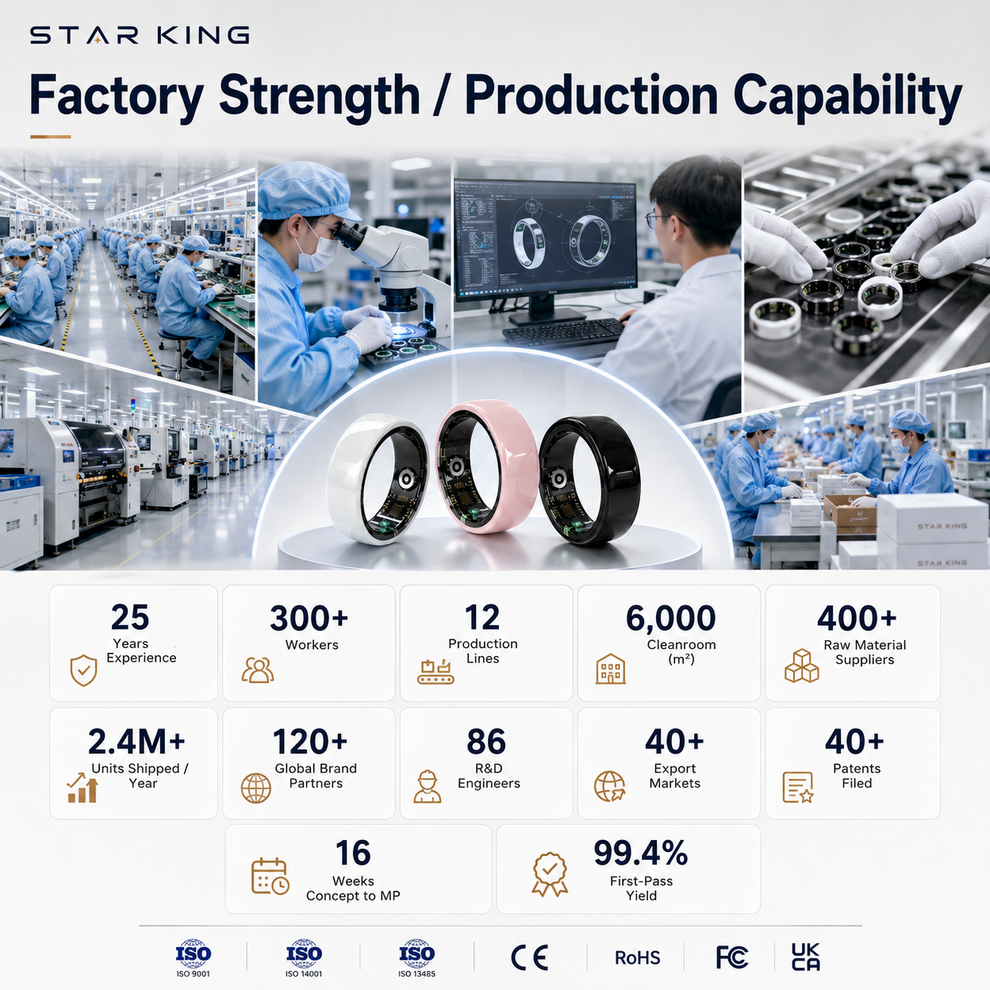
If you are ready to move from evaluation to action, STAR KING can help you compare configurations, confirm MOQ and lead time, and discuss logo, packaging, and app-level customization for AI translators suitable for Southeast Asian marketplaces. Request samples and a quotation so you can run the accuracy test in-house before you commit to mass production. You can also review the broader AI translator product range first.
Discuss Your Smart Wearable OEM/ODM Project
Planning a smart ring, smart watch, smart band, AI glasses, AI translator, or AI voice mouse project? Contact STAR KING to discuss product positioning, sample testing, customization scope, certification requirements, lead time, and quotation details.

Team Star King

Scan WhatsApp QR code
Leave a Reply